Key takeaways
- Front gardens are on show all year, so start with evergreen plants
- Make the path to the door clear, direct and wide enough for two
- Hide bins with a bin store, a trellis screen or a tall enough hedge
- Use gravel or permeable paving so rain can soak away
- Matching pots by the door and a simple layout look smart in a small space
The front garden is the most public bit of your home, and often the most neglected. A little care gives you kerb appeal and makes coming home lovelier.
Front gardens are small, busy and on show all year, and these ideas work within those limits. The RHS has more front garden design ideas too.
Front garden design principles
Evergreen first, flowers second
A back garden can get away with looking bare in winter. A front garden can’t, because everyone sees it every day of the year. Build it around evergreen plants that look as good in January as in July.
Great evergreens for front gardens:
- Box, or a box alternative like Ilex crenata: for hedges, balls and edging. Box can suffer from blight and box caterpillar, so an alternative is often the safer bet.
- Euonymus ‘Emerald Gaiety’: white-edged leaves, compact, fine in shade.
- Skimmia japonica: glossy leaves and red winter berries or buds, happy in shade.
- Viburnum tinus: flowers from late autumn to spring, and makes a thick screen.
- Lavender: silvery leaves and summer flowers for a sunny spot. See our lavender growing guide.
Then add bulbs for spring, bedding or perennials for summer, and berries for autumn and winter. Our flower planting calendar has the timings for bulbs, annuals and perennials. But the evergreen framework should look good on its own.
Create a clear route to the door
The path to your front door is the most-used route on your property. Make it obvious, direct and wide enough for two people side by side: at least 90cm, ideally 1.2m.
Path materials for front gardens:
| Material | Cost | How long it lasts | Look |
|---|---|---|---|
| Block paving | Medium | A long time | Traditional, neat |
| Natural stone | Higher | Decades | Smart, timeless |
| Gravel on membrane | Low | Top up every few years | Relaxed, lets rain through |
| Brick | Medium to high | Decades | Cottage, period homes |
| Porcelain pavers | Medium | A long time | Modern, clean |
Symmetry and formality
Front gardens suit a more formal look than back gardens. Matching pots either side of the door, the same planting on both sides of the path and a central path to the door all feel calm and tidy.
It needn’t feel stiff. Let lavender spill over the path and a rose scramble up the wall.
Ideas by front garden type
Terraced house front garden (2m x 4m)
In the smallest front gardens, everything has to earn its place.
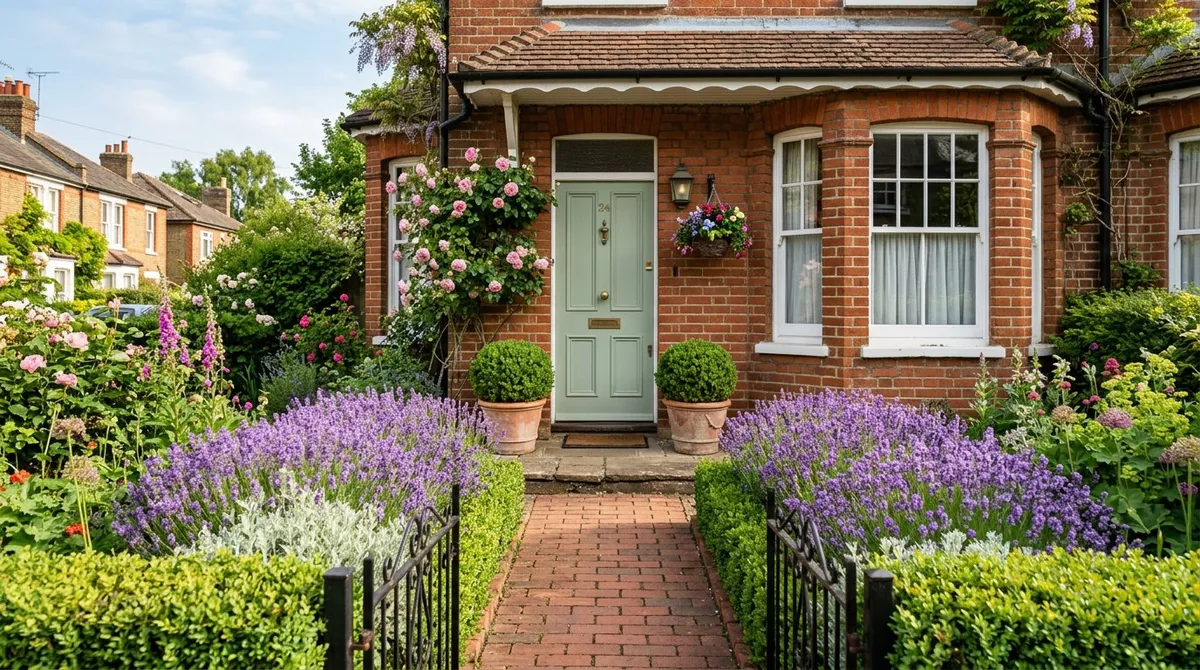
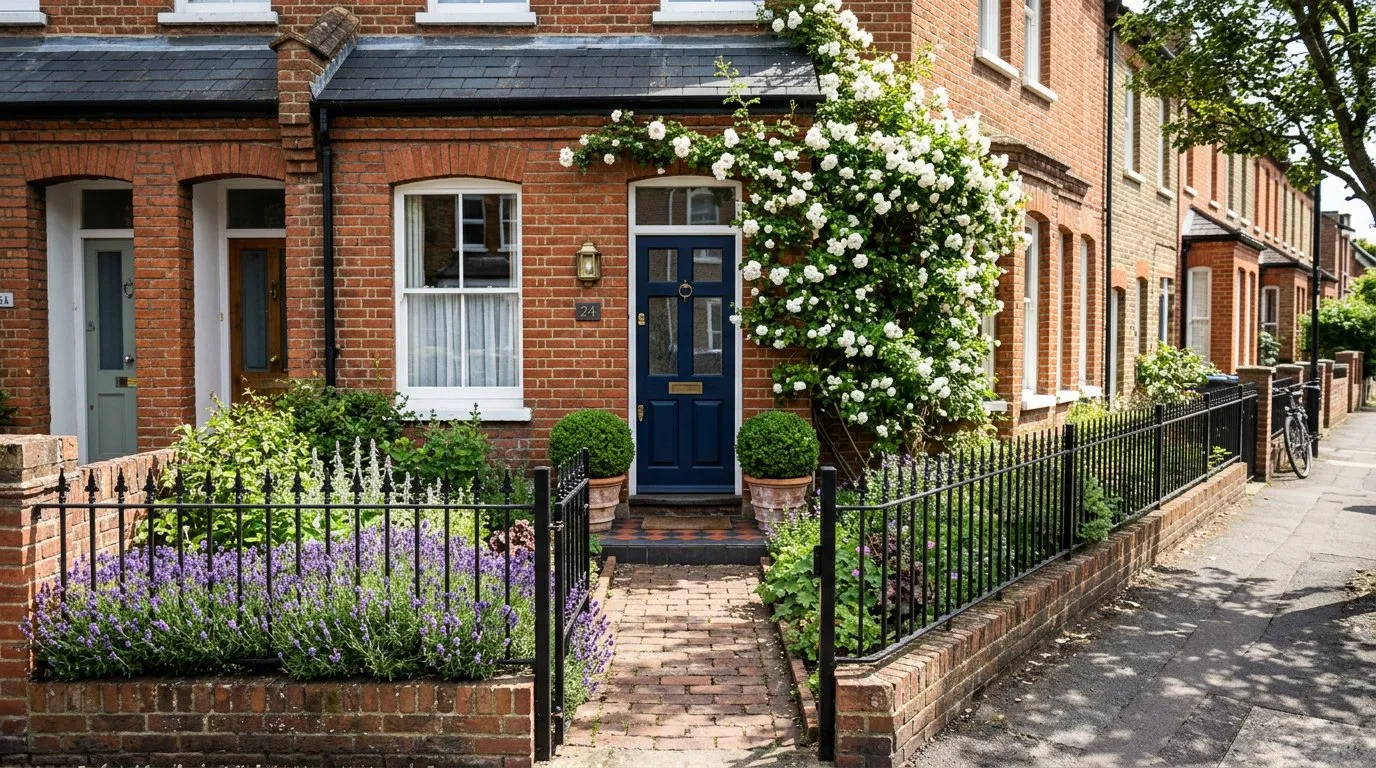 Box balls, a climbing rose and a lavender hedge make a big impact in a tiny terraced front garden.
Layout: a straight path from gate to door with low planting either side. Skip the lawn, as it’s too small to mow neatly.
Planting: two box balls or lavender plants either side of the door. A climbing rose or jasmine on the house wall. Ground cover like Geranium macrorrhizum or ajuga filling the beds, with crocus, tulip and daffodil bulbs pushing through for spring colour.
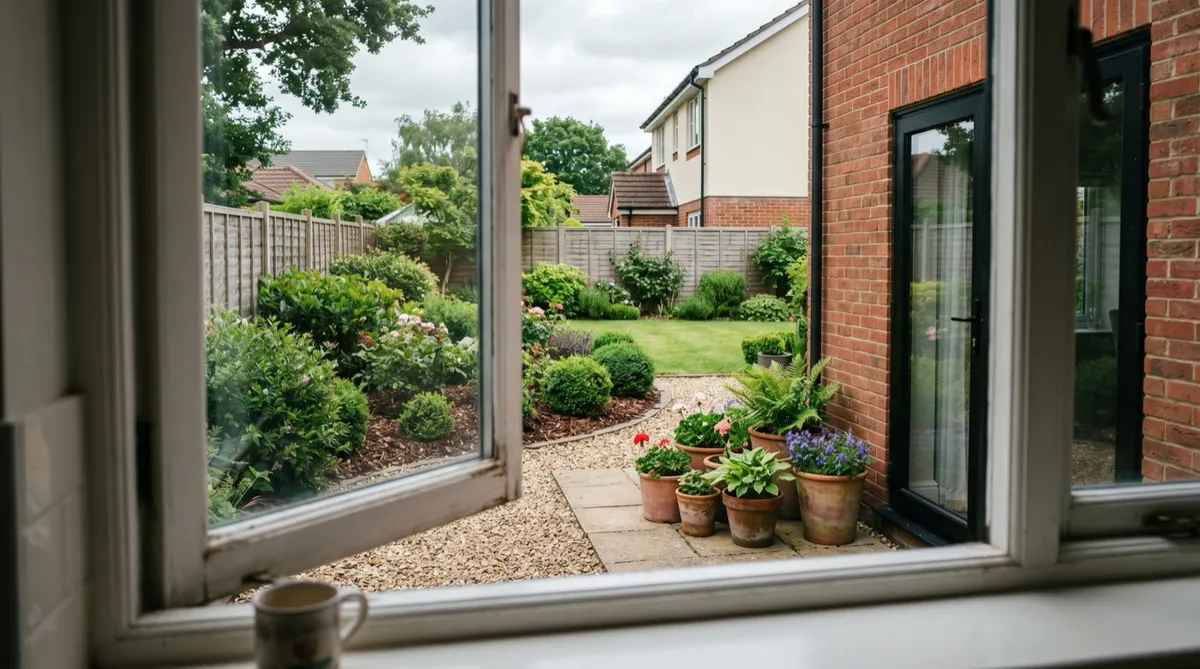
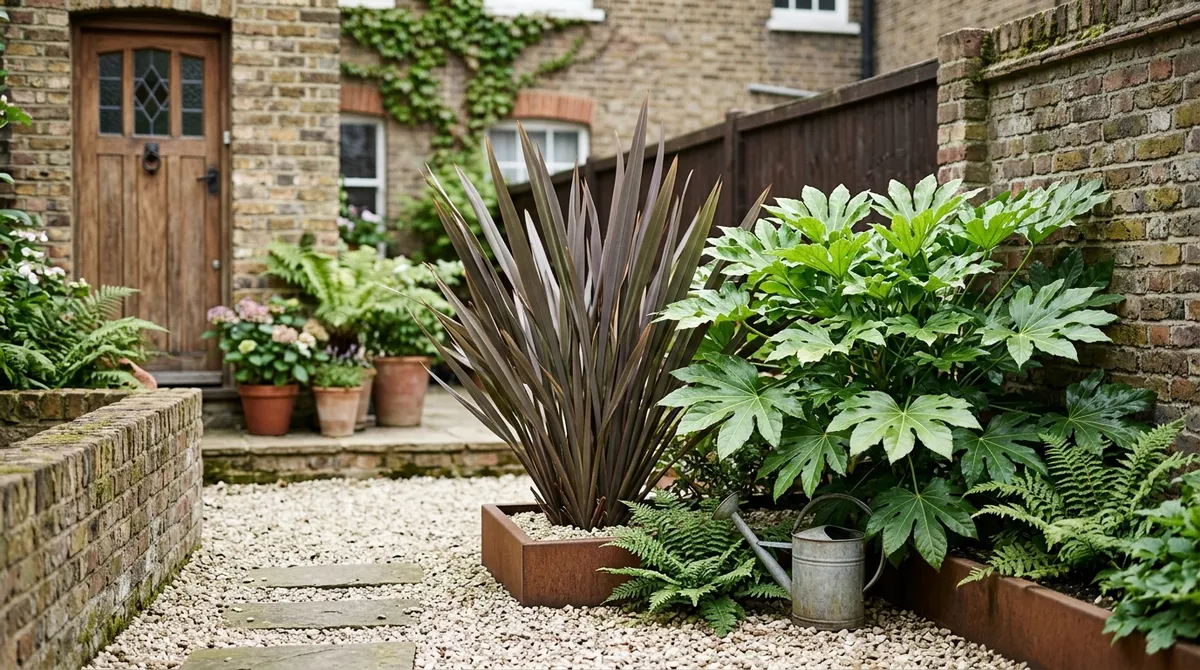
Surface: slabs for the path and gravel in the beds, or gravel all over with stepping stones to the door.
Semi-detached front garden (4m x 6m)
There’s room for a small feature. The trick is marking your space without building a wall.
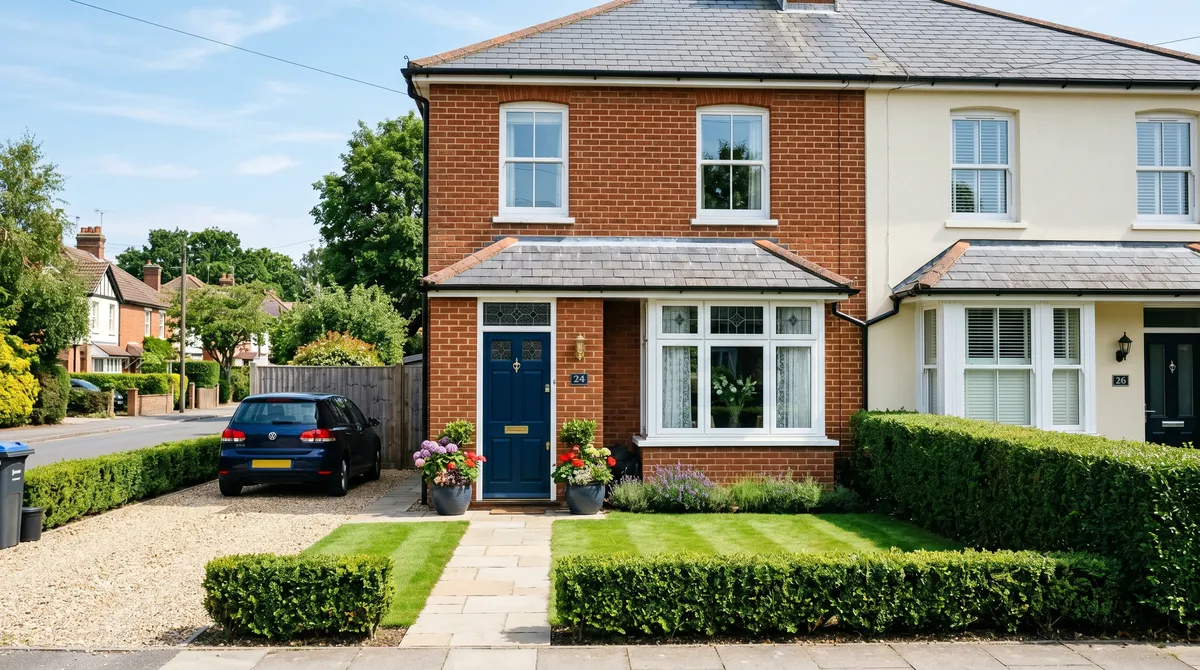
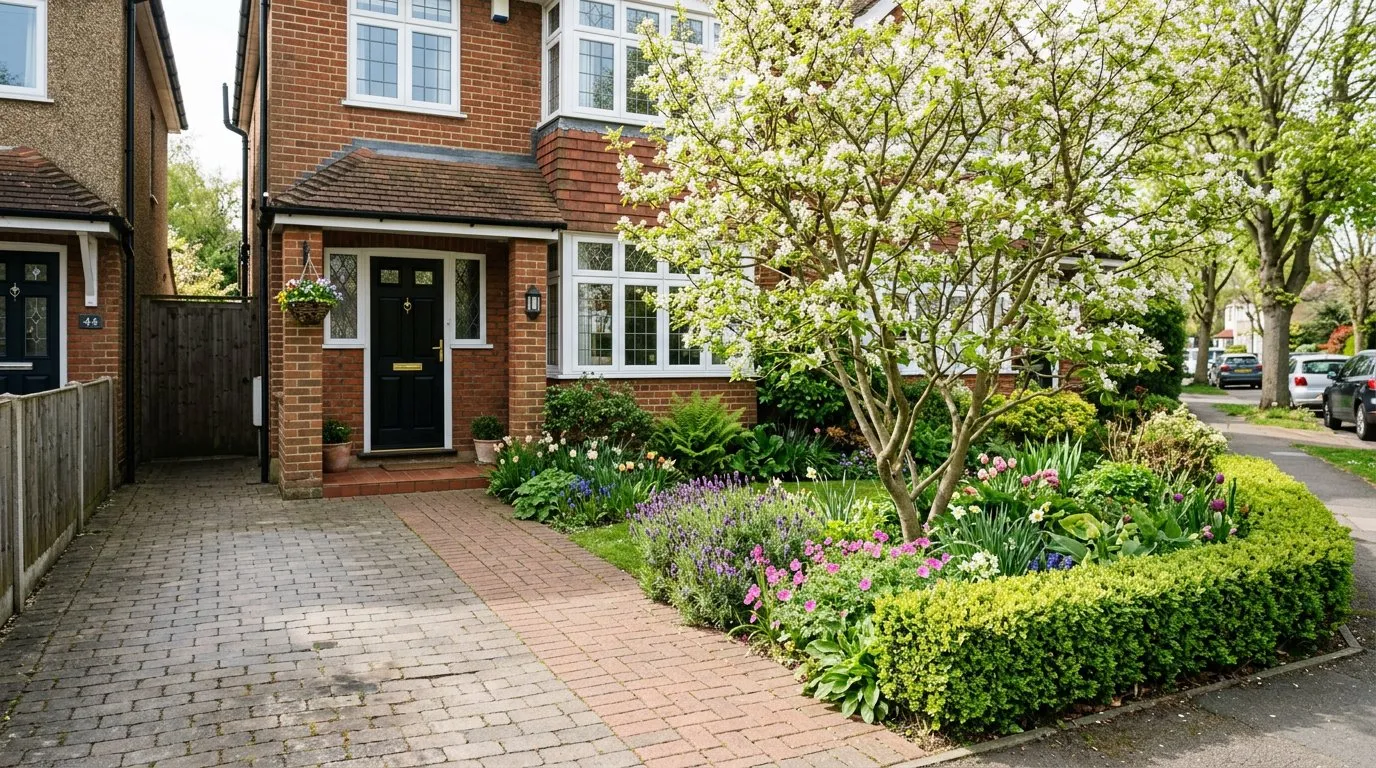 A multi-stem tree and a low hedge give a semi-detached front garden shape all year.
Layout: an angled path makes two triangular beds. Use one for evergreen structure and one for seasonal colour, with a low hedge or border along the boundary.
Planting: a small multi-stem tree such as Amelanchier, birch or Japanese maple as the centrepiece. An evergreen hedge along the front at about 60-80cm high. Mixed perennials in the beds, and low-maintenance plants are ideal, as front gardens tend to get less attention.
Driveway: if you need parking, use permeable block paving or gravel in a plastic grid. The groundwork is like laying a patio, but with a deeper base to take the weight of a car. Keep at least one planted bed between the drive and the house to soften it.
Detached house front garden (6m+ deep)
Bigger front gardens have room for a tree, a bench or even a lawn.
Layout: a curved or straight path to the door with generous borders either side, a tree set off to one side, and a low boundary hedge for privacy without feeling like a fortress.
Planting: a layered border with shrubs at the back, perennials in the middle and ground cover at the front. A tree like Amelanchier, crab apple or birch for height and seasonal interest. Climbers on the house, such as wisteria, climbing hydrangea or star jasmine.
Screening bins, meters, and utilities
Wheelie bins, recycling boxes and meter cupboards spoil most front gardens. Hiding them is the single best improvement you can make. Our guide to hiding wheelie bins has lots more ideas.
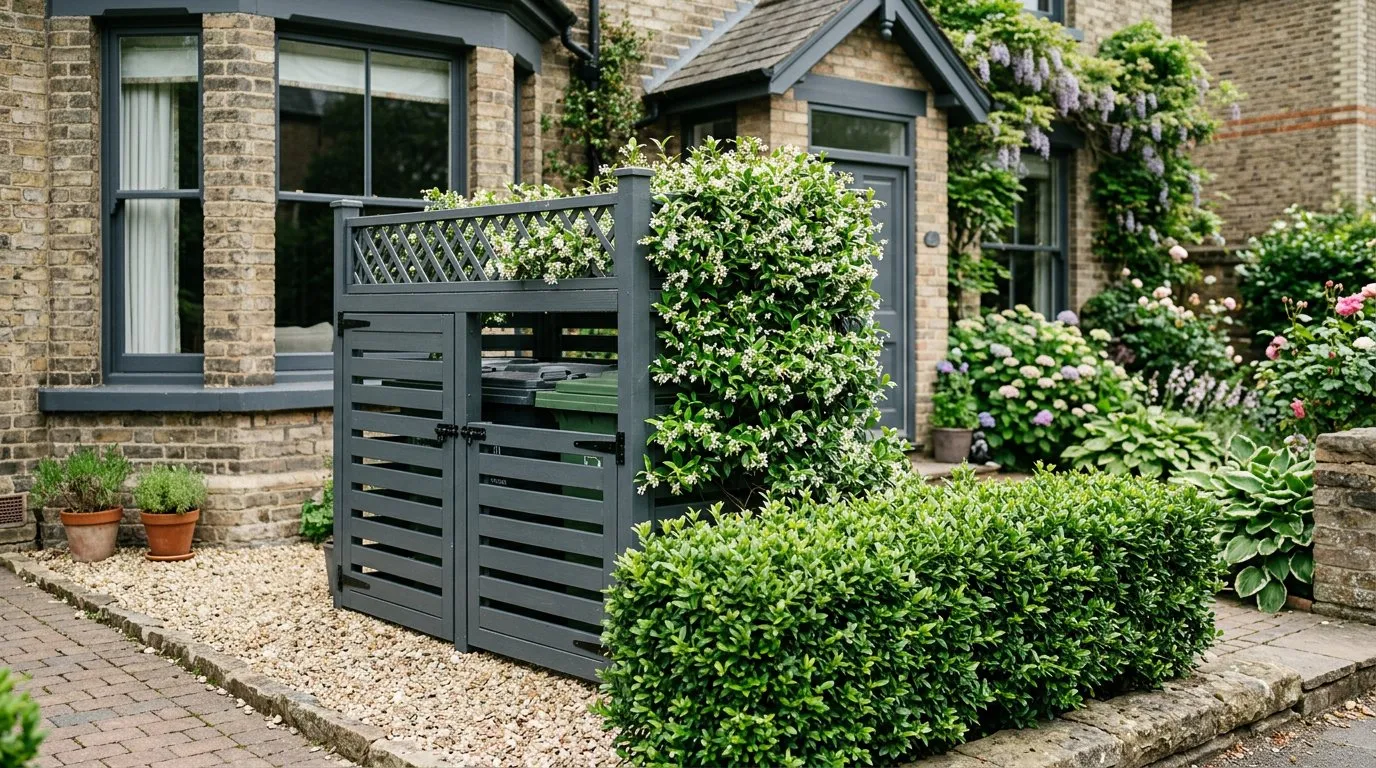 A painted bin store with a climber-covered trellis hides the bins and adds greenery.
Bin store: a wooden bin store painted to match the house is the neatest option.
Trellis screen: a trellis panel with an evergreen climber like star jasmine hides bins and looks lovely.
Hedge: a hedge in front of the bins works too, but it needs to be about as tall as the bins, around 1.2m, to hide them properly.
Tip: Keep the bins near the pavement rather than by the front door. It makes bin day easier.
Front garden boundaries
Low walls
Walls up to 1m high next to a road don’t usually need planning permission. A low brick or stone wall with a coping on top gives a clean edge, keeps dogs out and suits older houses.
Hedging
Hedges make the loveliest front boundaries. A 60-80cm hedge of box, lavender or beech marks the space without blocking light or views. Lavender adds scent for bees.
Railings
Original Victorian or Edwardian railings add period charm. If you’re replacing them, black, dark grey or heritage green paint looks best.
Open plan
Open-plan estates often look best with no boundary. Low planting like lavender, catmint and ornamental grasses marks the edge without a barrier.
Planting for year-round interest
A front garden needs to look good every month.
| Season | Plants | What they bring |
|---|---|---|
| Winter | Viburnum tinus, Skimmia, Sarcococca | Flowers, berries, scent and green leaves |
| Spring | Tulips, daffodils, Amelanchier blossom | Bold colour |
| Summer | Lavender, roses, geraniums, catmint | Scent, colour and bees |
| Autumn | Japanese anemones, cyclamen, Euonymus leaves | Late flowers and leaf colour |
Plant evergreen shrubs as the framework, then add bulbs and perennials. Clip box a couple of times a year and trim lavender after flowering.
Frequently asked questions
How do I make my front garden look nice?
Get three things right: the path, the evergreens and the bins. Make a clear path to the door, plant evergreens that look good all year, and hide the bins. Paint the front door a bold colour, put matching pots either side, and plant a low hedge or border along the front.
What plants look good in a front garden?
Evergreens that look good all year are the place to start. Lavender, box or a box alternative, Euonymus, Skimmia and Viburnum tinus all work. Add tulips and daffodils in spring, geraniums and roses in summer, and cyclamen and berries in autumn and winter.
Can I pave over my front garden?
Yes, as long as rain can soak away. In England, permeable paving like gravel or block paving with gaps, or paving that drains into a lawn or border, doesn’t need permission. Covering more than 5 square metres with solid paving that drains onto the road does. Check with your council if you’re unsure.
How do I hide bins in a front garden?
A bin store, a trellis screen or a tall hedge all work well. Paint a bin store to match the house, or grow an evergreen climber up a trellis. A hedge needs to be about as tall as the bins to hide them. Keep the bins near the pavement for easy collection.
What is the best low-maintenance front garden?
Gravel or permeable paving with evergreen shrubs and ground cover. Box balls or their alternatives, lavender and Vinca minor need little more than a yearly trim. A yearly patio clean keeps paving looking fresh. Skip a lawn, as it needs regular mowing and edging right where everyone can see it.
Do I need planning permission for a front garden wall?
Usually only if it’s over 1m high next to a road. Walls and fences elsewhere can usually go up to 2m without permission. Rules can be stricter in conservation areas or for listed buildings, so check with your council before you build.
Our team produces practical UK gardening guidance from source research, contributor records and established horticultural practice. Editorial standards are overseen by Matt W.