Key takeaways
- Fatsia japonica is the easiest bold plant for shade and needs almost no care
- Phormium, Yucca and Cordyline need full sun to keep their upright shape
- Trachycarpus fortunei is the hardiest palm for UK gardens
- Free-draining soil matters more than feeding, because winter wet causes most losses
- Cut tired Phormium leaves at the base, never across the top
- Agave and echeveria need moving under cover before the first frost
Architectural plants give a garden bold shape all year, and the best of them need almost no work. Spikes, fans, sword leaves and big glossy foliage carry the garden even when nothing is in flower. Choose the right plant for the light, give it free-draining soil and it will look after itself.
This guide picks the toughest structural plants for UK gardens and where each one grows best. For softer, flowering plants that also keep work down, see the guide to low maintenance garden plants.
What makes a plant architectural?
An architectural plant has a strong outline you can read from across the garden. Flowers are a bonus, never the main point.
Three things set them apart from ordinary border plants:
- A clear silhouette that holds through the year.
- Evergreen or long-lasting foliage, so the shape survives winter.
- Enough size or drama to anchor a space on its own.
Use them as a single specimen, repeat them through a border as structure, or plant a row as a screen. A garden built on good structural plants looks finished even in January. That’s why easy-care gardens lean on them so much. Bold foliage shapes are also the starting point for a jungle-style garden.
Why winter wet kills more of them than cold
Most architectural plants that die in UK gardens rot in wet soil rather than freeze. Many come from drier places such as New Zealand, the Mediterranean and Mexico. They cope with cold, but sit their roots in cold, soggy clay for weeks and they rot.
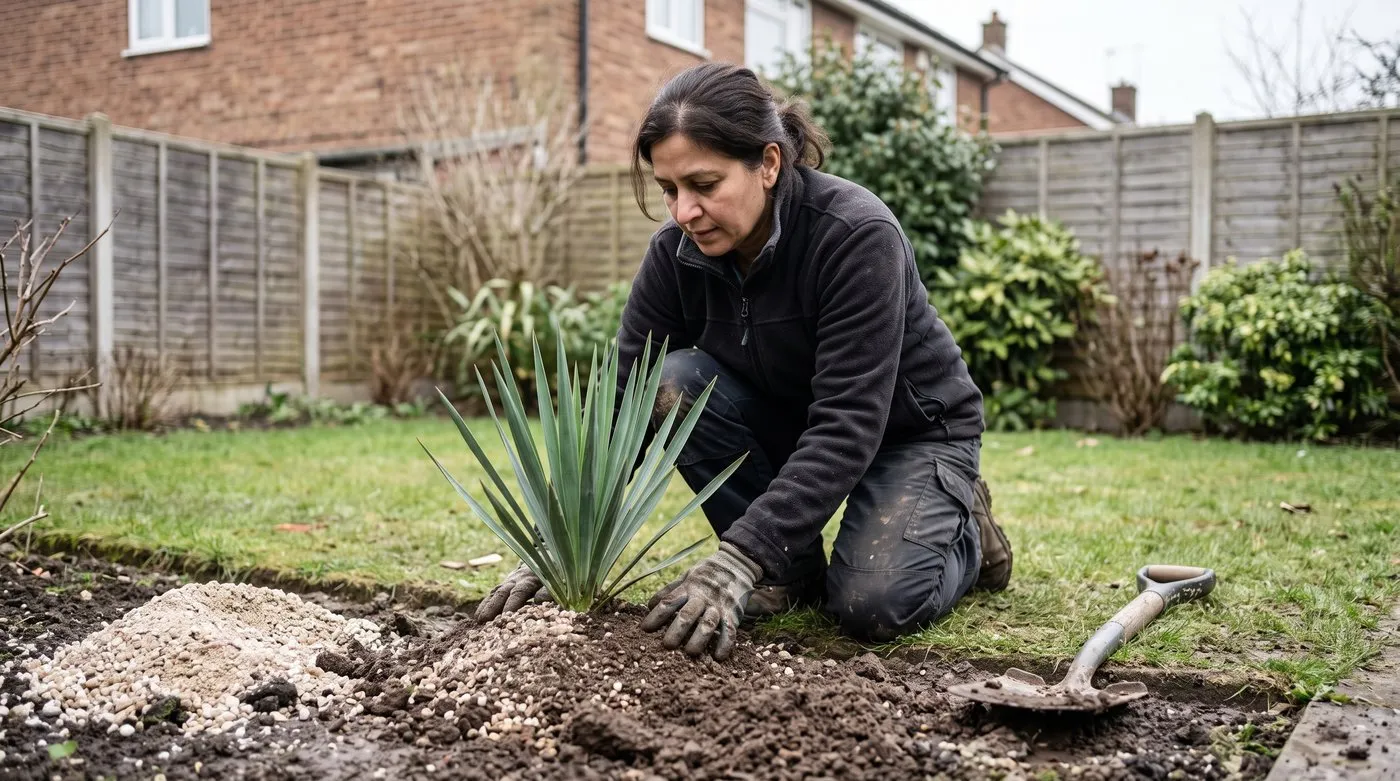
A low mound and plenty of grit keep the crown out of cold winter wet, which is what kills most spiky plants.
The fix is drainage, every time:
- Plant on a slight mound so water runs away from the crown.
- Dig plenty of horticultural grit into heavy soil.
- Avoid low spots and frost pockets where cold air and water both collect.
Gardener’s tip: Before planting anything spiky or exotic, dig a hole about a spade deep and fill it with water. If water is still sitting in it a few hours later, raise the bed or add lots of grit first.
Bold plants for shade: Fatsia, Mahonia and Astelia
Fatsia japonica is the easiest structural plant for shade. Its huge, glossy, hand-shaped leaves light up a dark corner, and it copes with town pollution and most soils. Shelter it from cold, drying winds, which can brown the leaves.
Mahonia x media varieties such as ‘Charity’ add height and scented yellow flowers from late autumn into winter, when little else is out. The mahonia guide covers pruning. Astelia chathamica brings silver sword leaves to part shade and looks striking in a large pot, though it needs a sheltered spot in colder areas.

Fatsia’s big glossy leaves brighten a shady corner where most plants sulk. It’s about as close to no-work as gardening gets.
Spiky plants for sun: Phormium, Yucca and Cordyline
The boldest spiky plants want full sun. In shade they grow loose and lean towards the light, which spoils their shape.
Phormium, New Zealand flax, makes a fountain of stiff sword leaves, in bronze, green or striped forms. Give it sun and free-draining soil and it stays upright and sharp. The guide to growing Phormium covers colours and sizes.
Yucca gloriosa holds rigid blue-green spears and sends up a tall spike of cream bells in late summer. It’s one of the most drought-tolerant plants you can grow. Plant it away from paths, as the leaf tips are sharp.
Cordyline australis makes a palm-like trunk topped with a burst of strappy leaves. It’s the least hardy of the three, so give it a warm, sheltered spot. The Cordyline guide explains winter care in cold areas.

In full sun, Phormium keeps its stiff, upright fan. Tidy it by cutting old leaves at the base, never across the tips.
The Chusan palm: a palm for UK gardens
Trachycarpus fortunei, the Chusan palm, is the hardiest palm for UK gardens. A hairy trunk topped with big fan leaves brings an exotic look, and it’s far tougher than it looks.
Plant it in sun or light shade, out of strong, cold winds, which shred the leaves. It grows slowly, so buy the biggest one you can afford. Care is simple: water it through its first couple of summers, then cut off the lowest brown leaves now and then for a clean trunk. For other palms worth trying, see hardy palms for UK gardens.

A Chusan palm with tall grasses glowing in low autumn light. Bold fan leaves and soft plumes make a lovely contrast.
Grasses and seedheads for movement in winter
Big ornamental grasses add height, movement and winter shape for one job a year. Miscanthus sinensis varieties stand through winter as tan plumes. Stipa gigantea sends airy, oat-like stems high above its leaves, catching the low sun. Cut both back to the base in late winter, before new growth starts. Neither is evergreen, but they stand well through winter.
Verbena bonariensis adds tall, see-through purple flowers that self-seed gently into gaps. Acanthus mollis, bear’s breeches, throws up tall spires of hooded flowers above big glossy leaves. Allium seedheads dry into neat globes that last for months. Leave them standing: they look wonderful under frost.

Leave allium seedheads standing and they keep the border looking good well into winter.
Architectural plants for pots, including tender ones
Pots let you grow tender showpieces you couldn’t risk in the ground. Agave americana and echeveria make perfect sculptural rosettes, but they aren’t reliably frost hardy. Grow them in pots and move them under cover for winter.
- Use a gritty mix, roughly two parts compost to one part grit.
- Choose a wide, heavy pot so top-heavy plants don’t blow over.
- Move agave and echeveria into a frost-free porch, greenhouse or shed before the first frost, usually October.
- Keep them almost dry through winter. Overwatering kills more than cold does.
Cordyline, compact Phormium, Astelia and Yucca also grow well in big pots and can usually stay out all year in milder areas. Agave leaves end in a sharp spine, so keep pots away from where children play.

Agave and echeveria in gritty pots on a city terrace. They spend summer outside and winter somewhere frost-free.
How to combine architectural plants
Repeat a few bold shapes rather than buying one of everything. Pick three structural plants and use each several times. It looks planned, not like a collection. Euphorbia characias, repeated through a sunny border, ties a whole space together with its lime-green spring flowers. Wear gloves when cutting it back, as the milky sap irritates skin and eyes.
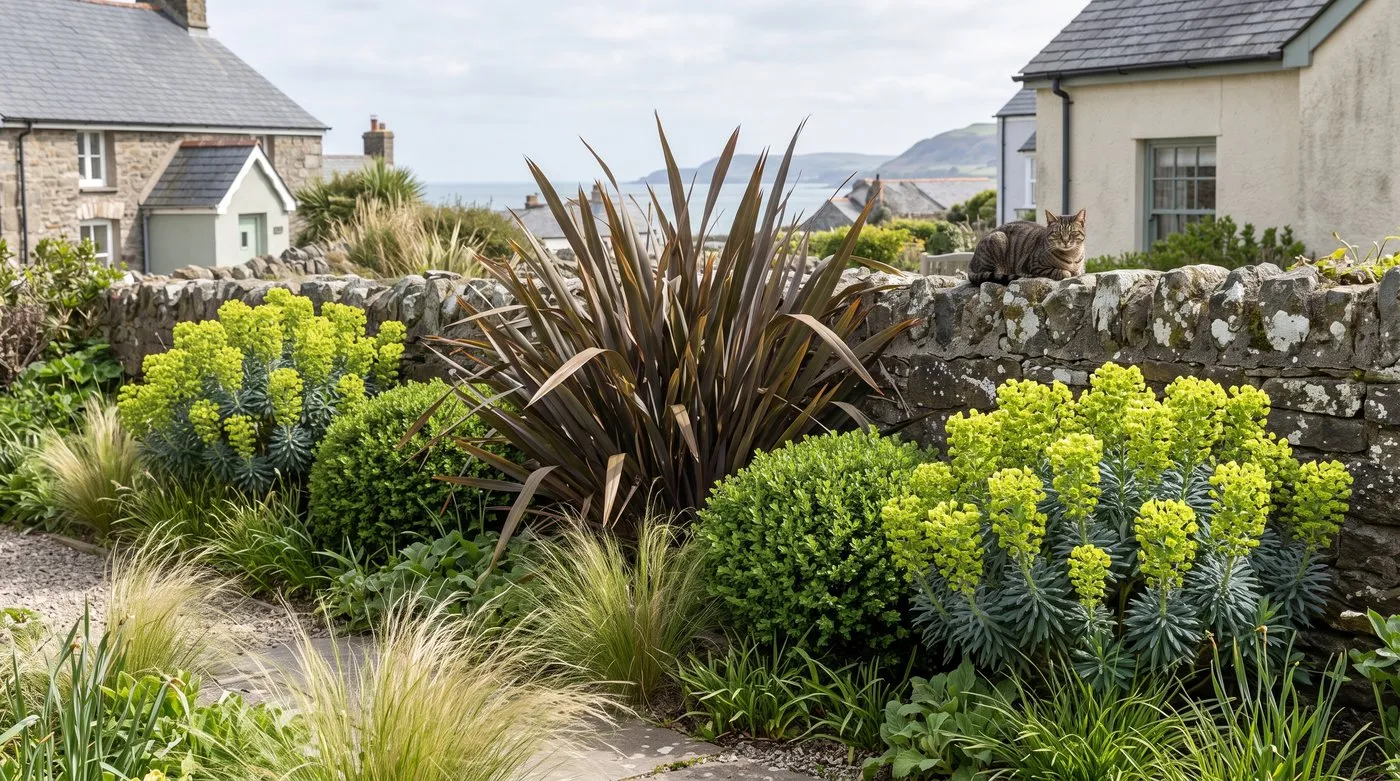
Repeating one bold plant and mixing spikes with rounded shapes makes a border look planned rather than busy.
Balance spikes with rounded and soft shapes. A Phormium sits better beside the dome of a hebe or a soft grass. Too many spikes together look harsh and busy, while broad, glossy Fatsia leaves calm things down. For the rounded layer underneath, see evergreen shrubs for year-round interest.
Common mistakes with architectural plants
- Planting in wet soil. Phormium, yuccas, Astelia and palms rot in cold, standing water. Plant on a mound or in well-gritted soil.
- Cutting Phormium across the top. The cut tips stay blunt and brown. Always take whole leaves out at the base.
- Putting tender plants in a frost pocket. Cold air pools in dips and at the bottom of slopes. Plant Cordyline and palms higher up or near a warm wall.
- Leaving agave out in winter. Cold plus wet turns them to mush. Bring them in before the first frost.
- Too many spikes together. Break them up with rounded shrubs, grasses and broad leaves.
Year-round care calendar
| Month | Main task |
|---|---|
| January | Check tender pots under cover are dry, not rotting |
| February | Cut Miscanthus and Stipa to the base before new growth |
| March | Divide overgrown Phormium clumps if needed |
| April | Plant new specimens and top-dress beds with grit |
| May | Move agave and echeveria back outside once frosts are over |
| June | Cut tired Phormium leaves at the base and tidy palm trunks |
| July | Water pots in dry spells; no feeding needed in the ground |
| August | Enjoy yucca flower spikes |
| September | Cut back Acanthus once flowering finishes |
| October | Move tender succulents under cover before the first frost |
| November | Leave grass plumes and allium seedheads standing |
| December | Brush heavy snow off Fatsia and palm leaves |
Now you’ve got the structure, read the guide to creating a gravel garden for the free-draining setting these plants love. More ideas are in our garden design section.
Frequently asked questions
What are architectural plants?
They are plants with bold, distinct shapes that give a garden structure. Their outline does the work rather than their flowers. Think spiky Phormium, the huge hand-shaped leaves of Fatsia or the trunk of a Chusan palm. Most are evergreen, so they look good in winter too.
Which architectural plants are best for low maintenance UK gardens?
Fatsia japonica, Euphorbia characias and Phormium are the easiest. All three are evergreen and hardy in most of the UK. Add Trachycarpus fortunei for a palm and Yucca gloriosa for spikes. None need staking or regular feeding once they’re settled in.
Are architectural plants hardy in the UK?
Most are hardy in free-draining soil across lowland Britain. Fatsia, Trachycarpus and Yucca gloriosa cope with most UK winters. Phormium and Cordyline like a sheltered spot in colder areas. Agave and echeveria are tender and need winter cover. Cold, wet soil kills more of them than frost.
Do architectural plants need full sun?
Most spiky ones do, but several bold plants love shade. Fatsia japonica, Mahonia and hardy ferns are happy in shade. Phormium, Yucca, Cordyline and palms want full sun. In shade, these sun lovers grow loose and lean towards the light.
How do you prune Phormium without ruining it?
Cut tired leaves right at the base, never across the top. Trimmed tips stay blunt and brown and look wrong all year. Reach into the clump in spring and cut each dead or damaged leaf off at ground level. Wear gloves, as the leaves are tough and sharp-edged.
What is the most low-maintenance architectural plant?
Fatsia japonica is the easiest for most UK gardens. It copes with shade, town pollution and most soils, and stays evergreen. Pulling off the odd yellowed leaf is often the only job it needs. Give it shelter from cold, drying winds to keep the big leaves looking good.
Can you grow architectural plants in pots?
Yes, many architectural plants grow well in pots. Agave, echeveria, Cordyline, compact Phormium and Astelia all suit containers. Use a gritty, free-draining mix and a wide, heavy pot so top-heavy plants don’t blow over. Move tender succulents under cover before the first frost.
Our team produces practical UK gardening guidance from source research, contributor records and established horticultural practice. Editorial standards are overseen by Matt W.