
Key takeaways
- The plain green Cordyline australis is the hardiest; coloured and striped forms are more tender
- Plant in spring, in full sun and free-draining soil, as winter wet kills more cordylines than cold
- In cold areas, tie the leaves up over the crown and wrap with fleece from November to March
- Coloured types like 'Red Star' are best in pots you can move under cover in winter
- A frost-damaged cordyline often sprouts again from the base, so don't dig it out too soon
Cordyline is the spiky, palm-like plant that gives seaside towns their holiday look. It’s easy to grow if you give it sun, sharp drainage and some winter shelter. The plain green Cordyline australis is the hardiest. Coloured types look stunning but need more protection.
It’s often called the cabbage palm or Torbay palm, but it isn’t a palm at all. It comes from New Zealand and is related to asparagus and yuccas. This guide covers which cordyline to choose, how to plant it, growing it in a pot, and how to get it through a cold winter. If you’re after a true palm, see our pick of hardy palms for UK gardens.
Which cordyline should I choose?
For a plant that lives outdoors year after year, choose the plain green Cordyline australis. Coloured and striped varieties are less hardy, so they suit mild gardens or pots.
| Cordyline | Leaves | Hardiness | Best for |
|---|---|---|---|
| Cordyline australis | Green | The hardiest | Planting out, coastal and mild gardens |
| ’Albertii’ | Green with cream stripes | Less hardy | Sheltered borders, pots |
| ’Torbay Dazzler’ | Cream and green stripes | Less hardy | Pots by a door, sheltered spots |
| ’Red Star’ | Bronze-purple | Tender in cold areas | Pots you can move |
| ’Torbay Red’ | Deep burgundy | Tender in cold areas | Pots, summer displays |
| ’Pink Passion’ | Pink, purple and green | The most tender | Summer pots, then under cover |
Cordylines grow slowly at first and then pick up speed. In mild coastal gardens an old plant can become a sizeable tree with a forked trunk. Inland, most stay smaller.
Where do cordylines grow best?
Cordylines need full sun, free-draining soil and shelter from cold wind. Drainage matters most, because cold, wet roots in winter are what usually kill them.
- Sun: as much as possible. In shade they grow lanky and are less hardy.
- Soil: sandy or loamy soil is ideal. Chalk is fine. On heavy clay, plant on a slight mound with plenty of grit, or grow in a pot instead.
- Shelter: a south- or west-facing wall gives warmth and protection from icy winds.
- Region: mild coastal gardens in the south-west, west and on islands grow them with little fuss. Inland and further north, plan on winter wrapping or a pot.
Cordylines cope well with sea air, so they’re a natural fit for coastal gardens. They also pair well with other bold leaves, such as the strappy foliage in our guide to growing phormium.

An older cordyline in a sunny coastal garden, sending up its creamy summer flowers.
How to plant a cordyline
Plant cordylines in April or May, once the risk of hard frost has passed. That gives them a whole summer to root in before winter.
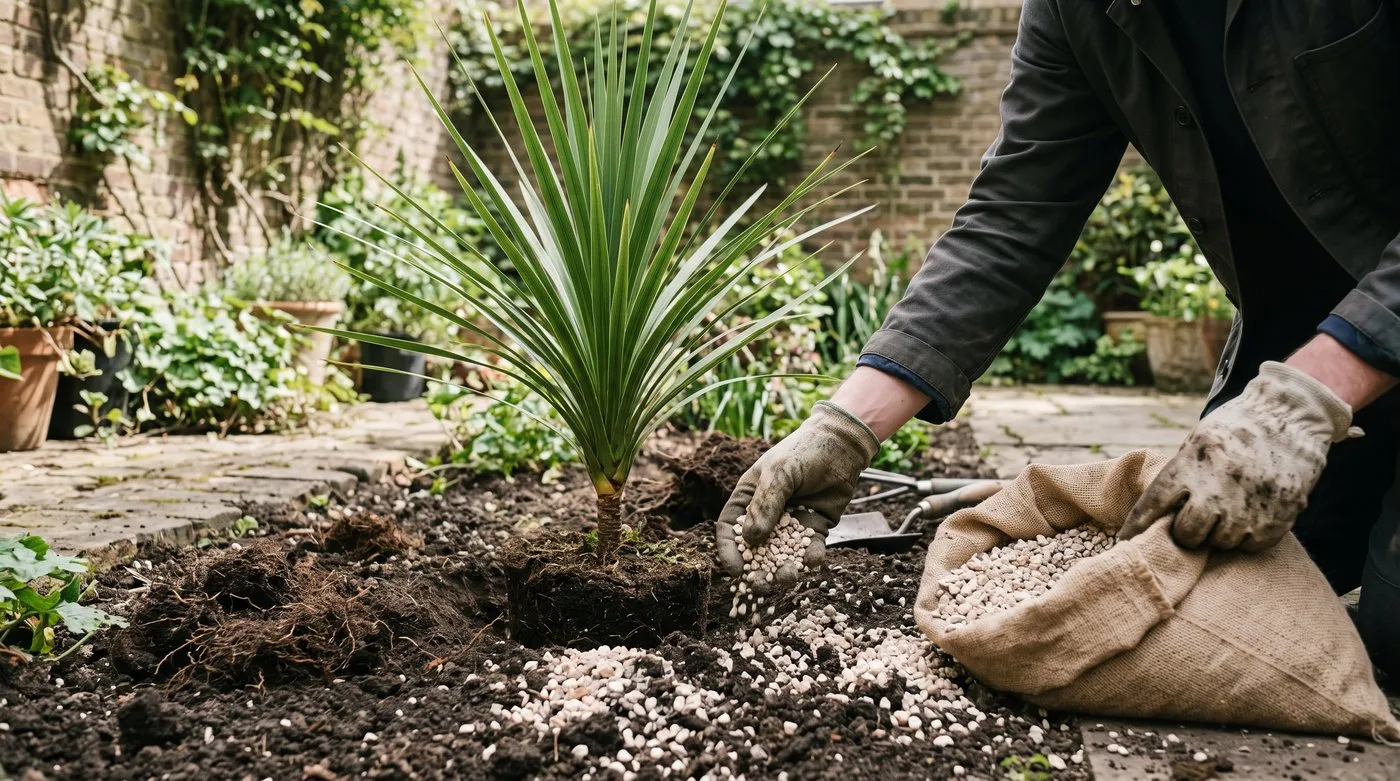
Mixing grit into the soil you put back helps winter rain drain away from the roots.
- Choose a young plant. Smaller plants settle in faster than big specimens.
- Dig a hole twice as wide as the pot and the same depth.
- On heavy soil, mix plenty of horticultural grit into the soil you put back.
- Set the plant so the top of the root ball sits level with the ground, or slightly higher on clay.
- Backfill, firm gently and water well.
- Mulch around the base, keeping the mulch off the trunk.
Water regularly through the first summer in dry spells. In a windy spot, a short stake helps until the roots take hold.
Growing cordyline in a pot
A pot is the best way to grow coloured cordylines, or any cordyline in a cold garden. You can move it under cover when hard frost is forecast.
- Pot: start with one a little bigger than the root ball and move up a size every few years. Heavy pots stop tall plants blowing over.
- Compost: a loam-based compost such as John Innes No. 3, with some grit added for drainage.
- Watering: keep the compost just moist in summer. In winter water sparingly, only when it’s nearly dry.
- Feeding: a balanced liquid feed every few weeks from spring to late summer.
- Winter: move pots into a cold greenhouse, porch or against a sheltered house wall in hard frost. Raise them on pot feet so water drains away.

Coloured cordylines like ‘Red Star’ are happiest in pots you can move to shelter in winter.
How to protect cordyline in winter
Cordylines are most at risk from wet crowns and hard frost. A little preparation in November saves a lot of heartache in March. Do it on a dry day.

Tying the leaves up keeps rain out of the crown, and a fleece wrap adds frost protection.
- Tie the leaves up. Gather the leaves gently upwards over the centre and tie them loosely with soft twine. This keeps rain and snow out of the crown, where the plant grows from.
- Wrap the crown. In cold areas, wrap the tied leaves and top of the trunk with a couple of layers of horticultural fleece.
- Mulch the roots. Spread a thick layer of bark or leaf mould over the root area.
- Unwrap in spring. Take everything off in March, or once hard frosts are over, so the plant doesn’t stay damp.
Young plants and coloured types need this most. Big, well-established green cordylines in mild gardens often manage without. For more ways to beat the cold, see our guides to protecting plants from frost and overwintering plants.
What to do with a frost-damaged cordyline
After a hard winter, a cordyline may look dead. Don’t dig it up straight away.
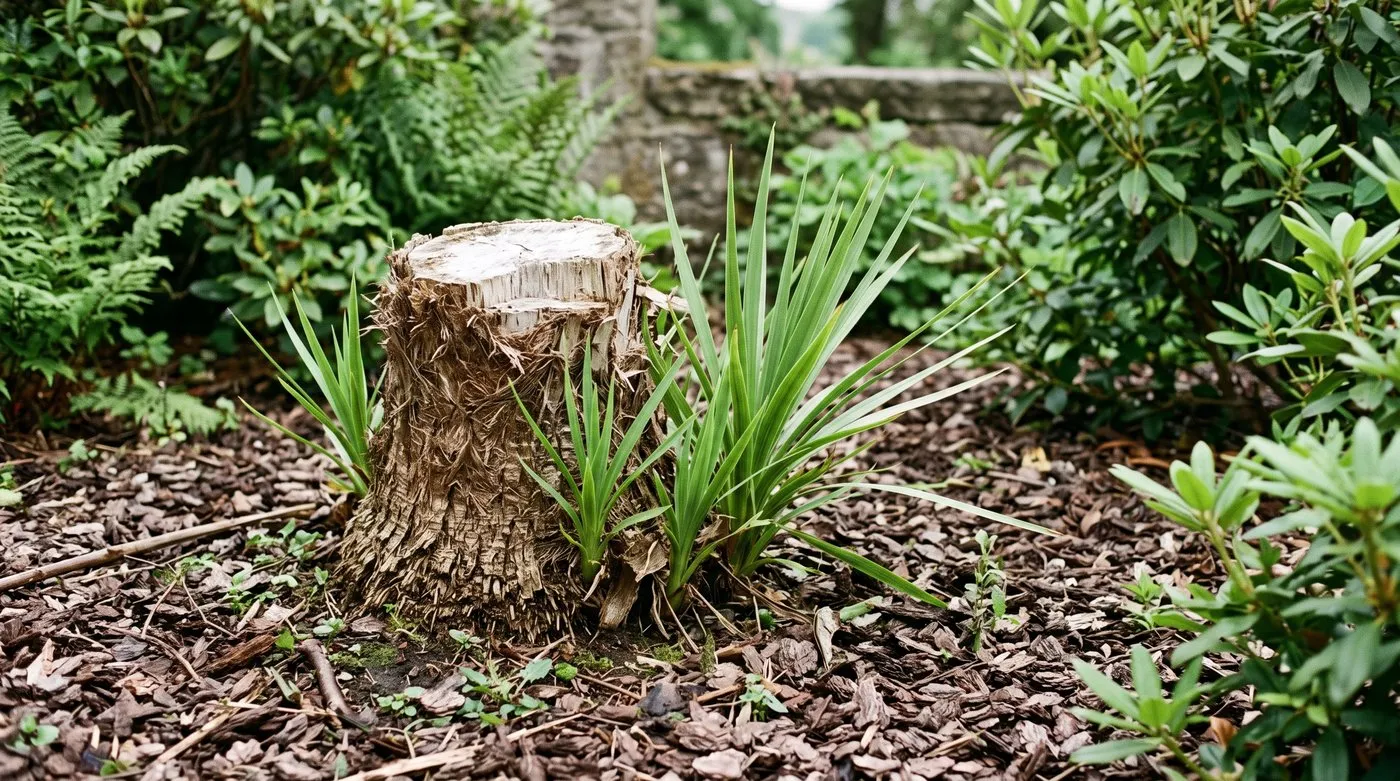
A frosted cordyline that looks dead often sends up new shoots like these by early summer.
- Mushy, collapsing top: the frost has damaged the crown or trunk. Scratch the bark with a fingernail, working down, until you find green, firm tissue. Cut just above that point.
- Whole trunk soft: cut it off near the ground in spring.
- Then wait: new shoots often appear from the base or lower trunk by early summer. A new stem soon fills out.
- Brown leaves only: if the crown is still firm and the centre leaves are green, trim the brown leaves and let it carry on.
Give it until midsummer before deciding it’s gone for good.
Cordyline flowers and branching
Older cordylines flower in early summer, sending up big sprays of small, creamy, sweetly scented flowers. Bees love them. Berries sometimes follow.
After flowering, the stem usually branches just below the old flower head. Over the years this gives the classic multi-headed tree shape. You can cut off the faded flower stalk once it turns brown, or leave it if you like the look.

Mature cordylines carry big sprays of small, scented flowers that bees love.
Common cordyline problems
- Brown lower leaves: normal ageing. Cut them off close to the trunk once fully brown.
- Brown leaf tips: usually cold wind, frost or a dry spell. Trim them if they bother you.
- Soft, rotting base or loose trunk: waterlogged soil. Improve drainage or move the plant to a pot.
- Sticky leaves and black sooty mould: aphids or mealybugs feeding on the leaves. Wipe or hose the leaves with plain water and see our guide to dealing with aphids.
Gardener’s tip: The leaf tips are sharp. Plant cordylines a little back from paths and seats, especially at a child’s eye height.
Common mistakes with cordylines
- Planting a coloured type in a cold, exposed spot. Choose the green species, or grow coloured ones in pots.
- Poor drainage. Wet winter roots kill them. Add grit or plant on a mound.
- Autumn planting inland. Young plants go into winter unrooted. Plant in spring.
- Wrapping too early or leaving it on too long. Wrap in late autumn and unwrap in spring, or the plant stays damp.
- Giving up on a frosted plant. Wait until summer for new shoots before digging it out.
Cordyline calendar
| Month | What to do |
|---|---|
| March | Unwrap once hard frosts are over. Cut off brown leaves |
| April to May | Plant new cordylines. Feed pots. Cut back frost damage to living tissue |
| June to August | Water in dry spells. Older plants may flower |
| September | Last feed for pots. Water less |
| October | Mulch the roots. Plan winter protection |
| November | Tie leaves up and wrap with fleece in cold areas. Move tender pots under cover |
| December to February | Check ties and wrapping after storms. Water pots sparingly |
Frequently asked questions
Is cordyline hardy in the UK?
The plain green Cordyline australis is hardy in mild and coastal areas. Elsewhere a hard winter can damage or kill the top growth, especially on young plants. Coloured and variegated types are more tender, so protect them or grow them in pots.
Why has my cordyline trunk gone soft and collapsed?
Usually because hard frost has damaged the trunk or crown. Scratch the stem to find green, living tissue and cut back to just above it. If the whole trunk is soft, cut it near the ground and wait. New shoots often appear from the base by early summer.
Can I grow cordyline in a pot?
Yes, cordylines grow well in large pots. Use a loam-based compost such as John Innes No. 3 with some grit added. A pot lets you move tender coloured types into a porch or cold greenhouse in hard weather.
How do I protect cordyline in winter?
Tie the leaves gently upwards over the crown in November. Wrap the bundle and the top of the trunk with horticultural fleece, and mulch the roots. Remove the wrapping in March once hard frosts are over.
Why is my cordyline flowering?
Flowering is a sign of a mature, happy plant. Older cordylines send up big sprays of small, scented creamy flowers in early summer. The stem usually branches below the old flower head afterwards, giving several heads of leaves.
Should I remove brown leaves from my cordyline?
Yes, once they’re fully brown. Lower leaves die off naturally as the plant grows. Cut them close to the trunk with secateurs rather than pulling, which can tear the stem.
Planning a whole exotic corner? Our guide to hardy exotic plants has more tough, tropical-looking partners, and jungle garden design shows how to put them together. There’s more in the plants hub.
Our team produces practical UK gardening guidance from source research, contributor records and established horticultural practice. Editorial standards are overseen by Matt W.


