Key takeaways
- Hardier types such as H. densiflorum and H. coccineum can stay outside in sheltered, well-drained gardens
- Plant rhizomes in spring, flat and just below the surface, about 40cm apart
- Cover crowns with a thick, dry mulch and fleece in late autumn, once frost blackens the leaves
- Tender H. gardnerianum (Kahili ginger) needs a pot moved under cover or lifting before frost
- Divide crowded clumps in spring, keeping a growing bud on every piece
Hedychium, the ginger lily, is a lush, leafy perennial that sends up scented spikes of orange, red or yellow flowers in late summer and autumn. Plant the rhizomes in spring in a warm, sheltered spot with rich, moist soil. Choose a hardier type if you want it to stay outside, and give it a thick, dry mulch in winter.
It’s a star of exotic borders, flowering just as much of the garden starts to fade. This is the ornamental ginger lily. If you’re after the edible root, see how to grow ginger at home instead.
Which ginger lilies grow well in UK gardens?
The hardier ginger lilies can stay in the ground in sheltered gardens, while tender ones need a frost-free home in winter. Check which type you have before you plant, as it sets your winter plan.
- Hedychium densiflorum is one of the hardiest, with dense spikes of orange or yellow flowers. ‘Assam Orange’ and ‘Stephen’ are well-known forms.
- Hedychium coccineum is taller, with spikes of red, orange or salmon flowers and long stamens. ‘Tara’ is a popular orange form.
- Hedychium gardnerianum, the Kahili ginger, has big lemon-yellow spikes with red stamens and a lovely scent. It is tender, so grow it in a pot.
Hybrids such as ‘C.P. Raffill’ are also sold. Check the label or the supplier’s notes for how hardy each one is.
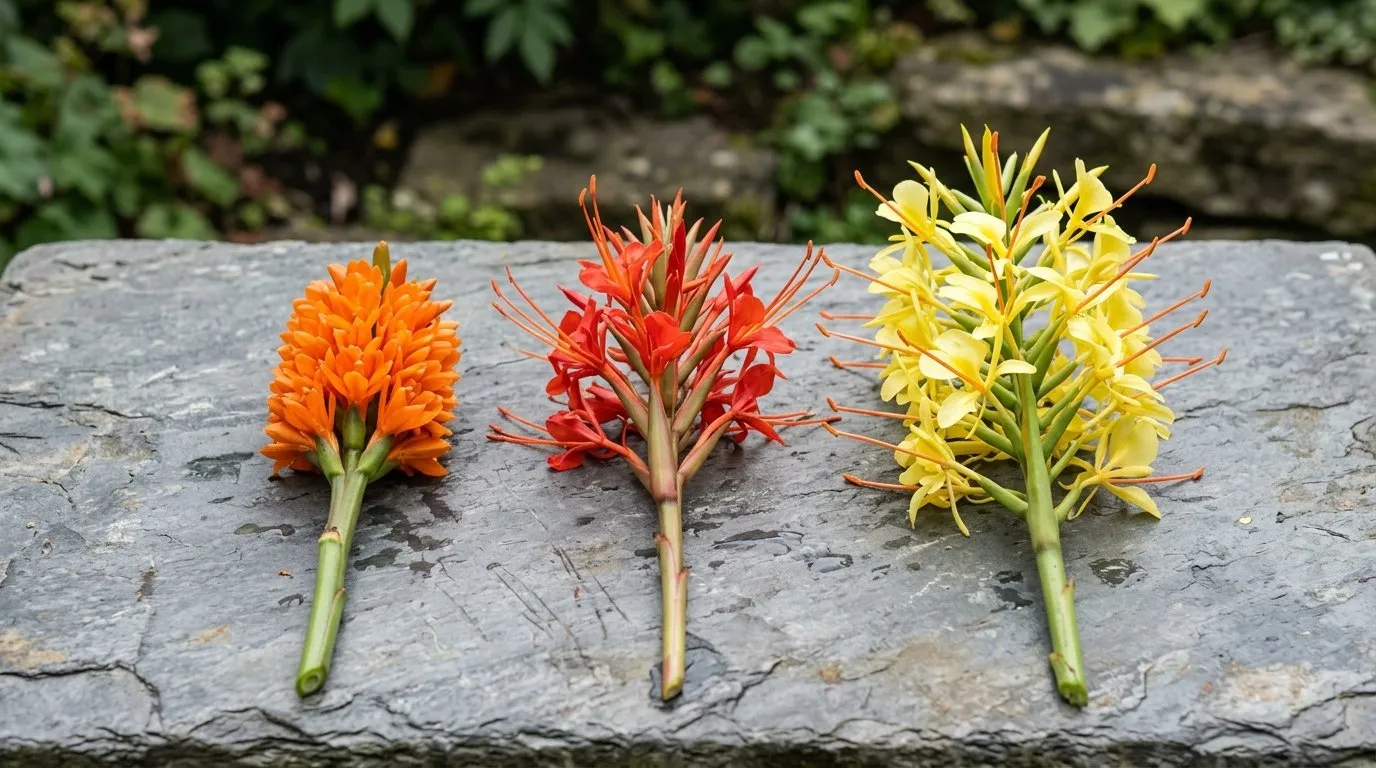
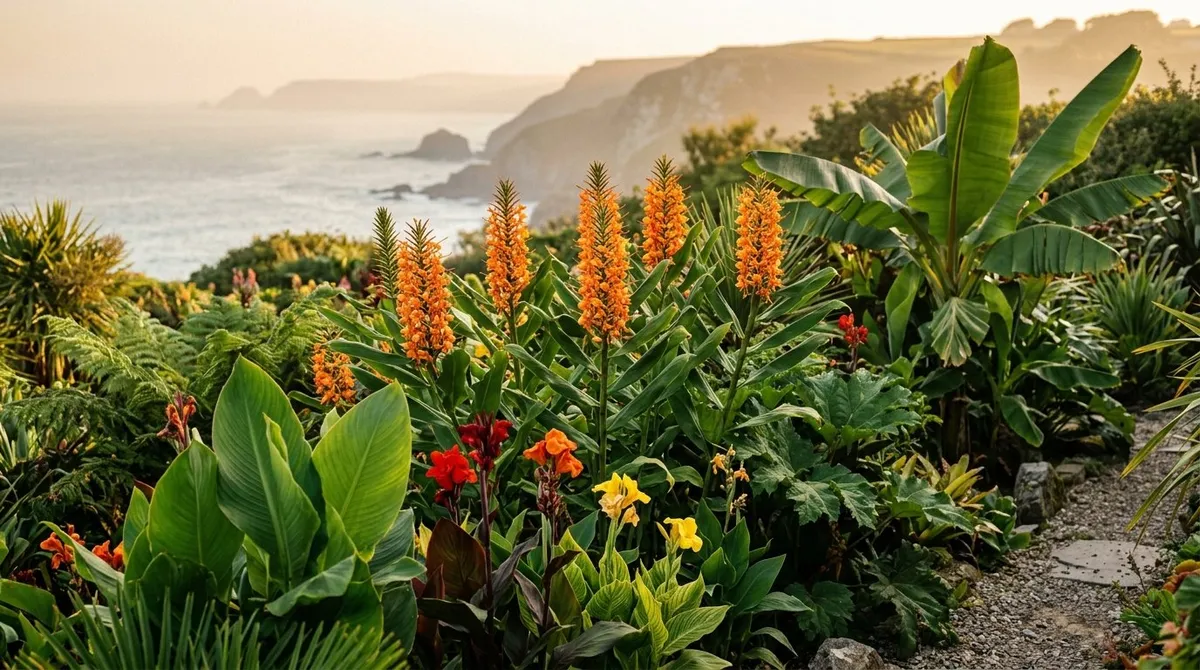
The hardier orange and red types on the left, and the tender, yellow Kahili ginger on the right.
Where to plant ginger lilies
Ginger lilies want sun, shelter and rich soil that stays moist in summer but drains in winter. A south- or west-facing spot by a warm wall or fence is ideal. The extra warmth helps the rhizomes ripen before winter.
Dig in plenty of well-rotted manure or garden compost before planting. The richer the soil, the bigger the clump. Avoid frost pockets and windy gaps, as wind shreds the broad leaves and flattens tall stems.
Ginger lilies look their best among other big-leaved plants. The guide to hardy exotic plants for UK gardens has ideas for a jungle-style border.
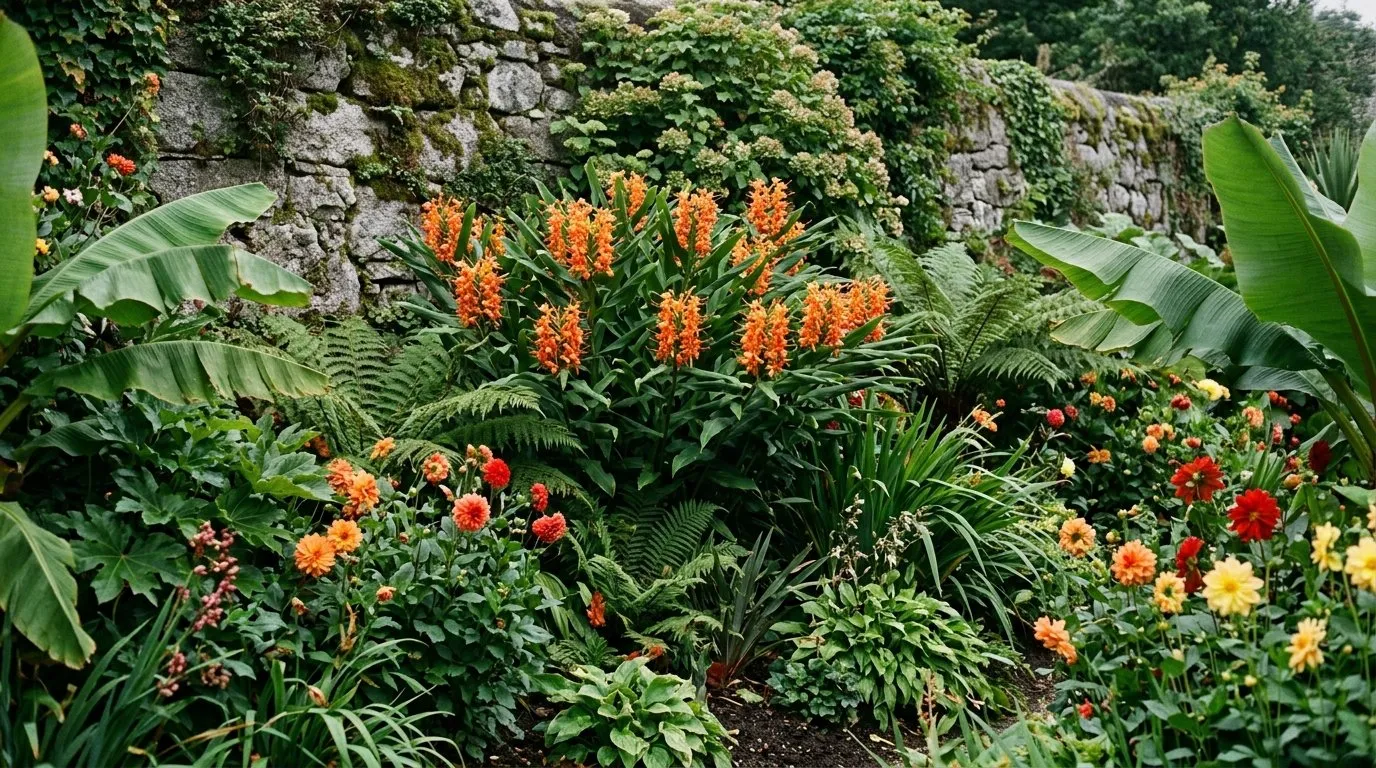
A warm wall and plenty of neighbours for shelter help ginger lilies reach full height by late summer.
How to plant hedychium rhizomes
Plant in spring once the soil has warmed, usually from mid-April to May. Cold, wet ground in early spring is the main cause of rot.
- If the rhizome arrived dry and shrivelled, soak it in tepid water for an hour.
- Dig a wide, shallow hole. Mix grit into the base on heavy soil.
- Lay the rhizome flat, with buds facing up, just below the surface.
- Cover with a few centimetres of soil and firm gently.
- Space rhizomes about 40cm apart so each clump can spread.
- Water in well and add a light compost mulch, keeping the buds clear.
Keep spring planting shallow. Save the deep covering for the winter mulch.

Shallow is right for spring planting. The rhizome only needs a few centimetres of soil over it.
Watering and feeding ginger lilies in summer
Ginger lilies are thirsty and hungry in summer. Water deeply in dry spells, soaking the roots rather than splashing the leaves. A clump that dries out in July gives short spikes later.
From early summer, give a high-potash feed, such as tomato feed, every week or two. Too much nitrogen gives lots of leaf and fewer flowers. Stop feeding in early autumn so the rhizomes firm up before winter.
A spring mulch of compost holds moisture in. The guide to what mulch is and how to use it explains the options.
How to protect ginger lilies in winter
A thick, dry mulch is what gets in-ground ginger lilies through a UK winter. Wet, cold soil kills more of them than frost alone.
- Wait until the first frosts blacken the leaves, usually in November.
- Cut the stems down to about 10cm.
- Push a cane in beside the crown so you know where it is in spring.
- Pile dry bark, straw or bracken about 15cm deep over the crown.
- Peg horticultural fleece over the mound to keep the rain off.
In colder parts of the UK, or on heavy clay, lifting or growing in pots is safer. Uncover the crown gradually in spring as new shoots push through, keeping fleece handy for late frosts. The guide to overwintering tender plants covers the same steps for cannas, dahlias and bananas.

A thick, dry mulch under fleece keeps frost and rain off the crown. Bricks hold it in place in winter winds.
Lifting and storing ginger lily rhizomes
Lift tender types, or any ginger lily in a cold garden, before the first hard frost in autumn. It’s much like storing dahlia tubers.
Cut the stems down and ease the clump out with a fork. Shake off loose soil, but don’t wash the rhizomes. Pack them in a crate of barely moist compost or sand and keep it somewhere cool and frost-free, such as a shed or garage. Check them monthly and throw out any soft pieces.
Pot them up in early spring under glass to get them going, then plant out after the last frost. The guide to growing dahlias covers the same lift-and-store routine.
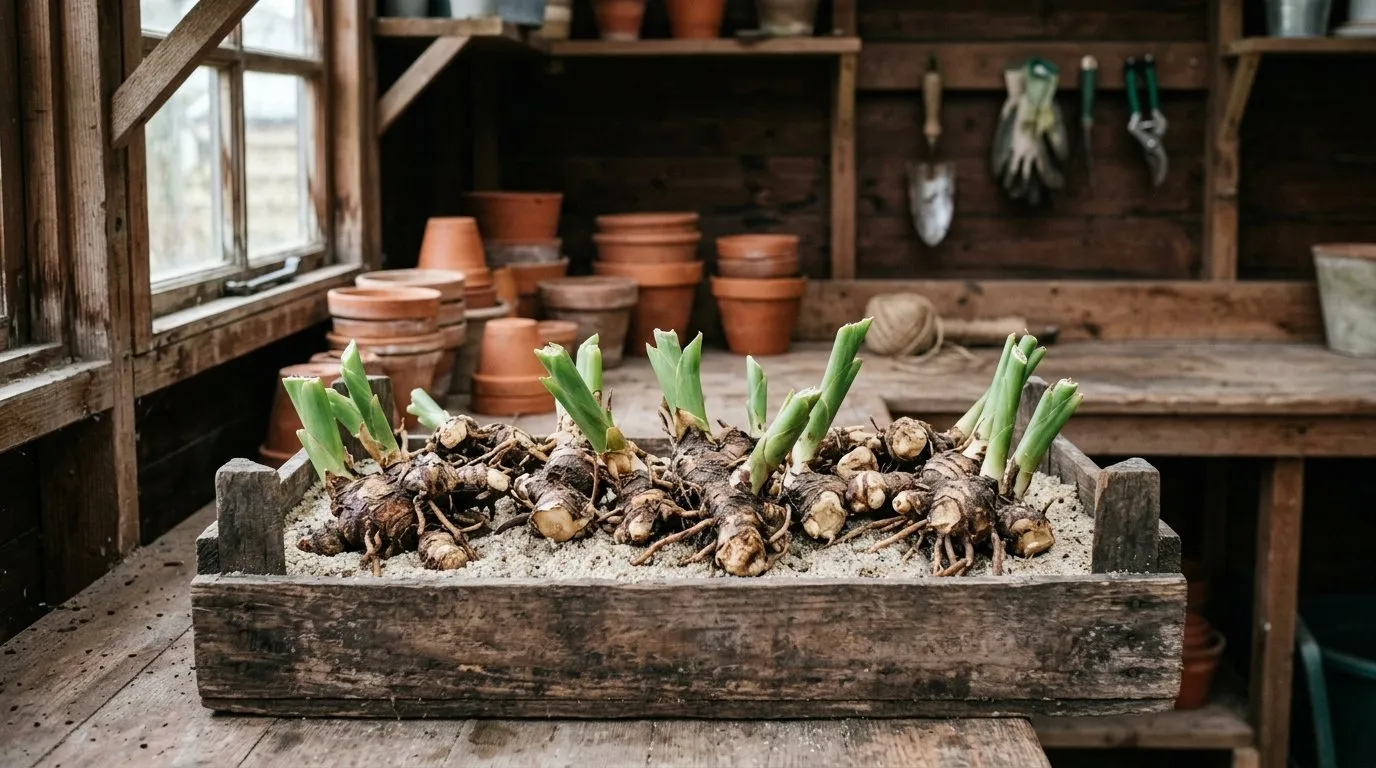
Stored rhizomes waking up in spring. Once shoots appear, pot them up somewhere bright and frost-free.
Growing ginger lilies in pots
A large pot is the easiest home for tender Kahili ginger, and handy on a patio or roof terrace. Use a pot at least 45cm across with good drainage holes. Fill it with a soil-based compost such as John Innes No 3 with some grit mixed in. The weight helps keep tall stems steady.
Plant the rhizome just below the surface. Water freely in summer and feed every week or two. Move the pot into a frost-free greenhouse, porch or garage in autumn before frosts. Keep the compost almost dry until spring.

A potted Kahili ginger brings late-summer scent to a terrace, then moves under cover for winter.
How to divide ginger lilies
Divide clumps every few years once they get crowded and flower less. Spring, as new shoots appear, is the time.
Lift the whole clump and wash off enough soil to see the rhizomes. Cut it into pieces with a clean knife, making sure each piece has at least one plump bud. Throw away old, woody pieces from the centre. Replant the young pieces about 40cm apart, or pot them up to grow on.
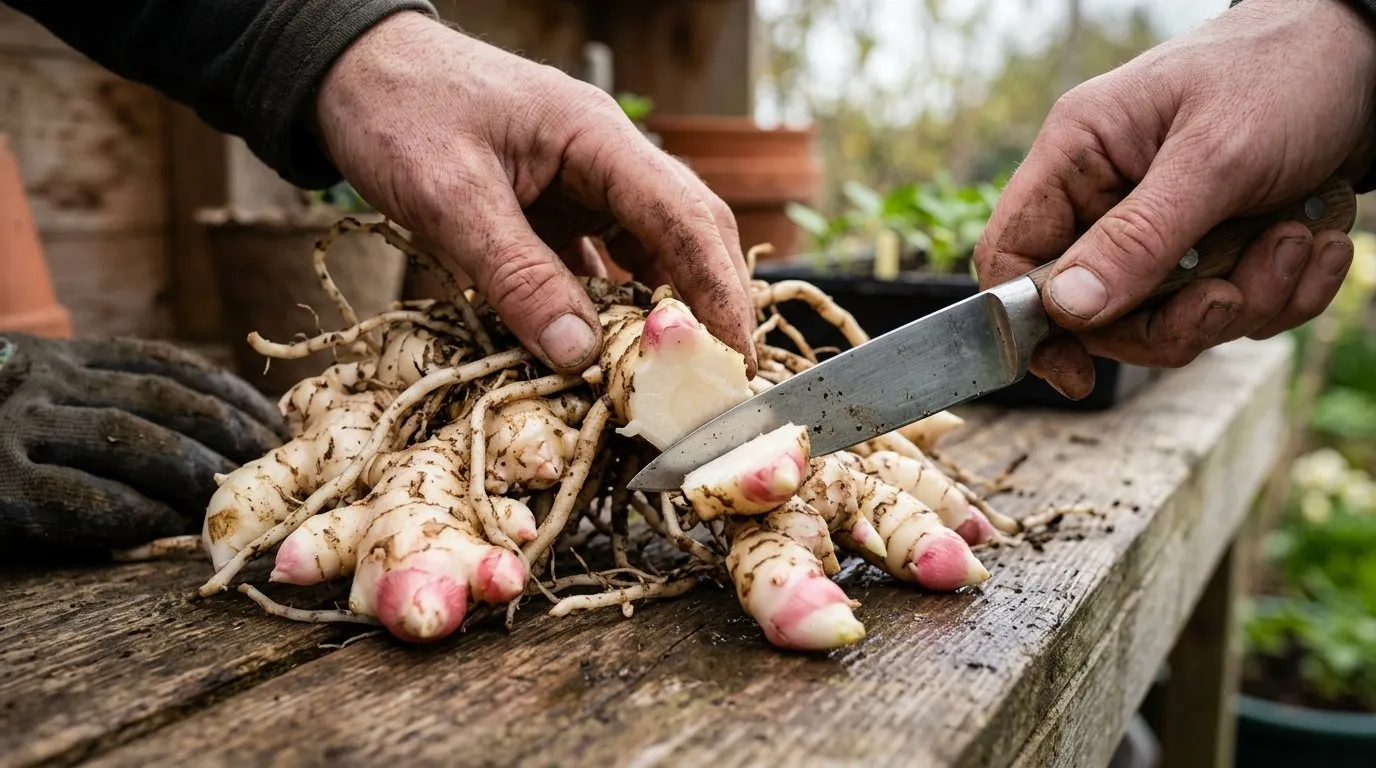
Each piece needs at least one fat bud. Young, outer sections grow away fastest.
Month-by-month ginger lily calendar
| Month | What to do |
|---|---|
| March | Pot up stored rhizomes under glass to start them off |
| April | Divide crowded clumps. Start uncovering mulched crowns |
| May | Plant new rhizomes and stored plants after the last frost |
| June | Start feeding. Water deeply in dry spells |
| July to August | Keep watering and feeding as spikes form |
| September | Main flowering. Stop feeding. Remove faded spikes |
| October | Lift tender types or move pots under cover before frost |
| November | Cut down frosted stems. Mulch crowns and cover with fleece |
| December to February | Keep mulch dry. Check stored rhizomes monthly |
Common mistakes with ginger lilies
Wet winter soil. A rhizome sitting in cold, wet clay rots however deep the mulch. Plant in well-drained ground, add grit, or grow in a raised bed or pot.
A soggy mulch. Compost or wet leaves soak up rain and freeze into a cold, wet cap. Use dry straw, bark or bracken, and keep fleece over the top.
Too much nitrogen. Rich, leafy feeds give lots of leaf and few flowers. Switch to a high-potash feed from early summer.
Losing the crown. The dormant rhizome vanishes under mulch, and it’s easy to spear it with a fork in spring. A cane beside it saves the clump.
Gardener’s tip: Kahili ginger has become an invasive weed in some warm parts of the world. Never dump unwanted rhizomes in the countryside or near water. Put them in your green waste bin instead.
Ginger lilies team well with cannas, bananas and dahlias, which enjoy the same rich, sheltered spot. The guide to growing cannas is a good place to start. For a very different tender exotic, the flame lily is a climber grown under glass.
Frequently asked questions
Are ginger lilies hardy in the UK?
Some are, in sheltered gardens with well-drained soil. Hedychium densiflorum and H. coccineum often come through winter in the ground under a thick, dry mulch, especially in milder and coastal areas. Kahili ginger, H. gardnerianum, is tender and needs a frost-free place in winter.
How deep should I plant hedychium rhizomes?
Plant them flat, just below the soil surface. Cover the rhizome with a few centimetres of soil, with any buds facing up, and space them about 40cm apart. Deep planting in cold spring soil can make them rot before they shoot.
When do ginger lilies flower?
Most flower from late summer into autumn in the UK. The exact timing depends on the type and the summer. A cool, dull year pushes flowering later. A warm, sheltered spot and steady watering and feeding bring the spikes on sooner.
How much winter mulch does a ginger lily need?
A thick layer, about 15cm, of dry bark, straw or bracken. Spread it over the crown once frost has blackened the leaves and you’ve cut the stems down. Peg fleece over the top to keep rain off. A wet mulch can rot the rhizome.
Should I lift Hedychium gardnerianum for winter?
Yes, in most UK gardens. Kahili ginger is tender. Lift the rhizomes in autumn before frost and store them in barely moist compost somewhere frost-free. Growing it in a large pot that you move under cover is easier.
Why is my ginger lily not flowering?
Usually too little sun, warmth or food. Ginger lilies need a warm, sheltered spot and rich, moist soil to make flowering stems. Young plants and fresh divisions may skip a year. Old, crowded clumps flower less too, so divide them in spring.
How do I propagate ginger lilies?
Divide the rhizomes in spring as growth starts. Lift the clump and cut it into pieces, each with at least one plump growing bud. Replant them about 40cm apart or pot them up. Most pieces flower within a season or two.
Now your ginger lily has a plan for winter, browse more exotic and border plant guides or read about hardy bananas to finish the jungle look.
Our team produces practical UK gardening guidance from source research, contributor records and established horticultural practice. Editorial standards are overseen by Matt W.