Key takeaways
- Musa basjoo is the hardy banana that can stay in the ground through most UK winters
- Wrap the stem in a dry, straw-packed cage with a rain cap after the first frost
- Red-leaved Ensete is tender, so lift it or move its pot somewhere frost-free each autumn
- Plant in full sun with shelter from wind, or the leaves shred into ribbons
- Feed weekly and water well from May to August for big leaves
- Pot up rooted suckers in late spring to make new plants
Yes, you can grow a banana outdoors in the UK, and it’s one of the quickest ways to make a garden feel tropical. The trick is choosing the right one. Musa basjoo, the Japanese banana, stays in the ground through most British winters with a little protection.
Plant a tender banana and leave it out, though, and it won’t survive the first proper frost. This guide covers which banana to buy, where to plant it, how to feed it for huge leaves and how to get it through winter.
Which banana is hardy in the UK?
Musa basjoo is the banana to grow outside in most of the UK. Its roots are hardy, and with its stem wrapped it comes back each spring. Most other bananas sold for gardens are tender.
Ensete ventricosum ‘Maurelii’, the red Abyssinian banana, has gorgeous burgundy-flushed leaves. It’s tender, so it has to come in every autumn. Musa ‘Dwarf Cavendish’ is the houseplant banana, best kept indoors all year. Musa sikkimensis is another tougher type, often treated like basjoo.
| Banana | Leaves | Hardiness | Winter care |
|---|---|---|---|
| Musa basjoo | Plain bright green | Hardy roots | Wrap the stem, mulch the roots |
| Musa sikkimensis | Green, sometimes red-flushed | Fairly hardy | Wrap the stem, mulch the roots |
| Ensete ventricosum ‘Maurelii’ | Red and green | Tender | Lift or move pot somewhere frost-free |
| Musa ‘Dwarf Cavendish’ | Glossy green | Tender | Keep indoors all year |
Check the label before you buy and treat each one the right way: wrap basjoo, lift Ensete.

Red Ensete is the showiest banana, but it’s tender. Growing it in a big pot makes moving it under cover easy.
Where to plant a banana
Bananas need full sun and shelter from wind. Sun drives fast growth, and shelter keeps those huge leaves whole.
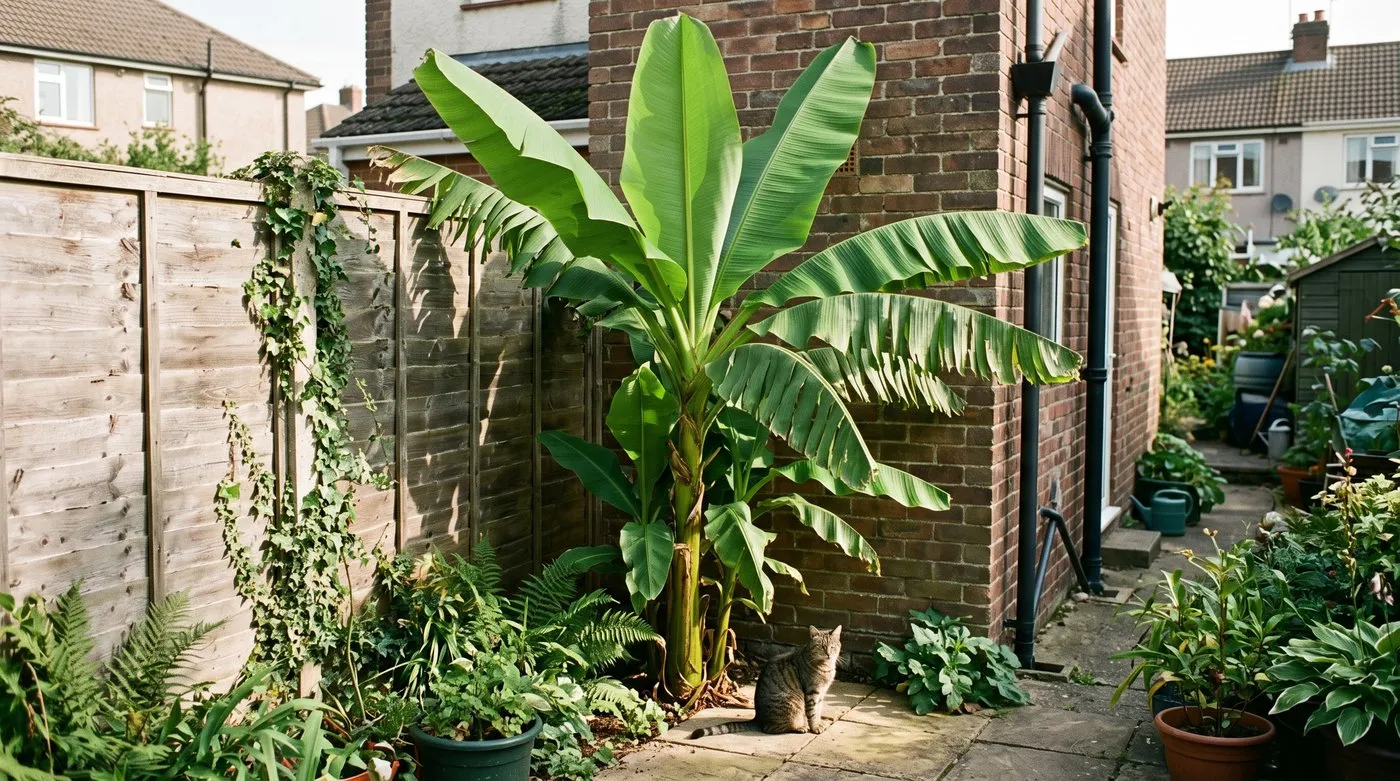
Wind splits banana leaves along their veins. A sheltered corner keeps most of them whole.
Pick a south or west-facing corner backed by a fence, wall, hedge or the house. A still sun trap is perfect. Avoid gaps between buildings, which funnel wind, and exposed coastal or hilltop spots. In a windy garden, the leaves soon split into ribbons along their veins. It doesn’t hurt the plant, but it spoils the tropical look.
The soil should be rich and moist but not waterlogged. Dig in plenty of compost or well-rotted manure before planting. Plant in late spring, once frosts have passed.
Feeding and watering for big leaves
Bananas are hungry, thirsty plants. Big leaves come from rich soil, regular feeding and plenty of water.
- Feed weekly with a high-nitrogen liquid feed from May to August.
- Water generously in dry spells. In hot weather, a big plant needs a good soaking most days.
- Mulch the root area with a thick layer of compost or manure each spring to hold in moisture.
- Stop feeding in early September so growth firms up before frost.
Growth is slow in cool spring weather. Once summer warms up, a happy basjoo unfurls new leaves quickly and can put on a couple of metres in a good year.

Regular feeding and watering keep fresh leaves coming through the summer. A hungry, dry plant soon stalls.
Gardener’s tip: Soil does most of the work. A banana on poor, dry ground sulks all summer. The same plant in rich, well-watered soil can be several times the size.
How to overwinter Musa basjoo outside
The roots of Musa basjoo are hardy, but the leaves die at the first frost and a bare stem can die back too. If you protect the stem, the plant regrows from a taller start in spring. Unwrapped stems are often killed to the ground and have to start again from the roots.
Wrap your banana after the first frost blackens the leaves, usually in late October or November:
- Cut off the leaves. Remove the blackened leaves and leave the upright stem standing. You can shorten it to about 1-1.5m to make wrapping easier.
- Build a cage. Push three or four canes into the ground round the stem. Wrap chicken wire round them to make a cylinder a bit wider than the stem.
- Pack with dry straw. Fill the cage firmly with dry straw or bracken. Dry insulation is what keeps the cold out.
- Add a rain cap. Cover the top with a tile, an upturned pot or waterproof sheet. Wet straw rots the stem.
- Mulch the roots. Spread a thick layer of mulch over the root area. In cold or windy gardens, wrap the cage in fleece too.
Unwrap gradually in April, opening it on mild days. Keep the materials handy in case a late frost is forecast. The guide to overwintering plants covers other tender plants you can protect at the same time.

A chicken-wire cage packed with dry straw, with a cap on top to keep the rain out.
Wrapped versus unwrapped bananas in spring
The difference shows in spring. A wrapped plant keeps its stem and gets going quickly. An unwrapped stem is often killed back to the ground, so the plant starts again from the roots and ends up shorter that summer.

The wrapped plant (left) is already growing away. The unwrapped one (right) collapsed and must start again from the roots.
How to overwinter Ensete ventricosum
Ensete is tender and frost damages it, so there’s no wrapping it in place. It has to come under cover every autumn.
Lift it, or move its pot, before the first frost, usually in October. Cut back the leaves to reduce bulk. Move it into a frost-free place: a shed, garage, porch or cool conservatory all work, as long as it doesn’t freeze.
Keep it nearly dry over winter. Water only enough to stop the roots shrivelling. Cold, wet compost rots the base, which is how stored Ensete is usually lost. Start it back into growth under cover in spring, harden it off and plant out after the last frost, in late May or June.
How to propagate bananas from suckers
Musa basjoo makes its own new plants. Mature clumps send up suckers, or pups, round the base. Each one can become a new plant.
In late spring, once growth has started, scrape the soil away from a sucker that has its own roots. Cut it cleanly from the parent with a sharp spade, keeping as much root as possible. Pot it into rich compost or plant it straight into a prepared spot. Water well until it settles.

Lift a sucker with plenty of roots attached and it soon grows into a new plant.
Banana care calendar
| Month | What to do |
|---|---|
| January to February | Leave wraps on. Check caps still shed rain. Keep stored Ensete frost-free and nearly dry |
| March | Start Ensete back into growth under cover. Keep basjoo wrapped |
| April | Unwrap basjoo gradually on mild days. Mulch the roots |
| May | Start weekly feeds on basjoo. Plant out Ensete late in the month or in June, once frosts are over |
| June | Feed weekly and water well. Pot up rooted suckers |
| July to August | Peak growth. Keep feeding and watering |
| September | Stop feeding. Gather straw and chicken wire for winter |
| October | Lift Ensete before the first frost. Cut basjoo leaves back once frosted |
| November to December | Wrap basjoo stems. Cap against rain. Add fleece in cold gardens |
Common mistakes with bananas
- Treating a tender banana as hardy. Ensete and Cavendish die if left out over winter. Check the label.
- Using wet straw or no rain cap. Soggy insulation rots the stem. Keep it dry.
- Starving the plant. A hungry, dry banana stays small. Feed weekly and water well in summer.
- Planting in a windy spot. Leaves shred within weeks. Choose a sheltered corner.
- Unwrapping too early. A sharp April frost can undo a whole winter’s work. Unwrap gradually.
Plants to grow with bananas
Bananas look best surrounded by other big-leaved plants. Cannas add hot colour at their feet, and colocasia brings more giant leaves. The scented ginger lily suits the same sheltered spot.
For more ideas, the guide to hardy exotic plants lists tough partners. To plan the whole look, read the guide to jungle garden design, or browse more in the plants section.
Frequently asked questions
Can you grow banana plants outdoors in the UK?
Yes, the hardy Japanese banana, Musa basjoo, survives outdoors in most UK gardens. Its roots are hardy, and a straw wrap protects the stem over winter. Tender bananas such as Ensete must come indoors before the first frost.
How cold can Musa basjoo survive?
Its roots survive most UK winters in the ground. The leaves are killed by the first frost and a bare stem may die back too. Wrapping the stem and mulching the roots gives the best chance of a strong start in spring.
How do you overwinter a banana plant outside?
Wrap the stem in a straw-filled cage after the first frost. Cut off the blackened leaves, put canes and chicken wire round the stem, pack it with dry straw and add a cap to keep rain out. Unwrap gradually in April.
Do banana plants fruit in the UK?
Not in any useful way outdoors. Musa basjoo sometimes flowers after a long, warm summer, but any fruits are small, seedy and not worth eating. Grow it for its huge leaves.
Is Ensete ventricosum hardy in the UK?
No, Ensete is tender and is damaged by frost. Lift it, or move its pot, into a frost-free shed, garage or conservatory before the first frost. Keep it nearly dry over winter and plant it out again in late May or June.
How fast do banana plants grow in the UK?
Musa basjoo grows fast once summer warms up. A well-fed plant in a sheltered spot can put on a couple of metres in a good season. Growth is slow in cool spring weather, then speeds up in July and August.
Why are my banana leaves tearing and shredding?
Wind is the cause. The big, thin leaves split along their veins in breezy spots. It doesn’t harm the plant, but it spoils the look. Plant in a sheltered corner backed by a fence, wall or hedge.
How do you propagate banana plants?
Detach rooted suckers from the base in late spring. Scrape the soil away, find a sucker with its own roots and cut it free with a sharp spade. Pot it up or plant it straight out.
Our team produces practical UK gardening guidance from source research, contributor records and established horticultural practice. Editorial standards are overseen by Matt W.