Key takeaways
- Most colocasia are tender; 'Pink China' is the hardiest and the only one worth leaving in the ground
- Colocasia leaves hang down, while alocasia leaves point up, which is the quickest way to tell them apart
- Start tubers indoors in March at 18-21°C and plant out after the last frost in late May or June
- They love water, so a pond edge, bog bed or pot standing in a saucer of water suits them
- Feed weekly in summer and shelter them from wind, which shreds the big leaves
- Lift after the first frost, dry for a few days and store in barely damp compost somewhere frost-free
Colocasia, or elephant ears, give a UK garden the biggest leaves you can grow from a single tuber. Their huge, heart-shaped leaves can turn a sheltered corner tropical by August. The catch is they come from warm, wet parts of Asia, so they need summer warmth, lots of water and a frost-free winter.
Get that rhythm right and they’re surprisingly easy. This guide covers choosing the right plant, where to grow it, starting tubers indoors, feeding and the autumn lift-and-store routine.
Colocasia or alocasia: which elephant ear is which?
Colocasia leaves hang downwards, while alocasia leaves point up and out. Both are sold as elephant ears, but they like different conditions, so it’s worth checking which you have.
On a colocasia, the leaf stalk joins the leaf a little way in from the edge, which is why the leaves nod. Alocasia hold their leaves stiffly upright. Colocasia are the water lovers and cope with wet feet that would rot an alocasia.
| Colocasia | Alocasia | |
|---|---|---|
| Leaf direction | Hangs down | Points up and out |
| Water | Loves wet soil, even a pond edge | Moist but well-drained |
| Best grown | Outdoors in summer, lifted for winter | Mostly as a houseplant |
This guide is about Colocasia esculenta, also known as taro, and its garden varieties. If you want a smaller, colourful leaf for indoors, see the guide to growing caladium.
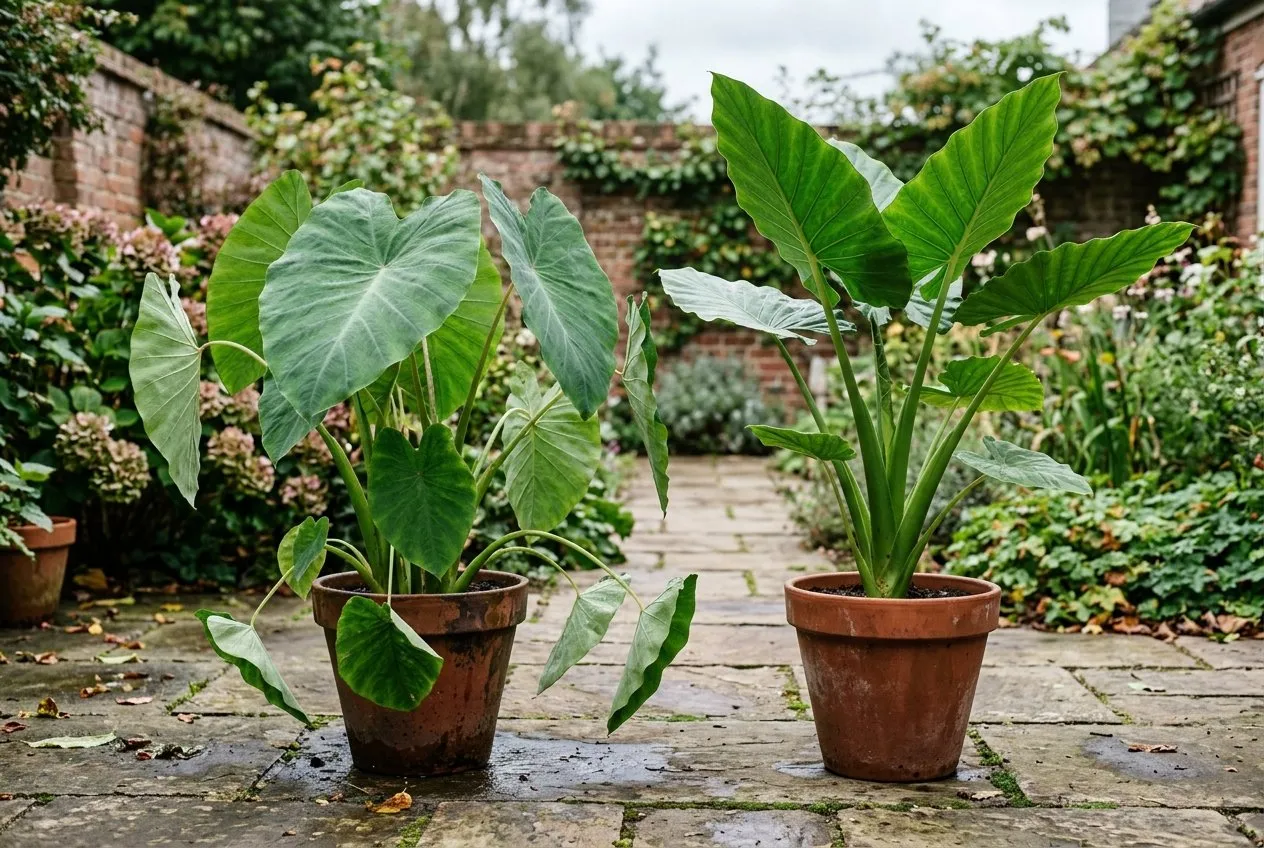
Leaf direction is the giveaway. The colocasia on the left hangs its leaves down, while the alocasia on the right points them up.
Are colocasia hardy in the UK?
No, most colocasia are tender. Frost kills the leaves, and a tuber left in cold, wet soil usually rots over winter. Treat it like a dahlia or canna: a summer plant that needs a frost-free winter.
‘Pink China’ is the hardiest and the one to try leaving in the ground, but only on free-draining soil under a thick mulch. Everything else, especially the dark-leaved varieties, should be lifted. A very mild coastal garden might get a tender one through a soft winter, but that’s a gamble.
Unlike the plants in the guide to hardy exotic plants, such as a hardy banana or phormium, colocasia need winter help every year.
Best colocasia varieties for UK gardens
For leaving outside, choose ‘Pink China’. For drama in a pot or bog bed, go for a dark variety such as ‘Black Magic’.
| Variety | Leaves | Best for |
|---|---|---|
| ’Pink China’ | Green on pink stems | The best chance of surviving outdoors |
| ’Black Magic’ | Matt purple-black | Dark drama, pots |
| ’Fontanesii’ | Green on dark stems | Pond edges |
| ’Mojito’ | Green, splashed dark purple | Smaller gardens and pots |
| Plain Colocasia esculenta | Large, mid-green | The biggest leaves |
Most reach about 1-1.5m in a good UK summer, smaller in a cool one. ‘Mojito’ stays more compact.
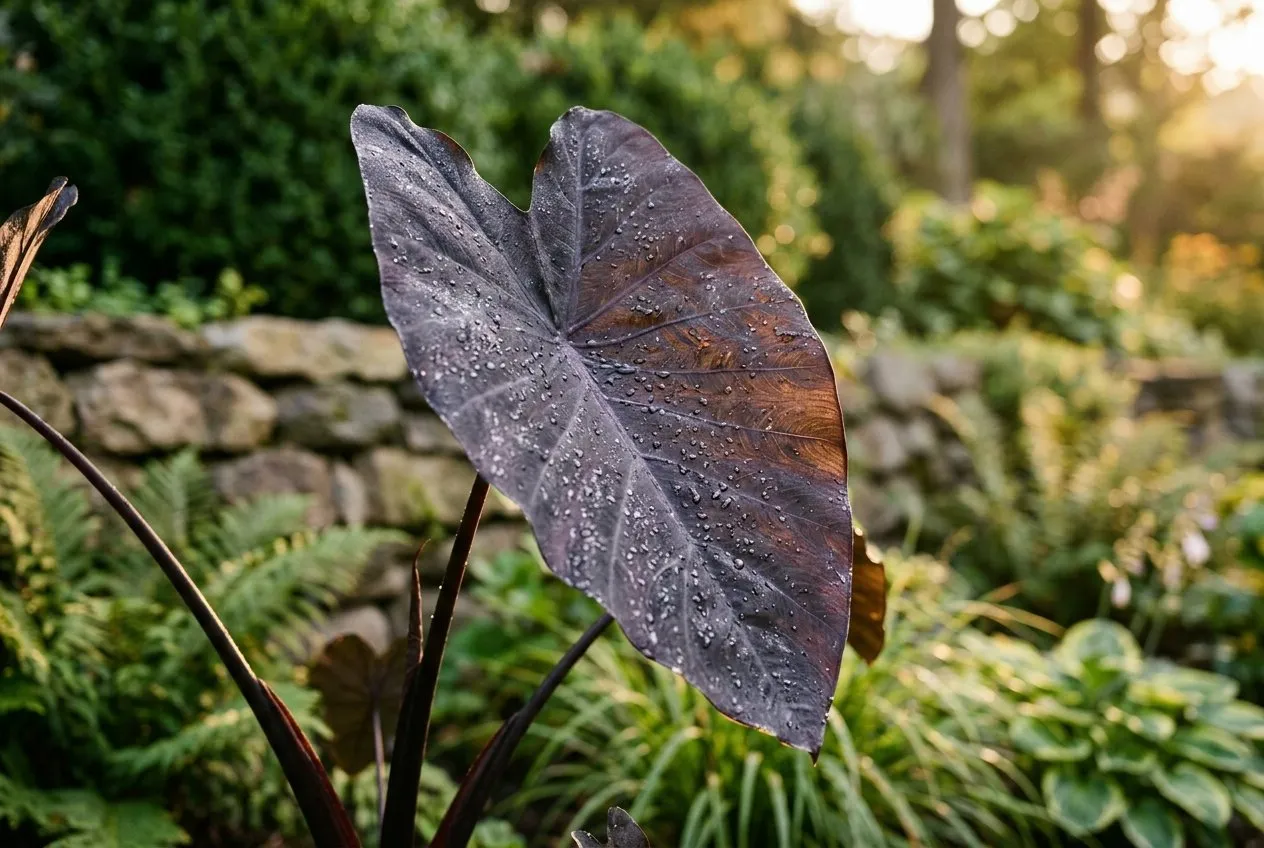
‘Black Magic’ really glows when low evening sun catches it from behind. It’s tender, so lift it every autumn.
Where to plant colocasia
Colocasia want constant moisture, rich soil, warmth and shelter from wind. Treat one like an ordinary border plant and it sulks. Treat it like a pond-edge plant and it grows fast.
The best spot is the edge of a pond or a permanently damp bed. If you have a bog garden, plant one straight in. On a pond shelf, grow it in an aquatic basket with the crown just below the water.
Full sun to light shade suits it. Wind is the enemy, as it tears the big soft leaves to ribbons. Choose a warm corner sheltered by a wall, fence or shrubs. Dig in plenty of well-rotted manure or compost before planting.
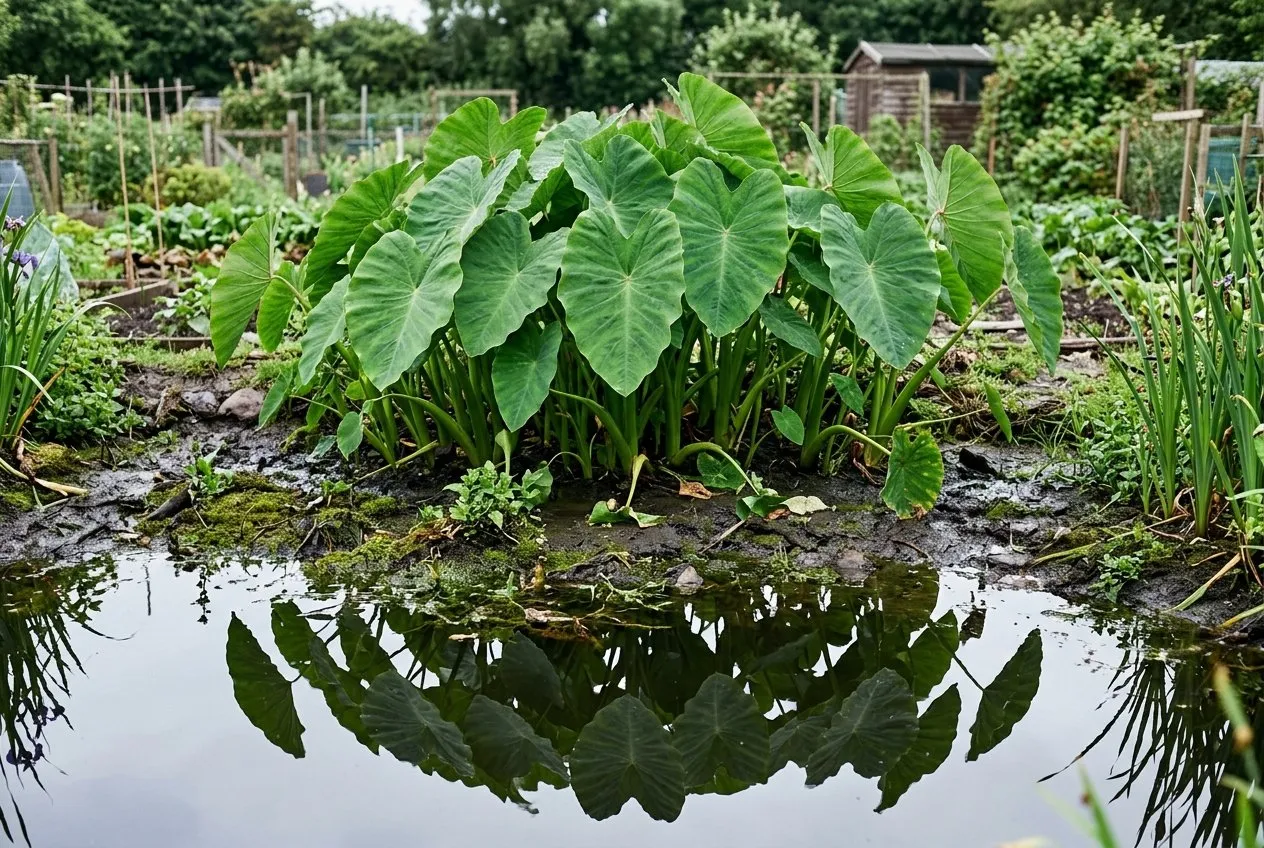
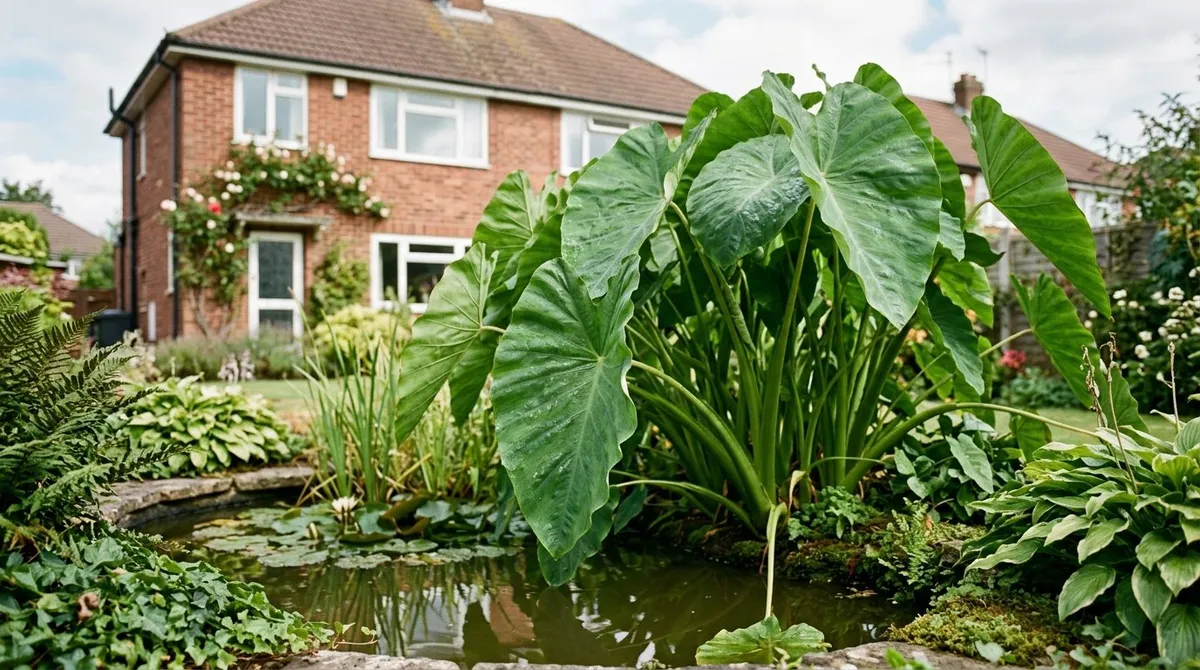
A pond edge gives colocasia exactly what it wants: wet roots all summer, and a reflection that doubles the show.
Starting colocasia tubers indoors in spring
Start dormant tubers indoors in March at 18-21°C. Warmth wakes them up. A heated propagator or warm windowsill both work. Starting early gives the plant a couple of extra months of growth before it goes outside.
Pot each tuber into a 2-3 litre pot of moist multipurpose compost. Set the growing point, the slightly pointed end, just below the surface. Keep the compost barely moist until a shoot appears, as cold, wet compost rots a dormant tuber. Once leaves appear, water more freely.
Grow it on in the brightest spot you have and pot it up as it fills the pot. Harden it off over a week or two in May. Don’t rush it outside, as a late frost on soft growth sets it back weeks.
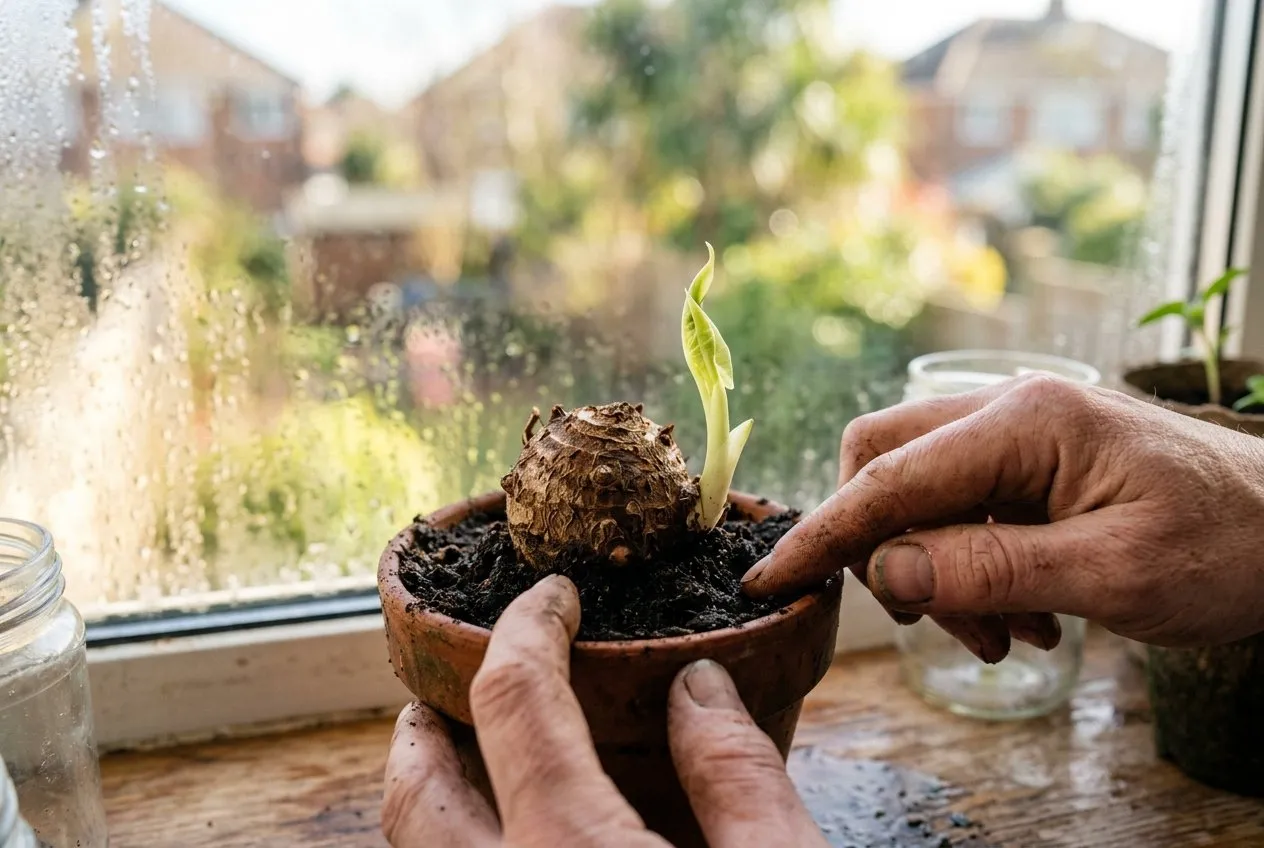
A tuber waking up on a warm windowsill in spring. Keep the compost just moist until the shoot is growing well.
Planting colocasia outside: pots or the ground
Plant outside after the last frost, from late May to June, once nights stay above about 10°C. In the ground it grows biggest. In a pot it stays a bit smaller but is far easier to move indoors for winter.
In the ground, choose your warmest, most sheltered and dampest corner. Plant the tuber just below the surface and water it in well. Space plants 60-90cm apart. The bold leaves look great with cannas, which like the same warm, rich conditions.
In a pot, go big: at least 40cm across, filled with rich compost. Stand it in a deep saucer of water in summer so it never dries out. In autumn, cut it back, let the compost dry a little, and move the whole pot into a frost-free shed.
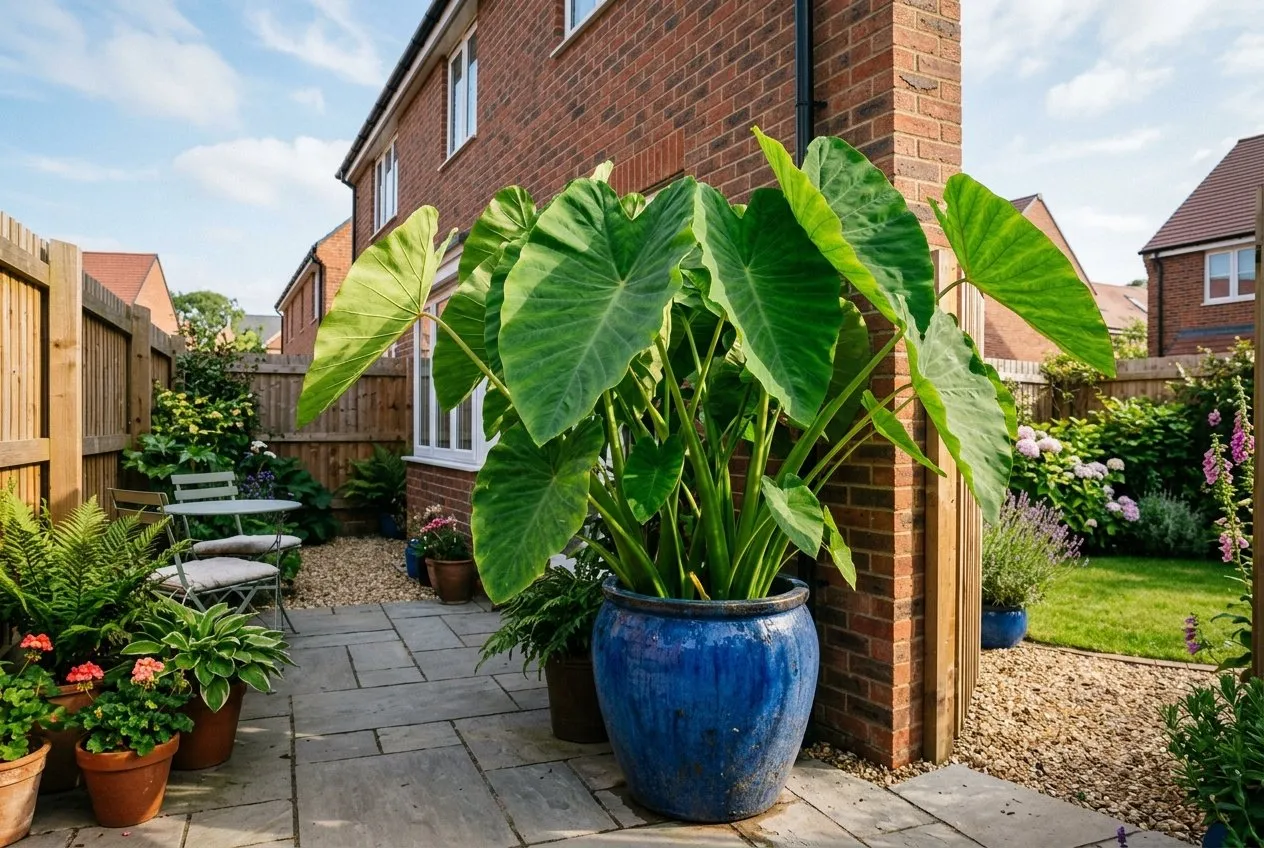
A big pot in a sheltered corner works well. When autumn comes, you just wheel it into a frost-free shed.
Feeding and watering for the biggest leaves
Colocasia are hungry and thirsty, so water often and feed every week in summer. Big leaves come from generous care, not a special variety.
Never let the soil or compost dry out. In hot weather a pot may need watering twice a day, unless it stands in water. A plant that dries out often drops a leaf.
From the time leaves appear, feed weekly with a balanced liquid feed. Or push controlled-release fertiliser into the compost in spring. Keep feeding through to early autumn. The same generous treatment suits hardy bananas.
How to lift and store colocasia tubers over winter
Lift colocasia after the first frost and store the tubers somewhere cool and frost-free until spring. It’s the same routine as for dahlias.
- Wait for the first frost to blacken the leaves, usually mid to late October.
- Cut the stems back to about 10cm. Wear gloves, as the sap can irritate skin.
- Lift the clump by forking in from the side, about 20cm out. The tubers are shallow and bruise easily.
- Dry them on newspaper in an airy, frost-free shed for three to five days. This step stops rot.
- Pack them in a box of barely damp compost or vermiculite, not touching, and cover them.
- Store in a cool, dark, frost-free shed, garage or spare room, ideally around 7-10°C. Check monthly and remove any that go soft.
A cold greenhouse isn’t safe, as it can freeze on the worst nights.
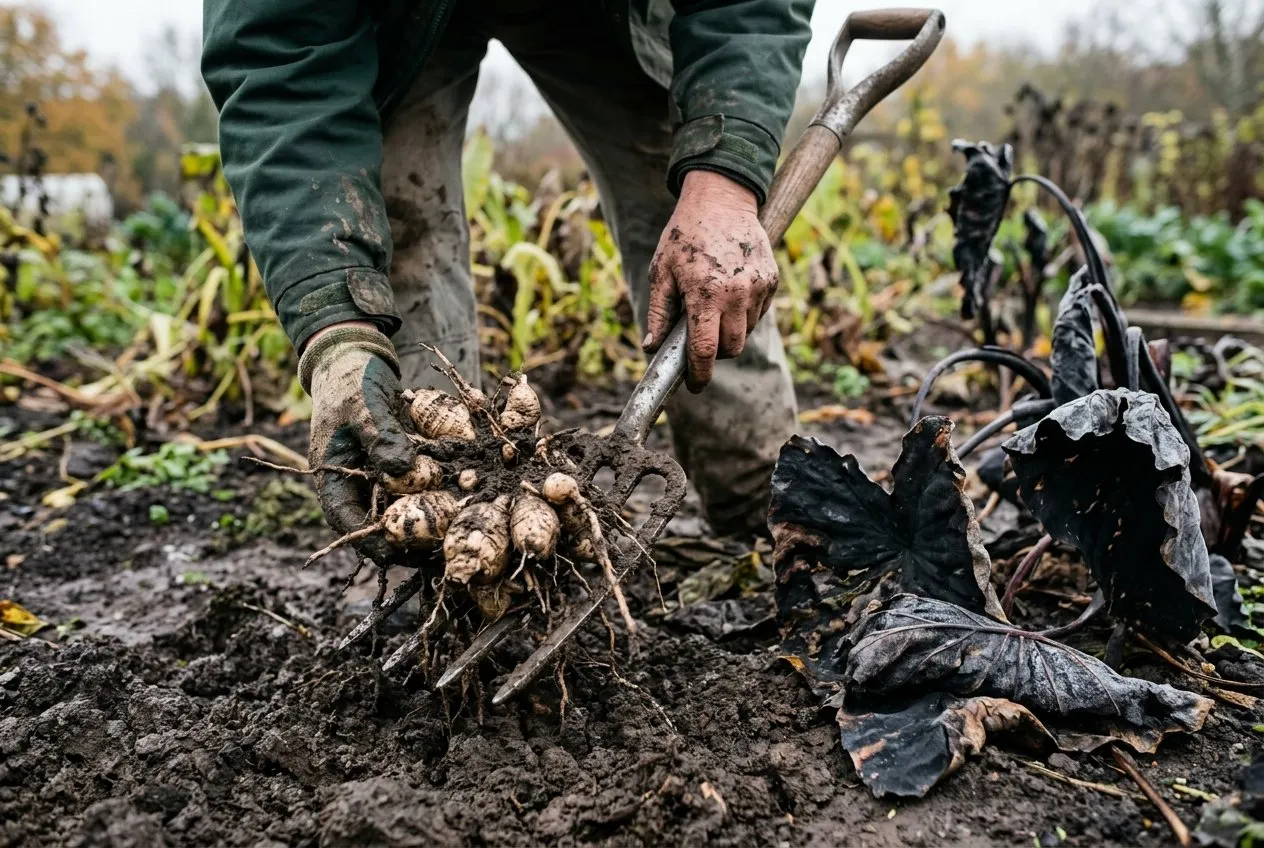
Lift a day or two after frost blackens the leaves. Fork in from the side so you don’t spear the shallow tubers.
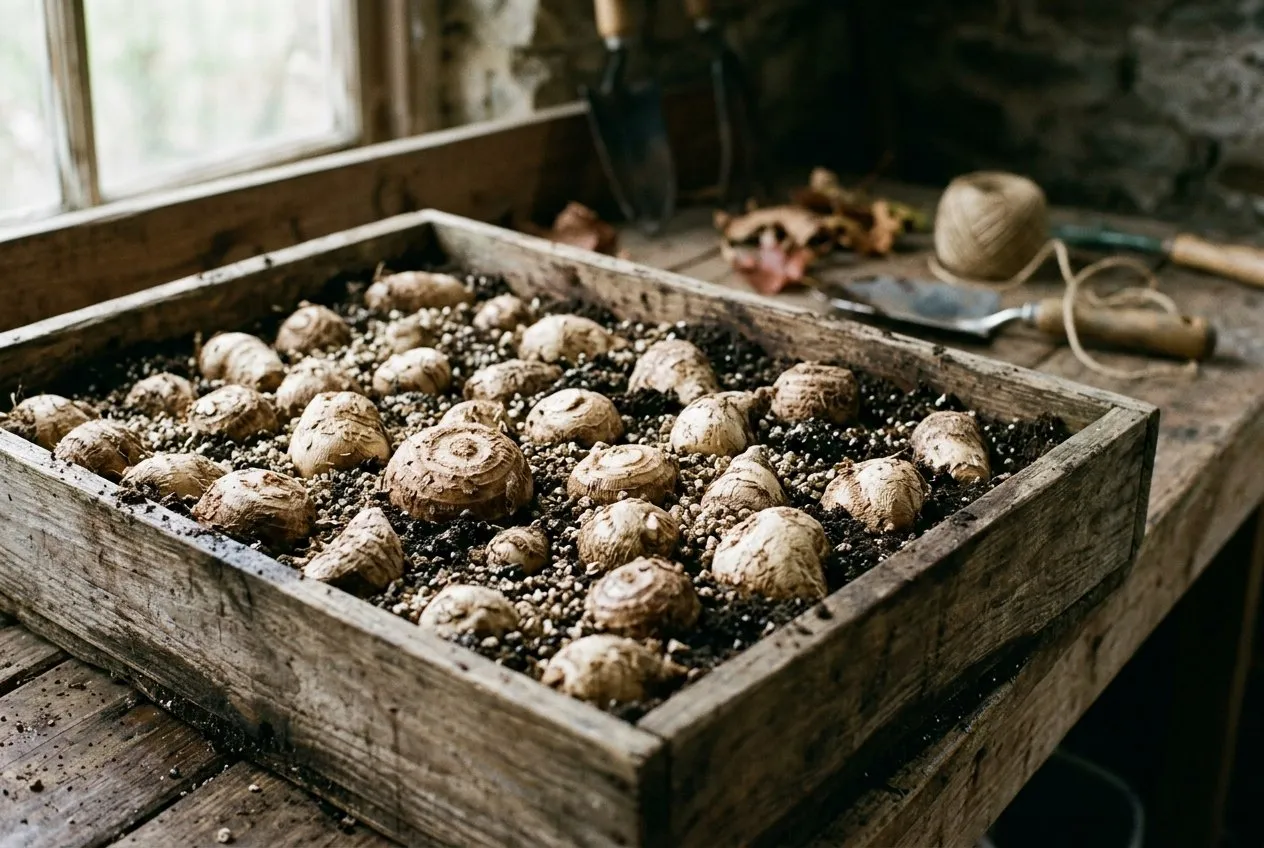
Space the dried tubers so they don’t touch, then cover them with barely damp compost for winter.
Leaving ‘Pink China’ outside over winter
‘Pink China’ is the only colocasia worth trying to leave in the ground, and only on free-draining soil. Wet is the real killer, not just cold. A tuber in cold, soggy clay all winter usually rots.
Choose your driest, best-drained spot. After the first frost, cut it back and pile 15-20cm of dry mulch over the crown, such as bark, straw or dry leaves. On heavier soil, put something over the top to keep the rain off. Lift a spare tuber too, just in case.
Month-by-month colocasia calendar
Northern gardens should plant out a week or two later and lift a little earlier.
| Month | What to do |
|---|---|
| January to February | Check stored tubers monthly. Remove any that are soft |
| March | Pot up tubers and start them at 18-21°C |
| April | Grow on in good light. Pot up as they fill out |
| May | Harden off. Plant out only after the last frost |
| June | Plant out. Start weekly feeding and plenty of water |
| July to August | Water daily in hot spells and feed weekly |
| September | Growth slows. Ease off feeding but keep the roots moist |
| October | Lift tubers after the first frost. Mulch any ‘Pink China’ left out |
| November to December | Keep stored tubers and potted plants frost-free |
Common colocasia problems and mistakes
Most colocasia problems come from cold, dry roots, wind or damp storage.
- Planting out too early. Frost turns the leaves to mush overnight. Wait until late May or June and keep fleece handy.
- Letting it dry out. Miss a watering in hot weather and it drops a leaf. Keep the roots moist all summer.
- Leaving tender types out. Only ‘Pink China’ has a real chance outdoors. Lift the rest.
- Storing tubers too wet. Dry them first and keep the packing just barely damp.
- No shelter from wind. Torn leaves never repair. Plant in a sheltered corner.
- Red spider mite under glass. Look for fine pale speckles and webbing under the leaves. Damp air helps keep it away, so stand pots on wet gravel.
Designing a tropical look with colocasia
Use colocasia as the bold centrepiece of a planting, not dotted about singly. One big plant or a group of three gives a border instant scale.
Pair dark leaves such as ‘Black Magic’ with orange cannas or scarlet dahlias. For a green jungle feel, group colocasia with a hardy banana and ferns in a damp, sheltered corner. The guide to jungle garden design has more ideas. More bold foliage plants are in the plants hub.
Frequently asked questions
Are elephant ears (colocasia) hardy in the UK?
Most colocasia are tender and won’t survive a UK winter outdoors. Frost kills the leaves, and cold, wet soil rots the tubers. ‘Pink China’ is the hardiest and may come through in the ground under a thick, dry mulch on free-draining soil in milder areas. Lift and store the rest.
How do I overwinter colocasia tubers?
Lift the tubers after the first frost and store them cool and frost-free. Cut back the blackened leaves, ease the clump out with a fork and brush off the soil. Dry the tubers for a few days, then pack them in barely damp compost or vermiculite. Keep them in a shed, garage or spare room until March.
When should I start colocasia into growth?
Start dormant tubers indoors in March at 18-21°C. Pot them into moist compost with the growing point just below the surface. A heated propagator or warm windowsill works well. Don’t plant them outside until the last frost has passed, usually late May or June.
Why are my colocasia leaves so small?
Small leaves usually mean too little water, food or warmth. Colocasia need constant moisture, regular feeding and a warm, sheltered spot. In a cool or dry summer the leaves stay smaller. A pond edge or bog bed gives the biggest leaves.
What is the difference between colocasia and alocasia?
Colocasia leaves hang down; alocasia leaves point up and out. Colocasia love wet soil and can grow at a pond edge. Alocasia prefer moist but well-drained compost. Both are sold as elephant ears, which causes plenty of confusion.
Can colocasia grow in water or a pond?
Yes, Colocasia esculenta grows well at a pond edge or in shallow water. Plant it in an aquatic basket on a pond shelf with the crown just under the surface, or in permanently wet soil. Lift it before winter unless it is ‘Pink China’.
Are elephant ears poisonous?
Yes, colocasia is harmful if eaten raw. The leaves and stems contain crystals that irritate the mouth and throat, and the sap can irritate skin. Keep pets and small children away from it and wear gloves when cutting stems.
Now your elephant ears are sorted for winter, read our guide to how to overwinter plants in the UK to keep the rest of your tender plants safe too.
Our team produces practical UK gardening guidance from source research, contributor records and established horticultural practice. Editorial standards are overseen by Matt W.