Key takeaways
- A bog garden is a weekend job with a spade, pond liner, gravel and compost
- Dig 30-40cm deep and fork holes in the liner every 15cm
- Marsh marigold, purple loosestrife and candelabra primulas are easy starters
- Plant in April or May so roots settle before winter
- Top up with rainwater from a water butt in dry spells
- Frogs, newts and dragonflies soon find it
A bog garden is one of the best things you can build for wildlife. It takes a weekend, doesn’t cost much, and lets you grow lush plants that sulk in an ordinary border.
It isn’t a pond, as there’s no open water. It’s a bed of soil that stays wet all year, sitting on a liner with holes in it. Marsh marigolds, purple loosestrife, ferns and irises love it and grow like never before.
Why build a bog garden?
A bog garden gives wetland wildlife a home in your garden. Wet, boggy places have become rare in the British countryside, so even a small patch helps.
It works in any size of garden. A half-barrel bog suits a balcony, while a 3m x 2m bed turns a damp corner into a burst of colour. There’s no open water, so it’s a gentler choice with small children around. No pumps, no filters, and very little to do beyond watering in dry spells.
Got a wildlife pond? Put a bog garden right next to it. Frogs and newts love hunting and hiding in the damp plants.
How to build a bog garden step by step
Allow most of a day. You’ll need a spade, a garden fork, butyl pond liner, old newspaper or carpet, gravel, and some compost to mix with the soil you dig out.
 Laying the liner. Fork holes in it every 15cm so water drains slowly but the soil stays wet.
Step 1: Choose the location
Pick a spot with a good few hours of sun. Most bog plants love sun, but primulas, ferns and astilbes are happy in part shade. Keep away from trees, as falling leaves smother plants and roots can pierce the liner. A naturally damp, low spot is ideal but not essential.
Step 2: Excavate the bed
Dig the area out to 30-40cm deep. Slope the sides gently rather than cutting them straight. Pile the topsoil on a tarpaulin to go back in later. Pick out sharp stones and roots that could tear the liner.
Step 3: Line the excavation
Lay old newspaper, carpet or fleece underlay over the base and sides to protect the liner. Spread the liner on top and press it into the shape of the hole. Leave 15-20cm spare around the edges.
Now fork holes in the liner every 15cm across the base. This is what makes it a bog garden rather than a pond. Water drains away slowly, so the soil stays wet without going stagnant.
Step 4: Backfill with enriched soil
Spread 5cm of gravel over the base of the liner. Then mix two parts of your topsoil with one part garden compost and fill the bed back up to ground level. Water well and leave it to settle for a couple of days before planting.
Step 5: Trim and hide the liner edges
Trim the liner so about 10cm tucks under the lawn or edging stones around it. Once the plants grow, you won’t see it at all.
Best plants for a bog garden in the UK
Planting for year-round interest
Spring (March-May): Marsh marigold and globe flower bring early yellow. Bugle spreads blue-purple spikes along the edges.
Summer (June-August): Purple loosestrife and meadowsweet add height. Candelabra primulas bring tiers of pink, red and white, and astilbes add feathery plumes. For a tropical touch, try colocasia, or elephant ears. It loves wet soil, so pop it in at the edge from June and lift it before the first frost.
Autumn (September-November): Ligularia’s orange daisies carry on into October, and royal fern turns copper. On the drier edge, persicaria keeps sending up crimson spikes into November.
Winter (December-February): Evergreen ferns and the old stems of purple loosestrife give some shape. Leave seed heads standing for birds.
One plant to skip is giant gunnera. It’s far too big for most bog gardens, and one kind is now banned from sale in the UK. Our gunnera ban guide explains what to do if you already have one.
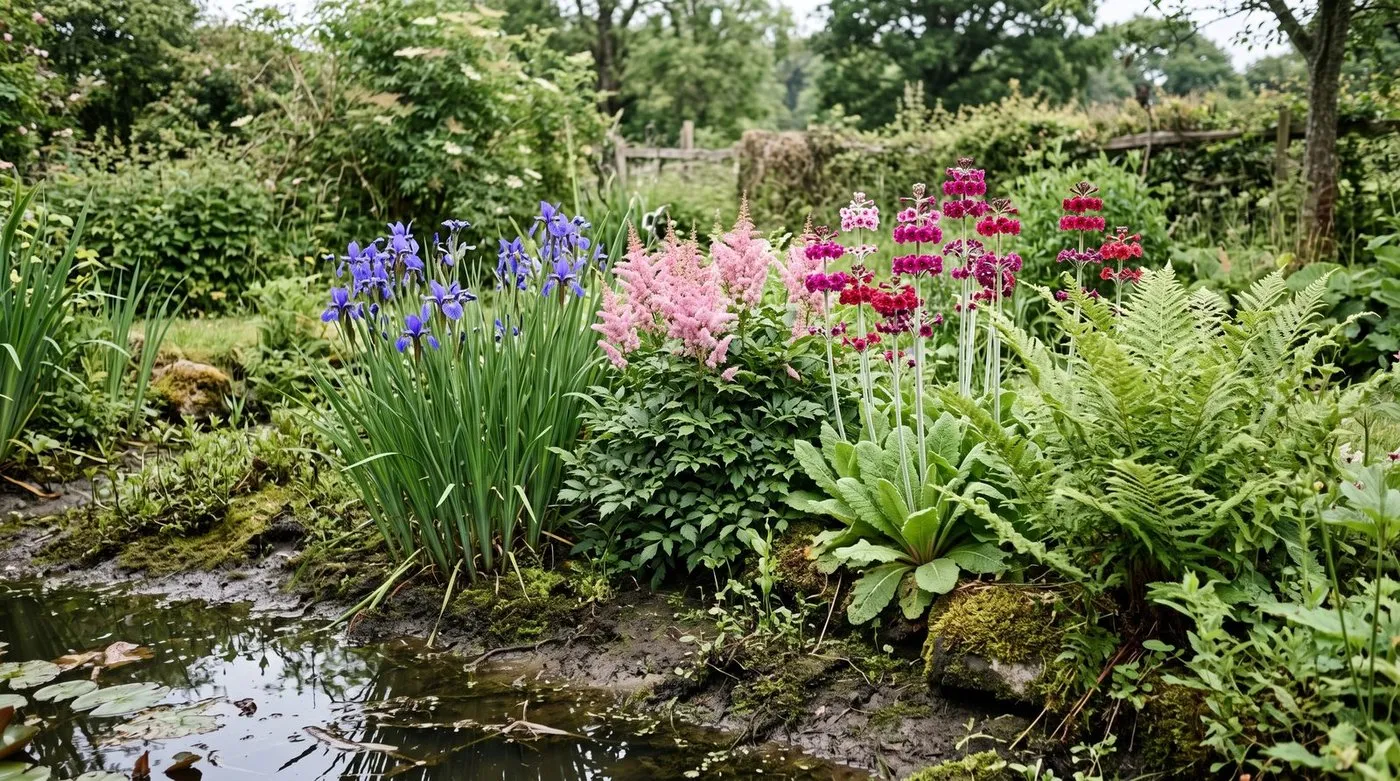 Irises, astilbes, primulas and ferns all love the wet soil of a bog garden.
Bog garden construction: materials and costs
Expect to spend roughly £50 to £150 for a 3m x 2m bed. Here’s what you’ll need.
| Material | For a 3m x 2m bed |
|---|---|
| Butyl pond liner | 4m x 3m piece |
| Underlay (or old carpet) | 4m x 3m |
| Pea gravel | About 3 bags |
| Garden compost | About 4 bags |
| Plants | 12-15 pots |
Go for butyl liner rather than cheaper PVC, as it lasts much longer. On a bed this size the difference in price is small. Aquatic nurseries often sell liner off the roll for less than garden centres.
You can cut the plant bill to almost nothing by splitting clumps from friends, growing from seed, or picking up divisions at plant sales. Some native wildflower nurseries also sell bog plant collections.
Wildlife your bog garden will attract
Wildlife usually turns up in the first summer. Dense, wet planting at different heights gives creatures places to hide, hunt and breed.
 A frog resting on a log at the edge of a bog garden. Dragonflies hunt above it from early summer.
Frogs and newts shelter and hunt among the damp leaves, especially next to a pond.
Dragonflies and damselflies perch on tall stems like purple loosestrife and yellow flag iris. Look out for darters, hawkers and the little blue azure damselfly.
Maintaining a bog garden through the seasons
Bog gardens need very little looking after. The main job is keeping the soil wet in dry spells.
Watering: Use rainwater from a water butt if you can. In a normal summer you might water every couple of weeks, and weekly in a very dry one. Push your fingers into the soil. If it’s dry a little way down, it’s time to water.
Spring (March-May): Cut back last year’s dead stems in early March. Split crowded clumps of primulas and irises. It’s also the best time to add new plants.
Summer (June-August): Deadhead primulas and loosestrife for more flowers. Pull up any yellow flag iris seedlings that pop up outside the bed, as it spreads keenly into damp lawn.
Autumn (September-November): Leave seed heads for winter interest and birds. Clear fallen leaves off the crowns of plants. Add a thin layer of leaf mould if the soil has sunk.
Winter (December-February): Nothing to do. Try not to walk on the bed when it’s sodden, as it squashes the soil.
For the rest of the gardening year, our gardening for beginners guide has a handy calendar.
Common mistakes when building a bog garden
Not making holes in the liner. Without them you’ve built a pond. Plants like primulas and astilbes rot in standing water.
Building under trees. Roots go looking for the wet soil and can tear the liner. Fallen leaves rot down and smother plants. Keep the bed well away from trees.
Relying only on tap water. Rainwater suits bog plants better and it’s free. Fit a water butt to the nearest downpipe.
Planting too close. Bog plants grow fast in wet, rich soil. Space them 30-45cm apart, even if it looks sparse at first. Crowded plants get mildew and go leggy.
Skipping the gravel. The gravel layer stops water sitting right on the liner and going stale, while still keeping the roots moist.
For more planting ideas, see our guide to the best plants for wet, boggy soil.
Now you know how to build and plant a bog garden, have a look at our guide to the best pond plants for UK gardens to carry the wetland theme further. For more ways to help wildlife, read how to create a wildlife garden.
Frequently asked questions
What is the difference between a bog garden and a pond?
A bog garden is wet soil with no open water. A pond holds standing water, while a bog garden has holes in its liner so water drains slowly and the soil stays soggy. Building one next to a pond makes a lovely natural edge.
Can I build a bog garden on clay soil?
Yes, clay is ideal for a bog garden. It holds water well, so you’ll top it up less often. On sandy soil, make fewer holes in the liner so it doesn’t dry out too fast.
How deep should a bog garden be?
Dig 30-40cm deep for most bog plants. That gives roots of irises, ligularia and astilbe plenty of room and keeps the liner hidden. A shallower bed works for small plants like marsh marigold, but it dries out faster in summer.
What are the best plants for a bog garden in the UK?
Marsh marigold, purple loosestrife and candelabra primulas are great starters. Marsh marigold flowers from March, purple loosestrife adds tall purple spikes in summer, and candelabra primulas bring tiers of colour in early summer. All are fully hardy in the UK.
How much does it cost to build a bog garden?
Roughly £50 to £150 for a 3m x 2m bed. The liner is the main cost. Plants add up, but you can save by splitting clumps from friends or growing from seed. Most gardeners already have the soil and compost.
Do bog gardens attract mosquitoes?
No, not if it’s built properly. Mosquitoes breed in standing water, and a bog garden has wet soil rather than open water. The holes in the liner stop puddles sitting on top.
When is the best time to plant a bog garden?
April or May is best. Spring planting gives roots a full season to settle before winter. September works too, but plants have less time to get going. Avoid winter, when cold, soggy soil stops roots growing.
Our team produces practical UK gardening guidance from source research, contributor records and established horticultural practice. Editorial standards are overseen by Matt W.