Key takeaways
- Gunnera tinctoria is a listed invasive plant: don't sell, plant, swap or let it spread
- Most garden 'Gunnera manicata' has turned out to be the hybrid Gunnera x cryptica, which is covered too
- You can usually keep an established plant, as long as it doesn't spread
- Cut off the cone-shaped flower spikes in early summer, before seed forms
- Don't compost gunnera waste or dump it near water
- Rheum palmatum, Rodgersia, Darmera and Astilboides give the big-leaf look legally
If you have a gunnera by your pond, the short answer is reassuring: you can usually keep it. Gunnera tinctoria, the Chilean giant rhubarb, is a listed invasive plant in Great Britain. Its hybrid, which most garden gunnera turns out to be, is covered too. That means no selling, planting, swapping or letting it spread. Keeping an established plant and stopping it seeding is fine.
This guide explains what the rules mean for you, how to stop your plant spreading, and how to remove it if you’d rather. It also suggests four legal plants that give the same jungle look. For other plants on the list, see the guide to banned plants in UK gardens.
Is gunnera illegal in the UK now?
It’s illegal to sell, plant, swap or spread large-leaved gunnera, but you can usually keep a plant you already have. In England and Wales, listed invasive plants are covered by the Invasive Alien Species (Enforcement and Permitting) Order 2019. Scotland and Northern Ireland have their own similar rules.
Under these rules you must not:
- Sell the plant or any part of it
- Plant a new one, or move yours somewhere new
- Give away divisions, cuttings or seed
- Let it spread into the wild, mainly by letting it seed
Gunnera tinctoria was added to the list in 2017. The GOV.UK guidance on invasive plant rules sets out exactly what’s allowed.
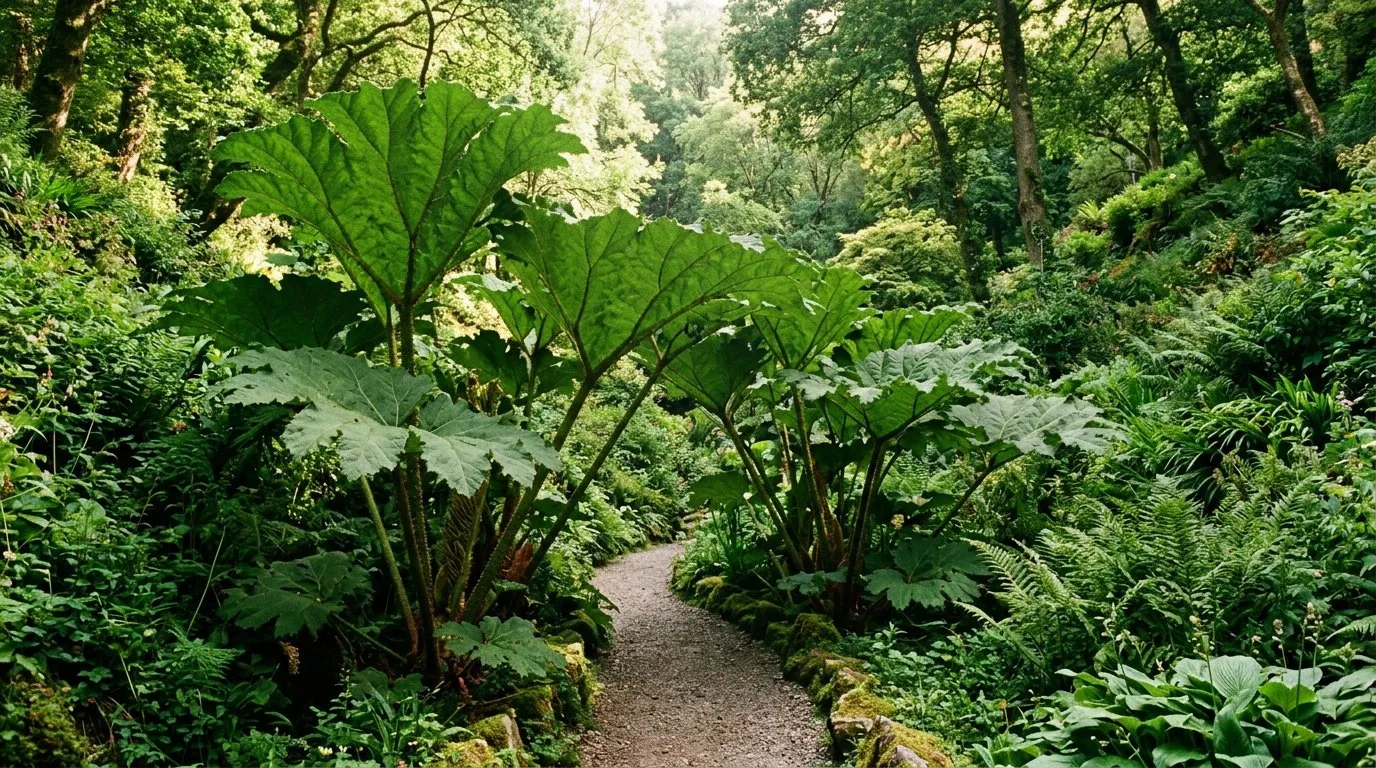
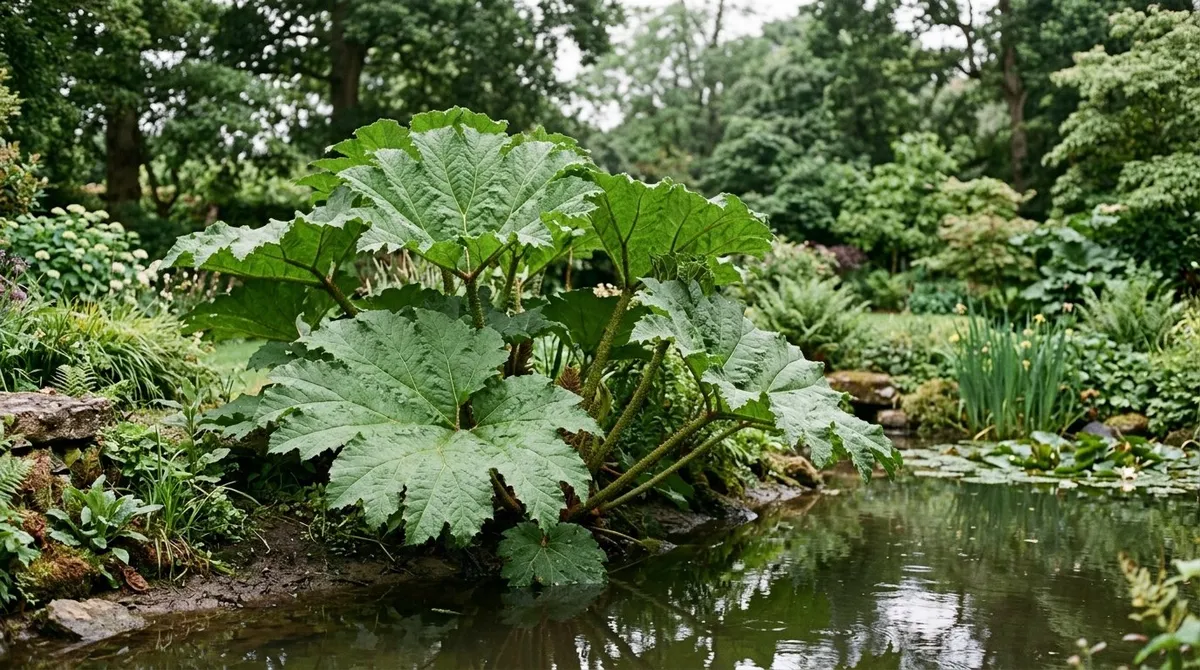
A gunnera at full size is a magnificent sight. The rules don’t ask you to remove one, just to stop it spreading.
Why was gunnera banned?
Gunnera spreads along rivers and damp ground, smothering native plants. One plant produces huge numbers of seeds, and they travel on water and with birds. In parts of the west of Britain and Ireland it has escaped and formed dense stands.
For years, gardeners grew two “kinds”. Gunnera tinctoria was the known troublemaker. Gunnera manicata was the prized giant, thought to be well behaved. Then DNA research showed that most plants grown here as G. manicata were actually a hybrid between the two, now named Gunnera x cryptica.
Because the rules also cover hybrids of a listed plant, the hybrid is caught too. You can’t tell the two apart by eye, so the simplest approach is to treat any large-leaved gunnera as covered. The RHS gunnera questions page explains the background.
Do I have to dig up my gunnera?
No, you don’t usually have to remove an established plant. The rules are about movement and spread, not ownership. An old gunnera sitting quietly by your pond isn’t breaking them, as long as you stop it seeding.
There’s no benefit to ripping out a well-behaved plant, unless you want the space back. The approach is much like managing other listed plants such as Himalayan balsam: know the rules, contain the plant and dispose of waste carefully.
If you live right beside a stream or river, think harder about removal. That’s exactly where escaped seed does the most harm.
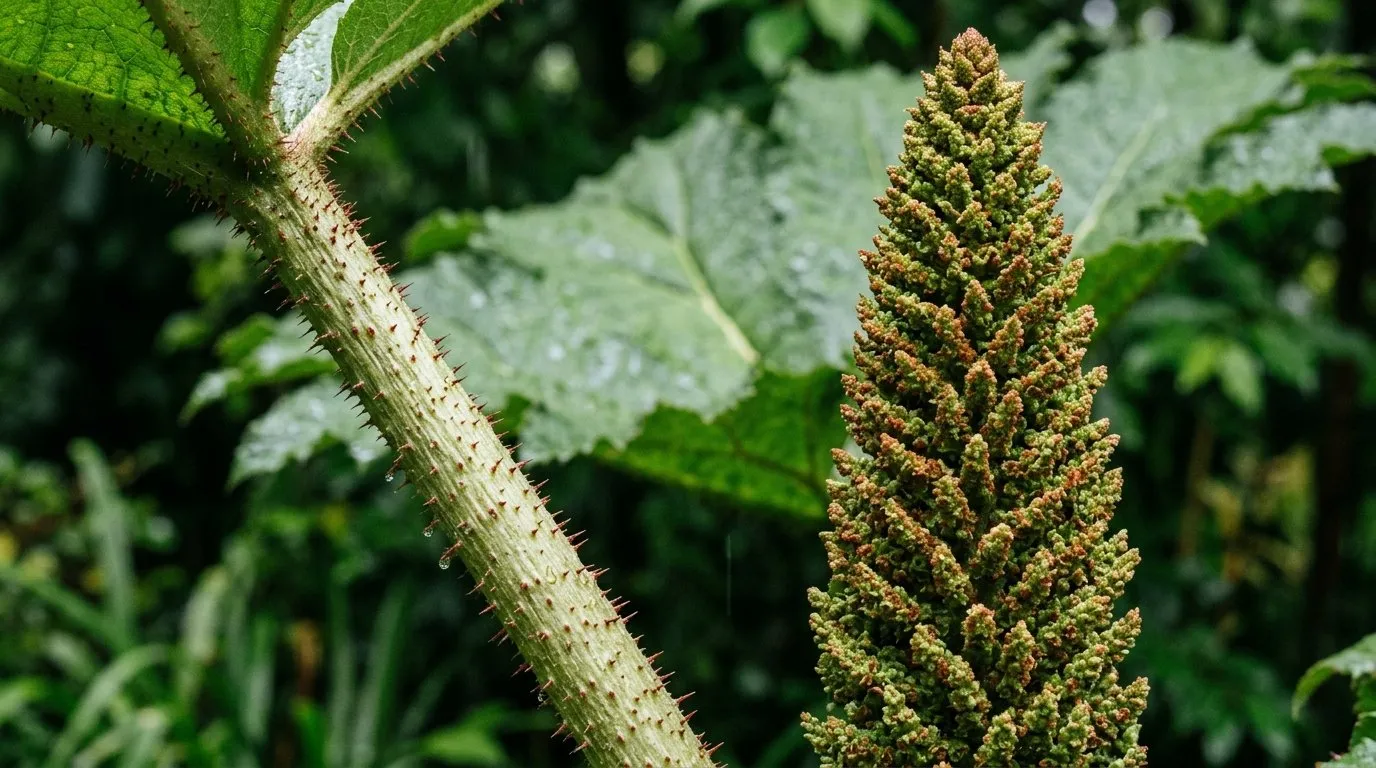
This cone-shaped flower spike is the part to remove. Mind the prickles on the stalks when you do it.
How to stop your gunnera spreading
Cut off the flower spikes before they set seed. That one job is the heart of keeping a gunnera legally. A plant that never seeds can’t spread.
The flower spikes push up from the crown in late spring and early summer. They’re cone-shaped, greenish to reddish-brown, and can reach around 1m tall. Left alone, they ripen masses of small seeds by late summer.
- Check the crown from late spring onwards.
- Cut each spike low down with loppers, as soon as you spot it.
- Wear thick gloves and long sleeves, as the stalks are prickly.
- Bag the spikes straight away so no seed drops.
Don’t put gunnera spikes, leaves or roots in your home compost. Check with your council how they’d like it disposed of, rather than assuming the green-waste bin is fine. Never dump it near a stream, pond or ditch. And never give away divisions, however nicely a neighbour asks.
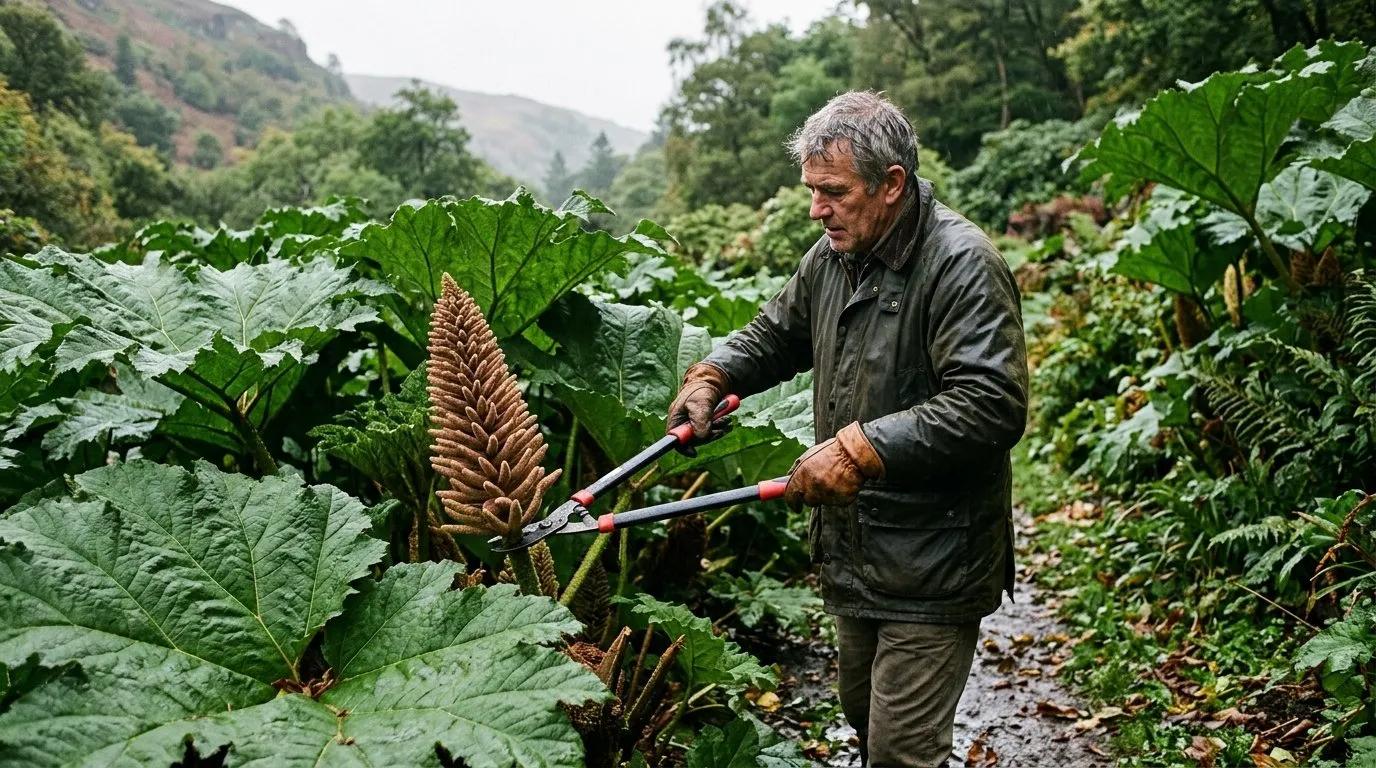
Cut the spike low down with loppers, then bag it straight away. Gloves save your hands from the prickles.
How to remove gunnera if you’d rather
Cut the leaves down, then dig out the crown. Removal isn’t a legal requirement, but some people want the space back or worry about a plant near open water.
Start by cutting the leaves and stalks down to the crown. Wear thick gloves and long sleeves. A big plant produces a surprising pile of leaves.
On a small or young plant, you can lever the crown out with a spade and fork. Large crowns are woody and heavy, and may need two people or a mattock. Remove as much of the crown as you can, and watch for regrowth the following year.
If digging isn’t possible, an approved weedkiller can be used, following the label exactly. Expect to treat any regrowth the next season. Bag all the waste and dispose of it as your council advises. Never put it in the compost.
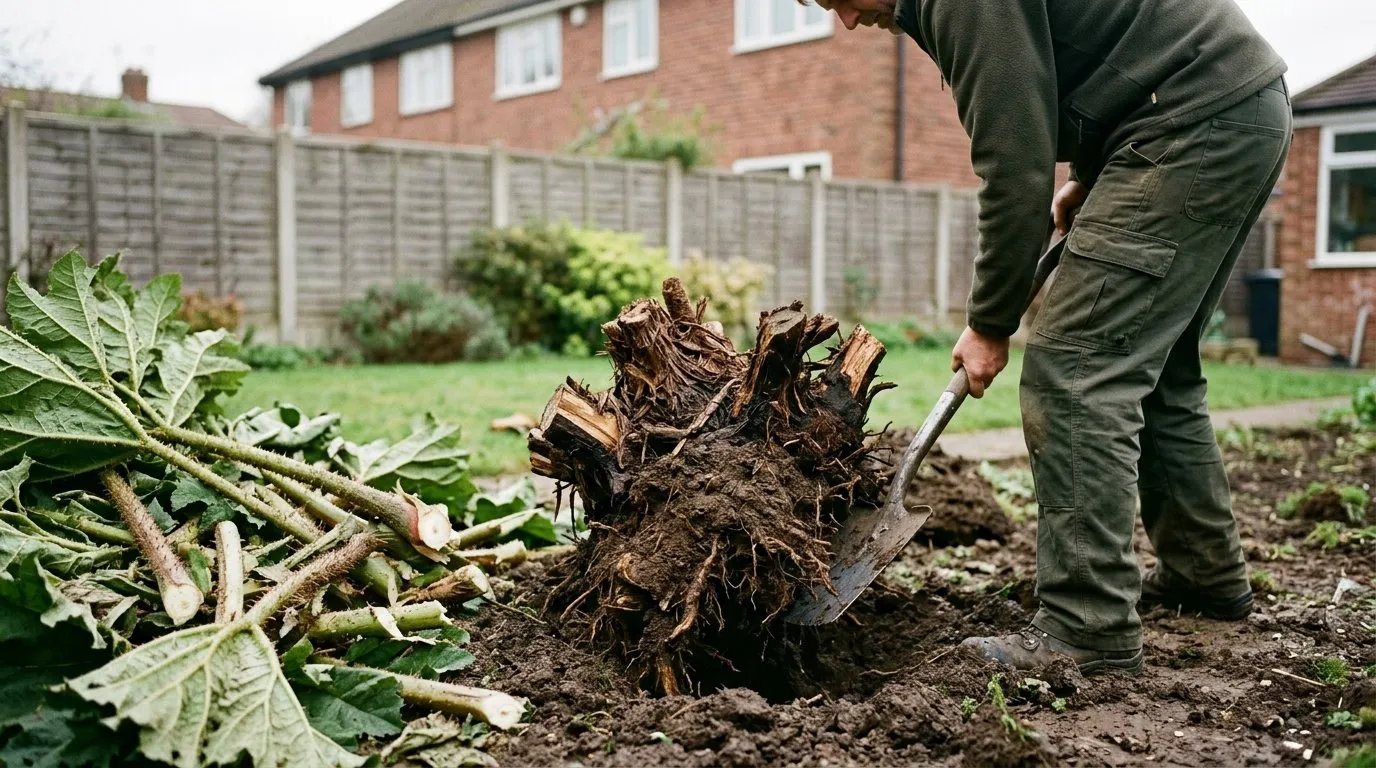
An old crown is a heavy, woody lump. Lever it out bit by bit and bag every piece.
Once the ground is clear, you have a lovely damp, rich spot. Fill it with one of the legal giants below, or browse the best plants for wet, boggy soil.
How to look after an established gunnera in winter
Fold the plant’s own dead leaves over the crown in autumn. Gunnera crowns can be damaged by hard frost, and the old leaves make a handy blanket.
After the first frosts blacken the leaves, cut them off and lay them upside down over the crown. Add a little straw underneath in colder gardens. Remove the cover in spring, once the worst frosts are over and new growth starts. This is ordinary care, and it’s fine to carry on doing it for a plant you’re keeping.
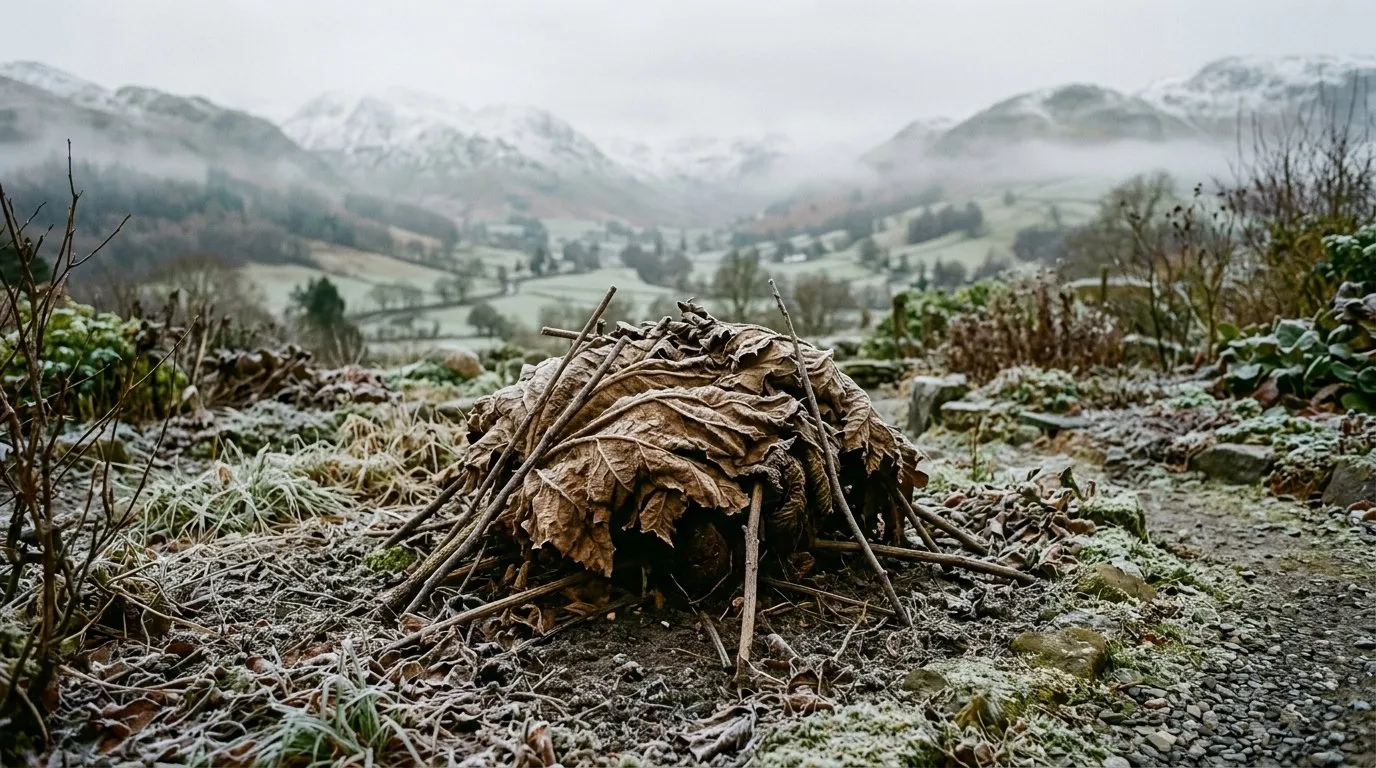
Folding the old leaves over the crown keeps frost off over winter. Lift them away in spring.
Big-leaf plants to grow instead of gunnera
Rheum palmatum, Rodgersia, Darmera peltata and Astilboides tabularis give you the bold, big-leaf look legally. All four love the same damp, rich soil that gunnera enjoys.
Rheum palmatum, the ornamental rhubarb, is the closest match for drama. It has big, deeply cut leaves and tall plumes of red or cream flowers in early summer, reaching around 2m. ‘Atrosanguineum’ has red-flushed young leaves.
Rodgersia has leaves shaped like a horse chestnut’s, with fluffy cream or pink flower plumes in summer. It grows to about 1m and enjoys damp shade.
Darmera peltata, the umbrella plant, has round leaves on tall stalks and pink flowers in spring before the leaves. It’s perfect for a smaller pond edge and helps hold a bank together.
Astilboides tabularis has huge, round, plate-like leaves held up on central stalks like parasols. It likes damp, partly shaded spots.
| Plant | Rough height | Leaf look | Best spot |
|---|---|---|---|
| Rheum palmatum | Around 2m in flower | Big, deeply cut | Damp soil, sun or part shade |
| Rodgersia | About 1m | Like a horse chestnut leaf | Damp shade |
| Darmera peltata | About 1m | Round, on tall stalks | Pond edges, boggy ground |
| Astilboides tabularis | About 1-1.5m | Huge and plate-like | Damp, part shade |
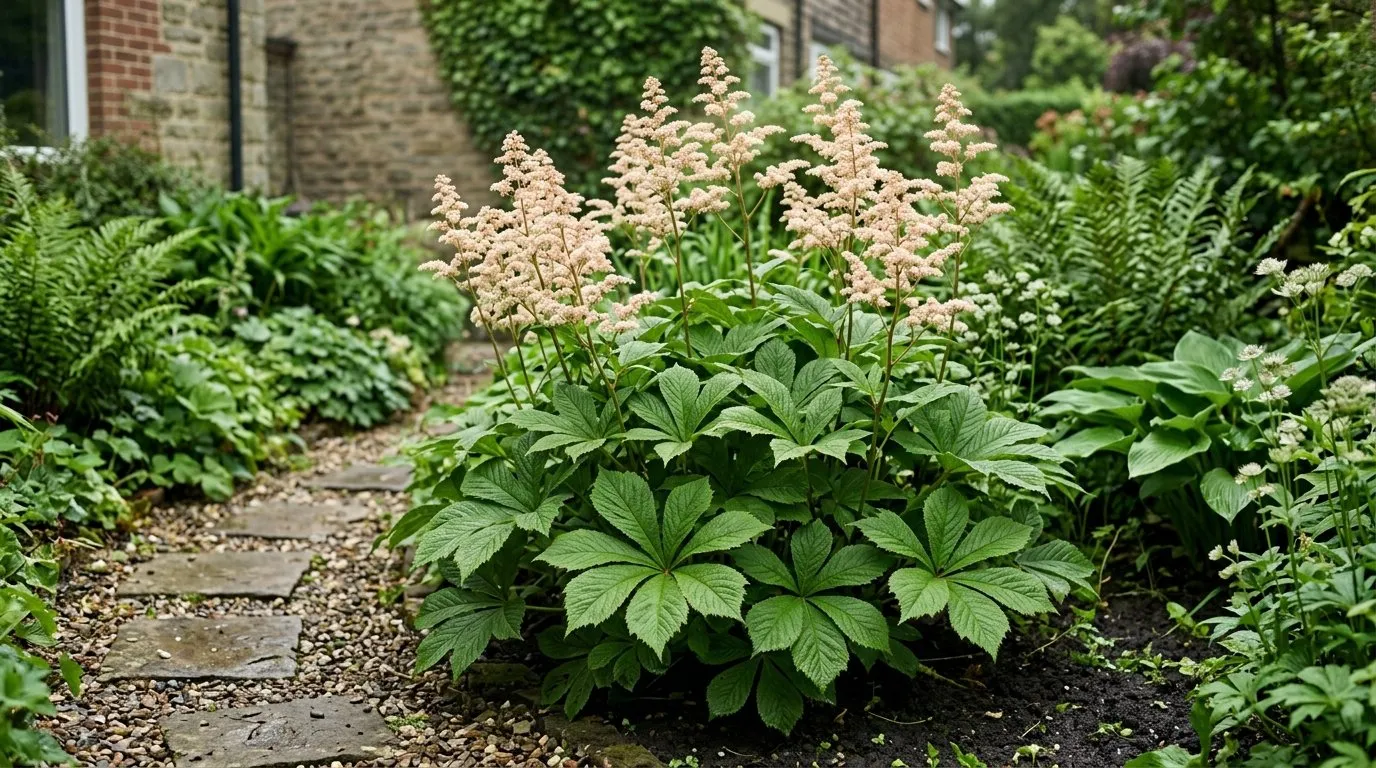
Rodgersia gives architectural leaves on a garden-friendly scale. It’s happy in a damp, shady corner.
The guide to creating a bog garden shows how to make the damp ground these plants love.
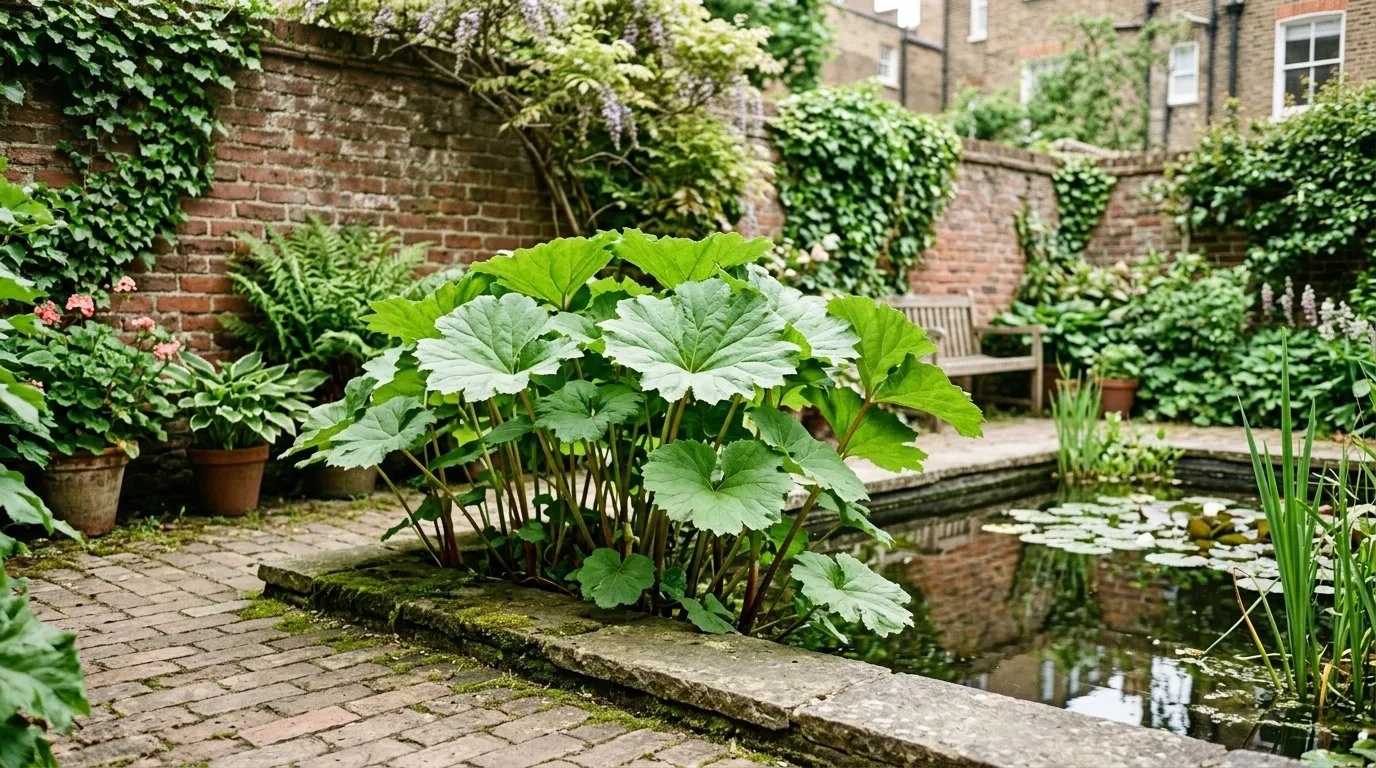
Darmera’s round leaves suit a small pond where a gunnera would swamp everything.
Is gunnera the same as edible rhubarb?
No, gunnera isn’t related to the rhubarb you eat. It’s only called giant rhubarb because of its huge leaves. Don’t eat any part of it.
Garden rhubarb is a completely different, legal plant grown for its stalks. Only the stalks are eaten, as its leaves are poisonous. If that’s the crop you’re after, see the guide to growing rhubarb. Rheum palmatum, the ornamental rhubarb above, is a close cousin of the edible one, but it’s grown for its looks.
Common mistakes with gunnera
- Letting the flower spikes ripen. That’s how it spreads. Cut them off in early summer.
- Composting the waste. Seeds and bits of crown can survive. Bag it and follow your council’s advice.
- Sharing divisions. Giving a piece to a friend breaks the rules, however kindly meant.
- Planting a “manicata” from an old stock. Most turn out to be the hybrid. Choose a legal alternative instead.
- Dumping it near water. Rivers carry seeds and pieces far downstream.
Frequently asked questions
Is gunnera illegal in the UK?
It’s illegal to sell, plant, swap or spread large-leaved gunnera. Gunnera tinctoria is a listed invasive plant, and the rules also cover its hybrid, Gunnera x cryptica. An established plant already in your garden can usually stay, as long as it doesn’t spread.
Do I have to dig up my gunnera?
No, you don’t usually have to remove an established plant. The rules are about spreading it, not owning it. Stop it seeding, don’t share bits of it, and dispose of any cuttings carefully.
Why was gunnera banned?
It spreads along rivers and damp ground, smothering native plants. Seed travels on water and with birds. DNA research then showed most garden gunnera was a hybrid with the invasive species, which brought it under the same rules.
How do I stop my gunnera spreading?
Cut off the flower spikes in early summer, before seed forms. Bag them straight away. Don’t compost them or put them anywhere near a stream or pond, and never give away divisions.
What can I plant instead of gunnera?
Rheum palmatum, Rodgersia, Darmera peltata and Astilboides tabularis. All love the same damp, rich soil and give a bold, big-leaf look. Rheum palmatum is the closest match for drama, while Darmera suits a small pond edge.
Is gunnera the same as the rhubarb I eat?
No, gunnera isn’t related to edible rhubarb. It’s only called giant rhubarb because of its huge leaves. Garden rhubarb is a completely different, legal plant grown for its stalks.
Browse more garden problem guides for other invasive plants. For lovely, legal planting around water, read our guide to the best pond plants for UK gardens next.
Our team produces practical UK gardening guidance from source research, contributor records and established horticultural practice. Editorial standards are overseen by Matt W.