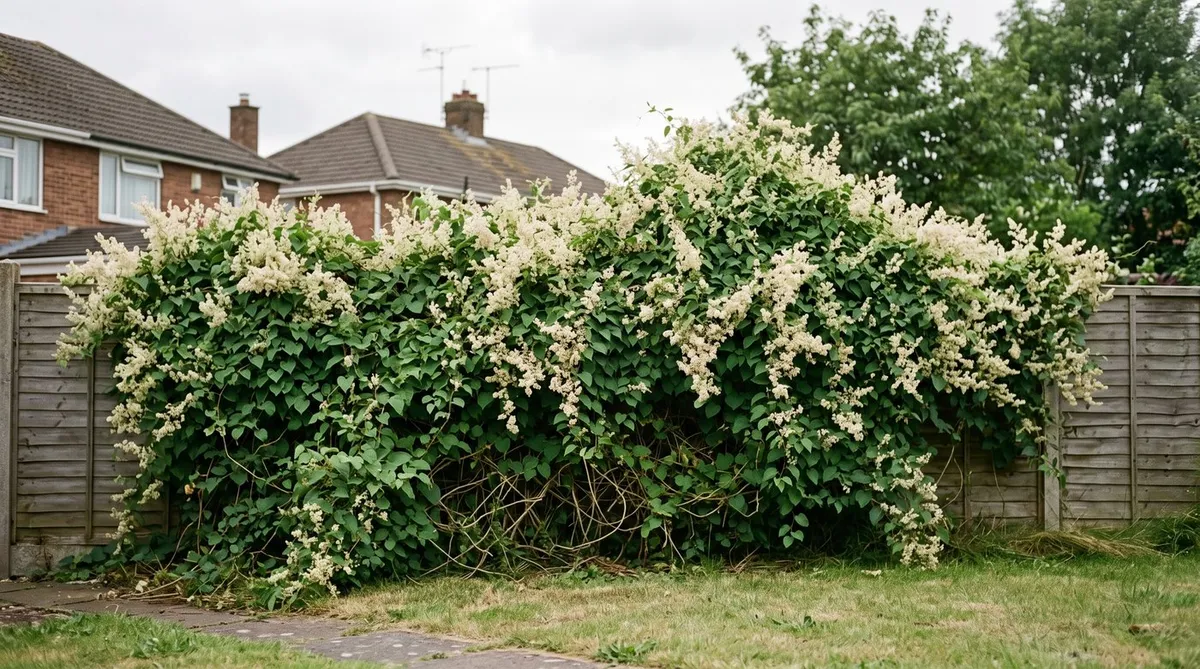
Key takeaways
- Russian vine can grow several metres in a year and reach about 12m
- It is not Japanese knotweed, which has upright, hollow, bamboo-like canes
- Frothy cream flowers cover the plant from late summer into autumn
- Prune hard in late winter, as it flowers on new growth
- To remove it, cut the top growth and dig out the woody crown
- On big plants, an approved weedkiller in late summer weakens the crown first
Russian vine is the fastest climber most UK gardeners will ever meet. Also called mile-a-minute, it can smother a fence, shed or tree in a couple of summers. That makes it either a handy screen or a real headache, depending on where it grows.
This guide covers all three jobs: growing it on purpose, keeping it in check with hard pruning, and getting rid of it for good. It also settles the question that worries people most. No, Russian vine is not Japanese knotweed.
What is Russian vine?
Russian vine (Fallopia baldschuanica) is a woody, deciduous climber in the same family as knotweed. You may also see it sold as Polygonum baldschuanicum. Despite the name, it comes from Central Asia.
It climbs by twining: thin, wiry stems wrap around anything they touch and thicken into woody rope over the years. The leaves are heart-shaped with a pointed tip. From late summer into autumn, frothy sprays of tiny cream flowers, sometimes tinged pink, cover the plant.
Left alone, it makes a huge, heavy mass of growth that can pull down weak fences and trellis. That weight and speed cause most of the problems people have with it.
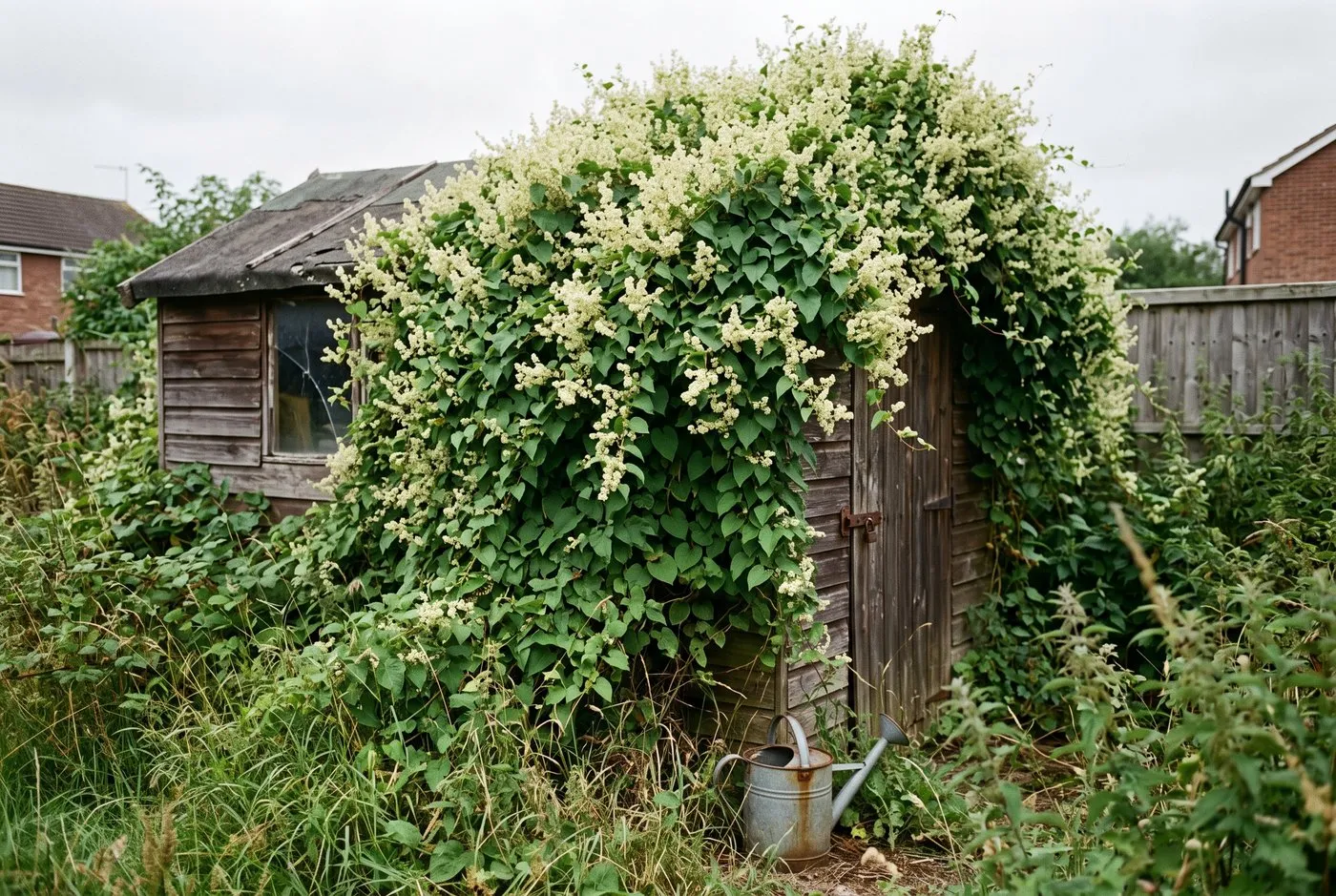
A couple of summers of free growth is all Russian vine needs to bury a shed like this one.
Russian vine or Japanese knotweed?
People often mistake Russian vine for Japanese knotweed, and the worry is usually needless. They are different plants with very different rules.
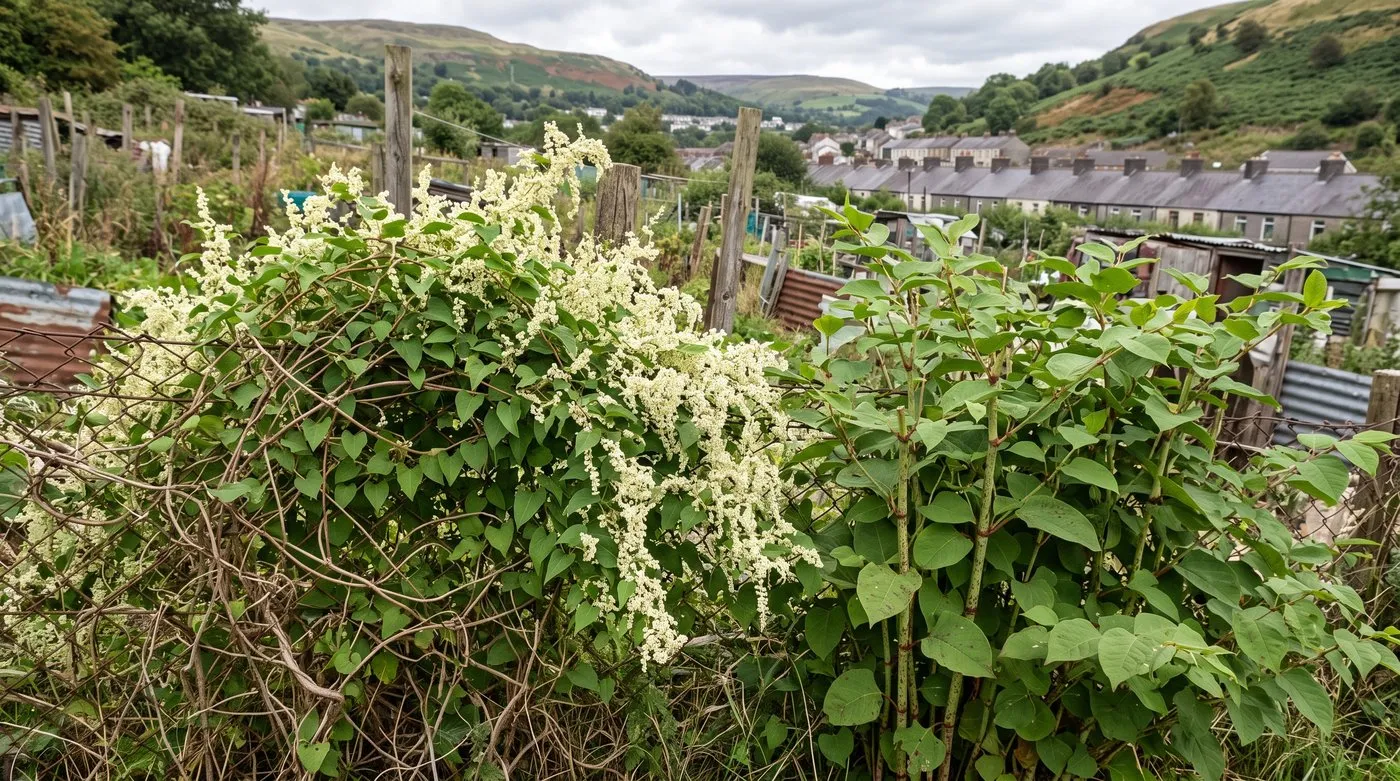
Twining stems that climb mean Russian vine. Upright, speckled, bamboo-like canes mean Japanese knotweed.
The quickest test is the stem. Russian vine has woody stems that twine round supports and climb. Japanese knotweed has hollow, upright, bamboo-like canes, often speckled purple-red, growing in dense clumps. Knotweed leaves are shield-shaped with a flat base and sit in a zig-zag up the cane.
| Feature | Russian vine | Japanese knotweed |
|---|---|---|
| Stems | Woody, twining, climbs | Hollow, upright, bamboo-like canes |
| Leaves | Heart-shaped, pointed tip | Shield-shaped, flat base, zig-zag up the cane |
| Flowers | Frothy cream sprays, late summer to autumn | Creamy tassels, late summer |
| Habit | Climbs and smothers | Dense upright thickets |
| Legal rules | No special rules, but don’t let it spread into the wild | Strict rules on spreading and disposal |
If your plant is climbing and twining, it is Russian vine. If you’re not sure, check the Japanese knotweed identification guide before you dig or move any soil.
Warning: Japanese knotweed has strict legal rules. It is an offence to let it spread into the wild, and soil or cuttings containing it must be disposed of properly. Identify the plant before you start digging.
How fast does Russian vine grow?
Very fast. In a warm, wet summer it can put on several metres of new growth. The energy for that comes from a woody crown and deep roots, which store food over winter.
- Spring: buds break along old stems and growth soon speeds up.
- Summer: the mile-a-minute phase. Stems shoot out week by week.
- Late summer to autumn: frothy flowers cover the plant.
- Winter: growth stops and leaves drop, but the crown stays alive underground.
The common mistake is cutting it down in spring or early summer and thinking that’s the end of it. The crown simply pushes out new shoots, often bushier than before. To get rid of it you need to deal with the crown.
Using Russian vine as a fast screen
Grown on purpose, Russian vine has one real use: hiding a large, ugly structure quickly. A bare wall, a big old shed or a chain-link boundary can disappear in two or three seasons.
Give it a very sturdy support, such as strong wires on a wall, heavy trellis bolted in place or a solid pergola. Lightweight fence panels can be pushed over by the weight. Plant it in spring, water it through the first summer and then stand back.
Keep it well away from gutters, roof tiles, young trees and shared boundaries. For most gardens there are calmer choices. The guide to fast-growing climbers for fences and walls suggests plants that cover quickly without the yearly fight.
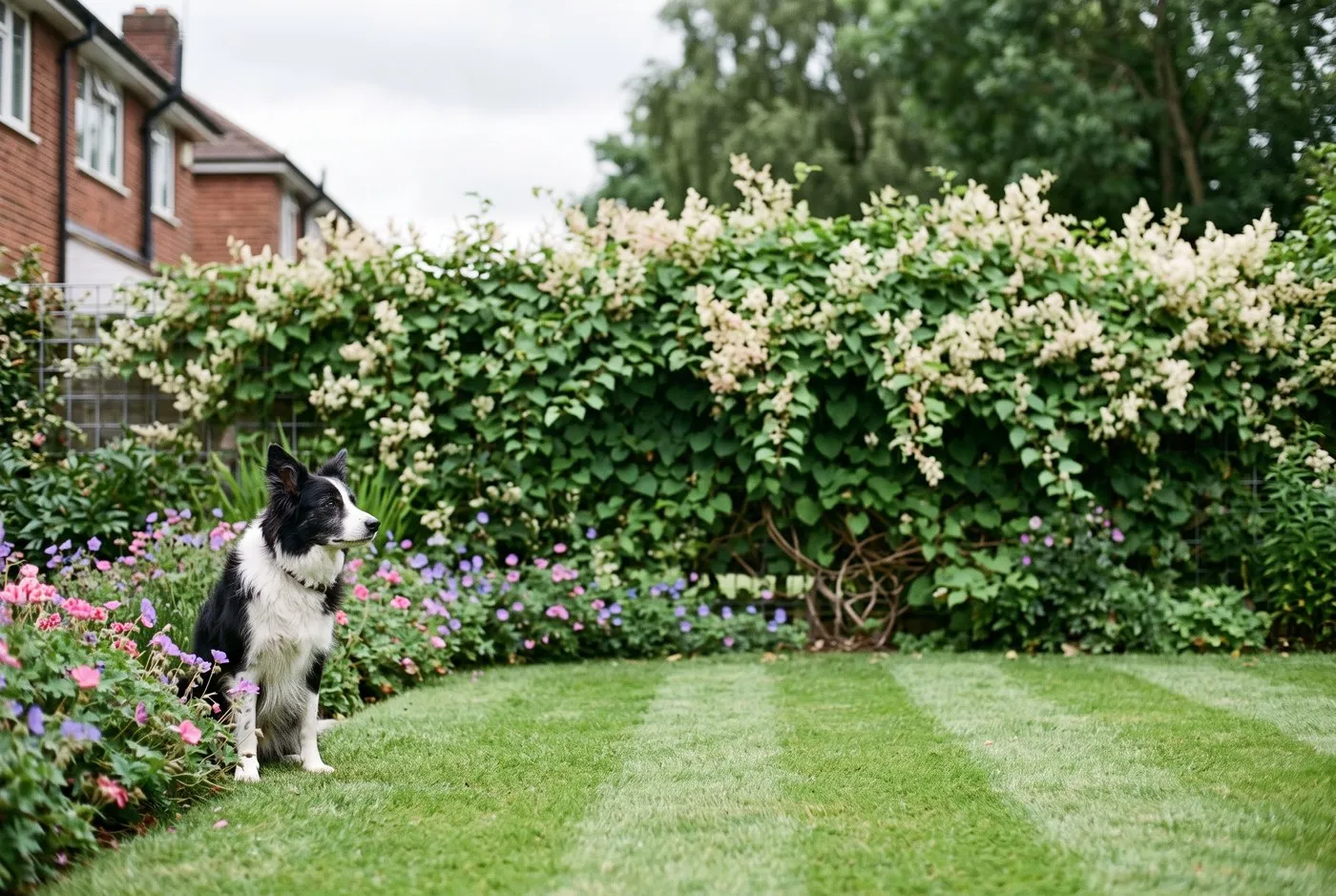
On a big, sturdy boundary Russian vine makes a quick green screen. Just be ready to prune it every year.
How to keep Russian vine under control
If you keep Russian vine, you’re signing up for hard pruning every year. It flowers on new growth, so you can cut it back hard without losing the summer show.
Prune hard in late winter, in February or early March, before growth starts. Cut the whole plant back to a framework of strong stems. Take out dead, weak and tangled growth. A pruning saw handles the thick woody stems at the base, and loppers do the rest. Wear gloves, as the wiry stems can scratch.
Trim again in summer. Cut back anything reaching into trees, gutters or next door as soon as you see it. If that sounds like too much work, the plant is in the wrong place and removing it is the better answer. Russian vine is one of the garden thugs that take over UK plots for exactly this reason.
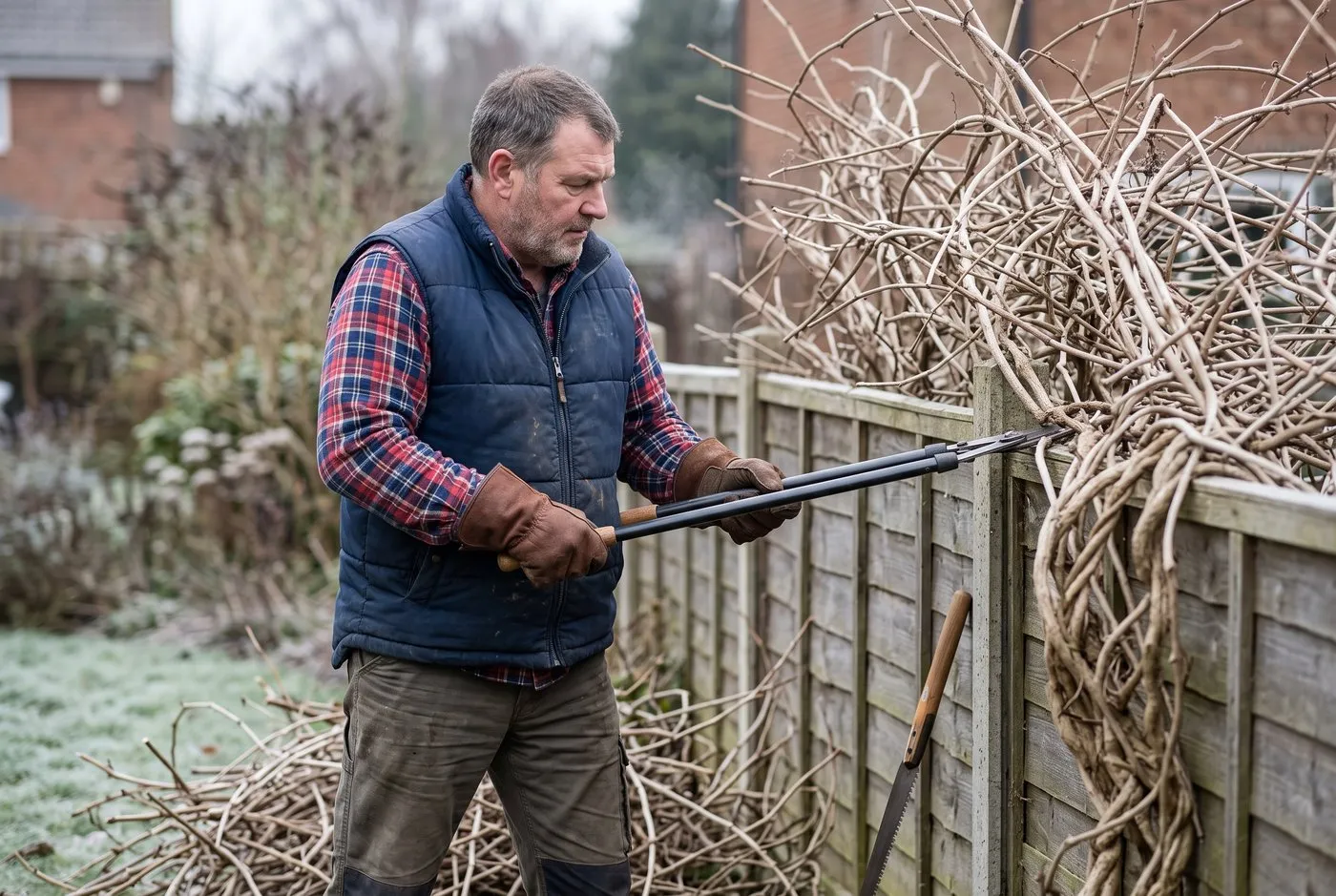
Late winter is the time for a hard cut back. Use loppers on the thinner stems and a saw on the thick woody ones.
How to get rid of Russian vine for good
Start by cutting away most of the top growth so you can see what you’re dealing with. Then tackle the crown, the woody mass at soil level, because that’s what regrows.
Digging out the crown
On small and medium plants, digging works without any chemicals.
- Cut the stems back to knee height.
- Loosen the soil all round the crown with a strong fork.
- Lever the woody crown out, following the main roots as far as you can.
- Pick out any pieces of root and crown from the loosened soil.
- Check the spot every few weeks next summer and dig out any new shoots while they are small.
It is hard work on heavy clay, but a crown left in the ground means the vine comes back.
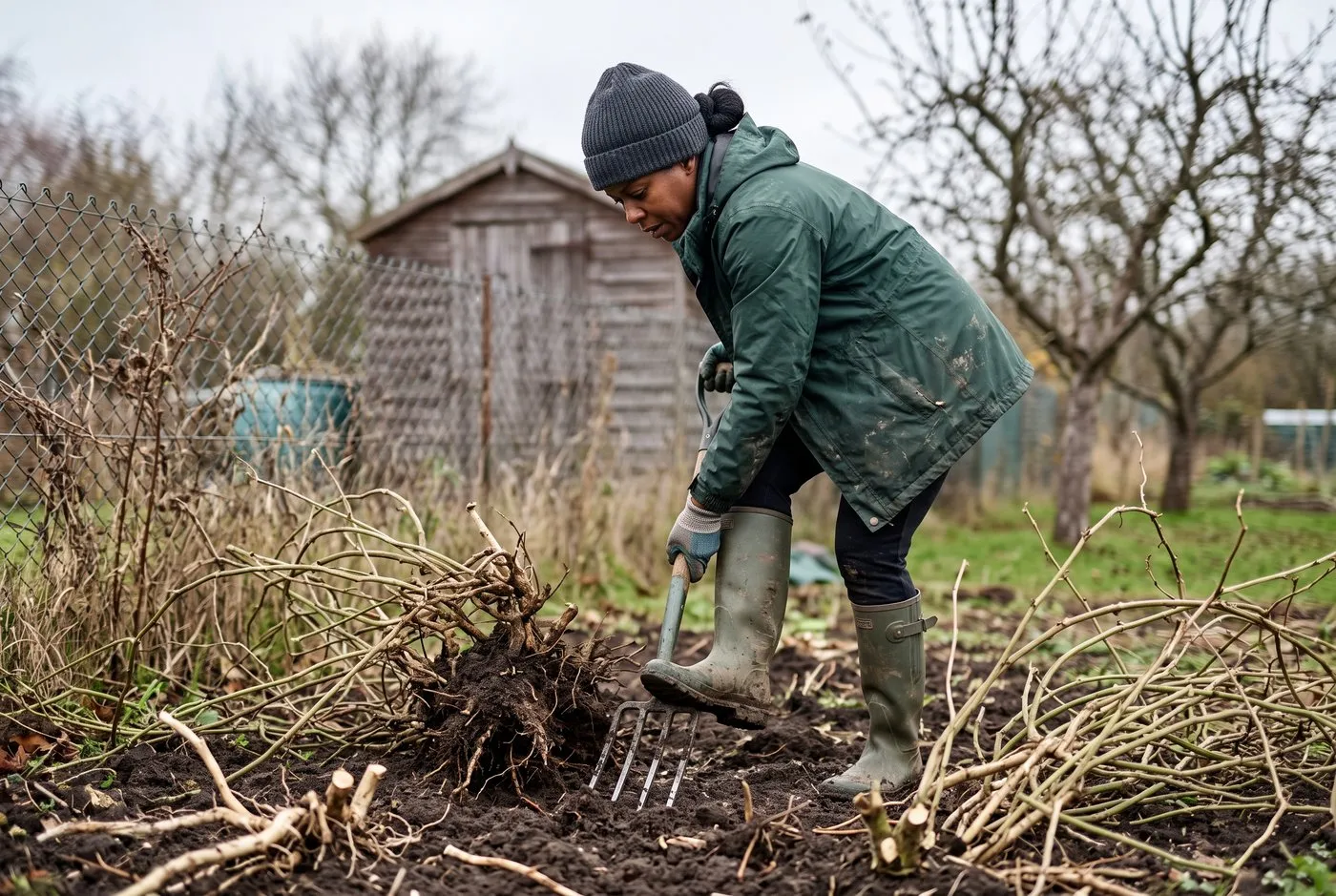
Digging out the woody crown is the surest way to get rid of a small or medium Russian vine.
Using weedkiller on large plants
On big, old plants the crown can be too large to dig out easily. A glyphosate-based weedkiller approved for woody weeds can weaken or kill it. Late summer and early autumn work best, as the plant is drawing food down into its roots.
Cut the main stems low, then treat the fresh cut surfaces straight away with the product, following the label exactly. This keeps the weedkiller off nearby plants. Treat every cut stem, not just the biggest. Leave the crown over winter, then dig it out the following year and check for regrowth.
Keep children and pets away from treated areas until the product has dried, as the label directs.
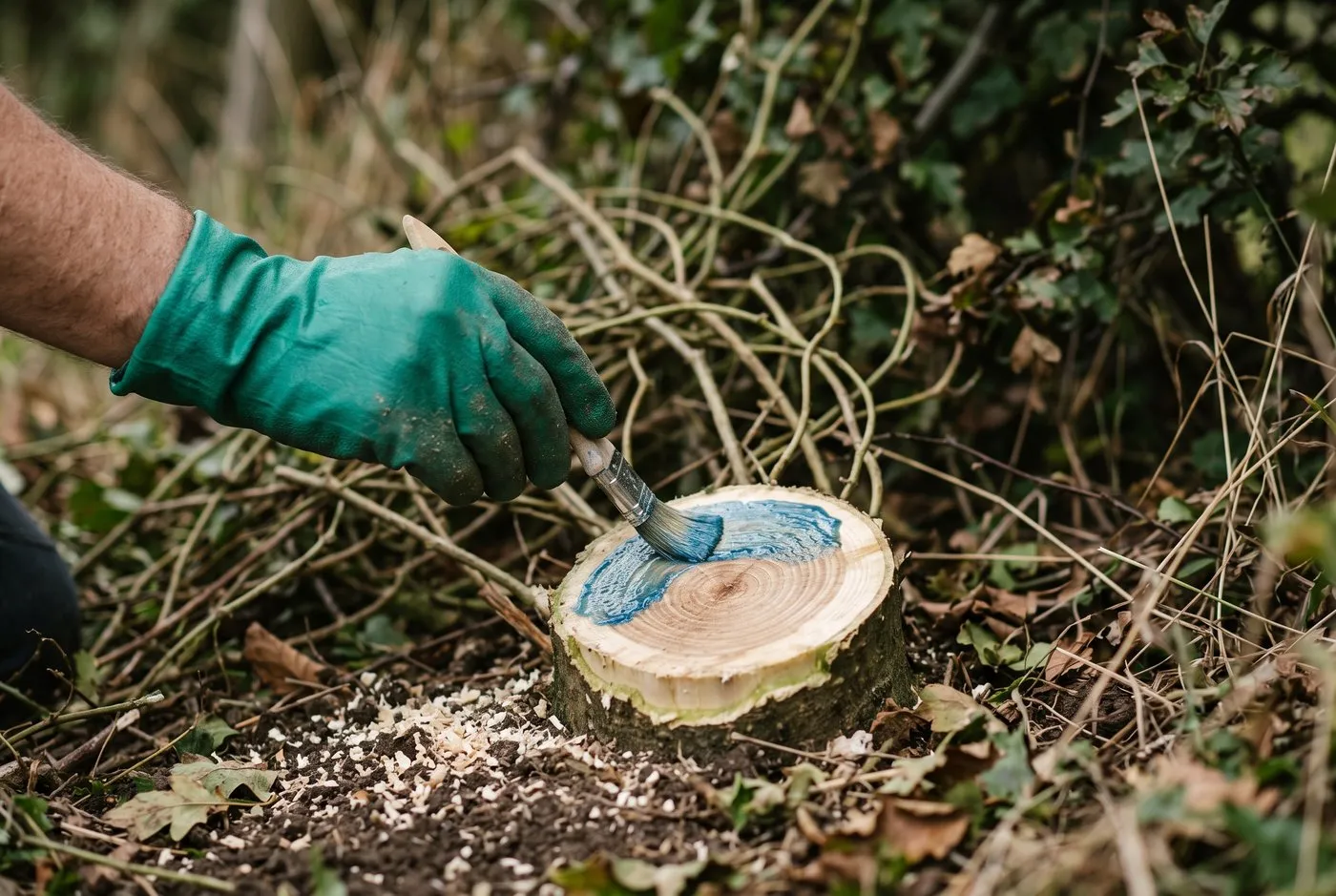
Painting the product onto freshly cut stems keeps it off nearby plants. Always follow the label.
Why does Russian vine keep coming back?
Almost always, the crown is still there. Cutting off the top growth leaves the woody crown and roots full of stored food, and they simply send up new shoots.
The fix is to remove or kill the crown, then keep watching:
- On small plants, dig out the whole crown and the main roots.
- On large plants, treat the crown in late summer, then dig out the dead remains.
- Through the next summer, check every few weeks and remove any regrowth while it’s small.
It’s the same patient approach that beats bindweed and brambles, where any bit left behind can start again.
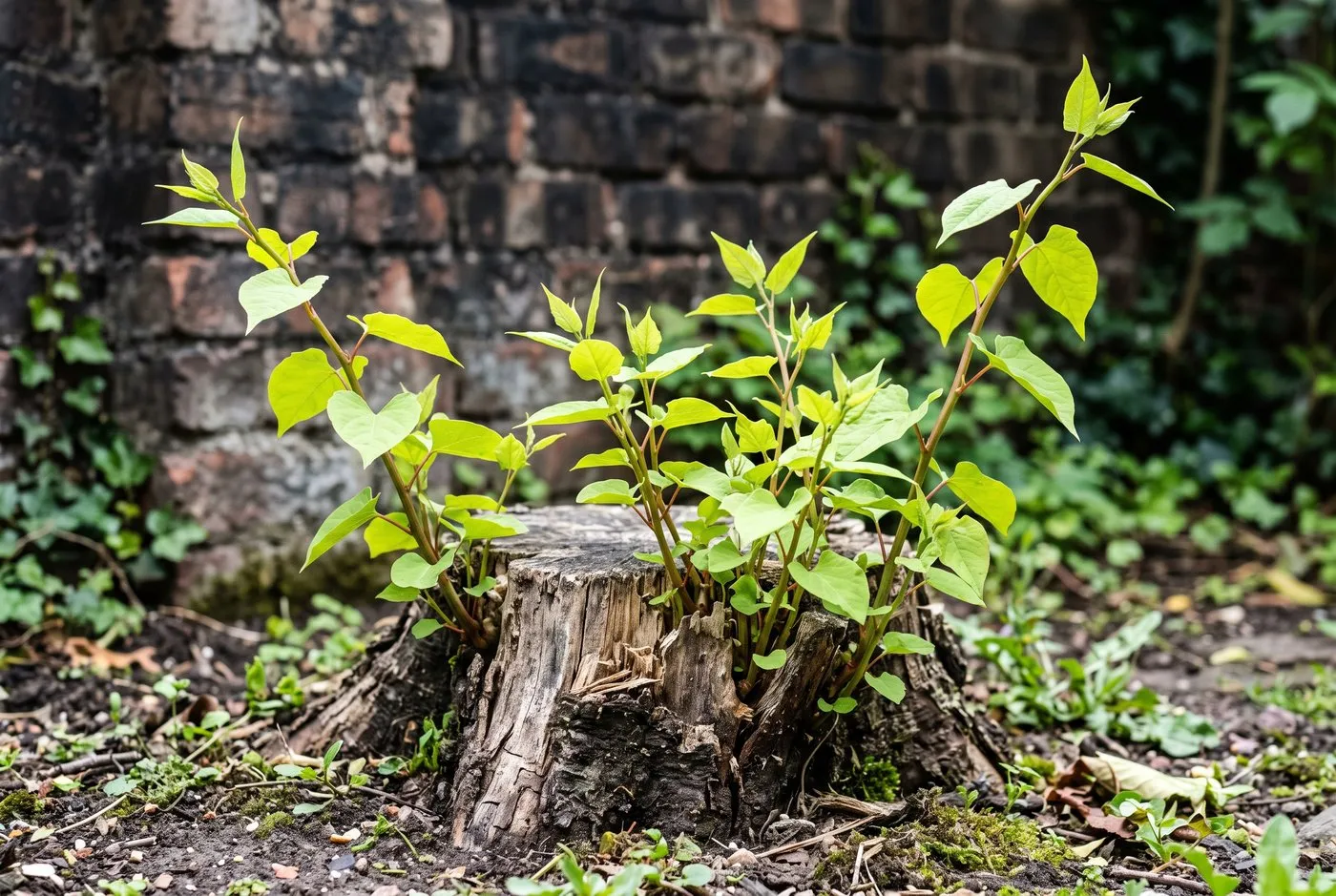
New shoots like these spring up from a cut stump if the crown is left alive.
Month-by-month Russian vine calendar
| Month | Task |
|---|---|
| January | Sharpen loppers and saw. Plan which plants to keep and which to remove |
| February | Prune hard to a framework of strong stems before growth starts |
| March | Finish winter pruning. Clear away cut stems |
| April | Growth speeds up. Remove shoots on cleared ground while small |
| May | Tie in growth you want to keep. Dig out unwanted shoots |
| June | Trim to shape. Keep growth off gutters and roofs |
| July | Flowering starts. Cut back anything heading into trees or next door |
| August | Best time to treat unwanted crowns with weedkiller |
| September | Keep treating cut stems or regrowth while the plant is still active |
| October | Flowering fades. Mark where treated crowns sit |
| November | Dig out dead crowns from last year’s treatment |
| December | Bag up or let cut stems dry out before disposal |
Common mistakes with Russian vine
- Cutting it down in spring and walking away. The crown just regrows, often bushier. Deal with the crown.
- Planting it on a small fence. It belongs on large, sturdy structures. On a light fence it can push panels over.
- Using weedkiller at the wrong time. Late summer works best. Spring treatments often leave the crown alive.
- Composting the crown and roots. Pieces can regrow. Bag them or put them in the green waste bin.
- Mistaking it for Japanese knotweed. Check the stems first: twining means Russian vine, hollow upright canes mean knotweed.
Frequently asked questions
Is Russian vine the same as Japanese knotweed?
No, they are different plants. Russian vine is a woody, twining climber with heart-shaped leaves. Japanese knotweed grows as upright, hollow, bamboo-like canes with shield-shaped leaves and has strict legal rules. Russian vine doesn’t, but don’t let it spread into the wild.
How fast does Russian vine grow?
Very fast: it can grow several metres in a single summer. That speed is why it is called mile-a-minute. A plant can reach about 12m and smother a fence or shed in a couple of years.
Will weedkiller kill Russian vine?
A glyphosate-based weedkiller can kill it, but it usually takes more than one go. Use an approved product labelled for woody weeds, in late summer, exactly as the label directs. Cutting stems and treating the fresh cut keeps the weedkiller off other plants.
How do I get rid of Russian vine permanently?
Cut down the top growth, then dig out the whole woody crown and main roots. Pieces left in the ground can regrow, so check the spot through the next summer. On big plants, treat the crown with weedkiller first, then dig it out later.
When should I prune Russian vine?
Prune it hard in late winter, in February or early March. Cut back to a framework of strong stems. It flowers on new growth, so you won’t lose the flowers. Trim it again in summer if it heads into trees or gutters.
Should I grow Russian vine at all?
Only if you need to hide a large, ugly structure fast and have room. Give it a very sturdy support well away from the house, trees and neighbours. On a small fence it becomes a yearly battle.
Now you know how to tame or remove Russian vine, read the guide to 9 climbers to cover an ugly fence fast for gentler alternatives, or browse more weed fixes in the garden problems section.
Our team produces practical UK gardening guidance from source research, contributor records and established horticultural practice. Editorial standards are overseen by Matt W.


