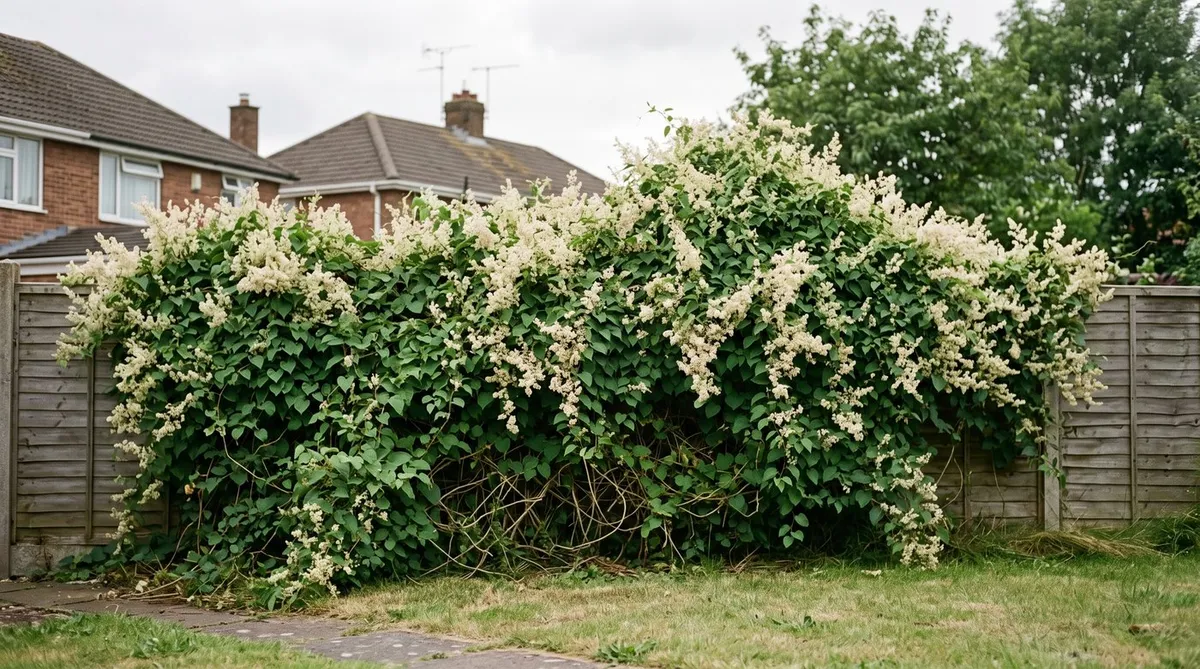
Key takeaways
- Tree of Heaven spreads by root suckers and by masses of wind-blown seed
- Cutting it down without treating the stump makes it come back thicker
- Treat it between July and September, when sap heads down to the roots
- Pull seedlings while they're small, getting the whole root
- It's a listed invasive species, so never plant it or let it spread
Tree of Heaven (Ailanthus altissima) is a fast-spreading tree that loves town gardens, car parks and railway banks, especially in southern England. It was planted as an ornamental for its tropical-looking leaves, then escaped.
The trick with this one is that the problem is underground. Cut it down without treating it and you swap one trunk for a thicket of suckers. Here’s how to spot it, why it fights back, and how to kill it properly.
How to identify Tree of Heaven
Get the ID right first. Tree of Heaven is often mixed up with sumac, ash, walnut and elder, and they need very different handling.
Leaves and the gland test
The leaves are long and made up of lots of leaflets in pairs along a central stalk. The giveaway is at the base of each leaflet: one to four blunt teeth, each with a tiny round bump underneath. The rest of the edge is smooth. Sumac, by contrast, is toothed all the way along. The leaf stalks are often reddish.
Then sniff it. A crushed leaf gives off a strong, sour smell, often compared to rancid peanut butter. Some gardeners call it the “tree of hell” for good reason.
Bark, seeds, and growth habit
Young bark is smooth and pale grey with faint pale streaks. Female trees carry big bunches of winged seeds that turn from green to orange-red in late summer and hang on through winter. They blow a long way on the wind.
 Female trees carry bunches of winged seeds that turn orange-red in late summer and blow a long way.
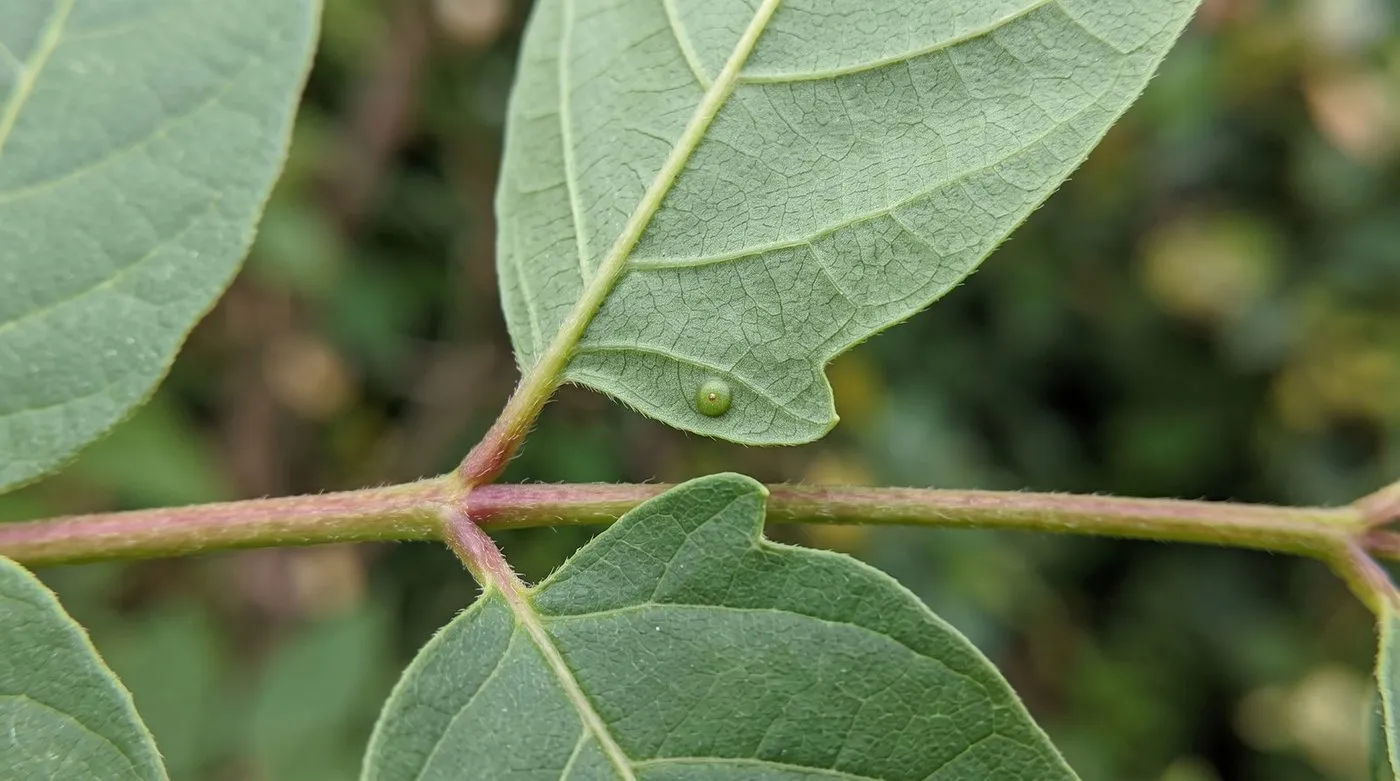 The easy check: a few blunt teeth near the base of each leaflet, each with a little bump underneath.
 A mature trunk has smooth grey bark with pale cracks. Check the leaves too to be sure.
Why Tree of Heaven is so hard to kill
A little understanding here saves years of battling it.
The suckering reflex
The tree has wide, shallow roots that run a long way from the trunk. They’re dotted with sleeping buds. While the tree is whole, the top keeps those buds asleep. Cut the top off and the buds wake up, sending up lots of suckers, often in next door’s border or through a patio.
This is the mistake almost everyone makes. They cut the tree down, feel they’ve won, and next spring there are twenty shoots instead of one trunk.
Seed and chemical warfare
Female trees also scatter lots of seed, and seedlings grow very fast. On top of that, the roots and bark release a substance that holds back other plants nearby. That’s why it often forms dense patches on rough ground.
Root fragment regeneration
Small pieces of root can grow into a whole new tree. So digging out an established tree usually backfires. You snap the roots, leave pieces behind, and end up with a scattered patch instead of one tree. Horsetail and brambles play the same trick, where chopping the top just spurs the roots on.
 Suckers popping up along a fence after the parent tree was cut down without treating the stump.
When to treat Tree of Heaven for a proper kill
Treat it between July and September. Timing is everything, because the weedkiller has to reach the roots.
In late summer the tree sends food down to its roots to store for winter. A weedkiller that moves inside the plant travels down with it and reaches the roots. In spring, the sap is rising, so it never gets there.
Tree of Heaven removal methods compared
| Method | Best for | How hard |
|---|---|---|
| Treating a cut stump | Any trunk you can cut | Medium |
| Spraying the leaves | Suckers and young regrowth | Easy, but needs repeating |
| Pulling by hand | Small seedlings only | Easy |
| Bark treatment | Standing trees that can’t be felled | Call a professional |
Cut-stump treatment, the gold standard
For any trunk you can cut, this is the most reliable way. Cut the stem low, then straight away paint a brushwood killer (usually one containing triclopyr) onto the fresh cut. Do it within a minute or so, before the cut seals over. Focus on the outer ring just inside the bark, where the living wood is. Always follow the instructions on the label.
Speed matters because the tree seals a cut quickly. Leave it too long and the weedkiller just sits on the surface while the roots carry on.
 Painting brushwood killer onto the outer ring of a freshly cut stump, before the cut seals.
Basal-bark treatment when you cannot cut
Where felling is tricky, professionals can treat a standing tree by painting a band of weedkiller around the base of the trunk, which soaks through the bark. This uses mixes that aren’t sold for home use, so leave it to a contractor. It’s useful near buildings, where a falling trunk could cause damage.
 Bark treatment paints a band around the base of the trunk. It’s a job for a professional.
Foliar treatment for suckers and seedlings
For the suckers that will pop up, and any regrowth that’s still small, spray the leaves with a suitable weedkiller between July and September. Expect to repeat this for two or three years until the roots run out of steam. Pick a still day and keep spray off plants you want to keep. If you’d rather avoid weedkillers, our guide to organic weedkillers covers the options, but be honest with yourself: none of them will kill the roots of an established tree.
The root cause most people miss
Most failed attempts come from treating Tree of Heaven as a trunk problem. It’s really a root problem.
The fix is to kill the roots, not the shoots. That means two things. Use a weedkiller that moves through the plant, at the right time of year. And accept that one go rarely finishes the job. A big patch needs a stump treatment followed by two or three years of spraying suckers. Think of it as a campaign, not a weekend.
Keep on top of seedlings too. If there’s a female tree nearby, new seedlings will keep blowing in. Pull them as soon as you spot them, before the root gets established.
 Pull seedlings while they’re small and get the whole root out.
Common mistakes when removing Tree of Heaven
Dodge these five and you’ll save yourself years of fighting the same patch.
Cutting it down and walking away
This is the big one. Cutting it down without treating the stump is the quickest way to get more trees. If you can’t treat the cut straight away, don’t cut at all.
Treating in spring
Weedkiller applied while the sap is rising never reaches the roots. Wait for July to September.
Digging out an established tree
Bits of root left behind become new trees. Save the spade for seedlings, and even then get the whole root.
Composting or fly-tipping the material
Stems and root pieces can regrow, and as a listed invasive the material mustn’t be allowed to spread. Don’t put it on the compost heap. Let cut material dry out completely on a hard surface, and check with your council about how to get rid of it.
Ignoring the neighbour’s tree
You can clear your garden perfectly and still get new seedlings every autumn from a tree two gardens away. Have a chat with your neighbours. Tackling it together works far better. The same goes for other shared invaders like Japanese knotweed and Himalayan balsam.
The law on Tree of Heaven in Great Britain
Tree of Heaven is a listed invasive species. You mustn’t plant it, sell it, or let it spread into the wild. You don’t have to remove one already growing on your land, but you are responsible for stopping it spreading beyond it.
Wear gloves, long sleeves and eye protection when you cut it, as the sap can irritate skin and eyes.
A realistic budget for clearing Tree of Heaven
For a smallish garden tree, doing it yourself is cheap. A bottle of brushwood killer treats lots of stumps, and you’ll also need a brush, gloves, goggles and a pruning saw. The real cost is your time over two or three years of follow-up.
For a big, many-stemmed tree, or one near a building, call in a contractor who deals with invasive plants. Prices depend on size, access and taking the waste away. A quick fell-and-grind without weedkiller can end up costing more in the long run, because the suckers come back anyway.
Now you know how to beat Tree of Heaven without making more of it, have a look at our guide to banned and invasive plants to avoid in UK gardens so the next thug never gets a foothold.
Frequently asked questions
Is Tree of Heaven illegal in the UK?
It’s a listed invasive species, so you mustn’t plant it or let it spread. You can remove one that’s already on your land. Just get rid of the cut material carefully and stop it spreading to your neighbours.
Why does Tree of Heaven keep coming back after I cut it down?
Cutting the top off wakes up buds on the roots. The tree has a wide root system full of stored energy. Take the top away and those roots push up lots of new shoots, often metres from the stump. To stop it, you need to kill the roots with a weedkiller that travels inside the plant.
What is the best time of year to kill Tree of Heaven?
Late summer to early autumn, from July to September. At this time the tree sends food down to its roots for winter. Weedkiller applied then travels down with it. In spring the sap is rising, so the weedkiller never gets down to the roots.
How do I tell Tree of Heaven apart from sumac or ash?
Look for a few blunt teeth near the base of each leaflet. Each tooth has a tiny bump underneath. Sumac has teeth all along the leaflet edge. Ash has leaves in pairs on the twig and black buds. Crushed Tree of Heaven leaves smell strongly unpleasant, a bit like rancid peanuts.
Can I dig out Tree of Heaven instead of using chemicals?
Only seedlings. Pull them while they’re small, getting the whole root. Digging out a bigger tree usually fails, because small pieces of root left behind grow into new plants. For anything with a woody stem, treating the cut stump works far better.
Is Tree of Heaven poisonous to people or pets?
The sap can irritate skin and eyes, so cover up when cutting it. The smell of the crushed leaves can give some people a headache. Wear gloves and long sleeves, and keep children and pets away from the cut material and any weedkiller.
Will Tree of Heaven damage my house or drains?
It can. Its strong roots push into cracks in walls, paths, drains and foundations. It’s famous for growing out of buildings. Deal with any tree within a few metres of a structure promptly.
Our team produces practical UK gardening guidance from source research, contributor records and established horticultural practice. Editorial standards are overseen by Matt W.