Key takeaways
- Having knotweed or balsam turn up in your garden isn't a crime, but letting it spread into the wild is
- Giant hogweed, Himalayan balsam, skunk cabbage and Chilean rhubarb can't be sold, swapped or planted
- Five pond plants, including floating pennywort and parrot's feather, have been banned from sale in England since 2014
- Never strim knotweed or balsam, as the bits and seeds start new patches
- Knotweed and soil containing it are controlled waste, so never compost it or put it in the green bin
- Giant hogweed sap burns skin in sunlight, so cover up and report it to your council
Banned plants in UK gardens are less about what you own and more about what you let escape. In most cases it isn’t illegal to have an invasive plant in your garden. The offence is planting it in the wild, or letting it spread there. A shorter list of plants can’t be sold, swapped or grown at all.
Below you’ll find the plants that matter, what the law asks of you, and what to do if one turns up. The rules here are for England and Wales. Scotland and Northern Ireland have similar laws of their own.
What does the law say about invasive plants?
The main rule is in Section 14 of the Wildlife and Countryside Act 1981. It’s an offence to plant, or otherwise cause to grow, in the wild any plant on Schedule 9 of the Act. That list includes Japanese knotweed, giant hogweed, Himalayan balsam, Rhododendron ponticum, Spanish bluebell, three-cornered garlic and several cotoneasters. Serious cases can end in a fine or prison.
A second layer covers invasive species of special concern. For these, it’s an offence to sell, swap, grow, plant or release them. The list includes giant hogweed, Himalayan balsam, American skunk cabbage, Chilean rhubarb (Gunnera tinctoria) and several pond plants. Owners of large gunnera have extra rules, explained in our guide to the gunnera ban.
Two more laws back these up. Knotweed waste, and soil containing it, is controlled waste. And councils can serve a community protection notice on someone who lets knotweed cause a nuisance to neighbours. The GOV.UK guidance on invasive plants has the current lists.

The zigzag, purple-speckled stem and flat-based leaves are the giveaways for Japanese knotweed.
Having it versus spreading it
The difference between having a controlled plant and spreading it trips up a lot of people.
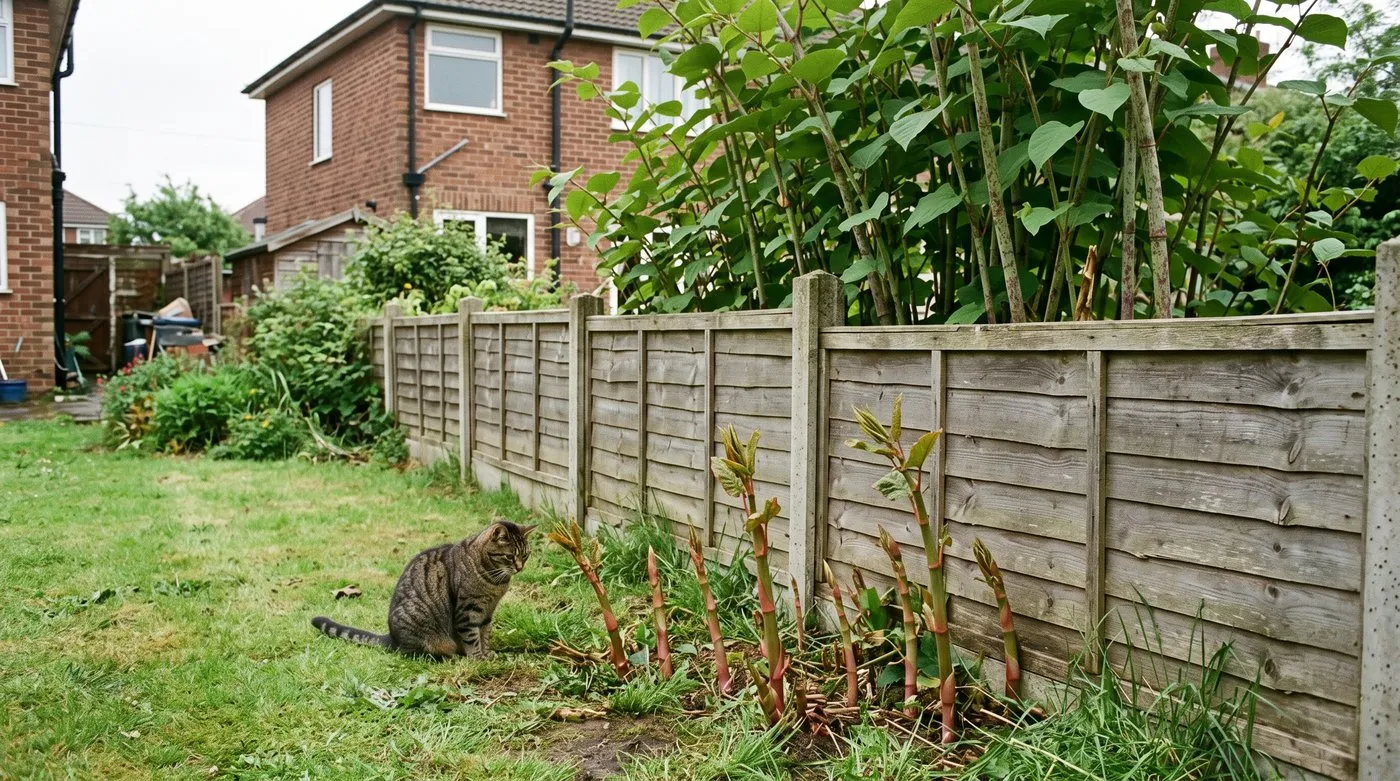
Knotweed creeping under the fence is the classic way it spreads, so raise it with your neighbour early.
If knotweed, balsam or Spanish bluebells are already in your garden, you’re not breaking the law. Nobody can make you remove them just because they’re there.
Spreading them is the offence. That covers planting them on land outside your garden, fly-tipping cuttings, and moving soil with root fragments in it. Letting knotweed creep under the fence can also land you in trouble with your neighbour and your council.
Warning: Never strim, mow or flail Japanese knotweed or Himalayan balsam. Cutting throws live fragments and seeds across the garden, turning one plant into many.
Which plants are banned or controlled in the UK?
These are the controlled plants you’re most likely to meet in or near a garden. Most are a spreading offence. The species of special concern also can’t be sold or grown.
| Plant | Problem | What the law says | What to do |
|---|---|---|---|
| Japanese knotweed | Spreads from tiny root pieces | Don’t let it spread; waste is controlled | Specialist treatment or approved weedkiller |
| Giant hogweed | Sap burns skin in sunlight | Don’t spread, sell or grow | Cover up, report, use a contractor |
| Himalayan balsam | Smothers riverbanks | Don’t spread, sell or grow | Pull before it flowers |
| Rhododendron ponticum | Shades out woodland plants | Don’t let it spread | Don’t plant it; dig out small plants |
| Three-cornered garlic | Carpets borders and verges | Don’t let it spread | Dig out the bulbs |
| Spanish bluebell | Crosses with native bluebells | Don’t let it spread | Dig out, plant native bluebells instead |
| American skunk cabbage | Takes over wet woodland | Don’t spread, sell or grow | Dig out; keep away from water |
| Floating pennywort | Chokes ponds and canals | Banned from sale since 2014 | Remove and dry out |
| Parrot’s feather | Blankets still water | Banned from sale since 2014 | Remove and dry out |
| Australian swamp stonecrop | Forms thick mats in ponds | Banned from sale since 2014 | Remove and dry out |
Each of the worst offenders has its own guide: three-cornered garlic and removing Spanish bluebells are two of the most common garden finds.

Giant hogweed often grows beside rivers and paths. Its huge white flower heads make it easy to spot from a distance.
Why Japanese knotweed causes the biggest headaches
Japanese knotweed does the most lasting damage to people’s finances, which is why it’s the one you hear about.
It spreads through underground stems called rhizomes. A small piece of root can grow into a new plant, so moving soil is risky. When you sell a home in England or Wales, the property information form asks whether knotweed is present. Lenders usually want to see a professional management plan before they’ll lend.
Treatment takes several seasons. You can use an approved weedkiller labelled for knotweed, following the label, or hire a specialist. If a sale or mortgage is coming up, a specialist’s plan and guarantee is usually worth having.
How to tell knotweed from look-alikes
Plenty of harmless plants get mistaken for knotweed. Check the stem before you panic or pay for a survey.
Knotweed has a zigzag stem, with one leaf at each kink. Leaves are shield-shaped, with a flat base and pointed tip. Older canes are hollow, bamboo-like and speckled purple. New shoots in spring are red and look a bit like asparagus.
If your plant twines around things, it’s almost certainly bindweed. If it’s low ground cover with heart-shaped leaves, it’s likely houttuynia, a garden thug but not a controlled plant. Our list of garden thugs that take over borders covers more legal but pushy plants.

Knotweed’s broad shield leaf, bindweed’s arrowhead and bamboo’s narrow blades. The stem tells you even more than the leaf.
Why garden ponds need extra care
Garden ponds are how several of the worst invaders escape. That’s why five pond plants were banned from sale in England in April 2014.
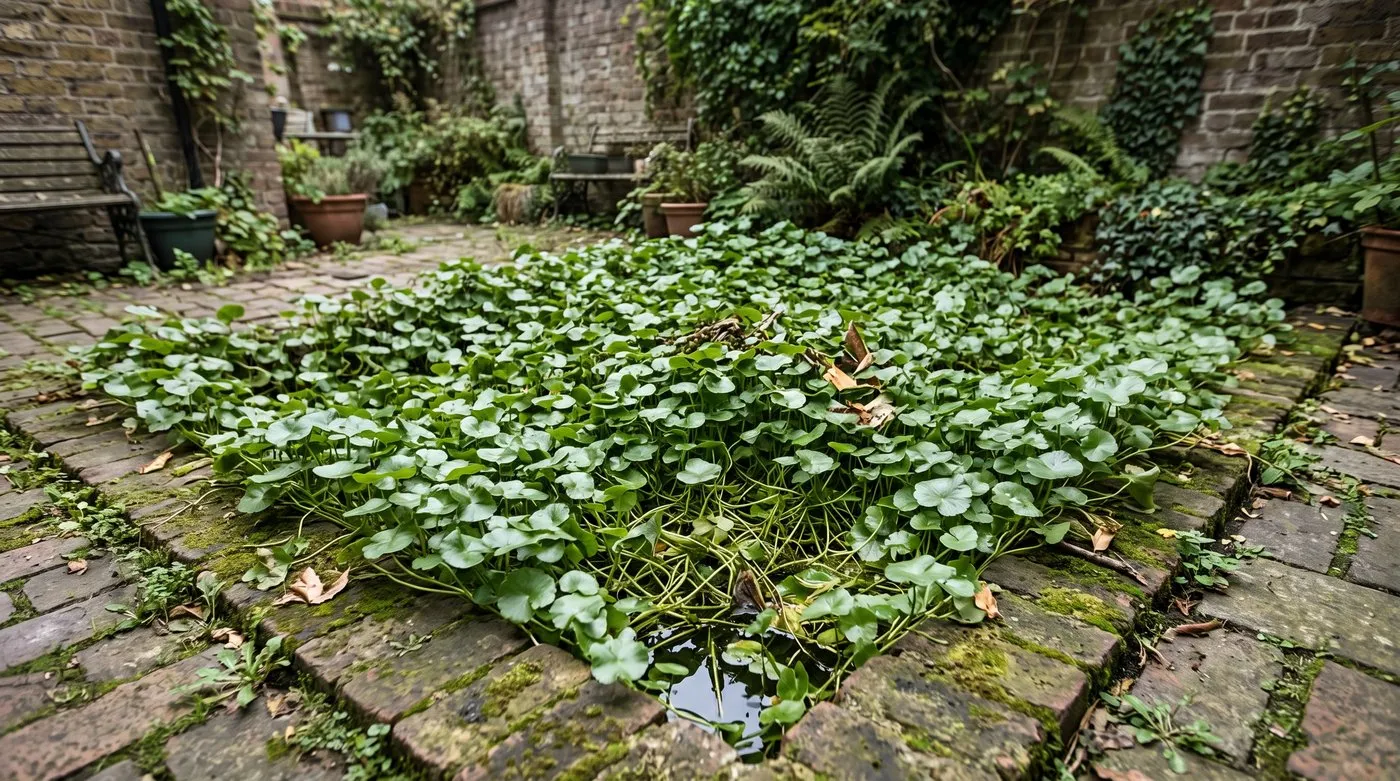
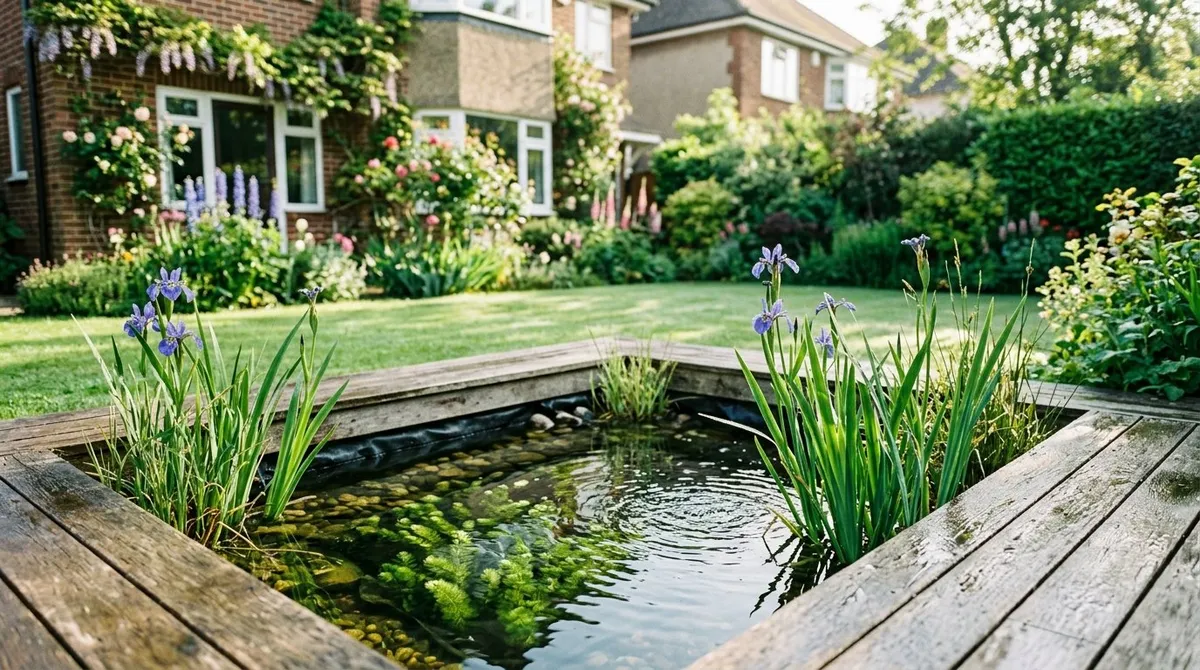
Floating pennywort can cover a small pond in a single summer, which is why it was banned from sale.
They are floating pennywort, parrot’s feather, water fern (Azolla filiculoides), Australian swamp stonecrop (Crassula helmsii, sometimes sold as New Zealand pigmyweed) and water primrose. All form thick mats that block light and crowd out native life. Crassula can regrow from a tiny fragment.
Heavy rain can wash pond plants into ditches and streams. From there they reach rivers and canals, where they’re very hard to clear. Stick to native or well-behaved plants from our list of the best pond plants for UK gardens.
Gardener’s tip: Never tip unwanted pond plants or pond water into a drain, ditch or stream. Leave the plants to dry out completely on a hard surface, then bin them.
When to tackle invasive plants
Timing decides whether you win or lose a year. Hit seed-spreaders like balsam before they flower. Tackle knotweed from late summer into autumn, when the plant draws weedkiller down to its roots.
| Month | What to do |
|---|---|
| March to April | Look for red knotweed shoots and note every patch |
| April to May | Pull young Himalayan balsam seedlings while they’re soft |
| June | Keep pulling balsam; report giant hogweed to the council |
| July | Last chance to pull balsam before the pods burst |
| August to October | Treat knotweed with an approved weedkiller, or call a specialist |
| November to February | Plan ahead, and book a survey if you’re selling |
Pulling balsam is the classic job. Our Himalayan balsam removal guide explains how to clear a patch over a few summers.

Balsam pulls up easily by hand. Do it before the seed pods form, so you aren’t scattering next year’s crop.
Getting rid of invasive plant waste safely
Getting rid of the waste is where good intentions go wrong. Knotweed and soil containing it are controlled waste.
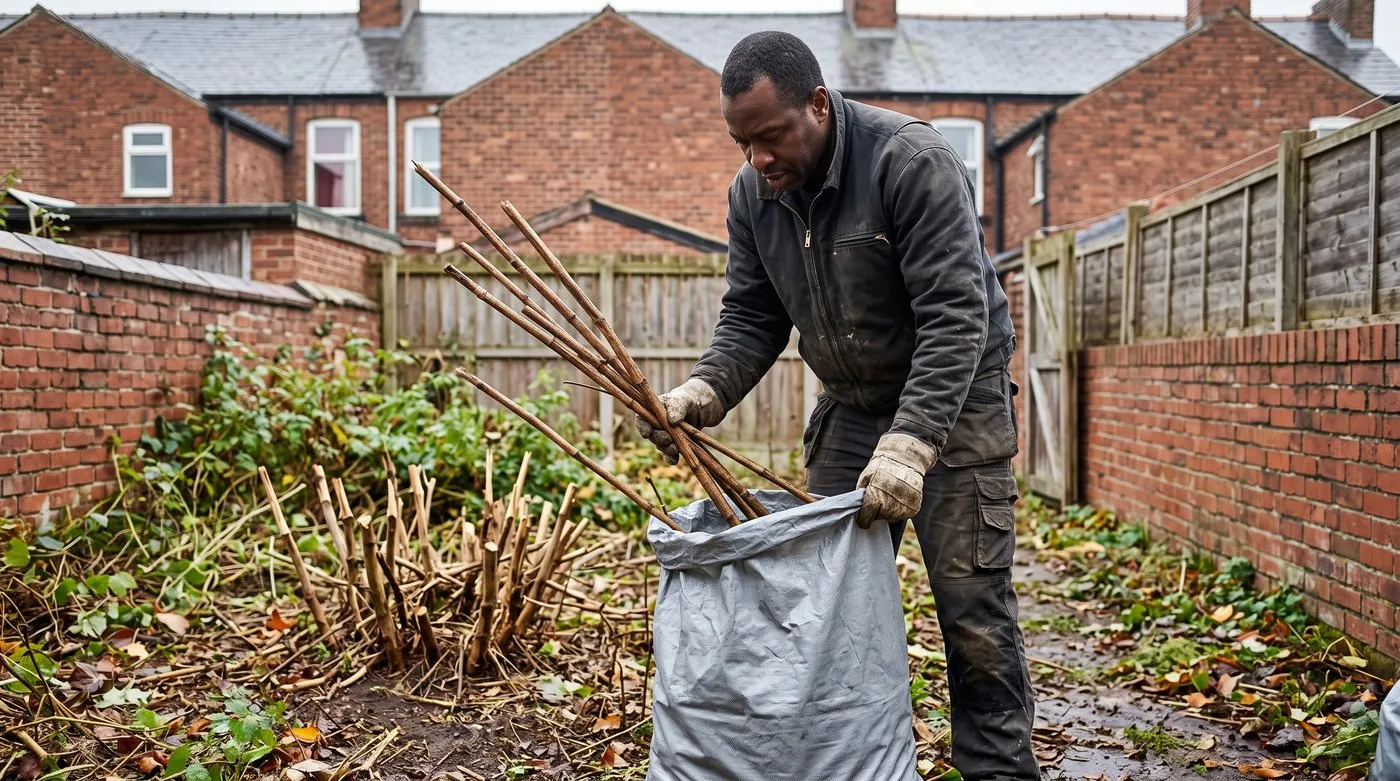
Knotweed waste is controlled waste, so bag it carefully for a licensed landfill site and never compost it.
Send knotweed to a landfill site licensed to take it, with the right paperwork. Burying or burning it on your own land is allowed only under strict rules, so read the Environment Agency guidance first. Never put knotweed in the home compost or the council green bin.
For other plants:
- Himalayan balsam: pulled plants without seed pods can go on the compost heap.
- Giant hogweed: wear full cover and gloves, bag it up, and ask your council about disposal.
- Pond plants: dry them out completely on hard ground, then bin them.
If giant hogweed sap touches your skin, wash it off with soap and water straight away. Keep the area covered from sunlight, and see a pharmacist or GP if it blisters. Our giant hogweed guide has photos to help you spot it.
Common mistakes with banned plants
- Strimming or mowing knotweed and balsam. It spreads pieces and seeds for metres. Pull balsam and treat knotweed instead.
- Composting the wrong thing. A bit of knotweed root or a ripe balsam pod survives a home heap. Never compost knotweed at all.
- Spraying knotweed in spring. It kills the top growth, but the roots grow back. Late summer and autumn work better.
- Moving soil with knotweed in it. This is the most common way it spreads. Check soil before you dig it out or bring it in.
- Ignoring a neighbour’s patch. If knotweed is coming under your fence, raise it early and in writing.
Where to report invasive plants
Report giant hogweed, knotweed and pond invaders on public land, verges or waterways to your local council. The GB Non-Native Species Secretariat has identification sheets and a recording scheme.
In your own garden, three steps cover most cases. Identify the plant properly, stop it crossing your boundary, then treat it at the right time. For more on weeds and pests, browse our garden problems hub.
Frequently asked questions
Is it illegal to have Japanese knotweed in your garden?
No, having it on your land isn’t illegal. You must not plant it, move it or let it spread into the wild. If it causes a nuisance next door, your council can serve a community protection notice, and your neighbour may have a civil claim.
What is the most dangerous banned plant in the UK?
Giant hogweed is the most dangerous to people. Its sap makes skin burn and blister in sunlight. Japanese knotweed causes more money worries, because it can complicate selling or remortgaging a home.
Which plants are banned from sale in the UK?
Invasive species of special concern can’t be sold, including giant hogweed and Himalayan balsam. Five pond plants have also been banned from sale in England since 2014: floating pennywort, parrot’s feather, water fern, Australian swamp stonecrop and water primrose.
What should I do if I find giant hogweed?
Don’t touch it with bare skin. If sap gets on you, wash it off with soap and water and keep the skin covered from the sun. Report the plant to your council, and leave large stands to a specialist with protective kit.
Can I be prosecuted for spreading invasive plants?
Yes, letting a Schedule 9 plant grow in the wild is an offence. The worst cases can mean a fine or prison. Dumping cuttings on a verge or moving soil with knotweed in it are the usual ways people get caught out.
How do I get rid of Japanese knotweed waste legally?
Treat it as controlled waste and never put it in the compost or green bin. It must go to a landfill site licensed to take it. Burying or burning it on site is allowed only under strict rules, so check the Environment Agency guidance first.
Now you know the rules, read our Japanese knotweed identification guide to check whether that mystery plant is the real thing.
Our team produces practical UK gardening guidance from source research, contributor records and established horticultural practice. Editorial standards are overseen by Matt W.