Key takeaways
- Legumes (clover, peas, beans, vetch, lupins, gorse) and a few non-legumes such as alder and sea buckthorn fix nitrogen
- Cut a root nodule open: pink inside means it is working, white or green means it is not
- A living legume keeps its nitrogen, so beans planted next to sweetcorn don't feed it
- The soil gains when the plant dies and rots, so cut green manures at flowering and leave the roots in
- Pick the pods and most of the nitrogen goes home with you in the seeds
- Plants fix little in rich, freshly manured or very acid soil
Nitrogen fixing plants grow their own fertiliser. Bacteria living in little lumps on their roots turn nitrogen from the air into food the plant can use. Clover, peas, beans and lupins all do it, and so do alder and sea buckthorn.
There’s one catch that most plant lists skip. The plant keeps that nitrogen for itself while it’s alive. Your soil only gains when the plant dies back and rots down. Get that timing right and these plants are a brilliant, free way to build up tired ground. This guide covers which ones to grow, how to check they’re working, and how to get the nitrogen into your soil.
How do nitrogen fixing plants work?
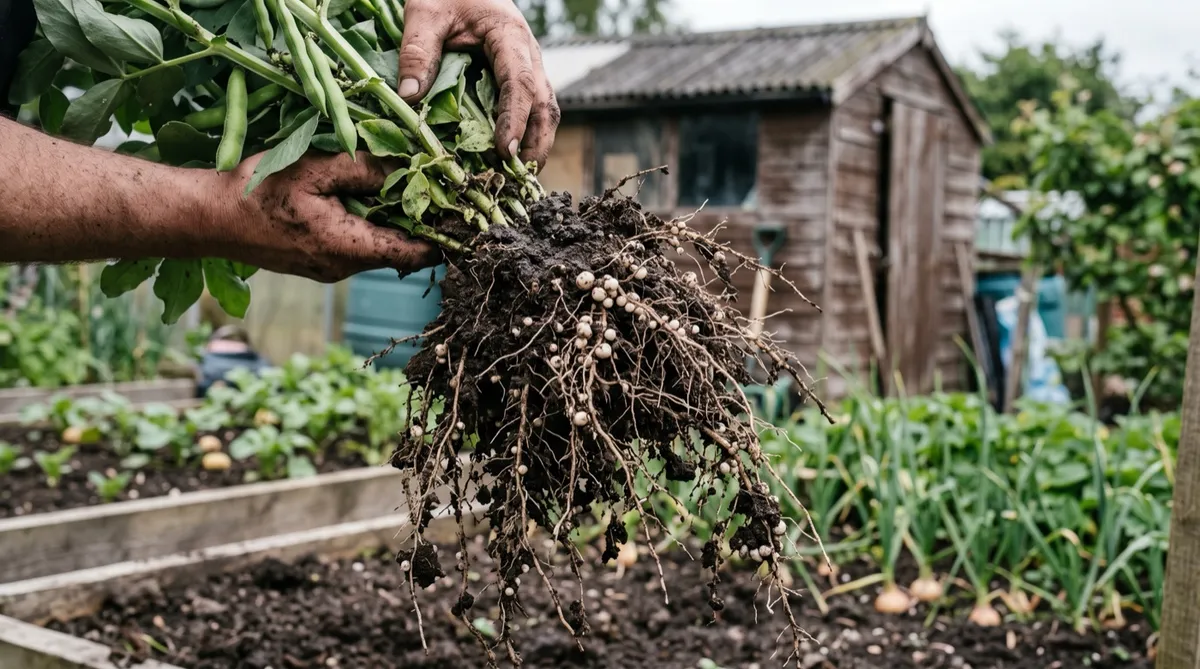
They team up with soil bacteria that live inside small swellings on the roots, called root nodules. The bacteria take nitrogen gas from the air in the soil and turn it into a form the plant can use. In return, the plant feeds them sugar from its leaves.
Air is mostly nitrogen, but plants can’t use it in that form. That’s why this partnership matters. It lets legumes grow well in poor soil where other plants would look pale and hungry.
Fixing nitrogen costs the plant a lot of energy. So it only bothers when it needs to. In rich soil it simply takes up the nitrogen that’s already there and makes few nodules.

Lift a broad bean around flowering time and you’ll see the nodules clustered on the finer roots near the surface.
How to tell if root nodules are working
Cut a nodule open. Pink or red inside means it’s busy fixing nitrogen. White, green or brown means it’s too young, past its best or not working.
The pink comes from a protein that soaks up oxygen, which would otherwise stop the bacteria working. Check peas or broad beans when they’re in flower, as that’s when nodules are most active. Late in the season, as pods fill, many nodules turn greenish and stop.
If you find no nodules at all, the usual reasons are rich soil, very acid soil or waterlogging. Lupins on ground that has never grown them can also lack the right bacteria.
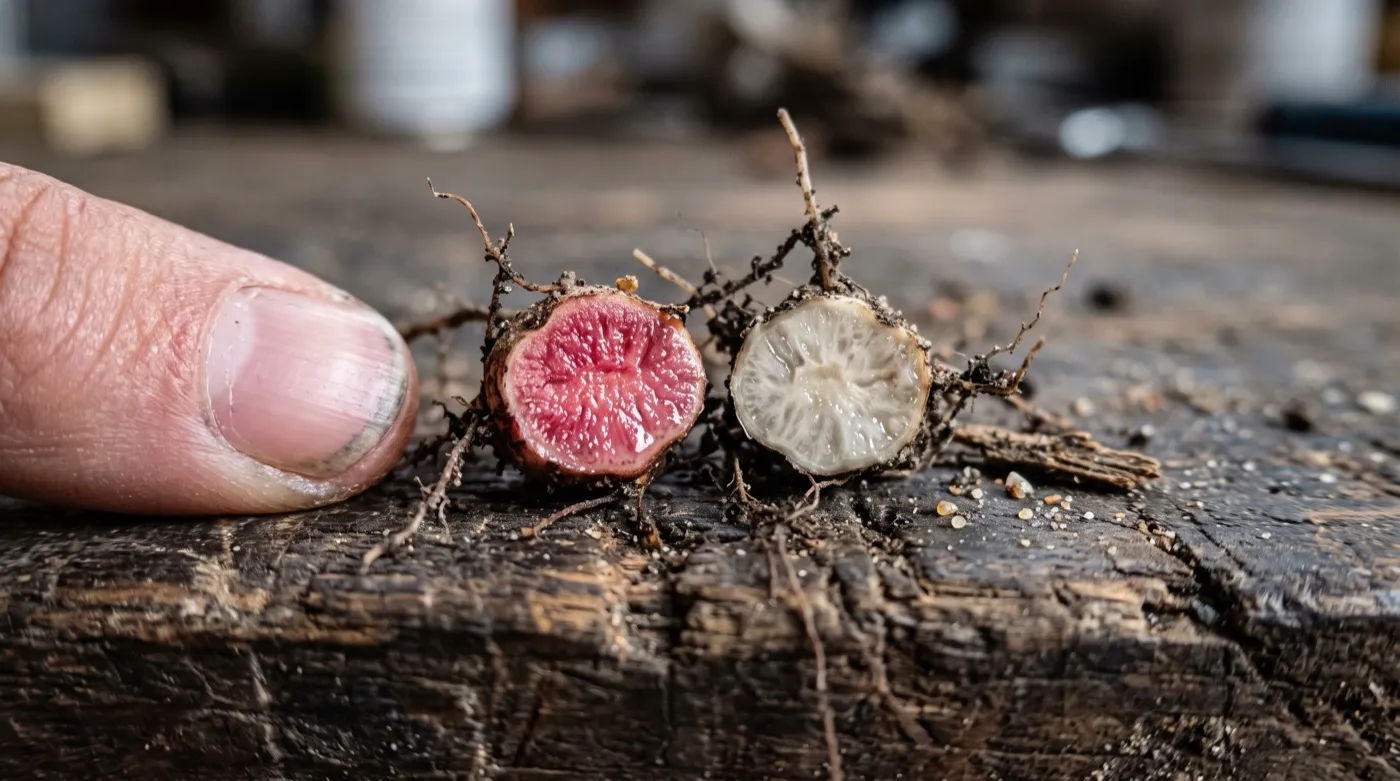
The quick test. The pink nodule on the left is fixing nitrogen. The white one beside it isn’t doing anything useful.
Legumes and the other nitrogen fixers
Most nitrogen fixing plants are legumes, the pea and bean family. A smaller group of trees and shrubs does the same job with a different soil organism called Frankia.
Legumes work with Rhizobium bacteria. Their nodules are small, round or finger-shaped, and usually last a single season. This group covers clover, peas, beans, vetch, lupins, sweet peas, gorse, broom, laburnum and wisteria.
Frankia plants are not legumes. In UK gardens the main ones are alder, sea buckthorn, bog myrtle, Elaeagnus and Ceanothus. Their nodules are woody, last for years and grow into knobbly clusters. These are the ones to reach for on a hard site, as several of them cope with wet, salty or very poor ground.
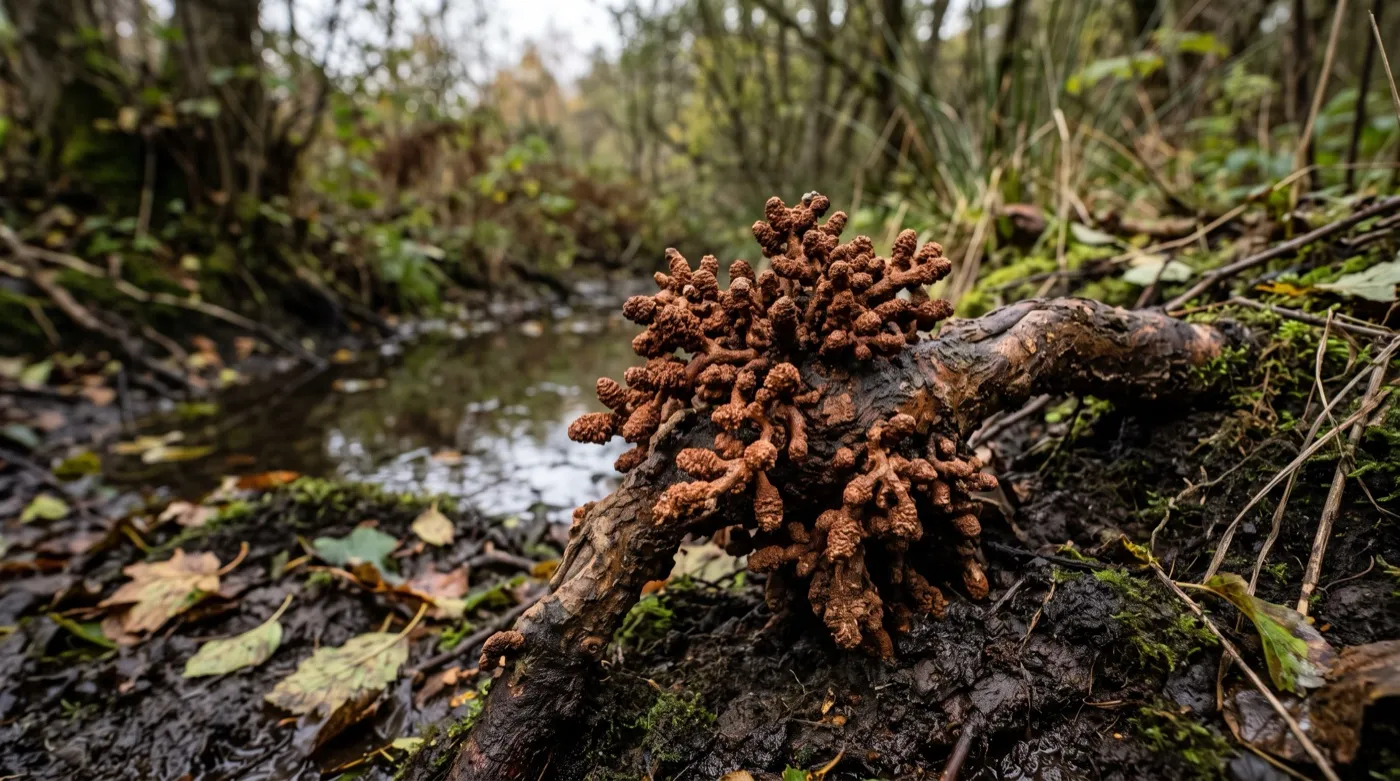
Alder nodules look nothing like a bean’s. They are woody and grow into knobbly clusters that last for years.
The best nitrogen fixing plants for UK gardens
Pick by what you want the plant to do. Green manures build soil in a veg bed. Shrubs and trees improve awkward ground slowly. Edible crops fix a little, but you take most of it home in the pods.
| Plant | Type | Best for | Good to know |
|---|---|---|---|
| Red clover | Short-lived perennial | Resting a veg bed for a season or two | Bees love the flowers |
| Winter tares (vetch) | Hardy annual | Winter cover on cleared beds | Sow August to September |
| Crimson clover | Annual | A quick summer green manure | Pretty red flowers |
| White clover | Perennial | Lawns and paths | Stays green in dry spells |
| Field beans | Hardy annual | Winter cover on heavy soil | Sow September to November |
| Lupin | Annual or perennial | Acid, sandy soil | Deep roots open up the ground |
| Broad beans and peas | Annual crops | Food first, a small soil gain | Leave the roots in after picking |
| Alder | Tree | Wet ground and shelter belts | Italian alder copes with drier soil |
| Sea buckthorn | Shrub | Seaside gardens and pure sand | Suckers, and needs a male plant for berries |
| Gorse and broom | Shrubs | Poor, dry, acid ground | Gorse is very prickly |
| Bog myrtle | Shrub | Wet, acid corners | Won’t grow on chalk or lime |
| Ceanothus | Shrub | A sunny, sheltered wall | Can be damaged in a hard winter |
Match the plant to your ground. Lupins and sea buckthorn thrive in free-draining soil, so they suit the plants in our guide to the best plants for sandy soil. Alder wants the opposite.
Warning: Laburnum is a legume, but every part of it is poisonous, especially the seeds. Skip it where children or pets play.
Alder, sea buckthorn and other nitrogen fixing shrubs
These are the plants to choose when the ground is too wet, salty or poor for much else. They feed the soil slowly through falling leaves and old roots.
Alder thrives in soggy ground that drowns most trees, and it takes well to coppicing. Common alder (Alnus glutinosa) is native and great for wildlife. Italian alder (Alnus cordata) copes far better with dry soil and chalk. Both feature in our pick of the best small native trees for UK gardens.
Sea buckthorn grows in pure coastal sand and shrugs off salt spray. It has silver leaves and bright orange berries in autumn. Plants are male or female, so you need a male nearby for the females to fruit. It also suckers, so give it room or keep it away from lawns.
Bog myrtle is a native for a wet, acid corner. Its leaves have a lovely resinous scent. It won’t tolerate lime.
Ceanothus is the one many gardeners already grow without realising it fixes nitrogen. Give it a sunny, sheltered wall. In cold, exposed gardens it can be damaged in a hard winter.
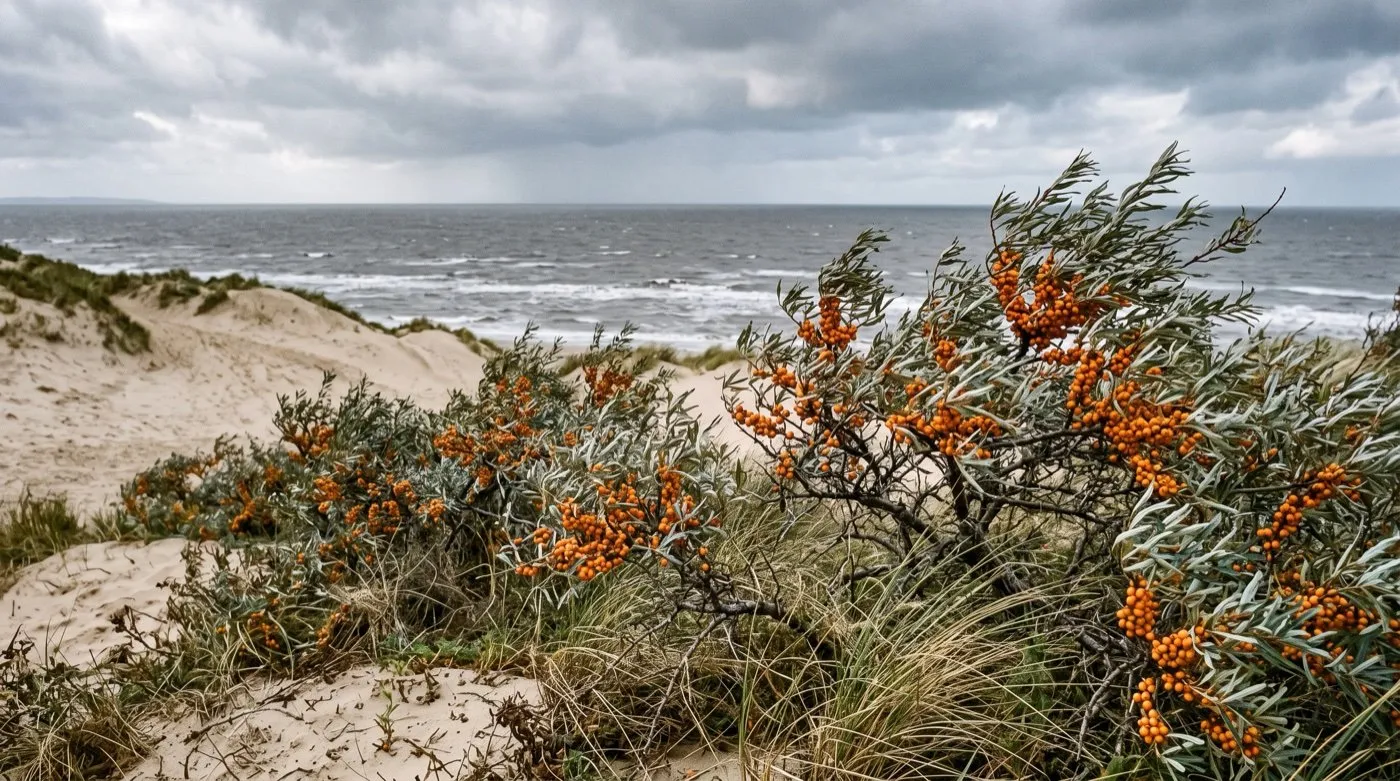
Sea buckthorn is happy in bare dune sand and salt wind, where very little else will grow.
Do beans feed the plants next to them?
Not while they’re alive. It’s one of the most repeated tips in gardening, but the bean keeps its nitrogen for its own leaves, stems and seeds. Only a tiny amount leaks into the soil around it.
So planting beans next to sweetcorn or squash won’t feed them much that season. The beans mainly add shade and competition for water. That doesn’t mean mixed planting is pointless, but feeding isn’t the reason to do it. Our look at companion planting myths covers what mixed planting can do.
The nitrogen reaches the soil when the plant dies and rots down. That takes a few weeks in warm, moist soil and longer in cold weather. So the way to use legumes is in sequence: grow them, cut them, let them rot, then plant your hungry crop.
How to get the nitrogen into your soil
Cut the plants down as they start to flower. That’s when they hold the most nitrogen in their leaves and stems. Once they set seed, much of it moves into the seeds.
Chop the top growth and either dig it lightly into the top few centimetres or leave it on the surface. On a no-dig bed, cover the cut material with a sheet or a layer of compost and let the worms take it down. Leave the roots in the ground either way. Wait a few weeks before sowing small seeds into the bed, as rotting greens can hold them back.
Growing peas and beans to eat? Most of the nitrogen ends up in the pods you pick. When you clear the crop, cut the stems at ground level and leave the roots to rot in place. Our green manures guide has sowing rates and timings for a full rotation.
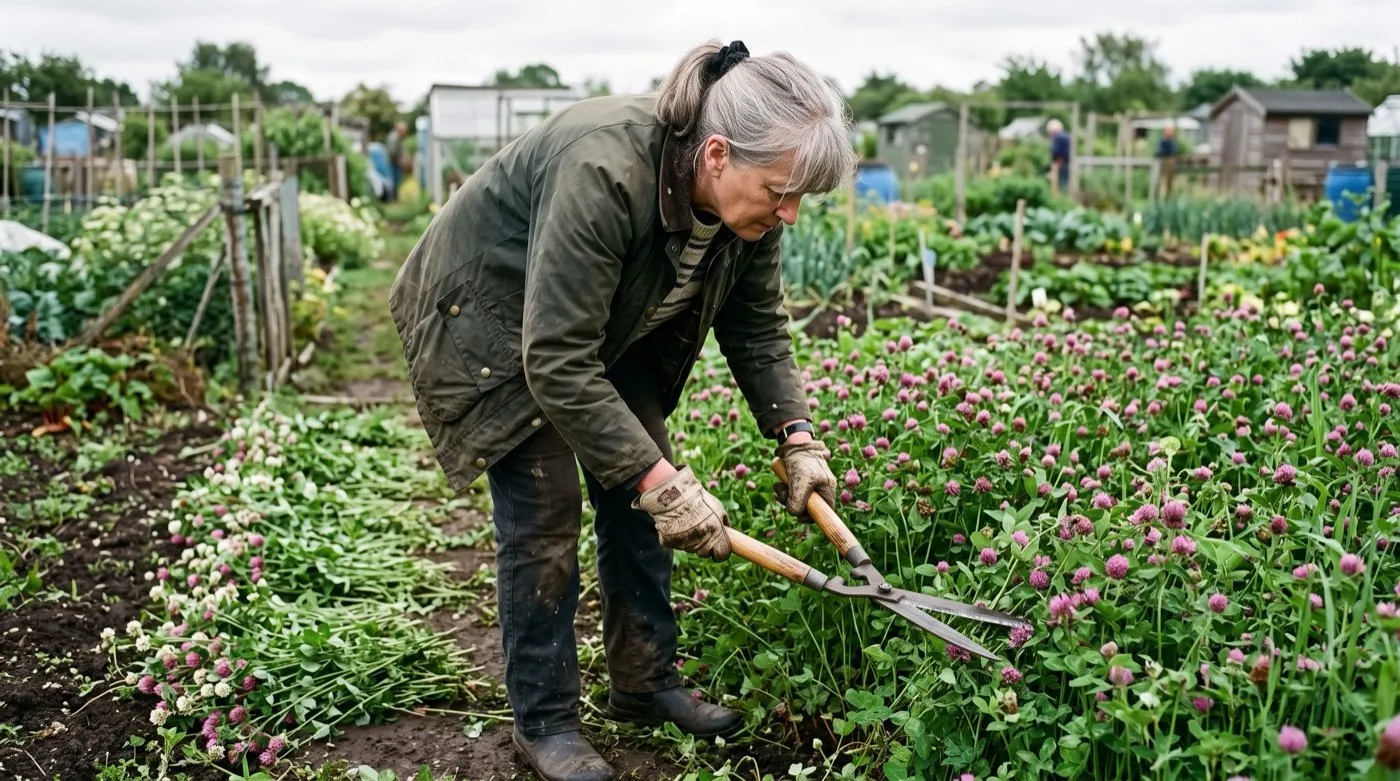
Cut clover as it comes into flower. Leave it longer and more of the goodness goes into seed.
Why your nitrogen fixers aren’t helping
If plants still look pale and hungry after a season of clover, nitrogen may not be the real problem. Poor structure, low organic matter or the wrong pH hold everything back, including the clover.
Three things stop legumes fixing well:
- Rich soil. Plants in freshly manured ground take up the nitrogen that’s there and make few nodules.
- Very acid soil. The bacteria struggle in very acid ground. Lucerne (alfalfa) is the fussiest and wants neutral to limy soil. Our guide to soil pH shows how to test yours and when to lime.
- Poor, compacted or waterlogged soil. Roots and bacteria both need air. Adding organic matter helps more than sowing more seed.
Need extra nitrogen this season rather than next? A bulky manure works faster than any plant. Our guide to animal manures compared explains which to use and when. Garden Organic’s guide to green manures is also useful for planning.

Gorse thrives on thin, acid hillsides, building fertility on ground that nobody feeds.
Month-by-month with nitrogen fixing plants
| Month | What to do |
|---|---|
| January | Plan which beds will rest under green manure. Order clover and vetch seed |
| February | Plant bare-root alder, sea buckthorn and gorse while dormant |
| March | Last month for bare-root trees and shrubs. Check soil pH on beds where clover struggled |
| April | Sow red clover, lucerne and lupins once the soil warms up |
| May | Sow crimson clover for a quick summer crop. Check pea and bean nodules |
| June | Cut red clover as it starts to flower. Leave the cuttings to rot |
| July | Clear early peas and broad beans, leaving the roots in the ground |
| August | Sow winter tares on cleared beds from mid-month |
| September | Last sowings of tares. Sow field beans on heavy soil |
| October | Cut red clover again before growth stops. Pick sea buckthorn berries |
| November | Sow field beans in mild areas. Plant bare-root shrubs as they go dormant |
| December | Leave winter cover crops growing. Lime very acid beds if a test shows they need it |
Common mistakes with nitrogen fixing plants
- Expecting beans to feed the crop next door. They keep their nitrogen while alive. Grow the legume first, then plant the hungry crop after it has been cut and rotted.
- Pulling up pea and bean roots. The nodules add a little to the soil. Cut the stems at ground level and leave the roots in.
- Waiting until seed sets. Cut green manures as they start to flower, when they hold the most nitrogen.
- Sowing clover into freshly manured ground. It will grow, but it won’t fix much. Use clover to rest poor or tired beds instead.
- Buying inoculant you don’t need. UK soils already have the bacteria for peas, beans, clover and vetch.
- Putting Ceanothus somewhere cold and exposed. It needs a warm, sheltered spot to come through hard winters.
A slow bank, not a quick feed
Think of nitrogen fixing plants as a savings account. They bank nitrogen from the air into their leaves and roots. You cash it in when you cut them down and let them rot.
Used that way, they work well. A season or two of red clover brings a tired bed back to life. An alder belt slowly enriches the ground beneath it through years of fallen leaves. White clover keeps a lawn green with no feeding at all, as our guide to lawn alternatives and ground cover explains. For more ideas, browse everything in our plants section.
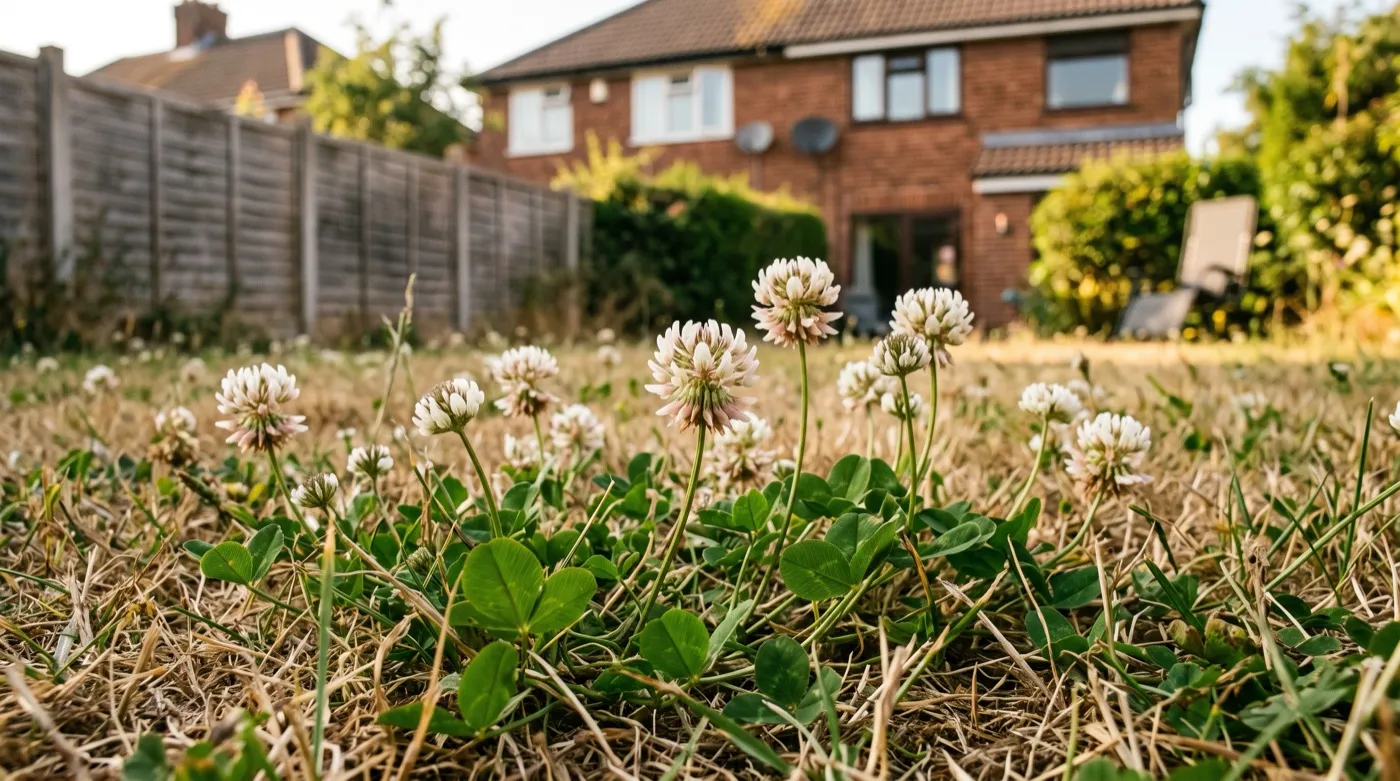
White clover stays green in a dry summer when the grass around it turns brown.
Now you know which plants fix nitrogen and when it reaches the soil, read our guide to growing broad beans for an easy first crop.
Frequently asked questions
Do nitrogen fixing plants feed the plants growing next to them?
Hardly at all while they are alive. The plant moves the nitrogen from its nodules into its own leaves, stems and seeds. Only a tiny amount leaks out. Neighbours benefit once the plant dies and its roots and leaves rot down.
Which plants fix nitrogen in the UK?
Legumes, plus alder, sea buckthorn, bog myrtle, Elaeagnus and Ceanothus. Garden legumes include clover, peas, broad beans, runner beans, vetch, lupins, sweet peas, gorse, broom and laburnum. The non-legumes work with a different soil organism, called Frankia, but do the same job.
How do I know if my bean root nodules are fixing nitrogen?
Cut one open and look at the colour. Pink or red inside means it is working. White, green or brown inside means it is too young, past its best or not fixing. Check broad beans or peas around flowering time, when nodules are at their busiest.
Which nitrogen fixing plant is best for a vegetable garden?
Red clover is the best all-rounder for a resting bed. Sow it in spring or late summer and leave it for a season or two. For winter cover, sow winter tares (vetch) or field beans in late summer and early autumn.
Do I need to buy Rhizobium inoculant for peas and beans in the UK?
Usually not, as the right bacteria are already in most UK soils. Peas, beans, clover and vetch have been grown here for centuries. Lupins on ground that has never grown them are the main case where an inoculant can help.
Does harvesting peas and beans remove the nitrogen they fixed?
Yes, most of it ends up in the seeds you eat. Leave the roots in the ground when you clear the crop, as the nodules still add a little. If you want the soil gain rather than the food, cut the plants at flowering and leave them to rot.
Why do nitrogen fixing plants stop fixing in rich soil?
Because fixing nitrogen costs the plant energy. If the soil already has plenty, the plant takes it up directly and makes few nodules. Clover sown into freshly manured ground often has almost bare roots for this reason.
Our team produces practical UK gardening guidance from source research, contributor records and established horticultural practice. Editorial standards are overseen by Matt W.