Key takeaways
- A handful of pairings have real support, most popular ones are folklore
- French marigolds in the greenhouse help keep glasshouse whitefly off tomatoes
- Nasturtiums work as a trap crop only if you check them and remove the pests
- Flowers that feed hoverflies help with aphids more than any single "repellent" plant
- Basil does not stop tomato pests, and marigolds do not deter slugs
- Fine netting, fleece and carrot fly barriers remain the reliable fixes
Companion planting is a mix of a few good ideas and a lot of folklore. The pairings that work do so for plain reasons: a scent that confuses a pest, a plant the pest prefers, or flowers that feed the insects that eat pests. The rest tends to come from old books and tradition rather than anything you’d see in your own beds.
This guide sorts the popular claims into three piles: worth trying, little evidence, and best avoided. For how to plan a companion bed from scratch, see the companion planting guide.
Does companion planting actually work?
Sometimes, but rarely as well as the books promise. Companions can nudge the odds in your favour. They are not a replacement for netting, fleece and keeping an eye on your crops.
Most real benefits come from one of three things:
- Scent confusion. A strong smell makes it harder for a pest to find its host plant.
- Trap cropping. A plant the pest likes more draws it away from your crop.
- Feeding predators. Open flowers feed hoverflies, lacewings and parasitic wasps, whose young eat aphids and caterpillars.
If a claim doesn’t fit one of these, be wary.
Companion pairings that are worth trying
French marigolds with greenhouse tomatoes
French marigolds (Tagetes patula) are the best companion for tomatoes under glass. Their scent helps keep glasshouse whitefly away. Dot a few plants among the tomatoes rather than in a row along the edge. Outdoors the benefit is smaller, but they look cheerful and feed hoverflies. The guide to greenhouse whitefly covers other controls.

French marigolds tucked in among greenhouse tomatoes are one of the few pairings with real support.
Nasturtiums as a trap crop
Nasturtiums attract blackfly and cabbage white butterflies, which can draw some of the attack away from beans and brassicas. The catch is that you have to check them. Pinch off and bin shoots covered in blackfly or caterpillars every week or so. Left alone, a trap crop just breeds more pests. The guide to growing nasturtiums covers sowing.
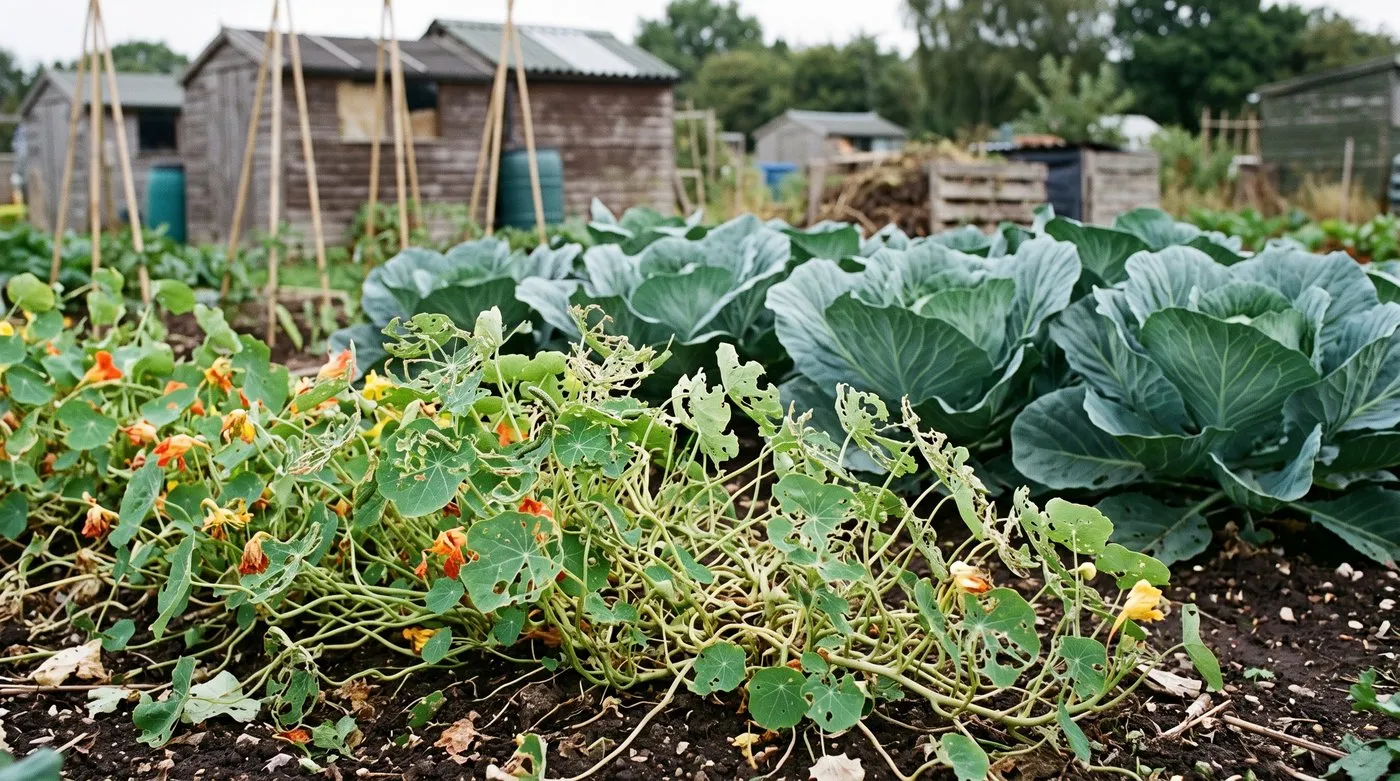
Holey nasturtium leaves next to clean cabbages show a trap crop doing its job. Now it needs clearing.
Flowers that feed hoverflies
Simple, open flowers such as poached egg plant, calendula and phacelia feed adult hoverflies. Their larvae eat large numbers of aphids. Dot these flowers along the ends of veg rows. It won’t wipe out aphids, but it helps the balance over a season. See the best companion flowers for veg beds for more ideas.
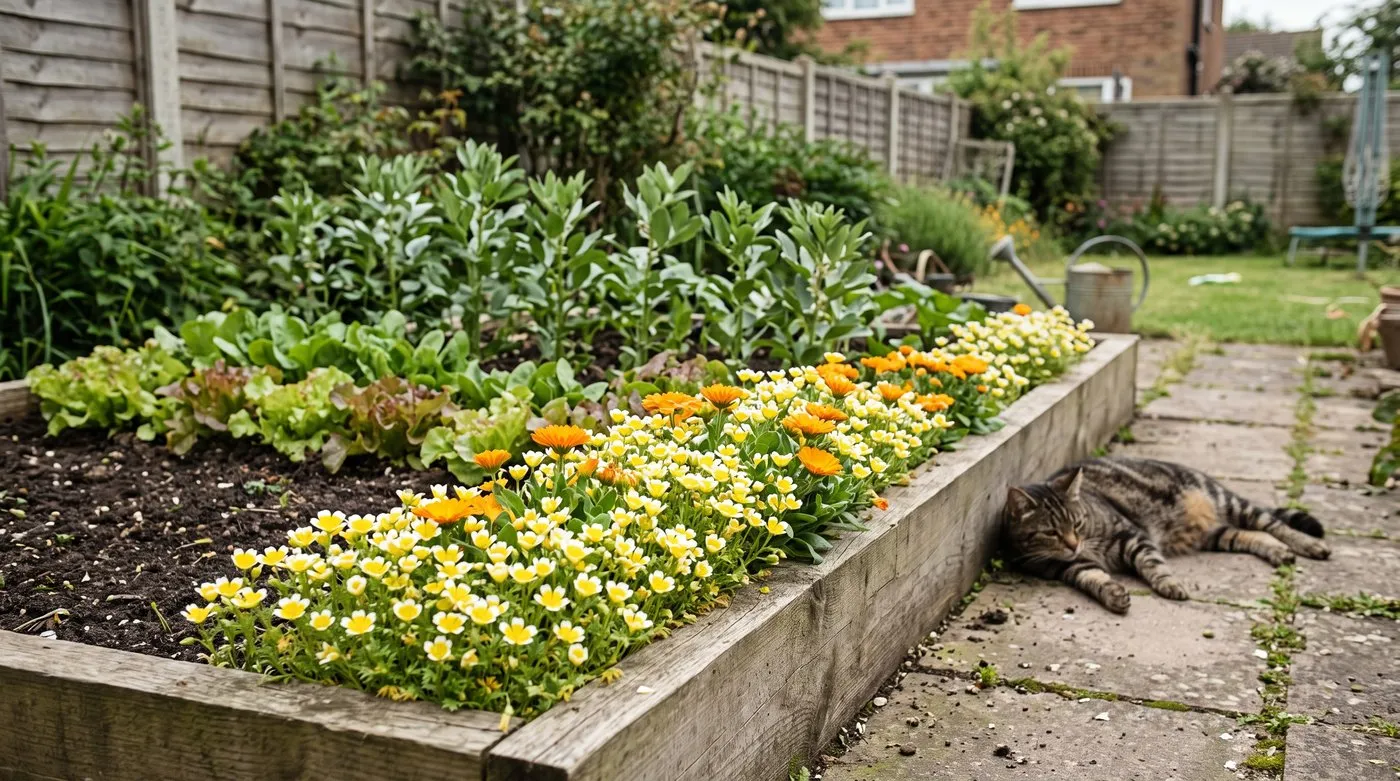
A strip of simple flowers at the end of the veg rows feeds hoverflies, whose larvae eat aphids.
Borage near squash and beans
Borage is loved by bumblebees, and squash and runner beans need insects to set fruit. Having bee flowers nearby helps in a dull summer. Borage self-seeds, so expect it back next year.
Carrots and onions, with a big caveat
Alternating rows of carrots and onions is meant to hide the carrot smell from carrot fly. Results are patchy, and the effect fades once the onions stop growing leaf. Treat it as a small extra. The reliable fix is fine mesh or fleece, or a 60cm barrier around the bed. The carrot root fly guide explains both.
Popular companion claims with little evidence
These pairings are harmless to try, but don’t rely on them.
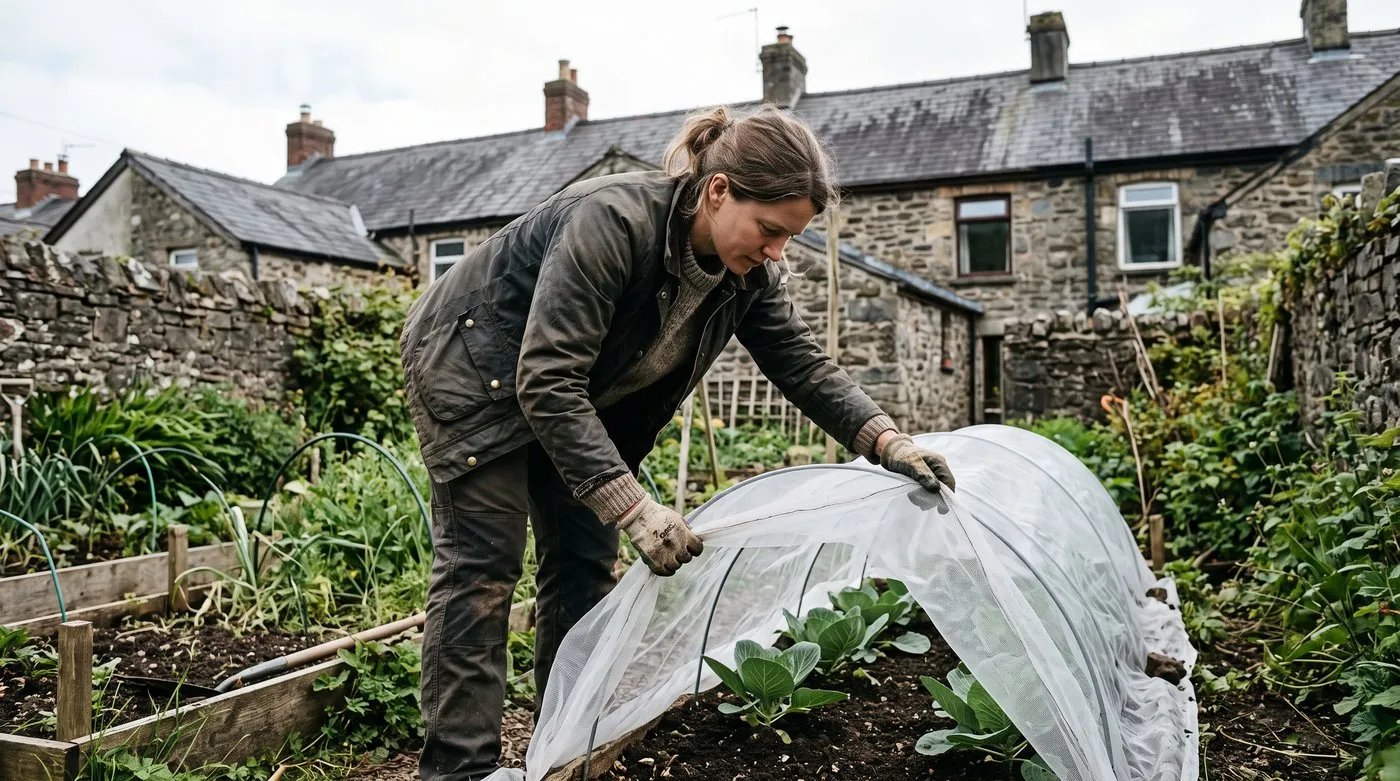
Fine netting keeps cabbage whites off brassicas far more reliably than any companion plant.
| Claim | Verdict | Better bet |
|---|---|---|
| Basil repels tomato pests | Little sign it does | Grow it for the kitchen; check for whitefly |
| Chives keep carrot fly away | Unproven | Mesh, fleece or a 60cm barrier |
| Garlic stops aphids and blackspot on roses | Little evidence | Squash aphids, clear fallen leaves |
| Dill protects cabbages from caterpillars | Feeds wasps, little effect on damage | Fine netting over brassicas |
| Summer savory deters blackfly on broad beans | Weak evidence | Pinch out bean tips once pods set |
| Marigolds repel slugs | False, slugs eat them | See the slug guide |
| Three Sisters (corn, beans, squash) | Tricky in UK summers | Grow each crop in its own space |
Basil and tomatoes is the classic. Basil likes the same warmth, so it suits a greenhouse border. It just doesn’t keep pests off.
The Three Sisters comes from North America, where summers are hotter. In a cool UK year, the beans and squash tend to swamp the sweetcorn.
Marigolds and slugs is the clearest myth. Slugs happily eat young French marigolds. The guide to getting rid of slugs covers what does help.
Companion plantings that cause problems
A few popular pairings do more harm than good.
- Mint in a veg bed. Mint spreads fast by runners and soon takes over. Grow it in a pot, or a bottomless pot sunk into the ground.
- Fennel next to dill. They can cross-pollinate, spoiling saved seed. Fennel is also tall and bulky, so give it its own spot.
- Tall sunflowers next to low crops. They cast heavy shade and take a lot of water.
- Potatoes near tomatoes. They are close relatives and share blight, so keep them well apart. The guide to late blight on potatoes and tomatoes explains why.

Mint runners creep through the soil and pop up everywhere. Keep mint in a pot unless you want a mint bed.
Why so many companion planting myths persist
Most companion tips come from old gardening books and cottage tradition, then get repeated online. Many were never checked properly. Others work in hotter climates but not in a UK summer.
Companion planting also feels like it works. A mixed bed with lots of flowers usually has more pest-eating insects anyway. So the bed does better, even if the “magic pair” had nothing to do with it.
How to judge any companion planting tip
Ask yourself four quick questions:
- Does it name a specific pest or benefit, not just “helps” or “protects”?
- Is there a plain reason it could work, such as scent, a trap crop or feeding predators?
- Does a trusted source such as the RHS back it up?
- Will it cost you space, water or light that your crop needs?
If the answers are vague, treat the tip as a nice extra at best.
Common companion planting mistakes
- Relying on companions instead of barriers. Companions nudge the odds. Netting, fleece and mesh actually keep pests out.
- Leaving trap crops to fester. A nasturtium smothered in blackfly is a pest nursery. Clear it.
- Planting marigolds only round the edge. Dot them among the crop where the scent matters.
- Crowding crops. Squeezing companions in can starve the main crop of light and water.
- Letting mint and fennel loose. Both are better in their own pots or beds.
For more pest-friendly ideas, read the guide to getting rid of aphids, then browse the growing section for crop-by-crop advice.
Frequently asked questions
Does companion planting actually work in UK gardens?
Some pairings help, but most popular claims are folklore. The best-supported ones are French marigolds against greenhouse whitefly, nasturtium trap crops and flowers that feed hoverflies. Treat companions as a bonus, not your main pest control.
What is the best companion plant for tomatoes in the UK?
French marigolds, especially in a greenhouse or polytunnel. Their scent helps keep glasshouse whitefly away from tomatoes. Plant a few among the tomatoes rather than in a row at the edge.
Does basil really repel pests from tomatoes?
No, there is little sign basil keeps pests off tomatoes. It grows happily in the same warm conditions, so it is a good use of space under glass. Enjoy it as a crop, not as pest control.
Does the Three Sisters method work in the UK?
It is tricky in most UK gardens. Sweetcorn, climbing beans and squash need a long, warm summer to all do well together. In a cool year the beans and squash swamp the corn. Growing each crop in its own space is usually more reliable.
Are there companion plantings I should avoid?
Yes, a few cause more trouble than they solve. Mint spreads by runners and takes over a veg bed. Fennel is big and can cross with dill. Tall sunflowers shade low crops. Keep potatoes and tomatoes apart as they share blight.
Do marigolds repel slugs?
No, slugs happily eat young French marigolds. Some gardeners use them as a sacrificial lure and pick the slugs off at night. For real slug control, use the methods in a dedicated slug guide.
Does nasturtium really trap aphids?
It can draw blackfly and cabbage white butterflies away from crops. The trick only works if you check the nasturtiums often and remove pest-covered shoots. Left alone, they can become a nursery for more pests.
Our team produces practical UK gardening guidance from source research, contributor records and established horticultural practice. Editorial standards are overseen by Matt W.