Key takeaways
- Nasturtium as a blackfly trap cut aphids on the crop by 60 to 70 percent over 3 seasons
- Calendula and poached egg plant tripled hoverfly counts, each larva eating 50 aphids a day
- Plant at a 1 flower to 4 vegetable ratio, spacing flowers roughly 30cm apart
- Sow companion flowers 3 to 4 weeks before the crop so they flower in time
- French marigold root effects on nematodes need months in the ground, not a single season
- Single open flowers feed beneficials, double pompon varieties offer almost no accessible nectar
How companion flowers actually protect a crop
Companion flowers help vegetables through four distinct routes, and knowing which one applies stops you wasting bed space. Trap cropping pulls a pest onto a sacrificial plant. Nasturtium does this with blackfly. Nectar provision feeds adult hoverflies, lacewings and parasitic wasps whose larvae then eat aphids. Calendula and poached egg plant do this. Physical and scent masking confuses pests hunting by smell, the weak effect behind most marigold claims. Pollinator draw lifts fruit set on courgettes, beans and tomatoes, where borage and phacelia pull in bees.
The mistake is treating all flowers as interchangeable pest repellents. They are not. A flower that feeds predators does nothing for soil nematodes. Match the mechanism to your actual problem.
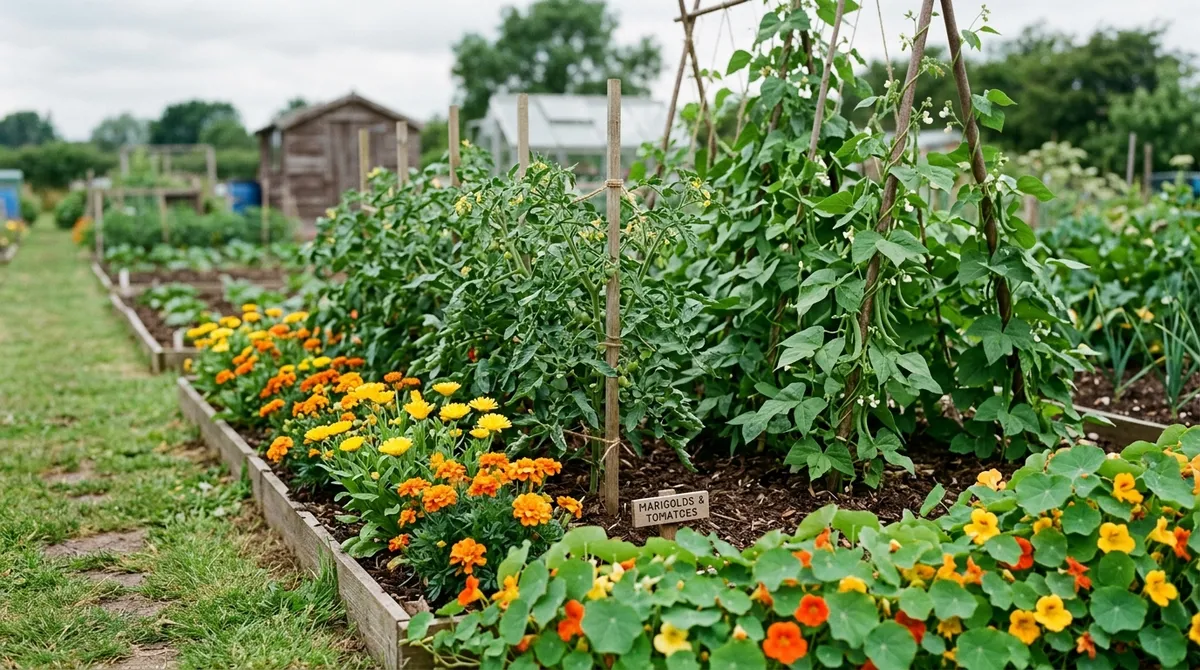
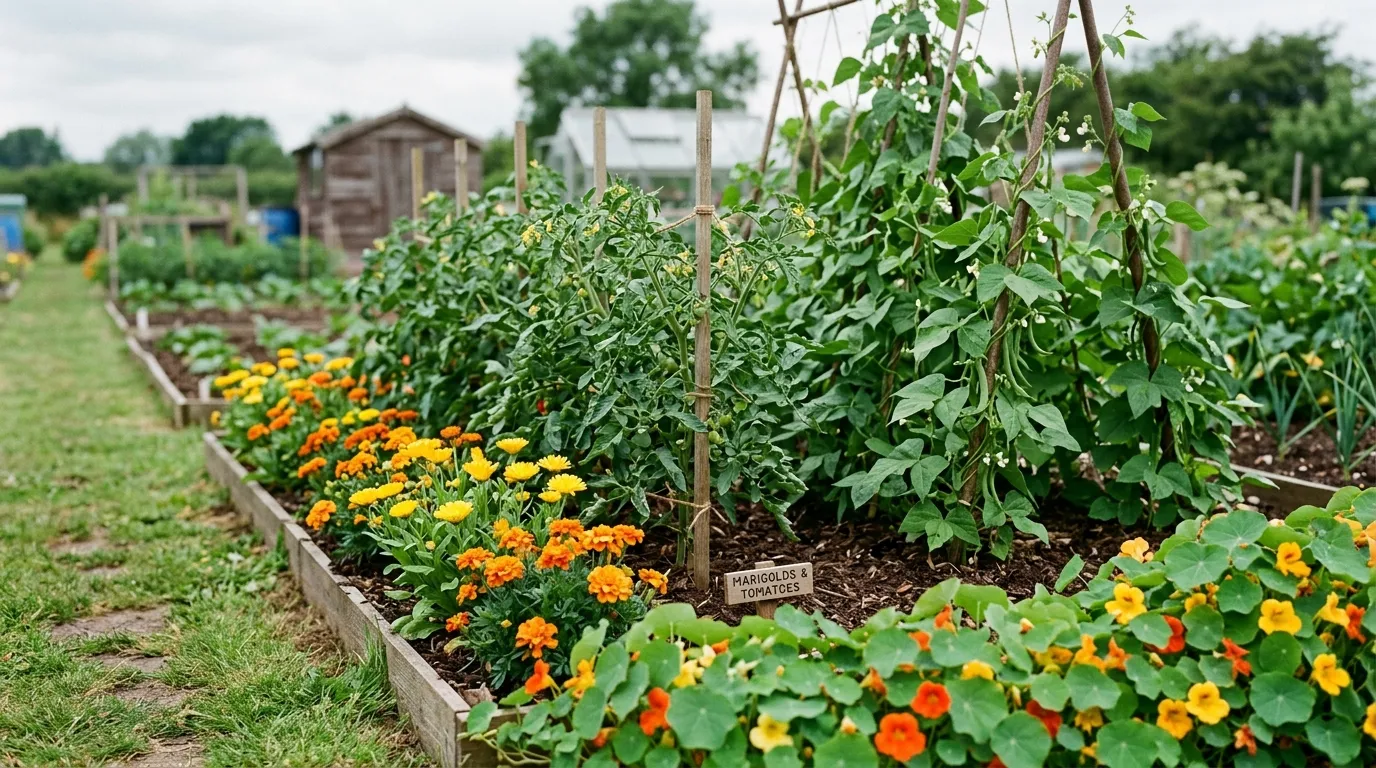 A mixed companion bed on a Lincolnshire allotment. Calendula and French marigold edge the tomatoes while nasturtium spills toward the beans.
French and African marigolds, the nematode and whitefly workhorses
French marigold (Tagetes patula) is the most studied companion flower, and the evidence is split. The strong, proven effect is root-knot nematode suppression. Tagetes roots release alpha-terthienyl, a compound toxic to several nematode species. Glasshouse and field studies show meaningful reductions, but only after the marigolds grow in the soil for a full season, roughly 90 to 120 days. A border of marigolds planted in May does little for this year’s tomatoes. It conditions the soil for next year.
African marigold (Tagetes erecta) is taller and showier but a weaker nematode agent than the French type. Choose single-flowered varieties. The pompon doubles carry almost no accessible nectar, so they feed nothing.
Gardener’s tip: Treat marigolds as a two-year investment for nematodes, not a quick fix. Grow a dense block where you plan next season’s tomatoes or potatoes, then dig it in.
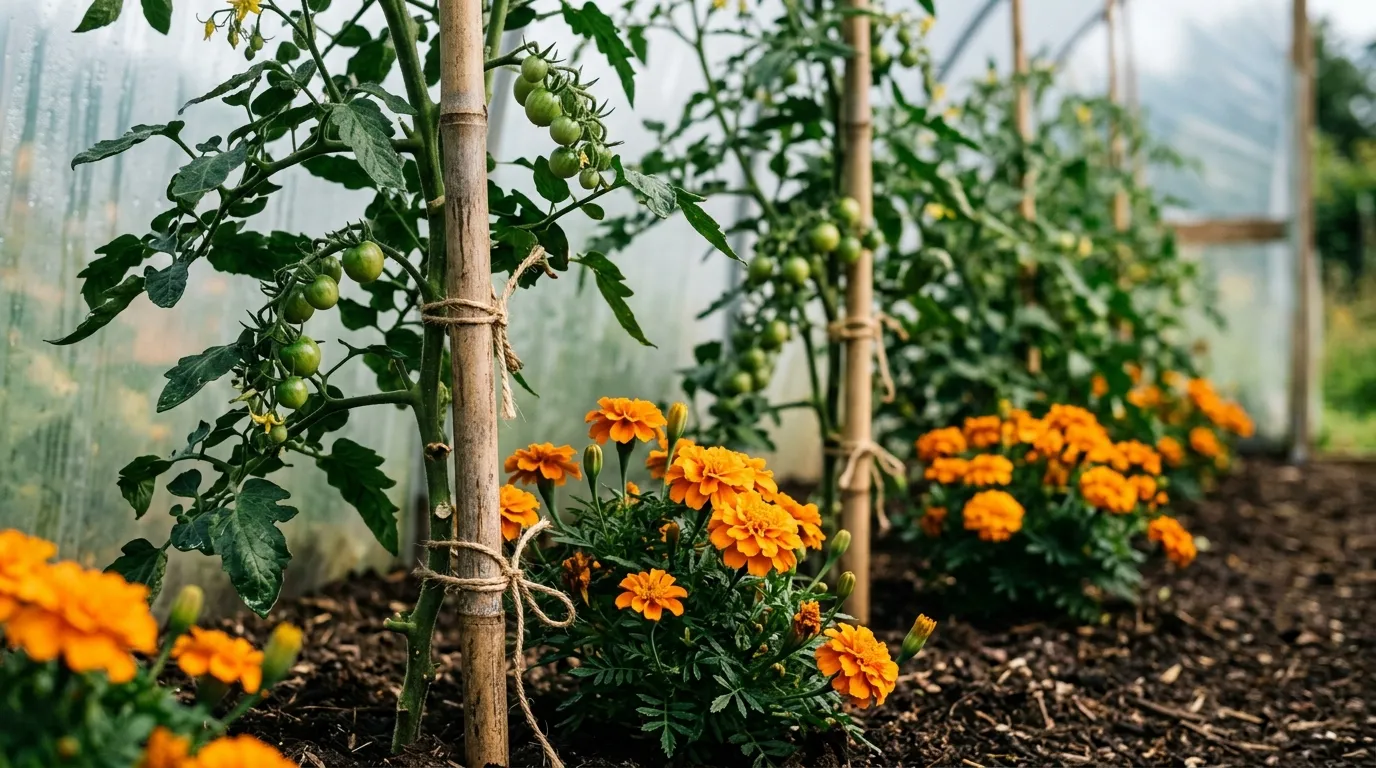 French marigolds set between tomato stems in a polytunnel. The scent masking effect is strongest in this enclosed air, weaker outdoors.
Nasturtium, the sacrificial blackfly trap
Nasturtium (Tropaeolum majus) is the best trap crop a UK veg grower has. Blackfly, the black bean aphid, strongly prefer nasturtium over many crops. The plant pulls the colony onto itself and away from the vegetable. This is trap cropping, not repellence, and it is one of the few companion effects with solid trial support.
Nasturtium also feeds cabbage white caterpillars, drawing them off brassicas in some gardens. The effect is less reliable than the blackfly draw. Sow nasturtium direct in late April, 2cm deep, at the bed edge. It needs poor soil. Rich ground gives all leaf and few flowers.
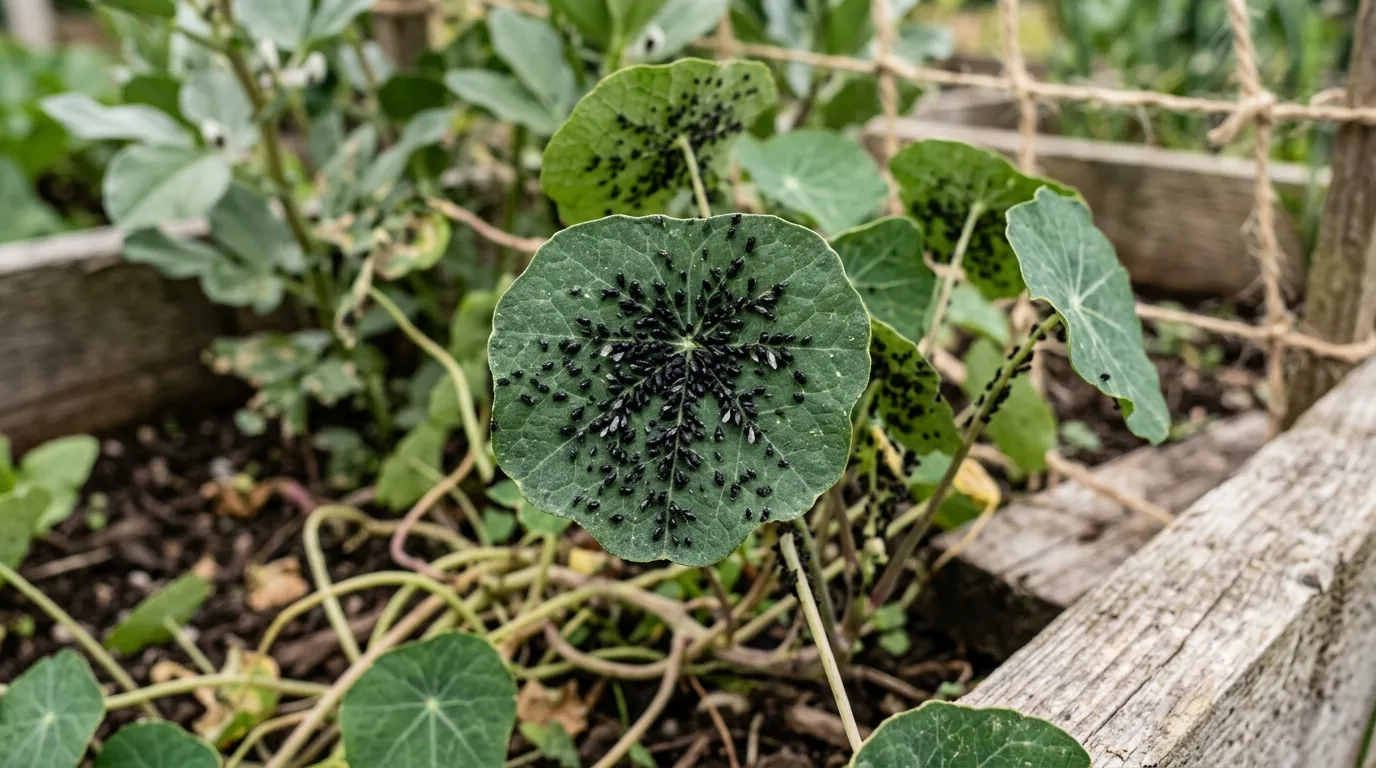 A nasturtium leaf carrying a heavy blackfly colony. This is the trap working. Remove these leaves before the aphids spread back to the crop.
Calendula and poached egg plant, the hoverfly engines
Poached egg plant (Limnanthes douglasii) is the early-season hero. It flowers from April, weeks before most companions, covering the spring aphid surge when crops are most vulnerable. It carpets the ground in white and yellow flowers and self-seeds reliably. Bees and hoverflies cover it.
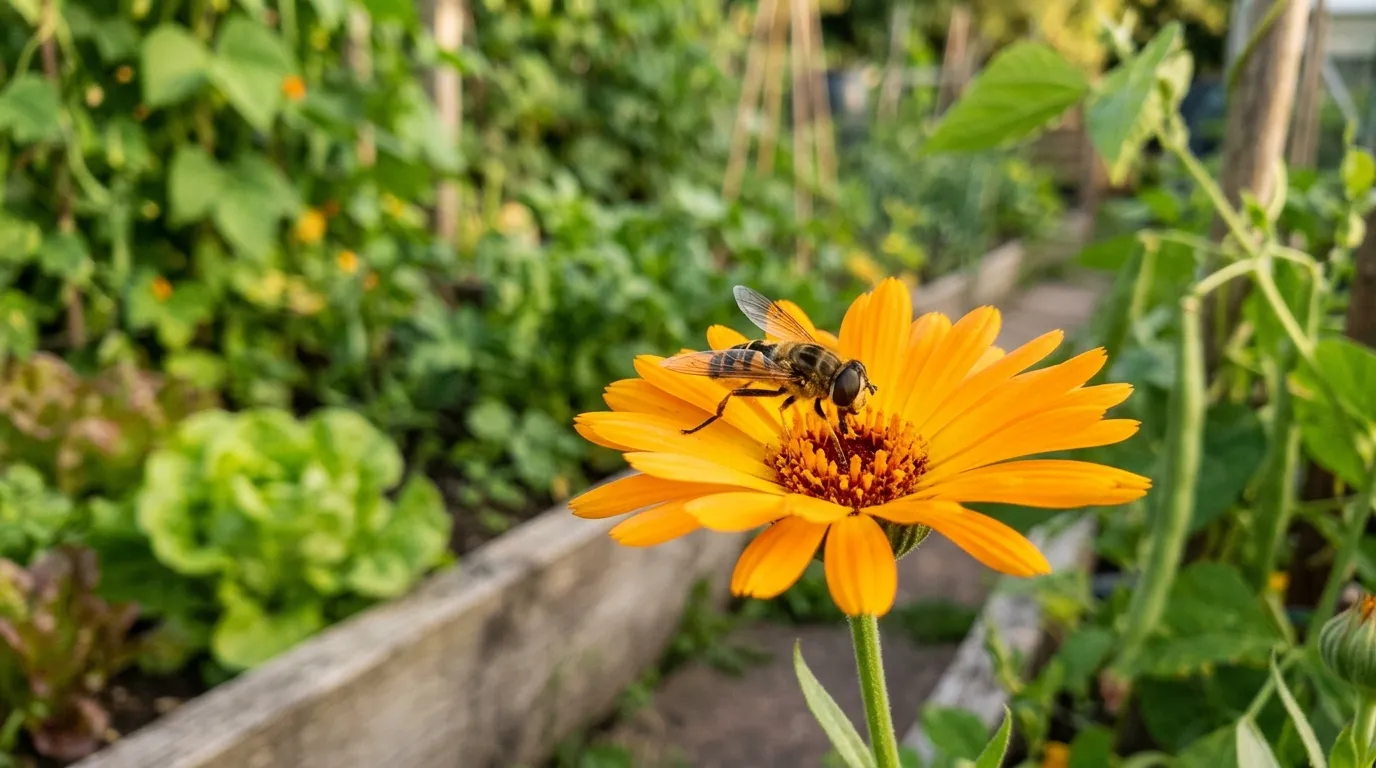 A hoverfly on calendula at the edge of a salad bed. The open flower lets the insect reach nectar that double flowers hide.
Borage, phacelia and the pollinator boosters
Some companion flowers earn their place by lifting pollination and fruit set rather than fighting pests. Borage (Borago officinalis) is the classic partner for strawberries and tomatoes. Its blue flowers refill with nectar fast, so bees visit repeatedly. Strawberry growers report better fruit set near borage, though controlled UK trial data is limited and the effect is partly folklore. It does reliably pull in bees, which matters for any insect-pollinated crop.
Phacelia (Phacelia tanacetifolia) does double duty. Sown as a green manure, it builds soil and smothers weeds. Left to flower, it is one of the strongest bee and hoverfly magnets available, rated highly by the Bumblebee Conservation Trust. Sow it in any gap between crops.
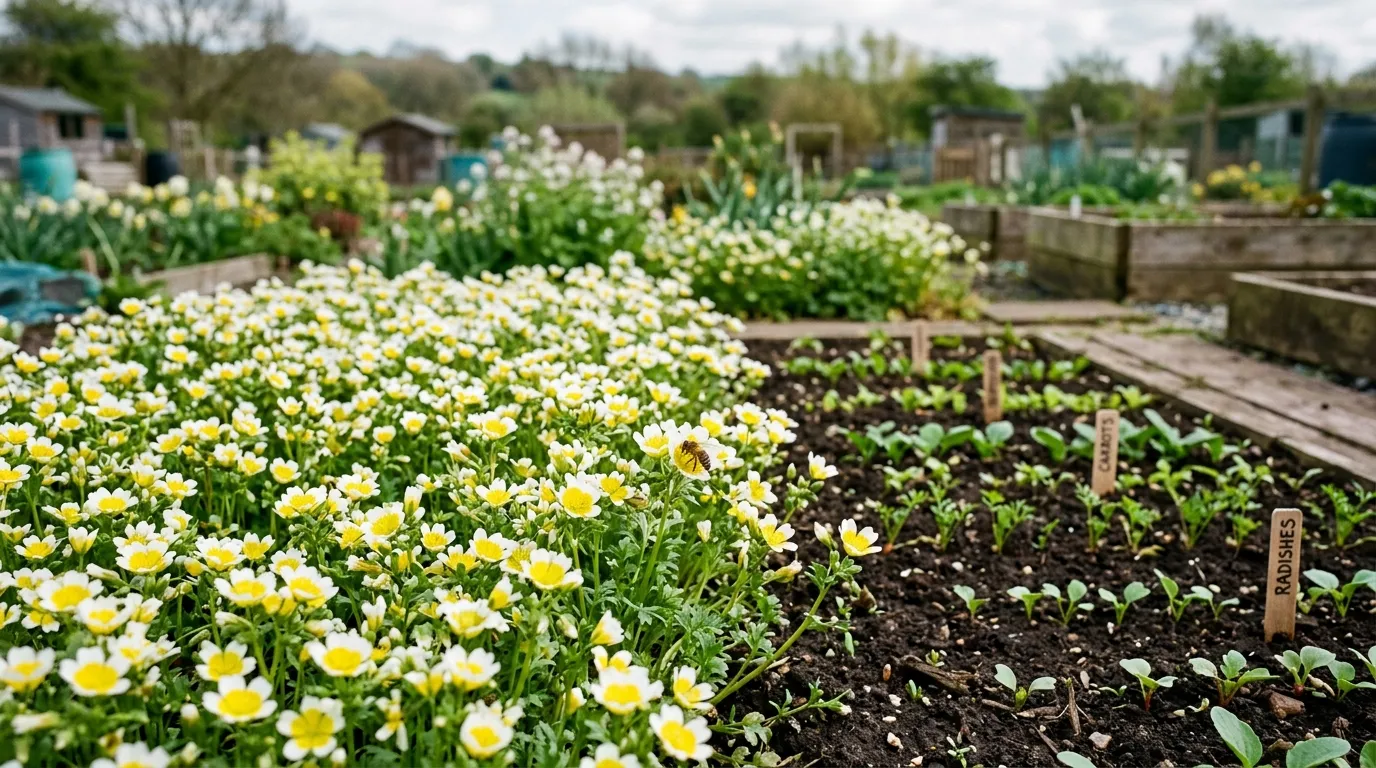 Poached egg plant in full April flower beside young veg. It feeds bees and hoverflies weeks before other companions open.
Crop-by-crop companion flower matrix
The honest reading: nasturtium trap cropping and hoverfly nectar from calendula, alyssum and poached egg plant are the trialled, dependable effects. Carrot fly masking and many aphid-repellence claims are weaker, closer to tradition than proof. Plant for the strong effects and treat the rest as a bonus.
Sweet alyssum, the hoverfly carpet
Sweet alyssum (Lobularia maritima) deserves its own section because it punches above its size. The low white carpet of tiny flowers is one of the most efficient hoverfly attractants per square metre. Commercial salad growers in the UK and US use it as an insectary strip between lettuce rows for exactly this reason.
Sow it direct in May, or buy plugs for an earlier start. Space plants 20 to 25cm apart so they knit into a continuous strip within six weeks. It tolerates being walked on lightly, so it works as a path-edge living mulch between salad rows. Trim it back by a third in August to trigger a fresh flush of flowers into autumn.
Getting the timing right with a sowing calendar
Warning: Never let a nasturtium trap crop sit unmanaged. By August an unemptied trap holds thousands of blackfly that migrate straight back onto your beans and courgettes when the nasturtium tires.
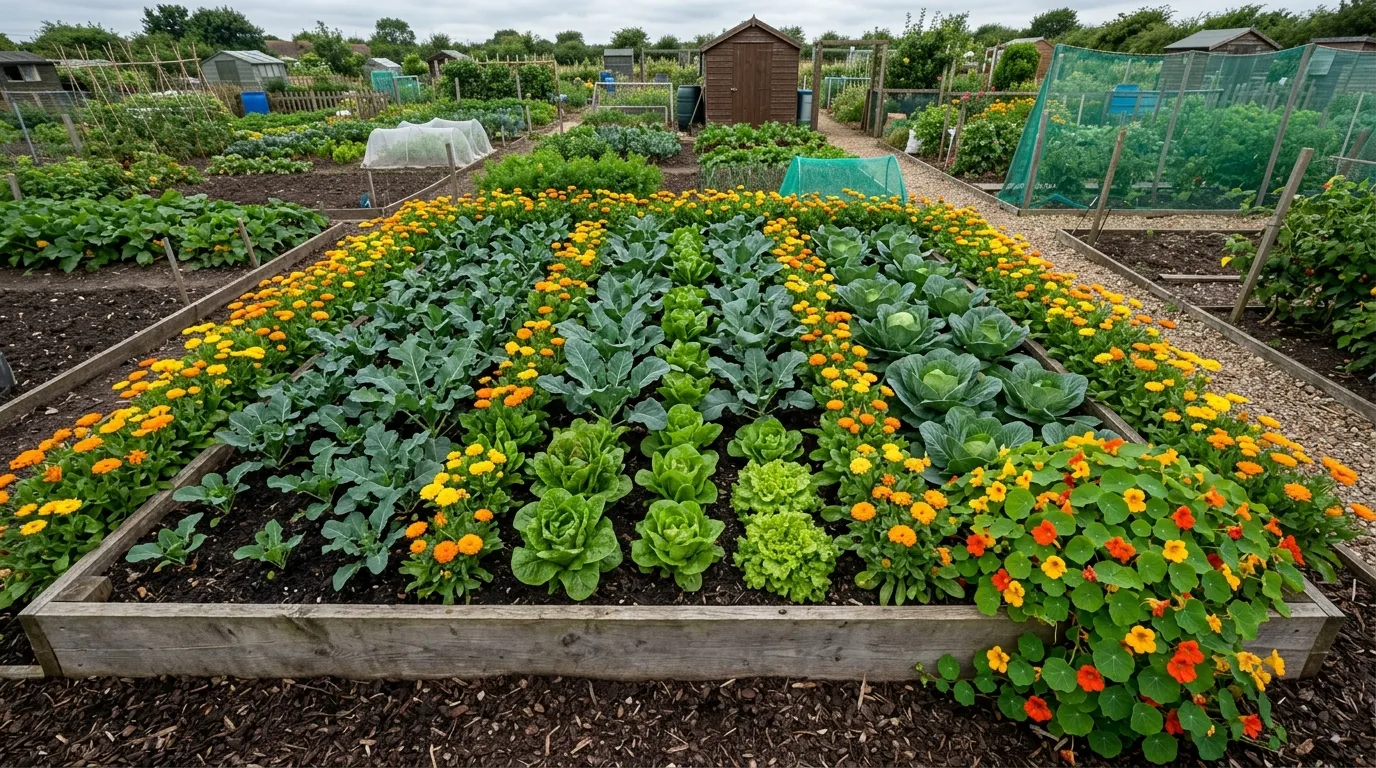 A planned companion bed seen from above. Flowers edge the bed and sit at every fourth station, at the 1 to 4 ratio.
Buy seed from any UK supplier. Limnanthes douglasii and Calendula officinalis are both cheap, hardy annuals widely stocked. Sow poached egg plant in autumn or early spring, calendula from February under cover. Both self-seed, so one packet of each seeds your plot for years.
Common mistakes that waste the flowers
Choosing double-flowered varieties. Pompon marigolds, double cosmos and frilly calendula look full but hide their nectar. Beneficial insects cannot reach it. Always pick single, open flowers. The plain species often beats the fancy cultivar for wildlife value.
Overcrowding the bed. Packing flowers between every plant starves both for water and light. Stick to a 1 flower to 4 vegetable ratio, spacing flowers about 30cm from the crop. Edges and every fourth station are enough.
Never emptying the trap crop. Nasturtium and other trap plants must be managed. Remove the worst-infested growth weekly or the trap becomes a breeding ground that reseeds the pest onto your crop.
Expecting total control. Companion flowers cut pest pressure by 50 to 70 percent on a good plan, not 100 percent. Keep netting brassicas against cabbage white and accept some loss. Treat flowers as one layer in a system, covered in our organic pest control guide.
How this differs from general companion planting
General companion planting covers the whole field: herbs that mask scent, plants that fix nitrogen, root partners that share space, and the three sisters polyculture. Our companion planting guide covers that broad ground, from basil with tomatoes to onions with carrots.
This article is narrower and evidence-led. It looks only at flowers, and only at the three mechanisms that hold up: trap cropping, nectar for predators, and scent masking. It separates the trialled effects from the repeated tradition. Plenty of classic pairings are myth, and our companion planting myths debunked article takes those apart in detail. For the individual flowers, see the dedicated marigold growing guide, nasturtium growing guide and calendula growing guide.
The takeaway: plant flowers for the pest you actually have, sow them ahead of the crop, and judge them on measured pest counts rather than packet promises. The Garden Organic charity is a good UK source for further trial-based companion data.
Frequently asked questions
What flowers should I plant with my vegetables?
Marigolds, nasturtiums, calendula and poached egg plant work best. Marigolds suit tomatoes and beans for whitefly and aphid help. Nasturtiums draw blackfly away from courgettes and beans. Calendula and poached egg plant pull in hoverflies whose larvae eat aphids. Match the flower to the pest you actually have.
Do marigolds really keep pests off vegetables?
French marigolds repel some whitefly and suppress soil nematodes. The whitefly effect is modest and works by scent masking in enclosed spaces like greenhouses. The nematode effect is real but slow, needing the marigolds in the ground for a full season. Outdoor aphid claims are mostly folklore, not trial-backed.
How close should companion flowers be to vegetables?
Space flowers roughly 30cm from the crop, at a 1 to 4 ratio. Too close and the flowers compete for water and light. Too far and beneficial insects do not move between them. An edge planting or every fourth station within the bed works well for most crops.
Which flowers attract hoverflies to a vegetable garden?
Poached egg plant, calendula, cosmos and sweet alyssum draw the most hoverflies. Their open, shallow flowers let hoverflies reach the nectar. One hoverfly larva eats 50 aphids a day. Poached egg plant flowers early, covering the spring aphid surge before other flowers open.
Can companion flowers replace pesticides on vegetables?
No, they reduce pest pressure but rarely eliminate it. Expect a 50 to 70 percent drop in aphids on well-planned beds, not zero. Treat flowers as one layer alongside hand-picking, netting and tolerance. Heavy infestations still need direct action like a blast of water or soft soap.
Next step
Now you know which flowers to pair with each crop, read our companion planting guide for the wider system of herbs, root partners and polyculture that completes a balanced veg plot. For more growing references, browse the full growing section.
Our team produces practical UK gardening guidance from source research, contributor records and established horticultural practice. Editorial standards are overseen by Matt W.