
Key takeaways
- Field beans, clover and winter tares add free nitrogen to your soil
- Sow winter green manures from September to November as soon as a bed is cleared
- Phacelia, buckwheat and mustard fill summer gaps in a matter of weeks
- Cut down two to four weeks before planting so they can rot down
- No-dig growers can simply chop them and leave them on top as mulch
- Green manures smother weeds, hold onto nutrients and improve soil
Green manures are one of the best-kept secrets in UK veg growing. These quick crops cover bare soil, smother weeds, hold onto nutrients, and some even add free nitrogen through their roots. Yet lots of us leave beds empty all winter and watch the goodness wash away with the rain.
What are green manures and why grow them?
Green manures are crops you grow to feed the soil, not to eat. Sow them on an empty bed, let them grow for a few weeks or months, then cut them down before your next crop goes in. You’ll also hear them called cover crops.
Garden Organic’s green manure advice is a handy companion to this guide. Here’s what they do for you:
- Free nitrogen: Field beans, clovers and vetches are in the pea and bean family. Helpful bacteria in nodules on their roots take nitrogen from the air and leave it in the soil.
- Fewer weeds: A thick carpet of phacelia or mustard leaves no light for weed seedlings.
- Nutrients kept, not lost: Winter rain washes goodness out of bare soil. Green manure roots grab it and hold it until spring.
- Better soil: Roots open up packed ground, and when they rot they leave behind organic matter that helps drainage and moisture. That’s a real help on heavy clay soil.
The eight best green manures for UK gardens
Field beans (Vicia faba)
The trusty winter green manure. Sow from late September to November and they’ll stand through hard winters. Their deep roots break up heavy clay and add nitrogen. Cut them down in March or April, at least two weeks before planting. They’re close cousins of broad beans, with smaller, cheaper seeds.
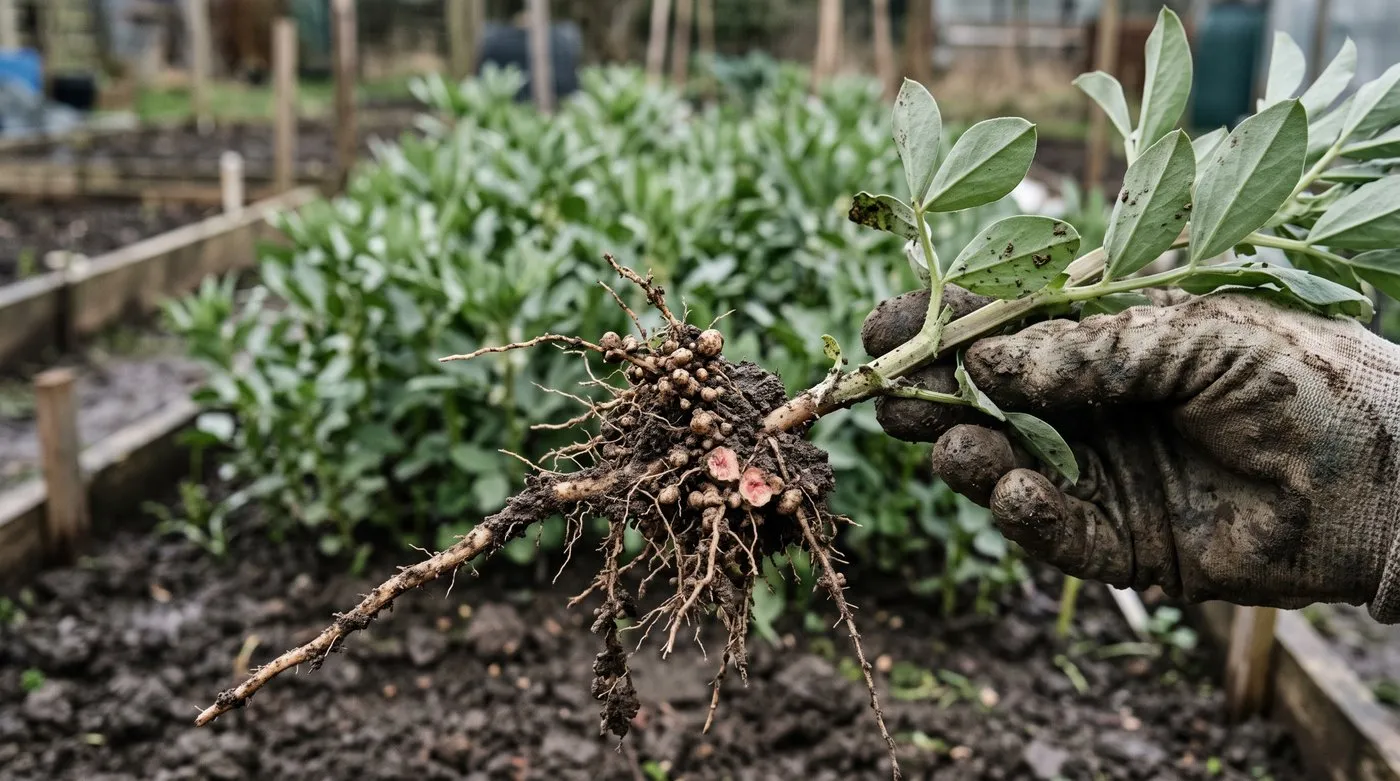
Pull up a field bean in spring and look for small round nodules on the roots. Pink inside means the bacteria are busy fixing nitrogen for your next crop.
Crimson clover (Trifolium incarnatum)
Sow from April to August. It adds nitrogen and has bright red flower spikes that bumblebees adore. It grows to about 30cm and copes with most soils, apart from waterlogged ground. Cut it before it sets seed. It’s an annual, so it won’t hang around in your beds for years.
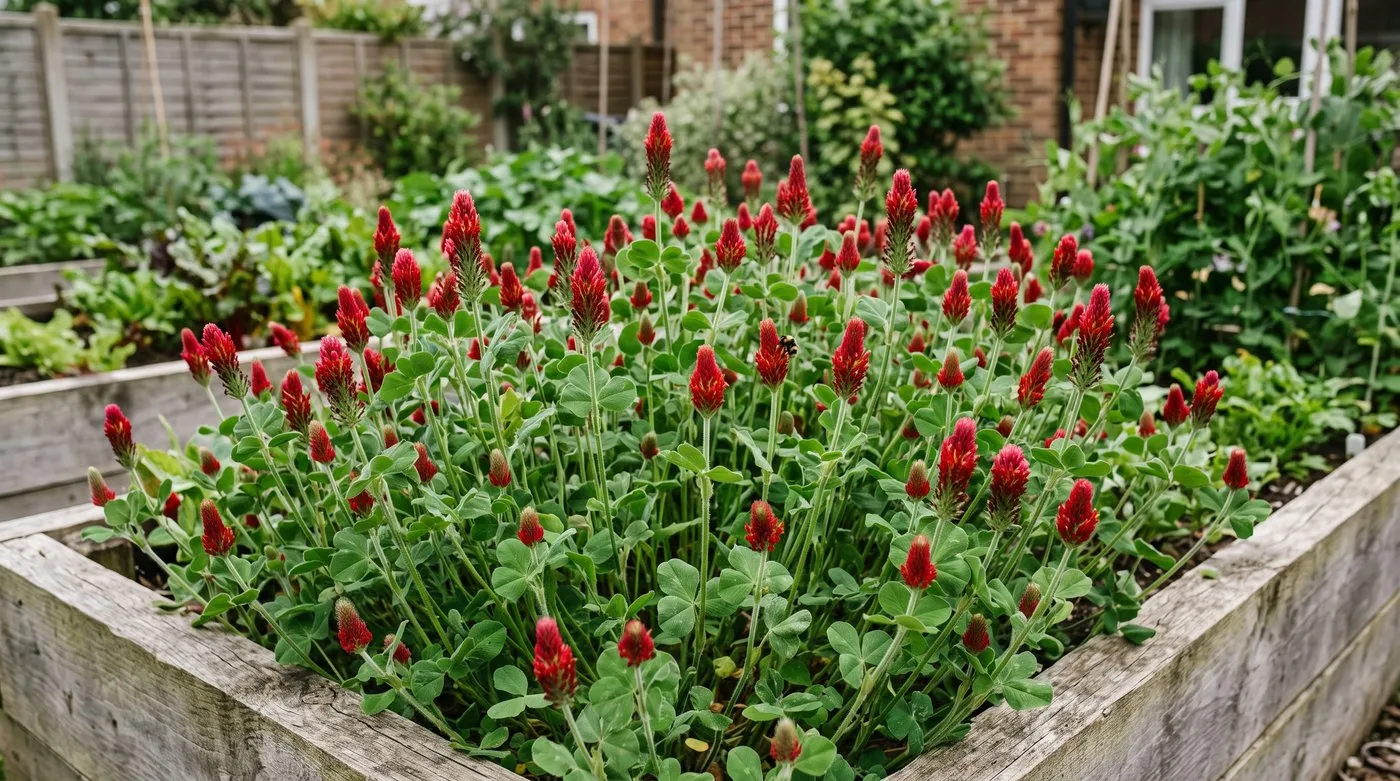
Crimson clover adds nitrogen and gives bumblebees weeks of flowers. Cut it before it sets seed, then let the bed rest before your next crop.
Phacelia (Phacelia tanacetifolia)
Phacelia covers the ground fast. Sow from March to September and you’ll have thick cover in six to eight weeks. It doesn’t add nitrogen, but its roots soak up nutrients that would otherwise wash away. The purple-blue flowers are a magnet for bees and hoverflies. Hard frosts usually kill it, so a late-summer sowing tidily dies off over winter. Our guide to growing phacelia as a green manure covers sowing and cutting in more detail.
White mustard (Sinapis alba)
The speediest of the lot. Sow from March to September and it’ll be thick in four to six weeks. It’s a brassica, so don’t grow it just before or after cabbages, broccoli and friends, as it can carry clubroot. If you follow a crop rotation plan, put mustard in with your brassicas. It adds bulk but not nitrogen.
Winter tares (Vicia sativa)
Also called common vetch, winter tares are in the pea family and go in from September to November. They add nitrogen and scramble about to cover the soil thickly. They cope with most soils and plenty of frost. Cut and dig in, or chop and drop, from March. They’re often sown with grazing rye to get the best of both.
Grazing rye (Secale cereale)
The toughest winter green manure. Sow from September to November and it’ll keep growing through the coldest UK winters. Its mass of fine roots holds the topsoil together and really improves soil structure. It doesn’t add nitrogen but stops nutrients washing away. Cut it in March or early April and wait two weeks before planting. On heavy ground the thick roots can be hard work to dig in.
Hungarian grazing rye
You’ll often see grazing rye sold as “Hungarian grazing rye” in UK seed catalogues. Treat it just the same: sow from September to November at the rate on the packet and cut it in early spring.
Buckwheat (Fagopyrum esculentum)
A summer green manure sown from April to August. It shoots up to 60-90cm and flowers within a few weeks. The white flowers are brilliant for hoverflies and bees. Frost kills it, so it’s strictly a summer crop. It’s happy on poor, sandy or acid soil where others struggle, and it’s good at freeing up phosphorus for the next crop.
Green manure comparison table
Here are all eight side by side. Pick the one that suits your season and soil.
| Green manure | Sow | Adds nitrogen? | Speed | Best soil | Survives winter? |
|---|---|---|---|---|---|
| Field beans | Late Sep-Nov | Yes | Medium | Clay, loam | Yes |
| Crimson clover | Apr-Aug | Yes | Medium | Most, not waterlogged | Not reliably |
| Phacelia | Mar-Sep | No | Fast | Any free-draining | Usually not |
| White mustard | Mar-Sep | No | Very fast | Any | No |
| Winter tares | Sep-Nov | Yes | Medium | Most | Yes |
| Grazing rye | Sep-Nov | No | Medium | Clay, loam | Yes, very tough |
| Hungarian grazing rye | Sep-Nov | No | Medium | Clay, loam | Yes, very tough |
| Buckwheat | Apr-Aug | No | Very fast | Poor, sandy, acid | No |
When to sow green manures in the UK
Timing is everything. Sow winter types too late and they won’t get going before the cold stops them. Sow too early in spring and you’re using space that could be growing food.
Autumn and winter sowing (September to November)
This is the big one. As you clear summer crops, sow a winter green manure straight away. Field beans and winter tares go in from late September through October. Grazing rye can go in as late as mid-November, as it sprouts in cooler soil than most.
The aim is thick cover before the worst of the winter rain, so the plants can hold onto nutrients until spring.
Spring and summer sowing (March to August)
Use summer green manures to fill gaps. Clear early potatoes in June? Sow phacelia or buckwheat straight away, and it’ll be ready to cut before autumn planting. Mustard fills even shorter gaps.
If a bed isn’t needed until autumn, sow crimson clover in April or May. It’ll grow all summer, add nitrogen and give the bees weeks of flowers before you cut it in late August.
How to sow green manure seeds
It’s easier than sowing veg. You want cover, not neat rows, so there’s no need to be fussy.
- Clear old crop remains and any big weeds
- Rake the surface roughly (no need for a fine seed bed)
- Scatter the seed evenly
- Rake lightly to cover it, or tread it in on heavy soil
- Water if the soil is dry, though autumn rain usually does the job
As a rough guide, sow field beans at 20-30 seeds per square metre, small seeds like phacelia and mustard at 1-2g per square metre, and clover at 2-3g per square metre. The packet will give the exact rate.
Buying seed in bulk saves money. Organic seed suppliers such as the Organic Gardening Catalogue sell green manure seed by weight.
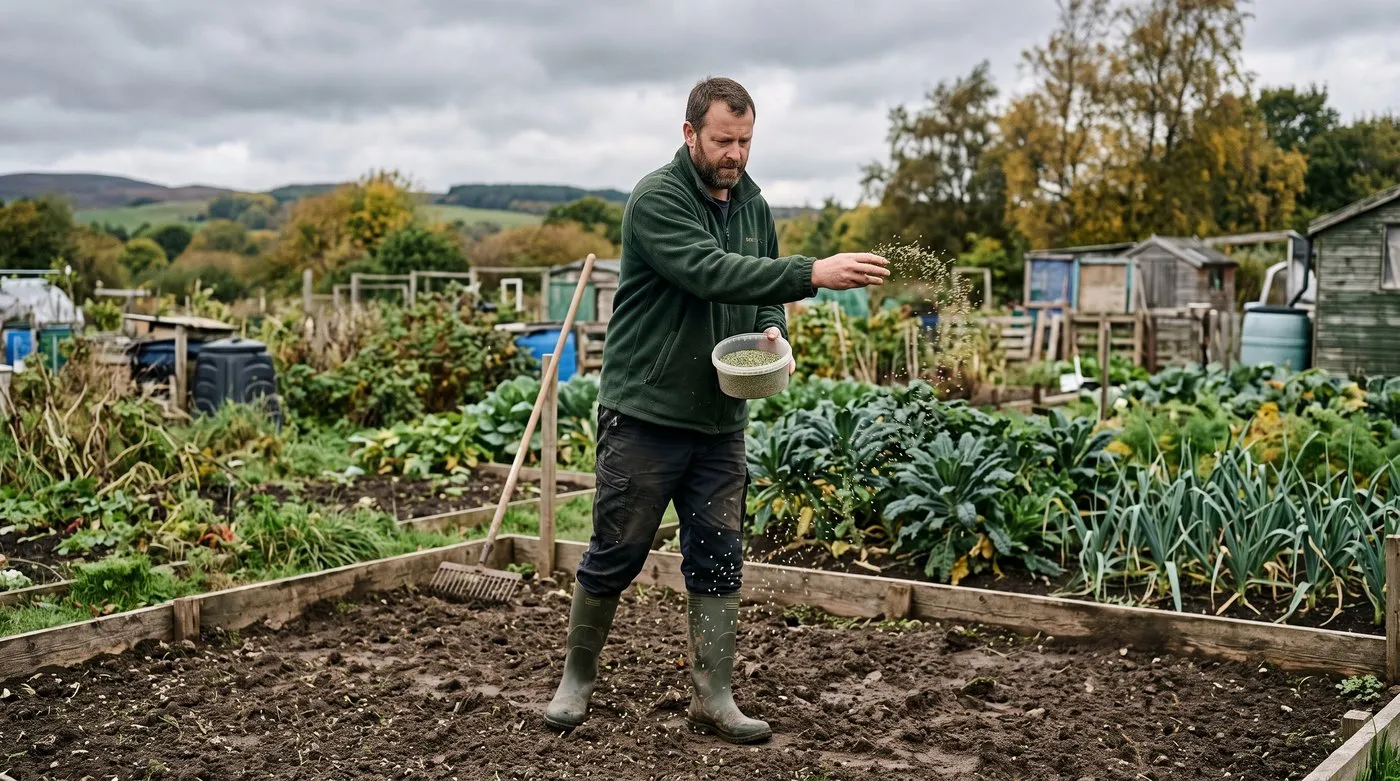
You want cover, not neat rows, so just scatter the seed evenly over roughly raked soil. Rake it in lightly, or tread it in on heavy ground.
How to incorporate green manures
You can dig them in or leave them on top. Both work. Getting the timing right matters more than the method.
Traditional digging method
Cut the green manure at ground level when it’s 15-30cm tall, or before it sets seed. Chop the stems up with shears or a sharp spade, then dig them into the top 15cm of soil. Wait two to four weeks before sowing or planting.
That wait matters. While the greenery rots down, it briefly ties up nitrogen, so seedlings planted too soon go hungry. Our guide to feeding garden plants has more on keeping soil well fed.
No-dig chop-and-drop method
Cut the green manure at ground level and leave the stems on top as mulch. Leave the roots in the soil to rot. Cover with a layer of compost and plant through it.
This keeps the soil structure intact and still gives you the nitrogen and goodness. In the growing season the mulch rots down within a few weeks.
For tough crops like grazing rye, some no-dig growers cover the cut stems with cardboard and compost instead of planting through the thick stubble. That suits allotments, where a bed can rest for a few weeks.
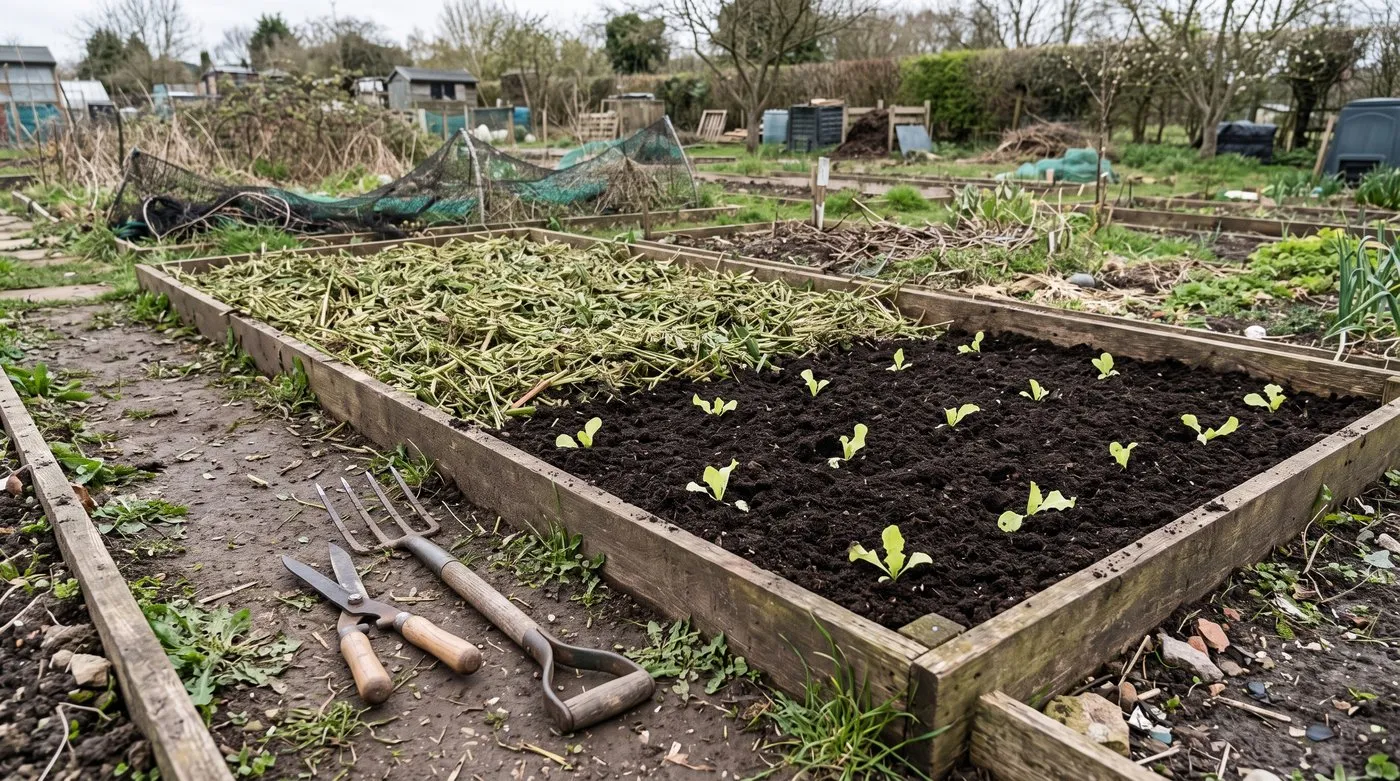
Cut the green manure at ground level, leave the stems on top and cover with compost. The roots rot in place, so the soil structure stays intact.
Green manures in crop rotation
Green manures slot neatly into a crop rotation. They fill the gaps between crops and keep the soil covered and fed.
A classic move is to sow a nitrogen-adding green manure, such as field beans, winter tares or clover, before a bed moves on to brassicas. Brassicas are hungry for nitrogen, so the green manure saves on feed.
Don’t sow mustard before brassicas. It’s a brassica too and can carry clubroot, which stays in the soil for years.
A simple rotation might look like this:
| Season | What’s in the bed |
|---|---|
| Spring-summer, year 1 | Peas and beans |
| Autumn-winter, year 1 | Grazing rye |
| Spring-summer, year 2 | Brassicas (cabbage, kale) |
| Autumn-winter, year 2 | Field beans |
| Spring-summer, year 3 | Roots (carrots, parsnips) |
| Autumn-winter, year 3 | Winter tares |
| Spring-summer, year 4 | Onions and garlic |
If you’re planning your vegetable garden for the first time, building green manures in from the start saves on feed and gets your soil in good shape faster.
Green manures for problem soils
Different green manures suit different soils. Match them up for the best results.
Heavy clay
Field beans are top for clay. Their strong roots punch through packed layers and leave drainage channels behind. Follow them with grazing rye, whose fine roots hold the topsoil together. Alongside a yearly dose of compost or manure, they make a real difference to clay.
Sandy and light soils
Sandy soil drains fast and loses goodness quickly. Grazing rye and phacelia have masses of roots that hold the soil and add organic matter. A winter crop of grazing rye is especially useful, as it stops winter rain washing nutrients away.
Buckwheat does well on poor sandy ground where others struggle.
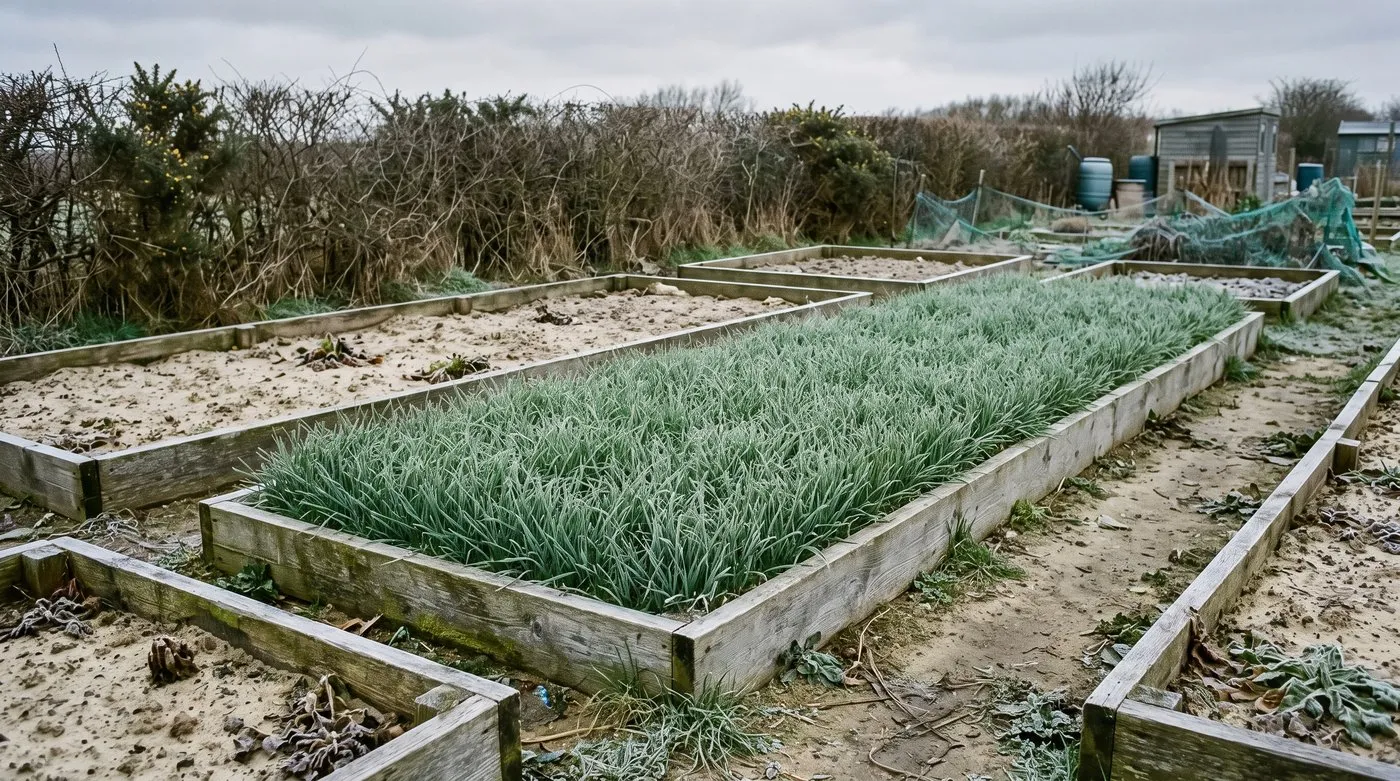
On sandy soil, a winter crop of grazing rye holds the topsoil together and stops rain washing the goodness away. Bare beds next door have nothing to hold it.
Acidic soils
Buckwheat copes with acid soil better than most green manures, and crimson clover handles mild acidity. Avoid field beans on very acid soil, as the root bacteria that help them add nitrogen don’t work as well. Testing your soil pH first helps you pick the right one.
Common mistakes to avoid
Green manures are forgiving, but a few slips can cause trouble for the next crop.
- Letting them set seed. Cut before flowering ends, or you’ll be pulling seedlings for years. Phacelia and mustard spread readily if left too long.
- Planting too soon after digging in. Wait at least two weeks. Rotting greenery ties up nitrogen and can hold back seeds.
- Sowing mustard before brassicas. They’re the same family, and mustard can pass clubroot on.
- Sowing tender types in autumn. Phacelia sown in October is likely to die in the first hard frost, leaving the soil bare all winter.
- Sowing too thinly. You need thick cover to beat the weeds. Sow at the packet rate or a little more.
Mixing green manure species
Sowing two together often works better than one. The classic UK mix is winter tares with grazing rye. The tares add nitrogen, and the rye gives them something to climb while its roots improve the soil.
Other good mixes:
- Field beans and grazing rye: nitrogen plus better structure on clay
- Phacelia and buckwheat: a summer feast for pollinators on sandy soil
- Crimson clover and phacelia: nitrogen plus quick cover in spring and summer
Mix the seeds in a bucket before you sow. The different plants work well together above and below ground.
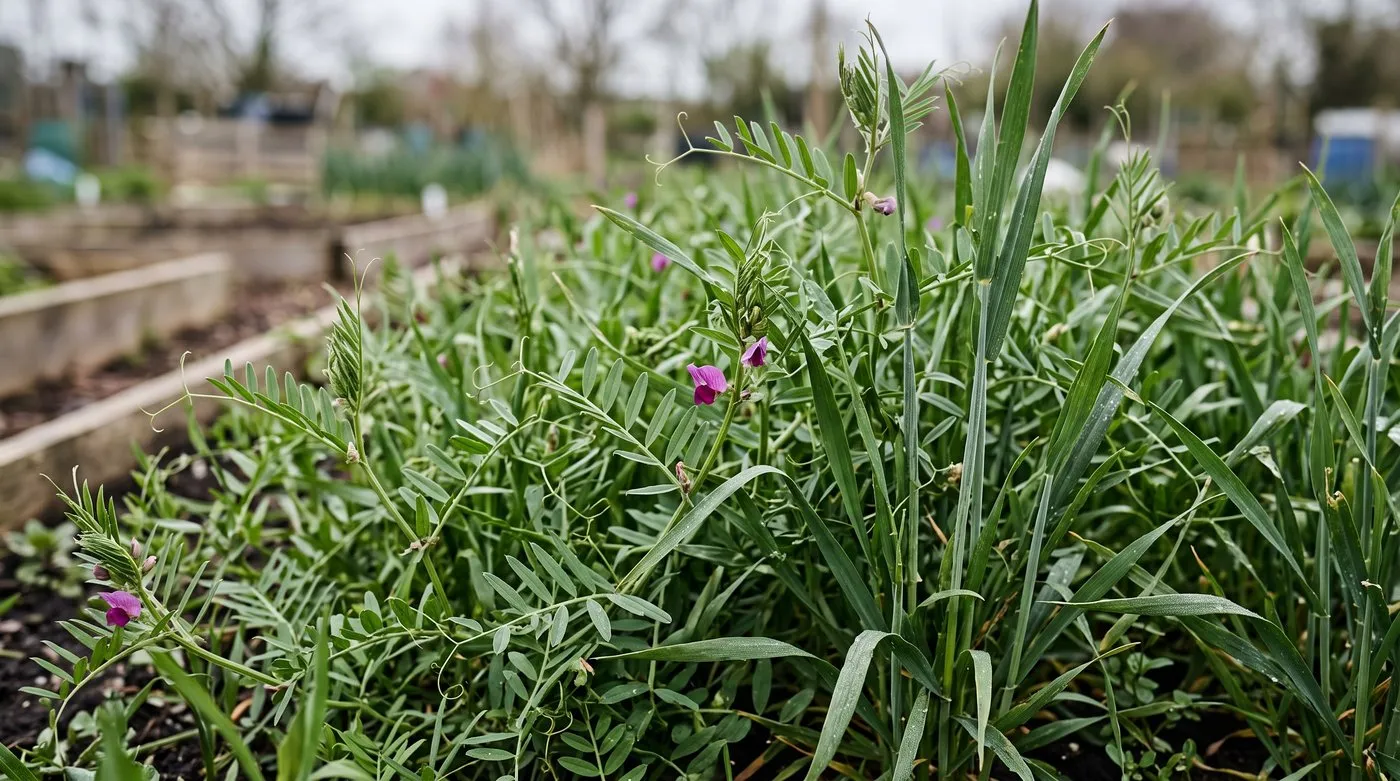
The classic mix: tares add nitrogen, and the rye gives them something to climb while its roots improve the soil. Mix the seed in a bucket before sowing.
Where to buy green manure seed in the UK
Most garden centres only stock a few, usually phacelia and mustard. For the full range, try specialist seed suppliers.
- The Organic Gardening Catalogue has a wide range of organic green manure seed
- Kings Seeds sells single types and ready-made mixes
- Tamar Organics and Real Seeds stock heritage and open-pollinated seed
- Agricultural merchants sell field beans and grazing rye in bulk for less
If you’re growing your own vegetables on a budget, bulk green manure seed is money well spent. A few pounds of seed saves on feed and improves your soil year after year.
You can save your own seed too. Let a small patch of phacelia or crimson clover flower and set seed, then collect and dry the heads for next year. Keep the seed somewhere cool and dry. Adding leaf mould as well gives your soil even more goodness.
Frequently asked questions
When should I sow green manures in the UK?
It depends which green manure you choose. Winter types like field beans, grazing rye and winter tares go in from September to November. Summer types like phacelia, buckwheat and mustard go in from March to August. Sow as soon as you clear a crop, so the soil is never left bare.
Do green manures really add nitrogen to the soil?
Only the ones in the pea and bean family do. Field beans, crimson clover and winter tares have helpful bacteria in little nodules on their roots that take nitrogen from the air. Others, like grazing rye and phacelia, don’t add nitrogen, but they stop what’s already there washing away in winter.
How do I dig in green manures?
Cut them down two to four weeks before you need the bed. Chop the stems into short pieces, then dig them into the top 15cm or leave them on top as mulch on no-dig beds. Wait at least two weeks before sowing or planting, as rotting greenery briefly ties up nitrogen.
Can I use green manures in raised beds?
Yes, they work well in raised beds. Scatter seed thickly over the surface after clearing summer crops and rake it in lightly. Winter tares and phacelia are good choices for small beds, as they’re easy to cut and clear in spring.
Which green manure is best for clay soil?
Field beans are the best choice for heavy clay. Their deep roots push through packed layers and open up drainage channels. Grazing rye is good too, as its mass of fine roots holds the topsoil together over winter.
Do I need to buy inoculant for green manure seeds?
Usually not in UK gardens. The helpful root bacteria that legumes need are normally already in the soil, especially if you’ve grown peas or beans before. On brand-new ground that’s never grown them, an inoculant can help in the first year.
Can I leave green manures to flower for pollinators?
Yes, and the bees will thank you. Phacelia and crimson clover have flowers that bees and hoverflies love. Just cut them before they set seed to stop them spreading. Buckwheat flowers within weeks of sowing and is a great bee plant for an allotment.
Our team produces practical UK gardening guidance from source research, contributor records and established horticultural practice. Editorial standards are overseen by Matt W.


