Key takeaways
- A pond, even a small one, is the best single thing you can add for wildlife
- Wildlife needs five things: water, food, shelter, nesting spots and a way to get around
- A 13cm x 13cm gap under your fence lets hedgehogs travel between gardens
- Hanging a feeder or stacking a log pile takes under an hour and helps straight away
- Lots of plants, with plenty of natives, feeds the most insects
- Stop using pesticides and leave a patch of grass to grow long
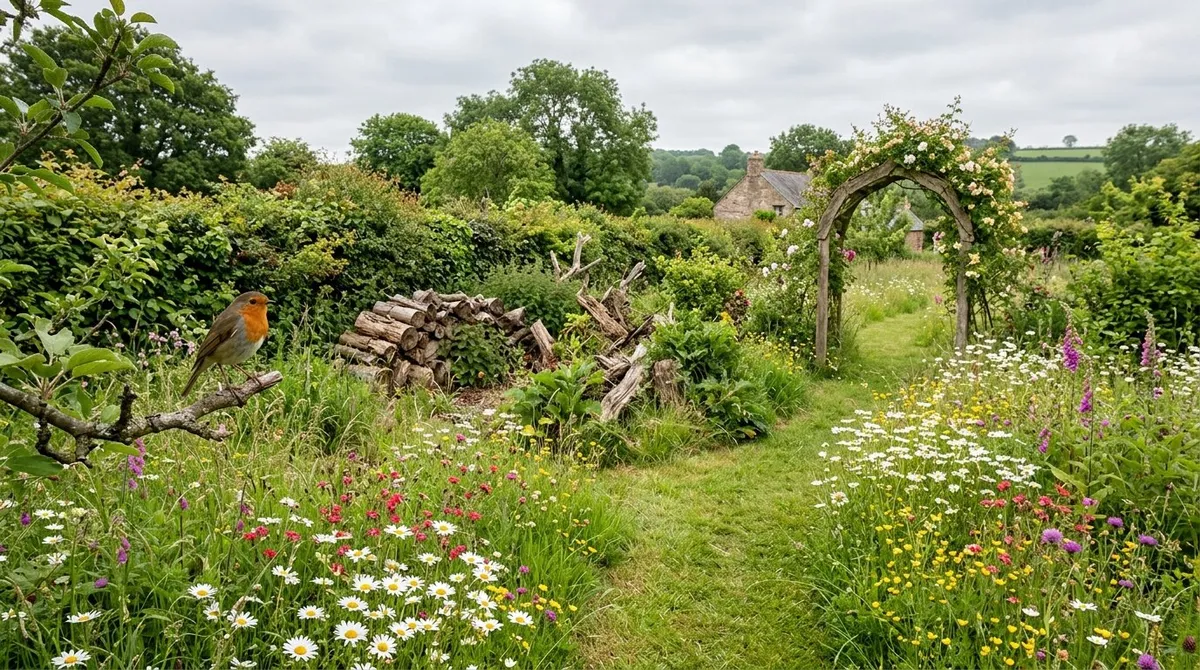
Your garden, however small, can be a lifeline for hedgehogs, songbirds, frogs and bees. As wild places shrink, gardens have become important places for wildlife to feed, shelter and raise young. The RHS wildlife pages are full of ideas for making room for nature.
A wildlife garden doesn’t mean letting everything go to weeds. It’s about a few choices: what you plant, where you leave things alone and which simple features you add. This guide covers the basics and links to our detailed guides on each topic. Even if you only do one thing, it helps.
The five habitat elements every wildlife garden needs
Wildlife needs five things: water, food, shelter, safe places to nest and a way to move between gardens. Give all five and you’ll get the biggest range of visitors. You don’t need to do it all at once. Start with one or two and build up.
| What they need | Ideas | Who it helps |
|---|---|---|
| Water | Pond, bird bath, dish of water | Frogs, newts, dragonflies, birds, hedgehogs |
| Food | Flowering and berrying plants, feeders, compost heap | Bees, butterflies, birds, hedgehogs |
| Shelter | Log pile, thick hedge, long grass | Frogs, toads, insects, small mammals |
| Nesting | Bird boxes, bat boxes, bug hotel | Birds, bats, solitary bees |
| A way through | Fence gaps, hedges, climbers | Hedgehogs, frogs, slow worms |
Water: the single most impactful feature
A pond is the best thing you can add for wildlife. Frogs, toads, newts, dragonflies, water beetles and pond skaters move in, and birds and hedgehogs come to drink. Our wildlife pond guide takes you through building one step by step.
Pond basics
- Size: even 1m x 1m works. Bigger ponds hold more life.
- Depth: at least 60cm in one spot, so it doesn’t freeze solid.
- Edges: at least one gentle slope, so frogs, hedgehogs and minibeasts can climb in and out.
- No fish: fish eat frogspawn, tadpoles and insect larvae, so keep a wildlife pond fish-free.
- Plants: underwater plants help keep the water healthy, and edge plants give cover and egg-laying spots. See our pond plant guide for ideas.
If you cannot dig a pond
If you’d rather have an ornamental pond with fish or a fountain, our guide on how to build a garden pond covers that. Rented gardens, balconies and paved yards can still offer water. A shallow dish on the ground gives birds, hedgehogs and insects a drink. A half barrel with a miniature waterlily and a couple of edge plants can host dragonfly larvae and water beetles. Even a wide saucer with pebbles gives bees somewhere safe to sip.
Our frog and toad guide explains what frogs and toads need to breed.
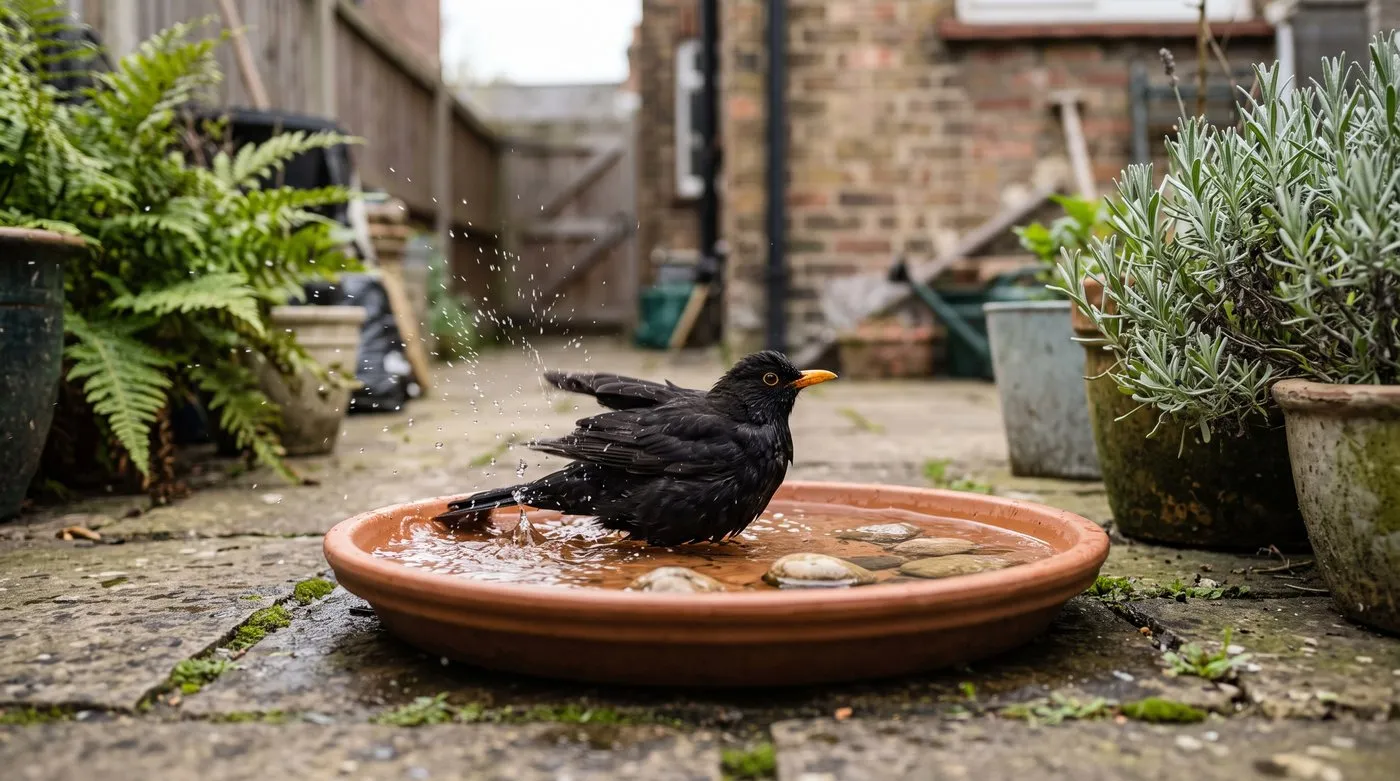
No room for a pond? A wide, shallow saucer on the ground gives birds, hedgehogs and bees a drink. Add pebbles so insects can land safely.
Food: native planting and feeding
Flowering and berrying plants are the best food, with bird feeders as a top-up. Plants feed insects, and insects feed almost everything else.
Why native plants matter
Native plants feed the widest range of insects, because those insects have lived alongside them for a very long time. Native oak is the champion, home to a huge number of insects, lichens and fungi. Those insects feed birds, bats, frogs and toads.
That doesn’t mean ripping out every non-native plant. Just make sure plenty of your plants are natives, and plant generously.
Are non-native plants bad for wildlife?
No, non-native garden plants still feed wildlife, especially pollinators. The RHS Plants for Bugs research found that a garden with plenty of British natives supported the most minibeasts. Plants from elsewhere still did a good job, just a little less.
For bees and hoverflies, a mix works best. Natives are the core, and plants from further afield stretch flowering into early spring and late autumn. How much you plant matters just as much as where the plants come from. More plants means more insects, and any planting is better than none.

Ox-eye daisies, poppies and cornflowers keep bees and butterflies fed through the summer.
Best native plants for wildlife
| Plant | Type | Why wildlife loves it | Flowers |
|---|---|---|---|
| Hawthorn | Hedge or small tree | Hundreds of insects, berries for birds | May to June |
| Blackthorn | Hedge | Early nectar, sloes for birds | March to April |
| Dog rose | Scrambling shrub | Bees and hoverflies, hips for birds | June to July |
| Honeysuckle | Climber | Moths, berries | June to September |
| Ivy | Climber | Late nectar, winter berries, shelter | September to November |
| Foxglove | Biennial | Bumblebees | June to July |
| Red campion | Perennial | Moths and hoverflies | May onwards |
| Ox-eye daisy | Perennial | Bees, hoverflies and beetles | June to September |
| Wild primrose | Perennial | Early bees | March to May |
Our guide to bee-friendly plants has the best nectar plants for every season.
Bird feeding
Feeders help all sorts of garden birds, from tits and finches to robins and blackbirds. Sunflower hearts, fat balls and a dish of water are a cheap way to start. You can feed all year. Winter food helps birds survive the cold, and spring and summer food helps parents raise chicks. Clean feeders regularly to stop disease spreading.
Our seasonal bird feeding guide covers what to put out month by month.
Berry and seed plants
Berrying shrubs feed birds in autumn and winter, when insects are scarce. Cotoneaster, pyracantha, holly, rowan and crab apple all feed thrushes, blackbirds and winter visitors like fieldfares. Wild food varies a lot from year to year: oak, beech and hazel have bumper years, and a mast year sends a glut of acorns and nuts through the food chain before a leaner year follows. Leave seed heads on your perennials over winter too. Goldfinches love teasel and sunflower heads.
Shelter: log piles, hedges, and long grass
Animals need somewhere to hide from predators, shelter from bad weather and sleep through winter. The best shelters are easy and fit into most gardens.
Log piles
A stack of logs in a shady corner is the easiest shelter of all. Pile up logs of different sizes with gaps between them. Frogs, toads, newts, slow worms, beetles, woodlice, centipedes and hedgehogs all use log piles. Over time, fungi and moss move in too. If you have a pond, put the pile near it.

A mossy log pile in a shady corner is a year-round home for frogs, beetles and hedgehogs.
Native hedging
A mixed hedge of hawthorn, blackthorn, field maple and dog rose is the best boundary for wildlife. It gives birds nest sites, bees nectar, everyone berries in winter, and hedgehogs a safe route. A hedge of just laurel offers far less. Plant bare-root whips between November and March, about 5 to 6 per metre. Our cottage garden planting guide shows how to weave native plants into a pretty garden.

A mixed native hedge full of berries feeds birds and gives them safe places to nest.
Long grass and wildflower areas
Leave at least one patch of grass unmown through summer. Long grass is a hunting ground for frogs and toads, a hideout for beetles and spiders, and food for butterfly caterpillars. A wildflower lawn goes further, adding colour from spring to late summer.
You don’t need to give up the whole lawn. A strip along a fence or a corner behind the shed is plenty. Mow a neat path through it to show it’s on purpose.
Compost heaps
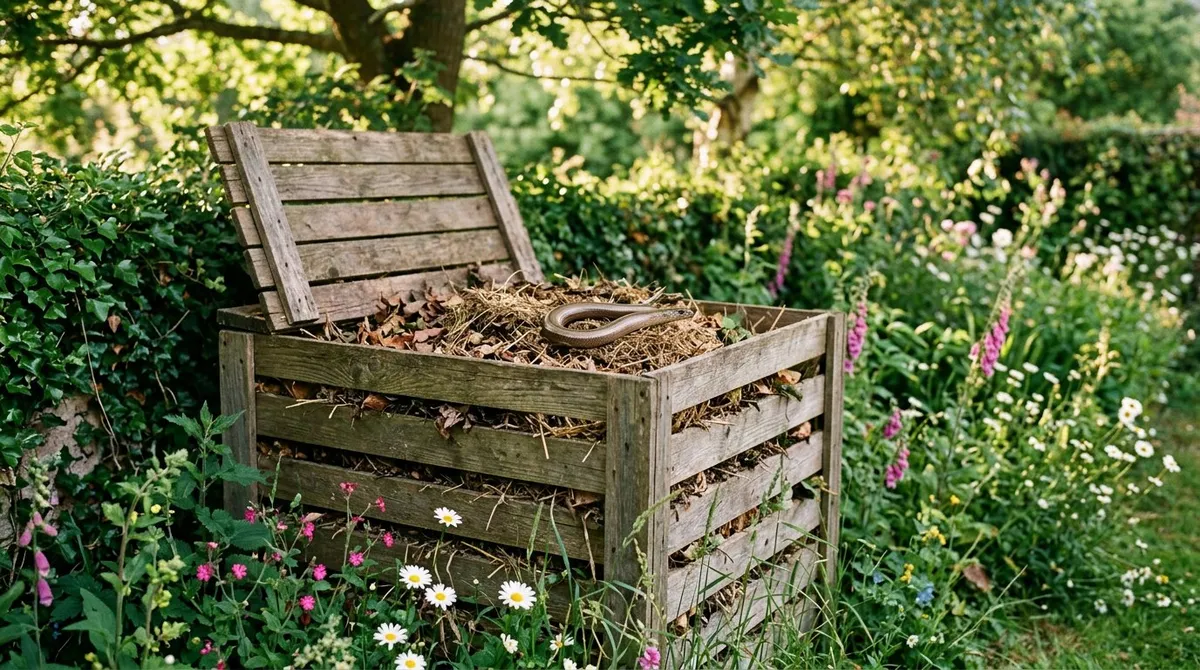
A compost heap is a wildlife home as well as a garden tool. Its warmth attracts slow worms and nesting grass snakes, and the minibeasts inside feed hedgehogs, robins and wrens. An open bay sitting on soil is better for wildlife than a sealed bin. Always check before forking, as hedgehogs, toads and slow worms often shelter inside, especially from October to March.
Nesting: bird boxes, bat boxes, and bug hotels
Boxes and bug hotels stand in for the tree holes, old buildings and dead wood most gardens lack.
Bird boxes
Nest boxes give birds the holes that modern houses and gardens don’t. A box with a 25mm hole suits blue tits and coal tits, and a 28mm hole suits great tits. Open-fronted boxes suit robins and wrens. Put boxes up 2 to 3 metres high, facing between north and east to avoid strong sun, ideally by February. Our bird guide has more on choosing and placing boxes.
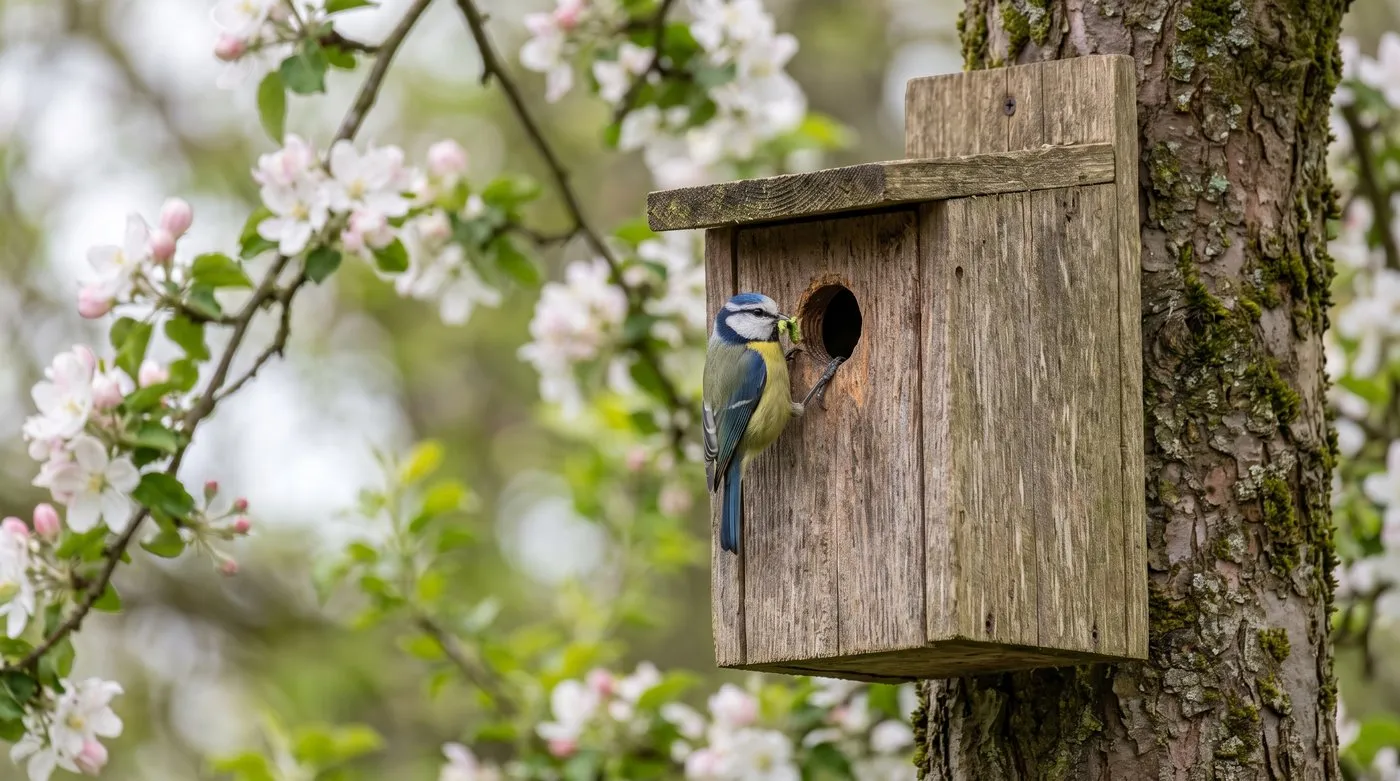
A 25mm hole suits blue tits. Fix boxes 2 to 3 metres up, facing between north and east, ideally before February.
Bat boxes
All UK bats and their roosts are protected by law. A bat box high up on a sunny wall or tree gives them somewhere to rest. One little pipistrelle can eat a huge number of midges in a night. Our bat garden guide explains where to put boxes.
Bug hotels
A bug hotel gives solitary bees, lacewings and ladybirds places to nest and shelter. Fill it with a mix of hollow canes, drilled blocks of wood, pine cones and bark. Put it in a sunny, sheltered spot facing south or south-east. The solitary bees that move in help pollinate fruit trees and veg.
Hedgehog houses
Hedgehogs have declined a lot in Britain, so they need all the help they can get. A hedgehog house in a quiet corner gives them somewhere to nest and hibernate. Tuck it under a hedge or by a log pile, with the entrance facing away from the wind, and fill it loosely with dry leaves. Our hedgehog guide covers houses, feeding and garden hazards.
Connectivity: hedgehog highways and wildlife corridors
One garden on its own is small. Wildlife needs to move between gardens, parks and wild spaces, and solid fences are the biggest barrier.
Hedgehog highways
Cut a 13cm x 13cm hole at the bottom of your fence. Hedgehogs can squeeze through, but it’s too small for most pets. Hedgehogs roam a long way each night looking for food and mates, so without gaps each garden is a dead end. Our hedgehog highway guide explains where to cut and how to chat to your neighbours about it.
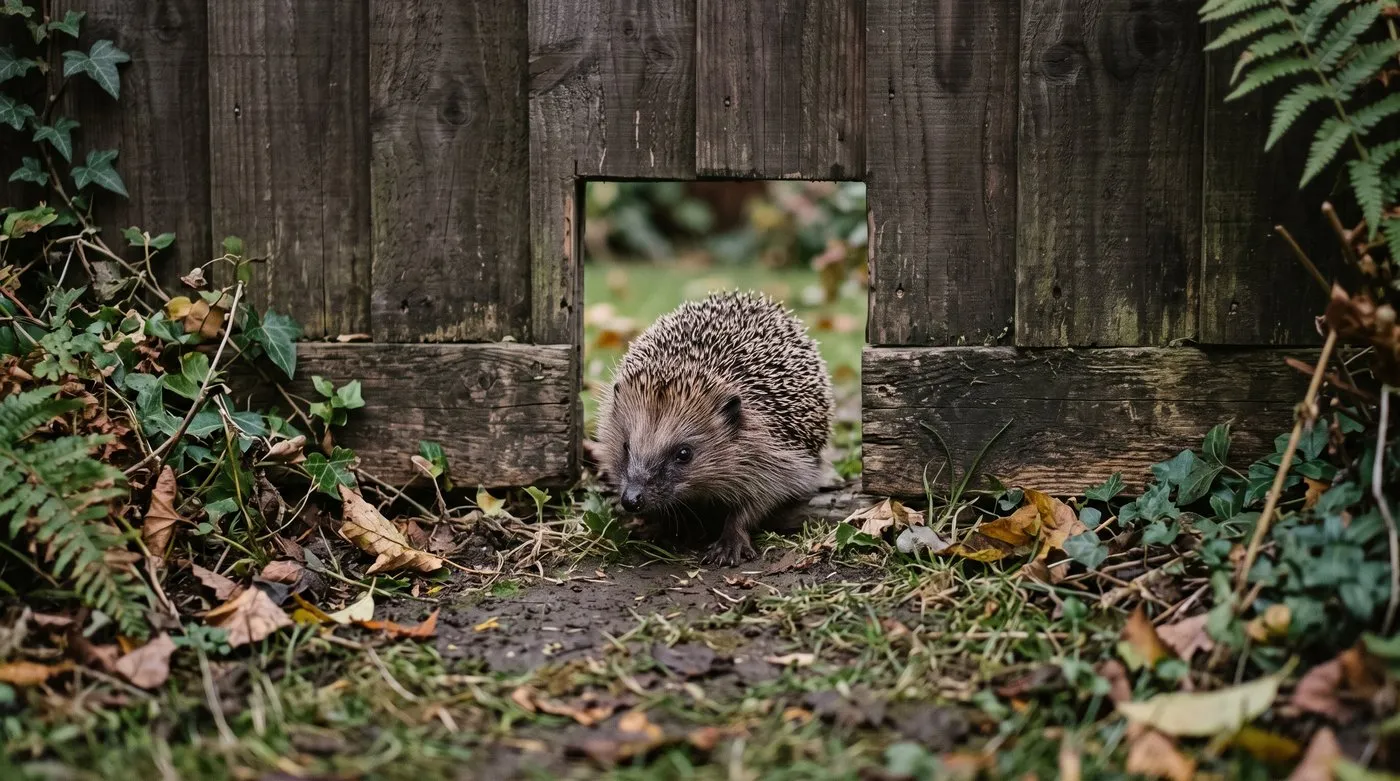
A 13cm square gap lets hedgehogs roam between gardens but is too small for most pets. Chat to your neighbours and link up the street.
Green corridors
Grow climbers on walls and fences to make routes for insects. Ivy, honeysuckle and clematis give bees, butterflies and hoverflies nectar and shelter. A line of trees and shrubs along a street links gardens together for birds and bats.
Reducing barriers
Swap solid fence panels for hedges where you can, as hedges give wildlife far more. If you need a fence, leave a gap at the bottom. Gravel boards right down to the ground block frogs, hedgehogs and beetles.
The wildlife gardening spectrum
Wildlife gardening isn’t all or nothing. Anything from a small change to a big makeover helps.
| Level | Time | What to do | Who benefits |
|---|---|---|---|
| Starter | Under an hour | Hang a feeder, put out water, stop using slug pellets | Birds, hedgehogs |
| Keen | A weekend | Build a log pile, cut a hedgehog gap, plant a native climber | Frogs, insects, hedgehogs |
| Committed | Ongoing | Dig a pond, plant a native hedge, make a wildflower patch | Dragonflies, frogs, butterflies, bats |
| Going wild | Years | Swap lawn for wild areas, plant a woodland edge, let plants self-seed | A much wider range of wildlife |
Most wildlife-friendly gardens sit somewhere between keen and committed. You don’t need a nature reserve. A few well-chosen additions to an ordinary garden make a real difference.
Quick wins: things you can do today
Each of these takes less than an hour and helps straight away.
Stop using pesticides. Insecticides kill pollinators and the insects birds feed their chicks, and weedkillers wipe out wildflowers. Metaldehyde slug pellets are now banned outdoors in Great Britain because they harmed birds and mammals. Use mulch for weeds and pick off slugs at dusk instead.
Leave a patch of lawn unmown. Mark out a square and let it grow from April to September. Cut it once at the end of summer and rake off the clippings. Grasshoppers, beetles, caterpillars and frogs will thank you.
Stack a log pile. Gather fallen branches and prunings, or buy a few untreated logs. Stack them loosely in a shady spot, and beetles, woodlice and toads will soon move in.
Hang a bird feeder. Fill a tube feeder with sunflower hearts and hang it about 2 metres from a bush or tree, so birds can dash for cover. Keep it topped up. Our bird feeding guide has seasonal tips.
Put out a shallow dish of water. A terracotta saucer with a few pebbles for insects to land on gives birds, hedgehogs and bees a drink. Set it on the ground in an open spot.
Cut a hedgehog highway. A 13cm x 13cm hole at the bottom of the fence takes a few minutes with a jigsaw and links your garden to the neighbourhood.
Seasonal wildlife garden calendar
| Month | What to do |
|---|---|
| January | Feed birds every day. Keep a small patch of pond ice open, but don’t smash it. Order bare-root hedging. |
| February | Put up bird boxes. Leave hedgehog houses alone. Join a local toad patrol. |
| March | Look for frogspawn. Sow wildflower seed on prepared ground. Start a compost heap. |
| April | Stop mowing the wildflower patch. Watch for the first butterflies and bees. Avoid cutting hedges while birds are nesting, roughly March to August. |
| May | Birds are busiest nesting, so leave hedges and thick shrubs alone. Plant pond edge plants. |
| June | Mow paths through long grass. Top up bird baths in dry spells. Build a bug hotel. |
| July | Deadhead some wildflowers for more blooms, but leave seed heads for finches. Keep the pond topped up. |
| August | Butterflies are at their best. Put out water in dry spells. Note which plants the bees love most. |
| September | Put out hedgehog food, like meaty cat food or cat biscuits, never bread and milk. Plant spring bulbs for early bees. |
| October | Build or top up log piles before hibernation. Plant native hedging. Dig a new pond. Leave some fallen leaves for hedgehogs. |
| November | Hold off hedge trimming until late winter so birds can eat the berries. Hang fat balls without nets. Check hedgehog gaps are clear. |
| December | Keep feeders full. Float a ball on the pond to help keep a hole open. Plan next year’s projects and enjoy the winter wildlife garden. |
Balancing wildlife and aesthetics
A wildlife garden can look smart if the wild bits look deliberate and the edges are neat. The best ones mix wild corners with pretty, well-kept planting.
Make zones. Keep a neat lawn and tidy borders near the house and let the far end go wilder. A mown path through a wildflower patch looks planned. A patio garden can have pots of pollinator plants alongside the table and chairs.
Use native plants in borders. Foxgloves, wild geraniums and ox-eye daisies look gorgeous in a cottage garden border next to garden perennials. Nobody looks at a drift of foxgloves and thinks “messy”.
Tuck away the practical bits. Screen the compost heap with woven willow or hazel. Slip the log pile into a border. Hang the bug hotel on a wall where it looks like a feature.
Keep the edges crisp. Mow a neat edge around wild areas and keep paths swept. The contrast makes both tidy and wild look intended. Our front garden ideas guide shows how to mix wildlife planting into a smart front garden.
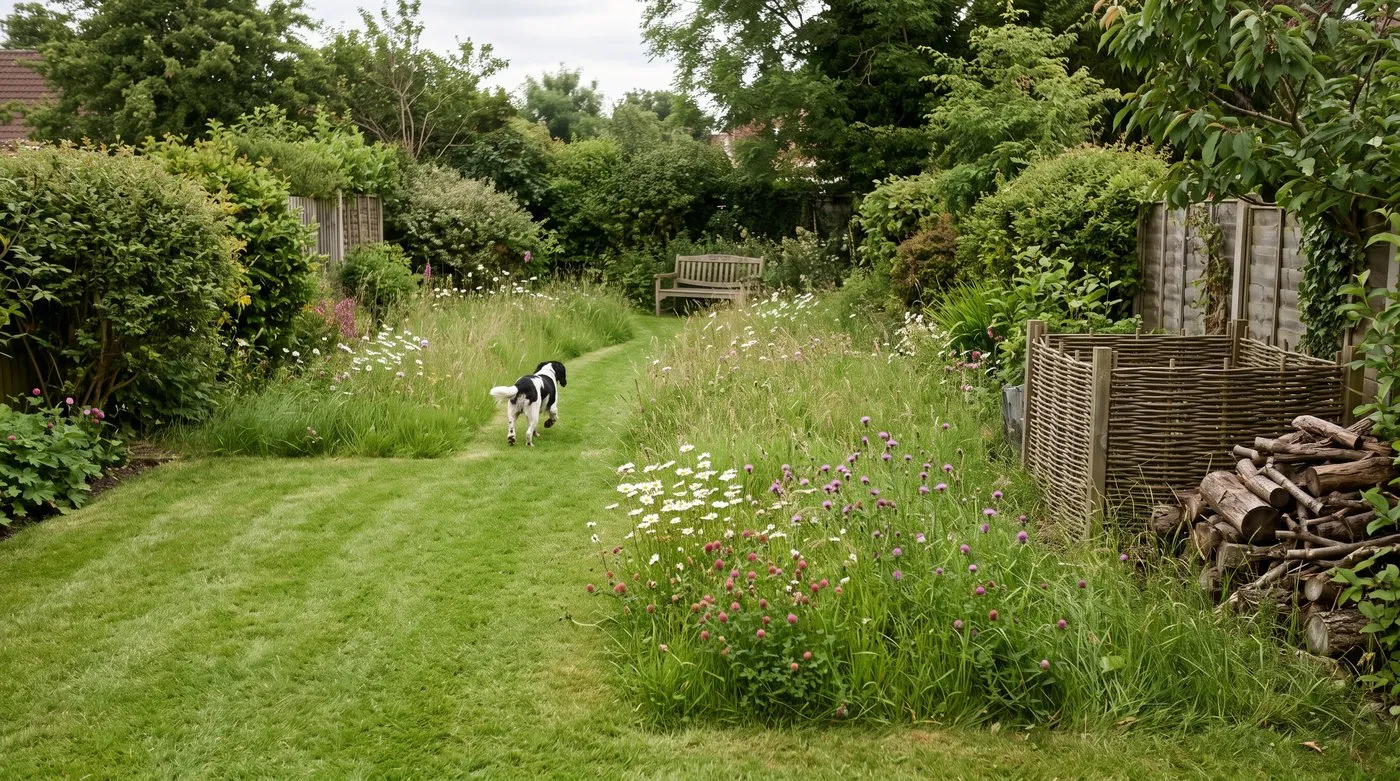
A mown path and crisp edges make wild areas look deliberate. Keep it neat by the house and let the far end go wilder.
Will a wildlife garden attract rats?
Not on its own. Rats come for easy food and dry shelter, so the main risks are spilled bird food and cooked scraps in the compost.
Use feeders with trays, and only put out what birds finish in a day or two. Don’t scatter food on the ground where rats have been seen. Keep cooked food, meat and dairy out of the compost, and keep the heap damp. Clear clutter from under sheds and decking. If rats turn up, take the feeders down for a few weeks until they move on. Avoid poison baits, as they can also kill owls, kestrels and other animals that eat poisoned rats. Our guide on how to get rid of rats has more tips.
Is artificial grass bad for wildlife?
Artificial grass gives wildlife almost nothing. There’s no food for insects, worms and soil life are sealed off underneath, and birds have nothing to forage in. It can also get very hot in summer sun.
If you want an easy lawn, just mow less often. Every three or four weeks lets clover, daisies and selfheal flower for bees. A patch of wildflower lawn or a gravel garden with tough flowers are other easy options. If you already have artificial grass, a wide planted border around it, a container pond and a climber on the fence bring some wildlife back.
Now you know the basics, read our guide on building a wildlife pond for the best next step.
Frequently asked questions
How do I start a wildlife garden?
Start with water, food and shelter. Sink a washing-up bowl as a mini pond, with stones as a ramp. Hang a feeder of sunflower hearts and stack a log pile in a shady corner. Birds and insects often find them quickly. Add native plants, a bug hotel and a hedgehog gap over time.
What is the best wildlife garden feature?
A pond is the best single feature for wildlife. Even a 1m x 1m pond with no fish can bring frogs, newts, dragonflies, birds and hedgehogs. Underwater and edge plants give frogs and insects places to breed. Nothing else in a garden helps such a range of creatures.
Can I have a tidy garden and still help wildlife?
Yes, a wildlife garden doesn’t have to look messy. Keep most of the lawn short and let one corner grow long. Mix native plants into neat borders. Keep paths and seating tidy. A feeder, a log pile and a small pond fit into any style of garden.
What animals will visit a wildlife garden?
Birds, hedgehogs, frogs, toads, bats, butterflies, bees and dragonflies are all likely. Slow worms turn up where there are compost heaps and long grass. Foxes and badgers visit some gardens, especially in the country. Even small town gardens host beetles, spiders, moths and hoverflies.
Do I need a big garden for wildlife?
No, any size helps. A window box of lavender feeds bees. A shallow dish of water gives birds and hedgehogs a drink. A climber on the wall shelters insects and nesting birds. A tiny courtyard with a mini pond, a log pile and a native climber can host lots of creatures.
What native plants are best for wildlife?
Hawthorn, blackthorn, dog rose, honeysuckle, ivy and native bluebells are all great. Hawthorn feeds hundreds of kinds of insect and gives birds berries. For flowers, foxgloves, red campion, ox-eye daisies and wild primroses give nectar from spring to autumn.
When is the best time to create a wildlife garden?
Autumn is best for the big jobs. Dig ponds in autumn or winter, when frogs and newts aren’t breeding. Plant bare-root hedging from November to March. Log piles and bug hotels can go in any time, and you can hang a feeder today. Spring is best for sowing wildflowers and planting pond edges.
Our team produces practical UK gardening guidance from source research, contributor records and established horticultural practice. Editorial standards are overseen by Matt W.