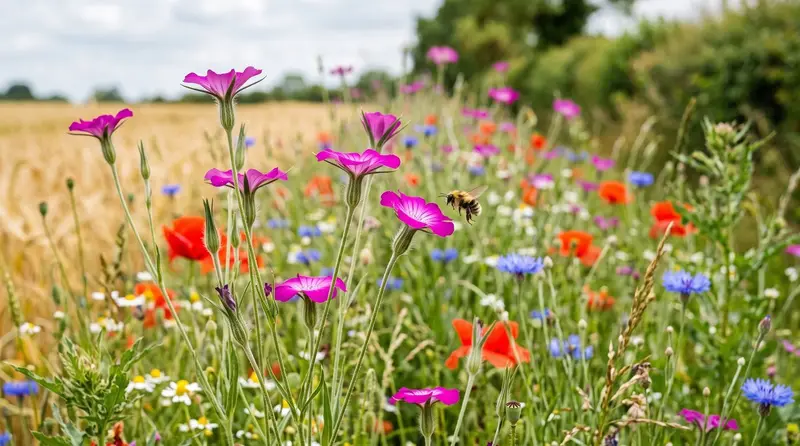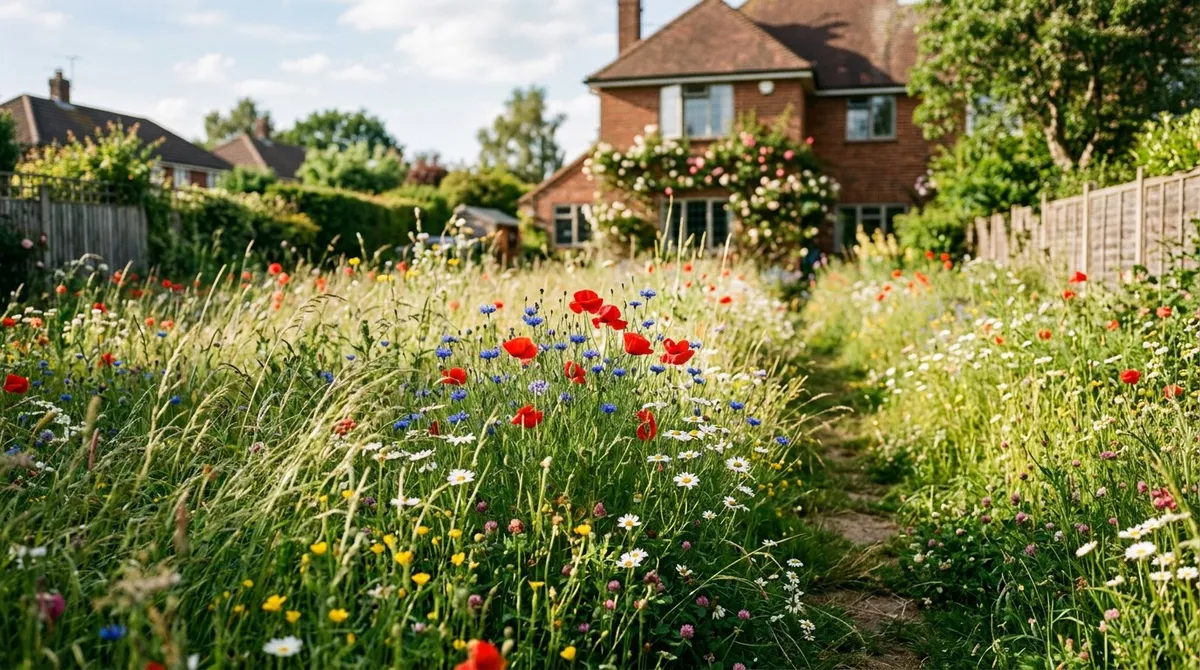
A wildflower lawn needs low-fertility soil and just one cut per year in late August or September. Sow native seed at 2-4g per square metre in spring or autumn. Yellow rattle (Rhinanthus minor) is the single most important species: it parasitises grass roots, reducing grass vigour by up to 60%. A 20-square-metre meadow patch supports over 100 insect species. UK native wildflowers like oxeye daisy, field scabious, and knapweed flower from May to September.
Key takeaways
- Wildflowers need poor soil, so never fertilise and remove grass clippings after every cut
- Yellow rattle reduces grass vigour by up to 60%, giving wildflowers room to establish
- Sow seed at 2-4g per square metre in either March-April or September-October
- Cut the meadow once per year in late August or September, then remove all cuttings
- A 20-square-metre wildflower patch supports over 100 insect species
- Cornfield annuals like poppies and cornflowers give instant colour in year one
wildflowers meadow lawn native plants pollinators biodiversity wildlife gardening
Our team produces practical UK gardening guidance from source research, contributor records and established horticultural practice. Editorial standards are overseen by Matt W.