Key takeaways
- Forget-me-nots are fully hardy and cope with winters anywhere in the UK
- Sow from May to July for flowers the following spring
- There are three main kinds: woodland, alpine and water forget-me-nots
- They seed themselves freely, so pull spent plants before the seed drops to keep them in check
- The woodland kind is a native wildflower and a great early food for bees
- They're happy in part shade and ordinary soil, so they fill tricky spots well
Forget-me-nots are usually grown as hardy biennials. Sow them from late spring into summer and they’ll flower the following year. Then pull up spent plants before the seed drops if you don’t want them everywhere.
What conditions do forget-me-nots need?
They grow in most UK garden soils. They like moist soil that drains well, but cope with clay, loam and sandy soil too. Sun or part shade both work, though part shade with steady moisture gives the best show.
| What they need | In plain terms |
|---|---|
| Soil | Most soils, ideally moist but not soggy |
| Light | Sun to part shade |
| Spacing | 15-20cm apart |
| Cold | Fully hardy |
They’re tough enough for any UK winter, and frost doesn’t harm the leafy clumps. The one thing they dislike is heavy clay that stays wet all winter, which can rot their shallow roots.
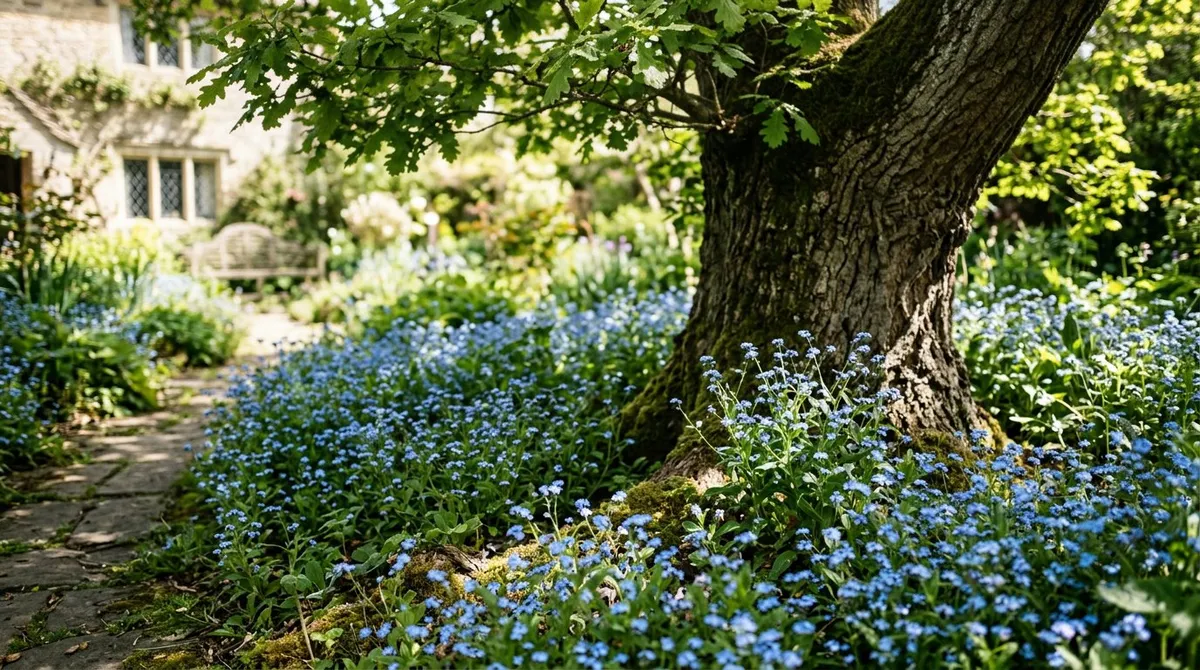
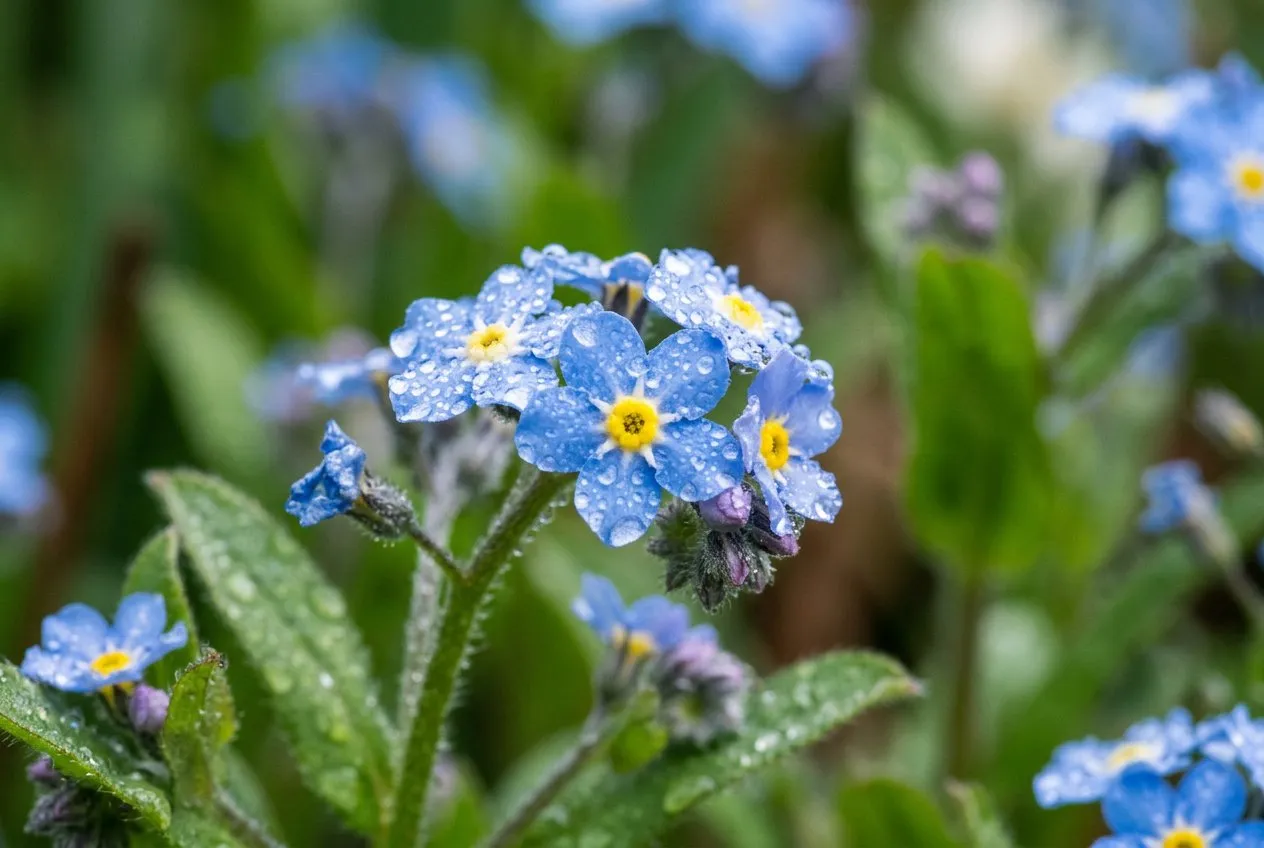 Those famous sky-blue petals with sunny yellow centres.
When should you sow forget-me-not seeds?
Sow from May to July for flowers the following April to June. In the first summer and autumn they grow a clump of leaves, sit quietly through winter, then flower in spring, drop their seed and die.
Sow thinly on moist compost or soil and cover with a very fine layer. Keep it moist, and seedlings usually appear within a few weeks. If you’re sowing in trays, use modules and keep them in a cold frame or unheated greenhouse. Plant out in September or October, 15-20cm apart.
| Month | Jobs |
|---|---|
| May to July | Sow in trays or straight into the ground |
| July to August | Thin or prick out seedlings |
| September to October | Plant out tray-grown seedlings |
| October to March | Leave them be over winter |
| April to June | Enjoy the flowers |
| Late June to July | Pull spent plants, or save some seed |
Which forget-me-not species should you grow?
There are three main kinds, and each suits a different spot. Pick the right one and they’ll be happy.
| Woodland (M. sylvatica) | Alpine (M. alpestris) | Water (M. scorpioides) | |
|---|---|---|---|
| Size | Small to medium | Very small | Medium, spreading |
| Best spot | Borders, under trees | Rock gardens, troughs, gravel | Pond edges, bog gardens |
| Lives | Two years | A few years | Many years |
| Soil | Moist, drains well | Gritty, drains well | Always wet |
Myosotis sylvatica is the one you’ll find in most garden centres, and the one that seeds about the most. It has the classic sky-blue flowers, though pink (‘Rosylva’) and white (‘Snowsylva’) kinds are available too. It’s lovely in shady borders under trees.
Myosotis alpestris stays small and suits rock gardens, troughs and gravel. It needs sharp drainage and hates winter wet.
Myosotis scorpioides is the water forget-me-not. It spreads by creeping stems along pond edges and is happy in shallow water. It’s great for bog gardens and pond margins. It’s a British wildflower, so buy plants from an aquatic nursery rather than digging them up from the wild.
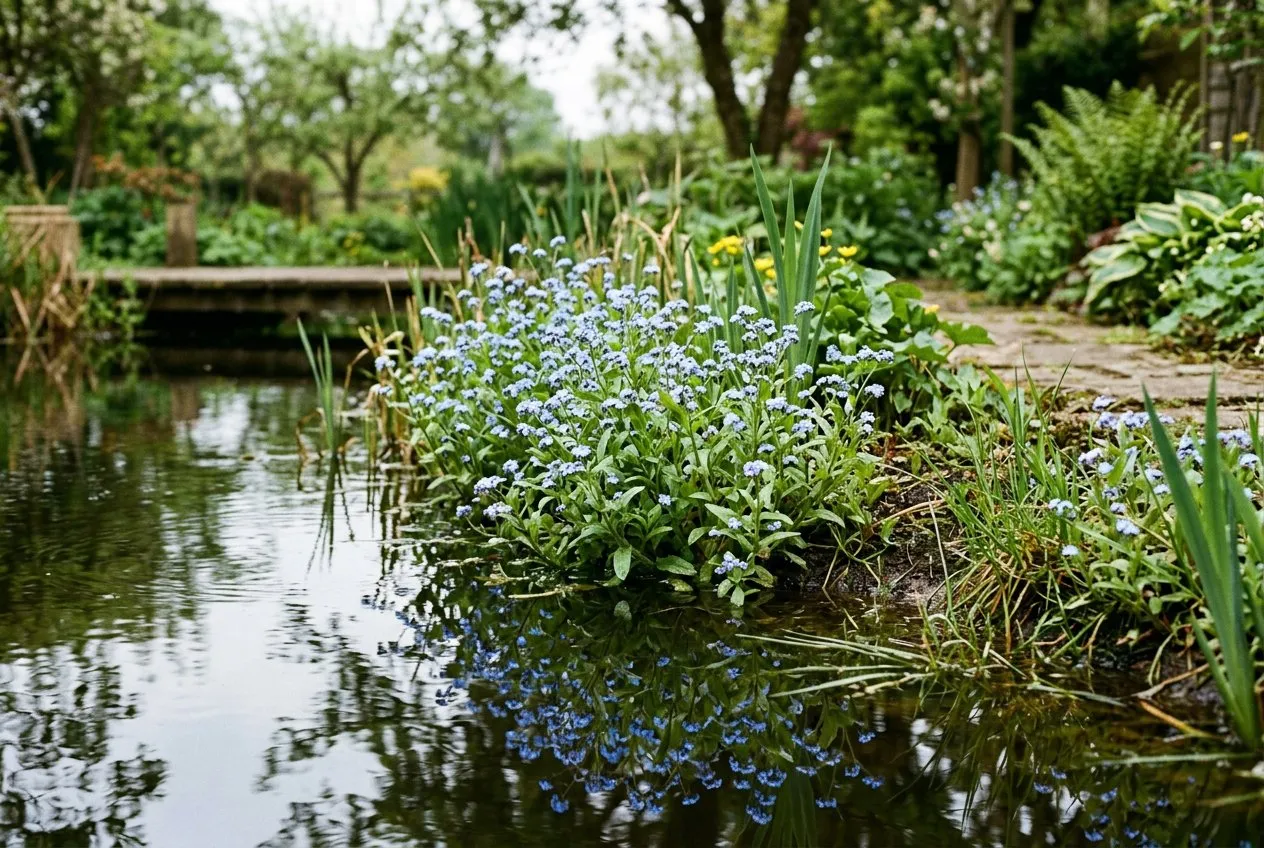 Water forget-me-nots softening the edge of a wildlife pond.
How do forget-me-nots self-seed?
Each plant makes lots of seed, which drops close by when the pods split. That’s how a few plants turn into a carpet. Left alone, they can fill a border within a couple of years.
The seeds ripen along the flower stems and drop in early summer. Most come up that autumn, sit through winter as small clumps and flower the next spring. Then it all starts again, with no help from you.
Love the blue? The woodland kind is perfect for relaxed borders and woodland-style planting. Let just a few plants seed if you want them back next spring.
Are forget-me-nots good for wildlife?
Yes, they’re a lovely early food for bees. They flower from April to June, which helps fill the gap between spring bulbs and summer flowers.
The open, flat flowers make pollen and nectar easy to reach for bumblebees, solitary bees and hoverflies. They’re great alongside other early flowers such as primroses, pulmonaria and grape hyacinths in a bee-friendly planting scheme.
The woodland forget-me-not is a native British wildflower, so it’s a natural fit for a wildlife garden.
The low, dense leaves also give beetles and other little creatures somewhere to shelter. In a wildflower lawn or mixed border, they add another layer for wildlife.
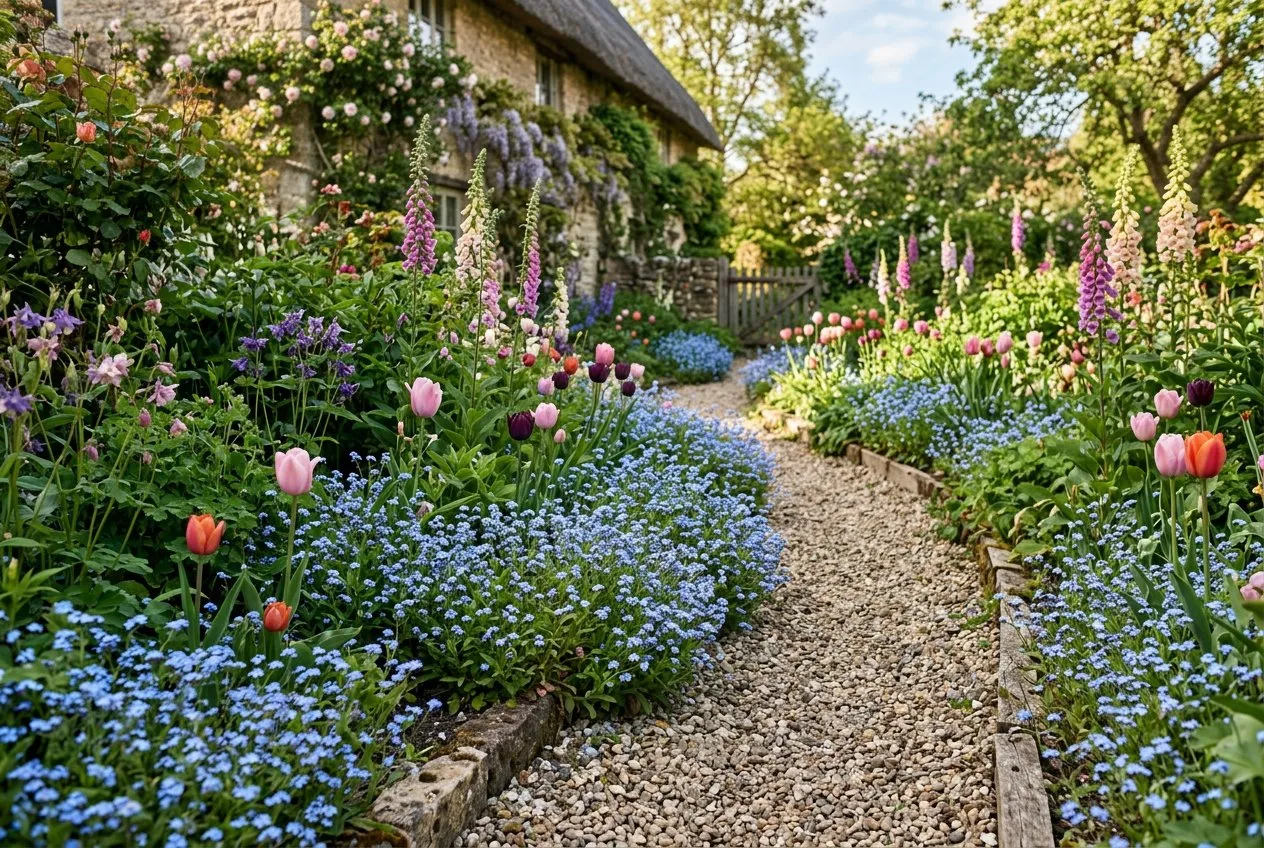 Forget-me-nots seeding along a cottage garden path, mingling with tulips and foxgloves.
How to grow forget-me-nots in difficult spots
Forget-me-nots cope where lots of plants struggle. That makes them handy for filling gaps.
Dry shade under trees
The woodland kind naturally grows under trees, flowering in spring before the leaves above fill in. Under garden trees, sprinkle seed on bare soil between the roots in early summer and water it in. Fewer will come up than in open ground, but you’ll soon have a pretty patch.
North-facing borders
They do well in north-facing spots too, flowering a little later than in sunnier places. Mix them with ferns, hostas and brunnera for a lovely shady border.
Gaps in paving and gravel
Self-sown forget-me-nots often pop up in cracks and gravel. Leave them where they look nice. They die back by midsummer, so they won’t be in the way for long.
Common problems with forget-me-nots
Powdery mildew is the most common issue. It shows as white, dusty patches on the leaves in late spring, usually after flowering when the plants are tired anyway.
The easiest fix is to pull up affected plants after flowering, as they’re finishing their life anyway. Spacing plants 15-20cm apart and watering the soil rather than the leaves helps prevent it.
Slugs and snails like young seedlings in autumn and early spring. Keep an eye on new plants. Once they’ve grown into dense clumps, slugs tend to leave them alone.
Flea beetles sometimes chew tiny round holes in the leaves. It’s usually minor and doesn’t stop them flowering.
Frequently asked questions
Are forget-me-nots perennial or annual?
Most garden forget-me-nots are biennials. They grow leaves in the first year, flower in the second, then die. But they seed themselves so freely that they come back every spring anyway. The water forget-me-not is a true perennial and spreads along pond edges.
When should I sow forget-me-not seeds?
Sow from May to July for flowers next spring. Sow thinly on moist compost or soil and cover with a very fine layer. Keep it moist and seedlings usually appear within a few weeks. Plant them out in September or October, about 15-20cm apart.
Do forget-me-nots grow in shade?
Yes, they love part shade. The woodland kind grows naturally under trees in dappled light. In full sun they flower a little earlier but finish sooner and can flop in dry spells. Part shade with moist soil gives the longest show.
How do I stop forget-me-nots spreading?
Pull up plants once flowering finishes, before the seed drops. Timing is everything, so don’t wait until the stems turn brown. If you’d like a few back, leave three or four plants to seed and pull the rest. Any extra seedlings are shallow-rooted and easy to hoe off.
Can I grow forget-me-nots in pots?
Yes, they look lovely in pots. Use multipurpose compost in a pot at least 15cm deep. Keep the compost moist but not soggy. They’re great for balconies and patios, especially in a partly shady spot.
Our team produces practical UK gardening guidance from source research, contributor records and established horticultural practice. Editorial standards are overseen by Matt W.