
Key takeaways
- Boggy soil stays wet but isn't underwater, so check which you have before you buy
- Candelabra primulas and astilbe are the most reliable flowers for damp ground
- Marsh marigold and yellow flag iris cope with the wettest, standing-water edges
- Ligularia and rodgersia give big, bold leaves in damp shade
- Cornus alba dogwood and royal fern add height and winter interest
- Plant in spring and mulch so the soil never dries out in summer
The best plants for wet, boggy soil are the ones that love having damp roots all year. Candelabra primulas, astilbe, ligularia and Siberian iris all thrive where ordinary border plants rot. With the right picks, a soggy corner can become the lushest part of the garden.
The trick is knowing how wet your ground really is. Damp soil and a pond edge need different plants. Below you’ll find how to check, the best flowers, foliage plants, shrubs and ferns for wet ground, and how to plant them. If you’d like to build a lined bog bed from scratch, our guide on how to create a bog garden walks you through it.
Is your ground boggy or a pond margin?
Check before you buy. Boggy soil stays moist all year but isn’t under water. A pond margin has shallow standing water for at least part of the year. The plants for each are quite different.
Boggy soil drains slowly after rain. Puddles may sit for a short while, and the ground feels spongy underfoot. Most of the plants in this guide love it. A pond margin has water over the soil. Only true marginal plants, like yellow flag iris and marsh marigold, cope with that.
To test, dig a hole about 30cm deep and watch it after rain. If water sits in the bottom for days, treat it as a margin. If the soil is damp but the hole drains within a day, it’s boggy ground. Our guide to the best pond plants for UK gardens covers plants for standing water.

Yellow flag iris and marsh marigold are happy with their feet in shallow water. Most bog plants want damp soil instead.
A stream nearby doesn’t always mean the soil stays wet, so dig a test hole before you plant. Our shade, stream and sun garden article shows how to tell the difference.
The best flowering plants for boggy ground
Candelabra primulas and astilbe are the most reliable flowers for damp soil. They come back every year and spread happily in moist ground.
Candelabra primulas, such as Primula bulleyana and Primula japonica, flower from May to July. Their flowers sit in tiers up the stems, about 60cm tall. They self-seed into lovely drifts in damp soil. Our guide to growing primulas covers sowing and dividing them.
Astilbe has feathery plumes in red, pink or white from June to August. Plants are 30-90cm tall. Its one rule is that the soil must never dry out. Our guide to growing astilbe covers dividing the clumps.
Iris sibirica has slender blue or white flowers in June, at about 90cm. Meadowsweet (Filipendula) and globe flower (Trollius) like the same damp conditions. For late colour, Persicaria carries pink and red spikes from July until the frosts. Lobelia cardinalis adds scarlet spikes into September, though it may need a winter mulch in colder areas.

Astilbe brightens damp shade from June to August, as long as the soil never dries out.
Gardener’s tip: Let candelabra primulas drop their seed before you tidy them. The seedlings pop up in the damp soil, and a few plants soon turn into a drift.

Candelabra primulas self-seed in damp soil, so a few plants fill a wet border for free over a few years.
Big-leaved plants for damp shade
Big, bold leaves are where wet ground really shines. Constant moisture lets plants grow huge leaves that would scorch in dry soil.
Ligularia, such as ‘The Rocket’ and ‘Desdemona’, has bold leaves and tall yellow or orange flowers in mid to late summer. It flops dramatically when dry and perks up after a soak, so it tells you when it’s thirsty. Rodgersia has handsome, deeply divided leaves and creamy plumes, and loves the same damp shade.
For bigger spaces, Darmera peltata has large round leaves, with pink flowers that appear before the leaves in spring. Gunnera manicata is the giant of the group, with enormous leaves. Cover its crown with its own folded leaves in winter. Don’t confuse it with Gunnera tinctoria, which is invasive and banned from sale. Our guide to the gunnera ban explains the difference.

Ligularia adds height and big leaves to damp shade. It wilts when dry and recovers quickly after a good soak.
Shrubs and ferns for wet ground
Wet-tolerant shrubs add height and winter structure that perennials can’t. Ferns and sedges fill the ground beneath them.
Cornus alba (dogwood) has bright red winter stems and copes well with wet clay. Willows, such as Salix alba var. vitellina with golden stems, cope with the wettest ground of any shrub. Their roots go looking for water, so plant them well away from drains, pipes and the house. Elder and guelder rose both suit damp hedges and feed birds with their berries.
For ground-level texture, ferns love damp shade. The royal fern (Osmunda regalis) can reach about 1.5m in wet soil and turns golden in autumn. The shuttlecock fern (Matteuccia struthiopteris) spreads in moist ground to form a colony. Add sedges, such as Carex elata ‘Aurea’, for fine golden leaves.

Cornus alba is happy on wet clay and earns its space with glowing red stems all winter.
Wet-soil plants compared
Use this table to match each plant to how wet your spot is. Put the wettest-loving plants lowest, and the ones that like moist but not soggy soil on the edges.
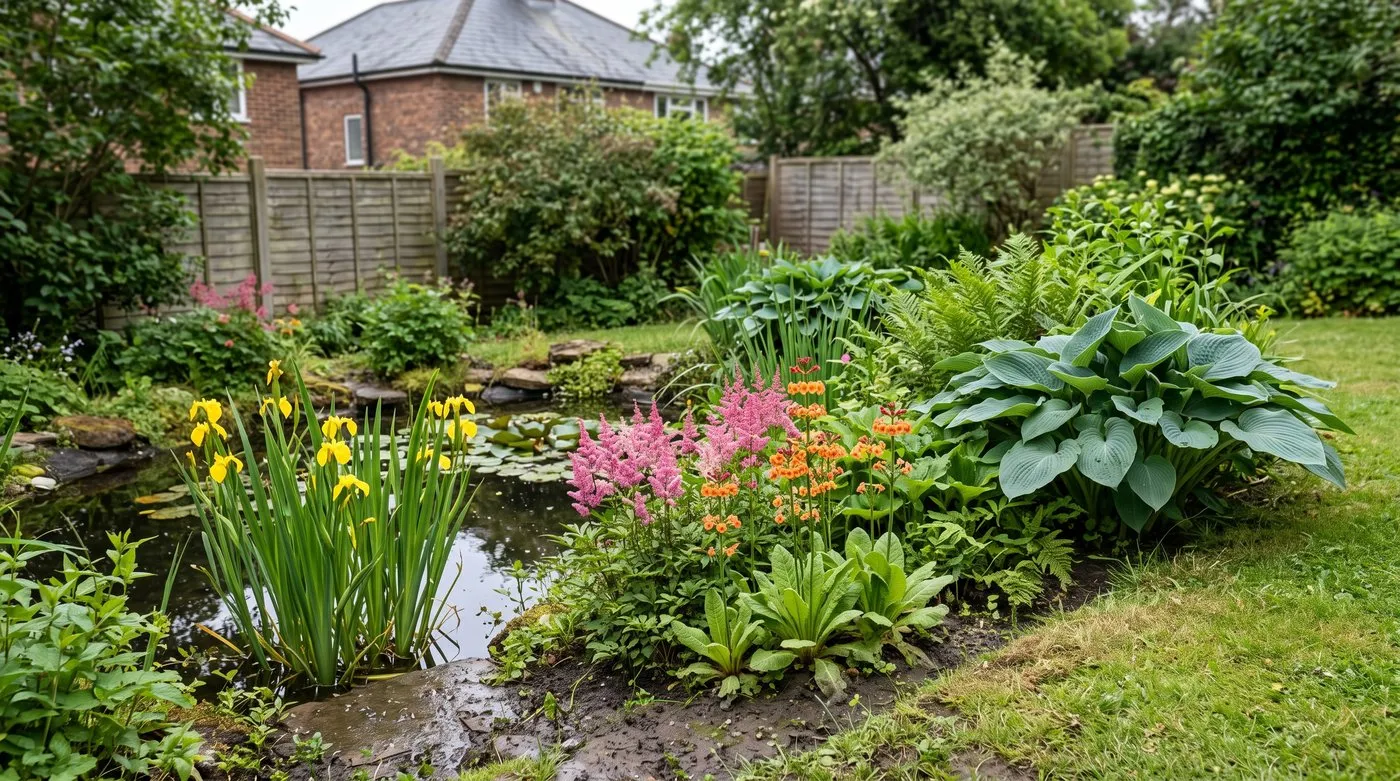
Plant in bands: marginals in the water, bog plants in the damp middle and hostas on the drier edge.
| Plant | Type | Height | Wettest spot it copes with | Flowers | Aspect |
|---|---|---|---|---|---|
| Marsh marigold | Marginal perennial | 30cm | Shallow standing water | March to May | Sun or part shade |
| Yellow flag iris | Marginal perennial | 1-1.5m | Shallow standing water | May to June | Sun or part shade |
| Candelabra primula | Perennial | 60cm | Boggy, never dry | May to July | Part shade |
| Astilbe | Perennial | 30-90cm | Boggy, never dry | June to August | Part shade |
| Ligularia | Perennial | 1-1.5m | Boggy, never dry | July to September | Part shade |
| Iris sibirica | Perennial | 90cm | Reliably moist | June | Sun or part shade |
| Cornus alba | Shrub | 2m | Wet clay | Grown for stems | Sun or part shade |
| Hosta | Perennial | 30-75cm | Moist, not winter-wet | Summer, grown for leaves | Part to full shade |
Think of it in bands. Marginals go at the wettest point. Most bog plants go in the permanently damp middle. Moisture-lovers like hostas, covered in our guide to growing hostas, sit on the drier edge. Put each plant in the right band and the planting almost looks after itself.
How to prepare and plant boggy ground
Plant in spring, from March to May, when the soil is warming and plants grow fast. Even moisture-lovers need some air at the roots, so heavy, sticky clay benefits from improving first.
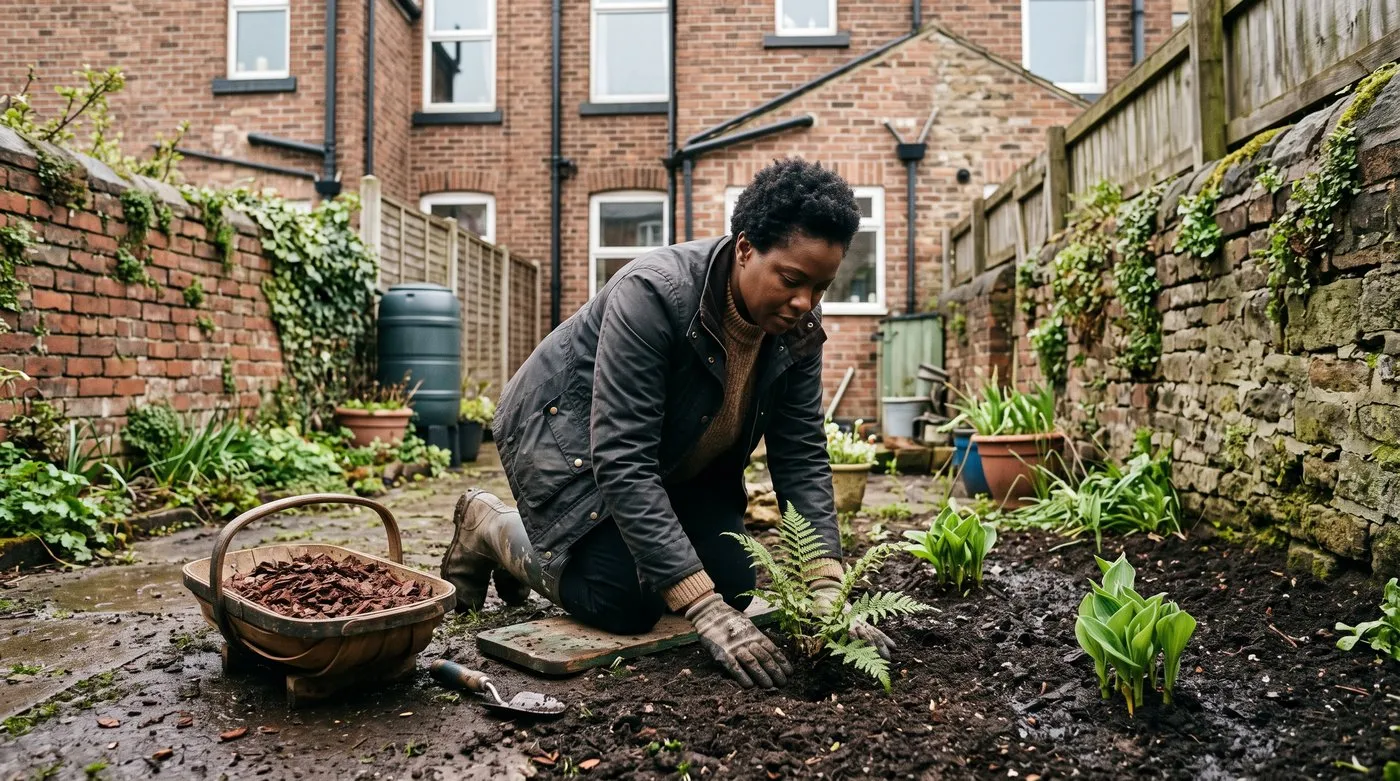
Kneeling on a board spreads your weight, so you don’t squash wet soil while you plant.
- Clear weeds, especially creeping ones like couch grass, before you plant.
- Dig in a good layer of compost or well-rotted manure, about 5-10cm deep, to open up heavy clay.
- Plant at the same depth as the pot. On the very wettest spots, set crowns on a slight mound.
- Water new plants in, even if the ground is wet. This settles the soil around the roots.
- Mulch with compost or bark to keep the soil moist through summer.
If the wet comes from compacted ground rather than a natural low spot, our guide to fixing waterlogged clay explains when better drainage is worth it.
A month-by-month plan for wet ground
| Month | What to do |
|---|---|
| January | Plan and order plants. Check frost hasn’t lifted any crowns |
| February | Cut back old fern fronds and dead stems before new growth starts |
| March | Dig in compost. Plant marsh marigold and early primulas |
| April | Main planting month for astilbe, ligularia, rodgersia and iris |
| May | Candelabra primulas flower. Water new plants in dry spells |
| June | Iris sibirica and astilbe flower. Mulch to hold moisture |
| July | Ligularia flowers. Deadhead to keep things tidy |
| August | Keep the soil damp. Never let bog plants dry out in hot weather |
| September | Lobelia flowers. Divide crowded clumps |
| October | Enjoy autumn fern colour. Leave seedheads for wildlife |
| November | Cover gunnera crowns. Clear fallen leaves off primulas |
| December | Note the wettest spots so you can plan next spring |
Common mistakes with wet-soil planting
- Treating boggy soil like a pond. Bog plants drown in standing water. Test how wet the ground is first.
- Planting ordinary border plants and hoping. Lavender, most herbs and other Mediterranean plants rot in winter wet. Choose plants that love damp soil.
- Skipping the compost. Even bog plants need air and food at the roots. Dig in organic matter before planting.
- Planting willow near the house. Willow roots seek out water and can damage drains. Keep it well away from pipes and buildings.
- Letting the soil dry in summer. Bog plants have shallow, thirsty roots. A dry August can kill astilbe and ligularia. Mulch and water in hot spells.
For more ideas for tricky spots, browse all our plant guides.
Now you’ve got your plants, read our guide to the best plants for clay soil for the slightly drier ground around them.
Frequently asked questions
What plants grow well in wet boggy soil?
Candelabra primulas, astilbe, ligularia, rodgersia and Iris sibirica all thrive in boggy soil. They cope with damp ground that would rot most border plants. Add marsh marigold and yellow flag iris for the wettest spots. Most prefer part shade and rich soil.
What is the difference between boggy soil and a pond margin?
Boggy soil is wet but not underwater, while a pond margin has standing water. Bog plants want damp roots without being drowned. Marginal plants like yellow flag iris are happy with their roots in shallow water.
Can I improve boggy soil or should I just plant for it?
Planting for it is usually easier than draining it. Digging in organic matter helps the roots get air. If the wet comes from compacted ground, better drainage can help. In a naturally low, wet spot, choose bog plants and enjoy it.
Do any shrubs grow in wet soil?
Yes, dogwood, willow, elder and guelder rose all cope with wet ground. Cornus alba gives bright winter stems on damp clay. Willow suits the wettest corners, but its roots seek out water, so keep it well away from drains and the house.
Will hostas grow in boggy soil?
Hostas like moist soil but not standing winter water. Grow them on the drier edge of a damp border, in part shade. Slugs love damp ground too, so thick-leaved varieties are a good choice.
Why do my plants keep dying in wet soil?
Most border plants rot when their roots sit in cold, wet soil over winter. Waterlogged ground has little air for roots. Switch to true bog plants, or plant on a small mound so the crown sits above the wettest soil.
Our team produces practical UK gardening guidance from source research, contributor records and established horticultural practice. Editorial standards are overseen by Matt W.


