
Key takeaways
- Lavender, clematis, pinks, scabious and buddleia all love chalk
- Beech, yew, whitebeam and field maple are great trees and hedges for chalk
- Skip rhododendrons, camellias and blueberries, or grow them in pots of ericaceous compost
- Cabbage-family crops, beetroot and asparagus do really well on chalk
- Spread compost or manure every autumn to help chalk hold water
- A cheap test kit from a garden centre tells you if your soil is alkaline
Chalky soil suits far more plants than most people expect. If you garden in the Chilterns, the North or South Downs, or the Yorkshire or Lincolnshire Wolds, your soil is probably alkaline. That’s no bad thing. Lavender, clematis, pinks and lots of vegetables actually do better on chalk than on acid ground.
What makes soil alkaline?
Alkaline soil sits over chalk or limestone rock. The chalk keeps the soil alkaline, and it also makes it drain fast. Unlike clay soil, chalk doesn’t hold on to water, so it dries out quickly in summer.
The main snag is iron. On chalk, iron gets locked away where plant roots can’t reach it. Acid-loving plants need lots of iron, so they go hungry and their leaves turn yellow between green veins. Gardeners call this lime-induced chlorosis. Rhododendrons, camellias, pieris and blueberries are the usual victims.
Chalky soil often has a thin layer of dark topsoil over white chalk. That’s why adding compost every year helps so much.
Best shrubs for alkaline soil
Shrubs give a chalk garden its year-round shape. These are all happy on chalk.
Buddleia (Buddleja davidii)
Buddleia loves chalk. It pops up on railway cuttings, quarries and chalk cliffs all over southern England. In the garden it grows fast, flowers from July to September and pulls in butterflies by the dozen. Cut it back hard to about 60cm in March for the biggest flowers. Every chalk garden deserves one.
Box (Buxus sempervirens)
Box grows wild on chalk downland and is the classic plant for low hedges and topiary. It’s happy in sun or part shade. Clip it in June and again in September. Box blight can be a problem, so choose a more resistant variety like ‘Faulkner’ and don’t plant too close together.
Philadelphus (mock orange)
Mock orange has gorgeously scented white flowers in June and July. It copes with poor, dry chalk. ‘Belle Etoile’ grows to about 2m and has white flowers with a purple centre. Prune straight after flowering, cutting the flowered stems back to strong new shoots.
Deutzia
Deutzia deserves more fans. Its arching stems are covered in star-shaped pink or white flowers in May and June. ‘Mont Rose’ grows to about 1.5m, while Deutzia gracilis stays small. Both like chalk and full sun.
Viburnum
Several viburnums love chalk. Wayfaring tree (Viburnum lantana) grows wild on the Downs. Viburnum tinus is an evergreen that flowers from November to March, keeping the winter garden interesting. Viburnum x burkwoodii has sweetly scented pink-white flowers in April. All cope with chalk and windy spots.
Buddleia and mock orange are two of the best shrubs for chalk. Both flower freely even in poor, dry soil.
Best perennials for alkaline soil
Perennials fill the gaps between shrubs and bring seasonal colour. Lots of cottage garden favourites love chalk, so that style suits chalk gardens perfectly.
Lavender (Lavandula angustifolia)
Lavender is the ultimate chalk garden plant. It comes from rocky Mediterranean hillsides and loves sharp drainage. ‘Hidcote’ (deep purple) and ‘Munstead’ (soft purple) are the most reliable in the UK. Plant in full sun. Trim after flowering in August and lightly again in April, but never cut into old, bare wood. Our lavender growing guide has all the details.
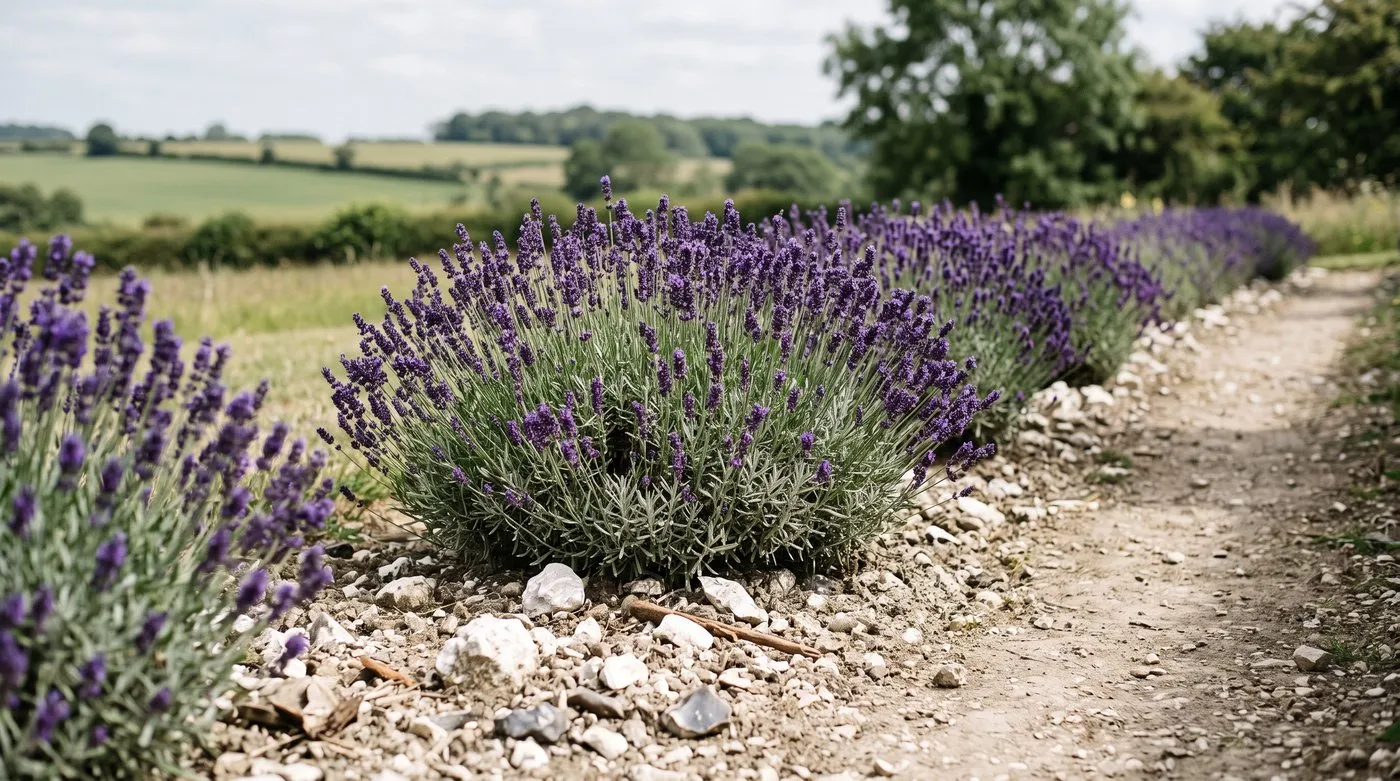
Lavender loves the sharp drainage of chalk. Trim it after flowering, but never cut back into old, bare wood.
Dianthus (pinks and carnations)
Pinks have grown on chalk for centuries. Garden pinks like ‘Doris’ (salmon pink, scented) and ‘Mrs Sinkins’ (white, very fragrant) are old favourites. Give them full sun and good drainage. Their clove-scented flowers appear from June to August. Trim after flowering to keep them neat.
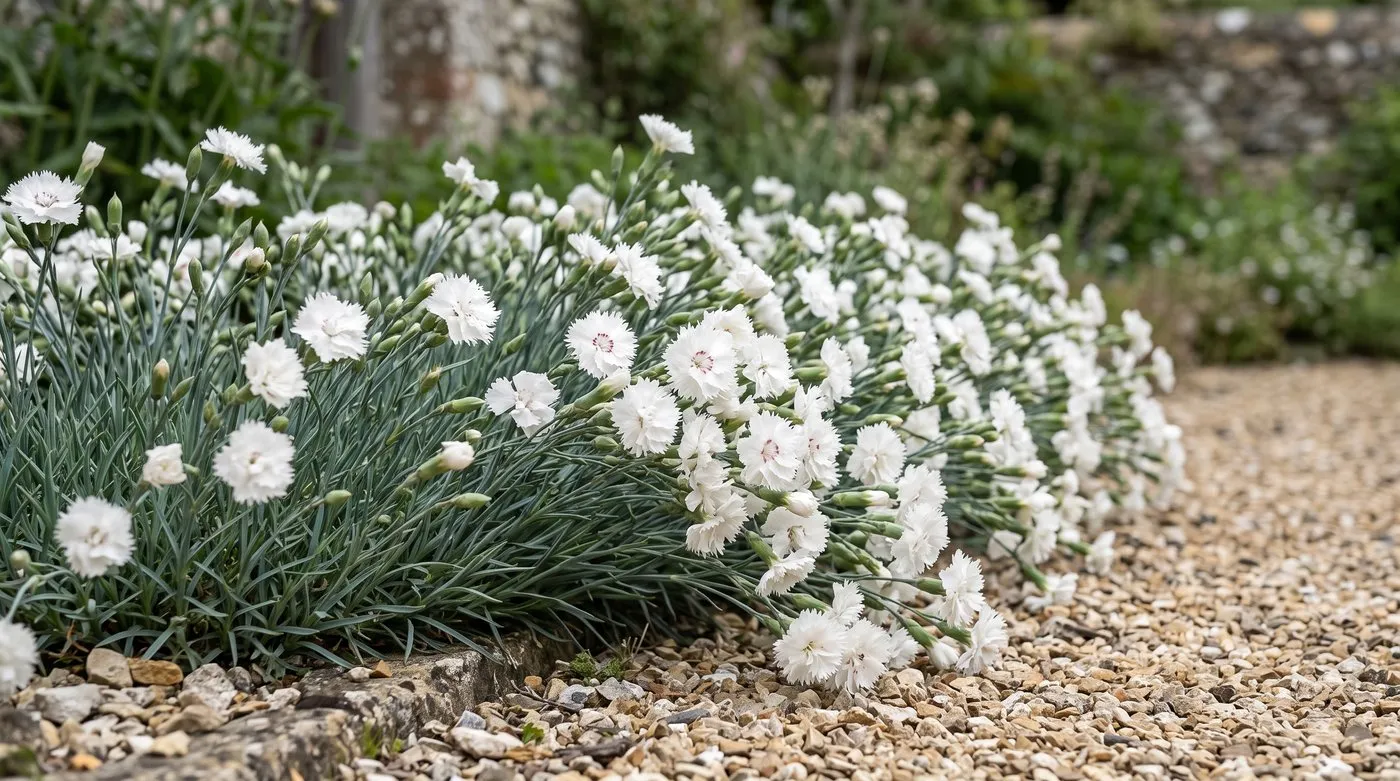
Pinks have grown happily on chalk for centuries. Give them sun and good drainage, and trim after flowering to keep them neat.
Scabious (Scabiosa and Knautia)
Field scabious and small scabious are native chalk wildflowers. Garden types like Scabiosa ‘Butterfly Blue’ flower from June to October with a steady supply of pincushion flowers. Bees and butterflies love them. It’s one of the longest-flowering perennials for chalk.
Erysimum (wallflower)
Wallflowers love chalky walls and dry banks. ‘Bowles’s Mauve’ is a perennial type that flowers for months from late winter into early summer. It copes with poor soil. Replace it every 3-4 years when it gets woody.
Geranium (hardy cranesbill)
Hardy geraniums will grow almost anywhere. On chalk, ‘Rozanne’ (violet-blue, June to October), bloody cranesbill (Geranium sanguineum, magenta) and meadow cranesbill (a native) all do well. They’re happy in sun or part shade. Cut most of them back in midsummer for a second flush of flowers.
Achillea (yarrow)
Wild yarrow grows on chalk downland across Britain. Garden types like ‘Moonshine’ (lemon yellow) and ‘Paprika’ (red-orange) give flat flower heads from June to September. They hate wet, heavy soil but love chalk.
Best climbers for alkaline soil
Walls and fences on a chalk garden are crying out for climbers. These love alkaline soil.
Clematis
Clematis is the queen of chalk climbers. Remember the old saying: heads in the sun, roots in the shade. Clematis are very happy on lime, as the RHS clematis growing guide explains. ‘Nelly Moser’ (pale pink with stripes), ‘The President’ (deep purple) and ‘Jackmanii’ (violet) all grow strongly on chalk. Our clematis growing guide covers pruning and planting depth.
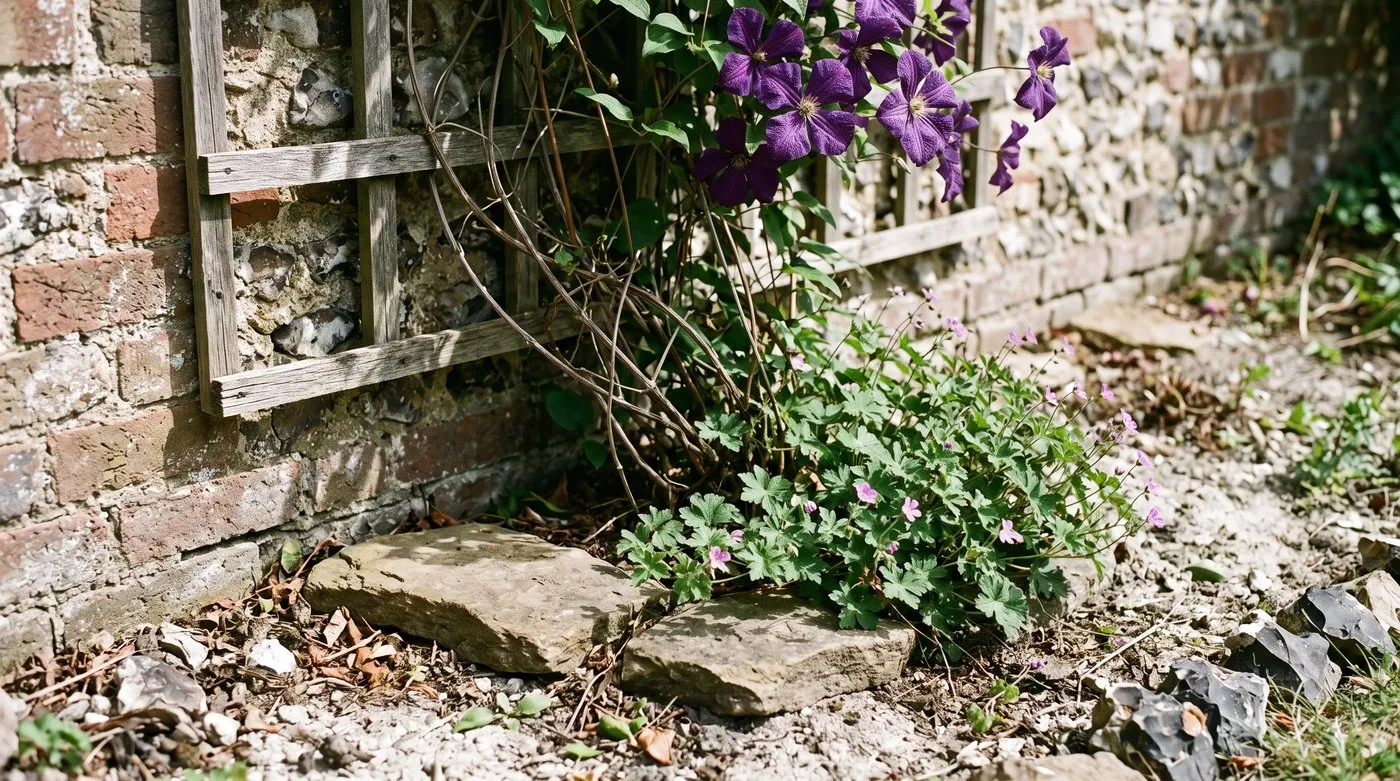
Heads in the sun, roots in the shade. A few flat stones or low plants over the root area keep clematis happy on chalk.
Honeysuckle (Lonicera periclymenum)
Our native honeysuckle grows wild in chalk hedgerows, and its evening scent is wonderful. Plant ‘Belgica’ (May to June) and ‘Serotina’ (July to September) for a longer season. Keep its roots in cool shade. It grows happily alongside clematis on the same support.
Roses (climbing and rambling)
Roses grow well on chalk, especially if you dig in plenty of compost or manure. Good climbers include ‘New Dawn’ (soft pink, repeat-flowering, healthy), ‘Climbing Iceberg’ (white) and ‘Compassion’ (salmon-orange, strongly scented). Ramblers like ‘Paul’s Himalayan Musk’ (blush pink) and ‘Rambling Rector’ (white) will smother a pergola or fence. Feed with a rose or high-potash feed in March. For more ideas, see our guide to the best climbing plants.
Clematis ‘Jackmanii’ on a limestone wall. Clematis are perfect climbers for chalk.
Best bulbs for alkaline soil
Bulbs give chalk gardens a show from late winter to early summer and again in autumn. Many come from rocky, limy places and feel right at home.
Crocus
Crocus spread happily in chalky grass. Crocus tommasinianus (purple, February) and ‘Snow Bunting’ (white, March) multiply over the years. Plant them 8cm deep in short grass or at the front of a border. No feeding needed.
Tulips
Tulips love well-drained chalk and often come back better than on heavy clay. Darwin hybrids like ‘Apeldoorn’ (red) and ‘Golden Parade’ (yellow) are the most reliable at flowering again. Plant 15cm deep in November.
Cyclamen
Hardy cyclamen are little gems for chalk. Cyclamen hederifolium flowers in autumn with pink or white flowers, then has pretty marbled leaves all winter. Cyclamen coum flowers from January to March. Both seed themselves under trees and shrubs in dry shade. They’re perfect at the foot of a hedge.
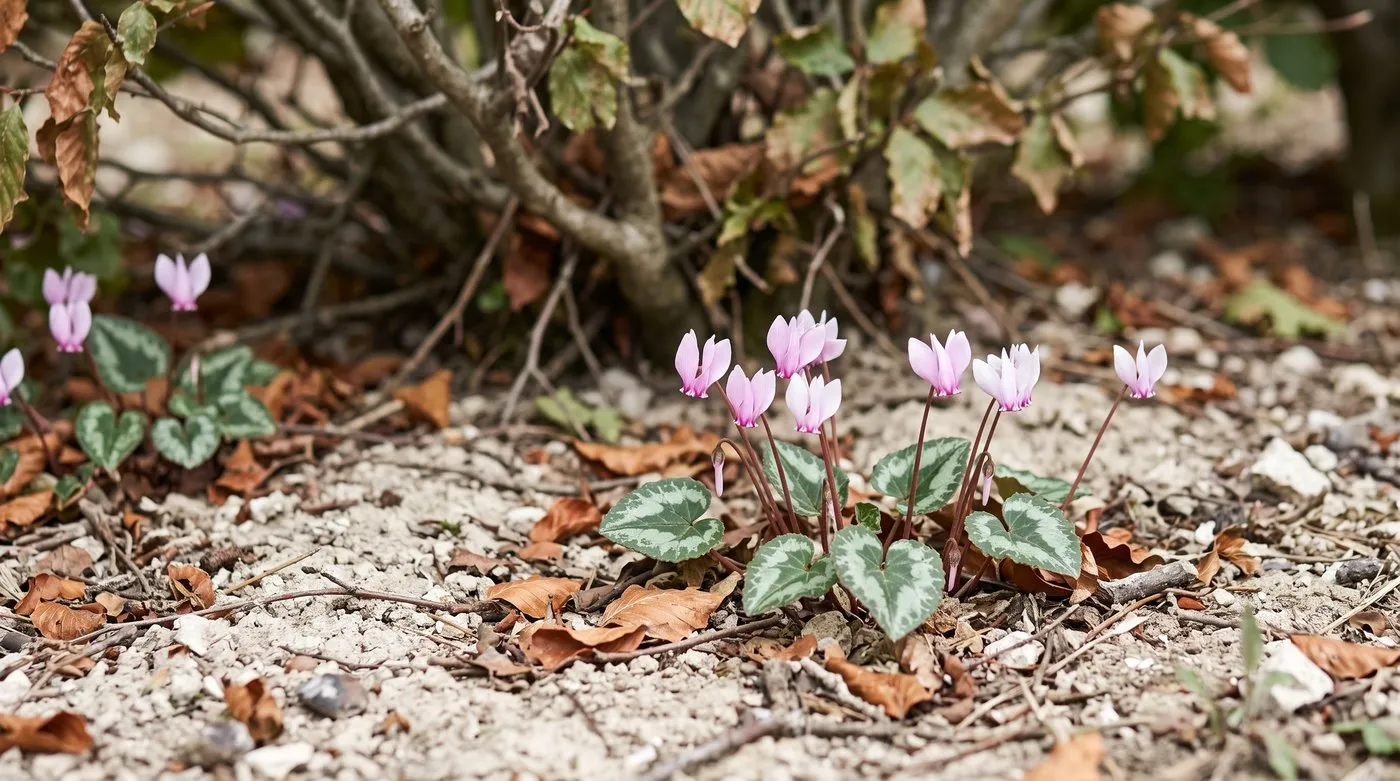
Hardy cyclamen are perfect for the dry shade under a hedge on chalk. They seed themselves about to make a bigger drift each year.
Alliums
Ornamental alliums love chalk. ‘Purple Sensation’ (May), Allium cristophii (metallic purple, June) and the drumstick allium (July) give a run of globe-shaped flowers. Plant at three times the depth of the bulb. They don’t need summer watering.
Vegetables for alkaline soil
Lots of veg growers on chalk think they’re at a disadvantage. They’re not. Several crops actually prefer it.
Brassicas
Cabbage, cauliflower, broccoli, Brussels sprouts and kale all like alkaline soil. The big bonus is that clubroot, a nasty brassica disease, is less of a problem on chalk. Gardeners on acid soil add lime for this reason, and you get it for free.
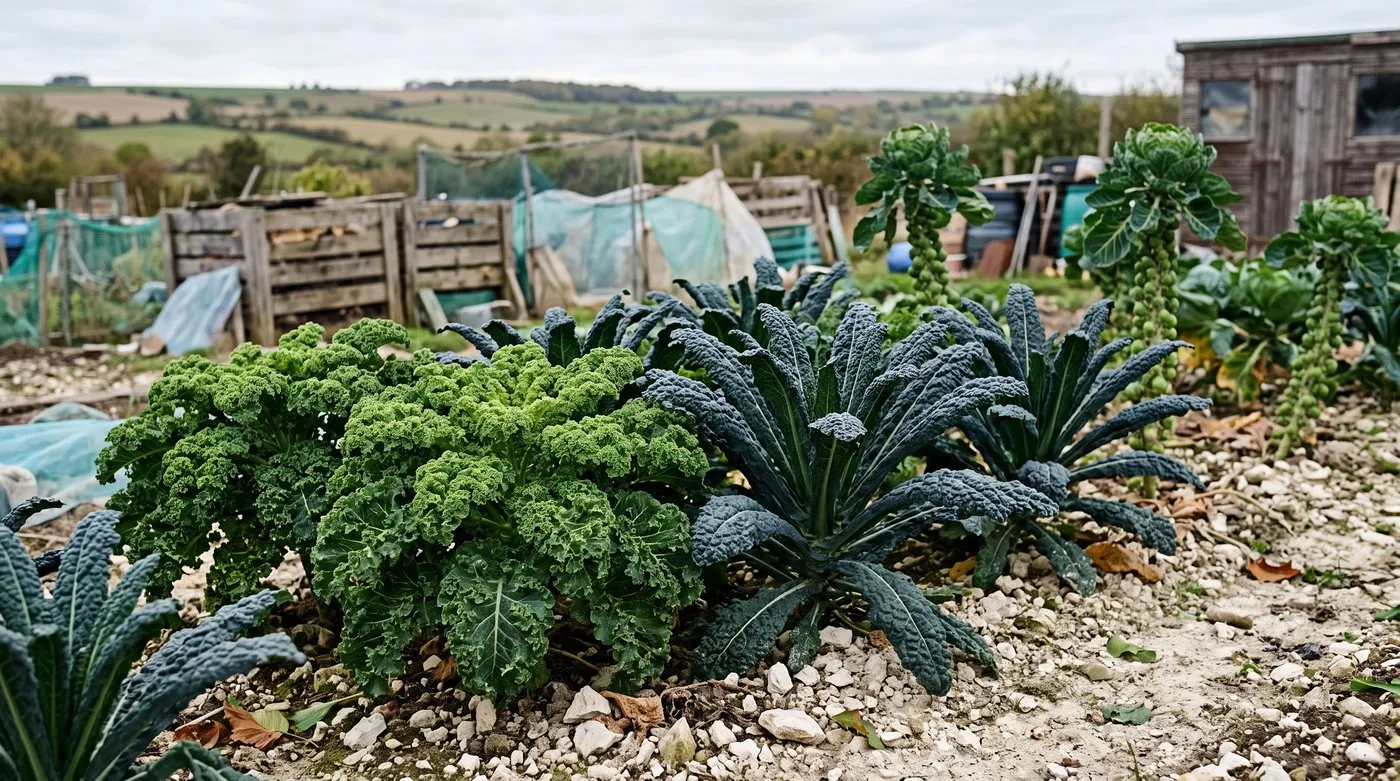
Cabbage family crops love chalk, and clubroot is far less of a problem here. Gardeners on acid soil have to add lime to get the same benefit.
Beetroot, spinach, and chard
Beetroot, spinach and chard are all happy on alkaline soil. Swiss chard is especially easy-going and gives pickings from spring to late autumn.
Asparagus
Asparagus loves sharp drainage, so chalk suits it well. A bed keeps cropping for many years once settled. Plant one-year-old crowns in April in a trench about 30cm wide and 20cm deep. Don’t pick any spears until the third year.
Legumes
Peas and beans like slightly alkaline soil. Runner beans, broad beans and French beans all crop well on chalk. Dig compost into the trench before sowing to help hold moisture.
Chalk-loving plants at a glance
| Plant type | Best on chalk | Why grow them |
|---|---|---|
| Shrubs | Buddleia, box, mock orange, viburnum | Year-round shape, easy care |
| Perennials | Lavender, pinks, scabious, geranium | Long flowering, cottage style |
| Climbers | Clematis, honeysuckle, climbing roses | Height, scent, lots of flowers |
| Bulbs | Tulips, crocus, cyclamen, alliums | Seasonal colour, spread in chalky grass |
| Vegetables | Cabbage family, beetroot, asparagus, beans | Less clubroot, good crops |
| Trees | Beech, yew, whitebeam, field maple | Native chalk trees, long-lived |
| Ground cover | Aubrieta, thyme, sedum, vinca | Smother weeds, hold dry banks |
Trees for chalk gardens
Trees give a chalk garden height and shelter. These all grow wild on chalk and limestone in Britain.
Beech (Fagus sylvatica)
Beech is the classic chalk woodland tree, with smooth grey bark and copper autumn leaves. A clipped beech hedge holds on to its russet leaves all winter. Plant bare-root young plants 45cm apart between November and March.
Yew (Taxus baccata)
Yew grows wild on chalk across the Downs and Chilterns, and it lives for centuries. A yew hedge is dense and dark, and it’s the perfect backdrop for flowering shrubs. Almost every part of yew is poisonous to people, pets and livestock, so keep children and animals from chewing it.
Whitebeam (Sorbus aria)
Whitebeam grows wild on the North and South Downs. The leaves are silvery underneath and flash white in the wind. Birds love the red berries in autumn. ‘Lutescens’ has extra bright silver leaves in spring. It’s a lovely medium-sized tree for chalk.
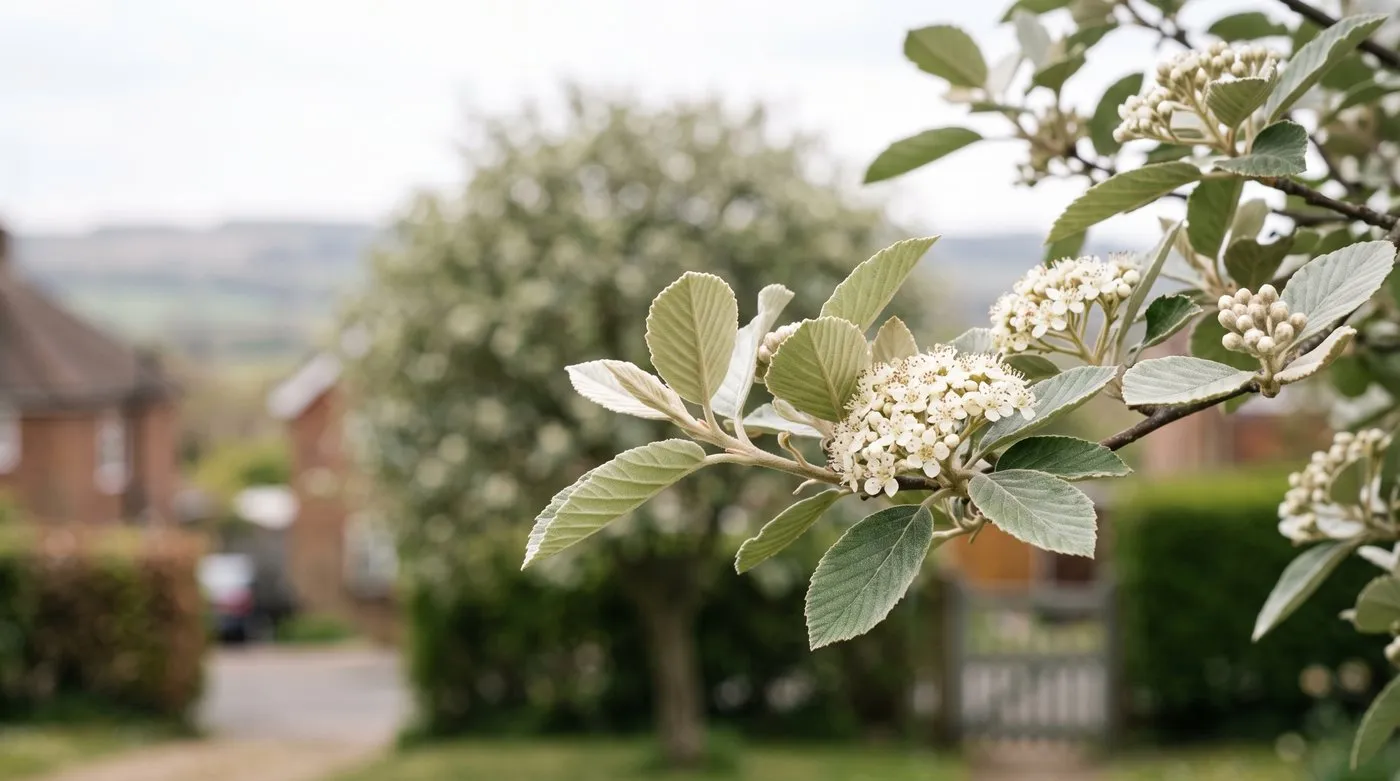
Whitebeam grows wild on the Downs, so it’s right at home on chalk. Birds strip the red berries in autumn.
Field maple (Acer campestre)
Field maple grows in chalk hedgerows across southern England. It’s tough, native and turns butter-yellow in autumn. It suits medium to large gardens and also makes a good hedge, coping with wind and drought.
How to improve chalky soil
You don’t need to change chalk soil, just feed it. The aim is more organic matter, so the soil holds more water and goodness.
Add organic matter every year
Spread 5-8cm of garden compost or well-rotted manure over the soil each autumn. Worms will pull it in for you. It helps chalk hold water, feeds your plants and stops the surface going crusty after heavy rain.
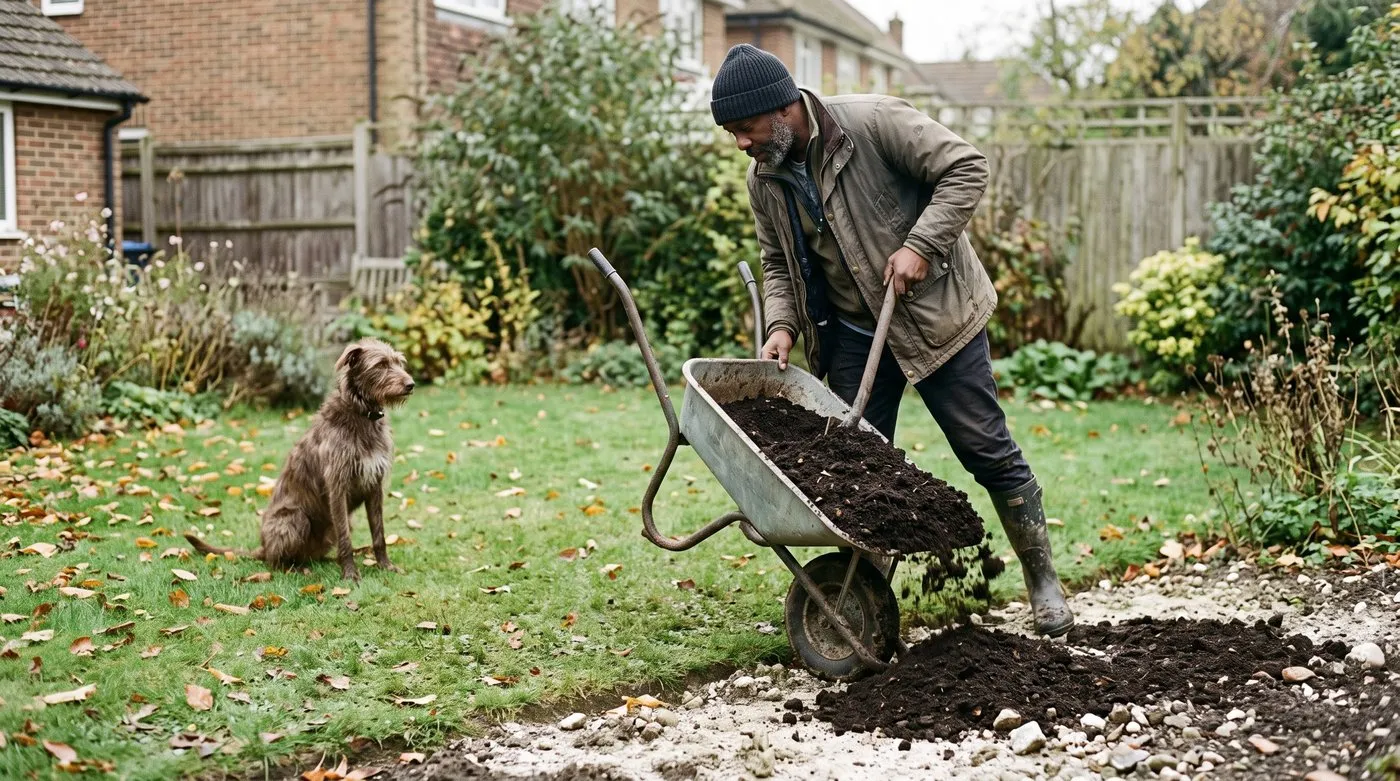
A thick layer of compost each autumn helps chalk hold water and feeds your plants. Leave it on top and the worms will pull it in.
Mulch to keep moisture in
Chalk drains fast, and summer drought kills more plants on chalk than the soil itself. Spread a 5cm layer of bark or compost in spring to keep moisture in through summer. Keep it a few centimetres away from plant stems. For the driest banks, choose drought-tolerant plants.
Use raised beds for acid-loving plants
If you really want rhododendrons, camellias or blueberries, grow them in raised beds or big pots of ericaceous compost. Water them with rainwater, because tap water in chalk areas is hard and slowly makes the compost less acid. For a fruit that copes well on chalk, try goji berries instead.
Plants to avoid on alkaline soil
Knowing what not to buy saves money and heartache. These plants struggle on chalk.
- Rhododendrons and azaleas: leaves soon turn yellow on chalk.
- Camellias: go pale and sickly on alkaline ground.
- Pieris: struggles badly on chalk and never looks its best.
- Blueberries: need properly acid soil and won’t crop on chalk.
- Heathers: most fail on chalk, apart from winter heathers like Erica carnea and Erica x darleyensis.
- Blue hydrangeas: turn pink on chalk. Pink is still pretty, but for blue, grow them in pots of ericaceous compost.
- Japanese maples: prefer acid to neutral soil. Some manage on mildly alkaline soil with lots of mulch, but they never really thrive on pure chalk.
Where to find chalk soil in the UK
Chalky soil follows the chalk and limestone hills of England. The main chalk areas are:
- The Chilterns, from Oxfordshire through Buckinghamshire to Hertfordshire
- The South Downs, from Hampshire to East Sussex
- The North Downs, through Surrey and Kent to the White Cliffs of Dover
- The Yorkshire Wolds, out to Flamborough Head
- The Lincolnshire Wolds
- Salisbury Plain in Wiltshire
- The chalk stream valleys of Hampshire and Dorset
Limestone areas like the Cotswolds, Peak District and Yorkshire Dales are alkaline too. They suit much the same plants, though limestone soil is often deeper and holds water better. Gardening on sandy soil brings a different set of challenges.
Ground cover for chalk banks and slopes
Dry chalk banks need tough, spreading plants that hold the soil and cope with drought. These five are reliable.
- Aubrieta tumbles over walls and banks in purple, pink and red from March to May. Cut it back hard after flowering. Loves chalk and full sun.
- Wild thyme makes scented mats on chalk banks. Bees love its flowers from June to August. It grows happily in cracks between paving too.
- Biting stonecrop (Sedum acre) is a native succulent with yellow flowers in June. It slowly spreads over bare chalk and thin soil.
- Bloody cranesbill (Geranium sanguineum) grows wild on chalk grassland. Magenta flowers from May to September on low, weed-smothering mats.
- Rock rose (Helianthemum) has papery flowers in red, orange, yellow, pink and white from May to July. Trim after flowering to keep it bushy.
Aubrieta and thyme are perfect ground cover for a dry chalk bank, with plenty of spring colour.
Frequently asked questions
What grows well in alkaline soil UK?
Lavender, clematis, pinks and buddleia all love alkaline soil. Beech, yew, box and hawthorn are great trees and hedges for chalk. Cabbages, beetroot and asparagus crop well on it too.
What plants should you avoid on chalky soil?
Avoid acid-loving plants like rhododendrons, azaleas, camellias, pieris and blueberries. On chalk their leaves turn yellow with green veins, because they can’t get enough iron. Most heathers struggle too, apart from winter heather (Erica carnea).
How do I know if my soil is alkaline?
A cheap pH test kit from a garden centre will tell you. Test soil from a few spots, about 15cm down. A reading above 7 is alkaline. White lumps of chalk in the soil and wild clematis in nearby hedges are good clues.
Can you make alkaline soil more acidic?
Not really, not on chalk. Sulphur lowers pH for a while, but the chalk soon pushes it back up. It’s much easier to grow chalk-loving plants in the ground and acid-lovers in pots of ericaceous compost.
Is alkaline soil good or bad for gardening?
It’s good for gardening. Roses, clematis, lavender and most cottage garden plants grow well on it, and plenty of vegetables are happy too. The main thing you miss out on is the acid-loving group like rhododendrons.
What vegetables grow best in alkaline soil?
Cabbage-family crops are the stars, because clubroot is less of a problem on chalk. Beetroot, spinach, asparagus, peas and beans do well too. Potatoes and soft fruit prefer slightly acid soil and may be less happy.
How do you improve chalky soil for planting?
Add organic matter every year. Spread 5-8cm of garden compost or well-rotted manure each autumn. It helps the soil hold water, feeds your plants and stops the surface going crusty after heavy rain.
Our team produces practical UK gardening guidance from source research, contributor records and established horticultural practice. Editorial standards are overseen by Matt W.


