Key takeaways
- Perennial gypsophila flowers from June to August and comes back for years
- Annual gypsophila flowers about eight weeks after sowing, so it's great for quick cut flowers
- Give it full sun and chalky or neutral soil that drains well
- Put supports in place in April, before the stems flop
- Cut for the vase or for drying when about half the flowers are open
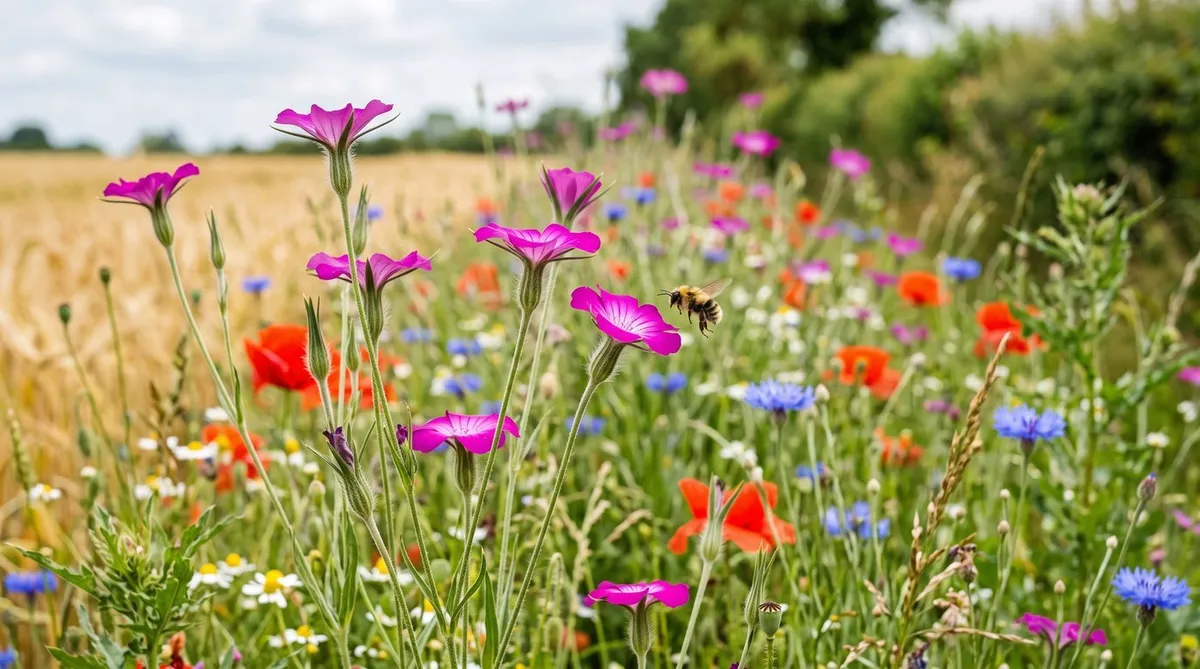
Gypsophila is pure magic in a border. Its clouds of tiny white or pink flowers seem to float above the ground, softening hard edges and filling gaps between bolder plants. It’s the ultimate filler, in the garden and in a vase.
The name tells you exactly what it wants. Gypsophila means “chalk-loving”, and in the wild it grows on chalky hills and limestone. Give it chalky or neutral soil, good drainage and full sun, and it will be happy for years.
What are the main types of gypsophila?
Two kinds are grown in most UK gardens. Knowing which is which helps you pick the right one.
Gypsophila paniculata is the perennial. It makes a deep-rooted plant about 90cm tall and wider still. From June to August it’s covered in a cloud of tiny flowers. It’s fully hardy and comes back for many years.
Gypsophila elegans is the annual. It grows to about 45cm and flowers around eight weeks after sowing. That speed makes it brilliant for anyone growing cut flowers. Each plant flowers for a few weeks, so sow a new batch every few weeks to keep flowers coming until autumn.
There are also little alpine kinds such as G. repens, which makes a low mat of pink or white flowers. It’s lovely in rockeries and on wall tops, and just as fond of chalk.
How do I grow gypsophila from seed?
Annual gypsophila is one of the easiest flowers to grow from seed. Perennials take a bit longer but aren’t hard.
Annual G. elegans: Sow straight into the ground from March to May, once the soil has warmed up. Make shallow drills about 1cm deep and sprinkle the seed thinly. Cover lightly and water gently. Seedlings appear in a week or two. Thin them to 20-25cm apart. For flowers all summer, sow a new row every three or four weeks until early June.
Perennial G. paniculata: Sow indoors in February or March. Fill small pots with seed compost mixed with extra perlite. Sprinkle the seed on top and press it in lightly. Keep somewhere warm and expect seedlings in one to three weeks. Move each one into its own small pot.
Plant perennials out from May, once frosts are over. Space them 90-120cm apart. Pick the spot carefully, because their long taproot means they hate being moved later.
What soil conditions does gypsophila need?
Gypsophila is fussy about soil. Get it right and it thrives. Get it wrong and it usually dies over winter.
Chalky or neutral soil is a must. On chalky soil it grows with no effort at all, and neutral soil is fine too. On acid soil it fails. A simple soil test kit will tell you, and you can add garden lime if your soil is acid.
Drainage comes next. Gypsophila won’t survive winter in soggy ground, as the roots rot. On heavy clay, dig a deep hole and mix in lots of grit. Even better, grow it in raised beds filled with a gritty mix.
Keep the soil lean. Rich soil gives you lots of leaves and fewer flowers. Poor, stony ground often gives the best show. Skip the manure and compost, and just add a light sprinkle of bonemeal at planting.
Full sun is essential. It won’t flower properly in shade. Sunny gravel gardens and the foot of warm walls are perfect.
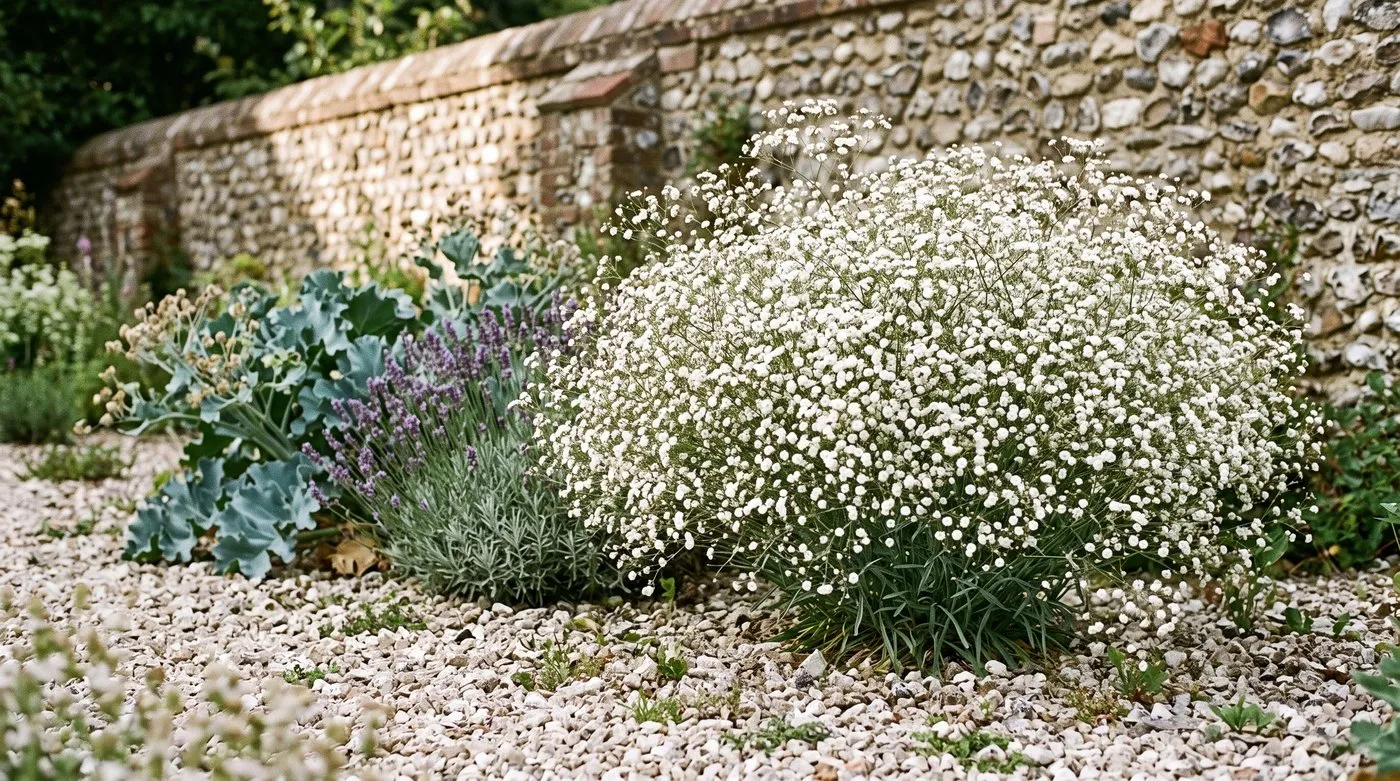
Gypsophila means chalk-loving, and it shows. Give it lean, well-drained soil and full sun and it’ll be happy for years.
How do I stake perennial gypsophila?
Perennial gypsophila needs support. Its cloud of thin stems looks weightless on a still day but flops flat after heavy rain or wind. Once stems have flopped, they snap rather than straighten.
Put supports in in April, before growth gets going. Two methods work well.
Pea sticks: Push twiggy hazel or birch prunings into the ground in a ring around the plant, about 40-50cm tall. The stems weave through the twigs and hide them. It looks natural and costs nothing if you have prunings.
Grow-through grids: Metal rings with a grid on top, on legs about 40-50cm high. Set one over the plant in early spring and the stems grow up through it. These are sturdier in exposed, windy gardens, though the grid can peep through the thinner outer stems.
Don’t wait until it has flopped. It’s a lesson most gardeners only need once.
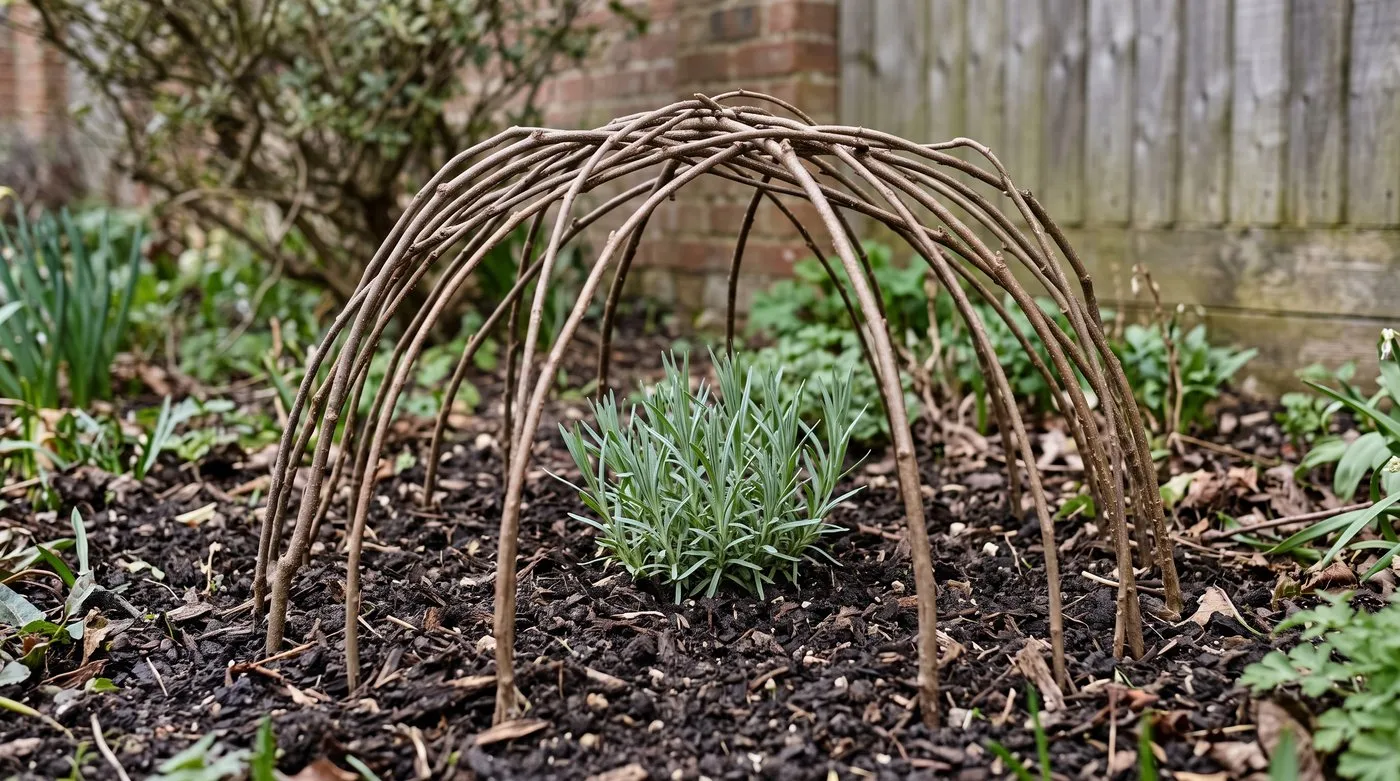
Get pea sticks in by April, before the stems take off. By June the cloud of flowers will hide them completely.
How do I cut and condition gypsophila?
Gypsophila is one of the best cut flowers you can grow. Its airy stems fill out arrangements, soften big blooms and last well.
When to cut: Pick when about half the flowers on a stem are open. Stems cut too early won’t open properly indoors.
Conditioning: Cut in the early morning and put the stems straight into a bucket of clean water with a little flower food. Strip any leaves that would sit under water. Let them have a long drink for a few hours before arranging. Change the vase water every couple of days.
How long it lasts: About a week to ten days in a vase. The little flowers keep opening for the first few days, so the cloud gets fuller.
For wedding flowers, cut a couple of days before and keep the stems somewhere cool so they’re at their best on the day.
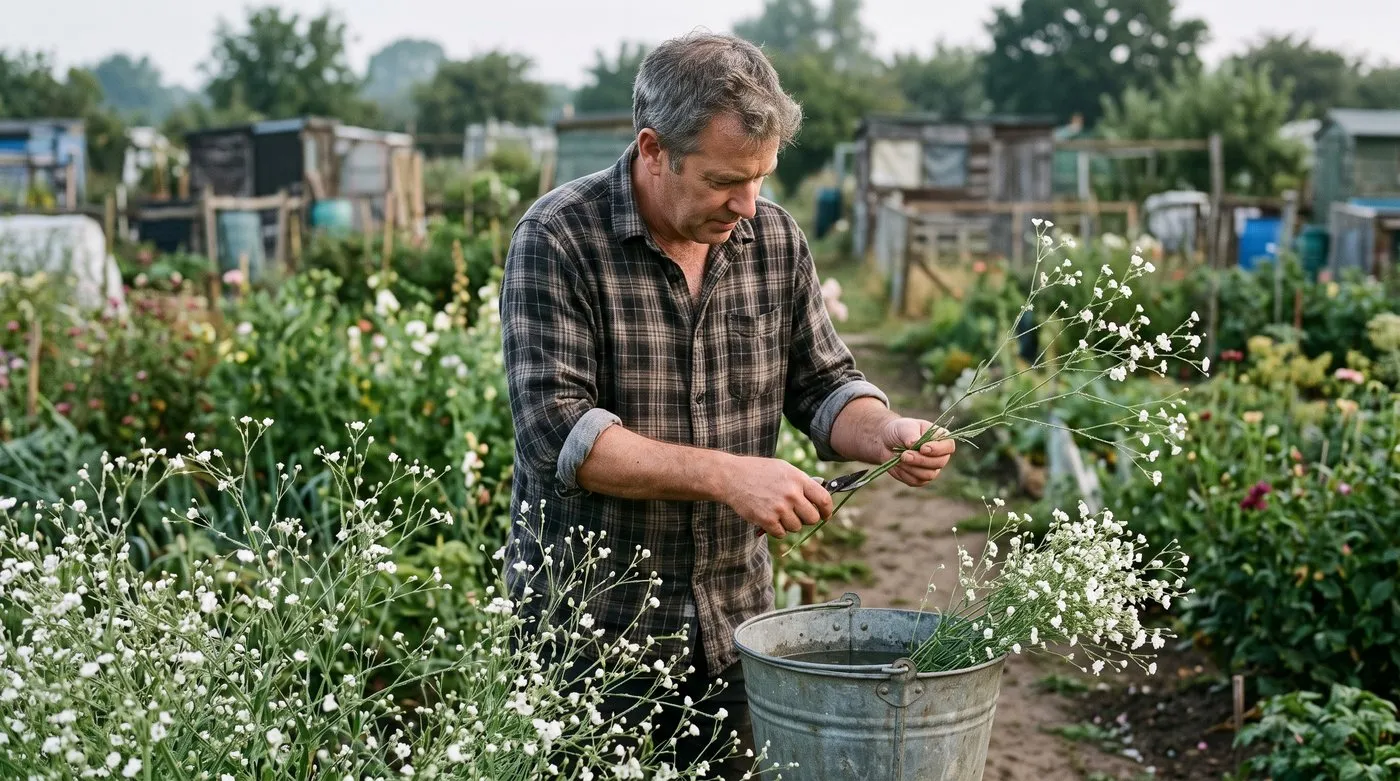
Cut when about half the flowers are open and get the stems straight into water. Stems cut too early won’t open indoors.
How do I dry gypsophila?
Dried gypsophila keeps its pretty shape for months, so it’s great for lasting arrangements.
Cut for drying when about half the flowers are open. Take long stems and strip all the leaves. Tie them in small bunches with elastic bands, which tighten as the stems shrink.
Hang upside down somewhere warm, dry, dark and airy, like a spare room or airing cupboard. Damp garages aren’t ideal. Drying takes two to three weeks.
Keep it out of the sun while drying. Sunlight turns white flowers a dull grey and makes pink ones fade unevenly.
For coloured gypsophila, stand fresh stems in water mixed with food colouring for a day or two. The flowers soak up the colour as they drink. Then dry as usual.
Dried stems are brittle, so handle them gently. A light mist of hairspray helps stop the tiny flowers dropping.
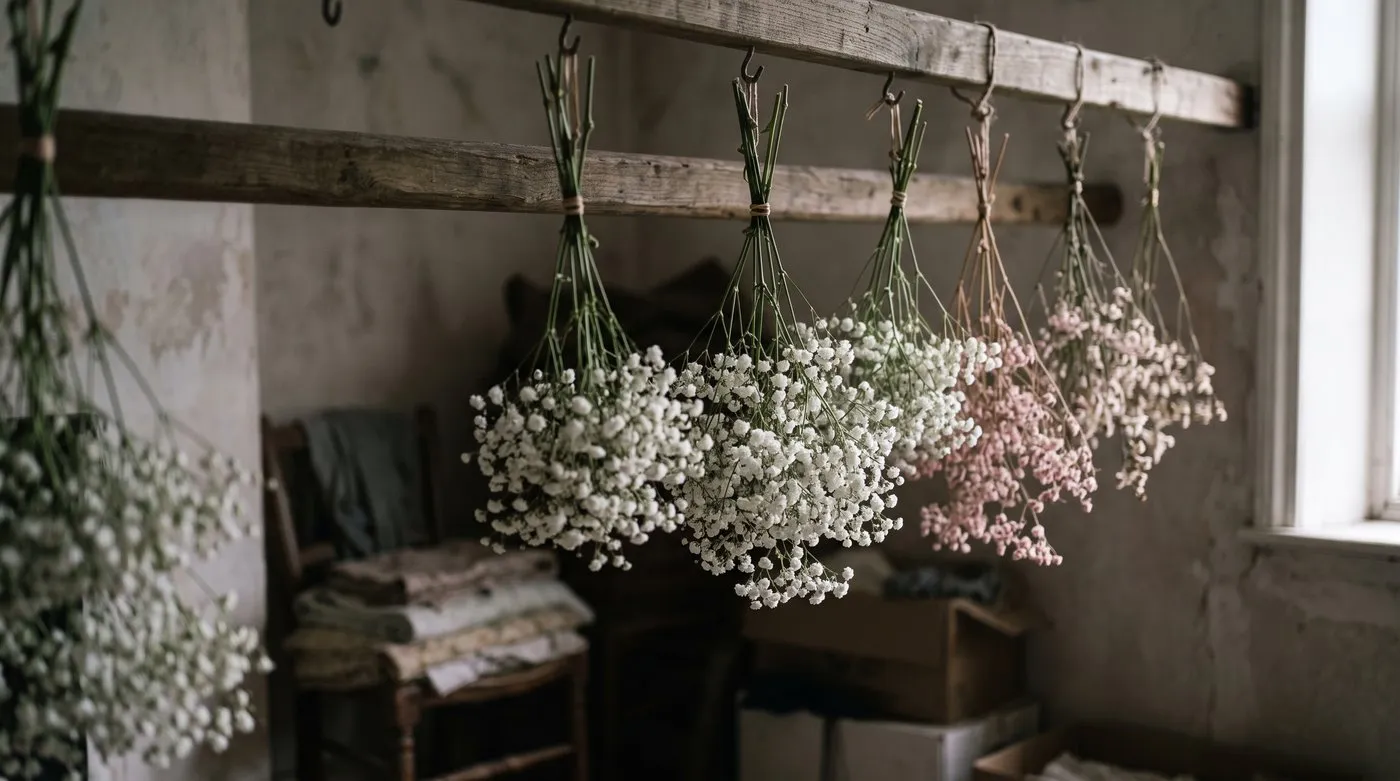
Hang small bunches upside down somewhere dark, dry and airy for two to three weeks. Sunlight turns the white flowers a dull grey.
Best gypsophila varieties for UK gardens
| Variety | Type | Height | Colour | Best for |
|---|---|---|---|---|
| ’Bristol Fairy’ | Perennial | About 90cm | Pure white, double | Cutting, borders |
| ’Flamingo’ | Perennial | About 80cm | Pale pink, double | Cutting, borders |
| ’Compacta Plena’ | Perennial | About 45cm | White, double | Small gardens, pots |
| ’Covent Garden’ | Annual | About 50cm | White | Quick cut flowers |
| ’Rosea’ | Annual | About 40cm | Soft pink | Borders, cutting |
‘Bristol Fairy’ is the classic double white perennial and holds the RHS Award of Garden Merit. Its tiny double flowers make the thickest cloud of all, and it’s the one florists love. It’s long-lived on well-drained chalk.
‘Flamingo’ is the pink version of Bristol Fairy. Its soft shell-pink flowers are lovely in pastel schemes and cottage garden borders. It needs staking just the same.
‘Covent Garden’ is the annual to grow in a cutting garden. It has bigger flowers than the perennials and long, straight stems that are easy to arrange. It flowers about eight weeks after sowing.
Can I grow gypsophila in pots?
Yes, if you pick the right one. ‘Compacta Plena’, at about 45cm, is the best perennial for pots. Full-sized Bristol Fairy is too big for most containers.
Use a loam-based compost such as John Innes No. 2 with extra grit mixed in. Multi-purpose compost tends to hold too much water.
Choose a pot at least 40cm wide with good drainage holes, and stand it on pot feet over winter. Water when the top few centimetres feel dry, and never leave it sitting in a saucer of water.
Annual gypsophila is great in pots and window boxes too. Sow straight into the pot in April for flowers by summer. It’s short enough not to need staking.
Common gypsophila problems
Crown rot is the biggest killer, especially on heavy, wet soil. The base of the plant turns brown and mushy in a wet winter. Prevention is the only cure: good drainage, no mulch over the crown, and planting on a slight mound so water runs off.
Grey mould can hit the flowers in long spells of wet weather. Snip off affected stems quickly and keep air moving around the plants. As with phlox, thinning crowded clumps in spring helps. Water the soil, not the flowers.
Slugs nibble young shoots in spring. A ring of grit around the plant puts some off. Nematodes watered on once the soil warms up in spring give longer protection.
Aphids sometimes gather on stem tips in early summer. Hose them off with water and leave the ladybirds and hoverflies to finish the job.
Poor flowering almost always comes down to acid soil, too little sun or a crown planted too deep. Check those three first.
Gypsophila in the wedding flower industry
Gypsophila has long been a favourite filler for weddings. Its cloudy sprays soften bouquets, fill table arrangements and look stunning in hanging displays.
Growing your own is very doable. Annual ‘Covent Garden’ flowers about eight weeks after sowing, so count back from the big day. For a July wedding, sow in early April.
Dried gypsophila, often dyed in pastel shades, is popular at weddings too. Plain white is still the classic.
For lots of stems, grow it in rows in a dedicated cutting garden bed, with plants about 30cm apart in rows 45cm apart. Closer spacing gives straighter stems that are easier to cut.
Frequently asked questions
Can I grow gypsophila on clay soil?
It struggles on heavy clay unless you improve the drainage. Clay stays wet in winter and the roots rot. Dig a deep planting hole and mix plenty of sharp grit into the soil, or grow it in a raised bed with a gritty mix. Annual gypsophila copes with clay a bit better, but still likes better drainage.
When should I sow annual gypsophila seeds?
Sow outdoors from March to May. Sow a new row every three or four weeks for flowers all summer. Cover the seed very lightly and thin the seedlings to 20-25cm apart. A last sowing in early June gives late flowers. Plants bloom about eight weeks after sowing.
How do I dry gypsophila for arrangements?
Cut the stems when about half the flowers are open. Pick in the morning once the dew has dried. Strip the leaves, tie small bunches and hang them upside down somewhere warm, dry, dark and airy for two to three weeks. Keep them out of sunlight, which turns white flowers a dull grey.
Why is my gypsophila not flowering?
The usual reason is acid soil. Gypsophila means chalk-loving, and it won’t flower well on acid ground. Test your soil and add garden lime if needed. Too much shade, soil that’s too rich, or a crown planted too deep can also stop flowering. The crown should sit at soil level.
Does gypsophila come back every year?
The perennial kind comes back for many years. Gypsophila paniculata and varieties like ‘Bristol Fairy’ and ‘Flamingo’ are long-lived in well-drained, chalky soil. Annual gypsophila flowers for one summer and then dies. It sometimes self-seeds, but you can’t count on it.
How do I stake gypsophila?
Put pea sticks or a grow-through support in place in April. Perennial gypsophila makes a big cloud of thin stems that flops in heavy rain or wind. Once flopped, the stems snap if you try to lift them. Set the support at about 40-50cm, and by June the stems will hide it.
Our team produces practical UK gardening guidance from source research, contributor records and established horticultural practice. Editorial standards are overseen by Matt W.