Key takeaways
- Round golden heads on 60cm leafless stems from midsummer into early autumn
- Sow indoors in February or March at 18-20°C, pressing seed onto the surface rather than burying it
- Plant out after the last frost, 25-30cm apart, in full sun and well-drained soil
- Wet winter soil kills it, so treat it as an annual in most UK gardens
- Cut when the heads are fully coloured and firm, then hang upside down for two to three weeks to dry
Craspedia, also called billy buttons or drumstick flower, gives you perfectly round golden balls on tall, bare stems. Sow it indoors in late winter, plant it in a sunny, well-drained spot after the frosts, and you’ll be cutting from midsummer. The heads last well in a vase and dry beautifully.
It comes from Australia and doesn’t like cold, wet winters, so most UK gardeners grow it as an annual. The two things that matter most are sowing the seed on the surface and giving it good drainage. Get those right and it’s an easy, cheerful plant for a cutting patch or a sunny border.
What are billy buttons?
Billy buttons are daisy-family plants whose flower heads are tight balls of tiny yellow florets, about 2-3cm across. Each one sits on a wiry, grey-green stem about 60cm tall, with a low tuft of leaves at the base.
There are no petals to drop or go brown, which is why florists love them. They hold their shape fresh and dried, and the bold, simple shape stands out in a jug of looser flowers. You may see the plant sold as Craspedia globosa or under its newer name, Pycnosorus globosus.
How to sow Craspedia seed
Sow Craspedia indoors in February or March at 18-20°C, and press the seed onto the surface rather than burying it. This is where most people go wrong.
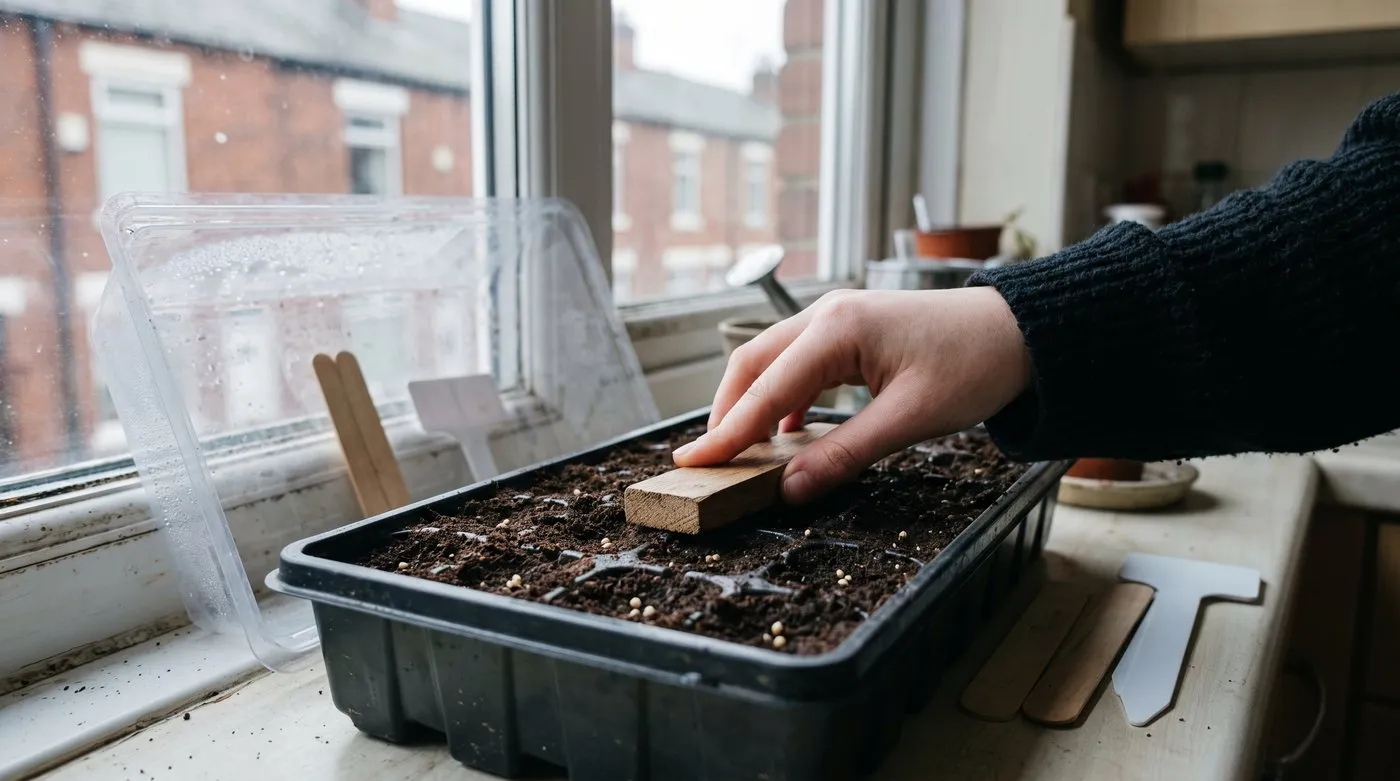
Press the seed in, but don’t cover it. Billy buttons come up best with their seed sitting on the surface.
- Fill a seed tray or modules with fine, moist seed compost.
- Scatter the seed thinly over the surface.
- Press it gently into the compost with a flat piece of wood. Don’t cover it.
- Stand the tray in a propagator or on a bright, warm windowsill.
- Keep the surface damp by watering from below.
Seedlings usually appear in two to three weeks. On a cold windowsill they’ll be slow and patchy, so warmth helps. The guide to sowing seeds indoors covers propagators and compost in more detail.
Once seedlings have their first true leaves, prick them out into small individual pots. Grow them on somewhere cool and bright. In May, harden them off for a week or two before planting out after the last frost.
Gardener’s tip: Buy fresh seed each year. Old seed tends to come up poorly, and it’s disappointing to wait three weeks for nothing.
Where to plant billy buttons
Plant Craspedia in full sun and well-drained soil. It grows wild on dry, open ground and rots quickly in damp, heavy soil.
- Sun: the sunnier the better. A south-facing spot against a warm wall is ideal.
- Drainage: this matters most. On clay, dig in plenty of grit, or grow it in a raised bed, gravel garden or large pot.
- Spacing: 25-30cm apart, so the plants form a loose clump of stems.
- Water: water while young plants settle in, then only in long dry spells.
It sits happily with other sun-lovers such as lavender, grasses and sea holly. A gravel garden suits it perfectly. Don’t feed it much, as rich soil gives soft stems that flop.

Gravel, sun and sea breezes. Billy buttons love a sharp-draining spot like this coastal Welsh garden.
Can Craspedia survive a UK winter?
Usually not. Craspedia is a tender perennial, and it’s the cold, wet soil of a UK winter that kills it, more than frost alone.
In a mild, sheltered garden on sandy or gravelly soil, a plant may come back for another year. Elsewhere, treat it as an annual and sow fresh each spring. If you’d like to try keeping a favourite plant, lift it into a pot of gritty compost in autumn. Keep it in a cold greenhouse or porch, just barely moist, until spring.
Craspedia growing calendar
| Month | What to do |
|---|---|
| January | Order fresh seed |
| February | Surface sow indoors at 18-20°C |
| March | Keep sowing. Prick out the first seedlings |
| April | Grow on somewhere cool and bright |
| May | Harden off. Plant out after the last frost |
| June | Water young plants in dry spells |
| July | First flowers. Start cutting |
| August | Peak cutting. Hang the firmest heads to dry |
| September | Last flowers. Pot up any plants you want to try keeping |
| October to December | Store dried bunches out of direct sun |
Cutting and drying billy buttons
Cut Craspedia when the heads are fully coloured and firm to the touch. Cut too early and the colour is pale. Cut too late and the heads go soft and can shed as they dry.
For the vase: cut in the cool of the morning and stand the stems in deep water for a few hours before arranging. Expect a week or two in a vase. The guide to conditioning cut flowers has tips for a longer vase life.
For drying:
- Cut firm, fully coloured heads with as much stem as you can.
- Strip any leaves from the stems.
- Tie them in small bunches of eight to ten stems.
- Hang them upside down somewhere dry, dark and airy, such as a spare room or a dry shed.
- Leave them for two to three weeks, until the stems are stiff.
Keep dried bunches out of direct sun, which slowly bleaches the colour. Out of the light, they stay golden for a long time. Regular cutting also keeps new stems coming through the summer.

Small bunches dry fastest. Hang them somewhere airy and out of the sun for two to three weeks.

Fresh on the left, dried on the right. The heads keep their shape either way.
Craspedia and other everlasting flowers
Craspedia is one of several everlastings, flowers that dry well and keep their colour. It pairs nicely with strawflower and statice in a dried bunch.
| Flower | What it looks like | Best for |
|---|---|---|
| Craspedia (billy buttons) | Round golden balls on bare stems | Bold, simple shapes |
| Strawflower (Helichrysum) | Papery daisies in many colours | Colour and volume |
| Statice (Limonium) | Clusters of tiny papery flowers | Filling out a bunch |
| Gomphrena | Small clover-like pompoms | Pink, purple and white |
All four are sown indoors in spring and like the same sunny, well-drained spot. Grow a few of each in a cutting garden and you’ll have fresh flowers all summer and dried ones all winter.

Billy buttons, strawflower and statice make a cheerful dried trio. All three are sown and grown the same way.
Common mistakes with Craspedia
- Covering the seed. Buried seed rarely comes up. Press it onto the surface and leave it uncovered.
- Sowing somewhere cold. A chilly windowsill gives slow, patchy germination. Aim for 18-20°C.
- Planting in wet, rich soil. Plants rot or flop. Choose full sun and add grit on clay.
- Planting out too early. It’s half-hardy. Wait until the frosts have passed, usually late May.
- Cutting the heads too late. Soft heads shed as they dry. Cut while they’re still firm.
For more easy flowers to grow for cutting, read the beginner’s guide to growing cut flowers, or browse the plants hub.
Frequently asked questions
Is Craspedia a perennial or an annual in the UK?
It is a tender perennial, usually grown as an annual in the UK. Cold, wet winter soil rots the roots, so most people sow fresh each spring. In a sheltered, very free-draining spot it sometimes comes back for another year.
Why won’t my Craspedia seeds germinate?
The usual reasons are burying the seed or keeping it too cold. Press the seed onto the surface of moist compost and leave it uncovered. Keep it at 18-20°C and don’t let the surface dry out. Seedlings usually appear in two to three weeks.
When do you sow Craspedia seeds in the UK?
Sow indoors in February or March at 18-20°C. That gives plants time to flower in their first summer. Prick out, grow on, harden off and plant out after the last frost, usually in late May.
How do you dry Craspedia flowers?
Cut the stems when the heads are fully coloured and firm. Strip any leaves, tie small bunches and hang them upside down somewhere dry, dark and airy. They take two to three weeks and keep their colour for a long time out of direct sun.
How tall does Craspedia grow?
Craspedia grows to about 60cm tall. Each wiry, leafless stem carries one round golden head about 2-3cm across. The stems usually stand without help, but can lean in a windy spot.
What is the difference between Craspedia and strawflower?
Craspedia has round golden balls; strawflower has papery, daisy-like flowers. Strawflower comes in lots of colours on leafy stems. Both are half-hardy annuals that dry beautifully, and they look great together in a bunch.
Our team produces practical UK gardening guidance from source research, contributor records and established horticultural practice. Editorial standards are overseen by Matt W.