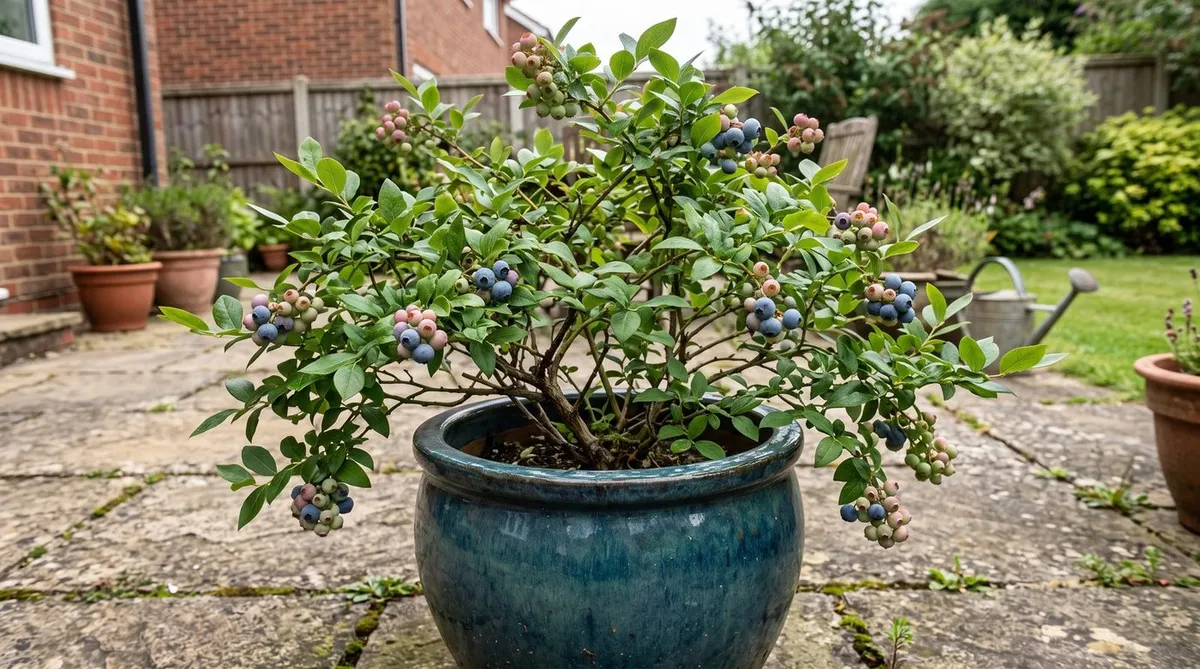
Key takeaways
- Blueberries need acid soil, so use ericaceous compost
- A pot of at least 40 litres is the easiest way to grow them
- Water with rainwater where you can, as tap water slowly makes compost less acid
- One bush fruits on its own, but two varieties give bigger crops
- Net the bushes as soon as berries turn blue, or the birds get them first
- Leave young bushes unpruned, then remove a few old stems each winter from year three
Blueberries are easier to grow than lots of people think. These acid-loving shrubs give you bowls of berries from July to September, and they’re very happy in pots.
The one thing to get right is the soil. Blueberries need acid soil, and most UK gardens don’t have it. The fix is simple: grow them in a pot of ericaceous compost, which is made for acid lovers. Below you’ll find the best varieties, plus how to plant, water, feed, prune and pick. For more fruit and veg ideas, browse our growing guides.
What soil do blueberries need?
Blueberries need acid soil. They’re relatives of heathers, rhododendrons and cranberries, which all like the same thing. In the wild they grow on acid moorland and heath. Most UK garden soil is neutral or chalky, which doesn’t suit them.
In the wrong soil the roots can’t take up iron. The leaves go yellow between the veins and the plant slowly struggles. A cheap soil test kit from the garden centre will tell you what you’ve got before you plant.
If your soil is acid, you can plant straight in the ground. That’s more likely in parts of Scotland and Wales, and on sandy or peaty soil. For everyone else, pots of peat-free ericaceous compost are the way to go.
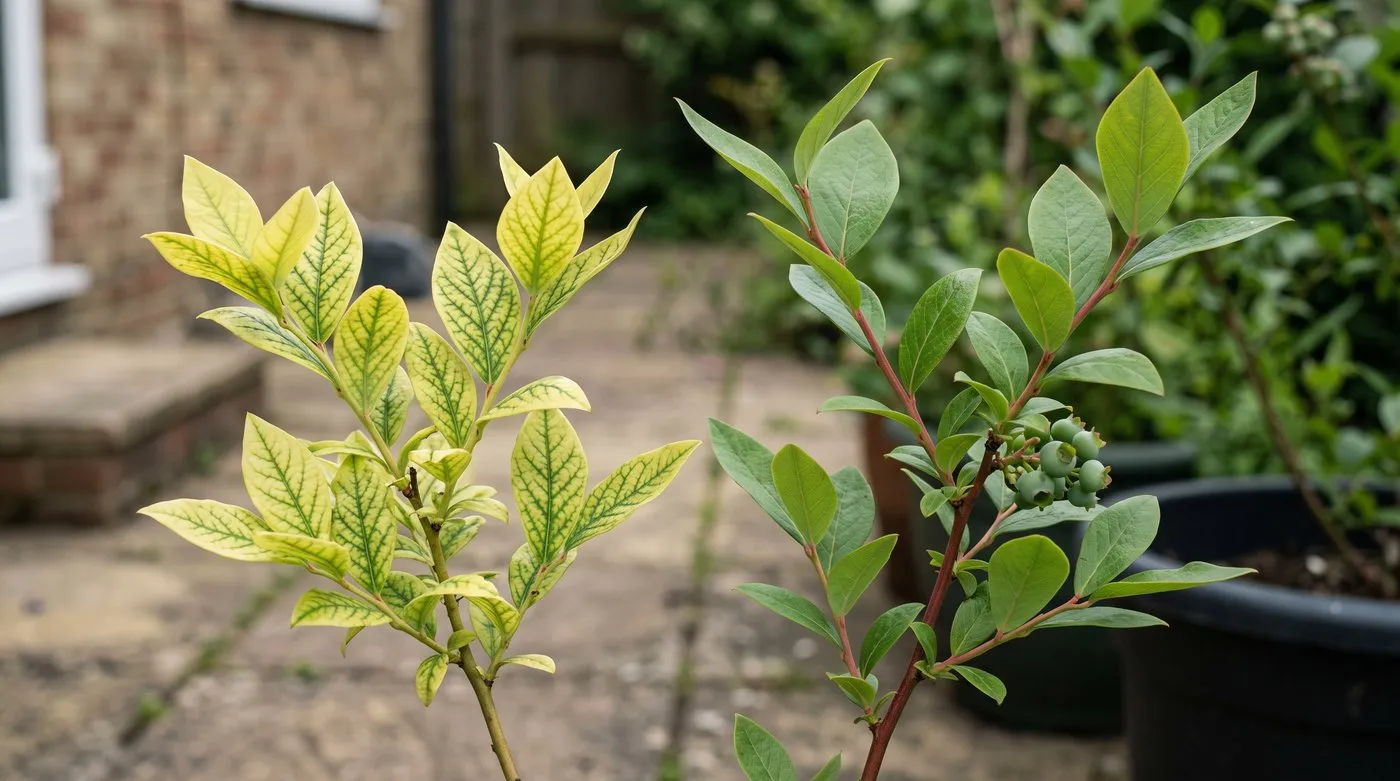
Yellow leaves with green veins mean the soil or compost isn’t acid enough. It’s the classic sign that blueberries need ericaceous compost and rainwater.
Best blueberry varieties for UK gardens
Pick northern highbush blueberries (Vaccinium corymbosum), which suit our cooler summers. Growing two or more varieties spreads the harvest and gives a better crop, because the bees can swap pollen between them. The RHS blueberry guide is a handy extra read.
Early season (late June to mid-July)
Duke is a great early choice. It flowers late but ripens early, which helps the blossom miss late frosts. The berries are medium-sized, mild and sweet. It’s a good pick for northern gardens.
Spartan ripens just after Duke with large, tangy, firm berries that are great for baking. The bush is upright and fairly compact, with lovely orange and red autumn leaves.
Mid-season (mid-July to August)
Bluecrop is the classic choice and a safe bet for beginners. It gives big, firm, tasty berries on a vigorous bush.
Chandler has the biggest berries of the lot, with great flavour. It fruits over several weeks, so you get a long mid-season harvest.
Late season (August to September)
Elliott carries the harvest into late September and sometimes October. The berries are a little tangy and get sweeter after picking.
Compact varieties for small spaces
Sunshine Blue only reaches about 90cm, so it’s ideal for a patio. In mild winters it keeps some of its leaves. Pink Lemonade is a fun one with pink berries that taste sweet and mild. Both grow well in a 30-litre pot.
Variety comparison table
| Variety | Season | Size of bush | Berries | Best for |
|---|---|---|---|---|
| Duke | Early | Medium | Medium, sweet and mild | Frosty areas, the north |
| Spartan | Early | Compact | Large, tangy, firm | Baking, smaller spaces |
| Bluecrop | Mid | Tall | Large, rich | Beginners, main crop |
| Chandler | Mid | Medium | Very large, sweet | Big berries, long picking |
| Elliott | Late | Tall | Medium, tangy | Stretching the season |
| Sunshine Blue | Mid to late | Small | Medium, sweet | Patios and pots |
| Pink Lemonade | Mid | Medium | Pink, sweet, mild | Something different, kids |
Handy tip: Plant two different varieties near each other for better crops. Choose them from different seasons and you could be picking from late June to September.
How to plant blueberries in containers
Pots are the easiest way to grow blueberries in the UK. You control the compost, and you can move the plant to the sunniest, most sheltered spot. The same container growing tips that work for veg work for fruit too.
Choosing the right pot
 Planting a blueberry bush into ericaceous compost with its roots spread out.
 A blueberry in a pot of ericaceous compost. Pots make it easy to give them the acid soil they love.
Go for a pot of at least 40 litres per bush. Bigger is better, as it holds more water in summer. Terracotta dries out faster than plastic, so skip it if you tend to forget to water. Make sure there are good drainage holes.
Plastic, resin or glazed pots all work. Fabric grow bags are good too. Avoid metal pots in full sun, as they get hot and can cook the roots.
Compost and planting method
Fill the pot with ericaceous compost only. Don’t mix in ordinary multipurpose compost. A few handfuls of bark chips or perlite help drainage, because the fine roots rot in soggy compost.
Plant at the same depth the bush sat in its nursery pot. Firm gently and water well with rainwater. Finish with 5cm of bark or pine needle mulch on top. Our guide to mulching has more ideas.
Planting in the ground
If your soil is acid, you can plant in the ground. Dig a hole about 60cm wide and 40cm deep. Mix the soil you dug out half and half with ericaceous compost. Space bushes 1.5m apart and mulch well with pine bark or wood chip.
If your soil is only slightly acid, you can dig a bigger pit filled with ericaceous mix and add sulphur chips each year. Test the soil each spring. It works, but it’s more fuss than a pot.
Watering blueberries correctly
Use rainwater whenever you can. Tap water in much of the UK is hard (alkaline), and over time it makes the compost less acid. That leads to yellow leaves.
A water butt on a shed, greenhouse or house is ideal. If the butt runs dry in a drought, use tap water rather than let the plant dry out. A short spell of tap water does far less harm than a thirsty plant.
Keep the compost moist but never soggy. In hot weather, pots may need water every day. Push a finger 3cm into the compost. If it feels dry, water until it runs out of the bottom.
In winter, water much less, maybe once a week or less. The compost just needs to stay slightly damp. Stand pots on pot feet so winter rain drains away.
Feeding and fertilising
Feed with an ericaceous plant food, not a general one. Ordinary feeds can make the compost less acid.
Feeding schedule
Feed pot-grown blueberries every two weeks from April to August with a liquid ericaceous feed, diluted as the label says. Stop in September so the plant can toughen up for winter.
You can also scatter a slow-release ericaceous feed on the compost in spring for steady food all season.
What to avoid
Don’t use farmyard manure, mushroom compost, lime or wood ash on blueberries. They all make the soil less acid.
If leaves go yellow between the veins, the compost has lost its acidity. Scatter sulphur chips on top and give a feed containing sequestered iron. Test again after a month.
Pruning blueberry bushes
Leave young bushes unpruned for the first two years. They need time to build roots and branches. Some growers pick off the flowers in the first year so the plant puts its energy into growing. You’ll wait a little longer for berries, but you’ll get a stronger bush.
How to prune from year three
 Winter pruning takes out old grey wood and makes room for fresh new stems.
Prune in winter, between December and February. Flower buds are fat and round. Leaf buds are small and pointy. Learn to spot the difference so you don’t cut off next summer’s berries.
Each winter, cut two or three of the oldest stems right down to the ground. Old wood is thick and grey with peeling bark. Young wood is smooth, reddish-brown and bendy. Removing old stems makes way for fresh growth from the base.
Take out anything dead, crossing or damaged. Open up the middle so air and light can get in. A grown-up bush should have about 6 to 8 main stems of different ages.
Tip pruning for shape
After picking in summer, trim back any long, straggly shoots by up to a third. This keeps the bush tidy and encourages side shoots, which carry next year’s fruit.
Month-by-month blueberry calendar
Here’s what to do through the year. In the north, things may happen a week or two later.
| Month | What to do |
|---|---|
| January | Order bare-root plants. Prune established bushes |
| February | Finish pruning before buds swell. Repot if the roots are crammed |
| March | Plant new bushes. Add slow-release ericaceous feed. Top up mulch |
| April | Start fortnightly liquid feeds. Get your water butt ready |
| May | Flowers open. Fleece them on frosty nights |
| June | Early berries start to colour. Put up bird netting. Keep compost moist |
| July | Main picking starts. Pick when fully blue. Keep feeding |
| August | Mid and late varieties at their best. Freeze any spare berries |
| September | Late varieties still going. Stop liquid feeds |
| October | Lovely autumn colour. Water less. Clear fallen leaves |
| November | Plants go dormant. Move pots somewhere sheltered |
| December | Start winter pruning. Plan next year’s varieties |
Blueberries look good all year. Spring blossom feeds early bees, summer brings berries, and the autumn leaves are as bright as any ornamental shrub. Our UK planting calendar has timings for all your other fruit and veg.
Protecting blueberries from birds
Birds love blueberries as much as you do, so net them. Blackbirds, thrushes and pigeons can strip a bush very quickly. Netting is the only thing that really works.
Cover bushes with fine netting as soon as the berries start to turn blue. Put up a frame of canes or hoops first, so the net doesn’t sit on the fruit. Birds can peck through netting that touches the berries.
Pin the net down at the bottom and keep it taut. Check it every day for trapped birds or hedgehogs. Take it off once you’ve picked the last berries.
Patio bushes near the house tend to get fewer visits from birds. If you grow several bushes, a fruit cage is the best long-term answer.
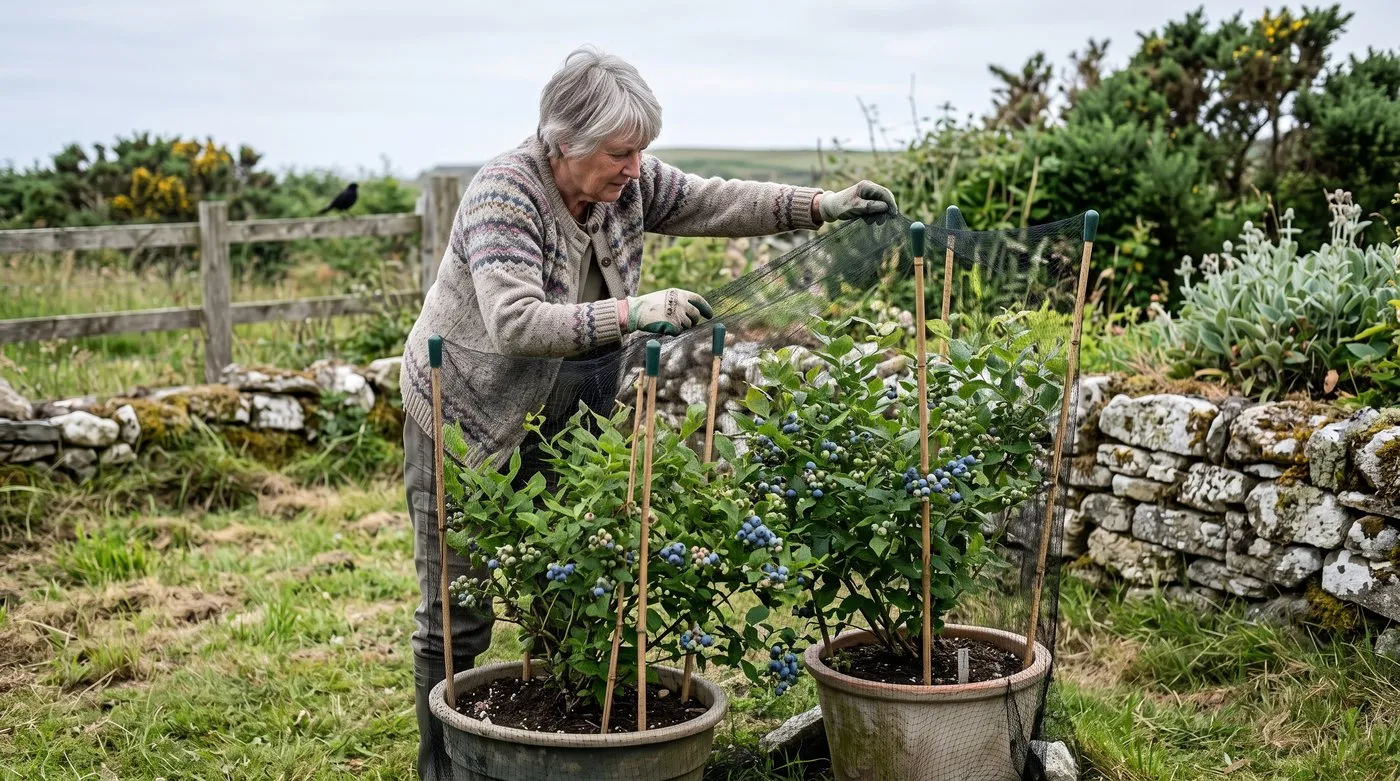
Put the net up on a frame as soon as the berries start to colour, so birds can’t peck through where it touches. Check it daily for anything trapped.
Common mistakes when growing blueberries
Using the wrong compost
This is the big one. Ordinary multipurpose compost isn’t acid enough, and the plant will struggle. Always check the bag says ericaceous. Our compost guide explains the different types.
Watering with tap water long-term
A few weeks of tap water in a drought is fine. But using it all the time slowly makes the compost less acid, and yellow leaves follow. Collect rainwater in a butt. Even a small one covers most of the season.
Pruning too early or too hard
Pruning in the first two years cuts off the wood that would give your first berries. Wait until year three. Then take out just two or three old stems each winter.
Forgetting to net against birds
Birds start on the berries at the first hint of blue, before they’re properly ripe. Net as soon as they change colour, not after the birds have found them.
Planting in shade
Blueberries cope with a little shade but crop much better in full sun. In deep shade you’ll get leggy growth, few flowers and sour berries. Put pots in your sunniest spot, just like any patio fruit and veg garden.
Harvesting and storing blueberries
Pick blueberries when they’re blue all over and come away with a gentle tug. If you have to pull, they’re not ready. Unripe berries are sour and won’t sweeten after picking.
 Picking ripe blueberries. They’re ready when fully blue with a dusty bloom.
Go over the bushes every few days at peak time. Berries on the same bunch ripen over a week or so. Handle them gently, as they bruise easily, and use shallow tubs rather than deep bowls.
Fresh berries keep for about a week in the fridge. Don’t wash them until you’re about to eat them. To freeze, spread them on a tray in a single layer, then bag them once frozen. Frozen berries keep for months and are great in smoothies, muffins and crumbles.
Growing blueberries alongside other fruit
Blueberries get on well with other acid-loving fruit. Cranberries and lingonberries like the same ericaceous compost and make neat ground cover under taller bushes. The tea plant likes acid compost too, so see our tea plant growing guide.
For a mixed fruit patio, keep blueberries in their own ericaceous pots and grow strawberries nearby in ordinary compost. A few raised beds for other soft fruit turn a small space into a lovely picking garden.
Blueberries flower in April and May, giving early food to bees alongside apple and pear blossom. The more bee-friendly plants you grow, the better all your fruit will set.
Now you’ve got blueberries sorted, try our guide on how to grow blackberries in the UK. They’re one of the easiest soft fruits and keep you picking from August into October.
Get the feeding right with our guide to feeding fruit bushes.
Frequently asked questions
Can I grow blueberries in pots in the UK?
Yes, pots are the easiest way to grow them here. Most garden soil isn’t acid enough. A pot of 40 to 50 litres filled with ericaceous compost gives them exactly what they need. Water with rainwater and feed with ericaceous plant food from April to August.
What is the best blueberry variety for the UK?
Bluecrop is a reliable all-rounder for beginners. It gives large, tasty berries in mid-season. Duke ripens earliest, Chandler has the biggest berries, and Sunshine Blue stays small at about 90cm, which is perfect for a patio.
Do blueberry bushes need two plants to fruit?
No, one bush will fruit on its own. But two different varieties planted near each other usually give bigger berries and a better crop. Bees carry the pollen between them, so choose varieties that flower at the same time.
Why are my blueberry leaves turning yellow?
Usually the compost isn’t acid enough any more. Leaves go yellow between green veins because the plant can’t take up iron. Watering with tap water is the usual cause. Switch to rainwater, add sulphur chips and feed with an ericaceous plant food.
When do blueberries fruit in the UK?
Most fruit from July to September. Early varieties like Duke can start in late June in the south. Late ones like Elliott can run into October in a mild year. Pick when the berries are fully blue and come away with a gentle tug.
How do I prune blueberry bushes?
Start in winter once the bush is three years old. Each year, cut two or three of the oldest stems down to the ground. Old wood is grey with peeling bark. Take out dead, damaged or crossing branches and open up the middle. Don’t prune in the first two years.
Can I grow blueberries in normal compost?
No, normal compost isn’t acid enough. Blueberries need ericaceous compost, sold for acid-loving plants. In normal compost the leaves yellow and growth stalls. Look for a bag labelled ericaceous at any garden centre.
Our team produces practical UK gardening guidance from source research, contributor records and established horticultural practice. Editorial standards are overseen by Matt W.


