
Key takeaways
- Feed once a year in late winter or early spring, before the buds break
- A general fertiliser plus sulphate of potash suits currants, gooseberries and raspberries
- Blackcurrants are hungry and like a richer mulch of well-rotted manure
- Too much nitrogen on gooseberries and redcurrants gives soft leafy growth and mildew
- Blueberries need ericaceous feed and rainwater, never lime or wood ash
- Mulch 5-8cm deep after feeding to hold moisture while the fruit swells
Feed fruit bushes once a year, in late winter or early spring, and they will crop well for years. A general fertiliser and a little sulphate of potash, then a thick mulch, is all most currants, gooseberries and raspberries need. Blueberries play by different rules, and they get their own section below.
This guide covers what to give each bush, when, and the easy mistakes that lead to plenty of leaf but not much fruit. If you want feeding advice for the whole garden, the guide to feeding garden plants covers borders, veg and pots.
What do fruit bushes need to crop well?
Fruit bushes need a balanced feed in spring, extra potash (potassium) for flowers and fruit, and steady moisture while the berries swell. That’s really it.
The three main plant foods each do a job. Nitrogen grows leaves and shoots. Phosphorus helps roots. Potassium, the K in NPK, helps flowering and ripening. The guide to what NPK numbers mean explains the labels on fertiliser packs.
Bushes need some of all three. The trick is not to overdo the nitrogen. Lots of it gives lush, soft growth, which attracts aphids and mildew and doesn’t turn into extra fruit.

This is what a spring feed is for: well-filled strings of blackcurrants and plump gooseberries in midsummer.
When and how to feed currants and gooseberries
Feed in late winter or early spring, just before the buds break. Scatter a general fertiliser, such as Growmore or fish, blood and bone, over the root area, along with sulphate of potash. Use the rates on the packs.
The roots spread at least as wide as the branches, so cover that whole circle. Keep the granules off the stems. Hoe or rake them lightly into the surface, and water them in if the soil is dry.
Blackcurrants are the hungriest of the group. They like a little more nitrogen, so give them a generous mulch of well-rotted manure on top of the spring feed. Gooseberries, redcurrants and white currants need less nitrogen. For them, go easy on the general feed and don’t skip the potash.
Raspberries take the same spring feed, scattered along the row. The guides to growing redcurrants and blackcurrants and growing gooseberries cover pruning and picking too.

Late winter, before the buds break, is the moment to scatter the feed. Spread it out to the edge of the branches and keep it off the stems.
Why blueberries need a different feed
Blueberries are ericaceous, which means they need acidic soil, roughly pH 4.5 to 5.5. In ordinary or chalky soil they can’t take up iron, and the leaves turn yellow between green veins.
Feed them in spring with an ericaceous fertiliser made for acid-loving plants. If the soil is creeping towards neutral, sulphur chips lower the pH slowly. Water with rainwater where you can. Hard tap water carries lime and gradually undoes your good work.
Never give blueberries garden lime, wood ash or mushroom compost. All three make the soil more alkaline. Mulch with composted bark or pine needles instead. If your soil isn’t naturally acidic, grow them in pots of ericaceous compost. The guide to growing blueberries has the full picture.

A pot of ericaceous compost, a bark mulch and a can of rainwater keep blueberries happy, even where the garden soil is chalky.
Gardener’s tip: Yellow blueberry leaves with green veins usually mean the soil isn’t acidic enough. More ordinary feed won’t help. Switch to rainwater and an ericaceous feed.
Which feed should you use?
Most bushes do well on a general feed plus potash. The others are handy extras.
| Feed | What it gives | Best for |
|---|---|---|
| Growmore or fish, blood and bone | Balanced feed | Spring feed for currants, gooseberries, raspberries |
| Sulphate of potash | Potassium | Flowering and fruiting, all bushes except blueberries |
| Well-rotted manure | Slow, gentle feed and moisture | Blackcurrants especially |
| Ericaceous feed | Feed for acid-loving plants | Blueberries, cranberries |
| Liquid high-potash feed | Quick potassium | Fruit in pots, summer top-up |
| Wood ash | Some potassium, alkaline | Currants and gooseberries, thinly and not every year |
Mulching fruit bushes after feeding
Mulch straight after the spring feed. Spread 5-8cm of compost, leafmould or well-rotted manure over the root area while the soil is moist, and keep it a hand’s width away from the stems.
A good mulch holds moisture through summer, when the berries are swelling. It also keeps weeds down and feeds the soil gently as it rots. Dry spells while fruit swells give small, seedy berries, so the mulch matters as much as the feed.
For blueberries, use composted bark or pine needles instead. A layer of plain brown cardboard under the compost helps smother weeds on a new fruit bed.

A thick layer of compost over damp soil keeps the roots moist all summer. Leave a small gap around the stems.
A summer top-up with comfrey or potash feed
Fruit in the ground rarely needs more than the spring feed. Bushes in pots, or heavy croppers on poor sandy soil, can have a liquid high-potash feed every two weeks or so while the fruit swells.
A shop-bought tomato feed does the job. So does comfrey liquid, made by soaking comfrey leaves in water for a few weeks. Dilute it to the colour of weak tea, about one part to ten parts water, and water it round the roots. The comfrey liquid feed recipe shows how to make it, smell and all.
Stop liquid feeding once the fruit is picked, so the bush can firm up its wood before winter.

Comfrey liquid is a free summer top-up for hungry bushes. Dilute it well before it goes anywhere near the roots.
Fruit bush feeding calendar
| Month | What to do |
|---|---|
| February to March | Spring feed for currants, gooseberries and raspberries, then mulch |
| March to April | Ericaceous feed for blueberries, plus a bark mulch |
| May to July | Liquid high-potash feed every two weeks for bushes in pots |
| June to August | Water in dry spells while fruit swells, especially pots |
| August to September | Stop liquid feeding once the fruit is picked |
| October to January | No feeding. Plan the spring mulch and top up the comfrey patch |
Common mistakes when feeding fruit bushes
- Too much nitrogen. Lawn feed or heavy chicken manure gives soft growth, aphids and mildew. Gooseberries are especially prone to American gooseberry mildew on lush shoots.
- Feeding too late. A feed in late summer pushes soft growth that the frost catches. Stick to late winter and spring.
- Treating blueberries like currants. Lime, ash and ordinary feed slowly starve them.
- Mulching dry soil. Mulch locks in what is there. Water first, or wait for rain.
- Forgetting pots. Potted fruit runs out of food fast and needs regular liquid feeds.
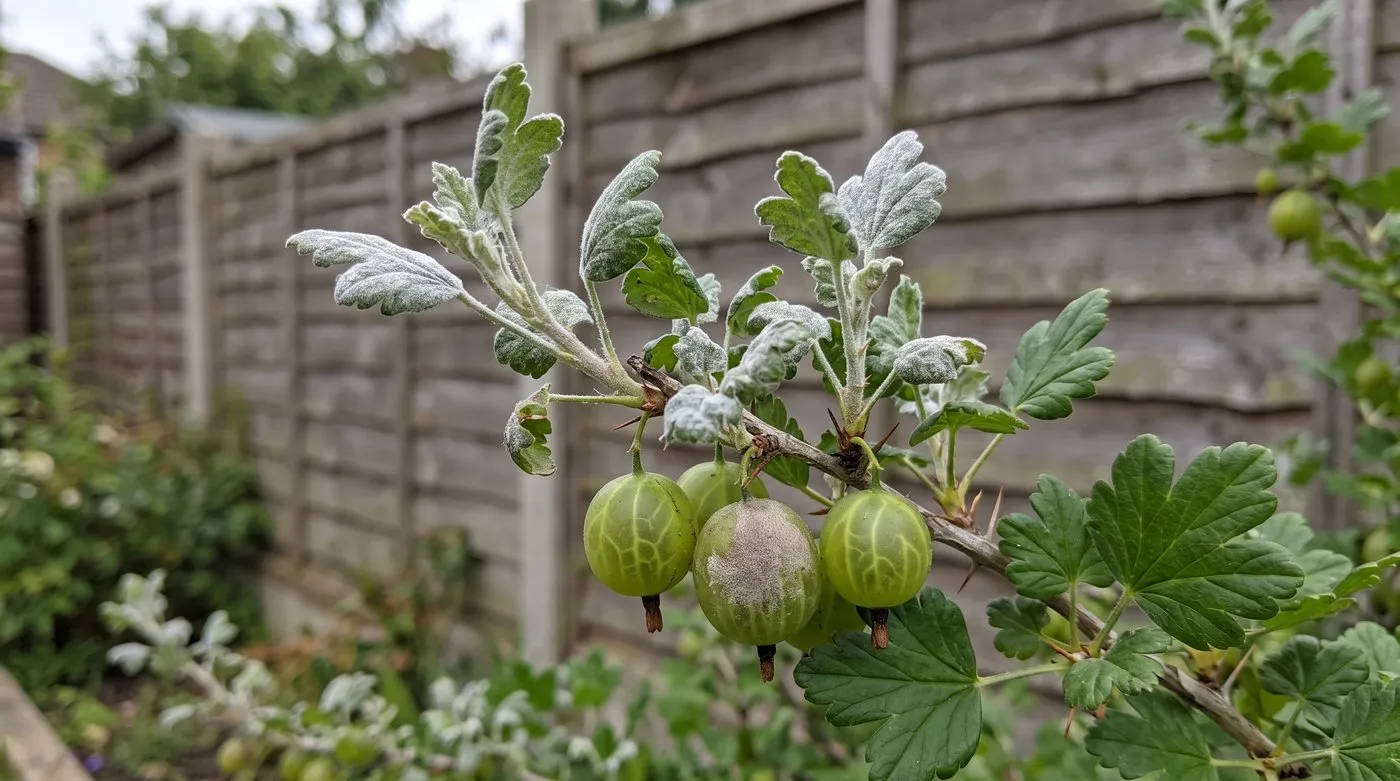
Soft, overfed shoots are a magnet for gooseberry mildew. Go easy on the nitrogen and the bush stays tougher.
Frequently asked questions
What is the best feed for fruit bushes?
A general fertiliser plus sulphate of potash suits most fruit bushes. Give both in late winter or early spring, then mulch with compost or well-rotted manure. Potash helps flowering and fruiting. Blueberries are the exception and need an ericaceous feed.
When should I feed my fruit bushes?
Feed once in late winter or early spring, before the buds break. That puts nutrients in the soil ready for flowering. Scatter the feed over the root area, water it in if the soil is dry, then mulch. A liquid potash feed in summer can help heavy croppers in pots or poor soil.
Can you give fruit bushes too much fertiliser?
Yes, and too much nitrogen is the usual problem. It gives soft, leafy growth that aphids and mildew love, especially on gooseberries and redcurrants. Feed once a year at the rate on the pack and let mulch do the rest.
How do you feed blueberries?
Use an ericaceous feed for acid-loving plants in spring. Blueberries need acidic soil, so never give them lime, wood ash or mushroom compost. Water with rainwater where you can, as hard tap water slowly makes the soil less acidic. Mulch with composted bark or pine needles.
Is wood ash good for fruit bushes?
A little suits currants and gooseberries, but never blueberries. Wood ash contains potash but is also alkaline, so it raises soil pH. Use only ash from untreated wood, scatter it thinly in late winter, and don’t use it every year on the same spot.
Do raspberries need feeding?
Yes, raspberries like the same spring feed as currants. Scatter a general fertiliser and sulphate of potash along the row in late winter or early spring. Then mulch with compost or well-rotted manure, which keeps their shallow roots moist.
How do you feed fruit bushes in pots?
Feed potted fruit regularly through the growing season. Pots wash nutrients out quickly. Use a liquid high-potash feed every two weeks or so from flowering until the fruit is picked. Use an ericaceous liquid feed for blueberries.
Once your bushes are fed and mulched, the guide to growing fruit in pots and containers shows how to add more fruit to a small space. For more soft fruit guides, browse the fruit growing hub.
Our team produces practical UK gardening guidance from source research, contributor records and established horticultural practice. Editorial standards are overseen by Matt W.


