Key takeaways
- Both are hardy raspberry and blackberry crosses that grow well across the UK
- Plant bare-root canes from November to March, about 2.5 to 3m apart
- Train canes on horizontal wires about 30cm apart on a fence or wall
- They fruit in July and August on canes that grew the year before
- After picking, cut fruited canes to the ground and tie in the new ones
- Loganberry LY654 is thornless, which makes life much easier
Boysenberries and loganberries are two of the most rewarding berries you can grow. Both are crosses between a raspberry and a blackberry, and they’ve got the best of both. The berries are big and full of flavour, and one plant gives plenty for eating fresh, freezing and making jam.
They love our mild, damp climate. Heavy clay, cool summers and cold winters don’t bother them, and they fruit well from the Highlands to the south coast. Yet you’ll see far fewer of them than blackberries or raspberries. That’s a shame, because the flavour is something special.
What is the difference between boysenberry and loganberry?
Loganberries are long, dark red and tangy. Boysenberries are rounder, nearly black and sweeter.
Loganberry was the first raspberry and blackberry cross, made in California in the 1800s. The berries are long, dark red when ripe and firmer than a blackberry. The flavour is sharp and tangy, which makes them brilliant for jam and cooking.
Boysenberry came later, from a mix of loganberry, raspberry and blackberry. The berries are rounder, bigger and almost black when ripe. They’re softer and sweeter, with a rich, winey taste.
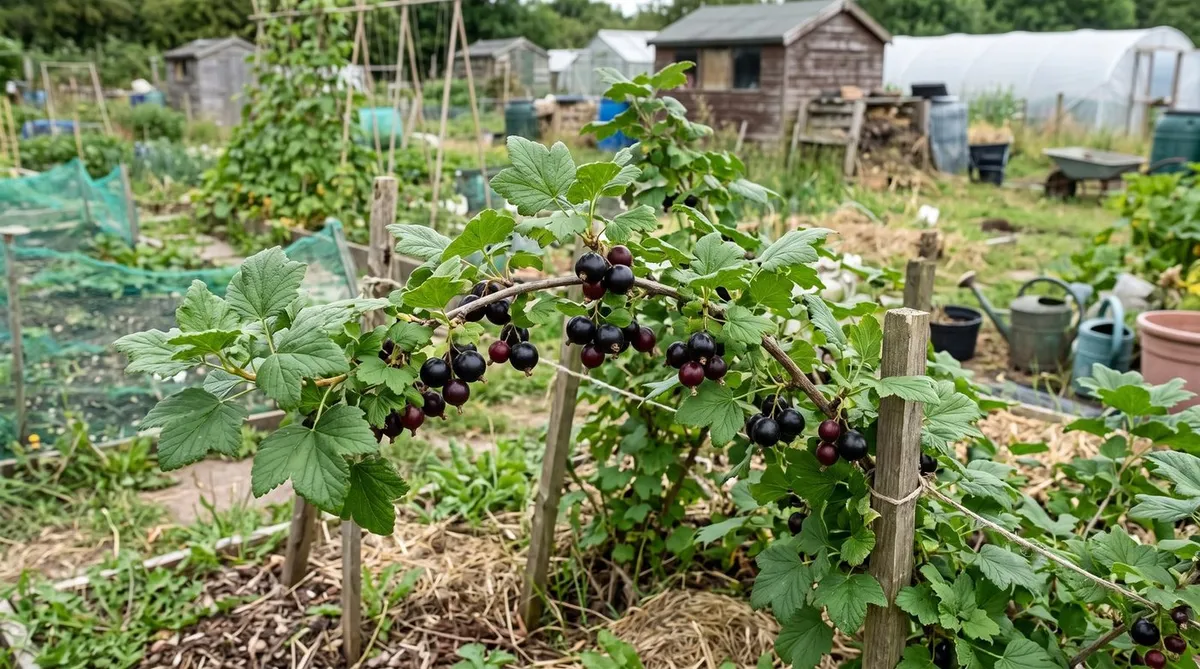
 Boysenberry canes tied to wires in spring. New canes grow long by midsummer.
Both grow long canes that fruit on last year’s growth. Training, pruning and care are the same. The difference is in the fruit.
Hybrid berry comparison table
| Feature | Boysenberry | Loganberry | Tayberry | Blackberry |
|---|---|---|---|---|
| Berries | Large, purple-black | Long, dark red | Large, deep red-purple | Black |
| Flavour | Sweet and rich | Sharp and tangy | Sweet-sharp, fragrant | Sweet when fully ripe |
| Thorns | Usually thorny | Thornless LY654 or thorny | Thorny (thornless form exists) | Both types sold |
| Growth | Moderate | Moderate to strong | Strong | Very strong |
| Picking | Mid-July to mid-August | Early July to mid-August | Early July to early August | August to October |
| Best for | Eating fresh, puddings | Jam, cooking, freezing | Jam, freezing, fresh | Everything |
Where should I plant hybrid berries?
Pick a sunny fence, wall or post-and-wire frame at least 1.8m tall. South, west or east-facing all work. Allow about 2 to 3m of width per plant. A sunny, sheltered spot gives the sweetest fruit.
Site requirements
- Sun: At least four hours of direct sun a day. Full sun is best, especially in the north.
- Soil: Any ordinary garden soil, including clay and chalk. The RHS hybrid berry guide agrees they’re not fussy.
- Drainage: They don’t like soggy ground. If puddles sit after rain, raise the bed or improve drainage first.
- Shelter: Avoid really windy spots. Wind damages young canes and keeps bees away at flowering time.
A 3m stretch of fence suits one plant. If you grow both, space them 2.5 to 3m apart, just like blackberries.
How do I train boysenberry and loganberry on wires?
Tie the canes onto horizontal wires so they don’t flop. Left to sprawl, they turn into a tangle and the fruit rots on the ground. It’s the same system as for blackberries, and a little like training fruit trees on espalier wires.
Installing support wires
- Fix horizontal galvanised wires to the fence or wall about 30cm apart
- Put the lowest wire about 60cm off the ground
- Add more at 90cm, 120cm, 150cm and 180cm
- Use vine eyes to hold the wires a few centimetres off the fence
- Pull each wire tight so it won’t sag under heavy canes
 Ripe loganberries: long, dark red, firmer than blackberries and nicely sharp.
The one-way fan training system
Fruiting canes go one side, new canes the other. This makes pruning easy.
Year 1: New canes grow from the base in spring. Tie them to the wires, fanned out to one side. No fruit this year.
Year 2: Those canes flower and fruit in July and August. Meanwhile, new canes grow from the base. Tie these to the other side. After picking, cut all the fruited canes to the ground.
Year 3 onwards: Last year’s new canes now fruit. Tie the fresh ones to the empty side and cut out fruited canes after picking. Repeat every year.
Tying technique
Use soft twine or stretchy plant ties, tying every 30 to 40cm along each cane. Space canes 10 to 15cm apart so light and air get in. Keep 5 to 8 strong canes per plant and remove thin or weak ones at the base.
Most boysenberries have thorns, so wear thick gloves. Loganberry LY654 has no thorns, which is one of the best reasons to choose it.
When do I prune hybrid berry canes?
Prune straight after the last berries are picked, usually late August or early September. Canes that have fruited won’t fruit again, so they come out.
Pruning method
- Cut every fruited cane down to the ground
- Untie them and take them away
- The new canes should already be tied to the other side
- If not, fan them out and tie them in now
- Remove any weak, thin or damaged new canes
- Keep 5 to 8 strong canes per plant for next year
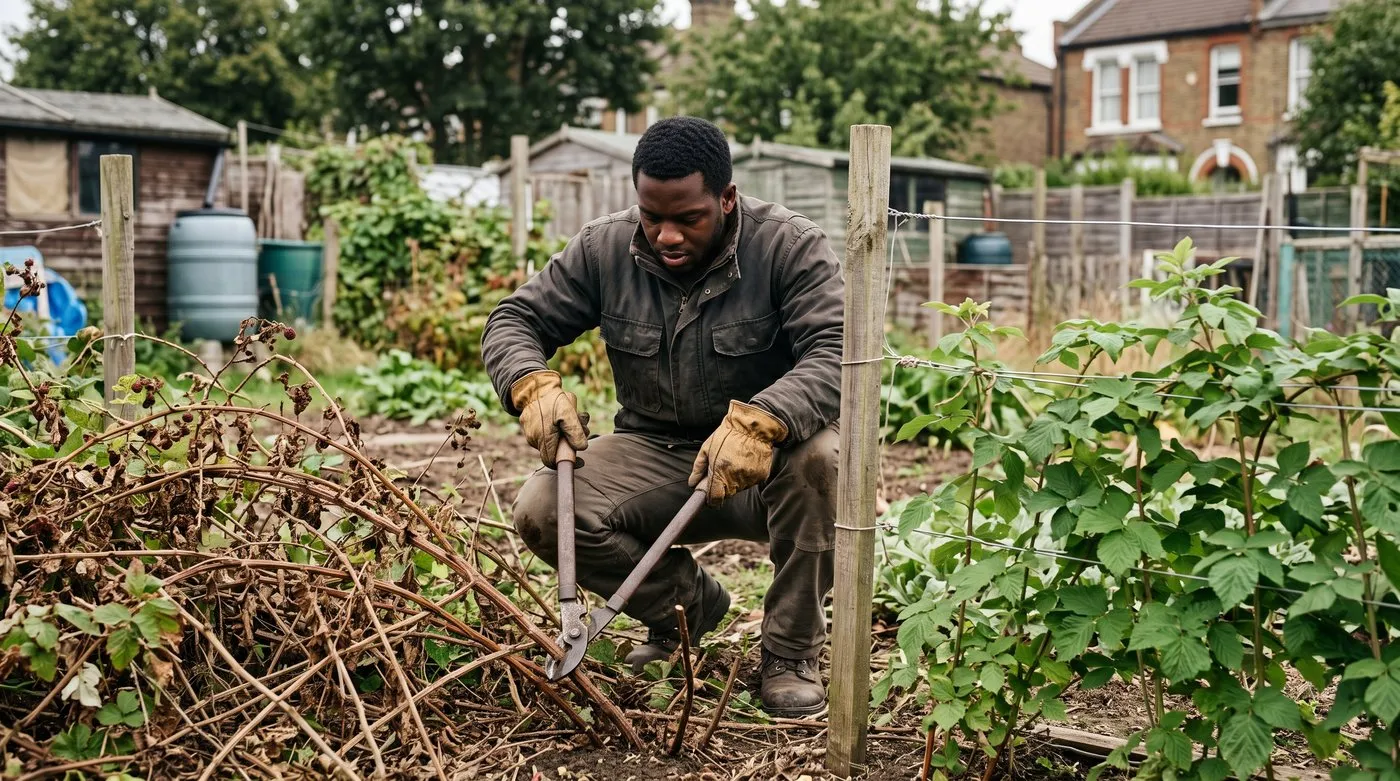
Once a cane has fruited it won’t fruit again, so cut it right to the ground after the last picking. Keep five to eight strong new canes for next year.
Winter tidy-up
In February, check the canes. Take out any damaged by winter storms. Trim very long canes back to a strong bud. This encourages side shoots, which is where the fruit grows.
Month-by-month care calendar
| Month | What to do |
|---|---|
| January | Check ties are secure but not too tight. Order bare-root plants |
| February | Trim over-long canes. Scatter sulphate of potash around the base at the pack rate |
| March | Mulch with 5 to 8cm of compost or well-rotted manure, keeping it off the stems |
| April | Side shoots appear. Remove weak growth. Look out for aphids on soft tips |
| May | Flowers open. Water if spring is dry. Don’t spray anything while bees are busy |
| June | Fruit swells. In dry spells give 10 to 15 litres per plant twice a week |
| July | Picking starts. Pick every 2 to 3 days. Net against birds |
| August | Keep picking. Cut out fruited canes after the last pick. Tie in new canes |
| September | Finish tying in. Clear fallen fruit and old leaves |
| October | Tip-layer canes for new plants. Plant bare-root canes from late in the month |
| November | Best month to plant bare-root canes. Water in well |
| December | Check supports and replace rusty wires |
When are boysenberries and loganberries ready to pick?
Boysenberries are ready when they’re dark purple-black and soft. A ripe one comes away with a gentle pull. If you have to tug, wait. They bruise easily, so handle gently.
Loganberries are ready when they’re deep dark red and slide off easily. They hold their shape better after picking. Underripe ones are hard and very sour, so be patient.
 Boysenberries (dark purple) and loganberries (dark red). Pick into shallow tubs so they don’t get squashed.
Harvest tips
- Pick into shallow tubs, no more than two berries deep.
- Pick every 2 to 3 days at peak time. The fruit ripens in waves over a few weeks.
- Pick in the morning once the dew has dried. Wet fruit goes mouldy faster.
- Eat within a day or two, or pop them in the fridge.
- To keep them longer, freeze on a tray, then bag. They freeze well and make great jam, crumbles and sauces.
Expected yields
You won’t get fruit in the first year, as the canes are still growing. Expect a small crop in year two, and a full one from about year three. Loganberries tend to give a bit more fruit per plant, while boysenberries give fewer but bigger berries.
How to propagate hybrid berries by tip layering
Bury the tip of a cane and it grows roots. It’s free, easy and works just like it does for blackberries.
Method
- In late July or August, choose a healthy new cane that hasn’t fruited
- Bend the tip gently down to the ground
- Bury the tip about 10 to 15cm deep in a hole filled with compost
- Peg it down or hold it with a stone
- Water and keep the soil moist through autumn
- By next March it should have roots and a new shoot
- Cut it from the parent and plant it where you want it
Each plant can give you a couple of new ones a year. Great for filling more fence or sharing with friends.
Common problems and how to solve them
Pests
- Raspberry beetle: The main pest. The grubs feed inside the fruit. Pick and bin affected berries. If it’s a big problem, use an insecticide labelled for raspberry beetle, exactly as the label says.
- Aphids: Greenfly gather on soft shoot tips in spring. Pinch off affected tips or blast them with water, and let ladybirds and lacewings help. If you do spray, use an authorised product as the label directs. Home-made soap sprays aren’t approved as pesticides in the UK.
- Birds: Blackbirds and thrushes love ripe fruit. Net plants as soon as the berries start to colour.
Diseases
- Cane spot: Purple spots on canes in late spring. Cut out and bin affected canes, and space canes further apart.
- Grey mould: Fuzzy grey mould on fruit in wet summers. Pick promptly and remove mouldy berries straight away. Good airflow helps.
- Spur blight: Dark patches round buds in late summer. Thin to 5 to 8 canes per plant and cut out affected canes in autumn.
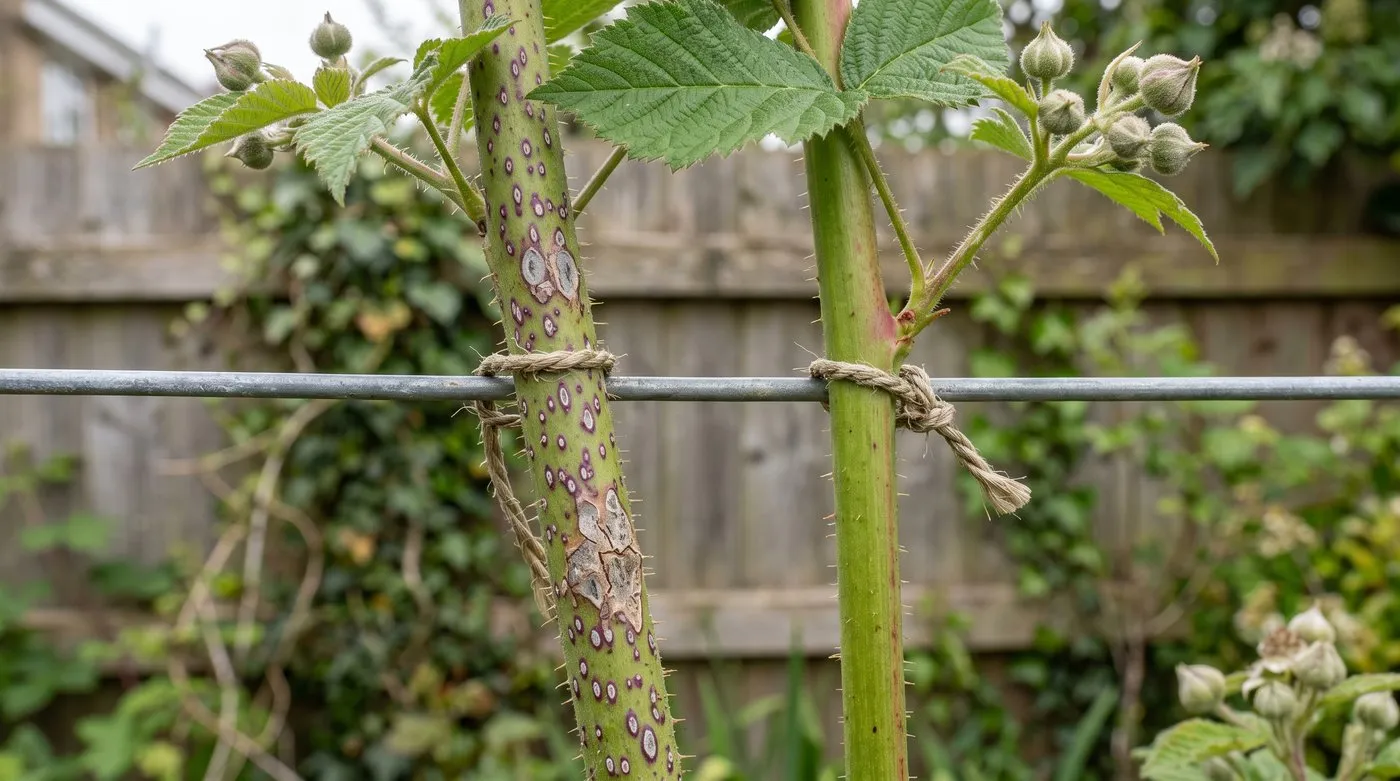
Purple spots on the canes in late spring are a sign of cane spot. Cut out and bin affected canes, and space the rest further apart for better airflow.
Cultural problems
- Few berries: Usually frost on the flowers or not enough bees. Fleece plants on frosty nights in April and May.
- Small, dry berries: Not enough water while the fruit swells. Water deeply and mulch.
- Canes dying back: Often soggy soil. Improve drainage, and don’t plant where raspberries or hybrid berries grew before.
Growing hybrid berries in containers
Both grow in big pots, though you’ll get less fruit. It’s a good option if you don’t have open ground. See our guide to growing fruit in pots and containers for more.
Container requirements
- Pot size: At least 45cm across and 40cm deep
- Compost: John Innes No. 3, which is heavy and stable
- Support: A small trellis or obelisk in the pot
- Watering: Daily in summer, twice a day in heatwaves
- Feeding: Tomato feed every two weeks from flowering until the last pick
Thornless LY654 is the best choice for pots, as it’s much easier to handle up close. Repot with fresh compost every few years. Pots are also easier to fleece and net.
Best varieties for UK gardens
Loganberry
- LY654 (thornless): The usual choice. No thorns, good crops and strong growth. Easy to find at fruit nurseries.
- Original thorny loganberry: A little more vigorous, but the thorns make training and picking a pain. Only worth it if you have lots of space.
Boysenberry
- Boysenberry: Usually sold simply as “boysenberry”. Big, sweet, dark berries. Most are thorny, though thornless forms are sold too. A little less vigorous than loganberry, so it’s handy in smaller gardens.
Other hybrid berries worth considering
- Tayberry: A raspberry and blackberry cross bred in Scotland. Large, fragrant berries. Thorny, though ‘Buckingham’ is thornless. Fruits a little earlier than loganberry.
- Tummelberry: A Scottish relative of the tayberry. Smaller berries, but very hardy. Good for chilly northern gardens.
- Sunberry: A smaller-fruited hybrid. Not often sold, but worth a try if you spot it.
Grow them alongside blueberries and gooseberries for soft fruit from June to September with very little fuss.
Frequently asked questions
What is the difference between a boysenberry and a loganberry?
Boysenberries are bigger, darker and sweeter than loganberries. Loganberries came first, from a raspberry and blackberry cross. Boysenberries came later, from loganberry, raspberry and blackberry. Loganberries are long, dark red and tangy, great for cooking. Boysenberries are rounder, almost black and sweet enough to eat fresh. Both grow the same way.
Are boysenberries and loganberries easy to grow in the UK?
Yes, both are easy soft fruits for UK gardens. They cope with heavy clay, some shade and cold winters. The main thing they need is a fence, wall or posts with wires for tying in. Pruning after picking is the only real job each year.
When should I plant boysenberry and loganberry?
Plant bare-root canes from November to March. November is ideal, as winter rain keeps the roots moist while they settle. Pot-grown plants can go in any time, but autumn and winter are best. Space plants 2.5 to 3m apart along the support.
Do boysenberries and loganberries need full sun?
Full sun gives the sweetest fruit and biggest crops. Both cope with part shade if they get at least four hours of direct sun. East or west-facing fences still give a good crop. Avoid deep shade under trees.
Can I grow boysenberry and loganberry in pots?
Yes, in a pot at least 45cm across and 40cm deep. Use John Innes No. 3 compost and add a trellis or obelisk. Water every day in summer and feed fortnightly with tomato feed from flowering. You’ll get less fruit than from plants in the ground.
How long do boysenberry and loganberry plants live?
A healthy plant can keep fruiting for many years. Crops build up over the first few seasons. When the canes get weaker, replace the plant. Tip-layering gives you free new plants from your old ones.
Where can I buy boysenberry and loganberry plants in the UK?
Specialist fruit nurseries sell both from about October to March. Thornless loganberry LY654 is easy to find. Boysenberries are a little less common, but most specialist fruit nurseries stock them.
Our team produces practical UK gardening guidance from source research, contributor records and established horticultural practice. Editorial standards are overseen by Matt W.