Key takeaways
- A thornless cross between blackcurrant and gooseberry
- Fully hardy, and rarely troubled by mildew or big bud mite
- Pick the purple-black berries from mid-July to August
- One bush fruits on its own, no partner needed
- Grows 1.5-2m tall and wide in sun or part shade
- Tart and tangy, so brilliant for jam and cordial
The jostaberry is a thornless fruit bush that grows happily all over the UK and gives you bowls of dark, tangy berries every summer. It takes the toughness of a blackcurrant and the bigger, tangier berries of a gooseberry. If you already grow blackcurrants and redcurrants or gooseberries, it slots straight into the same fruit bed, and it’s less work than either.
Here’s how to plant it, prune it, pick it and use it.
What is a jostaberry?
The jostaberry (Ribes x nidigrolaria) is a cross between a blackcurrant and a gooseberry, bred in Germany and released in the 1970s. The name joins the German words for the two parents, Johannisbeere and Stachelbeere.
 Jostaberry clusters. The berries are bigger than blackcurrants and turn deep purple-black when ripe.
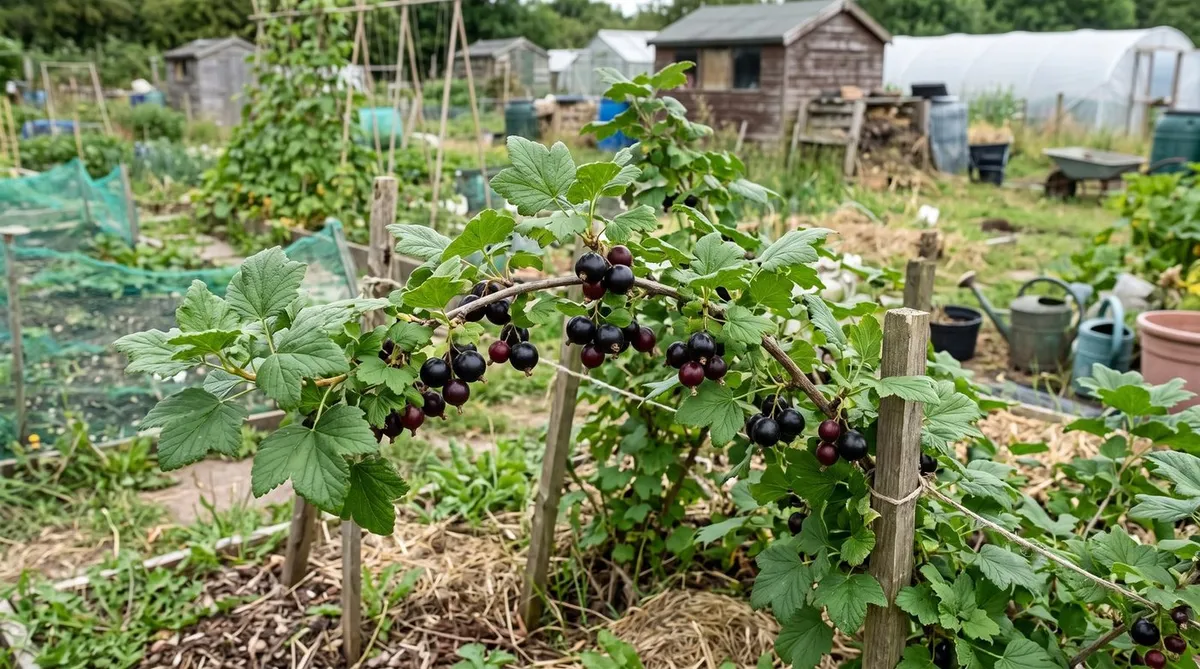
The bush grows 1.5-2m tall with strong, thornless stems. The leaves look like big blackcurrant leaves but don’t have the strong smell. The berries are about twice the size of a blackcurrant and go from green to red to glossy purple-black. They taste like a tart blackcurrant with a gooseberry tang.
Jostaberry vs blackcurrant vs gooseberry
| Jostaberry | Blackcurrant | Gooseberry | |
|---|---|---|---|
| Berry size | Medium | Small | Large |
| Thorns | None | None | Sharp |
| Mildew | Rarely a problem | Sometimes | Often a problem |
| Big bud mite | Rarely a problem | Common problem | Not affected |
| Size of bush | Big | Medium | Medium |
| Flavour | Tart and tangy | Rich | Sharp to sweet |
| Needs a partner? | No | No | No |
Be patient. A new bush gives little or nothing in its first year and a light crop in its second. It gets into its stride in the third or fourth summer.
Where should I plant jostaberry?
Full sun is best, but part shade is fine. In less light the crop is a little later and lighter. They’re less fussy than blackcurrants, and around four hours of direct sun a day is enough.
Site requirements
| What | What it likes |
|---|---|
| Sun | Sun or part shade |
| Soil | Any decent soil that holds moisture |
| Drainage | Moist, but not waterlogged |
| Shelter | A bit of shelter from wind helps the bees |
| Frost | Fully hardy. Fleece flowers in April if frost is forecast |
| Spacing | 1.5m between plants, 2m between rows |
They cope with heavy clay better than most soft fruit, as long as it doesn’t stay waterlogged. On sandy soil, dig in plenty of compost so it holds water while the fruit swells.
If you can, avoid a spot where blackcurrants or gooseberries grew recently. A fresh site gives the bush the best start.
 A young bush in its second summer. Strong upright growth like this is a good sign.
Planting method
Plant bare-root bushes from November to March. Pot-grown ones can go in any time, but autumn is best.
- Dig a hole 50cm wide and 30cm deep. Loosen the bottom with a fork.
- Mix a bucket of well-rotted compost or manure into the soil you dug out.
- Set the bush about 5cm deeper than it was growing before, just as you’d plant blackcurrants. This helps new shoots come up from below ground.
- Fill in and firm gently with your boot.
- Water well, even if the ground is damp.
- Mulch with 7-10cm of bark or compost, keeping it clear of the stems.
- Cut all stems back to about 5cm. It feels brutal, but it gives you strong new shoots in spring.
Month-by-month care calendar
| Month | What to do |
|---|---|
| January | Winter prune. Cut out the oldest third of stems at ground level |
| February | Scatter a general fertiliser such as Growmore at the rate on the pack |
| March | Mulch with compost or bark |
| April | Fleece the bushes if a hard frost is forecast while they flower |
| May | Water new bushes if it’s dry. Check shoot tips for aphids |
| June | Water in dry spells while the fruit swells |
| July | Start picking glossy purple-black berries |
| August | Finish picking. Net if birds are helping themselves |
| September | Tidy up any old fruiting wood |
| October | Order bare-root bushes for November |
| November | Plant new bushes. Take hardwood cuttings |
| December | Check stakes and ties. Clear fallen leaves from the base |
How do I prune a jostaberry bush?
Each winter, cut about a third of the oldest stems down to ground level. It fruits much like a blackcurrant, with the best crops on two and three-year-old stems. Older stems give less fruit, so take them out to make room for young ones.
It’s a vigorous grower. Left alone, it gets crowded in a few years, which means fewer berries and harder picking.
Winter pruning steps
- Find the oldest stems. They have dark, rough bark. Young ones are pale and smooth.
- Cut a third of the oldest stems to the ground with loppers or a pruning saw.
- Take out anything dead, damaged or crossing.
- Thin the middle if it’s crowded, so light and air can get in.
- Shorten any very tall stems to an outward-facing bud.
That’s it. It doesn’t need the fiddly spur pruning of gooseberries. Take out old wood, keep young wood and keep the shape open. If you’ve pruned fruit trees, this will feel easy.
Propagation from hardwood cuttings
New plants are easy to make from hardwood cuttings in November.
- Pick healthy, straight stems from this year’s growth, about as thick as a pencil.
- Cut 20-25cm lengths. Cut straight below a bud at the bottom and at a slant above a bud at the top.
- Push them into a trench of gritty soil, leaving just the top two buds showing.
- Firm them in and water once.
- Leave them alone for a year. By next autumn most will have rooted and can be moved.
When do I harvest jostaberries?
Jostaberries ripen from mid-July to late August. They don’t all ripen at once. The berries at the top and on the sunny side colour first, so expect to pick three or four times over a few weeks.
 No thorns means no scratched hands, unlike picking gooseberries.
How to tell when jostaberries are ripe
- Colour: glossy deep purple-black. Green or red means not yet.
- Feel: slightly soft when you squeeze gently.
- Pull: a ripe berry comes away with a gentle tug. If you have to yank it, wait a few days.
- Taste: try one. Ripe ones are tart but sweet. Unripe ones make your mouth pucker.
Pick into shallow tubs so they don’t squash, as they bruise more easily than gooseberries. Use them within three days, or freeze them spread out on a tray before bagging.
Using the harvest
Jostaberries are full of pectin, the stuff that makes jam set. That makes them brilliant for jam and jelly, and the dark juice makes a lovely cordial.
| Use | How | Tips |
|---|---|---|
| Jam | Equal weights of fruit and sugar | Sets well, with a rich purple colour |
| Cordial | Simmer, strain, add sugar | Dilute about 1 part to 4 of water |
| Crumble | Alone or mixed with apple | Add extra sugar, as they’re tart |
| Freezing | Freeze on trays, then bag | Keeps for up to a year |
| Wine | Usual country wine method | Deep colour. Give it time to mature |
| Fresh | Straight from the bush | Tart, so lovely with yoghurt and honey |
A grown-up bush gives far more than most families can eat fresh, so plan on jam, cordial and a full freezer.
What pests and diseases affect jostaberry?
Jostaberry is one of the toughest soft fruits you can grow. It rarely suffers from the mildew and big bud mite that plague its parents, and most gardeners never need to spray it.
 Berries ripening from green through red to glossy purple-black.
Disease resistance profile
| Problem | Blackcurrant | Gooseberry | Jostaberry |
|---|---|---|---|
| Gooseberry mildew | Sometimes | Often | Rarely |
| Big bud mite | Often | Not affected | Rarely |
| Leaf spot | Common | Common | Rarely |
| Coral spot | Sometimes | Sometimes | Rarely |
That toughness is the best reason to grow one. If mildew has spoilt your gooseberries or big bud mite your blackcurrants, a jostaberry is a real relief.
Potential problems
Birds are the main thief. Blackbirds and thrushes go for ripe fruit from July. Net the bushes when the first berries start to colour, and check the net daily for trapped birds.
Aphids sometimes gather on young shoot tips in May and June. Knock them off with a jet of water. Ladybirds usually tidy up the rest.
Capsid bugs can leave twisted shoot tips and small holes in leaves. It looks untidy but doesn’t hurt the crop, so you can usually ignore it.
Squirrels sometimes strip fruit before it’s ripe. Netting is the only thing that really works.
Growing jostaberry in containers
Jostaberry does well in a big pot on a patio or in a small garden. You’ll get a smaller crop than in the ground, but still plenty to enjoy. For more ideas, see our guide to growing fruit in pots.
Container requirements
- Pot size: at least 45cm across and 40cm deep. Bigger is better.
- Compost: peat-free multi-purpose with a few handfuls of perlite for drainage.
- Feeding: tomato feed every fortnight from flowering to harvest.
- Watering: daily in summer. Don’t let it dry out while the fruit swells.
- Repotting: every two to three years. In between, swap the top 10cm of compost each spring.
Frequently asked questions
What does a jostaberry taste like?
Like a cross between a blackcurrant and a gooseberry. Fully ripe purple-black berries are sweet but still tangy. Unripe ones are sharper, more like cooking gooseberries. The flavour deepens when cooked, so they’re great in jam, crumbles and cordial. You can eat them fresh too, a handful at a time.
How big does a jostaberry bush get?
Usually about 1.5-2m tall with a similar spread. That’s bigger than most blackcurrant and gooseberry bushes. Leave 1.5-2m between plants. Cut out some of the oldest stems each winter to keep it in check and fruiting well.
Do jostaberries need a pollination partner?
No, one jostaberry bush will fruit on its own. Bees and other insects do the work. A sunny, sheltered spot helps far more than a partner plant.
When should I plant a jostaberry bush?
Plant bare-root bushes from November to March. Pot-grown plants can go in at any time if the ground isn’t frozen or waterlogged, though autumn is best. It gives the roots time to settle before spring. Water well after planting.
Can I grow jostaberries in pots?
Yes, in a big pot they do well. Use one at least 45cm across with drainage holes, filled with loam-based or good peat-free compost. Water often, as pots dry out fast. Give a tomato-style feed from flowering to harvest, and repot every two or three years.
Are jostaberries good for you?
Yes, they’re a healthy fruit full of vitamin C. Their dark colour comes from the same pigments found in blackcurrants, and they give you fibre too. Think of them as somewhere between their two parents.
Where can I buy jostaberry plants in the UK?
Specialist fruit nurseries sell them, mostly online. Bare-root plants are around from late autumn to early spring and are the cheapest. Pot-grown ones are sold for longer but cost more. Garden centres stock them less often than blackcurrants or gooseberries.
Further reading
Jostaberry sits happily alongside other soft fruit. These guides are good next steps:
- How to grow gooseberries, one of the jostaberry’s parents
- How to grow redcurrants and blackcurrants, the other parent, with full pruning tips
- How to grow blackberries, including thornless kinds for summer fruit
- How to grow blueberries, another fruit that’s happy in a pot
- How to grow honeyberry, another unusual fruit to try
The RHS fruit growing guides are handy for seasonal care across all your soft fruit.
Our team produces practical UK gardening guidance from source research, contributor records and established horticultural practice. Editorial standards are overseen by Matt W.


