Key takeaways
- Grow cranberries in ericaceous compost, as they fail in ordinary soil
- A wide, shallow pot at least 40cm across is the easiest home for them
- Use rainwater and check the compost every day or two in summer
- They are fully hardy, so leave them outside all winter
- Pick from September to November once the berries are deep red all over
- Expect a few berries in year two and a proper crop by year three
Cranberries are a lot less fussy than their reputation suggests. They don’t need a bog, a flooded field or anything exotic. They need acid compost that never dries out, and that’s about it. Get those two things right and a single pot on the patio will give you enough berries for the Christmas sauce, with some left over for the freezer.
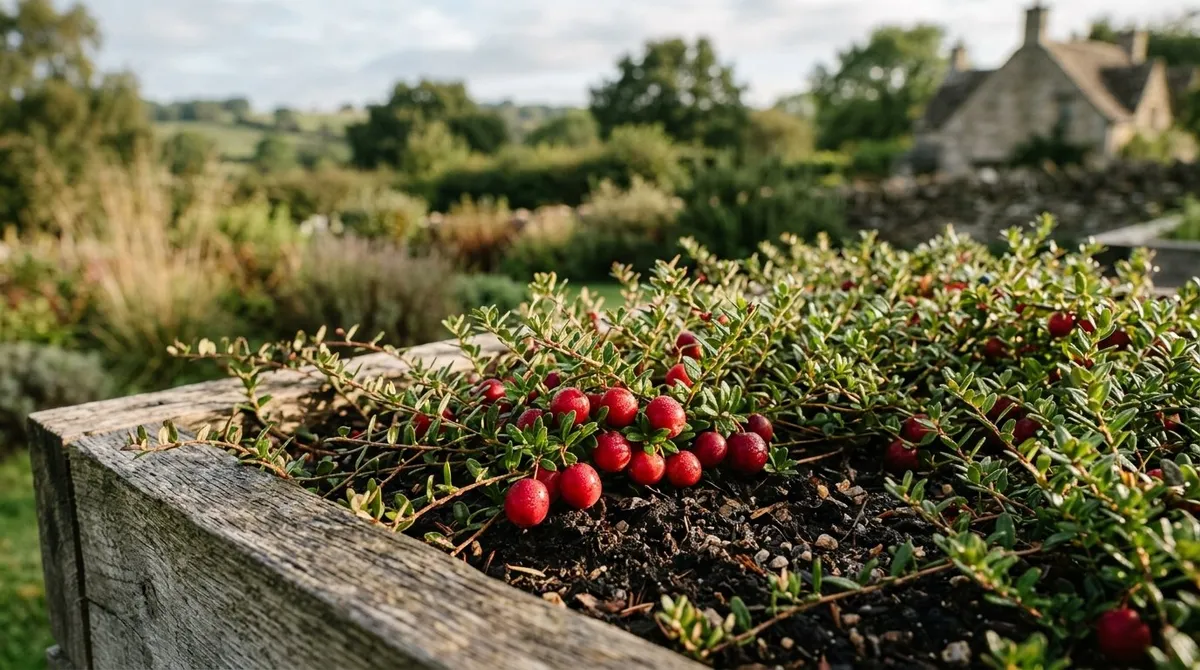
The plants themselves are low, wiry and evergreen, a bit like a creeping heather. The small leaves go a lovely bronze-purple in winter, so the pot earns its place even when it isn’t fruiting. And cold is no problem at all. Cranberries come from places with far harsher winters than ours.
Which cranberry varieties grow best in the UK?
The American cranberry (Vaccinium macrocarpon) is the one to buy for fruit. It’s a cousin of blueberries and likes the same sort of conditions. You’ll usually find it sold in 9cm or 1-litre pots, either by variety or simply labelled “cranberry”.
Britain has a native cranberry too, Vaccinium oxycoccos, which creeps through boggy moorland in parts of Wales, northern England and Scotland. It’s pretty, but the berries are small and few, so it’s better for a wildlife bog than a fruit patch.
| Variety | Berry size | Good for |
|---|---|---|
| ’Pilgrim’ | Large | Pots and beds, a reliable cropper |
| ’Early Black’ | Small to medium | Colder areas, as it ripens earlier |
| ’Stevens’ | Large | Raised beds |
| ’Howes’ | Medium | Smaller pots, ripens late |
| ’Ben Lear’ | Large | Spreading as ground cover |
| European cranberry (V. oxycoccos) | Small | Wildlife and bog gardens, very sharp taste |
If you only have room for one, ‘Pilgrim’ is the easy choice. In the north of England or Scotland, ‘Early Black’ gives you a better chance of ripe berries before the first hard frosts.
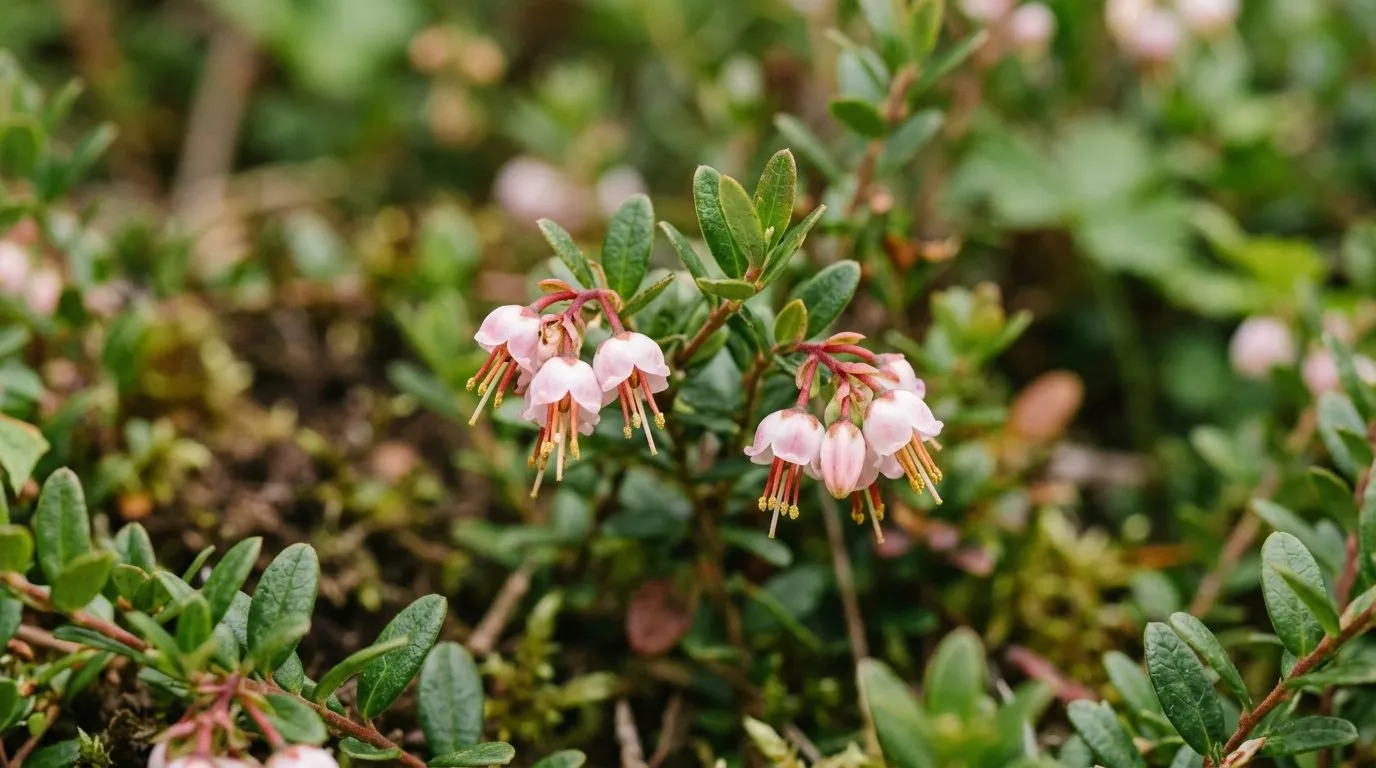 Cranberries in a raised bed of ericaceous compost. The trailing stems soon spread to cover the surface.
What soil do cranberries need?
Acid soil, and this matters more than anything else in this guide. Put a cranberry in ordinary or chalky ground and the leaves turn yellow between the veins, flowering stops, and the plant slowly gives up. Most UK garden soils simply aren’t acid enough.
So test before you plant. A soil kit from the garden centre costs a few pounds. Dig down about 10cm, take samples from two or three spots and see what colour the test goes. If it says neutral or alkaline, don’t fight it. Use a pot, or build a special bed.
To make an acid planting hole in the ground:
- Dig out about 30cm deep and 60cm wide for each plant
- Line the sides with permeable landscape fabric, which slows down your normal soil water seeping in
- Backfill with peat-free ericaceous compost and a few handfuls of sharp sand
- Each spring and autumn, scatter sulphur chips over the surface at the rate on the pack
- Add a fresh layer of composted pine bark every year
Even with all that, the surrounding soil will creep back in over time. That’s why most people find a pot easier.
How to grow cranberries in pots
A pot puts you in charge. You pick the compost, you pick the water, and the garden soil never gets a say.
Choosing the pot. Go wide rather than deep. Cranberry roots stay in the top few centimetres, so something at least 40cm across and 20 to 25cm deep is ideal. Half-barrels, wide glazed bowls and old Belfast sinks all work, as long as water can drain out of the bottom.
Fill it with peat-free ericaceous compost and mix in a little sharp sand to keep it open. Leave out garden compost, mushroom compost and anything with lime in it, as each of these makes the mix less acid.
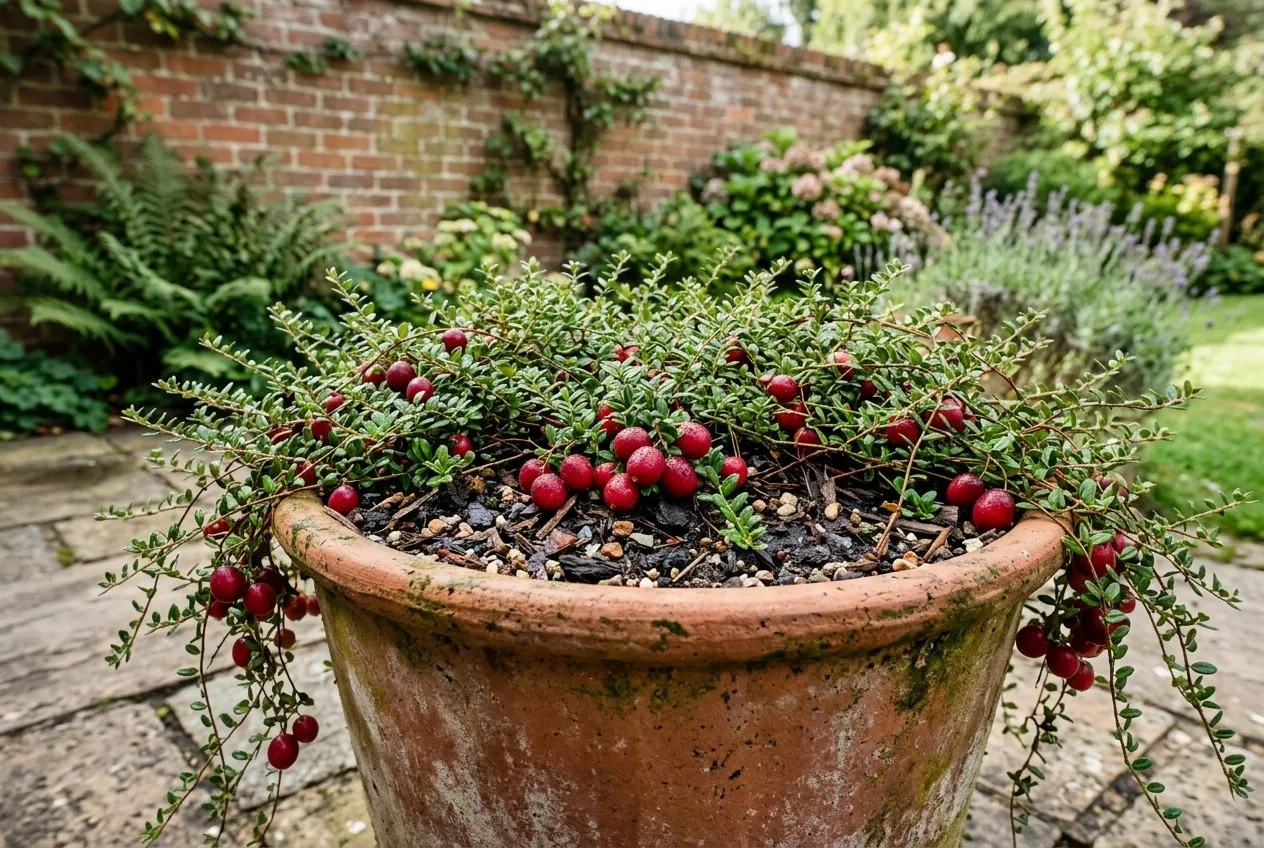 A cranberry trailing over the edge of a terracotta pot. In a pot, you control the compost and the water.
One plant fills a 40cm pot; a half-barrel takes three. Set each one at the same depth it was growing in its nursery pot, firm it in and water well. A thin layer of pine bark on top helps hold the moisture in.
Stand the pot somewhere sunny if you can. Cranberries cope with light shade, but you’ll get more flowers and berries in sun.
Watering is where most pot-grown cranberries go wrong. The compost should stay damp all the time. In a warm spell that means checking every day, and in a heatwave, possibly twice. Use rainwater, because tap water in hard-water areas like London, the South East and East Anglia carries lime that slowly undoes the acid compost. If you live somewhere with soft tap water, such as much of Scotland, Wales or the Lake District, tap water is less of a worry in a dry spell. A water butt is still the best friend a cranberry can have. Our guide to growing fruit in containers covers the basics of looking after fruit in pots.
Feeding is light. Once a month from April to August, give a liquid ericaceous feed (the kind sold for blueberries and camellias) at half strength. Overdo it and you get a mat of leaves with very few berries. Stop in August so the new growth firms up before winter.
Trimming takes five minutes. In early spring, snip off any long runners that have wandered over the edge of the pot. Leave the short upright shoots alone, because that’s where the flower buds for this year are waiting.
How to make a cranberry bog bed
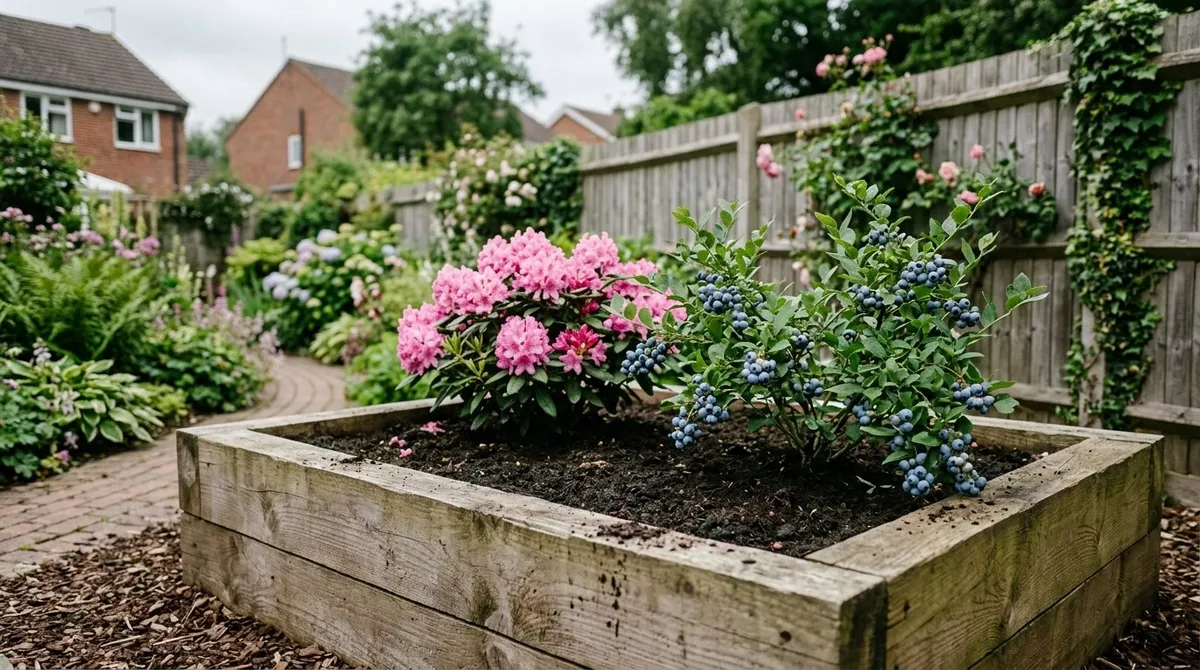
With a bit of space, a bog bed is the closest you’ll get to a cranberry’s home turf. It also suits other acid lovers, so you can plant heather and blueberries alongside.
- Dig a hole about 30cm deep and at least 1m square
- Line it with pond liner, then poke a few small holes in the base so it drains slowly rather than turning into a swamp
- Add a layer of gravel at the bottom
- Fill with peat-free ericaceous compost, sharp sand and composted pine bark
- Test the mix to make sure it’s acid before you plant anything
- Water with rainwater, ideally from a butt close by so it isn’t a chore
Plant cranberries 30cm apart, which means nine plants in a 1m square bed. Within two or three years the runners knit together into a low, glossy carpet of berries.
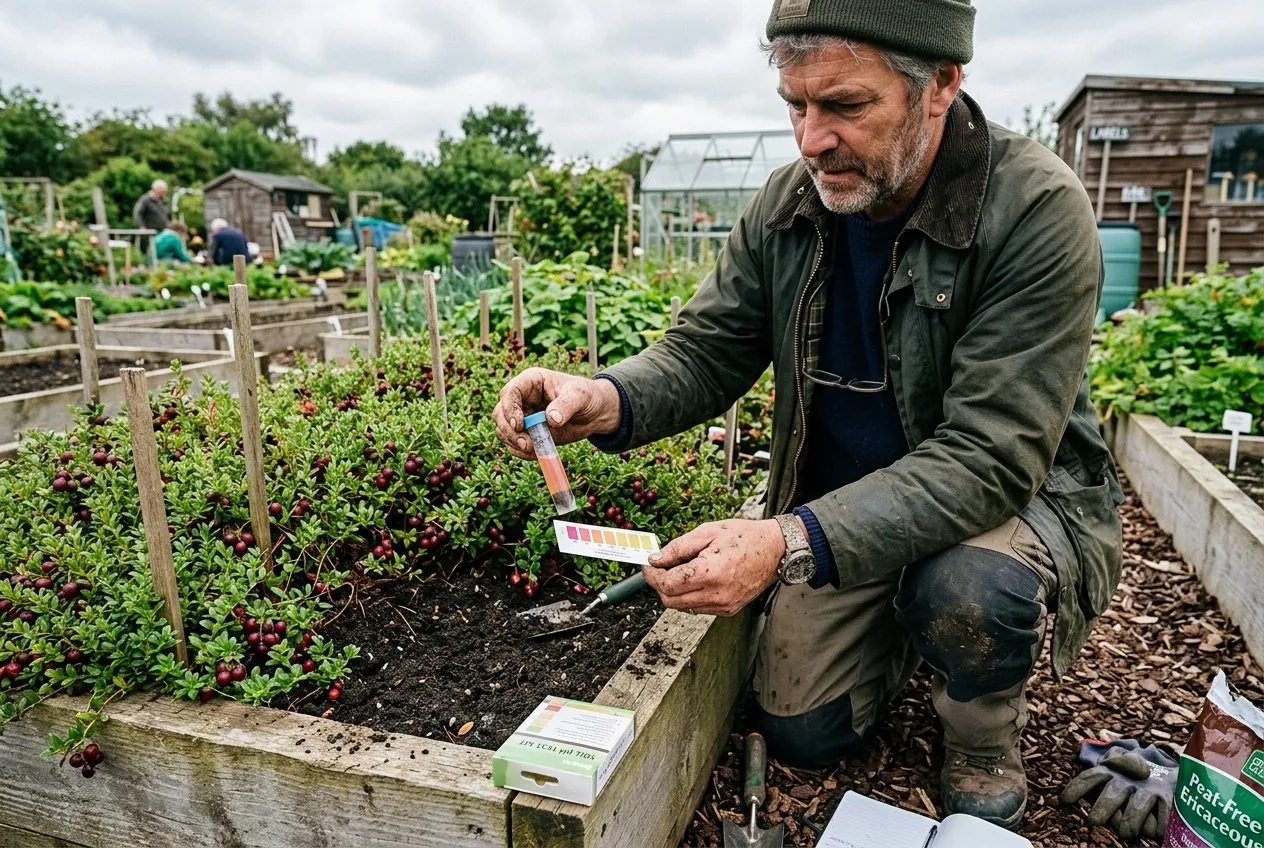 Checking the soil now and then helps you spot it becoming less acid before the plants suffer.
Cranberry care month by month
| Month | What to do |
|---|---|
| January | Check any stored berries. Order new plants. |
| February | Top up pots with a little fresh ericaceous compost. Test the soil. |
| March | Plant new cranberries. Trim straggly runners. |
| April | Start the monthly half-strength feed. Water regularly. |
| May | Peg a few runners onto the compost so they root and thicken the plant. |
| June | Small pink flowers appear. Leave them to the bees. |
| July | Water daily in hot spells. Keep an eye out for vine weevil notches on leaves. |
| August | Stop feeding mid-month. Berries start to colour. Treat pots for vine weevil. |
| September | Start picking early varieties like ‘Early Black’. |
| October | Main harvest for ‘Pilgrim’ and ‘Stevens’. Pick everything before hard frosts. |
| November | Clear fallen leaves. Mulch beds with pine bark. |
| December | Plants are resting and fully hardy. Just don’t let pots dry out. |
Those June flowers are worth a proper look. Each one hangs down with its petals swept back, which is supposed to resemble a crane’s head and neck. Early settlers called it the “craneberry”, and the name stuck.
How to pick and store cranberries
Cranberries ripen from September to November, depending on the variety and how far north you are.
Wait until the berries are deep red all over. Pale or white-shouldered ones need longer. There’s an old test that actually works: drop a berry on the patio. A ripe one bounces, thanks to the little air pockets inside. That’s why some growers in America still call them bounceberries.
Pick by hand, or run a wide-toothed comb through the runners to strip the berries off. Handle them gently, as bruised berries go soft quickly.
Unwashed cranberries keep for several weeks in the fridge in a paper bag. Sort through them every so often and throw out any soft ones. For longer storage, spread them on a tray, freeze them, then tip them into bags. They go straight from the freezer into the pan. You can also dry them slowly in a dehydrator, or a very low oven with the door propped open, and keep them in a jar for baking.
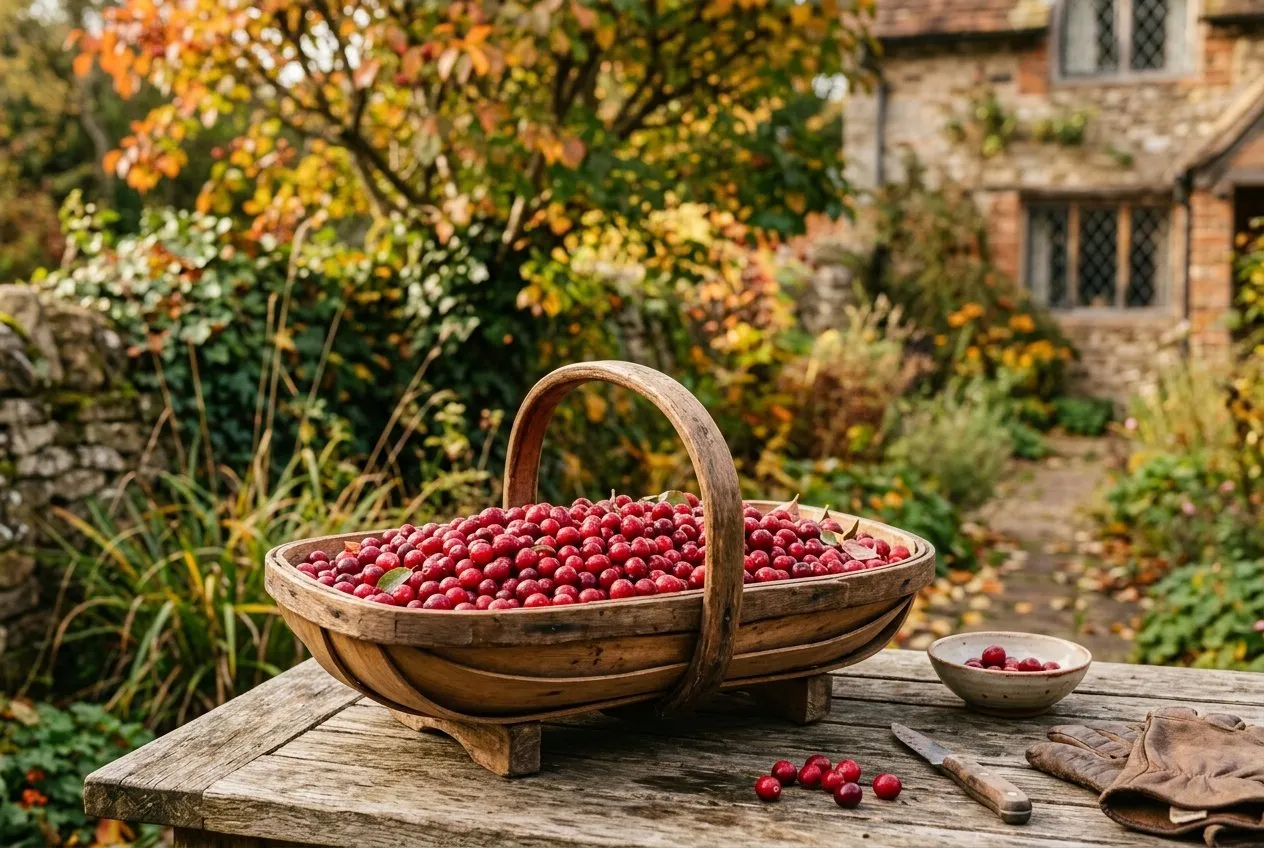 A trug of home-grown cranberries. They freeze well and make lovely sauce, juice and dried fruit.
Common cranberry growing mistakes
Using multi-purpose compost. It isn’t acid enough, and this is the single biggest reason cranberries fail. Always use ericaceous.
Topping up with hard tap water. In a hard-water area the lime builds up slowly. Over a year or two the leaves yellow and the crop drops off, and it’s easy to blame the plant. Use rainwater.
Letting the pot dry out. These are bog plants. A couple of hot, dry days can damage the fine roots near the surface. A bark mulch helps, and so does standing the pot out of the fiercest afternoon sun.
Planting too deep. Keep the plant at the same level it was in its nursery pot. The runners should lie on top of the compost, not under it.
Giving up too early. No berries in the first summer is completely normal. A few in year two and a proper crop in year three is the usual pattern.
Forgetting vine weevil. The C-shaped white grubs eat roots over winter and can kill a potted cranberry by spring. Water on a nematode treatment in late summer or early autumn while the compost is still warm. Our container vegetable growing guide has more on keeping vine weevil out of pots.
Good partners and ways to use cranberries
Cranberries share their taste in soil with several other plants, so it makes sense to grow them together in one acid bed or a group of pots. Lingonberries are probably the best match, with almost identical care.
- Blueberries like the same compost and make a taller backdrop for low, trailing cranberries
- Lingonberries are another acid-loving fruit you can grow right alongside
- Heathers keep the bed looking good all year and feed bees in late winter
- Rhododendrons and azaleas enjoy the same conditions and bring spring colour
Keep cranberries well away from anything that likes chalky soil, and never put wood ash, mushroom compost or lime near them.
Raw cranberries are too sharp for most people. Cooked, they’re another story: sauce for the turkey, juice, chutney with apple and onion, or dried berries for flapjacks. The RHS guide to growing cranberries is a handy extra read if you want more detail.
For more ideas on what shares an acid bed nicely, see our companion planting guide.
Now you know how to grow cranberries, why not try growing strawberries too? They’re another easy, rewarding berry for UK gardens.
Frequently asked questions
Can you grow cranberries in the UK?
Yes, and frost won’t trouble them at all. The two things that do are lime and dry roots. Put them in a pot of ericaceous compost, top it up with rainwater, and they’re one of the easier fruits you can grow.
What soil do cranberries need to grow?
Properly acid soil, the same as blueberries. In ordinary or chalky ground the leaves go yellow between the veins and the plants dwindle. A cheap test kit will tell you what you’ve got. If it isn’t acid, use a pot or a lined bed of peat-free ericaceous compost with a bit of sharp sand.
How long do cranberries take to fruit?
Two to three years from planting. Year two usually brings a small handful, and by year three the runners have filled the pot and you get a proper bowlful. Happy plants carry on cropping for many years after that.
Do cranberries need to grow in water?
No, they don’t. The flooded fields you see on TV are only flooded at harvest time, because the berries float and are easy to scoop up. At home the compost should feel like a wrung-out sponge. Roots sat in standing water will rot, so pots still need drainage holes.
When should I plant cranberries in the UK?
March to May is best. Roots get a whole season to settle before winter. You can plant pot-grown cranberries in September or October too, though they’ll sit quietly until spring. Allow 30cm between plants in a bed, or one plant to a 40cm pot.
Can I grow cranberries in a container?
Yes, and for most gardens it’s the best way. Use a wide, shallow pot at least 40cm across and 20 to 25cm deep, filled with peat-free ericaceous compost and a little sand. Give it sun or light shade, rainwater, and a half-strength ericaceous feed once a month from April to August.
What pests and diseases affect cranberries in the UK?
Not many. Vine weevil is the one to watch, because its grubs eat the roots of potted plants between autumn and spring. Water on a nematode treatment in late summer or early autumn. In a soggy autumn some berries may go mouldy, so water the compost, not the leaves.
Our team produces practical UK gardening guidance from source research, contributor records and established horticultural practice. Editorial standards are overseen by Matt W.