
Key takeaways
- Winter heath (Erica carnea) copes with chalky soil, so it's the one for chalk or limestone gardens
- Ling and bell heather need acid soil, like blueberries and rhododendrons
- Never cut into old bare wood, as heather won't grow back from it
- Plant in groups of five or more for a good show and plenty of food for bees
- Poor, free-draining soil gives the best plants, so don't feed them much
Heather is one of the most reliable plants you can grow in a UK garden. It gives colour in almost every month, keeps weeds down, needs hardly any feeding and feeds bees from midwinter right through to autumn. There are three main types, and at least one of them will suit your garden, whatever your soil.
What are the three types of UK heather?
Knowing the three types helps with everything else: soil, timing, varieties and what to plant them with.
Calluna vulgaris, ling heather
Ling heather is the native moorland heather that turns Scottish hillsides purple in late summer. It flowers from August to November, with small flowers packed along upright stems. Plants grow 20-60cm tall and spread into a thick mat that smothers weeds.
It needs acid soil and won’t survive in neutral or chalky ground. In the wild it grows on poor, windswept moors, so rich soil makes it floppy with fewer flowers. Ling heather comes in the widest range of leaf colours, from gold and orange to silver and dark green. That means it looks good all year, even when not in flower.
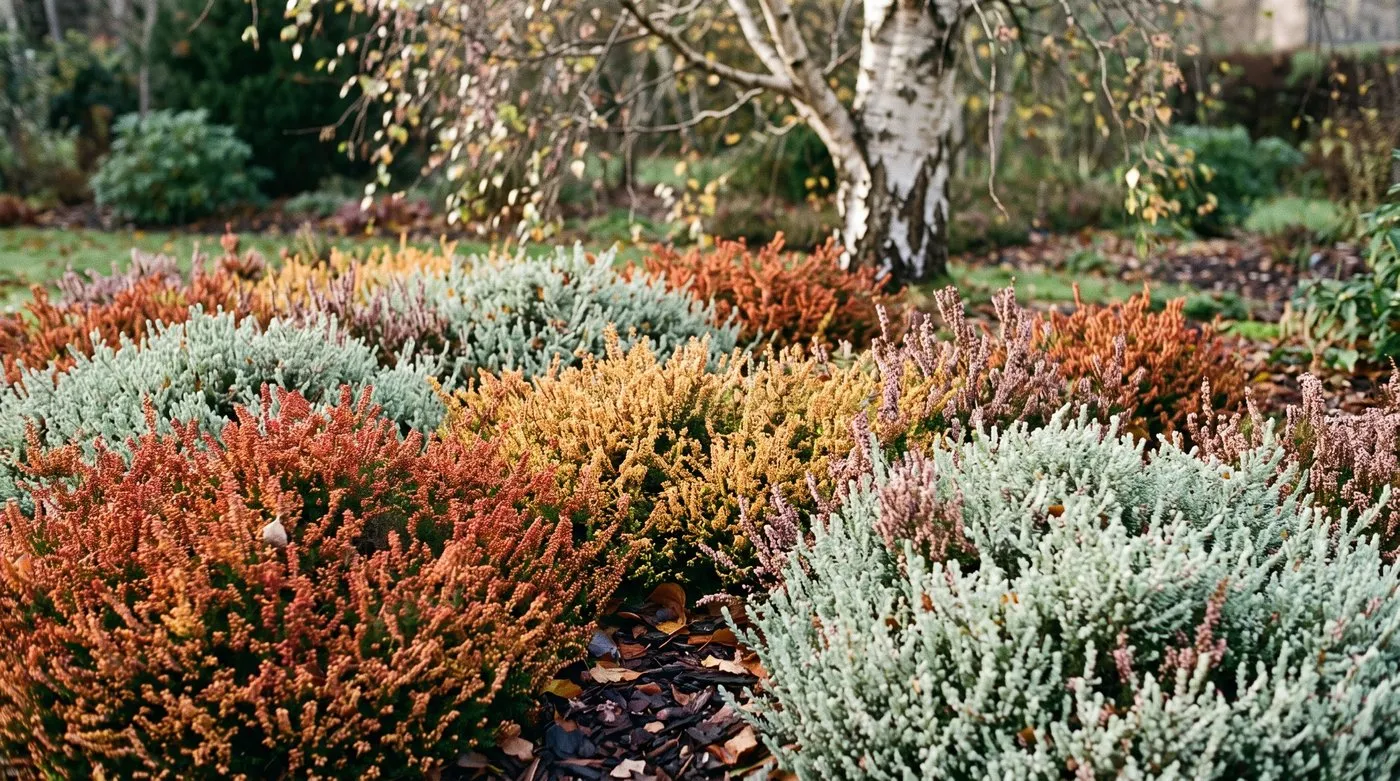
Ling heathers with coloured leaves look good long after flowering. ‘Firefly’ turns brick-red as the weather gets colder.
Erica carnea, winter heath
Winter heath is the easiest of the three because it copes with chalky soil. If your garden is on chalk, limestone or heavy clay that isn’t acid, this is the heather for you. It flowers from December to April, just when little else is in bloom. The little bell-shaped flowers come in white, pink and deep magenta.
Plants stay low, under about 25cm, but spread wide. That makes them lovely ground cover and edging for winter borders. They’re fully hardy and need no protection. For more winter colour, see our guide to the best winter flowering plants for UK gardens.
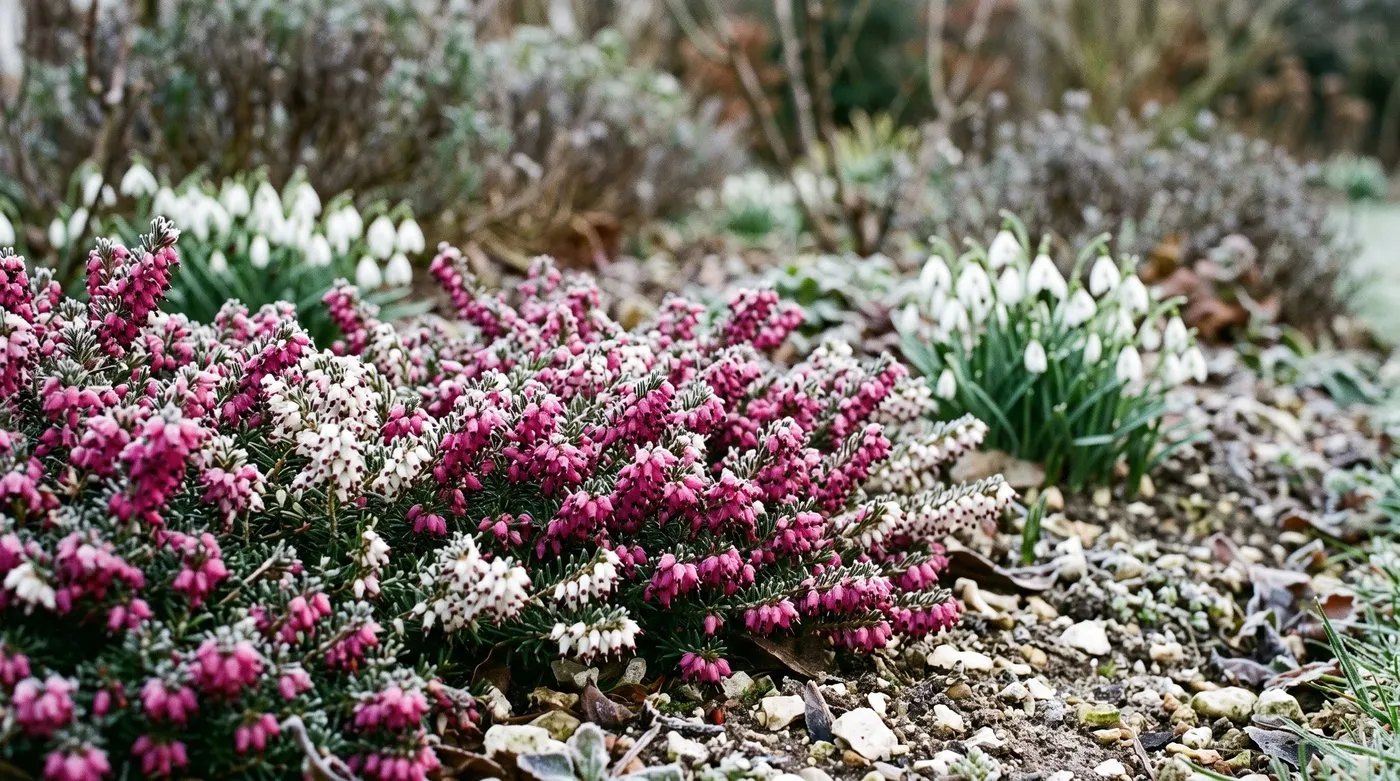
Winter heath copes with chalky soil and flowers from December to April. It’s a welcome meal for early bumblebees on mild days.
Erica cinerea, bell heather
Bell heather is the most compact and has the brightest colours: vivid purple, magenta and crimson. It flowers from June to September, bridging the gap between the other two. Like ling heather, it needs acid soil.
It grows wild on sandy, gravelly heaths in southern England and copes well with dry spells once settled in. That makes it a good choice for drought tolerant planting on light, free-draining soil. Plants reach about 20-35cm.
Which heather varieties are best for UK gardens?
Named varieties give you plants you can rely on. These are popular, proven choices. The RHS heather guide lists more of its award winners by season.
| Variety | Type | Flower colour | Leaves | Flowers |
|---|---|---|---|---|
| ’Dark Beauty’ | Ling | Deep crimson-purple | Dark green | Aug to Oct |
| ’Firefly’ | Ling | Mauve | Red-orange in winter | Aug to Sept |
| ’Silver Knight’ | Ling | Mauve-pink | Silver-grey | Aug to Sept |
| ’Gold Haze’ | Ling | White | Golden yellow | Aug to Sept |
| ’Springwood White’ | Winter heath | White | Bright green | Jan to Apr |
| ’Myretoun Ruby’ | Winter heath | Deep ruby-red | Dark green | Jan to Mar |
| ’Winter Beauty’ | Winter heath | Pink | Bright green | Nov to Mar |
| ’Kramer’s Rote’ | Winter heath | Magenta | Bronze-green | Dec to Mar |
| ’Purple Beauty’ | Bell heather | Rich purple | Dark green | Jun to Sept |
| ’Pink Ice’ | Bell heather | Clear pink | Dark green | Jun to Aug |
Ling heathers with coloured winter leaves, like ‘Firefly’, which turns brick-red in the cold, give you a second season of colour. The colour gets stronger in cold weather and full sun.
What soil and conditions does heather need?
All three heathers like the same things: sun, good drainage and poor soil. The big difference is how acid the soil needs to be.
Full sun: at least six hours a day. In shade, heather flowers poorly, grows leggy and fades away within a few years. An open, sunny border or a south or west-facing bank is perfect.
Free-draining soil: heather roots sit near the surface and rot in soggy ground. Sandy and gravelly soils are perfect as they are. On heavy clay, dig in plenty of grit and raise the bed a little above the ground around it. Our guide on how to improve clay soil has more tips.
Poor soil: it sounds odd, but it matters. Heather comes from poor moorland, and rich soil gives leaves rather than flowers. Skip the manure, fertiliser and rich compost. On very poor sand, a light ericaceous liquid feed in spring is plenty for ling and bell heather.
Acid soil for ling and bell heather: test your soil with a cheap kit before planting. If it isn’t acid, mixing in ericaceous compost helps a little, but it’s easier to grow winter heath instead. Or grow the acid-lovers in raised beds or big pots of ericaceous compost.
How and when to plant heather
Plant in autumn (September to November) or spring (March to May). Autumn planting gives the roots time to settle before summer. Avoid frozen or waterlogged ground.
Buy potted plants from a garden centre or heather nursery. Choose compact, bushy plants with flower buds rather than open flowers, so the show is still to come.
Plant in groups of five or more of the same variety. One heather on its own looks a bit lost. A drift of seven or nine, or a mix of colours of a similar height, gives that lovely sweeping effect. Space plants 30-45cm apart.
How to plant: Dig a hole twice as wide as the root ball and tease out any circling roots. Set the plant slightly deeper than it was in its pot, which helps the lower stems root. Firm gently and water well. Mulch with pine bark to keep moisture in and the surface acid for ling and bell heather.
Heather looks great with other acid-lovers. Blueberries like the same soil, as do rhododendrons, azaleas and pieris. Heather also mixes well with grasses, conifers and other bee-friendly plants. Our companion planting guide has more ideas for good neighbours.
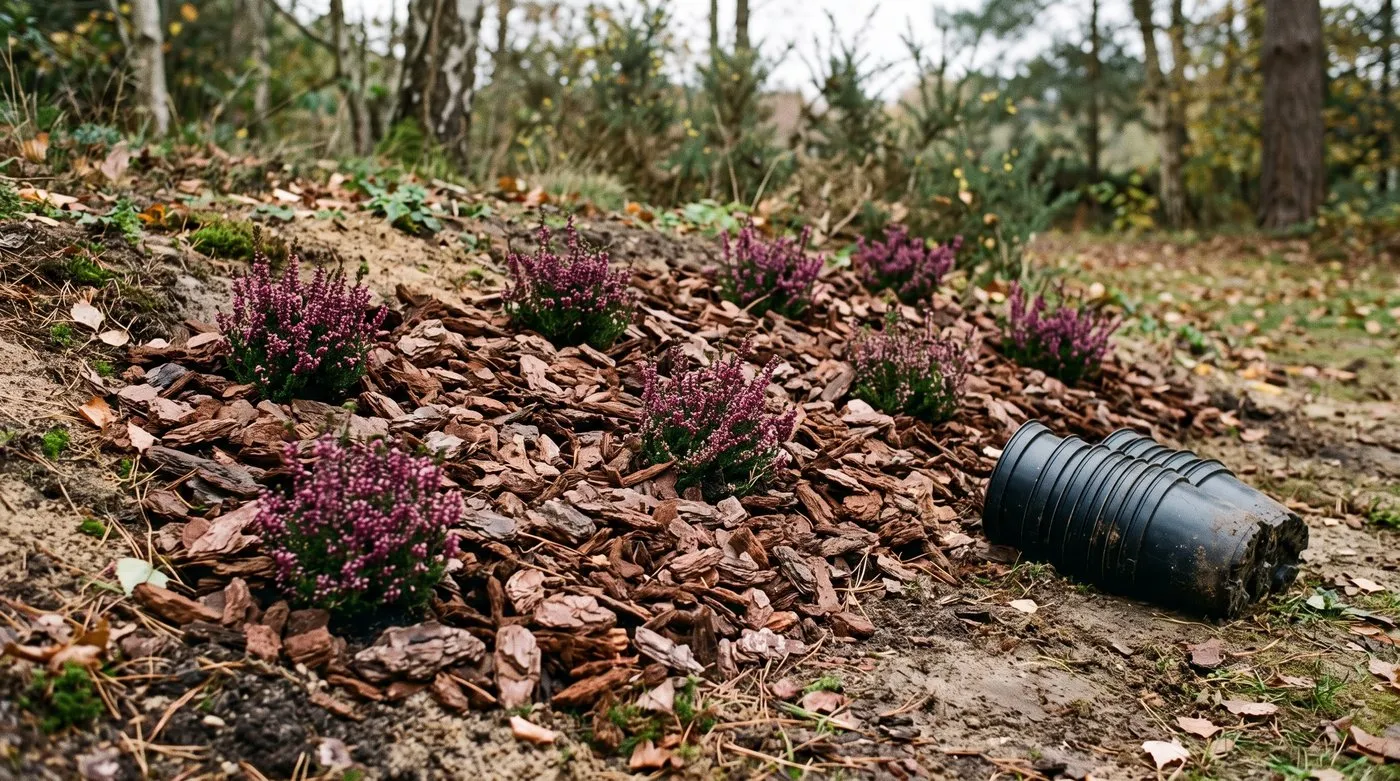
Plant heathers in groups of five or more of one variety for a proper sweep of colour. A pine bark mulch keeps moisture in.
How do you trim heather without killing it?
Heather is just like lavender: trim off this year’s soft growth, but never cut into old bare wood below the leaves. Heather can’t grow back from leafless stems, so cutting too hard leaves permanent bald patches.
- Ling heather (Calluna): Trim in early spring, before new growth starts. Take off the old flower spikes and a little of the soft top growth.
- Winter heath (Erica carnea): Trim in spring, just after the flowers fade. Take off the old flowers and a little growth, keeping plenty of leafy stems.
- Bell heather (Erica cinerea): Trim in early spring, like ling heather. Shear lightly to remove old flowers and shape the plant.
Garden shears make it quick. Work across the plant to make a soft dome. Afterwards it should look a bit lower and tidier but still fully covered in leaves. If you can see bare brown wood, you’ve gone too far. A light trim every year from the start stops plants ever getting too woody.
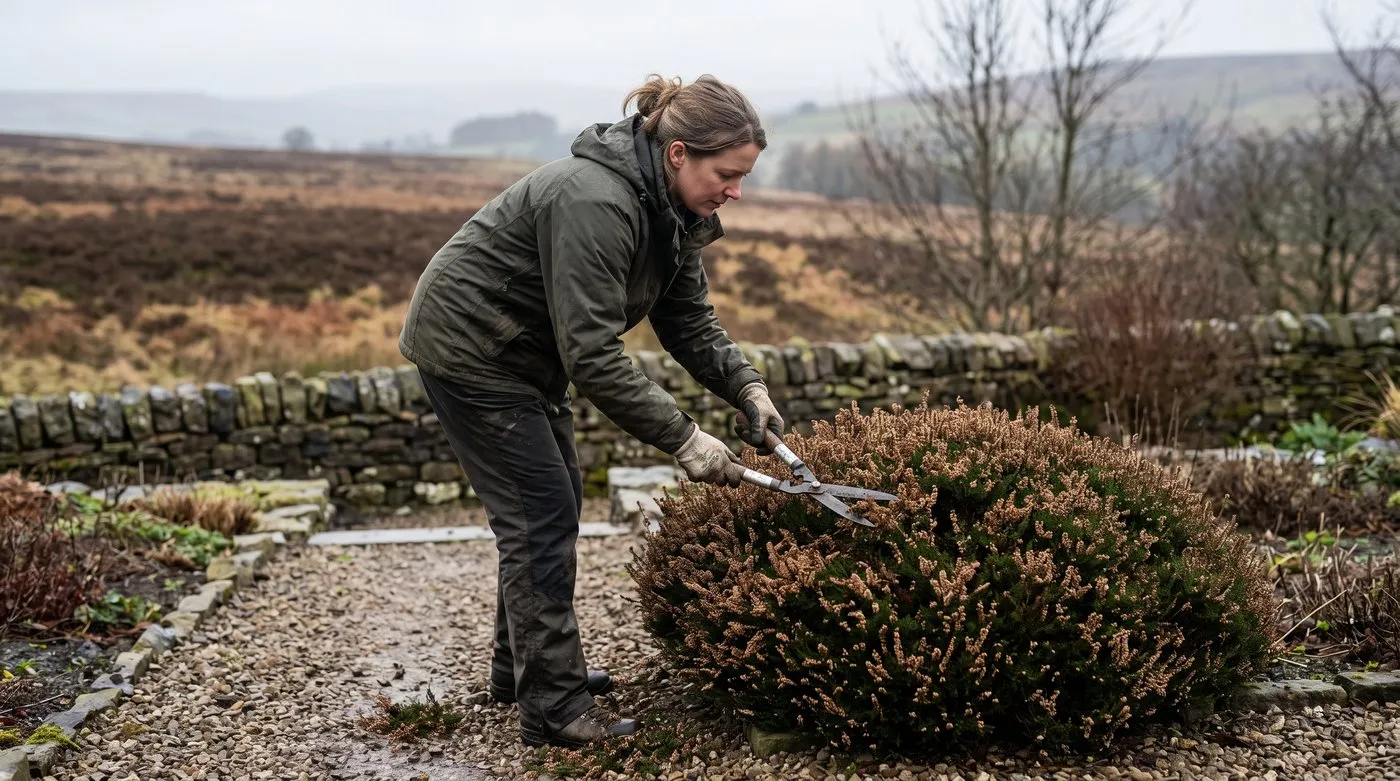
Trim off the old flowers and a little soft growth, but never cut into bare brown wood. Heather won’t grow back from it.
Month-by-month heather care calendar
| Month | What to do |
|---|---|
| January | Winter heath in full flower. Check for plants lifted by frost and firm them back in. |
| February | Firm in any frost-lifted plants. |
| March | Trim ling and bell heather. Top up the pine bark mulch. |
| April | Trim winter heath once its flowers fade. Plant new heathers. |
| May | Plant new heathers. Water new plants in dry spells. |
| June | Bell heather starts flowering. Keep an eye on new plants in dry weather. |
| July | Bell heather at its best. Established beds don’t need watering. |
| August | Ling heather starts flowering. Bees love it. |
| September | Ling heather in full flower. |
| October | Plant new heathers for autumn. Ling heather fading. |
| November | Ling heather leaves colour up in the cold. Plant before hard frosts. |
| December | Winter heath starts to open. ‘Firefly’ and similar ling heathers at their most colourful. |
Why is heather important for bees and wildlife?
Heather is one of the best garden plants for wildlife. Ling heather flowers from August to November, when most summer flowers are over. That late nectar helps bumblebees and honeybees stock up for winter. Heather honey is a real British treat.
Winter heath does the same job at the other end of the year. Flowering from December to April, it feeds early bumblebee queens on mild days in January and February. Very few garden plants offer food then, so even a small group of winter heath makes your garden much more useful to bees.
Heather also gives shelter to small birds, spiders and beetles. Its dense mat of stems is just what ground-dwelling insects need.
For more seasonal planting ideas, our spring gardening jobs guide covers border preparation and planting timings that work well alongside a heather bed.
Frequently asked questions
Can I grow heather in alkaline soil?
Yes, if you choose winter heath, Erica carnea. Ling heather and bell heather both need acid soil. On chalky soil, grow Erica carnea varieties such as ‘Springwood White’ or ‘Myretoun Ruby’. Or grow the acid-lovers in pots or raised beds filled with ericaceous compost, and water them with rainwater.
When should I trim heather in the UK?
Trim ling and bell heather in early spring, before new growth starts. Trim winter heath in spring, as soon as its flowers fade. Use shears to take off the old flower heads and a little of the leafy growth. Never cut into bare brown wood, as heather won’t grow back from it.
Does heather need ericaceous compost?
Ling and bell heather do, unless your soil is already acid. Winter heath (Erica carnea) is happy in any well-drained soil, including chalk. Test your soil before you buy, as wrong soil is the most common reason heather fails.
How many heather plants do I need for ground cover?
Space plants 30-45cm apart. At 30cm, about nine plants cover a square metre. Each plant spreads a fair bit over the first few years. For a bank or bed, plant drifts of five to seven or more of one variety to make a solid carpet that keeps weeds down.
Why is my heather dying in the middle?
Usually it’s been cut into old, bare wood. Heather can’t regrow from leafless stems, whether they’ve been pruned too hard or broken. Cut out the dead part and fill the gap with a new plant. To avoid it, only ever trim the soft, leafy growth.
Is heather good for bees?
Yes, it’s one of the best plants for bees. Ling heather flowers from late summer into autumn, when most flowers are over. Winter heath flowers from December to April, feeding early queen bumblebees when almost nothing else is in bloom. Even a small group makes a real difference.
How long does heather live?
With a yearly trim, heather stays neat for many years. Without trimming, plants turn woody and gappy after a few years and are hard to rescue. Trim every year, keep the soil right and don’t overfeed, and your heather will stay compact and full of flowers.
Our team produces practical UK gardening guidance from source research, contributor records and established horticultural practice. Editorial standards are overseen by Matt W.


