
Key takeaways
- Tall sedums like Autumn Joy flower from August to October and are loved by butterflies
- Creeping sedums spread fast and grow on almost no soil
- Sedum is the go-to plant for green roofs on sheds and garden buildings
- Cuttings root in a couple of weeks, no rooting powder needed
- Full sun and good drainage are a must. Wet winter roots kill more sedums than frost
Sedum is about as close to unkillable as garden plants get. From tiny mats that creep into cracks in walls to 60cm border plants with flat pink flower heads in autumn, it thrives where other plants give up.
For a tender, sculptural relative to grow in pots, see our guide to growing aeonium.
You’ll see the tall border types sold as Hylotelephium these days, including Autumn Joy, Matrona and Purple Emperor. The low creeping types keep the Sedum name. The RHS guide to Sedum lists plenty of varieties. Both groups are tough: happy in drought, hard frost and soil so poor other plants go hungry.
Which types of sedum can you grow?
There are three handy groups: tall border plants, creeping ground cover, and tiny rockery types. Knowing which is which saves you planting the wrong one in the wrong spot.
Tall border sedums
These are the showy ones. They grow 30-60cm tall with thick, fleshy stems and leaves, and big flat flower heads from August to October. The heads start pale green, turn pink or purple, then fade to a rusty brown. Leave them standing and they look great all winter.
Autumn Joy (also sold as ‘Herbstfreude’) is the most popular. It grows 45-60cm, opens salmon-pink in August and deepens to copper-red by October. Matrona has purple-tinged stems and pale pink flowers. Purple Emperor has the darkest leaves of all, a deep plum-purple on 40cm stems.
Creeping ground cover sedums
These spread into low mats 5-15cm tall and root wherever their stems touch the soil. Sedum spurium is the most vigorous, with pink, red or white flowers. Sedum album makes tight mats of little green bead-like leaves that turn red in winter.
Creeping sedums are the backbone of living green roofs on sheds and garden buildings. They have shallow roots, cope with drought and are fairly light.
Rockery sedums
The smallest sedums suit alpine troughs, rock gardens and gaps in dry stone walls. Sedum acre grows wild in the UK on cliffs, railway banks and old walls. It’s only 5cm tall, with bright yellow flowers in June and July. Sedum dasyphyllum has tiny blue-grey bead-shaped leaves. Both grow on a scraping of soil in full sun.
 Sedum acre and Sedum spurium covering a sunny rockery. They spread fast and need hardly any soil.
The best sedums for UK gardens
| Variety | Type | Looks | Best for |
|---|---|---|---|
| Autumn Joy | Tall | Pink turning copper-red | Autumn borders |
| Matrona | Tall | Pale pink, purple stems | Mixed borders |
| Purple Emperor | Tall | Dark plum leaves | Borders and big pots |
| Carl | Tall, compact | Bright pink | Patio pots |
| Angelina | Creeping | Lime-yellow, orange in winter | Pots, walls, gravel |
| Dragon’s Blood | Creeping | Red flowers, bronze leaves | Trailing over edges |
| Sedum acre | Tiny | Yellow flowers | Walls, roofs, troughs |
How to plant sedum
Plant sedum in full sun and soil that drains well. Get those two right and the rest is easy. It’s happy in poor soil, windy spots and by the sea. What it can’t stand is shade and wet roots.
Getting the soil ready
On heavy clay soil, dig in plenty of grit, about one part grit to three parts soil. Raising the bed a little helps winter drainage. Skip the compost and manure, as rich soil makes soft, floppy plants.
Creeping sedums need no prep if the ground drains well. For walls and rockeries, tuck a little gritty compost into the cracks. On green roofs, use a special sedum roof growing mix.
Planting
Plant potted sedums from March to October. Space border types 30-40cm apart and creeping types 20-25cm apart. Water in well, then leave them to it. Don’t mulch with bark or compost, as it holds damp around the base and can cause rot.
For a green roof, ready-grown sedum mats give you instant cover. Plug plants are cheaper but take a year or more to knit together.
Sedum on green roofs
Sedum is the favourite plant for green roofs on sheds and garden buildings. It’s light, shallow-rooted, keeps its leaves and copes with baking sun, drying winds and no watering. Not much else lasts up there.
 A mature sedum roof on a garden shed. A mix of types gives colour and texture all year.
Good roof sedums include Sedum acre, Sedum album, Sedum spurium, Sedum sexangulare and Sedum rupestre. Mixing five or six makes a tougher mat with colour all year.
A wet sedum roof is heavier than you’d think. Check your shed or building can take the weight before you start, and get older or flimsy structures checked first. Our green roof guide covers building and fitting one step by step.
How to take sedum cuttings
Sedum is one of the easiest plants in the world to propagate. Cuttings root in a couple of weeks, no rooting powder needed. Even a broken stem lying on bare soil will often root.
Stem cuttings (May to August)
- Cut 8-10cm stems from healthy growth with clean secateurs
- Strip the leaves from the bottom 3-4cm
- Leave the cut end to dry on a windowsill for a day, which helps stop rot
- Push the cuttings 3cm deep into half perlite, half multipurpose compost
- Water once, then leave them somewhere bright, out of hot midday sun
- Fresh growth at the tip after a couple of weeks means they’ve rooted
- Pot them up on their own after a few weeks, or plant them straight out
One big Autumn Joy plant gives you plenty of cuttings. Creeping sedums are even easier: snap off 5cm pieces and press them into gritty soil where you want them to grow.
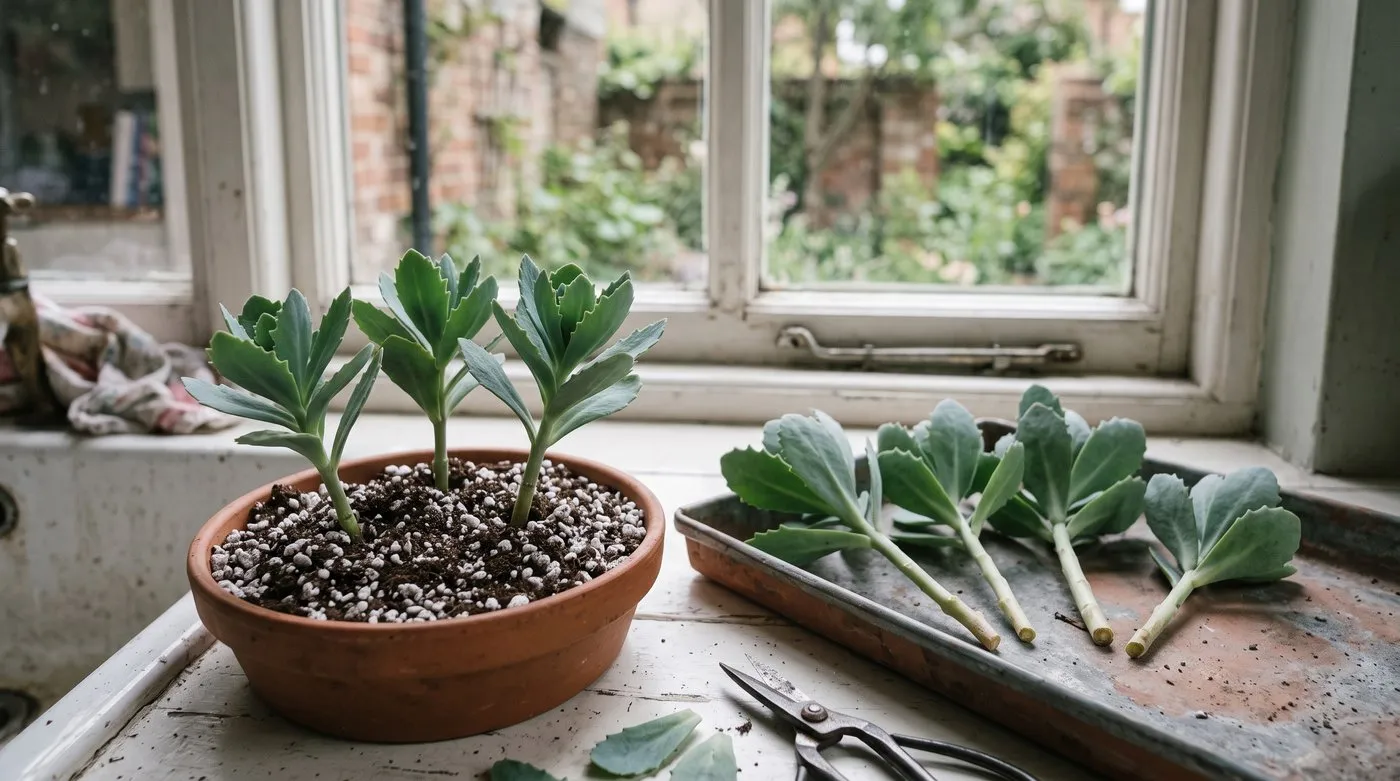
Let the cut ends dry for a day before potting, which helps stop rot. No rooting powder needed, as sedum roots in a couple of weeks.
Division (March to April or September to October)
Lift a clump of border sedum with a fork. Pull it apart into pieces, each with a few stems and roots. Replant straight away at the same depth and water once. Dividing every three or four years keeps clumps healthy and stops the middle dying out.
Sedum for bees and butterflies
Border sedums are a lifeline for late-season insects. They flower from August to October, just as summer flowers fade and insects need a last feed before winter. Red admirals, painted ladies, commas and small tortoiseshells all visit them.
 Tall sedums with ornamental grasses give shape and nectar from August until the first frost.
Bumblebees, honeybees, hoverflies and solitary bees love them too. The flat flower heads make an easy landing pad. Plant in groups of three or more and, on a warm September afternoon, a clump of Autumn Joy can be buzzing.
Sedum care month by month
| Month | What to do |
|---|---|
| January | Leave the dried flower heads standing for frost and wildlife |
| February | Cut border sedum stems down to 5cm as new shoots appear at the base |
| March | Plant new sedums. Divide big clumps. Add grit around them if needed |
| April | New growth on all types. Watch for slug damage on border types |
| May | Take cuttings. If plants flopped last year, cut stems back by a third |
| June | Creeping and rockery sedums flower. No watering needed once settled |
| July | Dragon’s Blood and other Sedum spurium types flower. Water new plants only in long dry spells |
| August | Border sedums start to colour up. Bees and butterflies arrive |
| September | Peak flowering for Autumn Joy, Matrona and Purple Emperor. Trim overgrown ground cover |
| October | Flower heads turn rusty brown. Leave them standing. Plant new sedums |
| November | Clear fallen leaves from around the plants. Check green roof drain outlets |
| December | Enjoy the frosty seed heads and plan next year |
Sedum in winter
Sedum looks good all year, not just in autumn. The dried flower heads of border types stand through winter and catch frost and snow beautifully. They look great next to ornamental grasses with their pale, bleached stems.
Leave the dead stems until late winter. They shelter insects and look their best on frosty mornings. Cut them back once new growth appears at the base in late February or early March.
Creeping sedums keep their leaves all year, and many change colour in the cold. Sedum spurium turns bronze-red, Sedum album goes bright red, and Angelina shifts from lime-green to burnt orange. A lovely bit of warmth in rockeries, pots and gravel from November to March.
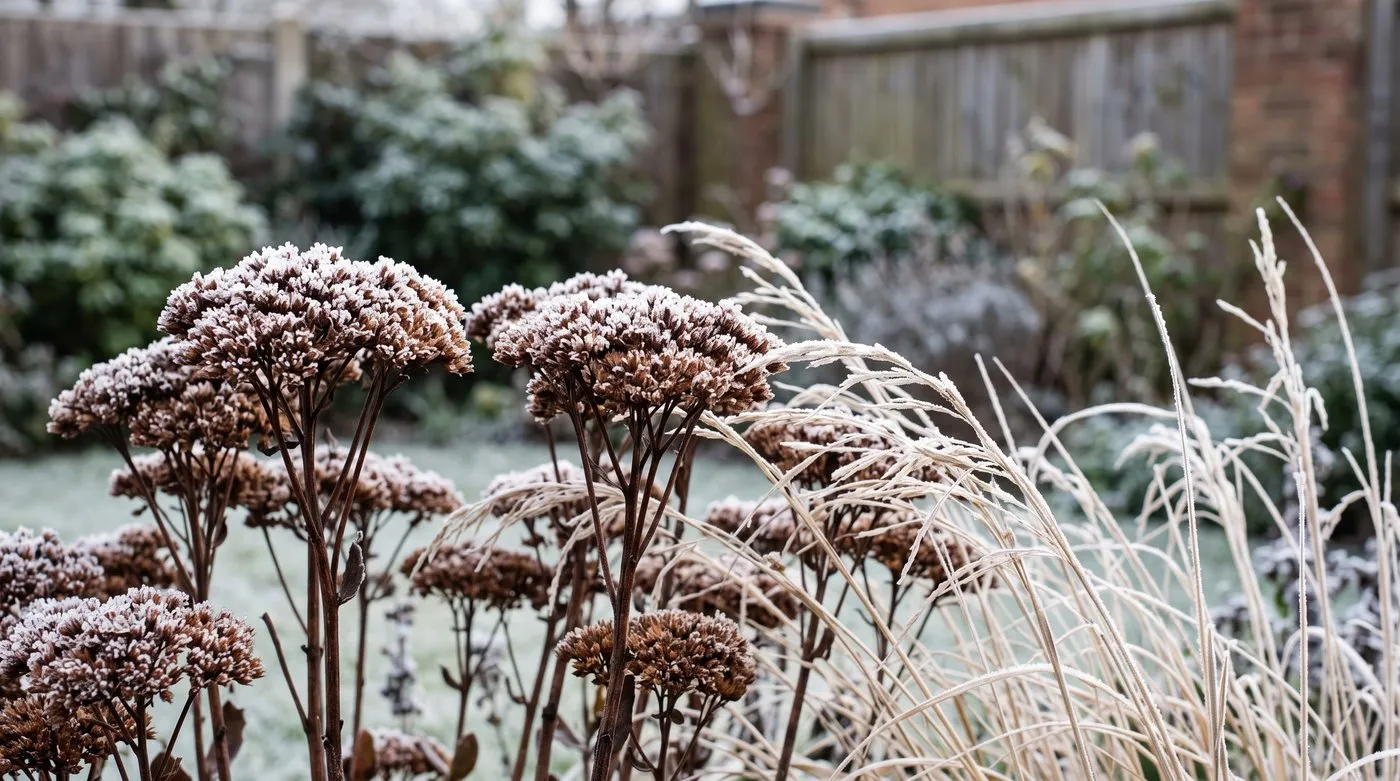
Leave the dried heads standing through winter for frosty mornings and sheltering insects. Cut them back once new shoots appear at the base.
Growing sedum in pots
Sedum is great in pots, troughs and window boxes. It’s all about drainage. Use half John Innes No. 2 and half grit or perlite, in a pot with big drainage holes. Terracotta is ideal because it dries out between waterings.
Compact border types like Carl and Purple Emperor suit big patio pots 30-40cm wide. Creeping types like Angelina and Dragon’s Blood spill nicely over the edges of bowls, troughs and raised planters.
Only water potted sedum when the compost is completely dry. That might be once a week in summer and once a month or less in winter. Winter overwatering is the most common way to lose one. A single half-strength liquid feed in April is plenty.
Common sedum mistakes
Too much water and rich soil
This is the big one. Sedum stores water in its fleshy leaves, and soggy roots soon rot, especially in winter. Always add grit to clay, and don’t mulch with bark or compost against the base. If water sits on your soil after rain, use raised beds or pots.
Planting in shade
Sedum needs at least six hours of sun. In shade, border types get thin, floppy stems and far fewer flowers, and creeping types go patchy. For a shady garden, choose shade-tolerant plants instead.
Feeding too much
Feed makes soft, leafy growth instead of flowers, and overfed sedum collapses by midsummer. Easy fix: don’t feed it. Sedum is used to thin, poor soil and does best in it.
Not dividing border types
After a few years, border clumps die out in the middle and flop outwards. Lift and divide every three or four years in spring or autumn. Replant the lively outer bits and throw away the tired centre.
Blocked drains on green roofs
When a sedum roof fails, a blocked drain outlet is usually to blame. Water pools, the growing mix stays wet, and roots rot. Check the outlets twice a year, in autumn after the leaves fall and again in spring.
Sedum for a dry, easy garden
Sedum is a natural fit for drought-tolerant garden design. Team it with lavender, ornamental grasses and ground cover plants like thyme and erigeron, and you’ll have a garden that needs almost no watering once settled.
For the driest spots of all, pair Sedum acre with houseleeks (Sempervivum) and creeping thyme in gravel or on top of a wall. All three cope with almost no soil, no watering and full sun, and all are fully hardy.
Frequently asked questions
Is sedum easy to grow in the UK?
Yes, sedum is one of the easiest plants going. It copes with drought, poor soil, hard frost and being forgotten. All it asks for is full sun and soil that drains well. Too much water and too much shade are what make it fail.
When should I plant sedum UK?
Plant sedum any time from March to October. Spring planting gives it the longest time to settle before winter. Autumn works well too, as the soil is still warm. Just avoid planting into soggy winter soil.
Can sedum grow in shade?
Not really, it needs at least six hours of sun. In shade, stems get leggy, you get far fewer flowers and the plants are more likely to rot. For a shady spot, try Epimedium or Vinca minor instead.
How do you propagate sedum?
Take 8-10cm stem cuttings from May to August. Strip the lower leaves, let the cut end dry for a day, then push it into gritty compost. They usually root in a couple of weeks without rooting powder. Dividing clumps in spring or autumn is just as easy.
Does sedum come back every year?
Yes, hardy sedums are perennials in the UK. Tall border types die back in winter and regrow from the base in spring. Creeping types like Sedum acre and Sedum spurium keep their leaves all year.
Why is my sedum flopping over?
Usually it’s too much feed, too much shade or too much water. Rich soil makes soft growth that can’t hold up the heavy flower heads. Grow it in lean soil and full sun. Cutting the stems back by a third in late May gives shorter, sturdier plants.
Is sedum good for bees and butterflies?
Yes, it’s brilliant for them. Border sedums flower from August to October, when other flowers are running out. Red admirals, commas and small tortoiseshells love them. Bumblebees, honeybees and hoverflies feed on them too.
Our team produces practical UK gardening guidance from source research, contributor records and established horticultural practice. Editorial standards are overseen by Matt W.


