Key takeaways
- Liriope is happy in dry shade under trees, where grass gives up
- Buy clump-forming Liriope muscari, not the running Liriope spicata
- Plant 30cm apart for cover in about three years
- Cut all the old leaves to the ground in late February
- Water young plants through their first two summers
- Slugs and snails leave it alone
Liriope is one of the toughest evergreen ground covers for dry shade. Often called lily turf, it’s happy in the hard ground under trees, where grass goes thin and most plants give up. Its grassy leaves stay green all year. Then from August to October, it sends up violet flower spikes just as the rest of the shady border fades. Black berries follow. It needs one cut a year, no staking and no spraying, and slugs leave it alone.
The RHS profile of Liriope muscari has the plant basics. Below is the practical bit: what to buy, how far apart to plant and how to keep it looking good.
Why liriope beats grass under trees
The ground under a big tree is the hardest spot in most gardens. The leaves block the light, the roots drink the water, and grass soon goes patchy and mossy. Liriope muscari is made for exactly this.
Its leaves are evergreen and grassy, so you get a green carpet all year. Its fleshy roots reach down below where tree roots are thickest. Once settled, it finds water deeper down and shrugs off dry spells.
It’s slower to get going than hardy geranium or periwinkle (Vinca minor). But once it’s in, it holds its ground against tree roots, and under big trees that matters more than a quick start.
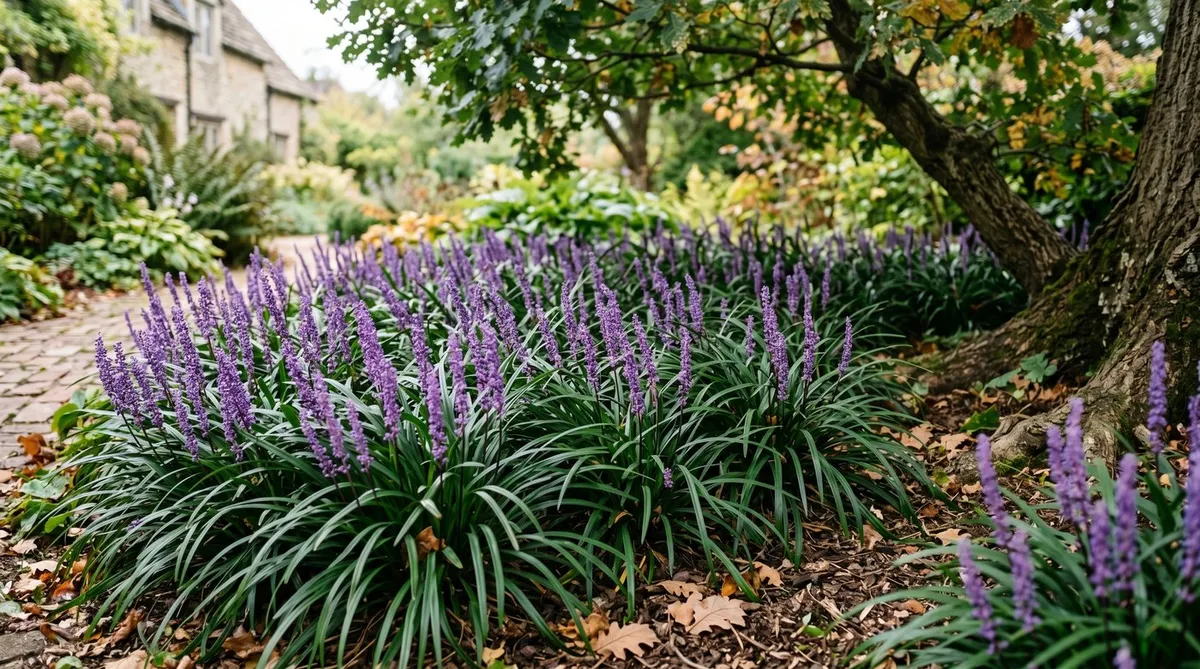
 A sweep of liriope under trees keeps the ground green where grass would struggle.
Buy the clumping type, not the runner
This is the one mistake to avoid. Two different plants are sold as liriope, and they behave very differently.
Liriope muscari forms a tidy clump that slowly widens. It stays where you put it, so it’s the one for borders, edging and ground cover.
Liriope spicata spreads by underground stems and creeps into lawns, paths and other plants. It’s fine for covering a bank fast, but not for a neat bed.
A third lookalike, Ophiopogon planiscapus (black mondo grass), is shorter and grown for its near-black leaves. Here’s how to tell them apart.
| Plant | How it grows | Height | Flowers | Best for |
|---|---|---|---|---|
| Liriope muscari | Clump, stays put | 30-40cm | Violet, August to October | Borders, edging, ground cover |
| Liriope spicata | Runs underground | 20-30cm | Pale lilac, few | Covering a bank fast |
| Ophiopogon planiscapus | Spreads slowly | Under 25cm | Small, pale | Black-leaved accent at the front |
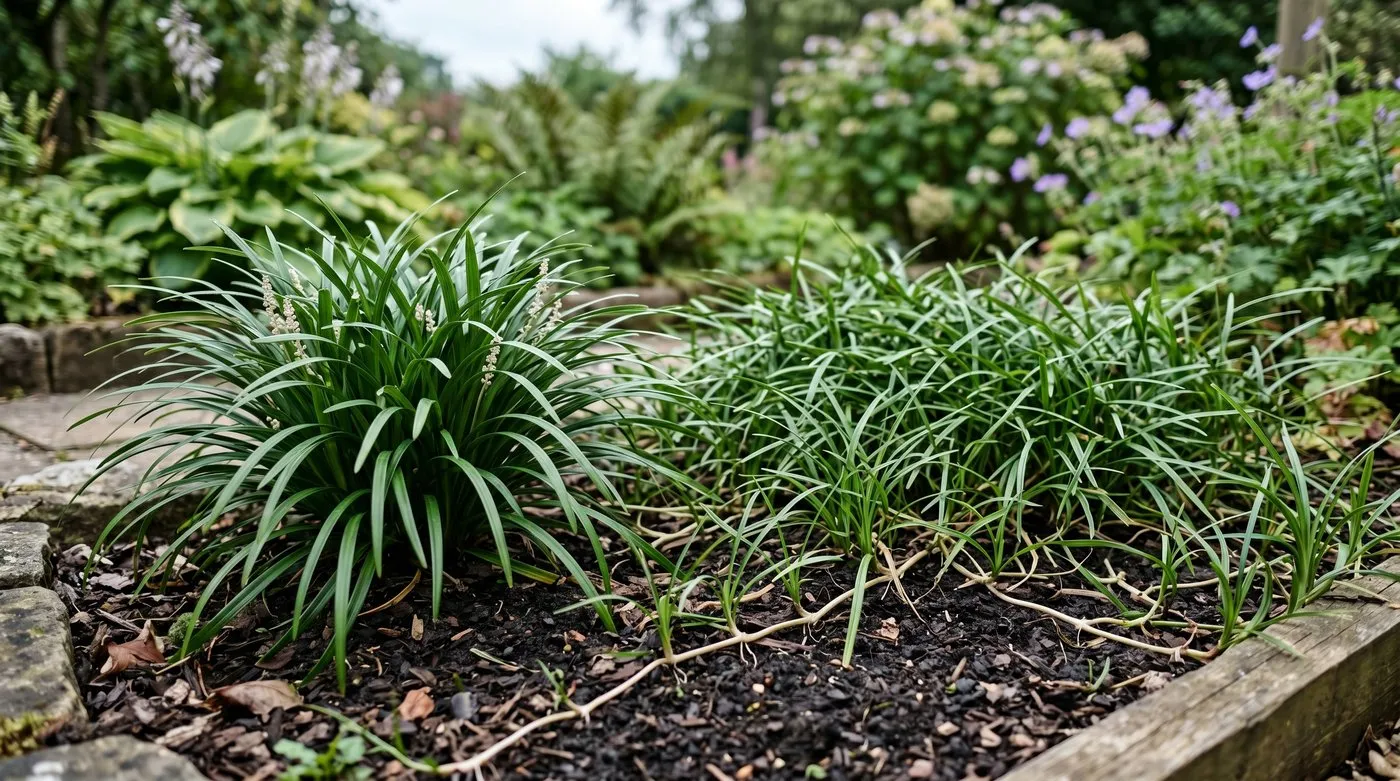 Muscari on the left stays a neat clump. Spicata on the right creeps outwards underground.
How to plant liriope for ground cover
Spacing is everything. Too far apart and weeds fill the gaps while you wait. Too close and you’ve spent more than you needed to.
For ground cover, plant 30cm apart, about four or five plants per square metre. The clumps should join up in about three growing seasons, a little longer on dry soil under a tree.
Want it quicker? Plant 25cm apart, about six per square metre. Happy to wait? Go to 35cm and save some money. For a single edging row along a path, space them 25-30cm apart.
Dig each hole as wide and deep as the pot. Sit the plant so the crown is level with the soil, not buried. Firm in, water well and mulch the whole area with 5cm of bark or leaf mould. March to May is the best time to plant, as the soil is warming up and the roots get a full season before winter.
Handy tip: Soak each pot in a bucket of water for ten minutes before planting. Dry shade soaks up moisture from a new rootball fast, and a well-watered plant settles in much better.
 A single row at 25-30cm apart makes a smart evergreen edge to a shady path.
The one job that matters: the late-winter chop
Liriope needs almost no care, but this one job is worth doing well. By February, the leaves look tatty and brown-tipped after a winter of frost and rain. Leave them and they hide the fresh growth, so the planting looks scruffy all summer.
Cut all the old leaves down to 3-5cm in late February, just before the new ones push up. Use hand shears for a few plants or a strimmer with a blade for a big area. Get the timing right and you’re cutting stubble. Leave it too late and you’ll snip the tips off new shoots, which then stay brown-ended all year.
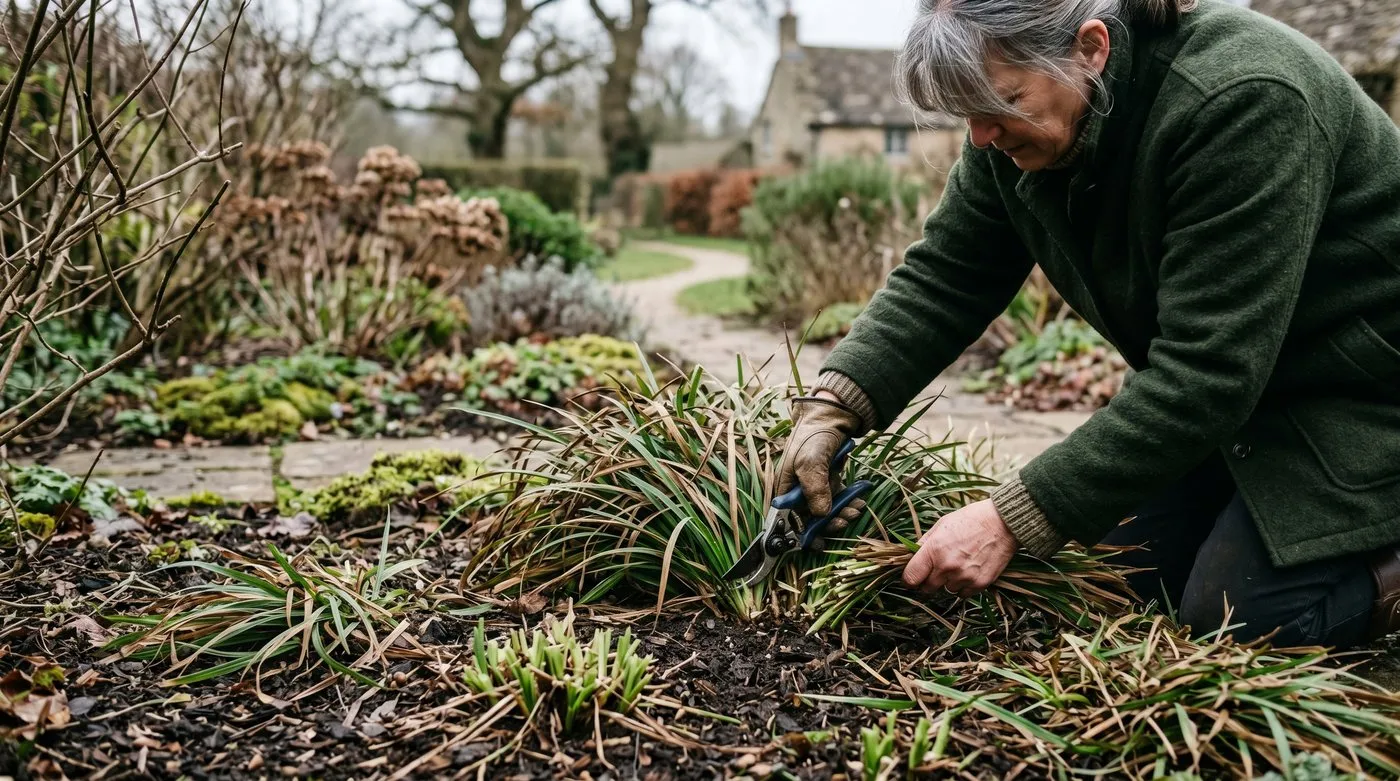 Shear the old leaves to a few centimetres in late February, before new shoots appear.
Watering, feeding, and the slow start
The hardest part is patience. Liriope is slow to settle, especially under trees, and may sit and sulk for a season. That’s normal. It’s busy growing roots first.
Through the first two summers, water every week or so in dry spells, and more in a heatwave. Tree roots will take the moisture otherwise. After that, it can look after itself.
A handful of blood, fish and bone in March is all the feed it needs. A spring mulch of leaf mould or bark feeds the soil and holds in moisture at the same time. Skip high-nitrogen feeds, which give soft leaves and fewer flowers.
And the best bit: slugs and snails leave it alone. The tough leaves don’t tempt them, so you can plant it on slug-heavy clay and forget about pellets and night patrols.
Dividing liriope to make more plants
Every four or five years, clumps get thick enough to split. Dividing keeps them growing well and gives you free plants.
Lift a clump in March or April, as growth starts. Split it with a spade, or two forks back to back, into pieces that each have several shoots and a good chunk of root. Throw away any dead, woody middle. Replant at 30cm apart, water in and mulch.
One big clump can give you several new plants. Divisions settle quicker than new pots because they already have good roots. It’s the cheapest way to cover a large area: buy a dozen plants, grow them on for a few years, then divide them across the bed.
Good to know: The black berries aren’t for eating and can cause a tummy upset if someone eats a lot. They’re not a serious hazard, but keep an eye on very young children.
Where to use liriope in the garden
Liriope is at its best as ground cover under big trees and shrubs. Plant in groups of nine or more for a natural look, and it’ll hold the soil and brighten a dull corner in autumn.
As path and border edging, it makes a neat evergreen ribbon that softens hard paving. It copes with the dry, packed soil along a path and needs just the one trim a year.
It’s also handy in shady pots and north-facing spots. Pair it with ferns, epimedium and hardy geraniums for layers of interest, or run it under taller shrubs. For more tough fillers, see our guide to ground cover lawn alternatives.
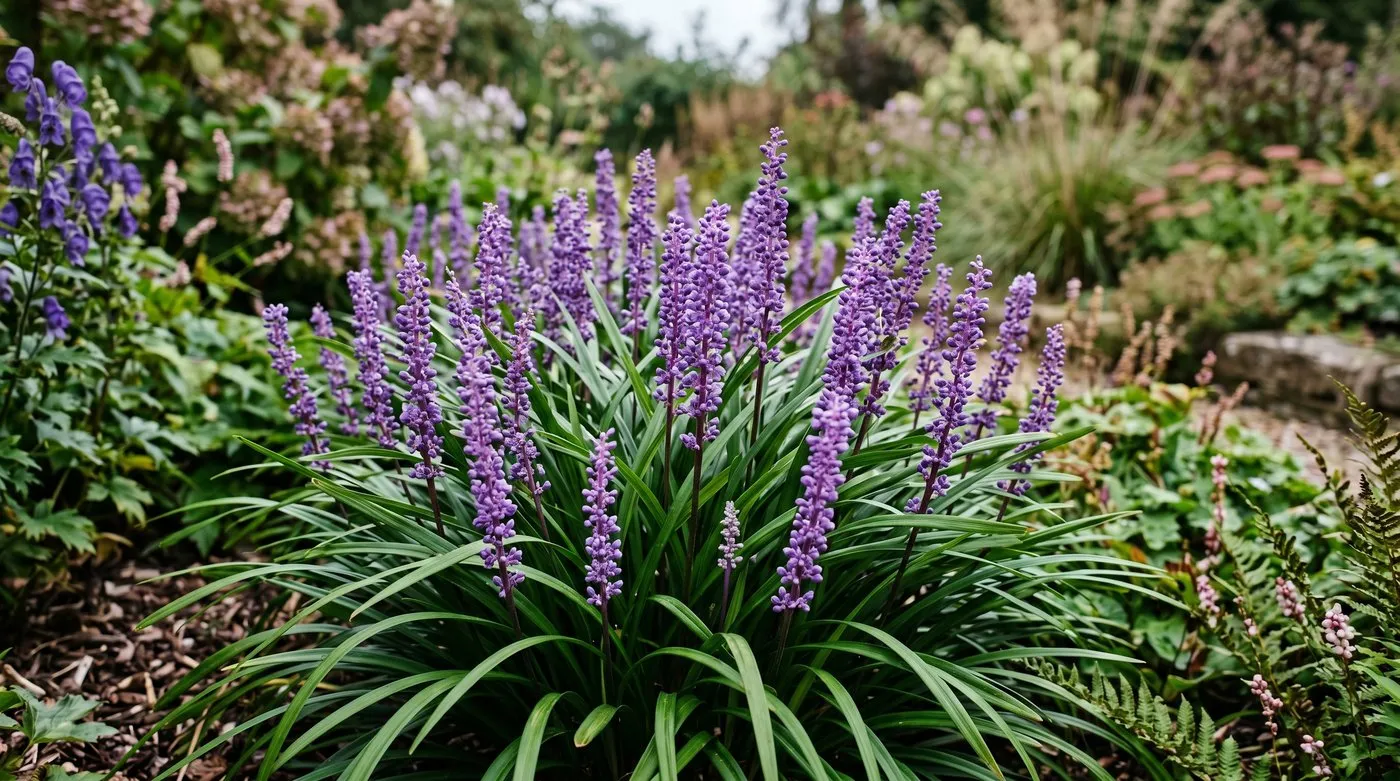 From August to October, violet spikes rise out of the green carpet just as the rest of the shade border fades.
Month-by-month liriope care calendar
| Month | What to do |
|---|---|
| January | Leave it be. The old leaves protect the crown from frost. |
| February | Cut all old leaves down to 3-5cm. The key job of the year. |
| March | New leaves appear. Add a handful of blood, fish and bone. Good month to divide. |
| April | Plant new liriope and divisions. Mulch with leaf mould or bark. |
| May | Water new plants weekly if the soil under trees is dry. |
| June | Keep young plants watered in dry spells. Older clumps cope alone. |
| July | Flower spikes start forming. Water young plants only. |
| August | Violet flowers open. No feeding or cutting now. |
| September | Still flowering. Enjoy the colour. |
| October | Flowers fade and berries form. |
| November | Clear fallen tree leaves off the clumps so they don’t smother them. |
| December | Nothing to do. Enjoy the evergreen cover. |
Common mistakes when growing liriope
Most problems come down to a few easy-to-avoid slips.
Buying the runner by mistake. Liriope spicata creeps everywhere. Read the label and buy Liriope muscari. They’re often sold side by side with nearly identical names.
Expecting quick cover. It’s slow for the first two seasons, and people often think it’s failed and dig it up. It hasn’t failed, it’s rooting. Give it three seasons.
Skipping the February cut. Leave the old leaves on and the planting looks tired all summer, with fewer flowers.
Letting young plants dry out. Under trees, a first-year plant dries out fast. Missing summer watering in the first two years is the most common reason it struggles.
Planting too deep. A buried crown can rot. Set it level with the soil, just as it sat in the pot.
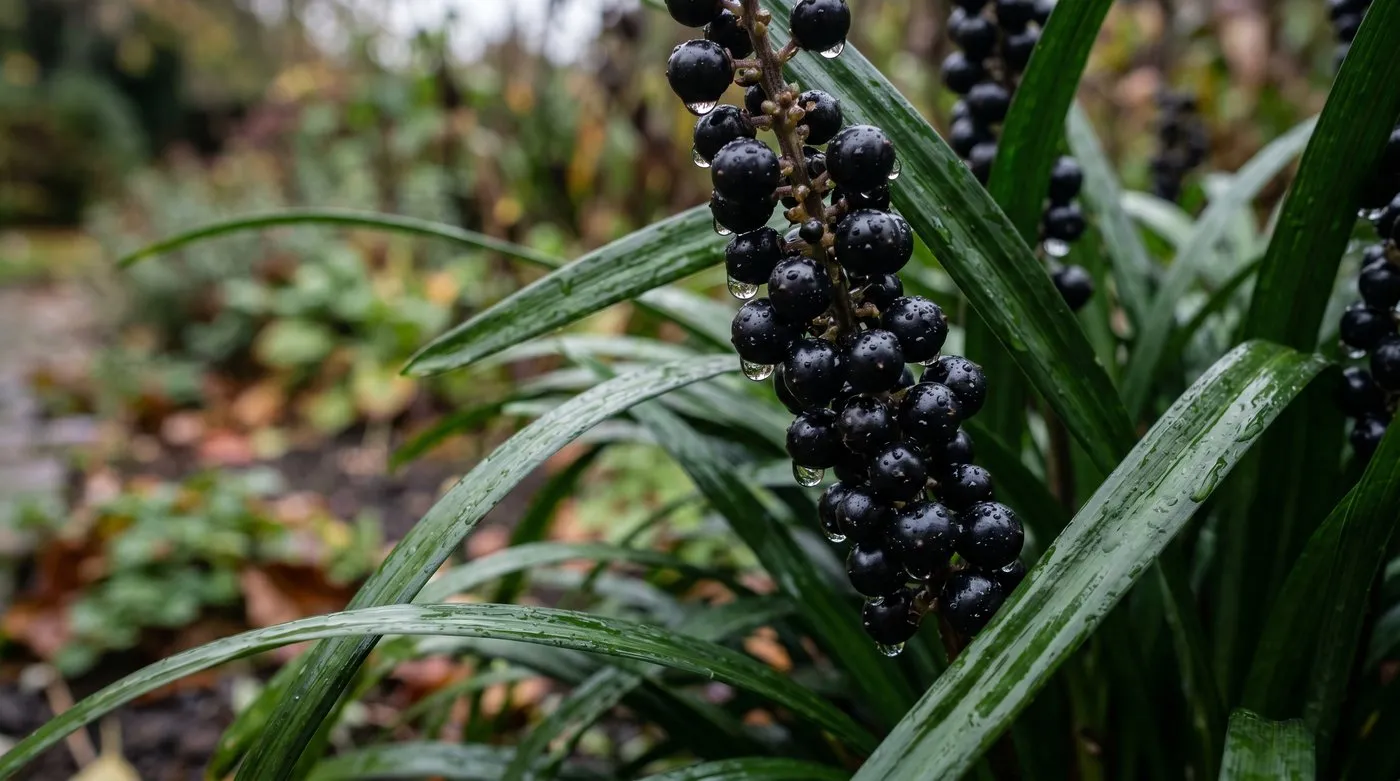 Black berries follow the flowers and hang on into winter.
Liriope compared to other dry-shade ground covers
Liriope isn’t the only choice for dry shade, but it ticks a lot of boxes. Here’s how it stacks up.
| Ground cover | Evergreen | Flowers | How it spreads | Copes with dry shade |
|---|---|---|---|---|
| Liriope muscari | Yes | Violet, late summer | Clump, stays put | Very well once settled |
| Vinca minor | Yes | Blue, spring | Runs, can swamp | Well |
| Epimedium | Partly | Yellow or pink, spring | Slow clump | Very well |
| Hardy geranium | No | Pink or blue, summer | Spreading clump | Fairly well |
| Bergenia | Yes | Pink, spring | Slow clump | Well |
| Pachysandra | Yes | White, spring | Runs | Well |
Liriope wins on the mix of evergreen leaves, autumn flowers, a tidy habit and no slug trouble. Vinca covers faster but runs and needs cutting back. Epimedium is its closest rival for a refined look. For more shade plants to layer with liriope, see our guides to growing hostas and growing heuchera.
Why pick Liriope muscari for dry shade? It gives you evergreen leaves, a tidy clump and late flowers without wandering into its neighbours. Be patient, water for two summers and cut the old leaves each February.
Bringing liriope into a wider shade scheme
Liriope works best as the evergreen base of a shady planting, with taller and seasonal plants mixed through it. Its strappy leaves look great next to broad or feathery foliage.
For contrast, plant it through a drift of ornamental grasses. For early colour before it flowers, add spring bulbs and shade shrubs such as camellias at the back. Autumn-flowering nerines go beautifully with the violet spikes.
On heavy, root-filled soil, a bit of work before planting pays off. Our guide to improving clay soil shows how to loosen it so young roots get away faster. For more ideas, browse our plants section.
Next, have a look at the best plants for clay soil to fill the rest of those tricky beds under trees.
Frequently asked questions about growing liriope
Does liriope grow in dry shade?
Yes, it’s one of the best evergreens for dry shade. It copes under mature trees where grass and most perennials give up. It’s slow to settle on dry soil, so water it through the first two summers. After that it handles drought and tree roots on its own.
How far apart should I plant liriope for ground cover?
Plant them 30cm apart, about four or five per square metre. The clumps should join up in about three growing seasons. Go to 25cm apart for quicker cover, or 35cm to save on plants if you don’t mind waiting a little longer.
When do you cut back liriope?
Once a year, in late February. Shear all the old leaves down to a few centimetres before the new ones push up. Old leaves look tired by then and hide the fresh growth. Leave it too late and you’ll have to snip around new shoots by hand.
Is liriope invasive in the UK?
Liriope muscari isn’t invasive. It forms a tidy clump that slowly gets wider. Liriope spicata is the one that runs by underground stems and can become a nuisance. Check the label and buy muscari for borders and edging.
What is the difference between liriope and ophiopogon?
Liriope is taller, with violet flower spikes. Liriope muscari makes neat 30-40cm clumps with upright flowers. Ophiopogon planiscapus, often called black grass, has near-black leaves, spreads slowly and stays under 25cm. They look alike but behave differently in a border.
Does liriope flower in shade?
Yes, it flowers well in part and full shade. It’s one of the few plants that flowers happily under trees, from August to October. You’ll get the most flowers in dappled shade. In deep shade it still flowers, just a little less.
Is liriope evergreen in the UK?
Yes, Liriope muscari keeps its leaves all winter. Hard frost can brown the tips, but it doesn’t die back. The February trim tidies up any winter-worn leaves.
Do slugs eat liriope?
No, slugs and snails rarely touch it. The tough, grassy leaves just don’t appeal to them the way hosta leaves do. That makes liriope a great shade plant for slug-heavy gardens. You can plant it and forget about slug patrols.
Our team produces practical UK gardening guidance from source research, contributor records and established horticultural practice. Editorial standards are overseen by Matt W.