Key takeaways
- Christmas box flowers from about December to March with a sweet, far-carrying scent
- Sarcococca confusa grows to about 1.5m; S. hookeriana var. humilis stays low and spreads
- It thrives in part or full shade and copes with dry shade once settled
- Plant it next to a door, path or gate so you catch the scent in winter
- It needs very little pruning, just a light tidy after flowering
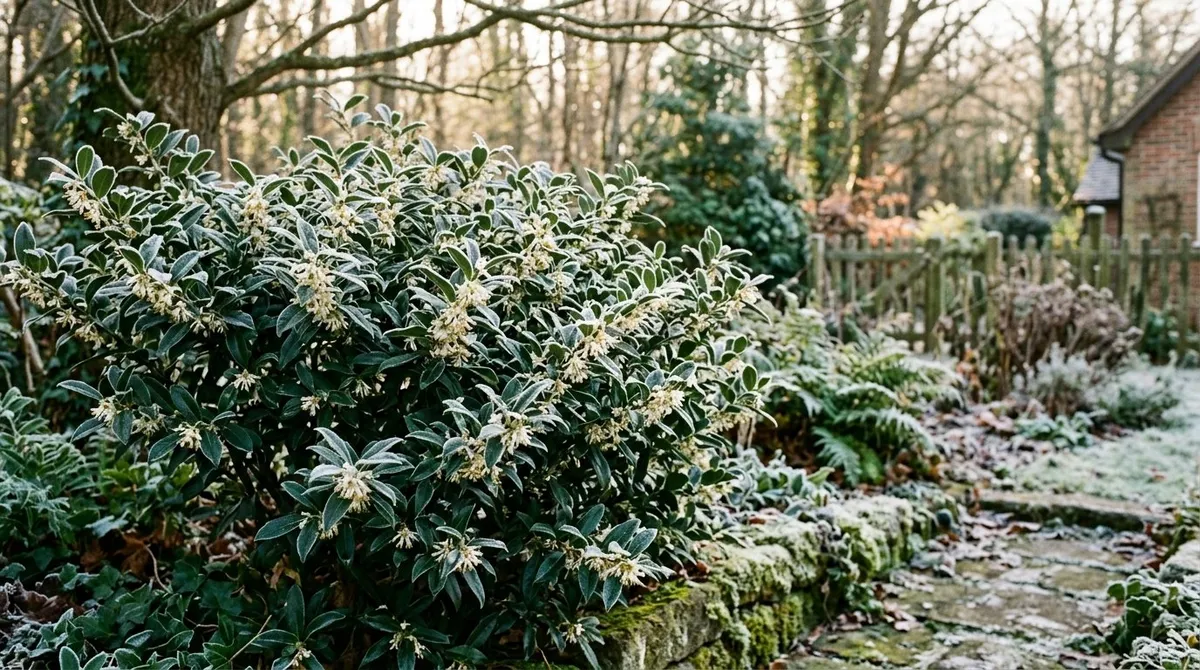
Christmas box is a small evergreen shrub with one big trick: a sweet scent in the middle of winter. You might walk straight past the plant, but you won’t miss the smell. It’s happy in shade, needs almost no work, and is one of the easiest scented shrubs you can grow.
This guide is about growing sarcococca itself. If you’re still choosing between winter shrubs, see our round-up of the best winter flowering shrubs first.
What is sarcococca?
Sarcococca is a small group of evergreen shrubs in the box family. They come from woodland in the Himalayas, China and South East Asia. The name Christmas box comes from the winter flowers and glossy, box-like leaves.
The flowers are tiny and creamy white, tucked in where the leaves join the stems. You can hardly see them from a few steps away. But in still, cold air their honey-vanilla scent fills a whole corner of the garden. Small round berries follow, usually black.
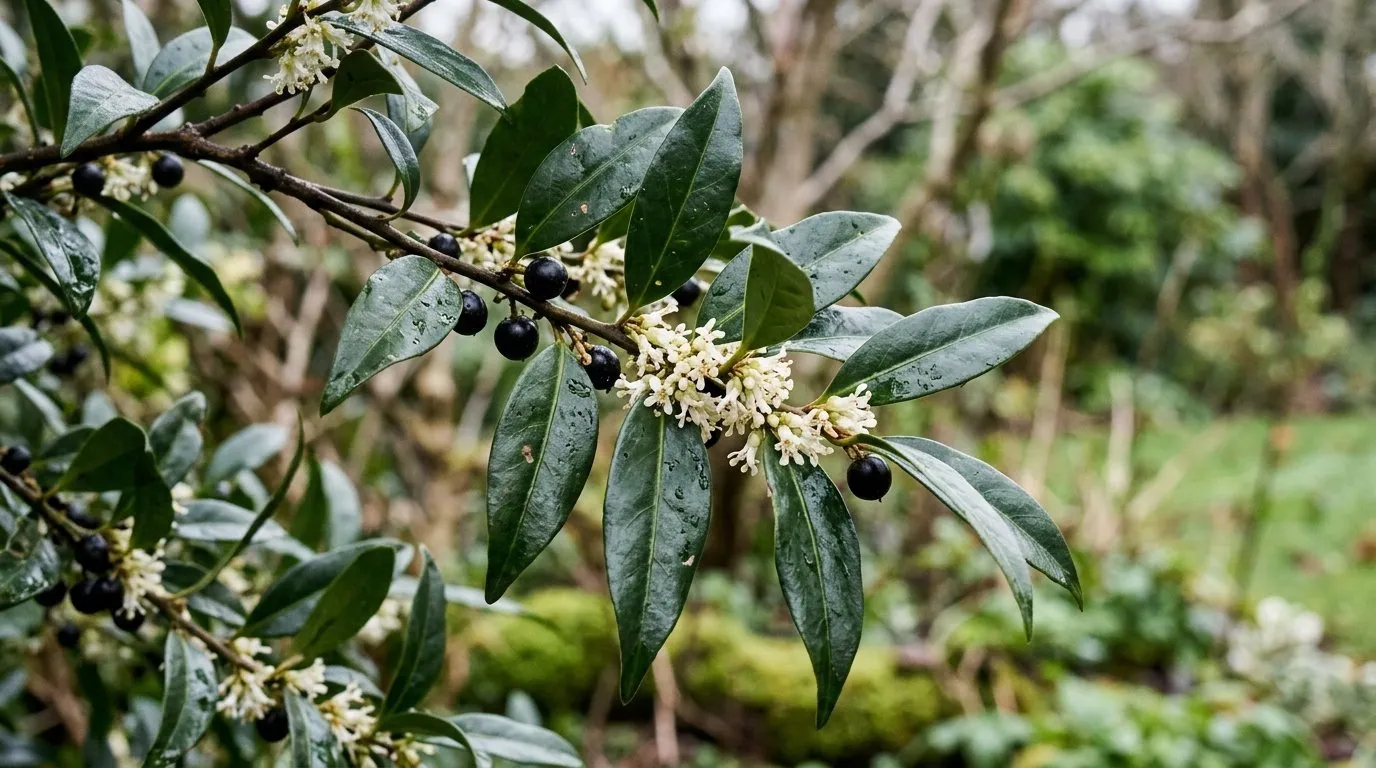
Sarcococca confusa often carries last year’s black berries alongside this winter’s scented flowers.
Which sarcococca should I choose?
For most gardens, choose Sarcococca confusa for an upright shrub or S. hookeriana var. humilis for low ground cover.
| Type | Rough size | Habit | Good for |
|---|---|---|---|
| S. confusa | About 1.5m tall and wide | Upright, bushy | Beside doors, shady borders, informal hedges |
| S. hookeriana var. humilis | About 60cm tall, spreading | Low, slowly spreading | Ground cover under trees, path edges |
| S. hookeriana var. digyna | About 1-1.5m | Upright, narrow leaves | Pink-tinged flowers; ‘Purple Stem’ has dark young stems |
| S. ruscifolia | About 1m | Upright | Red berries instead of black |
S. confusa is the one you’ll find in most garden centres. It forms a neat, bushy shrub with dark, glossy, pointed leaves.
S. hookeriana var. humilis spreads slowly by underground shoots into a low patch. It’s lovely planted in a drift under deciduous trees.
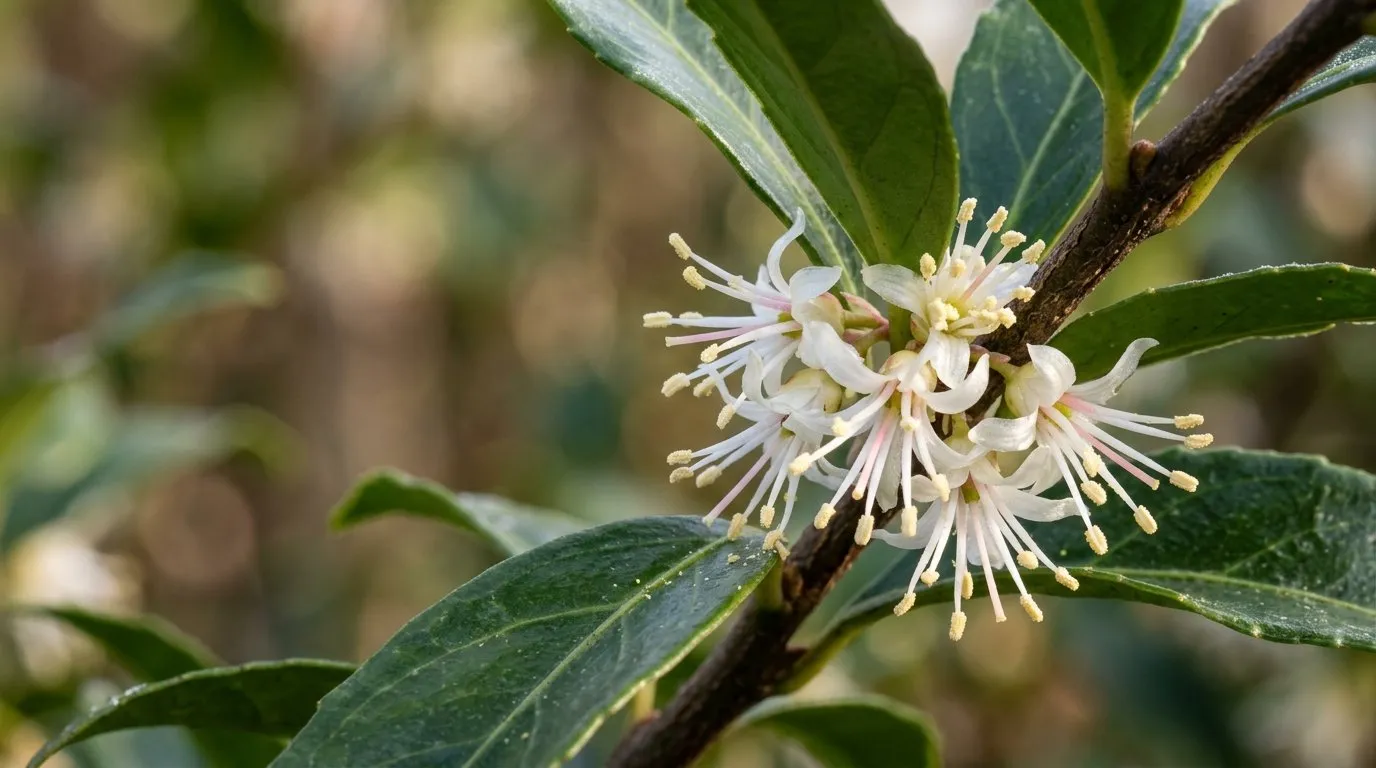
The flowers are small and spidery, but their scent is anything but shy.
Where to plant sarcococca
Plant sarcococca in part or full shade, somewhere you walk past in winter. A spot beside the front door, a path or a gate is ideal.
- Light: shade or dappled shade. Under deciduous trees is perfect: winter light, summer shade. Hot, full sun can scorch the leaves.
- Soil: most soils with plenty of organic matter. Dig in compost or leaf mould on sandy soil and heavy clay.
- Dry shade: once settled, it copes with dry shade better than most flowering shrubs. That makes it one of the best plants for dry shade.
It looks great with snowdrops, hellebores, hardy cyclamen and ferns. For more shade-loving partners, see our guide to the best plants for shade.
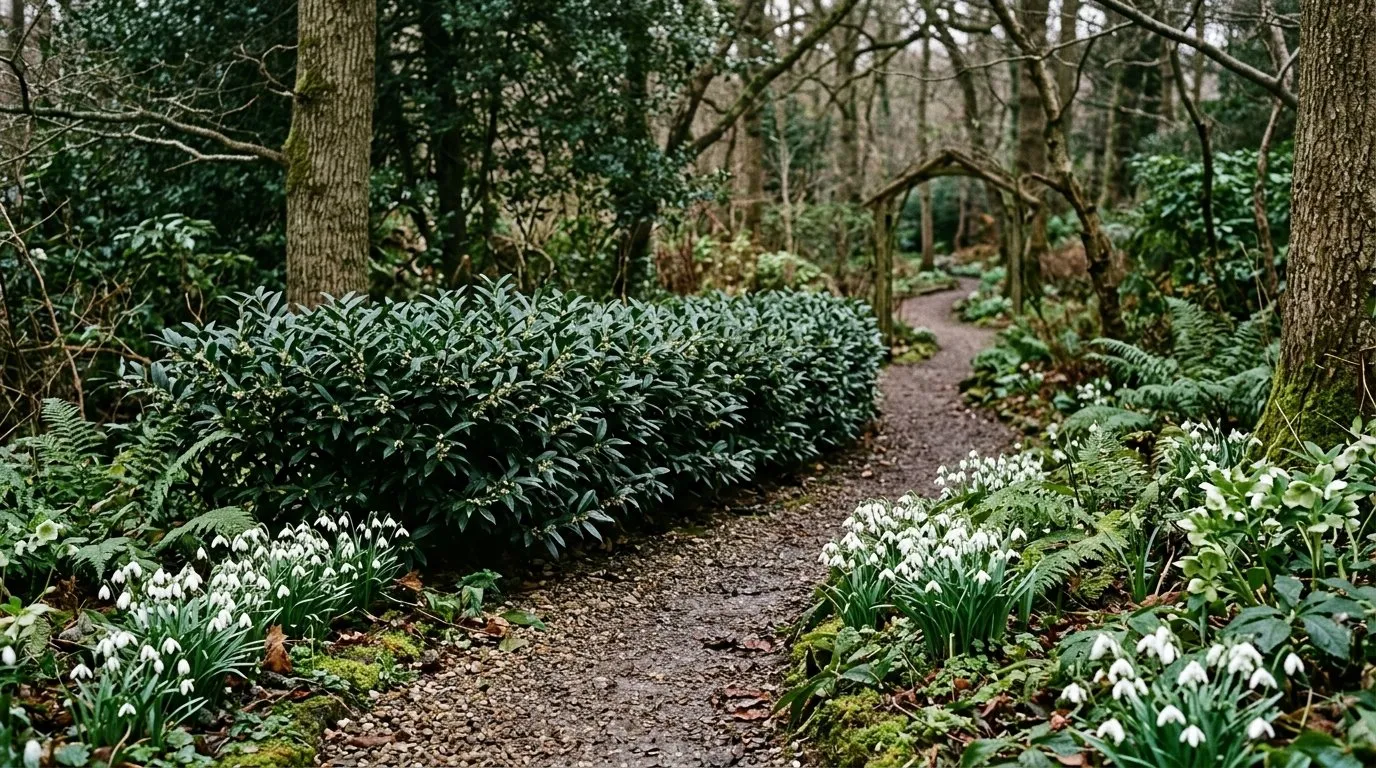
The low-growing humilis type makes a scented edge along a shady path, with snowdrops for company.
How to plant sarcococca
Plant in autumn or spring, when the soil is moist but not frozen.

Planting beside the front path means you’ll walk through the scent every winter morning.
- Dig a hole twice as wide as the pot and the same depth.
- Mix some garden compost or leaf mould into the soil you dug out.
- Plant at the same depth it sat in its pot, no deeper.
- Backfill, firm gently and water well.
- Mulch with leaf mould or bark, keeping it clear of the stems.
Spacing: for an informal hedge of S. confusa, plant about 60cm apart. For humilis as ground cover, plant about 50cm apart.
Bigger pots settle and flower sooner. Young plants can be slow for the first couple of years, so be patient.
Growing sarcococca in pots
Sarcococca makes a great pot plant for a shady doorstep or courtyard. Use a large pot with drainage holes and loam-based compost. Water regularly, as pots dry out faster than borders, and top-dress with fresh compost each spring.
A pair of pots by the front door means you’ll catch the scent every time you come home. Pair it with seasonal bulbs and ivy for winter containers that look good until spring.
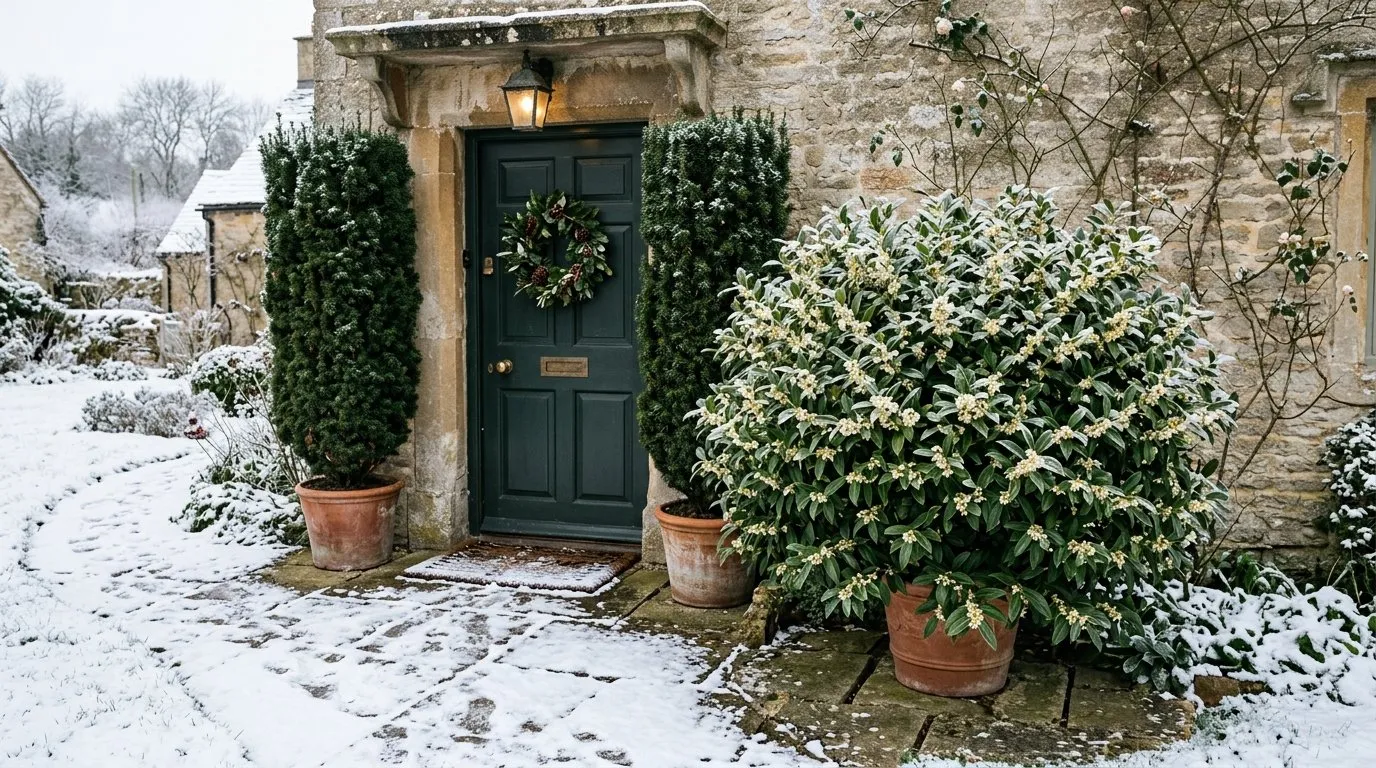
A pot of Christmas box by the front door greets you with scent all winter, even in snow.
Caring for sarcococca through the year
Sarcococca is about as low-maintenance as shrubs get.
| Season | What to do |
|---|---|
| Winter (December to March) | Enjoy the flowers. Shake heavy snow off the branches |
| Spring (March to April) | Light tidy after flowering. Top up the mulch |
| Summer | Water young plants and pots in dry spells |
| Autumn | Plant new shrubs. Remove any dead or damaged stems |
There’s no need to feed plants in the ground if you mulch each spring. Once established, they rarely need watering.
How to prune sarcococca
Sarcococca rarely needs pruning. If it does, wait until after flowering, in March or April.
- Cut out any dead, damaged or crossing stems.
- Shorten any overlong shoots to keep a natural shape.
- On an older, crowded plant, take out a few of the oldest stems at the base. Spread this over a couple of years.
Avoid clipping it into a tight shape. You’d lose the relaxed look and many of next winter’s flowers.
Sarcococca problems
Sarcococca is usually trouble-free. Two things are worth knowing.
Box blight can affect sarcococca, as it’s in the same family as box. Look for brown leaf patches and dark streaks on stems. Cut out affected shoots and bin them, rather than composting. Our guide to box blight and box tree caterpillar shows what to look for.
Slow start. Young plants often flower lightly for the first year or two. They pick up as they establish.
Common mistakes with sarcococca
- Planting it out of the way. The scent is the point, so put it where people walk.
- Planting in hot, full sun. The leaves can scorch. Shade suits it best.
- Pruning at the wrong time. Cutting in autumn or winter removes flowers. Prune just after flowering.
- Forgetting to water in year one. It’s tough later, but young plants need water in dry spells.
Want more scent near the house? Browse our plant guides, or read our guide to growing daphne, another lovely winter-scented shrub.
Frequently asked questions
What is Sarcococca and why is it called Christmas Box?
Sarcococca is a small evergreen shrub in the box family. It gets its common name from its winter flowers and glossy, box-like leaves. The flowers are tiny but have a strong honey-vanilla scent.
Where should I plant Sarcococca in the UK?
Plant it in part or full shade near a path or door. It suits north and east-facing spots, woodland edges and shady courtyards. Give it soil with plenty of organic matter. Hot, full sun can scorch the leaves.
When does Sarcococca flower in the UK?
Usually from December to March, often peaking in January and February. Timing varies with the weather and the type. Young plants flower lightly at first and more freely as they settle in.
Does Sarcococca produce berries?
Yes, small round berries follow the flowers. Sarcococca confusa has glossy black berries, and S. ruscifolia has red ones. They can hang on while the next flowers open. Don’t eat them.
Is Sarcococca poisonous to pets?
It’s best kept away from pets that chew plants. Plants in the box family can upset a pet’s stomach if eaten. If your dog or cat eats any part of it, call your vet.
Can you grow Sarcococca in a pot?
Yes, it grows well in a large pot in a shady spot. Use a loam-based compost and water regularly, as pots dry out faster than borders. A pot by the front door puts the scent right where you’ll notice it.
Our team produces practical UK gardening guidance from source research, contributor records and established horticultural practice. Editorial standards are overseen by Matt W.