
Key takeaways
- All parts of daphne are poisonous, so wear gloves and keep children and pets away
- Daphne bholua 'Jacqueline Postill' fills the winter garden with scent
- Never hard-prune daphne, as it rarely regrows from old wood
- Plant in soil that drains well, never in soggy clay
- Daphne odora grows well in a pot by the front door
- It grows slowly but lives a long time once settled
Daphne is one of the most fragrant shrubs you can grow for winter. On a cold January morning, a single plant can scent a whole front garden. Four kinds do well in the UK, flowering between December and May, each suiting a slightly different spot.
Best daphnes for UK gardens
Four kinds make up most of the daphnes grown in Britain.
Daphne odora ‘Aureomarginata’ is the most popular. It’s evergreen, with glossy dark leaves edged in cream. From January to March, deep pink buds open into pale pink, sweetly scented flowers. It grows to about 1 to 1.5m and likes a sheltered spot in part shade. It’s a great choice for a pot.
Daphne bholua ‘Jacqueline Postill’ is the star for winter scent. It’s tall and upright, to about 2 to 3m, and keeps some of its leaves in winter. White and pale pink flowers open from December to February. Give it a sheltered spot out of cold winds, such as the edge of a woodland area.
Daphne mezereum loses its leaves in winter. Bright purple-pink flowers cover the bare stems in February and March, followed by red berries in summer. It stays small, about 1m tall, and is the daphne that copes best with chalk. If you garden on chalky soil, this is the one for you.
Daphne x burkwoodii ‘Somerset’ flowers later, in May and June, with clusters of pale pink flowers. It’s compact, about 1m tall, and the easiest daphne to please. It’s lovely in a sunny or partly shaded mixed border.
Daphnes at a glance
| Kind | Flowers | Size | Leaves | Soil |
|---|---|---|---|---|
| D. odora ‘Aureomarginata’ | January to March | Small to medium | Evergreen | Neutral to slightly acid |
| D. bholua ‘Jacqueline Postill’ | December to February | Tall | Partly evergreen | Most soils |
| D. mezereum | February to March | Small | Drops its leaves | Chalky is fine |
| D. x burkwoodii ‘Somerset’ | May to June | Small | Partly evergreen | Most soils |
How to plant daphne
Daphne wants three things: good drainage, shelter from cold wind and soil that stays moist without being soggy. Get those right and it’ll be happy for years.
When: March or April in most of the UK. September works in mild southern gardens. Never plant into frozen or waterlogged ground.
Where: A sheltered spot with dappled shade or morning sun. A west or south-west-facing wall is ideal. Avoid open, exposed spots and frost pockets. Plant it by a front door or path so you catch the scent every time you walk past.
Soil: Dig a hole about 50cm wide and 40cm deep. Mix the soil you dig out half and half with leaf mould or composted bark. On heavy clay soil, improve a wide area rather than just the hole, or plant on a gentle mound or in a raised bed so winter wet drains away from the roots.
Depth: Set the plant so the top of the root ball sits just above the soil around it. Daphne hates being planted deep. Slope the soil slightly away from the stem so water runs off.
Watering: Soak well after planting and water weekly through the first summer. After a couple of years it copes with short dry spells, so just water in long dry periods.
Don’t move it. An established daphne hates root disturbance and rarely recovers. If you want one somewhere else, buy a new plant.
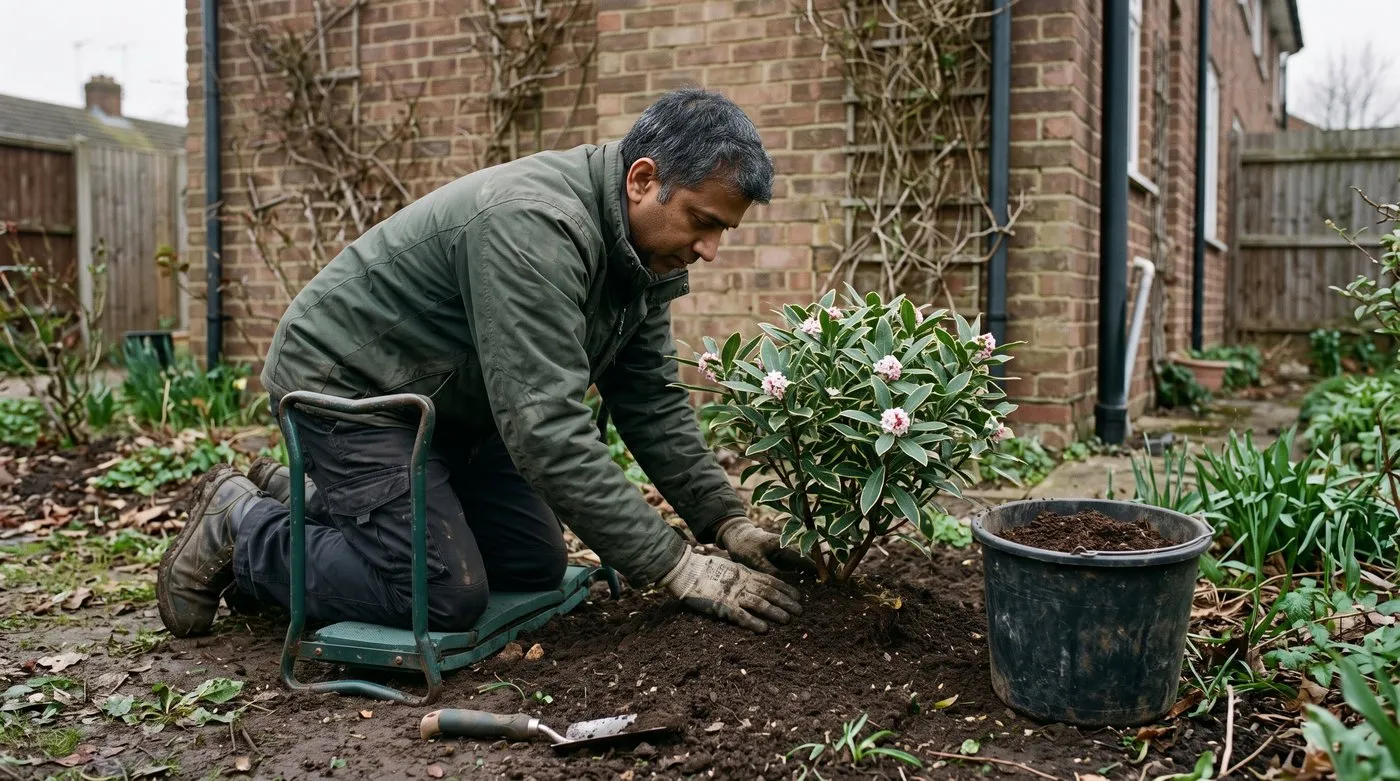
Set daphne a touch higher than the soil around it and slope the soil away from the stem. Its roots hate sitting in winter wet.
Growing daphne in pots
Daphne odora is the best one for pots. It’s compact and evergreen, so it looks good by a front door or on a patio all year. A pot is also a handy answer to heavy clay.
Pot: At least 40cm wide and 35cm deep, with good drainage holes. Terracotta is ideal.
Compost: John Innes No. 3 mixed with some perlite. It’s heavy enough to stop the pot blowing over and drains well. Multi-purpose compost holds too much water.
Feeding: A slow-release fertiliser in April is plenty. Skip regular liquid feeds, which give soft growth that frost can damage.
Winter: Move the pot against a warm, sheltered wall from November to March. In a hard freeze, wrap the pot in bubble wrap, as roots in pots freeze more easily than those in the ground.
 Daphne odora ‘Aureomarginata’ in a terracotta pot by the front door, perfectly placed to enjoy the scent.
Planning more pots? See our guide to the best plants for pots.
Pruning daphne
Daphne needs very little pruning. Shape it lightly, never cut it back hard. Most kinds grow into a neat dome on their own.
The golden rule: never cut into old, bare wood. Daphne doesn’t regrow from old stems the way buddleja or forsythia does, and you can lose the branch or the whole plant.
What to do: Straight after flowering, trim single stems back to a healthy side shoot to keep it in shape. Remove anything dead, damaged or crossing. Take off no more than a third of the plant in a year.
When: Right after flowering. For Daphne odora and Daphne bholua that’s March or April. For Daphne x burkwoodii, it’s July.
Leggy plants: Improve the shape gently over two or three years, cutting the longest stems back to side shoots. Don’t try to do it all at once.
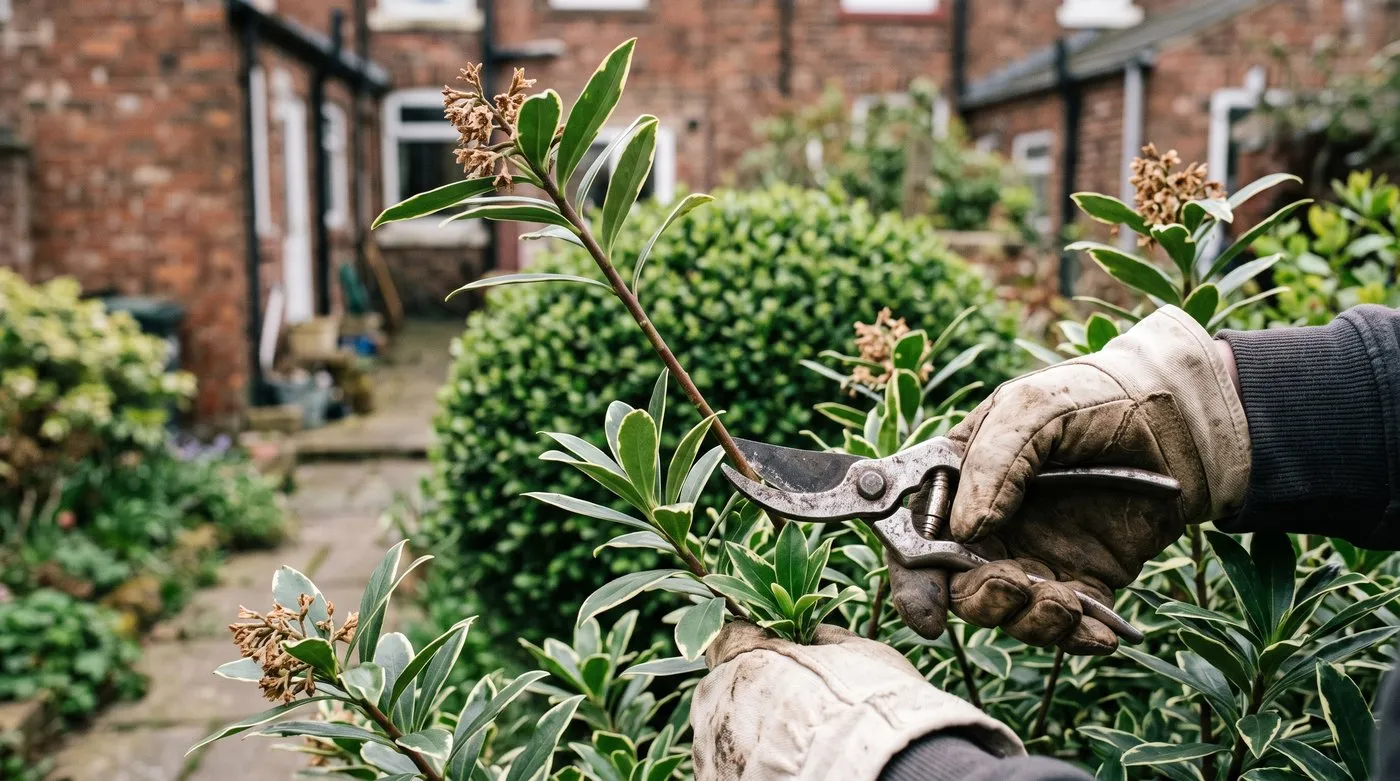
Trim one stem at a time back to a side shoot, straight after flowering. Keep well away from old, bare wood, as daphne rarely regrows from it.
Daphne is poisonous
All parts of every daphne are poisonous to people, dogs, cats and horses. It’s the one thing to know before you plant.
The red berries of Daphne mezereum are the biggest worry. They’re shiny, bright and at just the right height for small children. If anyone swallows the berries, get medical advice straight away.
The sap can also irritate skin. Wear gloves when pruning and wash your hands and tools afterwards.
If you have pets that chew plants, plant daphne where they can’t reach it, or pick a different scented shrub. The RHS list of potentially harmful garden plants is a useful check.
 Daphne mezereum berries in late summer. Bright and shiny, but very poisonous, so keep children and pets away.
Common problems
Sudden death. Root rot from soggy soil is the number one killer, especially on heavy clay. There’s no treatment once it sets in, so good drainage from day one is everything.
Yellow leaves. Usually too much water or compacted soil. Check the drainage first. On chalky soil, yellowing between the veins can mean the plant is short of iron, so give it a sequestered iron tonic in spring.
No flowers. Usually too much shade or too much pruning. Daphne odora and Daphne bholua form next winter’s flower buds in summer and autumn, so pruning late in the year cuts them off.
Aphids. Greenfly sometimes cluster on new spring shoots. Blast them off with a jet of water. Avoid sprays while it’s in flower, to look after bees and other helpful insects.
Wind-damaged buds. Cold, drying winds in December and January can spoil Daphne odora’s buds. A wall, fence or evergreen hedge gives the shelter it needs.
Daphne care month by month
| Month | What to do |
|---|---|
| January | Enjoy Daphne bholua’s flowers. Cover Daphne odora buds with fleece in a hard frost. |
| February | Daphne mezereum flowers. Water pots if the compost is dry. |
| March | Daphne odora in full flower. Plant new daphnes. |
| April | Lightly prune Daphne odora and Daphne bholua after flowering. Feed pots. |
| May | Daphne x burkwoodii flowers. Check new growth for aphids. |
| June | Water new plants weekly in dry spells. |
| July | Lightly prune Daphne x burkwoodii. Buds form for winter kinds. |
| August | Water established plants only in long dry spells. Take semi-ripe cuttings if you like. |
| September | Plant in mild southern gardens. Mulch with leaf mould. |
| October | Move pots against a sheltered wall. |
| November | Protect young plants from frost. Check the soil drains around the base. |
| December | Daphne bholua starts flowering. Cut a stem or two for scent indoors (wear gloves). |
If your garden is on the shady side, our guide to the best shrubs for shade has more ideas.
Now you know how to grow daphne, have a look at the best scented plants for UK gardens for fragrance all year round.
Frequently asked questions
Is daphne poisonous to dogs and cats?
Yes, all parts of daphne are toxic to dogs, cats and people. The bright red berries of Daphne mezereum are the biggest risk to pets and children. Eating any part can cause vomiting, diarrhoea and mouth blisters, and the sap can irritate skin. Plant daphne away from where pets roam, and wear gloves when pruning.
Why did my daphne suddenly die?
Usually because its roots sat in wet soil. Daphne roots are fleshy and rot quickly in heavy, soggy ground, especially over a wet winter. Moving an established daphne can kill it too. There’s no cure once root rot sets in, so plant in soil that drains well from the start.
Can I hard-prune a daphne that has become leggy?
No, daphne rarely survives hard pruning. Unlike buddleja or forsythia, it doesn’t regrow from old wood. If it’s leggy, trim single stems back to a side shoot after flowering. Take off no more than a third of the plant in a year. A badly overgrown daphne is better replaced than cut back hard.
When is the best time to plant daphne in the UK?
March or April suits most of the UK. Spring planting gives the roots a whole season to settle before winter. Avoid autumn planting in cold or exposed gardens. In mild southern gardens, pot-grown daphne can also go in during September.
Which daphne has the strongest scent?
Daphne bholua ‘Jacqueline Postill’ is the one to choose for scent. On a still winter day, you can smell it from well across the garden. Daphne odora ‘Aureomarginata’ is a close second, with a rich, sweet perfume. Daphne mezereum has a lighter scent.
Can I grow daphne in a pot?
Yes, Daphne odora is happy in a pot. Use one at least 40cm wide, filled with John Innes No. 3 mixed with some perlite for drainage. Water when the top 3cm of compost feels dry. Give a slow-release feed in April. In winter, move it against a warm, sheltered wall to protect the flower buds.
Does daphne grow in shade?
Most daphnes like dappled shade or morning sun. Deep shade means fewer flowers. Spurge laurel (Daphne laureola) is the exception and copes with deep shade under trees. For a scented daphne in a shady spot, try Daphne odora by a north-west wall where it gets evening light.
Our team produces practical UK gardening guidance from source research, contributor records and established horticultural practice. Editorial standards are overseen by Matt W.


