
Key takeaways
- Mahonia, Viburnum 'Dawn' and Viburnum tinus start flowering in November
- Sweet box, daphne, wintersweet and witch hazel have the strongest winter scent
- Sweet box, mahonia, skimmia and Viburnum tinus all flower in shade
- Plant scented shrubs by a door, gate or path so you smell them on the way in
- Prune winter shrubs straight after flowering, if at all, so you don't cut off next year's buds
- Daphne is poisonous if eaten, so keep it away from children and pets that chew
The best winter flowering shrubs for UK gardens are sweet box, witch hazel, wintersweet and daphne for scent, and mahonia and Viburnum tinus for tough, evergreen colour. Plant a few and you’ll have flowers from November to March, often on bare branches.
This guide is just about shrubs, the woody backbone of a winter border. For bulbs, hellebores and other low plants, see the guide to the best winter flowering plants. Use the two together and winter needn’t look bare.
Winter flowering shrubs compared
Here are 12 reliable winter shrubs, with when they flower and where they like to grow. Flowering shifts by a few weeks with the weather and where you live.
| Shrub | Flowers | Colour | Scent | Height | Shade? |
|---|---|---|---|---|---|
| Mahonia x media ‘Charity’ | November to February | Yellow | Light | 2-3m | Yes |
| Viburnum x bodnantense ‘Dawn’ | November to March | Pink | Strong | 2.5-3m | Part |
| Viburnum tinus | November to April | White, pink buds | Light | 2-3m | Yes |
| Winter jasmine | November to March | Yellow | None | Up to 3m on a wall | Part |
| Witch hazel (Hamamelis) | December to February | Yellow, orange, red | Strong in most | 3-4m | Light |
| Wintersweet (Chimonanthus) | December to February | Pale yellow | Very strong | 2.5-4m | No |
| Sweet box (Sarcococca confusa) | December to February | White | Very strong | 1-1.5m | Yes |
| Lonicera x purpusii ‘Winter Beauty’ | December to March | Cream | Strong | About 2m | Part |
| Daphne bholua ‘Jacqueline Postill’ | January to March | Pink and white | Very strong | 2-3m | Part |
| Garrya elliptica ‘James Roof’ | January to February | Grey-green catkins | None | 3-4m | Part |
| Cornus mas | February to March | Yellow | None | 4-5m | Part |
| Skimmia japonica ‘Rubella’ | Red buds all winter, flowers March to April | Red buds, white flowers | Light | About 1m | Yes |
Best scented winter flowering shrubs
Winter scent is the big reward of these shrubs. It carries furthest on still, mild days.
Sweet box (Sarcococca confusa) is the easiest to grow. Tiny white flowers along the stems smell strongly of vanilla from December to February. It is evergreen, about 1-1.5m tall, and grows in shade and dry soil under trees. Shiny black berries follow. The guide to growing sweet box has more.

Sweet box flowers look small, but the vanilla scent reaches you long before you spot them. Plant it by a door.
Witch hazel (Hamamelis x intermedia) has spidery, ribbon-like flowers on bare branches from December. ‘Pallida’ is a scented pale yellow, ‘Jelena’ coppery orange and ‘Diane’ dark red with less scent. It prefers neutral to acid soil and struggles on shallow chalk. It grows slowly, so it is happy in a border for many years. The guide to growing witch hazel explains siting.

Witch hazel flowers shrug off frost. Plant it where low winter sun shines through the petals.
Wintersweet (Chimonanthus praecox) has waxy, pale yellow flowers with purple centres and one of the strongest scents in the garden. It flowers best against a sunny, sheltered wall. Young plants can take several years to start flowering, so be patient. The guide to growing wintersweet covers this.
Daphne bholua ‘Jacqueline Postill’ has clusters of pink and white flowers from January with a rich, sweet scent. It needs well-drained soil, shelter from cold winds and is best not moved once planted. Daphnes can be short-lived, so enjoy them while they last. All parts are poisonous, so keep it away from children and pets. The guide to growing daphne has more on keeping it happy.
Viburnum x bodnantense ‘Dawn’ carries scented pink flower clusters on bare stems from November to March. It is tough, upright and grows in most soils. Lonicera x purpusii ‘Winter Beauty’, a shrubby honeysuckle, has small cream flowers with a lovely scent.

Viburnum ‘Dawn’ flowers on and off all winter. A mild spell brings a fresh flush of scented pink clusters.
Best winter flowering shrubs for shade
Sweet box, mahonia, skimmia and Viburnum tinus all flower in shade. All four are evergreen, so they also give the garden shape all year.
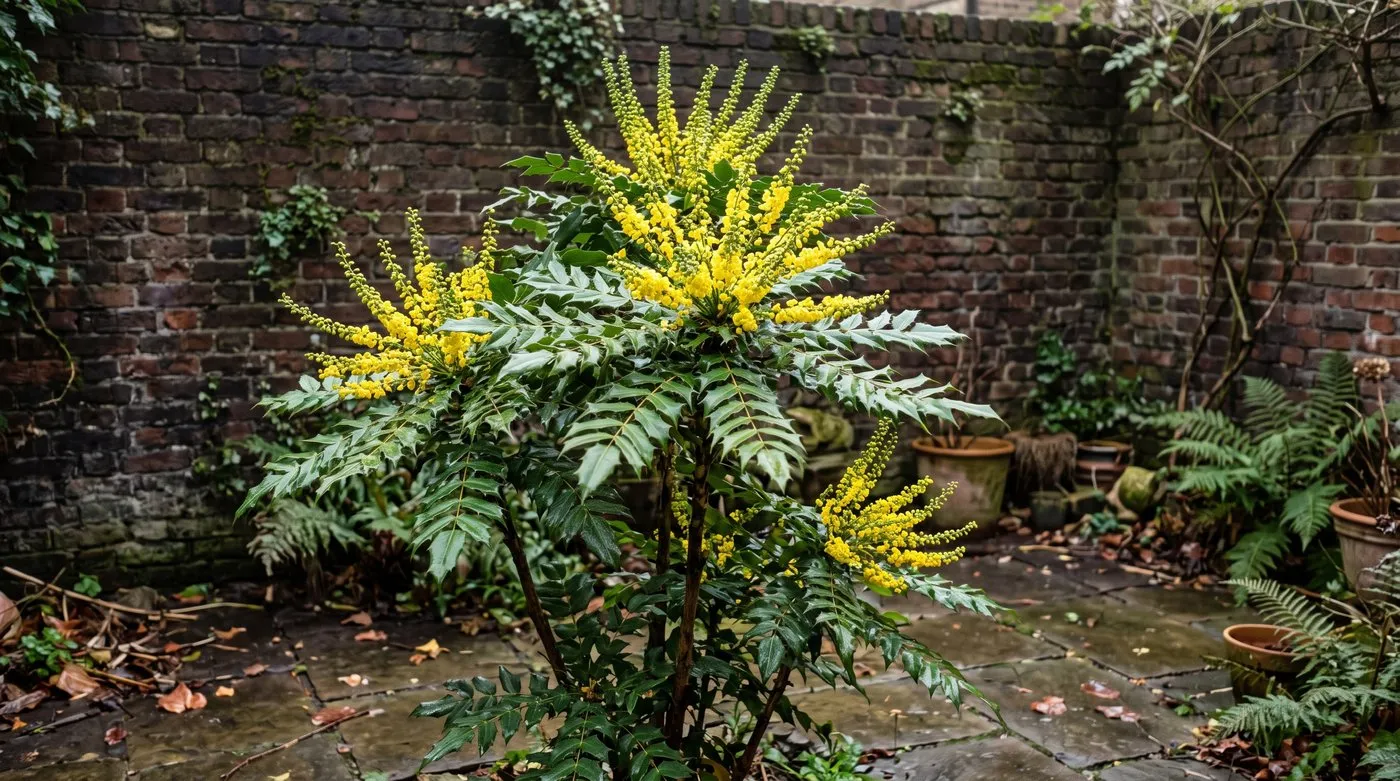
Mahonia lights up a shady corner from November, and winter-active bumblebees love it.
Mahonia x media ‘Charity’ has upright sprays of bright yellow, lightly scented flowers from November, above spiny, holly-like leaves. It copes with clay, dry shade and town gardens. If it gets leggy, cut a few of the oldest stems back hard after flowering. The guide to growing mahonia covers pruning.
Viburnum tinus has flat heads of white flowers opening from pink buds from November into spring. It makes a good evergreen screen or informal hedge.
Skimmia japonica ‘Rubella’ is a neat, compact shrub with red buds all winter that open to scented white flowers in spring. It prefers neutral to acid soil and shade, and suits pots of ericaceous compost.
Best winter shrubs for walls and fences
A sunny or sheltered wall helps winter flowers open and protects them from cold winds.
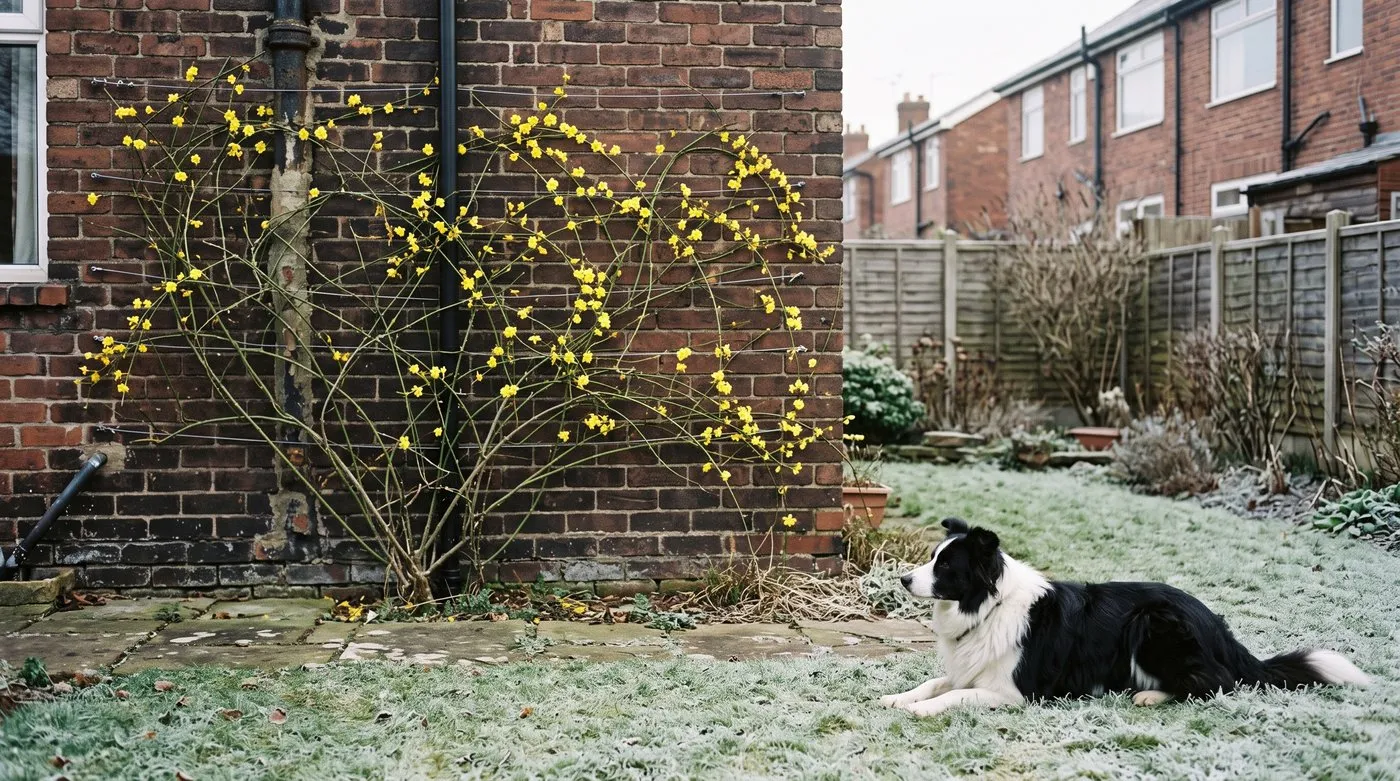
Winter jasmine brightens even a north-facing wall. Tie the stems to wires, as it can’t climb on its own.
- Wintersweet flowers best on a south or west-facing wall.
- Winter jasmine (Jasminum nudiflorum) has bright yellow flowers on green stems from November. It isn’t a true climber, so tie the stems to wires. It copes with a north-facing wall.
- Garrya elliptica ‘James Roof’ has long, silvery grey-green catkins in January and February. It suits a sheltered wall in sun or part shade.
Cornus mas is a large shrub or small tree with clouds of small yellow flowers on bare twigs in February and March. Give it room in a bigger garden.
Where to plant winter shrubs for scent
Put scented winter shrubs where you walk in winter, not at the far end of the garden. Good spots are by the front door, along the path to the bin or car, or under a window you open.

Plant scented winter shrubs where you walk every day. A daphne by the front door greets you all January.
A sheltered corner holds scent best, because wind blows it away. Group two or three scented shrubs near one path and you’ll catch something on most dry days from December to March.
Planting and pruning winter shrubs
Plant container-grown shrubs any time from autumn to early spring, when the soil isn’t frozen or waterlogged. Autumn is ideal, because roots settle in before the summer. Water well through the first spring and summer, especially in dry spells. Add a mulch of compost or bark in spring, keeping it clear of the stems.
Most winter shrubs need little pruning. If you do prune, do it straight after flowering, usually in March or April. They flower on wood grown the previous summer, so cutting back in autumn removes next winter’s flowers. Witch hazel and daphne are best left almost unpruned. The guide to pruning shrubs shows how to take out old stems.
Winter shrubs for wildlife
Winter shrubs give insects food when almost nothing else is in flower. Mahonia is especially good for buff-tailed bumblebees that stay active on mild winter days. Sweet box, Viburnum tinus and Cornus mas offer early nectar and pollen as spring approaches. Evergreen shrubs also give birds shelter from the cold.
Winter flowering shrubs month by month
| Month | Shrubs in flower |
|---|---|
| November | Mahonia, Viburnum ‘Dawn’, Viburnum tinus, winter jasmine |
| December | Add witch hazel, wintersweet, sweet box, ‘Winter Beauty’ |
| January | Peak for scent. Add Daphne bholua and garrya catkins |
| February | Witch hazel, sweet box, daphne, Cornus mas starts |
| March | Viburnum ‘Dawn’, daphne, Cornus mas, skimmia buds opening |
Common mistakes with winter flowering shrubs
- Pruning in autumn. It removes next winter’s flower buds. Prune after flowering instead.
- Hiding scented shrubs. A scented shrub at the far end of the garden is wasted in winter. Plant it near a path or door.
- Planting witch hazel or skimmia on chalk. Both prefer neutral to acid soil. On chalk, choose viburnum or mahonia.
- Planting daphne or wintersweet in wet soil. Both need good drainage. Add grit on heavy clay or choose sweet box instead.
- Expecting instant flowers. Wintersweet and witch hazel can take a few years. Viburnum ‘Dawn’ and mahonia flower sooner.
For more year-round plant ideas, browse the plants hub.
Frequently asked questions
What is the best winter flowering shrub for scent?
Sweet box (Sarcococca confusa) is the easiest scented winter shrub. Its tiny white flowers smell of vanilla from December to February, and it grows happily in shade. Daphne bholua and wintersweet are even stronger but need more care.
Which winter flowering shrubs grow in shade?
Sweet box, Mahonia, skimmia and Viburnum tinus all flower in shade. All four are evergreen, so they also give the garden shape all year. Sweet box copes with dry shade under trees.
When should I prune winter flowering shrubs?
Prune straight after flowering, usually in March or April. That gives the shrub all summer to grow the wood that carries next winter’s flowers. Most need little pruning beyond removing a few old stems.
Can I grow winter flowering shrubs in pots?
Yes, sweet box, skimmia and Viburnum tinus all do well in pots. Use a pot at least 40cm wide and loam-based compost such as John Innes No. 3. Skimmia prefers ericaceous compost. Keep pots watered in dry winter spells.
Why has my winter flowering shrub stopped flowering?
Pruning at the wrong time is the most common cause. Cutting back in summer or autumn removes the flower buds. Too much shade for sun-lovers such as witch hazel, and young plants still settling in, are other common reasons.
Are winter flowering shrubs good for wildlife?
Yes, they feed insects when little else is in flower. Mahonia is especially useful for bumblebees active on mild winter days. Sweet box and Viburnum tinus also offer early nectar.
Now your winter border is sorted, plan the rest of the year with the best flowering shrubs for UK gardens.
Our team produces practical UK gardening guidance from source research, contributor records and established horticultural practice. Editorial standards are overseen by Matt W.


