
Key takeaways
- Mahonia flowers from November to March, when hardly anything else does
- Mahonia japonica has the best scent, so plant it by a path or door
- It copes with deep shade, dry soil under trees and heavy clay
- Oregon grape spreads by suckers and makes great ground cover
- Trim after flowering to stop plants getting tall and bare
- Bees love the flowers and birds eat the berries
Mahonia flowers when almost nothing else in the garden does. From November to March, bright yellow flower sprays open above spiny, holly-like evergreen leaves. On a still winter day, Mahonia japonica fills the air with a lily-of-the-valley scent that feels like a small miracle in December.
These are tough shrubs from Asia and North America. They cope with deep shade, dry soil, heavy clay and city air, and need little more than a trim now and then. Yet they’re still underused in British gardens.
Which mahonia species are best for UK gardens?
A handful of mahonias cover most gardens. They differ in size, flowering time and how they grow.
Mahonia japonica is the best for scent. Arching sprays of pale yellow flowers smell of lily of the valley from December to February. It grows about 2m tall and 1.5m wide. The glossy, spiny leaves often turn reddish at the tips in cold weather. Choose this one if scent is what you want. For more winter fragrance, see our guide to scented plants.
Mahonia x media ‘Charity’ is the one you see most often. It has long, upright sprays of yellow flowers from November to January and is often the first mahonia to flower. It can reach 2.5-3m if you don’t prune it, and grows quite stiff and upright. The scent is nice but lighter than japonica’s. ‘Winter Sun’ is similar, with fuller flower sprays a little later.
Mahonia aquifolium (Oregon grape) is the ground-cover one. It grows about 1m tall and spreads slowly by suckers into a dense evergreen patch. Yellow flowers come in March and April, then blue-black berries. The leaves turn bronze-purple in winter. It’s the toughest of the lot, happy in deep shade and dry soil.
Mahonia x media ‘Lionel Fortescue’ has the longest flower sprays of all, bright yellow and upright from November to January. It grows about 2.5m and can look a bit gaunt unless you prune it.
Mahonia eurybracteata ‘Soft Caress’ is the smaller, softer option, with fine leaves that aren’t prickly. It’s a good pick near paths or if you have children.
Mahonia species comparison table
| Variety | Height | Flowers | Scent | Spreads? | Prickly? | Good for |
|---|---|---|---|---|---|---|
| M. japonica | About 2m | December to February | Strong | No | Yes | Scent, shady borders |
| ’Charity’ | 2.5-3m | November to January | Medium | No | Yes | Back of the border |
| Oregon grape | About 1m | March to April | Light | Yes | A little | Ground cover, dry shade |
| ’Lionel Fortescue’ | About 2.5m | November to January | Medium | No | Yes | Big flower sprays |
| ’Soft Caress’ | About 1.2m | Autumn | Light | No | No | Near paths, small spaces |
Where should I plant mahonia?
Mahonia grows anywhere from full sun to deep shade. That’s its superpower. It fills spots where most flowering plants give up.
Near a path or door is the perfect spot for the scented ones. Plant Mahonia japonica within a few metres of a door or path you use every day in winter, so you walk past the scent. Just keep it far enough back that you don’t brush against the prickly leaves.
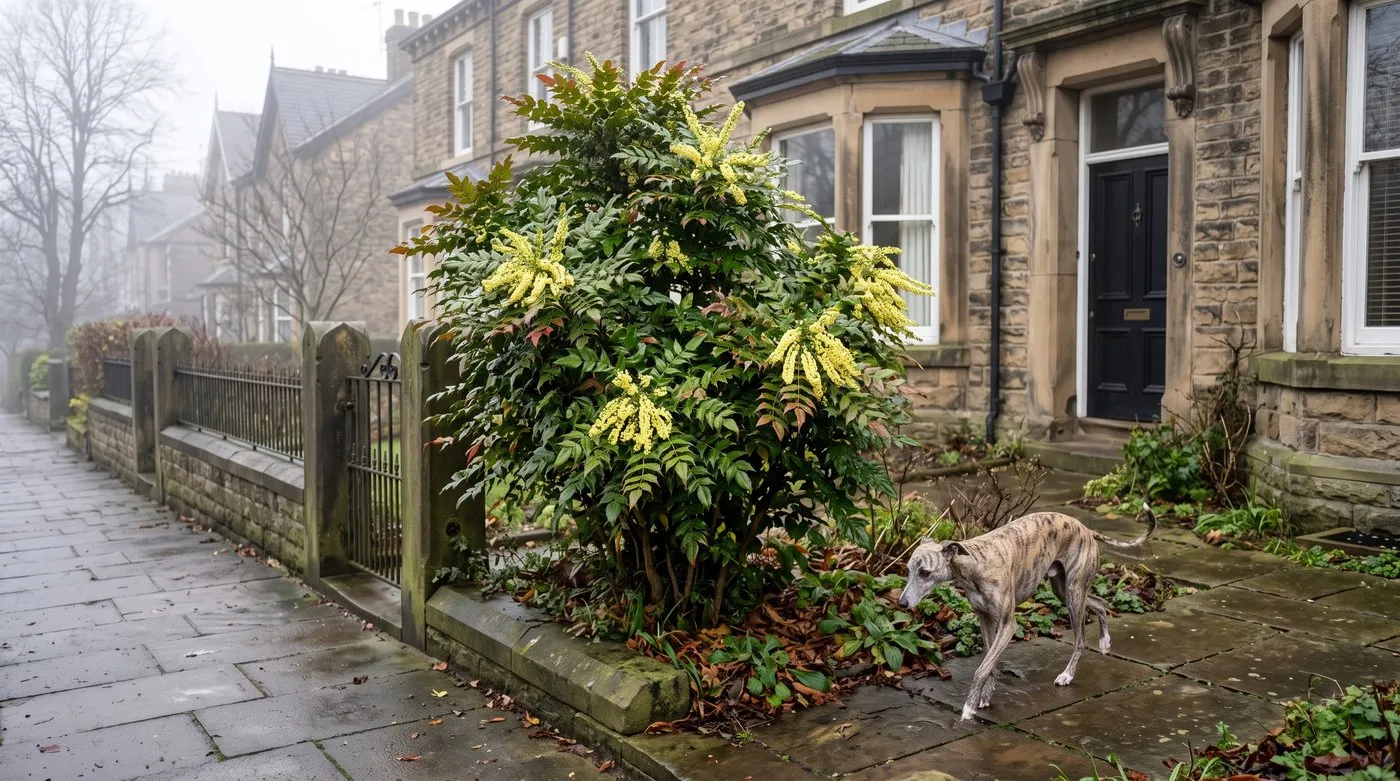
Plant a scented mahonia near a path you use every day in winter. Keep it far enough back that you don’t brush the prickly leaves.
How to plant and establish mahonia
You can plant pot-grown mahonia at any time of year, but October and November are best. The roots grow over winter and it’s ready to go in spring.
Dig a hole twice as wide as the rootball and the same depth. Set the plant at the same level it sat in its pot. Backfill with the soil you dug out, adding a handful of grit on heavy clay.
Water well and mulch with 5cm of bark or leaf mould. Water in dry spells through its first spring and summer. After that, it copes well with dry weather.
Most soils don’t need feeding. On very poor, sandy soil, a sprinkle of fish, blood and bone in March helps.
How to prune mahonia to prevent leggy growth
Left alone, mahonia can grow into tall, bare stems with a tuft of leaves at the top. A little pruning stops that.
A yearly trim is the easy way. When flowering finishes, snip off the old flower stalks and shorten the tallest stems by 15-20cm. This makes the plant branch lower down and stay bushy.
A hard prune rescues old, leggy plants. In April, cut the stems back to 30-60cm from the ground. It looks drastic for a few weeks, then new shoots pop out along the stems and from the base. By midsummer it’s leafy again. It may skip a year of flowers while it recovers.
Oregon grape is a bit different. Chop off unwanted suckers with a spade in spring. If the main plant gets too tall, cut it back after flowering. It bounces back well.
For more on pruning shrubs, see our shrub pruning guide.
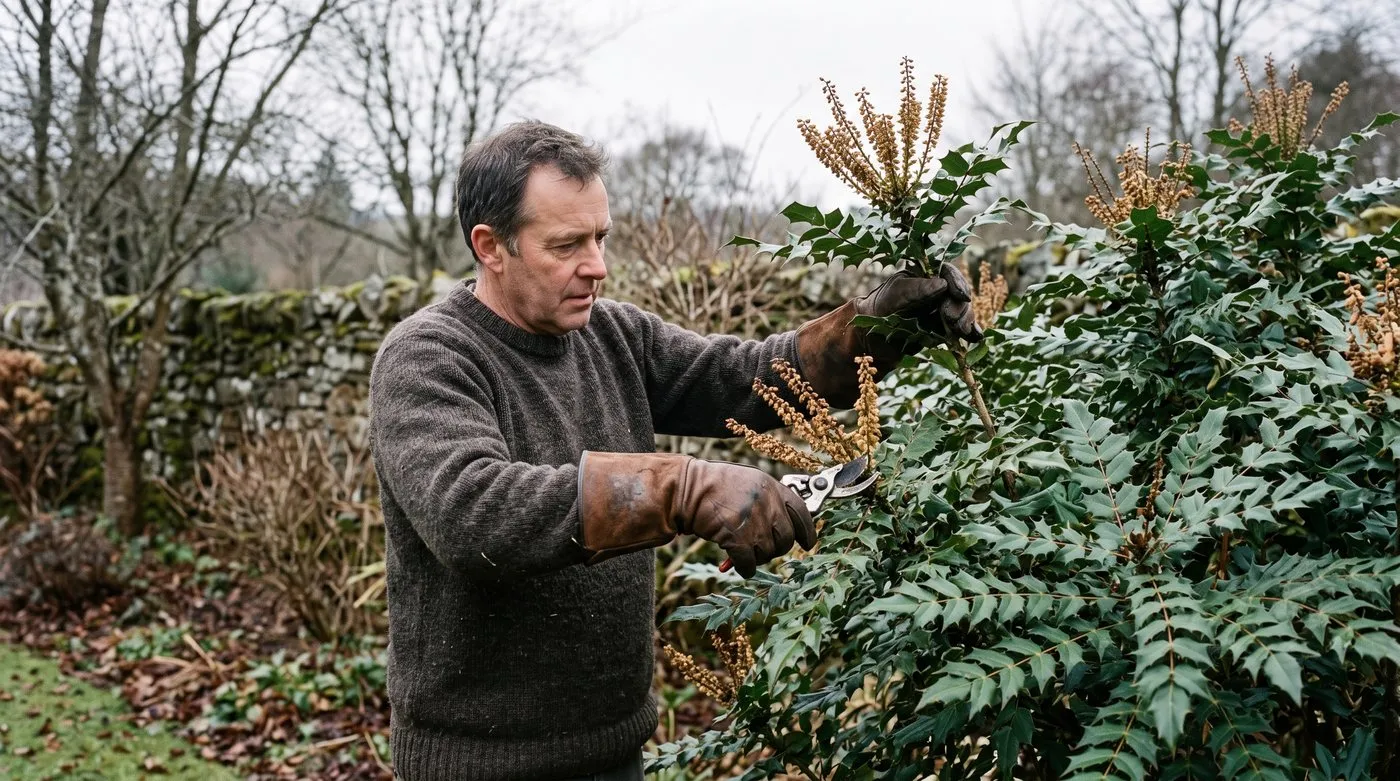
Snip off old flower stalks and shorten the tallest stems after flowering. It keeps the plant bushy instead of bare and leggy.
Mahonia berries and wildlife value
Mahonia gives wildlife something nearly all year round: winter flowers, summer berries and evergreen shelter.
Winter flowers from November to March feed bumblebees on mild days, when there’s very little else around. That makes mahonia a great choice for bee-friendly gardening.
Berries follow in late spring and summer. Blackbirds and thrushes soon strip the bunches.
Evergreen shelter is the third bonus. The thick, prickly leaves give small birds such as wrens, dunnocks and robins a safe place to nest, and the prickles help keep cats away. For another prickly evergreen that birds love, see our guide to growing berberis.
The berries are edible, but very sour. With sugar and sweeter fruit they make a passable jelly. Most gardeners happily leave them for the birds.
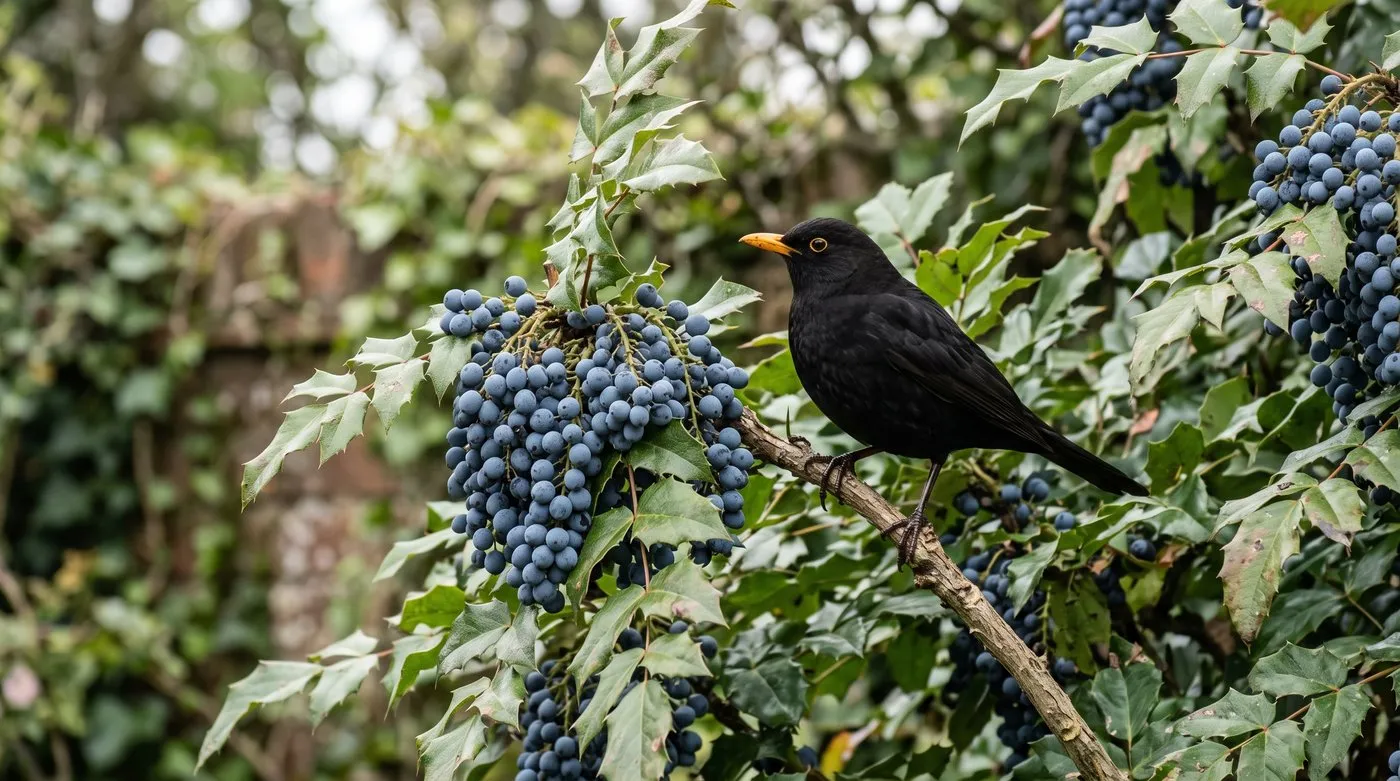
Blackbirds and thrushes soon strip the berries in summer. The prickly leaves also make a safe nesting spot for small birds.
How to combine mahonia with winter plants
Mahonia looks best with other plants that shine from November to March. Evergreen nandina adds red winter leaves to the mix.
With hellebores: Mahonia flowers above and hellebores below is a lovely winter pairing. Both like shade, and the yellow mahonia looks great with white, pink and purple hellebores.
With witch hazel: Plant mahonia near witch hazel for two winter-flowering shrubs together. Witch hazel has spidery flowers on bare branches, while mahonia adds evergreen leaves and scent.
With snowdrops and winter aconites: Plant drifts underneath for layers of winter colour. The yellow aconites pick up the colour of the mahonia flowers.
With evergreen ferns: Hart’s tongue fern and shield ferns give a green backdrop all year and cope with the same shade.
What problems affect mahonia?
Mahonia has very few problems. It’s a tough plant.
Mahonia rust is the only common disease. You’ll see orange-brown spots under the leaves and yellow spots on top, mostly on Oregon grape in damp autumns. Pick off and bin affected leaves, and thin crowded growth so air can move through. It rarely does real harm.
Powdery mildew sometimes appears on Oregon grape in dry summers, as a white dusty coating. Water during droughts and remove the worst leaves.
Pests rarely bother mahonia. The prickly leaves put most animals off, and deer usually leave it alone.
Leaf scorch can brown the leaf edges on plants in full sun during a hard cold snap. It looks untidy but the plant recovers with new growth in spring. Plants in shade are less affected.
Frequently asked questions
When does mahonia flower in the UK?
From November to March, depending on the type. ‘Charity’ often starts first, in November. Mahonia japonica is at its best from December to February. Oregon grape flowers last, in March and April. The yellow flowers come in long sprays and most are nicely scented.
Can mahonia grow in full shade?
Yes, it’s one of the best evergreens for full shade. Mahonias cope with north-facing walls and spots under trees. You may get a few less flowers in the very darkest corners, but they still flower well. Oregon grape is the toughest of all in shade.
How do I stop mahonia getting leggy?
Trim the tallest stems each year after flowering. That keeps it bushy from the bottom. If it’s already tall and bare, cut the stems back to 30-60cm in April. It looks bare for a few weeks, then sprouts new shoots. It may skip flowering for a year while it recovers.
Are mahonia berries poisonous?
They’re edible but very sour. Some people make them into jelly with sweeter fruit and plenty of sugar. Most gardeners leave them for the birds, and blackbirds and thrushes soon strip the bunches in summer.
What is the best mahonia for scent?
Mahonia japonica has the strongest, sweetest scent. It smells like lily of the valley and carries on still air. ‘Charity’ is scented too, but less so. Oregon grape has very little scent. Plant scented ones near a path, door or window you pass every day in winter.
Does mahonia spread?
Oregon grape spreads by suckers, but most others don’t. Mahonia aquifolium slowly creeps outwards, which makes it good ground cover but a nuisance in a small space. Mahonia japonica and the ‘Charity’ types stay as clumps where you plant them. Chop off unwanted Oregon grape suckers with a spade in spring.
Is mahonia good for wildlife?
Yes, it’s great for bees and birds. The winter flowers feed bumblebees on mild days when there’s little else about. Blackbirds and thrushes eat the blue-black berries in summer. The thick, prickly leaves also give small birds a safe place to shelter and nest.
Our team produces practical UK gardening guidance from source research, contributor records and established horticultural practice. Editorial standards are overseen by Matt W.


