Key takeaways
- Witch hazel flowers on bare branches from December to March
- It likes moist, neutral to acid soil and doesn't do well on chalk
- 'Jelena' (copper-orange) and 'Pallida' (sulphur-yellow) are lovely, reliable choices
- It needs almost no pruning, just a tidy-up after flowering
- Buy a named, grafted plant for reliable colour and quicker flowers
- The autumn leaves turn brilliant orange, red and gold
Witch hazel is one of the most cheerful shrubs you can grow for winter. While most plants are asleep from December to March, it covers its bare branches in spidery, scented flowers. Against a cold blue sky or a frosty lawn, it’s a real treat.
It doesn’t stop there. In autumn, the big leaves turn glowing shades of orange, red and gold before they fall, so you get two big moments a year from one shrub. Give it neutral to acid soil and a sheltered spot, and it needs almost no looking after. Here’s how to choose, plant and care for it, plus great partners for winter-flowering gardens.
What types of witch hazel can you grow in the UK?
Most garden witch hazels belong to one hybrid group, with three species worth knowing too.
Chinese witch hazel (Hamamelis mollis)
Very sweetly scented, with golden-yellow flowers. The spicy scent drifts a long way on still winter days. It’s fully hardy and slowly grows to 3 to 4m. The big, rounded leaves turn butter yellow in autumn.
 Spidery yellow witch hazel flowers with red centres on a frosty January morning.
Japanese witch hazel (Hamamelis japonica)
Smaller, more twisted petals in pale yellow. The scent is lighter than Chinese witch hazel. You’ll see it less often in gardens, because the hybrids below have more colour choice and stronger scent.
Hybrid witch hazel (Hamamelis x intermedia)
The group most garden varieties belong to. It’s a cross between Chinese and Japanese witch hazel, with flowers from pale yellow through copper-orange to deep red. They’re fully hardy, slowly reach 3 to 4m and have wonderful autumn colour.
Virginian witch hazel (Hamamelis virginiana)
The one used in witch hazel skin products. It flowers in autumn rather than winter, and the small yellow flowers are often hidden by the leaves. It’s a bigger plant, so for winter colour, choose a hybrid instead.
Best witch hazel varieties for UK gardens
Named varieties are grafted onto a sturdy rootstock. They cost more than seed-grown plants but flower sooner and you know what colour you’ll get.
Jelena
Copper-orange flowers with a sweet, citrusy scent. It flowers in mid to late winter and has some of the best autumn colour of all, with leaves turning orange, crimson and scarlet. It holds the RHS Award of Garden Merit. The RHS page for ‘Jelena’ has more detail.
Pallida
Sulphur-yellow flowers with a lovely strong scent. It’s often one of the first hybrids to flower, from December. The autumn leaves turn clear gold. Pick this one if scent matters most.
Diane
Rich, dark red flowers from January to March. The scent is lighter, but the autumn colour is superb, in deep reds and oranges. The dark flowers show up best against something pale, like a white wall or light evergreen hedge.
Arnold Promise
Bright golden-yellow flowers a little later, from February to March. It’s vigorous and one of the bigger hybrids, with orange and red autumn colour.
Aphrodite
Large, rich orange-red flowers with a sweet scent. It flowers from January to March with bright orange-red autumn leaves. It’s a newer variety, so look for it at specialist nurseries.
Varieties at a glance
| Variety | Flowers | When | Scent | Autumn colour |
|---|---|---|---|---|
| Jelena | Copper-orange | January to March | Good | Orange, crimson, scarlet |
| Pallida | Sulphur-yellow | December to February | Strong | Golden yellow |
| Diane | Dark red | January to March | Light | Red, orange-red |
| Arnold Promise | Golden-yellow | February to March | Good | Orange, red |
| Aphrodite | Orange-red | January to March | Good | Orange-red |
How to plant witch hazel
Get the spot and soil right, and it’ll look after itself for decades.
Choosing the right spot
Pick somewhere sheltered from cold, drying winds. Wind damages the delicate flowers and blows the scent away. A spot with sun for at least half the day gives the best flowers and autumn colour, though light, dappled shade is fine.
Plant it where you’ll see it from a window in winter. The flowers look best against something dark, like an evergreen hedge or dark fence.
The right soil
Neutral to acid soil suits it best. On chalky or alkaline soil, the leaves often turn yellow between the veins and the plant struggles. If you’re not sure, a cheap soil test kit from a garden centre will tell you.
It likes moist but well-drained soil with plenty of organic matter, like a woodland edge. Clay is fine as long as it isn’t chalky. On sandy soil, dig in leaf mould to hold moisture. Thin, dry soil over chalk is the one place to avoid.
 Planting a young witch hazel in a prepared border in winter.
How to plant
Dig a hole twice as wide as the rootball but no deeper. Most witch hazels are grafted, so keep the graft (a bulge near the base of the stem) at or just above soil level. If it’s buried, the rootstock can send up suckers.
Mix some leaf mould or ericaceous compost into the soil you dug out. Backfill, firm gently and water well. Add a thick mulch of bark or leaf mould, keeping it clear of the stem.
When to plant
Plant between October and March. October and November are ideal, as the roots settle in before the ground gets cold. Potted plants can go in at other times, but avoid midsummer drought and frozen ground. Water weekly through the first summer in dry spells. Witch hazel also fits beautifully into a garden planned around trees with great autumn colour.
Looking after witch hazel
Once settled, it’s one of the easiest shrubs there is.
Watering
Water new plants regularly through their first two summers. After that, normal rainfall is usually enough. In long dry spells, give it a good soak.
Feeding
It rarely needs feeding in decent soil. On poorer ground, give a light sprinkle of ericaceous fertiliser in April. An annual mulch of leaf mould feeds the soil slowly. Avoid mushroom compost, which can make soil more alkaline.
Pruning
It needs hardly any pruning. Just remove dead, damaged or crossing branches in spring, after flowering. If you must reduce its size, take out one or two whole branches at the base rather than trimming it all over. Hard pruning spoils its lovely vase shape. Our guide to pruning shrubs has more tips.
Removing suckers
Watch for shoots coming up from below the graft. These come from the rootstock and can take over if left. They often have smaller, rounder leaves than the rest of the plant. Pull them off at the base, as cutting can encourage more. Check a few times during the growing season.
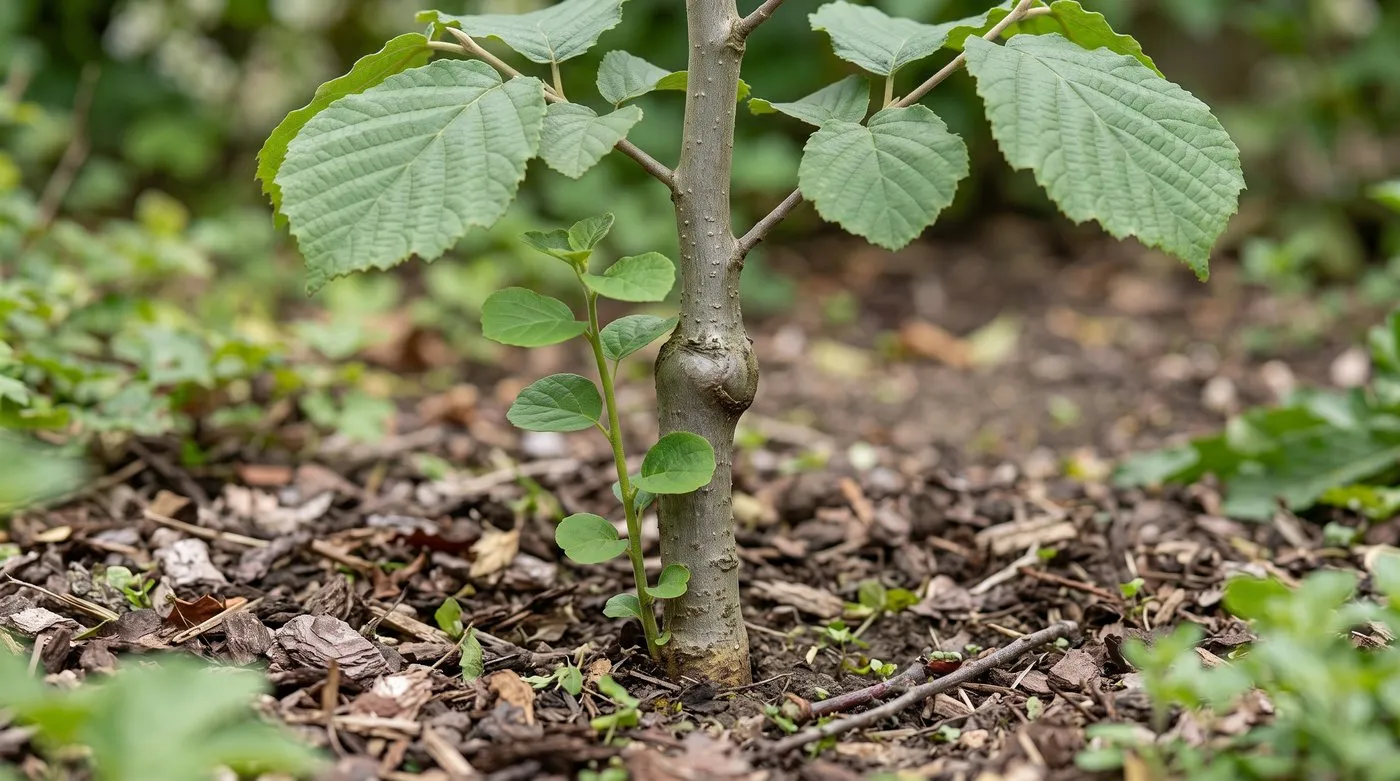
Shoots from below the graft bulge come from the rootstock. Their leaves are smaller and rounder, so pull them off at the base.
Autumn colour from witch hazel
 Witch hazel in full autumn colour, glowing orange, red and gold.
The autumn leaves are a second show. From late October, the big rounded leaves turn orange, red, crimson and gold. When they drop, you can see the bare branches that will carry the winter flowers.
Best varieties for autumn colour
‘Jelena’ has the most dramatic autumn display, moving through orange, copper, crimson and scarlet. ‘Diane’ turns deep red. ‘Pallida’ goes clear gold. ‘Arnold Promise’ gives orange and red. Plant it where low afternoon sun shines through the leaves to make them glow. Acers and amelanchier make great autumn neighbours.
What to plant with witch hazel
Fill the ground below with other winter flowers.
Snowdrops carpet the ground from January to March, flowering at just the same time. Winter aconites add golden-yellow cups from February. Hellebores flower from January to April in white, pink, purple and green.
For evergreen structure, Sarcococca confusa (sweet box) has glossy leaves and sweetly scented white flowers in winter. Mahonia x media ‘Charity’ gives yellow flower spikes from November to January. Pair it with wintersweet too, whose waxy yellow flowers have one of the strongest scents of winter. Our best winter-flowering plants for UK gardens has plenty more ideas.
Witch hazel also sits happily with rhododendrons, camellias and pieris, which like the same soil. Together they’ll give you colour from winter right through spring. See our best plants for acid soil for more options.
Common witch hazel mistakes
Most problems come back to soil and position.
Planting in chalky soil
The most common mistake. On alkaline soil, leaves turn yellow with green veins, growth slows and flowers are sparse. Check your soil before buying.
Planting too deep
Burying the graft encourages suckers and can rot the base. Keep the top of the rootball level with the soil. On heavy clay, plant it a little high.
Pruning hard
Heavy cutting causes dieback and spoils the shape. If it must be smaller, remove whole branches at the base, spread over a few years.
A cold, windy spot
Cold winds damage the flowers and blow away the scent. A hedge, wall or fence on the windy side makes a big difference.
Buying unnamed plants
Cheap, unnamed plants are often seed-grown. They can take years to flower and the colour is a lottery. Buy a named, grafted variety and you’ll know what you’re getting.
Witch hazel jobs month by month
| Month | Jobs |
|---|---|
| January | Enjoy the flowers |
| February | Peak flowering for most varieties |
| March | Flowering continues. Still time to plant |
| April | Remove dead or crossing branches. Feed if needed |
| May | Top up the mulch with bark or leaf mould |
| June | Water new plants if dry |
| July | Keep watering first-year plants in dry spells |
| August | Check for suckers and remove them |
| September | Check for suckers again |
| October | Autumn colour starts. Good time to plant |
| November | Leaves drop. Keep planting |
| December | Early varieties start flowering |
Frequently asked questions
When is the best time to plant witch hazel in the UK?
Plant between October and March, while it’s dormant. October and November are ideal, as the roots settle before the ground gets cold. Potted plants can go in at other times, but avoid drought and frozen ground. Water well and add a thick mulch.
Will witch hazel grow in clay soil?
Yes, as long as the clay isn’t chalky. Clay holds the moisture witch hazel likes. Dig in leaf mould to improve it and mulch every year. On alkaline clay over chalk or limestone, it’s likely to struggle.
Can I grow witch hazel in a container?
Yes, for a good few years. Use a pot at least 50cm wide and deep, with ericaceous compost and some perlite. Water regularly and feed with an ericaceous liquid feed from spring to late summer. It’ll eventually need a spot in the ground.
Does witch hazel need pruning?
Hardly at all. Remove dead, damaged or crossing branches in spring after flowering. Don’t prune hard, as it regrows slowly. If you must reduce it, take out one or two whole branches at the base.
Why is my witch hazel not flowering?
Chalky or alkaline soil is the usual reason. Test your soil first. Too much shade, frost-damaged buds in an exposed spot or a plant that’s still young can also be to blame. Seed-grown plants take longer to flower than grafted ones. Too much nitrogen feed can give leaves instead of flowers.
How fast does witch hazel grow in the UK?
Slowly, but it lives a long time. It takes many years to reach its full 3 to 4m, which means it rarely outgrows its spot. That makes it a good choice for smaller gardens. See our best trees for small gardens for more ideas.
Is witch hazel toxic to pets or children?
It isn’t usually listed as a poisonous plant. As with any garden plant, it’s best to stop pets and children chewing it. If a pet eats a lot of it and seems unwell, call your vet.
For more fragrant ideas, take a look at our best scented plants for UK gardens, with witch hazel as the star of winter.
Our team produces practical UK gardening guidance from source research, contributor records and established horticultural practice. Editorial standards are overseen by Matt W.