Key takeaways
- Meconopsis needs cool moist shade, acid soil and shelter from hot sun
- It thrives in Scotland and north or west Britain, struggles in the dry south
- Pinch out the first year's flower buds so the plant builds a clump and lives on
- 'Lingholm' is the most reliable repeat-flowering blue poppy for most gardens
- Soil pH 5.0 to 6.5, rich in leaf-mould, never bone dry and never waterlogged in winter
- Divide established clumps straight after flowering, in July or August
The Himalayan blue poppy has a reputation for being temperamental, and it is earned. Meconopsis wants the cool, damp, dappled-shade conditions of a high mountain woodland, and most UK gardens cannot offer that without help. Get the conditions right and you grow one of the most startling blue flowers in cultivation. Get them wrong and the plant sulks, then dies.
Why Meconopsis Is So Hard to Grow in Britain
Meconopsis evolved in the cool, wet, high-altitude woodlands of the Himalayas, western China and Tibet, often above 3,000 metres. That heritage sets every rule for growing it. It expects cool roots, constant moisture, acid soil and shelter from harsh sun. The further your garden sits from those conditions, the harder it fights you.
Summer heat is the main killer. Once soil temperatures climb and the air turns dry, the plant scorches and rots at the crown. A run of hot, dry weeks in July can finish a healthy clump in a fortnight. Drying wind does the same damage faster.
Soil chemistry matters just as much. These poppies need acid ground, ideally pH 5.0 to 6.5. On chalk or limestone the leaves yellow with chlorosis and the plant starves. If you garden on alkaline soil, raised beds of acid leaf-mould or large containers are the honest route. Our guide on how to make soil more acidic covers sulphur dosing and ericaceous beds if you want to shift a border.
Where the Blue Poppy Actually Thrives in the UK
Geography decides a lot here. The Himalayan blue poppy is far easier in Scotland, the Lake District, Wales and the cool, damp west than in the warm, dry south-east. The famous blue poppy displays at gardens like Branklyn in Perth and Crarae in Argyll are no accident. Cool summers, high rainfall and naturally acid soil do most of the work.
Rainfall is the quiet factor. Areas with over 1,000mm a year suit Meconopsis far better than the 600mm belt of the east. Where nature does not provide the water, you must, and a leaking butt in a dry July is a poor substitute for soft Highland rain.
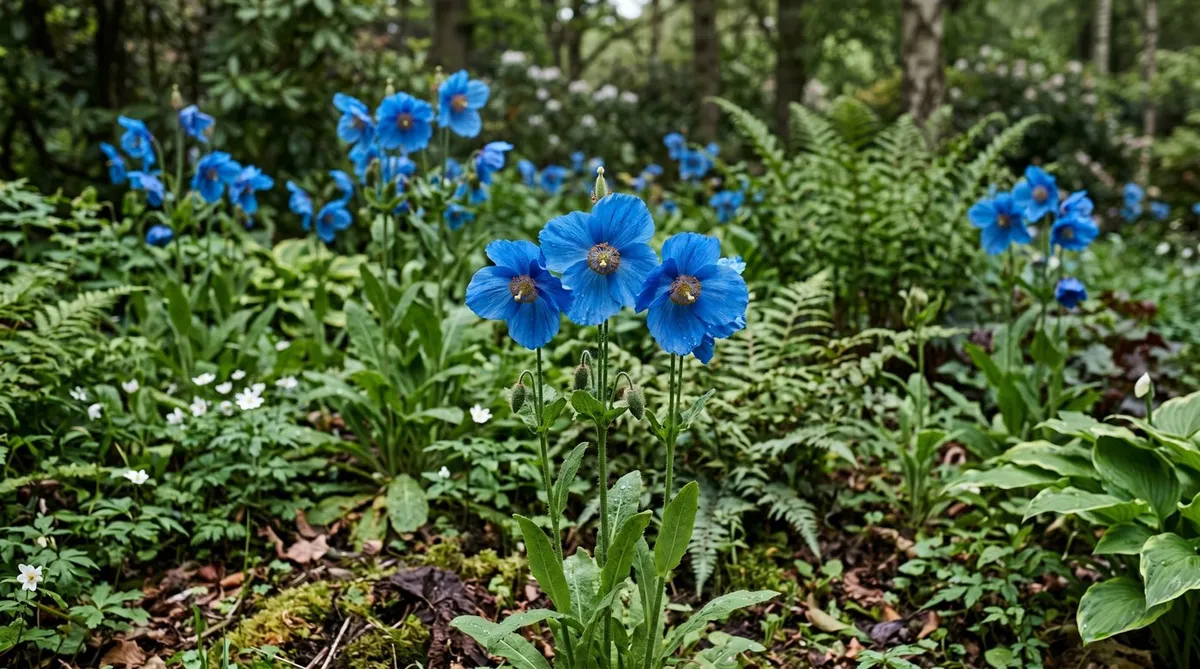
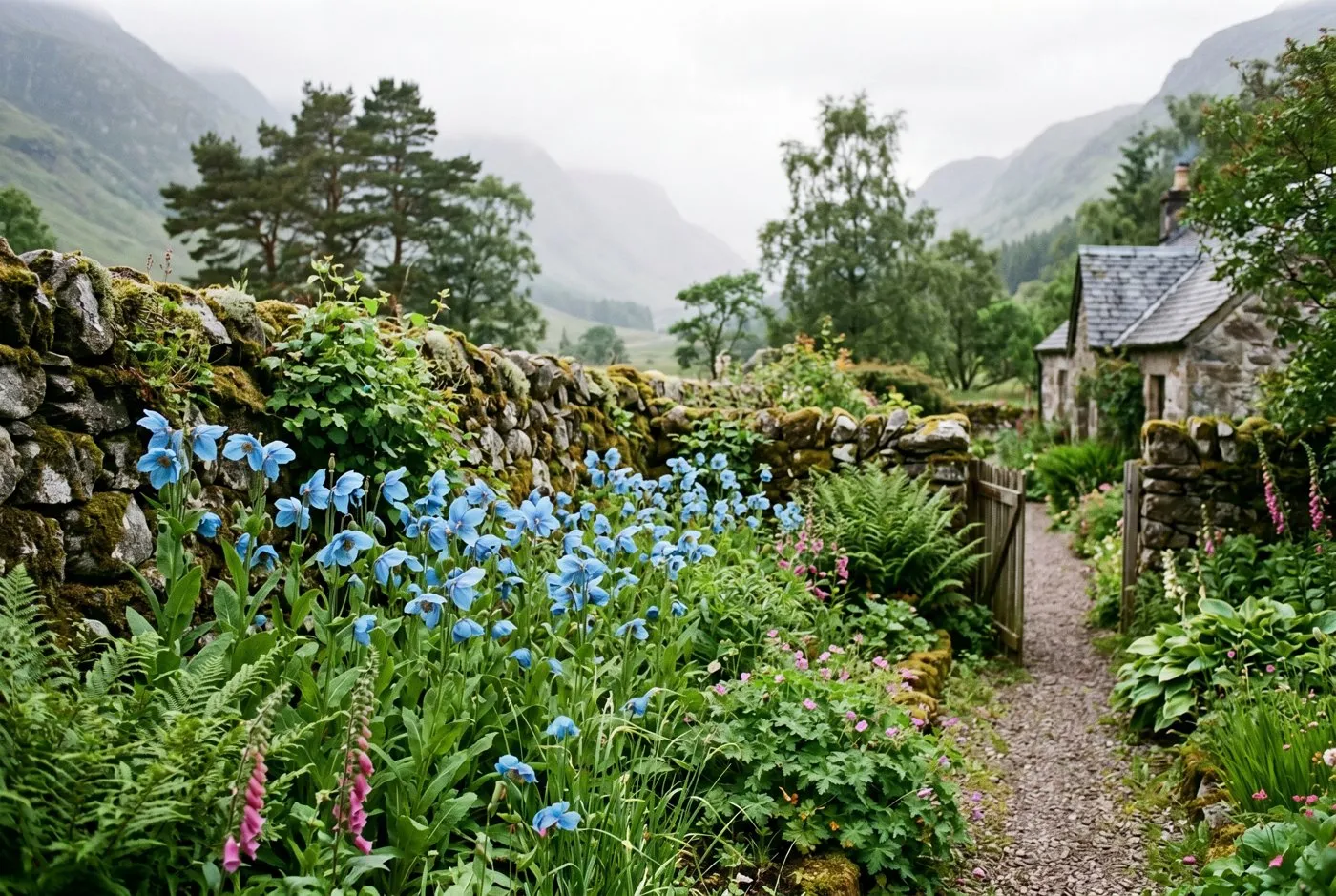 A Scottish garden setting where the blue poppy thrives without coddling. Cool summers, over 1,200mm of rain a year and naturally acid soil are exactly what Meconopsis wants. This is the easy mode the south never gets.
Choosing the Right Meconopsis Species
Not all blue poppies behave the same. Some are dependable perennials. Others flower once, set seed and die like biennials. Picking the right one is the difference between a clump that returns for years and a single brief show. For a first attempt, buy a named perennial hybrid as a potted plant, never a tray of mixed seed.
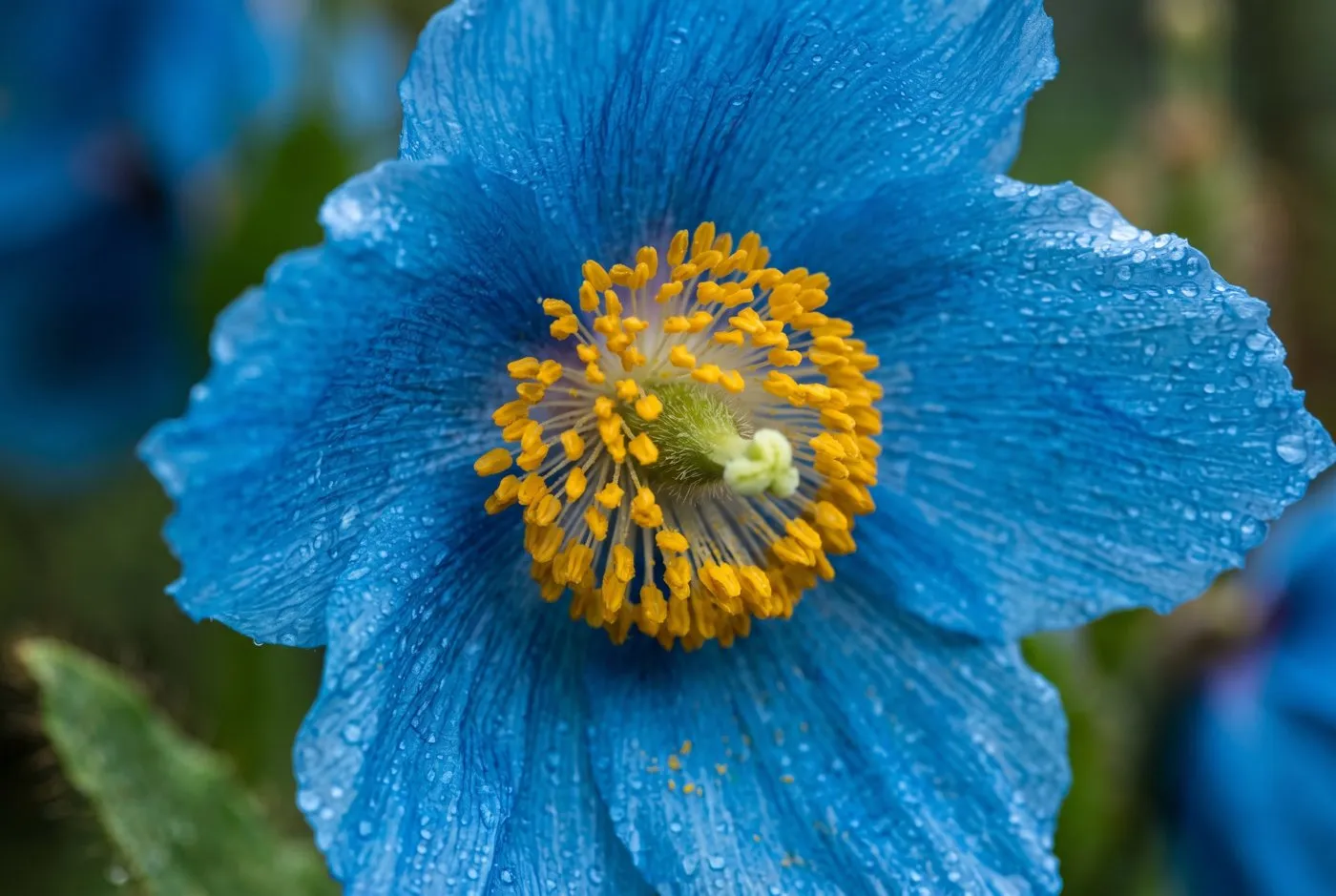 The crinkled, tissue-paper petals of Meconopsis ‘Lingholm’ in close-up. The clear sky-blue against the golden boss of stamens is the colour people travel to Scottish gardens to see. Soil acidity holds the blue true.
The Buds Trick That Keeps Meconopsis Alive
When a maiden plant throws up its first flower stem, pinch it out at the base before the buds open. The plant redirects that energy into making a bigger root system and, crucially, multiple crowns. A multi-crown clump is a perennial. A single-crown plant that has flowered is often a goner.
Once a plant has built a clump over its first full season, let it flower freely from year two. The clump-forming perennial types like ‘Lingholm’ then bloom every June without complaint, provided the soil stays cool and damp.
Building the Cool, Moist, Acid Soil It Needs
Soil is where most blue poppies are won or lost. Meconopsis wants ground that is acid, rich in leaf-mould and permanently moist but never waterlogged at the crown. That sounds contradictory, but it is the woodland-floor condition the plant evolved in: damp humus below, free-draining material at the surface.
Before planting, dig in a generous barrowload of leaf-mould or composted bark per square metre. Leaf-mould is the closest thing to the rotted woodland litter Meconopsis grows in naturally. If you have none, our guide on how to make leaf mould shows how to start a bin from autumn leaves. Mix in ericaceous compost if your soil tends neutral, to nudge the pH down towards 5.5.
Aim for pH 5.0 to 6.5 and test before you plant. On chalk, do not fight the open ground. Build a raised bed of imported acid topsoil and leaf-mould, or grow in large containers of ericaceous compost. For the wider picture on testing and adjusting acidity, read our soil pH explained guide.
Watering, Mulching and Surviving the Crown-Rot Risk
Meconopsis hates two opposite things, and balancing them is the daily job of growing it. It must never dry out in summer, yet its crown must never sit in cold winter wet. Get either wrong and you lose the plant.
Winter is the opposite problem. A crown sitting in saturated, airless soil rots in the cold. Sharp drainage right at the crown is the answer: a collar of horticultural grit around the neck of the plant lets surface water drain away while the leaf-mould below stays moist. On heavy ground, plant slightly proud on a low mound so water runs off the crown.
Warning: Never let a Meconopsis crown freeze while waterlogged. Cold wet sitting around the neck is the commonest winter killer. A handful of grit around the crown and a free-draining surface prevents it. Moisture belongs below the roots, not at the collar.
Dividing Established Clumps to Bulk Up Your Stock
Once a perennial type like ‘Lingholm’ has settled into a fat clump, division is the surest way to make more plants and keep the parent vigorous. It is also free, which matters when potted blue poppies cost six to nine pounds each.
Divide straight after flowering, in July or August, while the plant is still in active growth but the flowers are spent. Lift the whole clump with a fork, shake off loose soil, and tease the individual crowns apart by hand. Each crown with its own roots becomes a new plant. Replant each division immediately into moist leaf-mould soil, firm gently, water well and keep shaded until it settles.
Month-by-Month Meconopsis Care Calendar
Timing the jobs across the year keeps a blue poppy in good heart. This calendar reflects an average UK season; gardens in Scotland and the north run a week or two behind the south.
| Month | Task |
|---|---|
| March | Mulch with 5cm leaf-mould as growth restarts; refresh grit around crowns |
| April | Plant out potted stock into cool acid shade; keep new plants damp |
| May | Watch for the first flower stems on young plants; pinch them out |
| June | Main flowering of established clumps; water deeply in dry spells |
| July | Divide spent clumps after flowering; replant divisions at once |
| August | Continue dividing; deadhead unless saving seed; keep soil moist |
| September | Collect ripe seed if wanted; ease off watering as growth slows |
| October | Clear fallen leaves off crowns to prevent rot; top up grit collars |
| November | Improve crown drainage before winter wet; check no waterlogging |
| December | Leave dormant crowns alone; ensure surface water drains away |
| January | Do nothing; protect from prolonged waterlogging in mild wet spells |
| February | Order or source potted plants; prepare new beds with leaf-mould |
The two dates that matter most are May, when you pinch first buds, and July, when you divide. Miss those windows and you lose a year. Everything else is keeping the soil cool, acid and damp.
Common Mistakes That Kill Blue Poppies
Most Meconopsis failures trace back to a handful of repeated errors. Knowing them in advance saves the plant and your money.
Avoid those five and you are most of the way to a blue poppy that comes back. For more shade-loving choices to plant alongside, see our best plants for shade guide, and for an acid woodland scheme our list of the best plants for dry shade suits the trickier corners nearby.
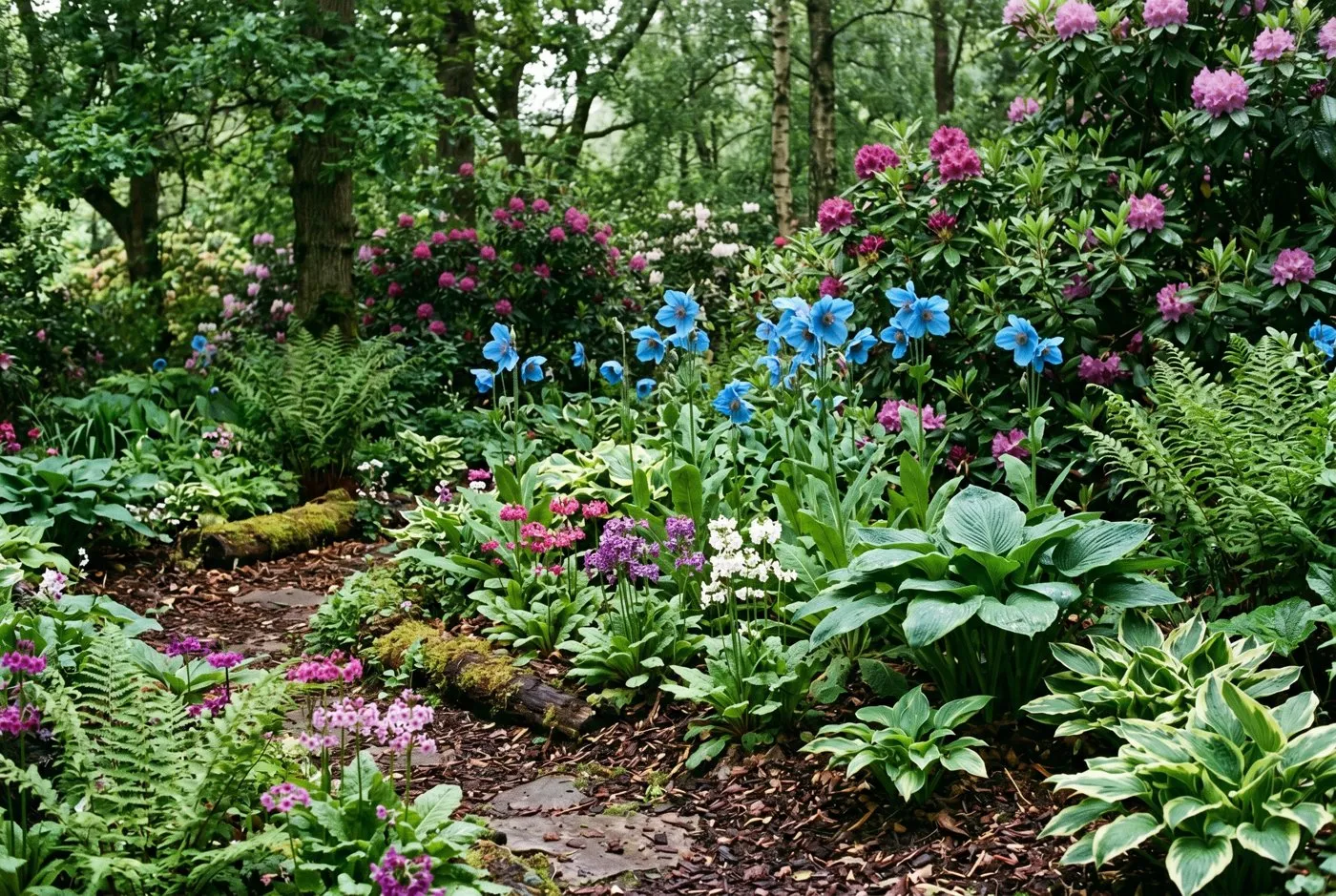 A layered acid woodland scheme: blue poppies with rhododendrons, primulas, hostas and ferns. These companions share the same cool, moist, acid needs, so the whole bed thrives or struggles together. Plant them as a community.
Companion Planting for a Woodland Blue Poppy Bed
Meconopsis looks and grows best in company, set among other plants that share its love of cool, moist, acid shade. A woodland community holds soil moisture, shades the ground and looks far more natural than a lone poppy in bare earth.
Rhododendrons and azaleas make the ideal backbone. They need the same acid, leaf-mould soil and light shade, and their spring flowers hand over to the June poppies. If you have not grown them, our how to grow rhododendrons guide covers acid beds and feeding. Primulas, especially the candelabra types, love the same damp ground and flower in the same window of clear blues, yellows and pinks.
For foliage and ground cover, hostas and ferns keep the soil shaded and cool, exactly what the poppy roots want. Camellias can take the back of an acid woodland bed too; our how to grow camellias guide covers their needs. Acid-loving blueberries can even earn a place in a productive corner, covered in our how to grow blueberries guide. Plant the whole bed as one community and the moisture, shade and acidity look after each other.
For broader inspiration on filling difficult cool corners, browse the full Garden UK plants section for shade and acid-loving choices.
Frequently asked questions
Why is Meconopsis so hard to grow in the UK?
It needs cool moist shade and acid soil most UK gardens lack. The Himalayan blue poppy comes from high, damp, cool mountain woodland. Hot dry summers, alkaline soil and drying wind all kill it. Northern and western gardens with acid, leaf-mould soil and a cool aspect suit it best. The dry, warm south-east is the hardest region of all.
Which Meconopsis is the easiest to grow?
Meconopsis ‘Lingholm’ is the most reliable perennial blue poppy. It is a fertile, vigorous garden hybrid that comes back year after year if kept in cool moist shade. True Meconopsis betonicifolia and grandis can behave as short-lived biennials. For a first attempt, buy ‘Lingholm’ as a potted plant in spring, not seed.
Should I let Meconopsis flower in its first year?
What soil does the Himalayan blue poppy need?
Cool, moist, acid soil rich in leaf-mould, around pH 5.0 to 6.5. It hates dry ground and chalk. Dig in plenty of leaf-mould or composted bark before planting. Keep it damp through summer but never let the crown sit in winter wet. Sharp drainage at the crown with moisture below is the balance to aim for.
When and how do you divide Meconopsis?
Divide established clumps right after flowering, in July or August. Lift the clump, tease apart the individual crowns by hand, and replant each one into moist leaf-mould soil straight away. Keep them shaded and watered until settled. Division every two to three years keeps the perennial types vigorous and is the surest way to bulk up ‘Lingholm’.
Now build the wider acid woodland garden
A blue poppy is the jewel, but it shines brightest in the right setting. Now you have the conditions sorted, read our guide on the best plants for acid soil to fill out the bed with companions that share its cool, moist, acid needs. The Royal Horticultural Society’s Meconopsis advice is a useful second opinion on siting and seed-raising, and the Woodland Trust has good free guidance on building the leaf-mould-rich, dappled-shade conditions these poppies depend on.
Our team produces practical UK gardening guidance from source research, contributor records and established horticultural practice. Editorial standards are overseen by Matt W.