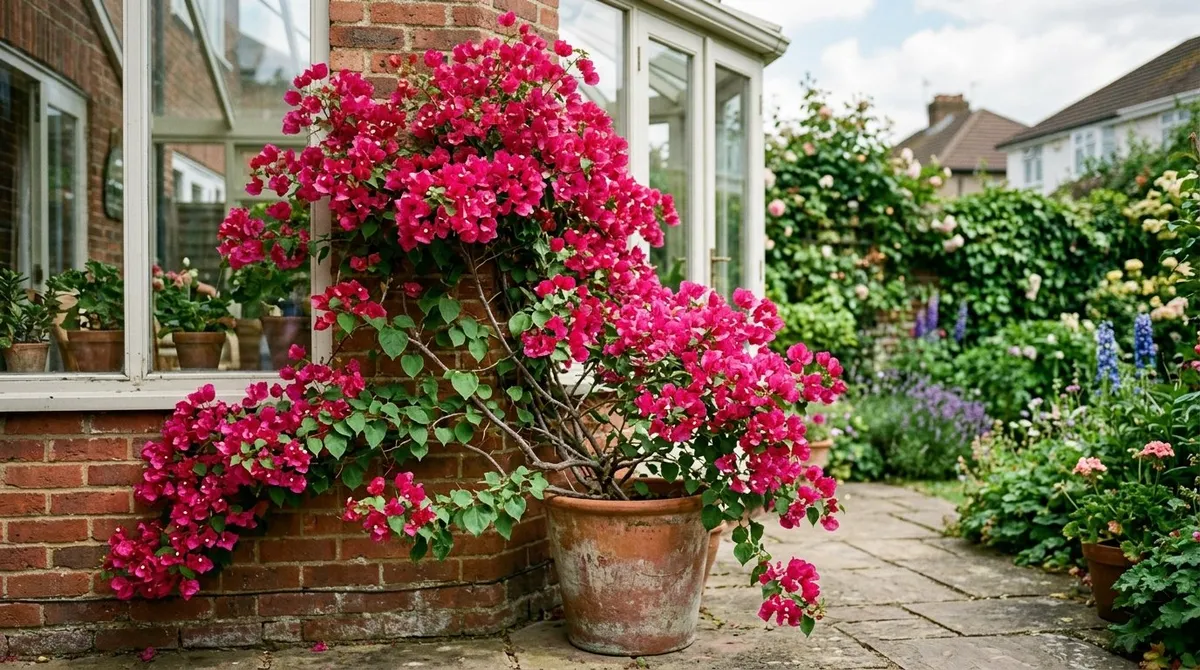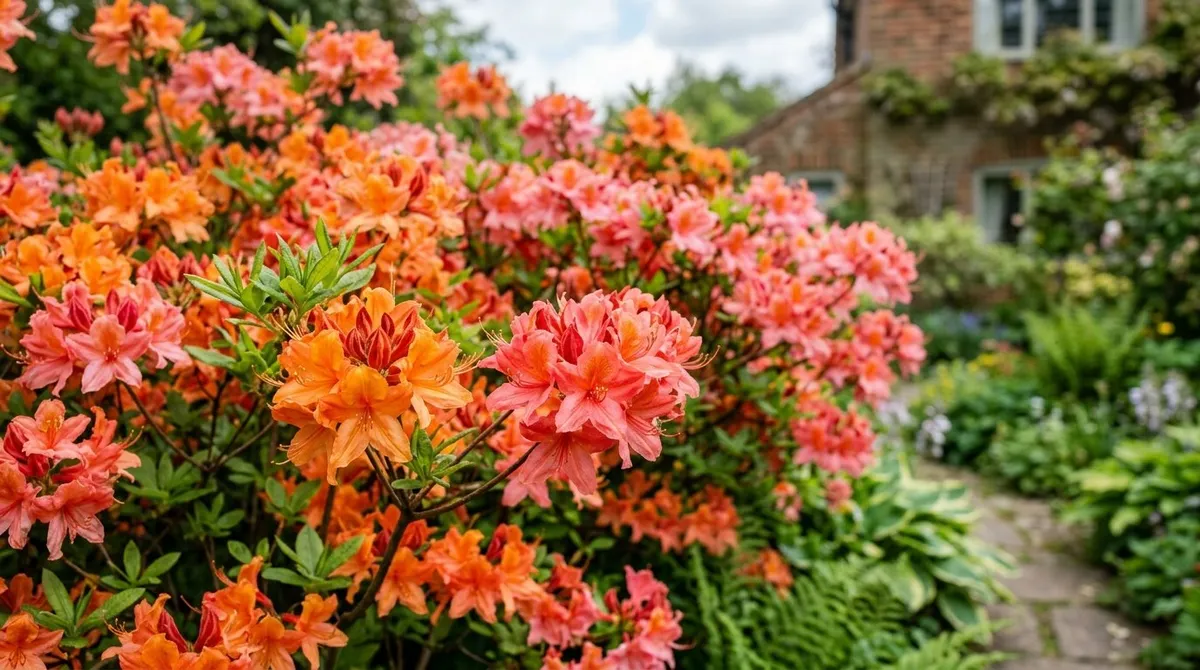
Key takeaways
- Azaleas need acid soil, so test yours before planting
- On limey or neutral soil, grow them in pots or raised beds of ericaceous compost
- Water pot azaleas with rainwater; hard tap water slowly turns leaves yellow
- Plant shallow and mulch with leaf mould, bark or pine needles
- Prune or deadhead straight after flowering, never in autumn or winter
- All parts are toxic to dogs, cats and horses if eaten
Azaleas give you more flower for the space than almost any other spring shrub. A happy plant disappears under its blooms for a few weeks, then settles into a neat mound for the rest of the year. The secret is acid soil. Get that right and they ask for very little.
This guide covers choosing an azalea, testing your soil, planting in the ground or a pot, watering, feeding, pruning and fixing yellow leaves.
Are azaleas and rhododendrons the same plant?
Botanically, azaleas are rhododendrons. They sit inside the genus Rhododendron, but gardeners keep them apart because they look and behave differently.
Azaleas usually have smaller, thinner leaves and smaller, funnel-shaped flowers. What they lack in flower size, they make up for in number, often hiding their leaves completely in spring. Many azaleas also drop their leaves in autumn, after a fiery show of colour.
If you want big evergreen leaves and huge flower trusses, look at the guide to growing rhododendrons instead. The soil and care are almost identical.
Like all rhododendrons, azaleas are toxic to dogs, cats and horses if eaten. Most pets leave them alone, but keep an eye on puppies that chew everything.
Evergreen or deciduous azalea: which should you grow?
Choose an evergreen Japanese azalea for a low, tidy mound that suits pots and small gardens. Choose a deciduous azalea for height, scent and autumn colour.
Evergreen Japanese azaleas stay compact, often under 1m tall and wider than high. They keep their small glossy leaves through winter and flower in a dense sheet of pink, red, magenta, white or salmon in April and May. Kurume types such as ‘Hinomayo’ (soft pink) and ‘Hino Crimson’ (red) are classic small-garden choices.
Deciduous azaleas, including the Exbury, Knap Hill and Ghent hybrids, grow taller and more open. They flower in May and early June in orange, yellow, red, pink and cream, and many are scented. In autumn the leaves turn red and orange before they fall.
| Feature | Evergreen Japanese | Deciduous (Exbury, Knap Hill, Ghent) |
|---|---|---|
| Size | Low, spreading mound | Taller, open shrub |
| Flowers | Small, in a dense sheet | Larger, often scented |
| Colours | Pink, red, magenta, white | Orange, yellow, red, cream |
| Flowering | April to May | May to early June |
| Autumn | Keeps its leaves | Red and orange leaves, then bare |
| Best for | Pots, edging, small gardens | Borders, scent, autumn colour |
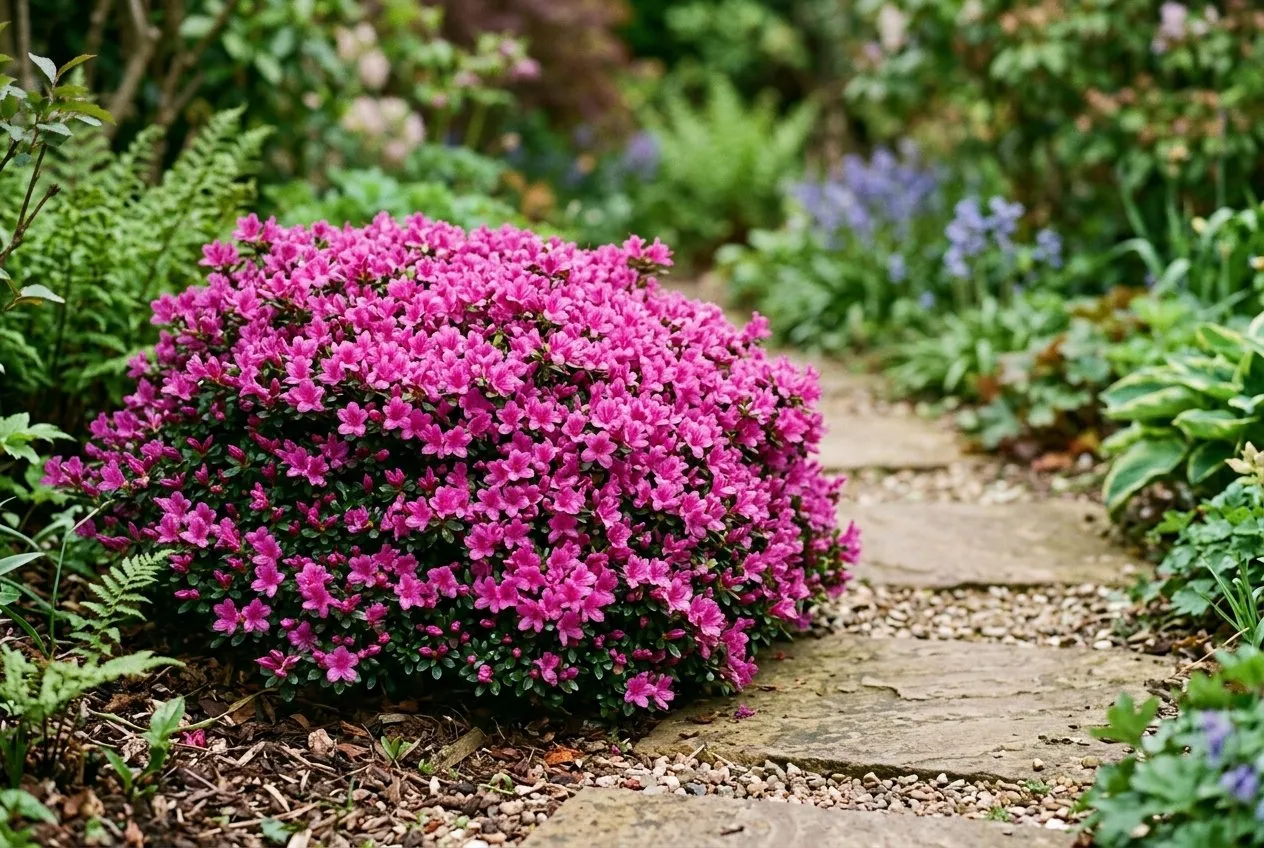
An evergreen Japanese azalea at its peak. These neat mounds keep their small leaves all winter and suit edging and pots.
What soil do azaleas need?
Azaleas need acid soil, roughly pH 4.5 to 6. This one fact decides whether they thrive or sulk. They are ericaceous plants, like heathers and blueberries, and they can’t take up iron from alkaline soil.
Test your soil before you buy. A simple test kit from a garden centre gives a good enough reading from a few spots around the garden. If the soil is acid, plant straight into the ground. If it is neutral or limey, grow azaleas in pots or a raised bed of ericaceous compost instead. Trying to acidify a whole chalky border rarely works for long.
The guide to soil pH explained walks through testing step by step.
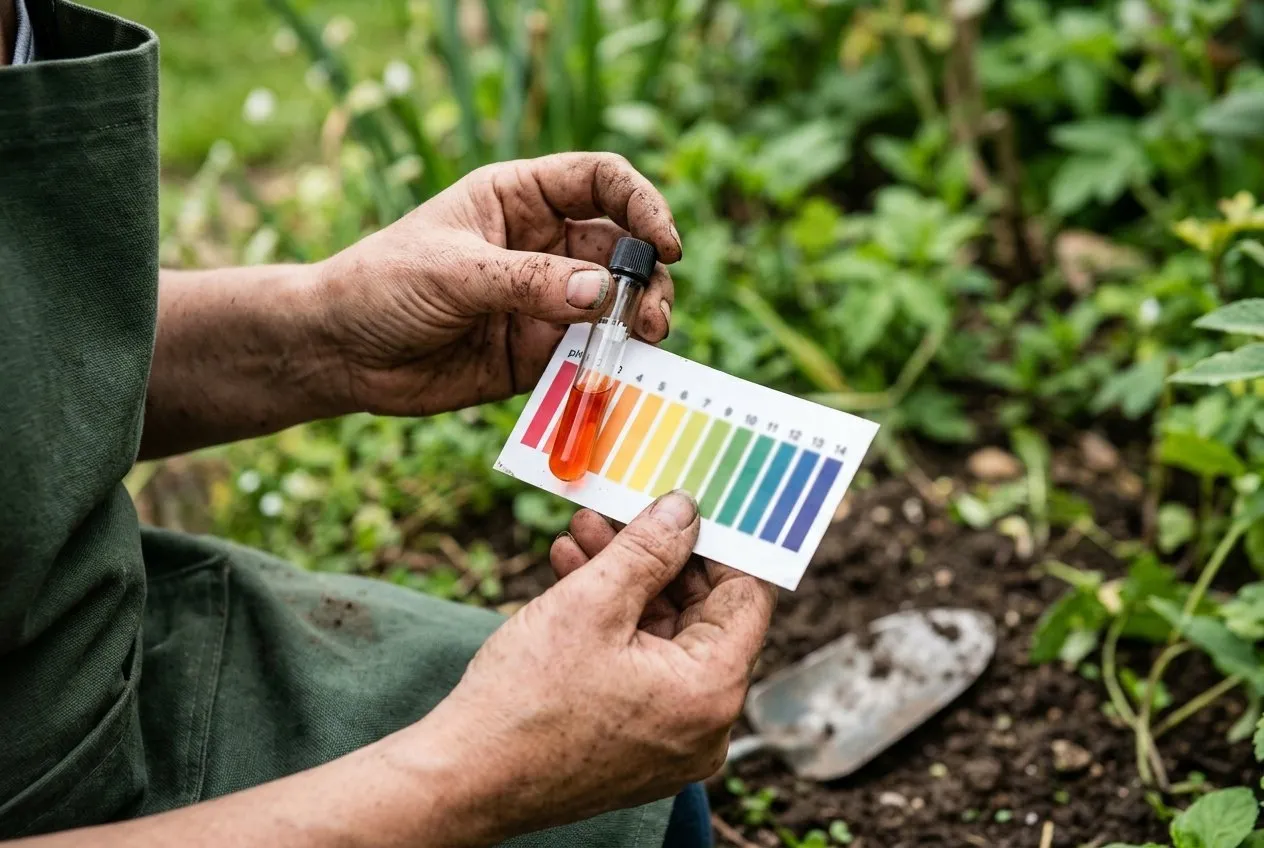
A quick soil test tells you whether azaleas can go straight in the ground or need a pot of ericaceous compost.
How to plant azaleas
Plant azaleas shallow, because their roots are shallow. They grow a dense mat of fine roots close to the surface, and burying the root ball is one of the quickest ways to lose one.
The best times to plant are autumn and spring, when the soil is moist but not frozen.
- Dig a hole twice the width of the root ball but no deeper.
- Gently tease out the roots if they circle the pot.
- Set the plant so the top of the root ball sits level with the soil surface, or a touch above.
- Backfill with the dug soil mixed with leaf mould or ericaceous compost, and firm gently.
- Water in with rainwater and mulch around the plant, keeping the mulch off the stem.
Choose a spot in light, dappled shade, sheltered from cold winds. Under high trees, or on an east-facing side of the house, is ideal. Avoid places where early morning sun hits frosted flowers, which can turn them brown.
On limey soil, a raised bed filled with ericaceous compost works well. Line the sides if it sits on chalk, so lime doesn’t creep in.
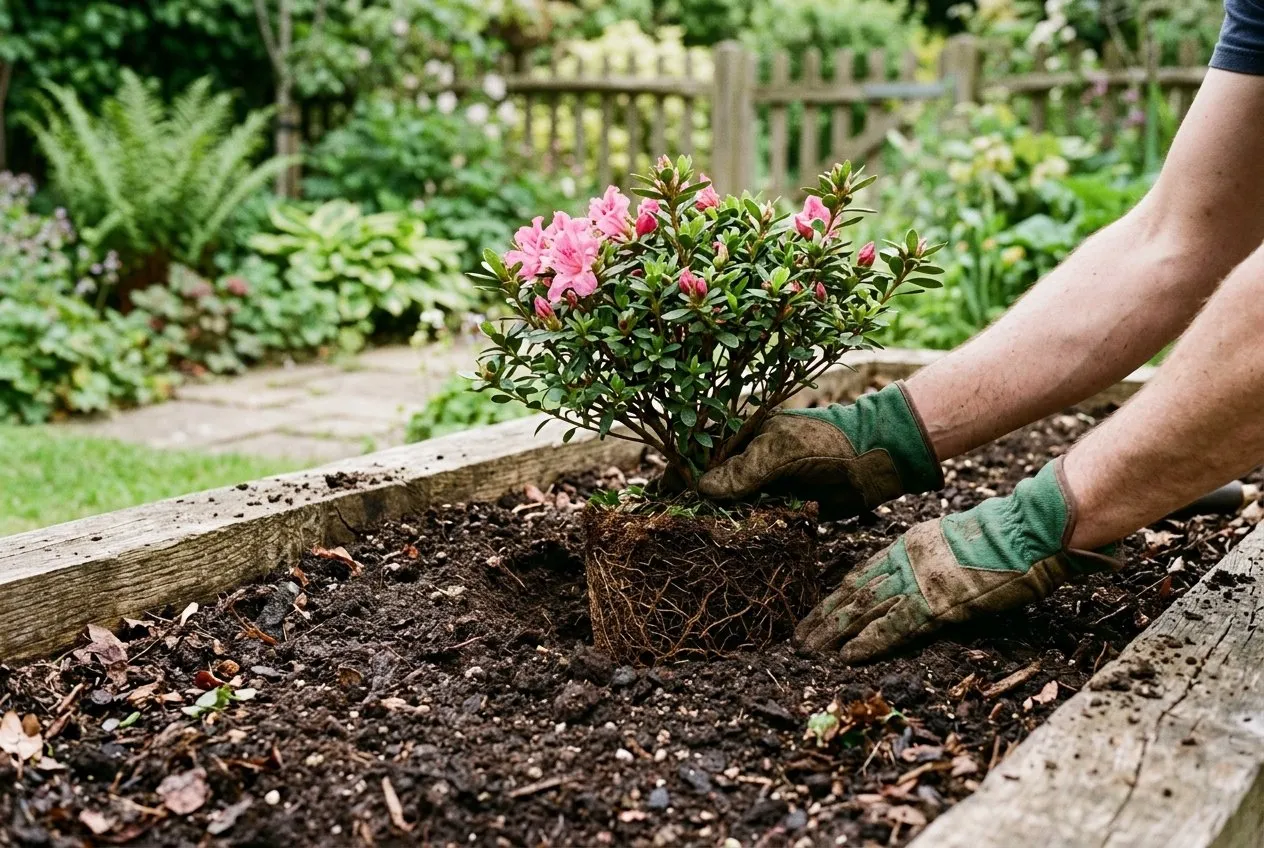
Set the root ball level with the surface, never buried. Shallow planting keeps the fine roots happy.
Growing azaleas in pots
Pots are the easiest answer on limey soil. A container lets you give an azalea exactly the acid conditions it needs. Evergreen Japanese types are the natural choice, though smaller deciduous ones work too.
Choose a pot 30-45cm across with several drainage holes. Fill it with peat-free ericaceous compost. Ordinary multipurpose compost isn’t acid enough and the plant will soon yellow. Plant at the same depth as before, leaving a gap at the rim for watering, and top with bark to hold in moisture.
Feed with an ericaceous liquid feed every couple of weeks from spring to midsummer, then stop. Top up with fresh ericaceous compost each spring and move into a slightly bigger pot every few years. The guide to the best plants for acid soil suggests good partners for a group of pots.
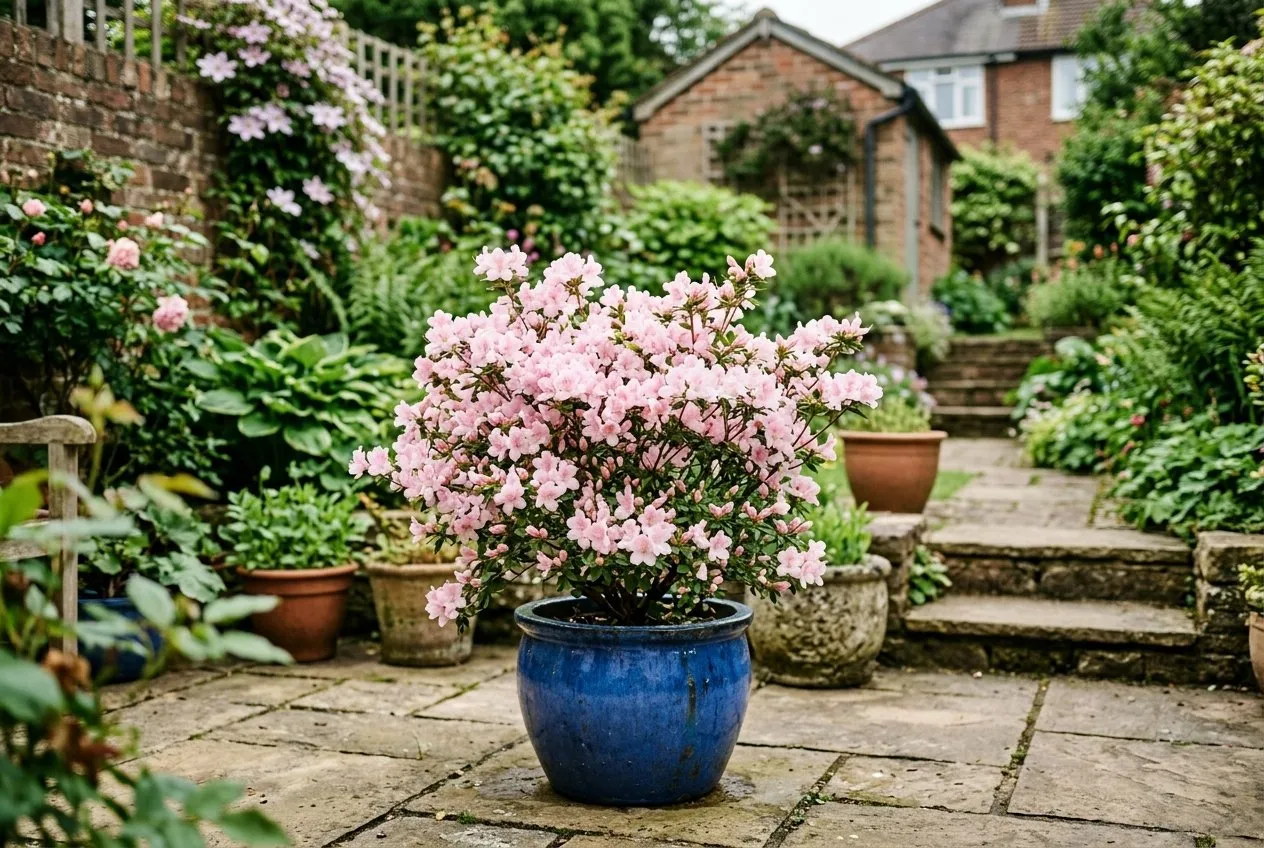
A pot of ericaceous compost lets you grow azaleas on any soil, even chalk or limey clay.
Watering azaleas: why rainwater matters
Water azaleas with rainwater whenever you can, especially in pots. In hard-water areas, tap water carries lime. Over a season or two it raises the pH of ericaceous compost and the leaves start to yellow.
Fit a water butt and save it for your acid-lovers. If you have to use tap water in a dry spell, it is fine for a short while. Switch back to rainwater as soon as the butt refills.
Keep the compost evenly moist through spring and summer, as the shallow roots dry out fast. Pay special attention in late summer, when next year’s flower buds are forming. Never leave a pot standing in a saucer of water.
Why are my azalea leaves turning yellow?
Yellow leaves with green veins usually mean lime-induced chlorosis. The soil or water is too alkaline, so the plant can’t take up iron, even though the iron is there.
A general fertiliser won’t help. Instead:
- Switch to rainwater for watering.
- Mulch with leaf mould, bark or pine needles.
- Apply sequestered iron (chelated iron), following the pack, for a quick green-up.
- If the plant is in limey ground, move it into a pot or raised bed of ericaceous compost.
Yellowing older leaves in autumn on a deciduous azalea is normal, though. That’s just the leaves getting ready to drop.
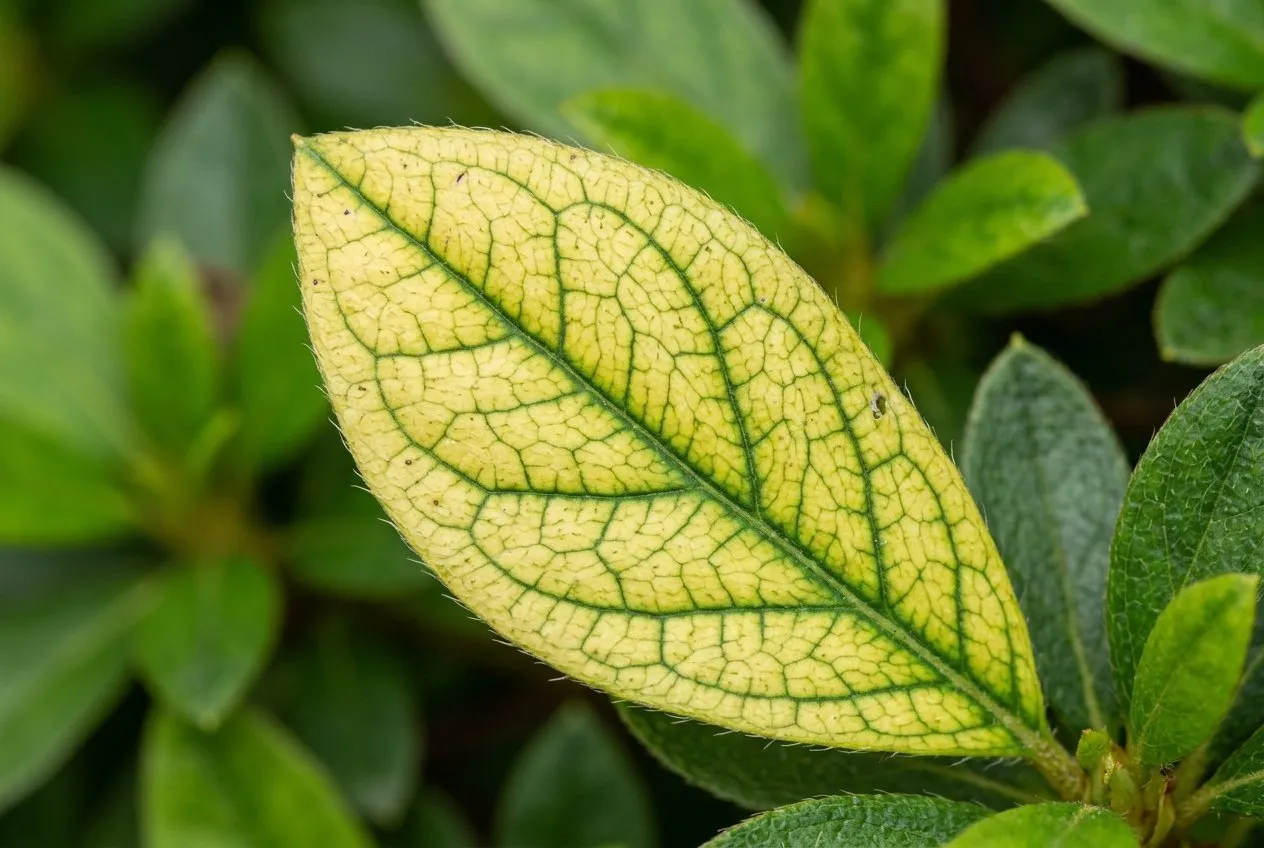
Yellow leaf, green veins: the classic sign the soil or water is too limey for an azalea.
Feeding and mulching azaleas
Azaleas are light feeders. One dose of ericaceous fertiliser in spring is plenty for plants in the ground. Overfeeding gives soft growth that scorches easily.
Mulch matters more than feed. Each spring, spread a layer about 5cm deep of leaf mould, composted bark or pine needles over the root area. It keeps the shallow roots cool and moist, smothers weeds and helps keep the soil acid. Keep it a few centimetres clear of the stem.
Don’t hoe or dig around an established azalea, as you’ll tear the surface roots. Avoid mushroom compost and wood ash as mulches, because both are alkaline.
Deadheading and pruning azaleas
Azaleas need very little pruning. The main jobs are deadheading and tidying, both straight after flowering.
On deciduous and large-flowered azaleas, snap off the spent flower heads once they fade. Do it gently: next year’s shoots sit right behind the old flower. On small-flowered evergreen azaleas, deadheading isn’t needed.
If a plant grows lopsided or too big, shorten wayward shoots straight after flowering, by late June at the latest. That gives the plant all summer to make new growth and set buds. Prune in autumn or winter and you cut off next spring’s flowers. An old, overgrown azalea is best renovated gradually, taking out a few of the oldest stems each spring over two or three years.
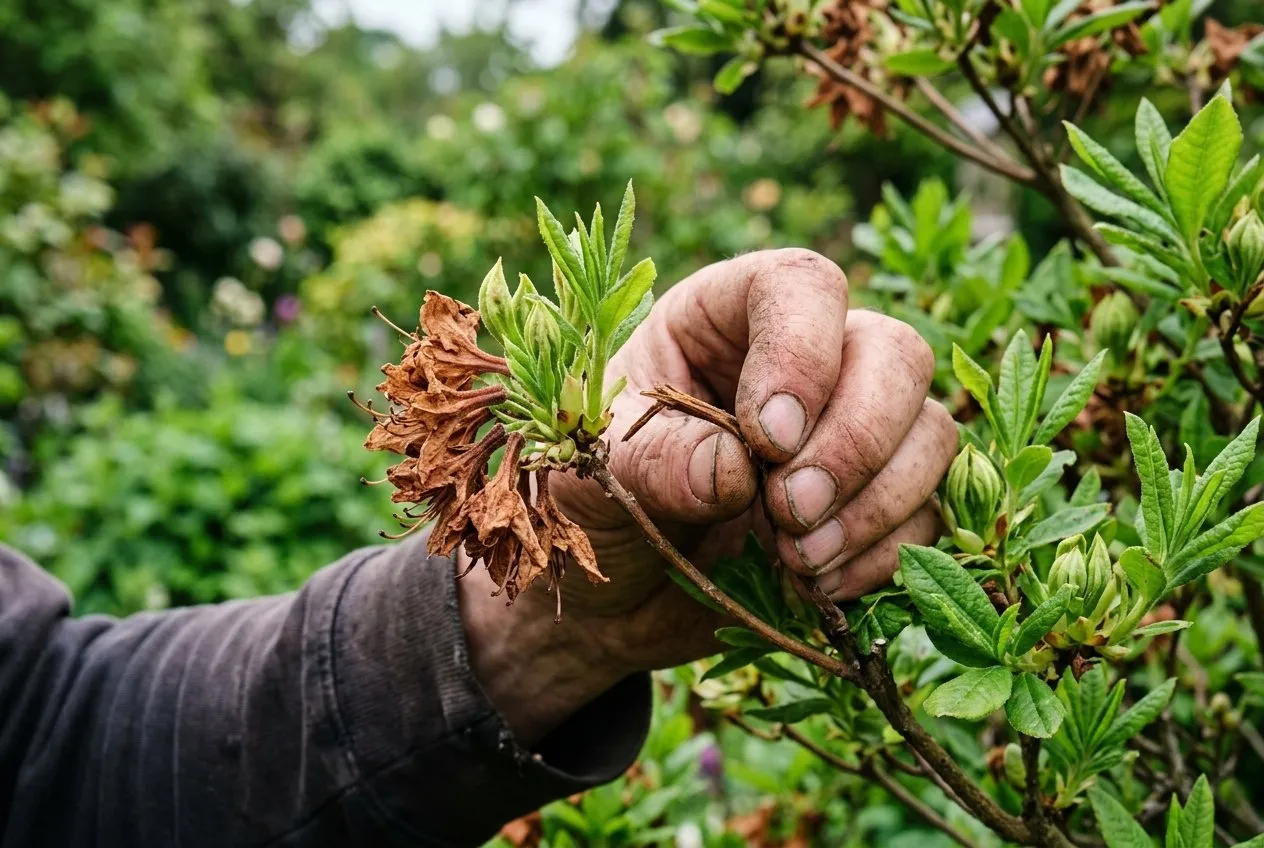
Snap off faded flowers carefully. The new shoots sitting just behind them carry next year’s blooms.
Azalea pests and diseases
Azaleas are fairly trouble-free in the right spot. These are the problems to watch for.
- Azalea gall: fleshy, pale green swellings on leaves or flowers in a wet spring, turning white and powdery. Pick them off and bin them before they turn white.
- Rhododendron lace bug: fine pale mottling on top of leaves and rusty spots underneath. It’s worst on plants in hot sun and dry soil, so shade and moisture help.
- Vine weevil: notched leaf edges in summer, and grubs eating roots in pots over winter. Water a vine weevil nematode into pots in late summer or early autumn.
- Powdery mildew: white dusty patches on deciduous azaleas in dry summers. Keep the roots moist and clear fallen leaves.
The RHS azalea gall page has photos to help you tell galls from new growth.
Azalea care calendar
| Month | What to do |
|---|---|
| January | Check pots aren’t waterlogged. Move exposed pots to shelter |
| February | Prepare raised beds or pots with ericaceous compost |
| March | Top up pots with fresh ericaceous compost. Check water butts |
| April | Feed plants in the ground. Start liquid feeding pots |
| May | Main flowering. Water well with rainwater |
| June | Deadhead and prune straight after flowering |
| July | Keep pots moist. Stop liquid feeding at the end of the month |
| August | Water well while flower buds form. Apply vine weevil nematodes to pots |
| September | Water less as growth slows. Plant new azaleas |
| October | Autumn colour on deciduous types. Refresh mulch |
| November | Plant or move azaleas while the soil is moist |
| December | No feeding. Protect pots from hard frost |
Common mistakes with azaleas
- Planting in limey soil. The plant yellows and slowly declines. Test first and use pots or raised beds if your soil isn’t acid.
- Watering pots with hard tap water. Lime builds up in the compost. Use rainwater wherever you can.
- Planting too deep. A buried root ball rots and the fine roots suffocate. Keep it level with the surface.
- Mulching with alkaline material. Mushroom compost and wood ash undo your good work. Stick to leaf mould, bark or pine needles.
- Pruning at the wrong time. Autumn or winter cuts remove next year’s flowers. Prune straight after flowering.
Autumn colour from deciduous azaleas
Deciduous azaleas earn their space twice a year. As nights cool in autumn, the leaves of Exbury, Knap Hill and Ghent hybrids turn yellow, orange and deep red before they fall.
Colour is strongest on plants with a bit more sun and in a cool, dry autumn. In deep shade they colour less. If autumn interest matters to you, plant deciduous azaleas where low autumn light catches them, alongside acers and other acid-lovers. For another shrub with lovely autumn leaves and winter flowers, see the guide to witch hazel.
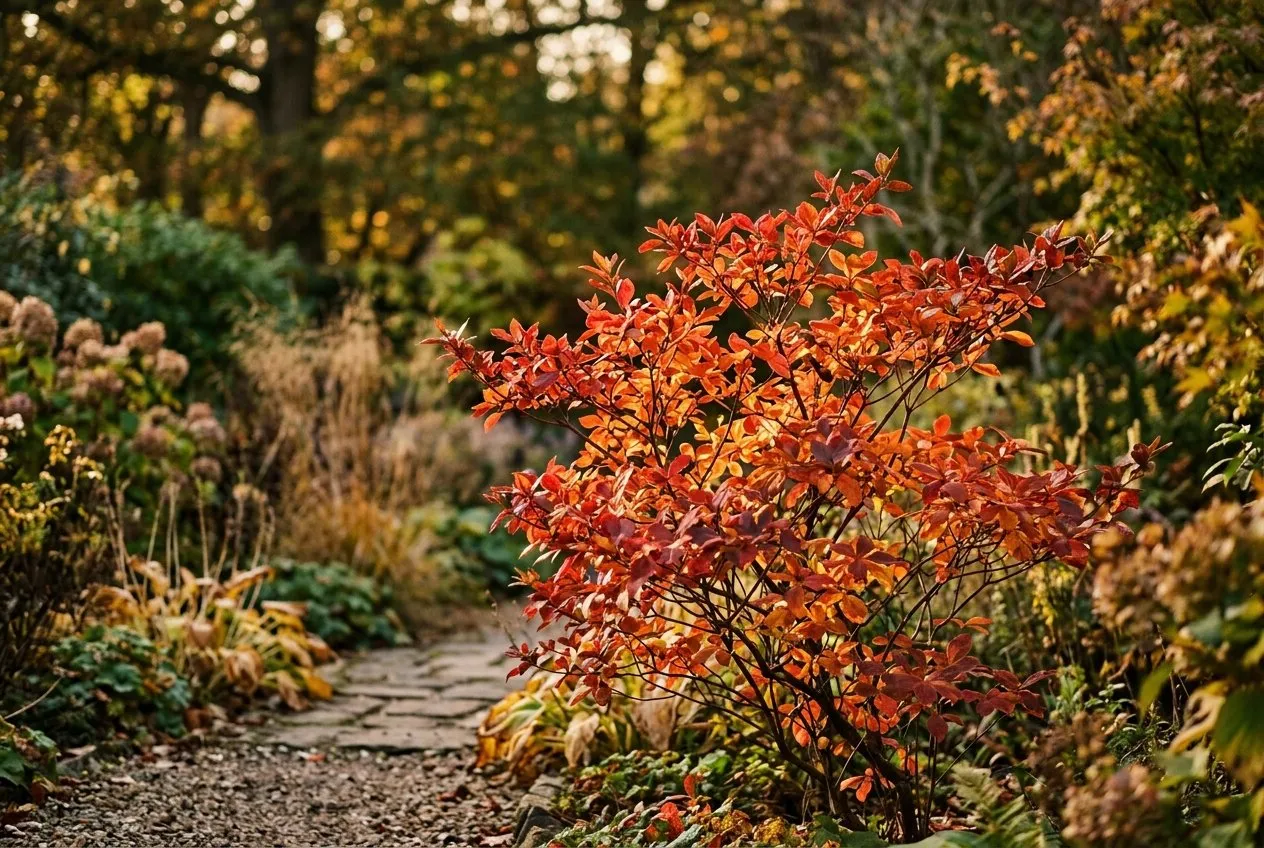
Deciduous azaleas put on a second show in autumn, with leaves in fiery reds and oranges.
More shrubs for acid soil
Azaleas share their soil needs with a whole group of shrubs. For evergreen leaves and bright spring shoots, read the guide to growing pieris. For year-round colour on the same acid bed, try growing heather, or browse more plant guides.
Frequently asked questions
Are azaleas and rhododendrons the same plant?
Botanically yes, azaleas belong to the genus Rhododendron. Gardeners treat them separately because azaleas usually have smaller leaves and smaller funnel-shaped flowers. Many are deciduous, while most rhododendrons are large evergreen shrubs.
What soil do azaleas need?
Acid soil, roughly pH 4.5 to 6. On chalky or limey ground they cannot take up iron and turn yellow. Test your soil first, and grow them in pots or raised beds of ericaceous compost if it isn’t acid.
Why are my azalea leaves turning yellow?
Usually the soil or water is too alkaline. Leaves go yellow while the veins stay green. Switch to rainwater, mulch with leaf mould or bark, and use sequestered iron following the pack.
Can you grow azaleas in pots?
Yes, pots are the best option on limey soil. Use a container 30-45cm wide with drainage holes, filled with ericaceous compost. Water with rainwater and feed with an ericaceous feed in spring and early summer.
How much sun do azaleas need?
Light dappled shade suits them best. Hot midday sun scorches flowers and dries the shallow roots, and deep shade means few flowers. Deciduous azaleas cope with a little more sun if the soil stays moist.
When and how do you prune azaleas?
Prune straight after flowering, by late June. Snap off spent flowers and shorten any wayward shoots. Cutting in autumn or winter removes next year’s flower buds.
Are azaleas poisonous to pets?
Yes, azaleas are toxic to dogs, cats and horses. Eating leaves or flowers can cause drooling, vomiting and more serious symptoms. Call your vet straight away if you think a pet has eaten some.
Our team produces practical UK gardening guidance from source research, contributor records and established horticultural practice. Editorial standards are overseen by Matt W.