Key takeaways
- Treat gardenia as a houseplant or conservatory plant in most of the UK
- Use ericaceous (lime-free) compost and water with rainwater, not hard tap water
- Keep it steadily warm, in bright indirect light, away from radiators and draughts
- Raise humidity with a pebble tray or by grouping plants, especially in winter
- Don't move or let the plant dry out once buds form, or they'll drop
- Gardenia is mildly toxic to cats and dogs, so keep it out of reach of chewers
Gardenias are worth the fuss. A single open flower can scent a whole room, and the glossy leaves look smart all year. The trick is knowing what this plant wants and keeping things steady. Give it acid compost, rainwater, warmth, humid air and a spot it never has to leave, and it will flower for years.
Why gardenias are tricky in the UK
Gardenia jasminoides is an evergreen shrub from warm, humid parts of China and Japan. It grows in naturally acid soil, in steady warmth and moist air. A typical British home throws three problems at it:
- Hard tap water, which slowly makes the compost less acidic
- Dry winter air from central heating
- Temperature swings, from a sunny windowsill by day to a cold draught at night
It isn’t so much difficult as particular. Get the compost, water, warmth and humidity right, and it’s happy. Get one wrong and it tells you quickly, with yellow leaves or dropped buds. Other acid lovers such as camellias are far more forgiving outdoors. Gardenia is best treated as a houseplant.
Light and temperature for gardenias
Gardenias want bright, indirect light and steady warmth. An east-facing windowsill suits them well. A bright spot set back from a south-facing window also works. Strong midday sun through glass scorches the leaves, while deep shade stops flowering.
Aim for about 16-23C by day and not much below 15C at night. A slightly cooler night helps buds form. What gardenias hate is a sudden change. Two common culprits are a radiator under the windowsill, which blasts hot, dry air, and a cold draught from a door or old window.
A conservatory gives great light, but unheated ones get cold at night from autumn. Bring the plant into the house if nights there start to drop. Our guide to conservatory houseplants has more plants that suit a sunroom.

A bright conservatory suits gardenias in summer. Keep an eye on night temperatures once autumn arrives.
The right compost for gardenias
Gardenias need ericaceous compost, meaning lime-free and acidic. In acid compost the roots can take up iron. In neutral or limy compost, the iron gets locked away and the leaves turn yellow.
Use an ericaceous compost, the same type sold for azaleas, rhododendrons and other acid-loving plants. Mix in a few handfuls of perlite so it drains well, because gardenia roots rot in soggy compost. Avoid ordinary multipurpose compost, loam-based mixes and garden soil.
Repot every couple of years in spring, into fresh ericaceous compost. Old compost slowly loses its acidity and structure. Go up only one pot size.

Fresh ericaceous compost with a little perlite keeps gardenia roots healthy. Repot every couple of years in spring.
Watering gardenias with rainwater
Water with rainwater whenever you can. Most UK tap water is hard, carrying lime that slowly makes the compost less acidic. Over time that leads to yellow leaves. Rainwater is naturally soft, so it keeps the compost acid. A water butt makes collecting it easy. If you live in a soft-water area, tap water is usually fine.
Keep the compost evenly moist, never soggy or bone dry. In summer, that often means watering a couple of times a week. In winter, when growth slows, water much less. Check with a finger: water when the top couple of centimetres feel just dry. Never leave the pot sitting in a saucer of water.
Warning: Don’t let a gardenia dry out while it’s in bud. Even one missed watering can make it drop every bud.
How to raise humidity for a gardenia
Gardenias like humid air, and centrally heated homes are very dry in winter. Dry air makes buds shrivel and drop, browns leaf tips and invites red spider mite.
Three easy ways to help:
- Pebble tray. Fill a wide tray with gravel, add water to just below the top of the stones and stand the pot on it. The base of the pot should sit above the water.
- Group plants together. Plants grouped closely create a slightly more humid pocket of air.
- A small humidifier is the most reliable option for a heated room in winter.
Bathrooms and kitchens are often more humid than other rooms, so a bright one can suit a gardenia well.

A pebble tray gives the leaves a little pocket of moist air. Keep the pot base just above the water.
Feeding gardenias
Feed every couple of weeks from April to September with an ericaceous liquid feed, the kind sold for azaleas and camellias. These keep the compost acidic and supply iron in a form the plant can use.
If leaves stay yellow despite rainwater, try a sequestered iron feed, which gives iron in an easy-to-absorb form. Yellowing between the veins on older leaves can mean a lack of magnesium. A magnesium feed such as Epsom salts, used as the pack directs, usually helps.
Stop feeding from October to March while the plant rests. Always feed onto moist compost, never dry roots.
Which gardenia to grow
Most gardenias sold in the UK are Gardenia jasminoides or its named forms, with fragrant double white flowers. These are best kept indoors or in a conservatory all year.
‘Kleim’s Hardy’ is the toughest form. It has single, starry white flowers and is the one to try on a sheltered, sunny patio in summer. Only gardeners in the mildest, most sheltered spots should risk leaving it out over winter, and even then it’s a gamble. It still needs ericaceous compost and rainwater.

‘Kleim’s Hardy’ has starry single flowers and is the toughest gardenia. Enjoy it on a sheltered patio in summer.
Why gardenia buds drop
Bud drop is the classic gardenia heartbreak. The plant sets plenty of fat buds, then drops them before they open. It’s almost never disease. It’s the plant reacting to a sudden change.
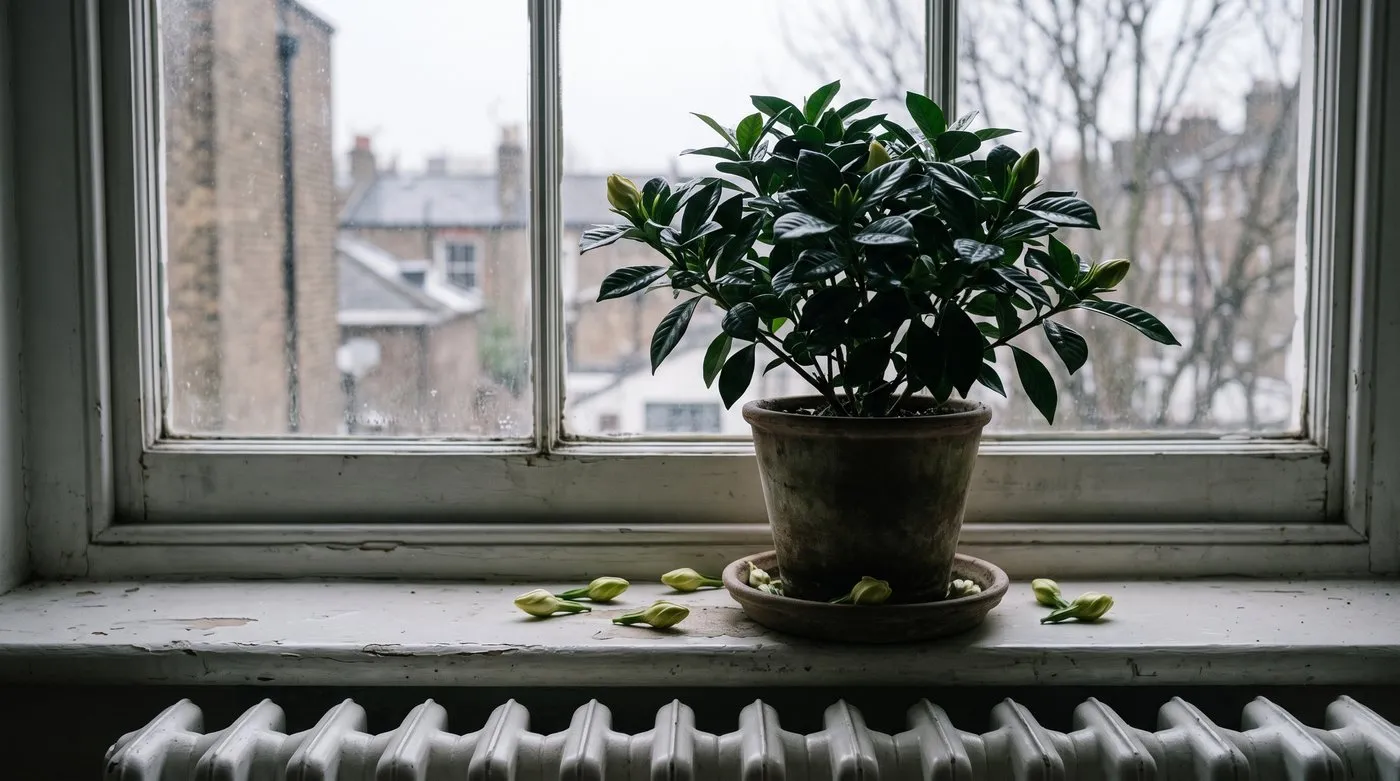
A windowsill above a radiator is a classic cause of bud drop. Hot, dry air and temperature swings make the plant shed its buds.
The usual triggers are:
- Temperature swings, such as moving from a warm room to a cold hall, or sitting by a draughty door
- Dry air, especially from central heating in winter
- Uneven watering, particularly letting the compost dry out while buds swell
- Moving the plant once buds form, even just turning it towards the light
The fix is simple: choose a bright, steady, humid spot before buds form, then leave the plant alone until it flowers.
Why gardenia leaves turn yellow
Yellow leaves with dark green veins usually mean the plant can’t take up iron. That’s called chlorosis. New leaves often show it first.
The usual cause is hard tap water slowly making the compost less acidic. Sometimes the compost is simply old and worn out. Work through the fixes in order:
- Switch to rainwater.
- Feed with an ericaceous feed or sequestered iron.
- If nothing improves, repot into fresh ericaceous compost.
New growth should come through green within a few weeks. Our guide to chlorosis and yellow leaves covers it in more depth.

Left: yellow leaf with green veins, a classic sign of hard water and iron lock-up. Right: a healthy, glossy leaf.
Pruning and taking cuttings
Prune straight after flowering, usually in late summer. Trim leggy shoots and remove weak or crossing stems. Next year’s flower buds form later in the season, so pruning in autumn or spring can remove them.
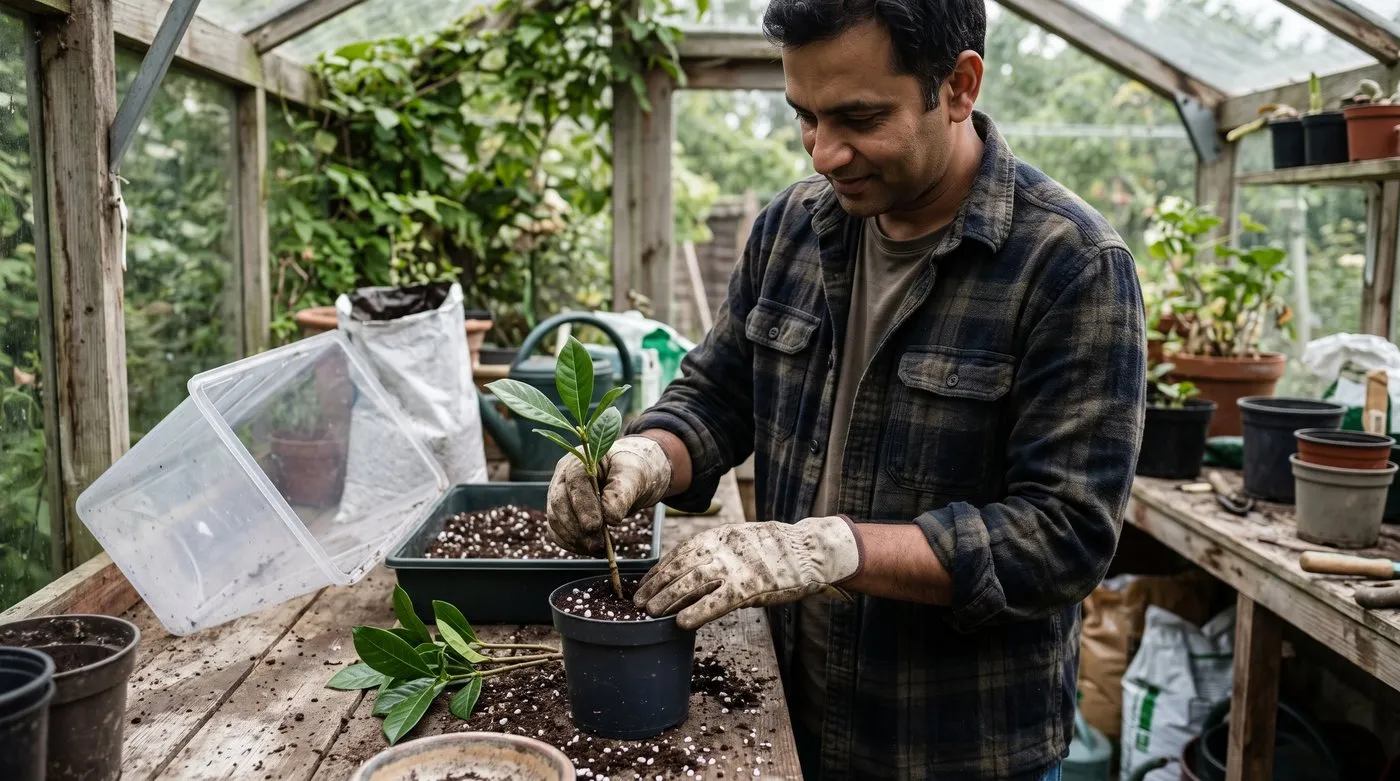
Short shoots of this year’s growth root best. A covered propagator keeps them warm and humid while they take.
Take semi-ripe cuttings from late spring to midsummer. Cut 8-10cm shoots of this year’s growth, firm at the base and soft at the tip. Remove the lower leaves, dip in rooting powder and push them into a mix of ericaceous compost and perlite. Keep them warm and humid in a covered propagator, ideally with gentle bottom heat, until they root.
Pests to watch for
Gardenias indoors can attract aphids, mealybug, scale insects and red spider mite. Red spider mite loves dry, warm air and shows as fine webbing and pale speckled leaves. Keeping humidity up helps prevent it.
Wipe aphids and mealybug off with a damp cloth or cotton bud, and check new buds weekly. For a bad attack, use an approved product for houseplants, following the label. Our guide to mealybug shows what to look for.
Gardenia care calendar
| Month | What to do |
|---|---|
| January | Keep steadily warm, away from radiators. Water sparingly. Boost humidity |
| February | Check leaf colour. Watch for red spider mite in dry air |
| March | Growth starts again. Repot now if needed |
| April | Start fortnightly ericaceous feeding. Move to the brightest indirect light |
| May | Take cuttings. Put ‘Kleim’s Hardy’ outside late in the month in mild areas |
| June | Buds and first flowers. Don’t move budding plants. Water steadily |
| July | Main flowering. Keep humidity up and keep feeding |
| August | Prune lightly after the main flush |
| September | Reduce feeding. Bring patio plants back inside before nights turn cold |
| October to December | Stop feeding. Water less. Keep warm, bright and away from draughts |
Common mistakes with gardenias
- Watering with hard tap water. The leaves slowly turn yellow. Use rainwater.
- Moving the plant in bud. Even turning the pot can make buds drop.
- Letting the air get too dry. Use a pebble tray or humidifier in winter.
- Radiators and draughts. Both cause sudden swings. Find a steady spot.
- Using the wrong compost. Ordinary compost isn’t acidic enough. Use ericaceous.
Pet note: Gardenia is mildly toxic to cats and dogs if eaten. See our guide to plants toxic to cats for others to keep out of reach.
Ready to grow more acid lovers? Our guide to making soil acidic helps you keep camellias, azaleas and blueberries happy too. Browse more indoor plant guides in our houseplants hub.
Frequently asked questions
Why is my gardenia dropping all its buds before they open?
Bud drop is caused by a sudden change in conditions. Moving the plant, dry air, a temperature swing or a missed watering can all make it shed buds. Find a steady, bright, humid spot and leave the pot alone once buds form.
Can you grow gardenia outdoors in the UK?
Only in the mildest, most sheltered gardens, and even then it’s a gamble. ‘Kleim’s Hardy’ is the toughest form to try. In most of the UK, keep gardenia indoors and only put it outside on a sheltered patio in summer.
Why are my gardenia leaves turning yellow?
Yellow leaves with green veins usually mean hard tap water. Lime in the water makes the compost less acidic, and the plant can’t take up iron. Switch to rainwater and use an ericaceous feed with added iron.
What compost should I use for gardenias?
Use ericaceous (lime-free) compost, the kind sold for azaleas and camellias. Mix in some perlite for drainage. Avoid ordinary multipurpose compost, loam-based mixes and garden soil, which are usually not acidic enough.
How often should I water a gardenia?
Keep the compost evenly moist but never soggy. In summer that often means watering a couple of times a week, in winter much less. Let the top couple of centimetres dry slightly, and never leave the pot sitting in water.
What is the best temperature for a gardenia indoors?
Aim for about 16-23C by day and not much below 15C at night. A slightly cooler night helps buds form. Keep the plant away from radiators and cold draughts, which cause sudden swings.
Is gardenia poisonous to cats and dogs?
Yes, gardenia is mildly toxic to cats and dogs. Eating it can cause vomiting or an upset stomach. Keep it out of reach of pets that nibble plants, and call your vet if yours eats some.
When should I prune a gardenia?
Prune straight after flowering, usually in late summer. Trim leggy shoots and remove weak or crossing stems. Pruning later risks cutting off next year’s flower buds.
Our team produces practical UK gardening guidance from source research, contributor records and established horticultural practice. Editorial standards are overseen by Matt W.