Key takeaways
- Lemongrass is frost-tender, so grow it in a pot you can bring indoors
- Root supermarket stems in a glass of water on a sunny windowsill
- Use gritty, peat-free compost and a pot with drainage holes
- Bring it inside by mid-September and keep it above about 10C in winter
- Water less in winter, as soggy compost is the main killer
- Divide crowded clumps in May every few years
Lemongrass is a lovely herb to grow at home. It looks great, smells wonderful when you brush past it and gives you fresh stems for Thai curries, Vietnamese soups and lemongrass tea. Best of all, you can start it from a stem you picked up at the supermarket.
Here’s how to root a stem in water, what warmth and light it needs, how to get it through winter, and how to split one plant into several. For more herb ideas, see our how to grow herbs guide, and our growing citrus trees guide for another warmth-loving pot plant.
 Lemongrass stems ready to cut. The pale, swollen bottom part is where the flavour is.
What lemongrass is and why UK growing is indoor
Lemongrass (Cymbopogon citratus) is a tropical grass from South and Southeast Asia. It’s been grown for cooking and its lovely scent for a very long time.
It can’t cope with our cold. Lemongrass is frost-tender and starts to struggle once it gets chilly, so a UK winter outdoors will kill it. That’s why it lives in a pot.
It wants warmth, lots of light and compost that drains well. A conservatory, a heated greenhouse or a sunny windowsill all work if it stays warm enough.
It grows as a clump, not a single stem. Each clump sends up more and more stems over time. The pale, swollen base of each stem is the bit you cook with. The long leaves have less flavour but are nice in tea.
The supermarket kind is the one to grow. That’s West Indian lemongrass, the standard cooking type.
In a UK pot, a mature clump reaches about 1-1.5m tall. It stays smaller than in the tropics because its roots are in a pot.
| Lemongrass at a glance | |
|---|---|
| Plant | Cymbopogon citratus |
| Hardiness | Frost-tender, keep above about 10C in winter |
| Where to grow | Conservatory, heated greenhouse, sunny windowsill |
| Pot size | Up to 30-40cm when mature |
| Height in a pot | About 1-1.5m |
| Light | As much sun as you can give it |
Starting from a supermarket stem: the water-rooting method
One supermarket stem can start a whole pot. Most people begin this way. The trick is choosing a stem with its base still on.
Look for little bumps or short root nubs at the bottom of the stem. These are where roots will grow. Stems trimmed right up with a smooth base won’t root.
Trim the stem to about 15-20cm. Peel off any dry outer layers and cut back the top. This stops it losing too much water while roots form.
Stand the stems in a glass with a few centimetres of water. Put it on a sunny windowsill. Change the water every two or three days to keep it fresh.
Roots appear in two to three weeks. First little white bumps, then thin white roots. Fresh green growth from the middle tells you it’s alive and well.
Pot up once the roots are about 5cm long. Use peat-free compost mixed with a good handful of grit, sharp sand or perlite. Start in a 15cm pot and move up as it grows.
Water well after potting and put it in the warmest, brightest spot you have. A light mist each day for the first week helps it settle.
Be patient in the first year. Expect a few thin new stems by autumn. It bulks up much more in year two, and from year three it’s a proper clump.
| Stage | Roughly when | What you’ll see | What to do |
|---|---|---|---|
| Pick your stem | Day 1 | Base with root nubs | Trim and stand in water |
| Rooting | 2-3 weeks | White roots appear | Change the water every few days |
| Potting up | About 3-4 weeks | Roots about 5cm long | 15cm pot, gritty compost |
| Settling in | A few weeks later | New shoots | Water lightly, full sun |
| First harvest | Autumn | Thicker stems | Cut a few at the base |
| Year two | Following year | Bigger clump | Move to a 25cm pot |
| Year three on | Ongoing | Full clump | 30-40cm pot, divide when crowded |
 Supermarket stems rooting in a jar of water, with white roots and new green growth. Time to pot them up.
Soil, pot size and watering
Use peat-free compost mixed with grit, sharp sand or perlite. Good drainage stops the roots rotting, which is the main thing that kills lemongrass in the UK.
Move it into bigger pots as it grows:
- First few months: 15cm pot
- End of the first year: 25cm pot
- Year two: 30cm pot
- Mature plant: 35-40cm pot
- After that: divide it rather than going bigger
Make sure the pot has drainage holes. A layer of crocks or gravel in the bottom helps too.
Water generously from May to September. Keep the compost evenly moist but never soggy. In hot weather a big pot may need water every few days.
Water much less from October to April. Let the compost dry a little between drinks. Too much water in winter is the most common way to lose a plant.
Feed weekly from May to September with a half-strength seaweed or balanced liquid feed. No feeding in winter.
Refresh the compost each May. Repot, or scrape off the top few centimetres and add fresh compost, to keep it growing strongly.
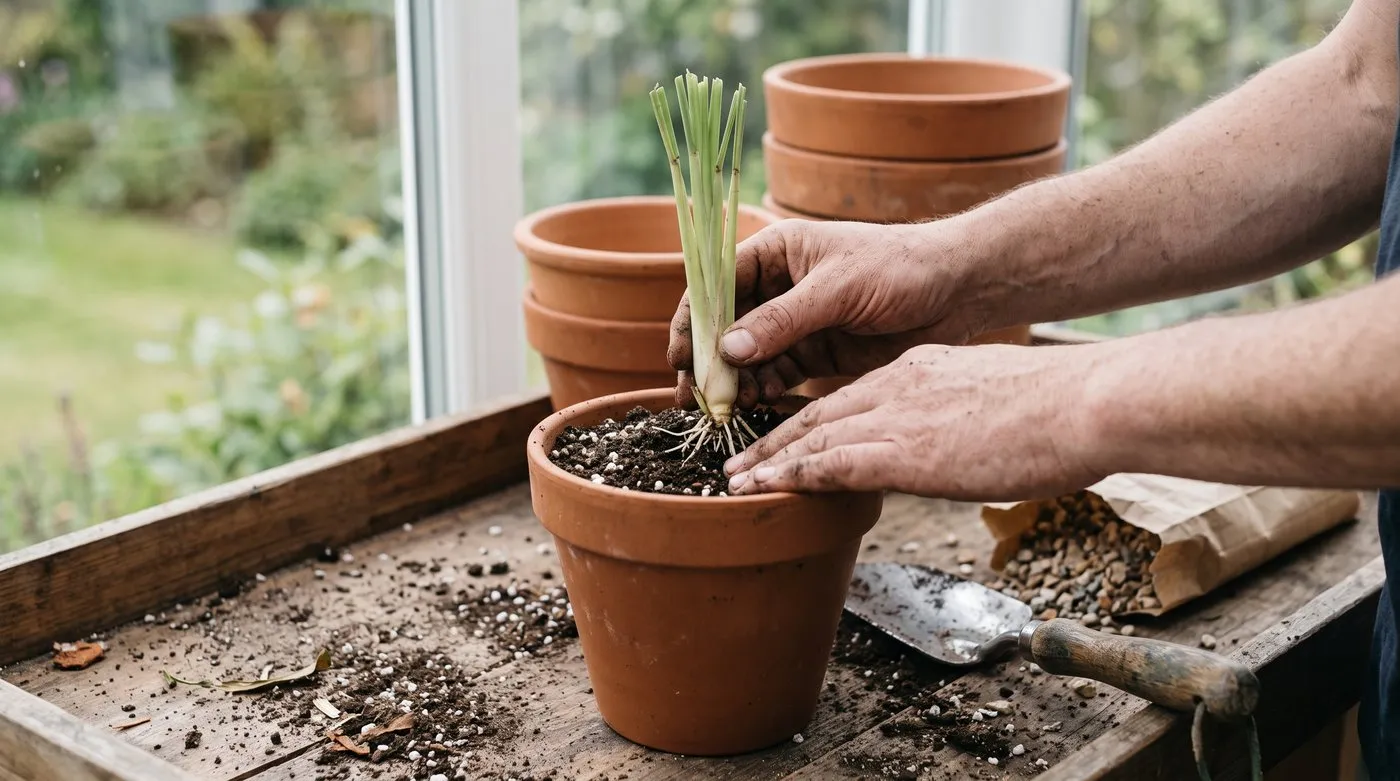
Good drainage stops the roots rotting, the main thing that kills lemongrass here. Start in a 15cm pot and move up one size at a time.
Heat, light and overwintering
Lemongrass loves warmth. It’s happy in a hot conservatory that would stress lots of other plants.
Keep it above about 10C in winter. Colder than that and it stops growing and slowly weakens. Frost will kill it.
Give it as much sun as possible. A south-facing conservatory, greenhouse or windowsill is ideal. In a dim spot it grows thin and weak, with less flavour.
Bring it in by mid-September. That’s when the nights start getting chilly. Moving it in early makes the change easier.
Put it back out gradually in late May. Once frosts are over, stand it outside for a bit longer each day for a week or so before leaving it out. If a cold night is forecast, bring it back in.
No conservatory? A sunny windowsill works. Water less in winter, and mist the leaves now and then if your room air is dry.
Brown or yellow leaves in winter are normal. Snip off the dead ones. The heart of the clump stays alive and grows again in spring.
Gardener’s tip: A heated propagator mat under the pot keeps the roots cosy in winter, even if the room is a bit cool. It can make all the difference in a chilly spot.
 Dividing a crowded lemongrass clump in May. One pot becomes several, and the spares make lovely gifts.
Harvest and kitchen use
Your first harvest is usually in autumn if you started in spring. Once the clump is established, you can cut stems all year.
Cut stems at the base with a sharp knife. Pick fat stems, about as thick as a pencil or more. Thin ones have little flavour.
Use the bottom 10-15cm of each stem. That pale, swollen part holds the flavour. The green leaves are tougher but great for tea.
Always leave plenty of stems standing. A plant cut right down takes weeks to recover. Little and often is best.
Fresh stems keep for a couple of weeks in the fridge wrapped in paper. You can also freeze whole stems. They’re easy to chop while still partly frozen.
Lemongrass tea: chop a couple of leaves, pour over boiling water and leave for 5-10 minutes. Add ginger or honey if you like.
Thai green curry paste: blend a few chopped stems with garlic, ginger, chilli, lime leaves, coriander and fish sauce.
Vietnamese pho: add a few bruised stems to the broth while it simmers.
Lemongrass syrup: simmer a few chopped stems in water and sugar, then cool and strain. Lovely in drinks.
 Freshly cut stems. Use the pale base for cooking and the green leaves for tea.
Division: turning one plant into four
Divide crowded clumps every few years to keep them growing well. A packed clump makes fewer good stems, and the middle gets weak.
Divide in May, when it’s growing strongly. Late spring divisions settle in faster than autumn ones.
Tip the plant out of its pot and tease away the old compost so you can see the roots.
Cut the clump into three or four pieces with a sharp knife or spade. Each piece needs a few stems and a good bunch of roots.
Pot each piece in fresh, gritty, peat-free compost. A 25-30cm pot suits each one.
Water well, then keep them out of strong sun for a week or so while they settle, before moving them back into full sun.
They’ll soon be growing again. Give spare pots to friends who love cooking.
Pests, diseases and yellow-leaf problems
Lemongrass doesn’t get many problems indoors. Aphids and red spider mite are the main ones.
Aphids cluster on new growth in spring. Wipe them off with a damp cloth or rinse them off with water.
Red spider mite loves hot, dry air. Look for fine yellow speckling on leaves and fine webbing. Mist regularly to raise humidity, and for bad cases buy predatory mites.
Rust sometimes shows on plants outside in summer. Look for orange spots on the leaves. Bring it in and give it plenty of air.
Root rot from overwatering is the big killer. Signs are yellowing leaves, soft stems at the base and a nasty smell from the compost. Tip it out, cut off rotten roots and repot in fresh, just-damp compost. Sadly, it’s often too late if you catch it late.
Yellow lower leaves in winter are normal. Water less and leave it be. New growth comes in spring.
Brown leaf tips mean dry air or too little water. Mist now and then in winter and check the compost.
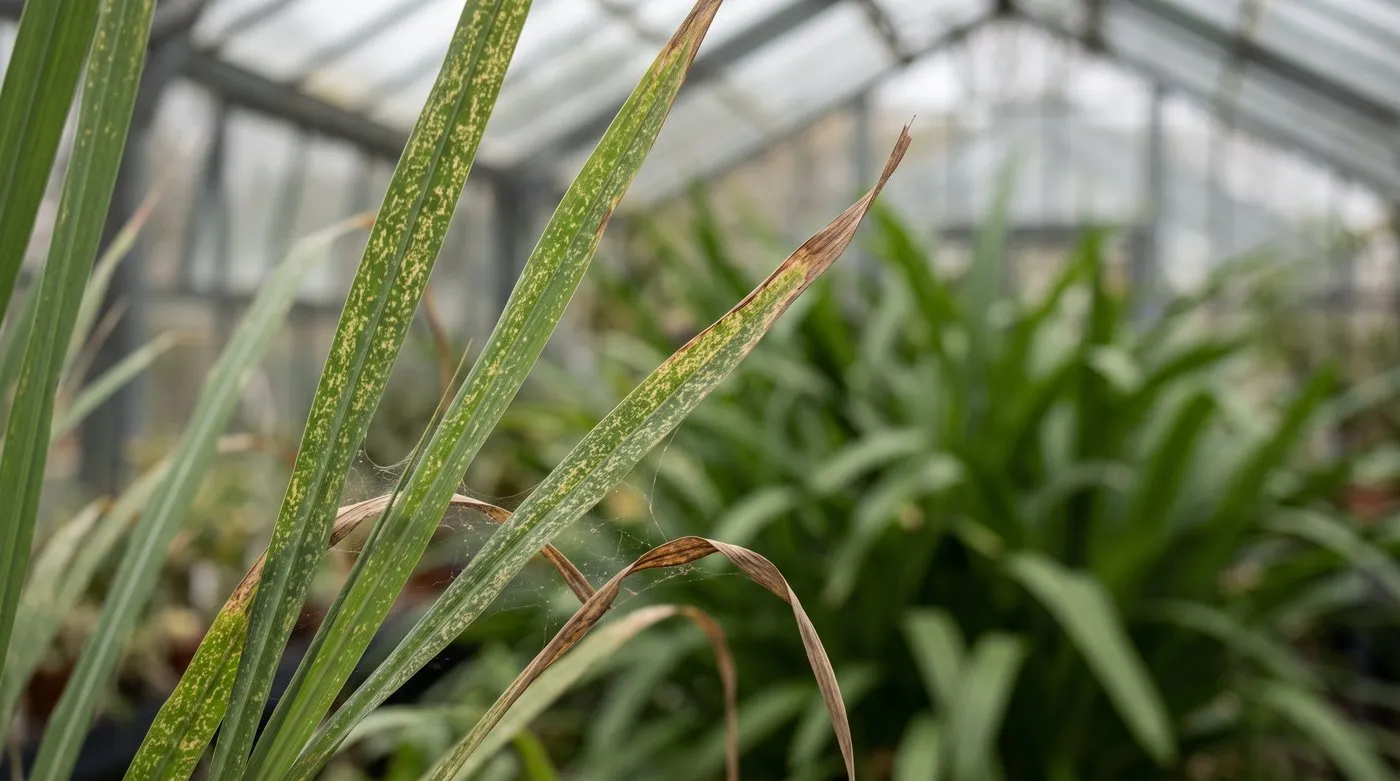
Fine yellow speckling and webbing point to red spider mite, which loves hot, dry air. Misting regularly helps keep it away.
Common mistakes to avoid
Potting stems before they’ve rooted. Lots of supermarket stems won’t root. Rooting them in water first shows you which ones will.
Too much water in winter. Cold, wet compost rots the base. Let it dry a little between drinks.
Too cold or too dark. Lemongrass needs warmth and sun. A north-facing room or unheated greenhouse won’t do.
The wrong pot size. A tiny cutting in a huge pot sits wet and rots. A big plant in a small pot stalls. Move up a size at a time.
Cutting too much at once. Always leave plenty of stems standing.
Never dividing. Crowded clumps make fewer good stems. Split them every few years.
Step-by-step: starting a lemongrass pot
Step 1: buy a few supermarket lemongrass stems in March or April. Choose ones with the base still on.
Step 2: trim each stem to 15-20cm and peel off dry outer layers.
Step 3: stand the stems in a glass with a few centimetres of water on a sunny windowsill.
Step 4: change the water every two or three days. Watch for white roots.
Step 5: after two to three weeks, pot up rooted stems in 15cm pots of gritty, peat-free compost.
Step 6: water well and put them in the brightest spot you have. Mist daily for the first week.
Step 7: after a month, start feeding weekly with half-strength seaweed feed.
Step 8: move into a 25cm pot in late summer, and bring it indoors by mid-September.
Step 9: keep it on a sunny windowsill or in a heated greenhouse over winter. Water much less.
Step 10: put it back outside or in the greenhouse in late May, a little at a time.
Step 11: cut your first stems in autumn at the base.
Step 12: divide the clump in May once it’s crowded, usually from year three.
Enjoy having fresh lemongrass on hand. For more ideas, see our how to grow herbs guide and our growing citrus trees guide. Our turmeric growing guide covers another spice that loves the same warmth. The RHS lemongrass page has more on the plant itself.
Frequently asked questions
Can lemongrass grow outdoors in the UK?
Not all year round, as it can’t take cold or frost. It’s happiest in a pot in a conservatory, heated greenhouse or on a sunny windowsill. In a warm summer it can sit outside in a sheltered, sunny spot, but bring it back in well before the nights turn cold in September.
How do I grow lemongrass from a supermarket stem?
Pick stems with the base still on, showing little bumps or root nubs. Trim the top, stand the stem in a glass of water on a sunny windowsill and change the water every few days. Roots should appear in two to three weeks. Pot it up in gritty, peat-free compost once the roots are about 5cm long.
How big does lemongrass grow?
In a UK pot, a mature clump usually reaches about 1-1.5 metres tall. It spreads into a good-sized clump too. A 30-40cm pot is about as big as most people want to manage, so divide it rather than moving it into an ever bigger pot.
When can I start harvesting lemongrass?
Usually by autumn if you start it in spring. A cutting rooted in March should have usable stems by then if it grows well over summer. Once the clump is established, you can cut stems all year. Cut them at the base with a sharp knife, and always leave plenty standing.
How do I overwinter lemongrass in the UK?
Bring it indoors before the nights get cold, usually by mid-September. Keep it on a sunny windowsill or in a heated greenhouse or conservatory, above about 10C. Water less, letting the compost dry a little between drinks. Some leaves will go brown, but the clump stays alive. Put it back out in late May once frosts are over.
Our team produces practical UK gardening guidance from source research, contributor records and established horticultural practice. Editorial standards are overseen by Matt W.