Key takeaways
- Hardy in most UK gardens, but pots and cold, exposed spots may need winter protection
- Give it full sun and poor soil that drains fast, never rich, wet ground
- Trim lightly once a year after flowering, and never cut into old, bare wood
- Take cuttings in late spring and summer for free new plants
- Old, woody plants rarely bounce back, so replace them every seven or eight years
- Wet winter soil kills more rosemary than frost does
Rosemary is an evergreen Mediterranean herb that loves a sunny, well-drained spot. It gives you fragrant leaves all year, and it’s happiest when you leave it alone.
More rosemary dies from kindness than from cold. Too much water, too much feed or rich border soil makes the roots rot. A dry, sunny corner suits it far better.
What are the best rosemary varieties for the UK?
For most gardens, an upright variety such as Miss Jessopp’s Upright is the best bet. Trailing types are lovely but less hardy, so they need shelter.
Here are five you’ll find in UK nurseries and garden centres.
| Variety | Shape | Size | Hardiness | Good for |
|---|---|---|---|---|
| Miss Jessopp’s Upright | Tall and upright | Tall | Reliable in most of the UK | Hedges, borders, cooking |
| Tuscan Blue | Upright and bushy | Medium to tall | Best in sheltered gardens | Strong flavour |
| Prostratus Group (trailing) | Low and spreading | Low | Less hardy, needs shelter | Walls, pots, ground cover |
| Severn Sea | Arching | Medium | Needs a warm, sheltered spot | Borders, banks, bees |
| Arp | Upright and open | Medium to tall | Sold as one of the hardier ones | Colder gardens |
Miss Jessopp’s Upright is the best all-rounder. It copes well with cold, grows into a smart column and gives plenty of leaves for cooking. In a cold or windy garden, choose an upright type and give it your most sheltered sunny spot.
Trailing rosemary looks great tumbling over a wall or the edge of a raised bed. Give it a sheltered, south-facing spot, or grow it in a pot you can move under cover in a cold snap. Our guide to growing herbs in the UK covers other kitchen favourites.
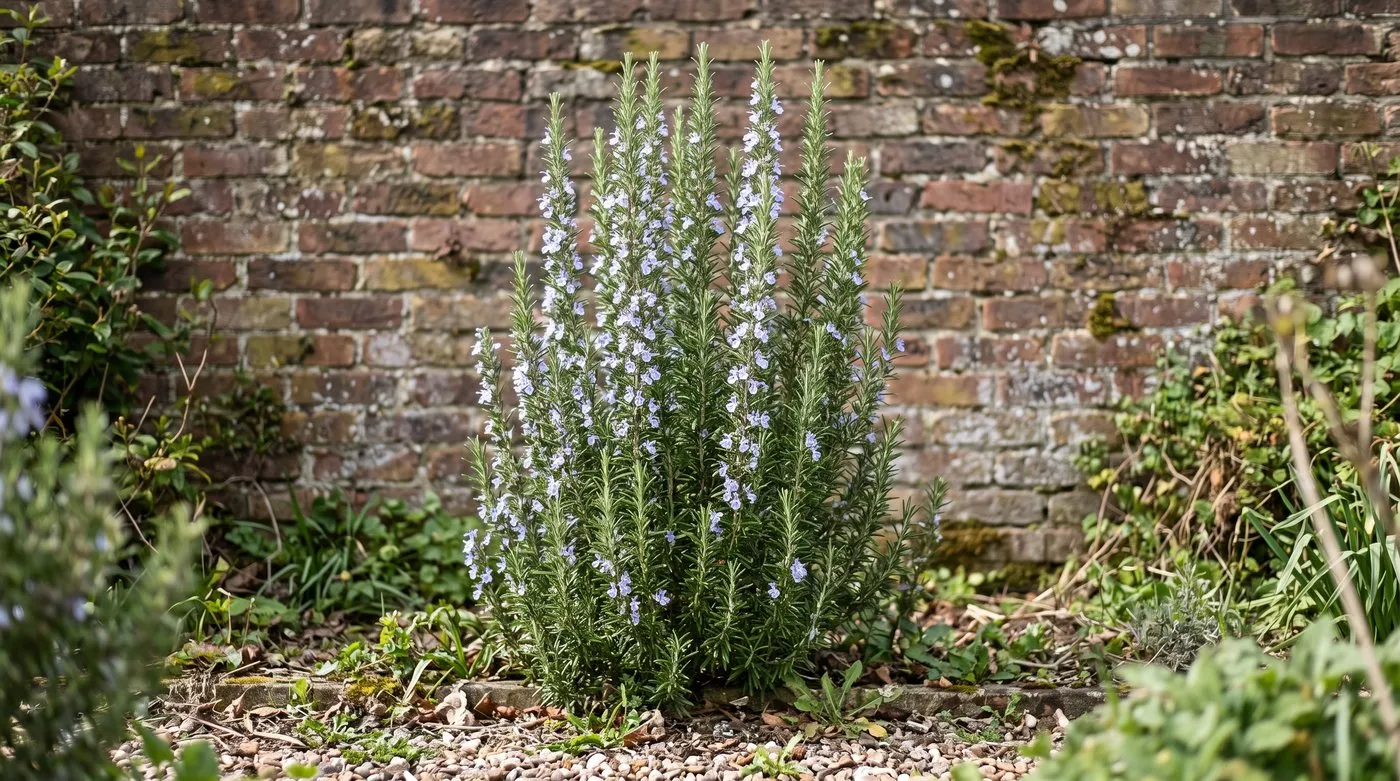
Upright types like this are the most reliable in UK gardens. Give the hardiest one your sunniest, most sheltered spot in a cold area.
Where should I plant rosemary?
Give it full sun and soil that drains fast. Get those two right and it’ll look after itself for years.
Sunlight requirements
Pick the sunniest spot you have. A south-facing wall or border is perfect. In shade it grows leggy and loses some of its scent.
Soil and drainage
Rosemary wants poor soil that drains quickly. This is where most plantings go wrong. In the wild it grows on rocky hillsides, so heavy clay and rich, damp soil are bad news.
If your soil is heavy, you’ve got three easy options. Plant in a raised bed filled with topsoil and grit. Plant on a mound with lots of grit dug in. Or grow it in a terracotta pot on a sunny patio. Don’t add manure, rich compost or fertiliser. Feeding makes soft growth that frost damages easily.
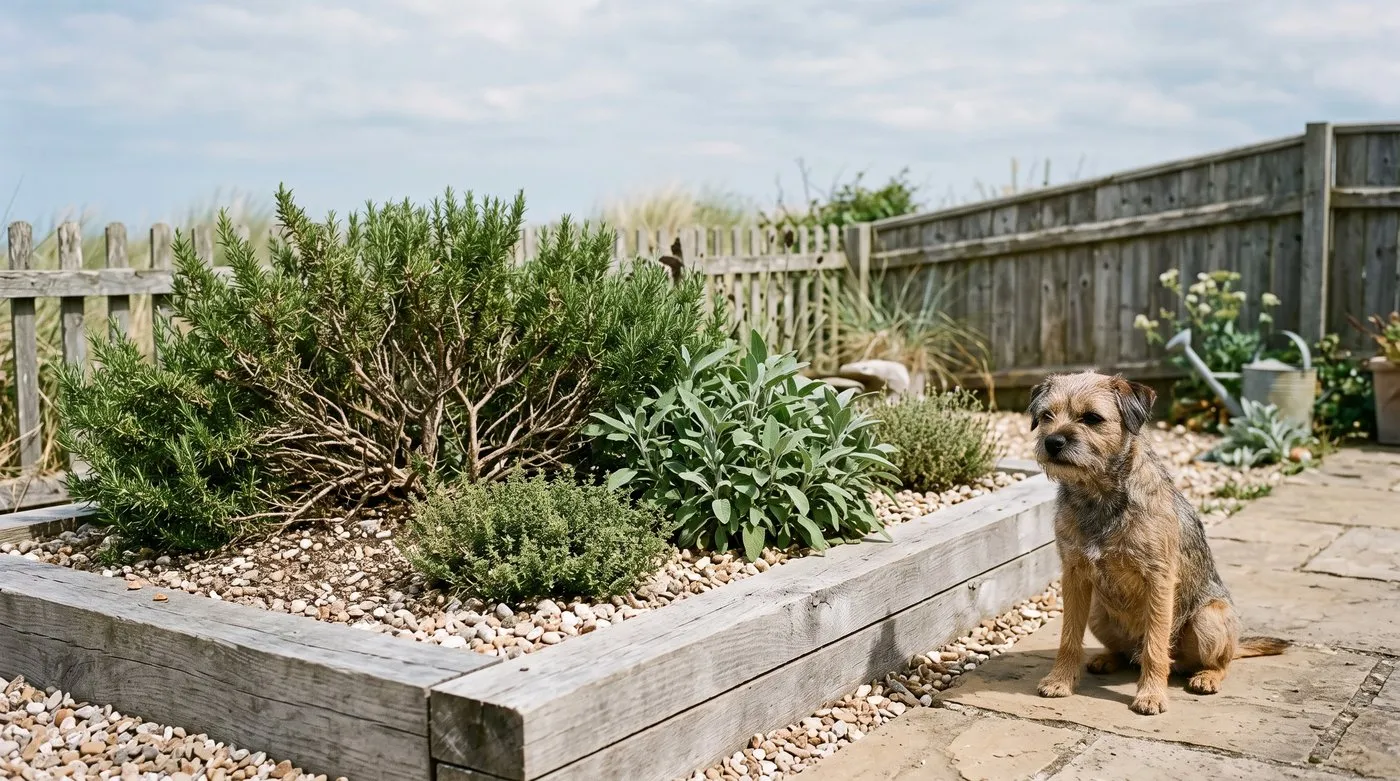
A raised bed of topsoil and grit gives rosemary the sharp drainage it loves. Gravel on top keeps the base of the stems dry through winter.
How to plant rosemary
Plant in spring, usually April or May, once the soil starts to warm. That gives it a whole season to settle in before winter. Autumn planting is riskier, as young plants go straight into cold, wet soil.
Dig a hole twice as wide as the root ball. If your soil holds water, mix what you dug out half and half with grit. Plant at the same depth it was in the pot, firm gently and water once. After that, only water in long dry spells in the first summer.
For a hedge, space upright plants 45-60cm apart. Single plants in a border need about 90cm-1.2m. Space trailing types 45-60cm apart as ground cover.
How to propagate rosemary from cuttings
Rosemary roots easily, so you can make new plants for free. Take soft cuttings in late spring or slightly firmer ones in summer. They usually root in six to eight weeks. Our rosemary cuttings guide walks you through it.
Step-by-step cutting method
- Choose healthy shoots from this year’s growth, without flowers
- Cut 10-15cm lengths just below a leaf joint
- Strip the leaves from the bottom 5cm
- Dip the end in rooting powder if you have some
- Push the cuttings into pots of half perlite, half peat-free compost
- Water once and stand them somewhere sheltered, out of direct sun
- Cover with a clear plastic bag or pop them in an unheated propagator
- Take the cover off for an hour each day so mould doesn’t build up
- After six weeks, tug gently to check for roots
Once rooted, pot them on into 9cm pots of gritty compost. Keep them in a cold frame or sheltered spot over winter and plant out next spring.
Layering is even easier. In spring or autumn, peg a low stem down into the soil, then cut it free once it has rooted.
You can grow rosemary from seed, but it’s slow and the plants vary. If you’d like to try, see our guide to sowing seeds indoors.
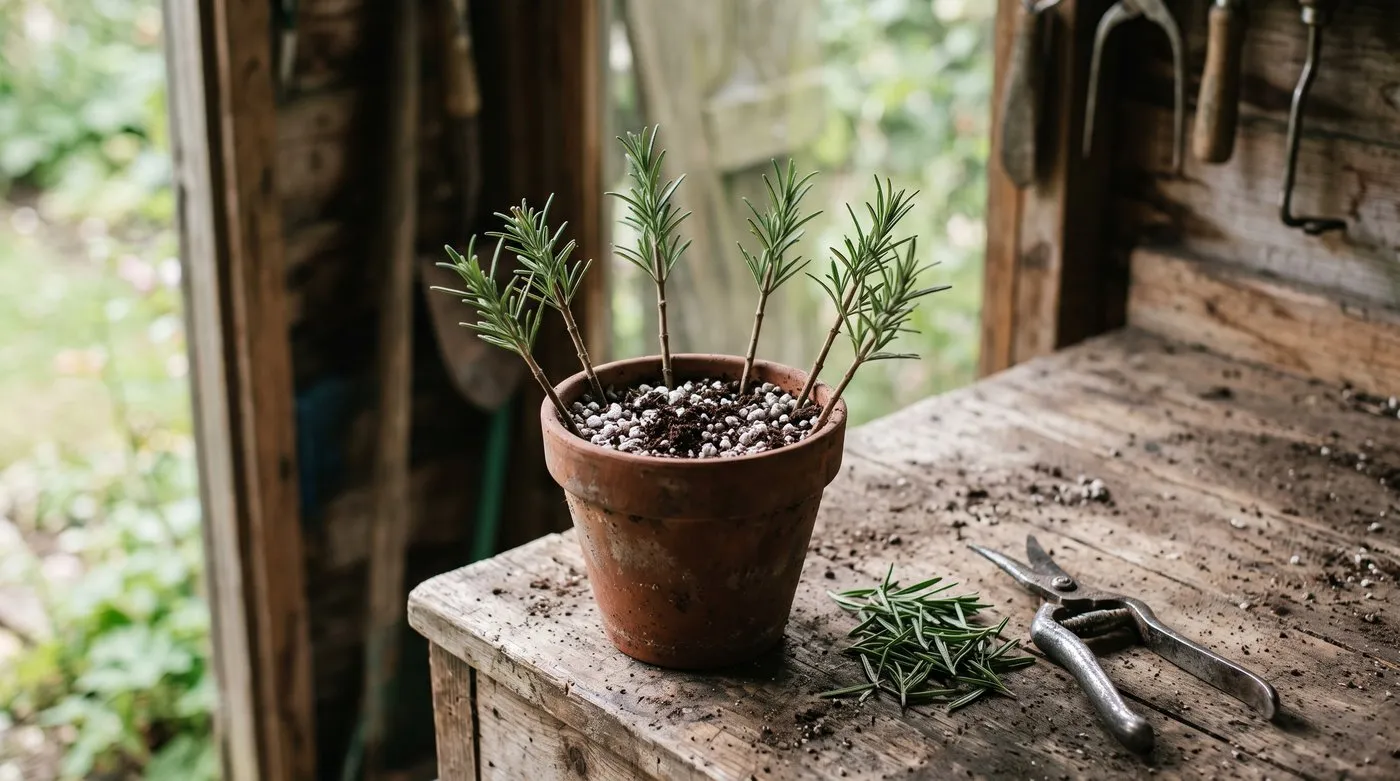
Strip the bottom 5cm of each cutting and push it into a gritty mix. They usually root in six to eight weeks.
How should I prune rosemary?
Give it a light trim once a year, just after flowering. Without it, plants go leggy and bare at the base.
Prune when the flowers finish, usually in late spring or early summer. Cut back this year’s green growth by up to a third, just above a pair of leaves.
The golden rule: never cut into old, bare wood. Rosemary rarely regrows from leafless stems.
Picking sprigs for the kitchen counts as pruning too. Regular snipping keeps it bushy.
If you grow lavender as well, the pruning rules are much the same. Neither likes being cut into old wood.

Trim this year’s green growth by up to a third after flowering. Never cut into old, bare wood, as rosemary rarely sprouts from it.
Can you revive an old, woody rosemary?
Usually not. Hard pruning rarely brings an old, straggly plant back, because bare wood seldom sprouts. It’s often best to replace plants every seven or eight years.
Before you dig up a tired plant, take cuttings from the soft tips in summer, or layer a low branch. That gives you a free young plant of the same variety. If most stems still have green growth, you can trim back to just above it in late spring. Don’t go further, and don’t take off more than a third at once.
Growing rosemary in pots
Rosemary does well in pots, as long as the compost drains freely. Pots are great if you have heavy clay or not much space.
Use a pot at least 30cm wide and deep with good drainage holes. Terracotta is ideal, as it lets the compost dry out a little through the sides.
The RHS rosemary guide suggests peat-free, soil-based compost mixed with some grit. John Innes No.3 with grit works well. Multipurpose compost on its own holds too much water. A layer of gravel on top keeps the base of the plant dry.
Water when the top 3cm of compost is dry. In summer that might be once a week. In winter you’ll hardly need to water at all. Overwatering is the quickest way to lose a potted rosemary.
Repot every two to three years in spring, one size up. A plant that’s been in the same pot for over a year can have a light general feed in late spring. Don’t overdo it. Our container vegetable gardening guide has more on drainage and watering.
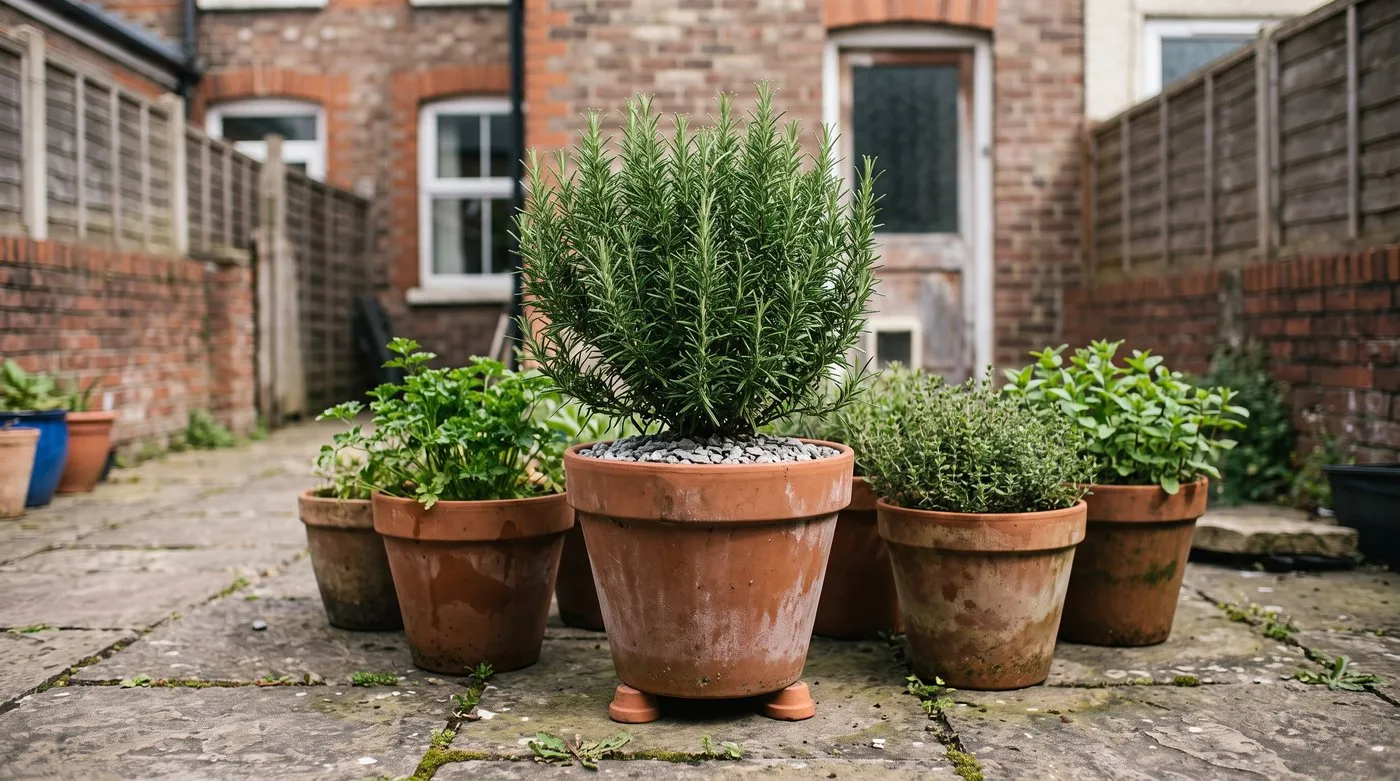
Terracotta, gritty compost and a gravel top keep potted rosemary from sitting wet. Pot feet let excess water drain away freely.
Does rosemary need protecting in winter?
In the ground, rosemary needs no protection in most UK gardens, as long as the soil drains well. In cold areas, or during a long hard frost, cover it with fleece or hessian. Take it off when the cold spell ends.
Pots need more care, as roots in a pot freeze faster. Group pots against a sunny wall and lift them onto pot feet. In a very cold or wet winter, move them into a porch, cold greenhouse or under an overhang. You’re trying to stop the compost sitting cold and soggy for weeks.
Leave frost-damaged shoots until spring before cutting them back. They help shelter the buds lower down.
Companion planting with rosemary
Rosemary is lovely at the edge of a veg plot, mainly because bees and hoverflies flock to its spring flowers.
Some people plant it near carrots and cabbages to keep pests away. There’s not much to back that up, so treat any effect as a bonus. Our companion planting guide has more pairings.
Rosemary looks great with other drought-tolerant plants such as sage, thyme and oregano. Group these Mediterranean herbs together in a sunny gravel garden or raised bed. For bee-friendly planting, it’s a valuable early source of food.
What are common rosemary problems?
Wet soil, rosemary beetle and frost cause most of the trouble.
Root rot
Root rot from soggy soil is the main rosemary killer, especially in winter. Leaves yellow, the stems go soft and brown at the base, and the plant wilts even after watering. By then it’s usually too late.
Prevention is everything. Plant in free-draining soil with plenty of grit. Don’t mulch with bark or compost, which holds wet around the stems. Use gravel instead.
Rosemary beetle
These shiny green and purple striped beetles eat rosemary, lavender and sage. They’re now common across much of the UK. Both adults and grubs strip the leaves.
Pick them off by hand. Hold a sheet or tray under the plant and tap the branches, and the beetles drop off. The RHS advice on rosemary beetle says plants usually cope with light damage, and the beetles are busiest from late summer to spring.
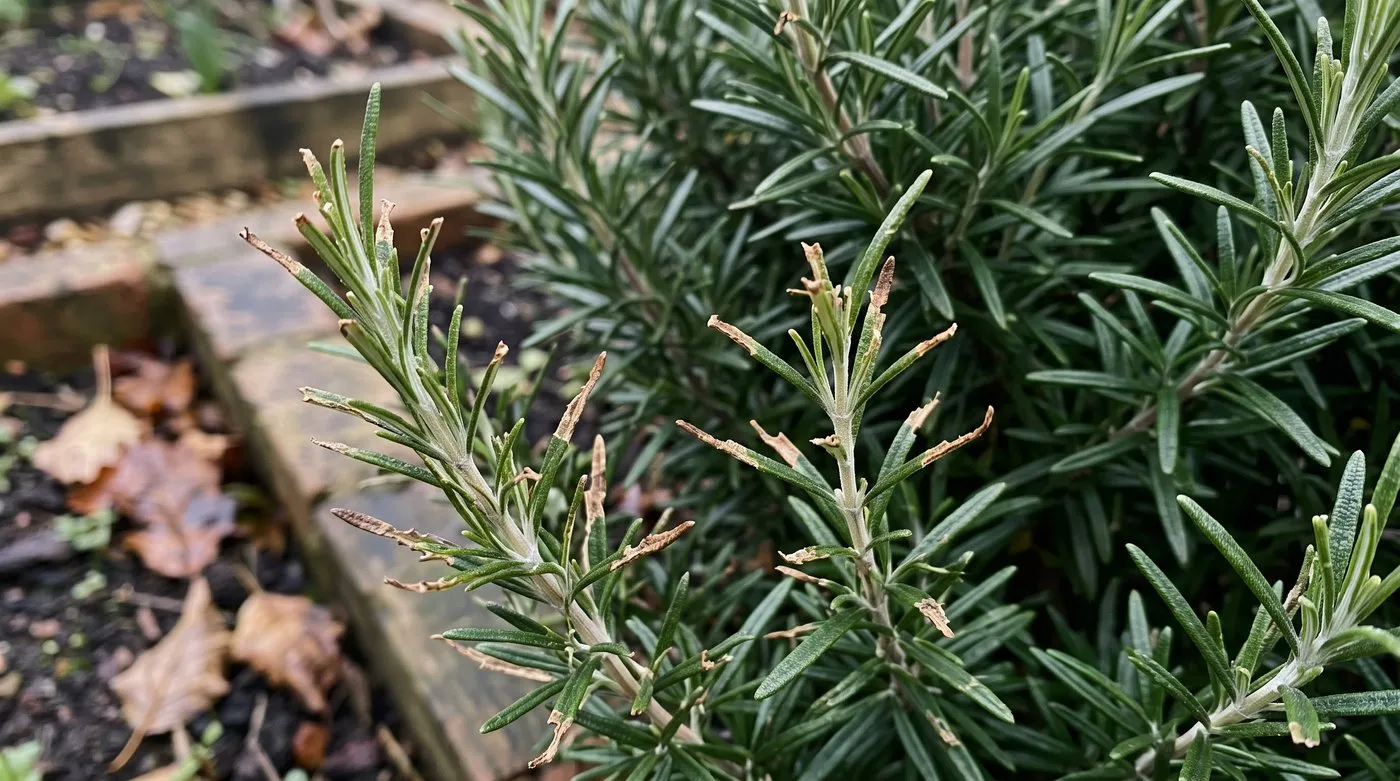
Stripped, ragged tips like these are a sign of rosemary beetle. Tap the branches over a tray to knock the beetles off, and plants usually cope with light damage.
Powdery mildew
A white powdery coating on the leaves, usually when air can’t move and the roots are dry. Space plants well and thin out crowded middles. Cut off and bin badly affected branches.
Frost damage
Shoot tips go black or brown after a hard frost. Wait until spring before cutting back the damage. New shoots usually appear lower down once it warms up.
Why buy British-grown rosemary?
Buying UK-grown rosemary lowers the risk of bringing in Xylella, a serious plant disease found in mainland Europe. Rosemary is one of the plants it can infect. Check the label or ask the nursery where the plant was grown. Taking cuttings from a healthy local plant avoids the worry altogether.
Month-by-month rosemary calendar
| Month | What to do |
|---|---|
| January | Check pots aren’t waterlogged. Tip water out of saucers. |
| February | Order new plants for spring. Cover plants in the ground during long hard frosts. |
| March | Trim off frost-damaged tips once hard frosts are over. Start picking fresh growth. |
| April | Plant new rosemary as the soil warms. Mulch with gravel. |
| May | Enjoy the flowers. Trim lightly once they finish. Take soft cuttings. |
| June | Finish pruning. Keep picking for the kitchen. |
| July | Take summer cuttings. |
| August | Keep taking cuttings. Water pots in dry spells. |
| September | Last chance for cuttings. Pot on rooted ones for a cold frame. |
| October | Move trailing types and pots under cover in cold areas. |
| November | Check the drainage around the base. No feeding until spring. |
| December | Pick sprigs for winter cooking. Watch for rosemary beetle in mild spells. |
Harvesting and using rosemary
You can pick rosemary all year. Snip 10-15cm sprigs from the tips with sharp secateurs. Regular picking keeps the plant bushy.
To dry it, cut whole stems on a dry morning. Tie five or six together and hang them upside down in a warm, airy room for two to three weeks. Strip off the dry leaves and keep them in a jar.
Fresh rosemary freezes well too. Strip the leaves, spread them on a tray and freeze, then tip them into a bag.
Rosemary also makes a lovely, informal hedge. Plant Miss Jessopp’s Upright 45-60cm apart for a fragrant boundary that needs just one trim a year. In a herb garden, it gives structure all year, even before spring gardening jobs bring everything else back to life.
Frequently asked questions
Is rosemary hardy in the UK?
Yes, in most of the UK. Established plants cope with a fair bit of frost, though hard frosts and cold winds can scorch them. Wet winter soil is the bigger danger. Young plants, trailing types and pots need more protection in cold areas.
How often should I water rosemary?
Hardly ever, once it’s settled in the ground. Water new plants in dry spells during their first summer. Water pots when the top 3cm of compost feels dry.
When should I prune rosemary?
Trim it lightly once a year, just after flowering. That’s usually late spring or early summer. Cut back the soft green growth by up to a third, and never cut into old, bare wood.
Why has my rosemary turned brown and died?
Usually soggy soil. Roots rot when they sit wet over winter, and the plant browns from the tips. Hard frost and cold wind can scorch shoots too. Replant in a raised bed or pot with plenty of grit.
Can I grow rosemary from seed?
Yes, but it’s slow and patchy. Cuttings are quicker and give you a plant just like the parent. That’s how nurseries grow named varieties.
Does rosemary attract bees?
Yes, bees love it. It flowers in spring, when early bees need food. Bumblebees and honeybees visit it a lot, and it’s on the RHS Plants for Pollinators list.
Does rosemary repel pests in the garden?
Probably not, despite the old advice. There’s little sign that it keeps carrot fly or cabbage whites away. Its real value near veg is bringing in pollinators. Grow it for flavour and wildlife.
Can I grow rosemary in a pot?
Yes, it does well in pots. Use one at least 30cm wide and deep with good drainage holes. Fill it with peat-free John Innes No.3 mixed with grit, and stand it on pot feet.
Our team produces practical UK gardening guidance from source research, contributor records and established horticultural practice. Editorial standards are overseen by Matt W.