Key takeaways
- Take cuttings from late July to early September, when shoots are firm at the base
- Cut 10 to 15cm pieces from shoots without flowers
- Strip the lower leaves and push them into a gritty sand and compost mix
- Rooting powder is optional but can help
- Roots form in about 4 to 8 weeks, then pot each cutting on
- Keep young plants under cover over winter and plant out in May
Rosemary is one of the easiest plants to grow from cuttings, as long as you get the timing right. Take cuttings in late summer, pop them in a gritty mix and keep them covered. Most will root in a couple of months, giving you free plants for next year.
Best time to take rosemary cuttings
There are a few times you can try, but late summer is the sweet spot.
| When | What the shoots are like | How well they root |
|---|---|---|
| May to June (softwood) | Soft, bendy new growth | Fair, but many rot |
| Late July to September (semi-ripe) | Firm at the base, soft at the tip | Best |
| October to November (hardwood) | Fully woody | Fair, and slow |
| Spring, from old wood | Last year’s wood | Poor |
Late July to early September is best. This year’s shoots have firmed up at the base but are still soft at the tip. That’s just right for rooting.
Taking the cuttings
What you need:
- Sharp, clean secateurs or a knife
- 9cm pots filled with half sharp sand, half peat-free compost
- Rooting powder (optional)
- A pencil or dibber
- A clear plastic bag or propagator lid
- Labels
Step by step:
- Pick a healthy plant. Choose a strong, healthy rosemary. Avoid shoots that are flowering.
- Choose your shoots. Look for this year’s growth that’s firm at the base and bendy at the tip.
- Cut 10 to 15cm long. Cut just below a leaf joint.
- Strip the lower leaves. Take the leaves off the bottom third or so. This bare bit goes into the compost.
- Trim the base. Make a fresh, clean cut just below a leaf joint.
- Dip in rooting powder, if using. Wet the cut end, dip it in the powder and tap off the extra.
- Plant it. Make a hole with a pencil and push the cutting in so the bare stem is buried. Firm the mix around it.
- Water lightly. Use a fine rose to settle the compost.
- Cover it. Pop a clear bag over the pot, or put it in a propagator, to keep the air moist.
- Find a bright spot out of direct sun. A shaded greenhouse bench, an east-facing windowsill or a cold frame are all good.
A 9cm pot takes three to five cuttings around the edge.
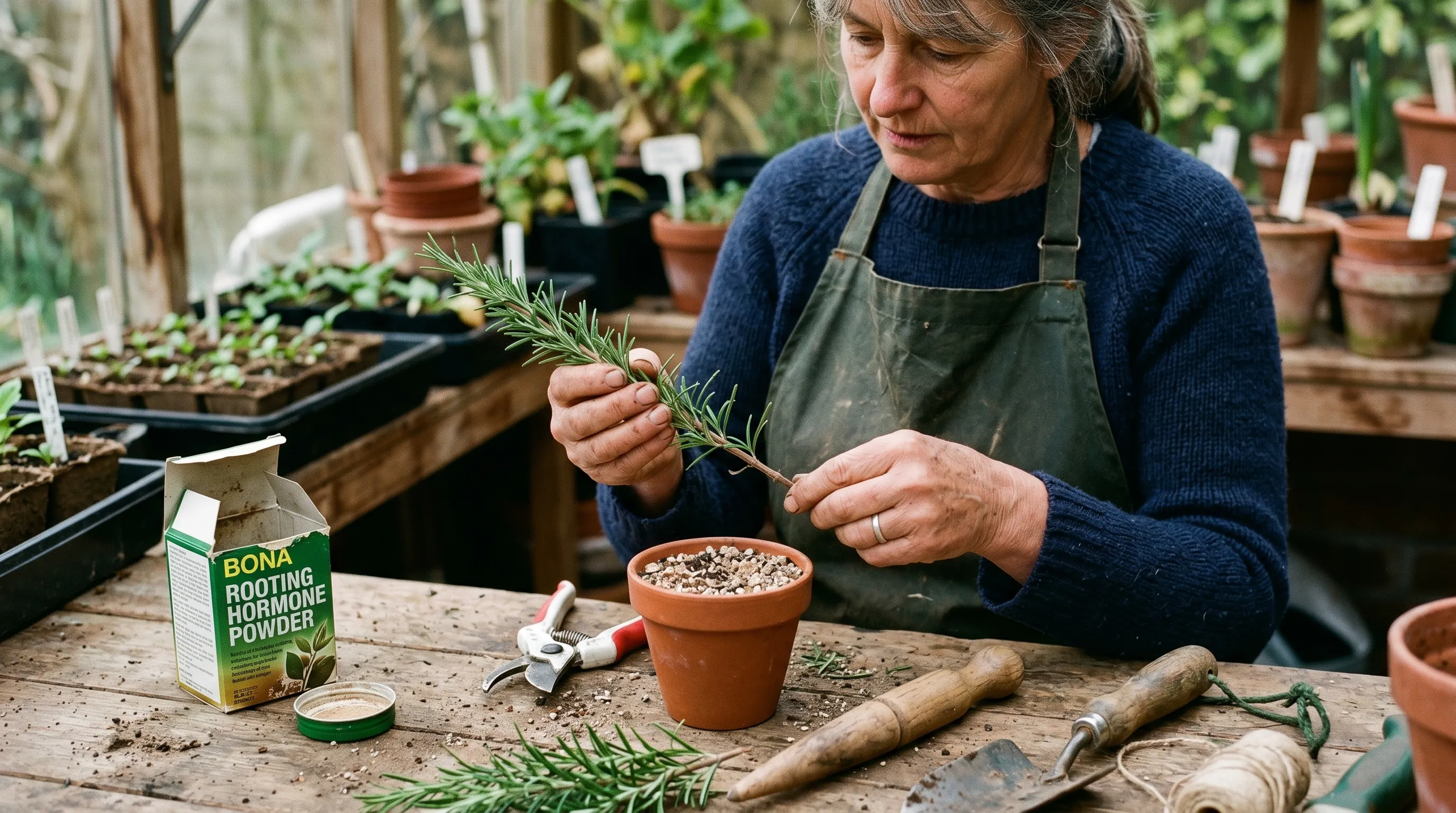 Getting a cutting ready: lower leaves stripped, base trimmed just below a leaf joint, and a pot of gritty mix waiting.
While the cuttings root
Cuttings usually root in about 4 to 8 weeks somewhere warm. In a cold frame it takes longer.
Looking after them:
- Keep the compost just moist, never wet
- Keep them covered to hold in moisture
- Wipe away condensation if it drips onto the cuttings
- Lift the cover for a while each day for fresh air
- Give them bright light, but no hot direct sun
- Don’t feed them until they’ve rooted
Signs they’ve rooted:
- A gentle tug meets a little resistance
- Roots peep out of the drainage holes
- New growth appears at the tip
- The leaves stay green and healthy
Signs something’s wrong:
- The cutting turns yellow, then brown
- Leaves drop from the bottom up
- Black mould on the cut end
- Still no resistance to a gentle tug after a couple of months
Potting on
Once the roots are a few centimetres long, give each cutting its own 9cm pot.
How to do it:
- Turn the pot upside down, holding the cuttings
- Tap out the rootball
- Gently separate the cuttings, keeping their roots intact
- Pot each one into peat-free multipurpose compost
- Plant at the same depth as before
- Water in
- Move them to a cold frame or unheated greenhouse for winter
Bring them somewhere more sheltered if a hard frost is forecast. Plant them out the following May, once the frosts are over.
Our plant propagation guide covers division and layering for other plants too.
The water-glass method
Some people root rosemary in a glass of water instead. It’s simple, though fewer cuttings take.
How to do it:
- Take a cutting as above
- Strip the lower leaves
- Stand it in a clear glass of room-temperature water, with the bare stem under water
- Change the water every week or so
- Keep it on a bright windowsill out of direct sun
- Roots should appear in a few weeks
Water roots can struggle when moved into compost, so some cuttings fail at this stage. Pot them into a gritty mix and keep them covered for a few weeks while they adjust.
For most people, rooting straight into compost is more reliable.
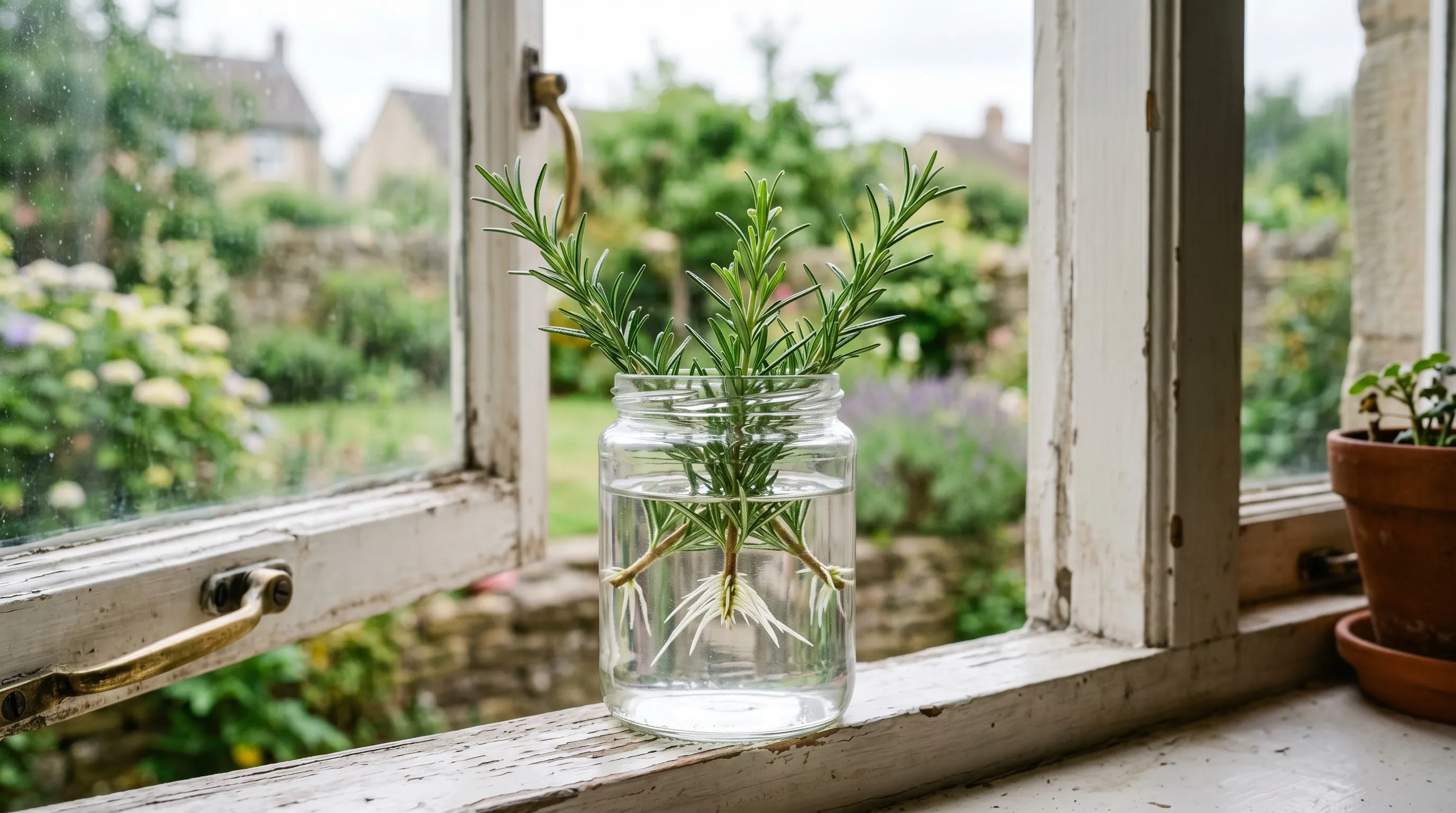 Rosemary cuttings rooting in water on a windowsill. It’s simple, but fewer cuttings take than in compost.
Common mistakes with rosemary cuttings
Taking soft cuttings too early. Soft spring cuttings often rot. Wait until July.
Using builder’s sand. It’s too fine and drains badly. Use horticultural sharp sand or grit.
Overwatering. Soggy compost rots cuttings before they root. Keep it just moist.
Planting out in autumn. Young plants can be killed by the first hard frosts. Keep them under cover and plant out in May.
Our rosemary growing guide covers planting and care. Got an old, woody plant? Our guide to reviving woody rosemary explains how to rejuvenate it.
Rosemary cuttings calendar month by month
| Month | Job |
|---|---|
| January | Decide which plants to take cuttings from |
| February | Buy sharp sand and rooting powder if you need them |
| March | Watch for new growth on the parent plant |
| April | Too early, as new growth is very soft |
| May | Give the parent plant a light trim |
| June | You can try soft cuttings, but expect losses |
| July | Start taking semi-ripe cuttings |
| August | The best month for cuttings |
| September | Last cuttings. Pot on early batches |
| October | Try woody cuttings if you like. Move rooted plants under cover |
| November | All young plants under cover for winter |
| December | Plan next year’s cuttings |
Frequently asked questions
When is the best time to take rosemary cuttings in the UK?
Late July to early September is best. The shoots are semi-ripe then, firm at the base but still soft at the tip. They root more reliably than soft spring cuttings, which often rot.
Do I need rooting hormone for rosemary cuttings?
No, but it can help. Rosemary often roots without it. If you use rooting powder, wet the cut end, dip it in and tap off the extra.
Can rosemary cuttings root in water?
Yes, though fewer take than in compost. Water roots can also struggle when you move them into compost. Rooting straight into a gritty mix is more reliable.
How long do rosemary cuttings take to root?
Usually about 4 to 8 weeks somewhere warm. In a cold frame it takes longer. A gentle tug that meets resistance means roots have formed. Pot them on, then plant out the following spring.
What is the best compost for rosemary cuttings?
A half-and-half mix of sharp sand and peat-free compost. The sand keeps it free-draining, which stops the cuttings rotting. Avoid builder’s sand, which is too fine.
Now plan the wider herb garden
Here’s the whole journey in pictures, from cutting to young plant.
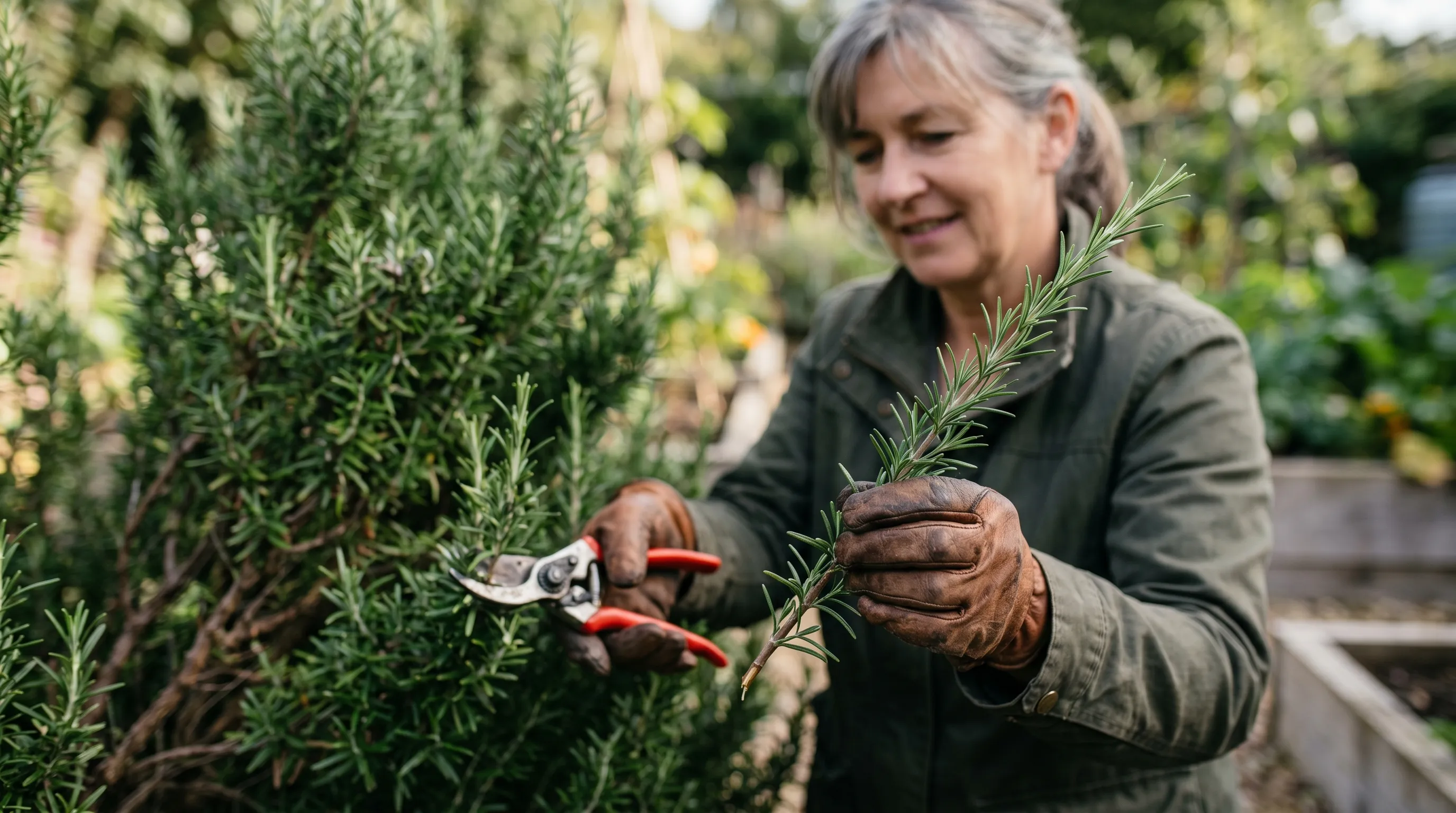 A late August cutting, firm at the base and soft at the tip, cut just below a leaf joint.
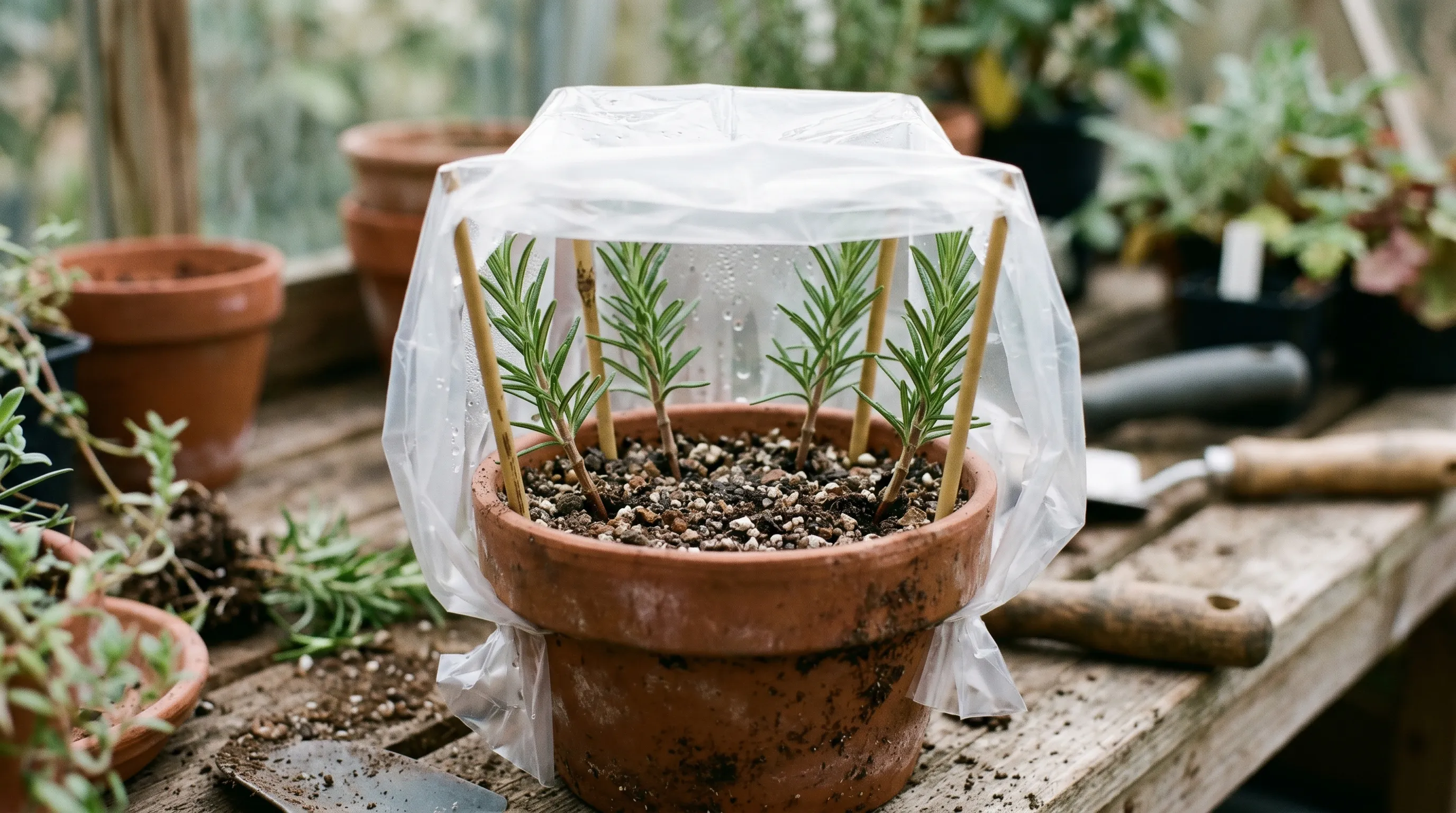 Four cuttings round a 9cm pot, under a clear bag held up on canes. Keep it somewhere bright but out of direct sun.
 A rooted cutting ready for its own pot. Plant it out the following May once the frosts are over.
Once you’ve got a few young rosemary plants, why not try other herbs too? Our plant propagation guide shows how to grow more of your favourites for free.
Our team produces practical UK gardening guidance from source research, contributor records and established horticultural practice. Editorial standards are overseen by Matt W.