Key takeaways
- Rosemary rarely regrows from bare brown wood, so never cut an old plant down to stumps
- Cut about a third of the oldest stems each spring, just above the lowest green shoots
- Spread the renovation over two or three years so the plant always keeps plenty of leaves
- Take cuttings or layer a low branch first, so you have a backup if the old plant fails
- A plant with no green growth low down, or one that browns after every wet winter, is best replaced
- Replant in sun and very well-drained soil, with a gravel mulch rather than bark
Old rosemary bushes often end up the same way: bare, twisty brown stems at the bottom and a tuft of green at the top. The tempting fix is a hard chop. Don’t. Rosemary rarely regrows from bare brown wood, so a hard cut can finish it off.
The good news is that a slow, staged cut-back can freshen up a leggy plant, as long as it still has some green growth low down. This guide shows how to do it, how to make a backup plant first, and when it’s kinder to start again. For everyday care of a young plant, see the guide to growing rosemary.
Why you can’t cut rosemary back hard
New rosemary shoots grow from green, leafy stems. Old bare brown wood rarely sprouts again. Cut a stem below its lowest leaves and it will usually die back. Cut the whole plant down to brown stumps and you may lose the lot.
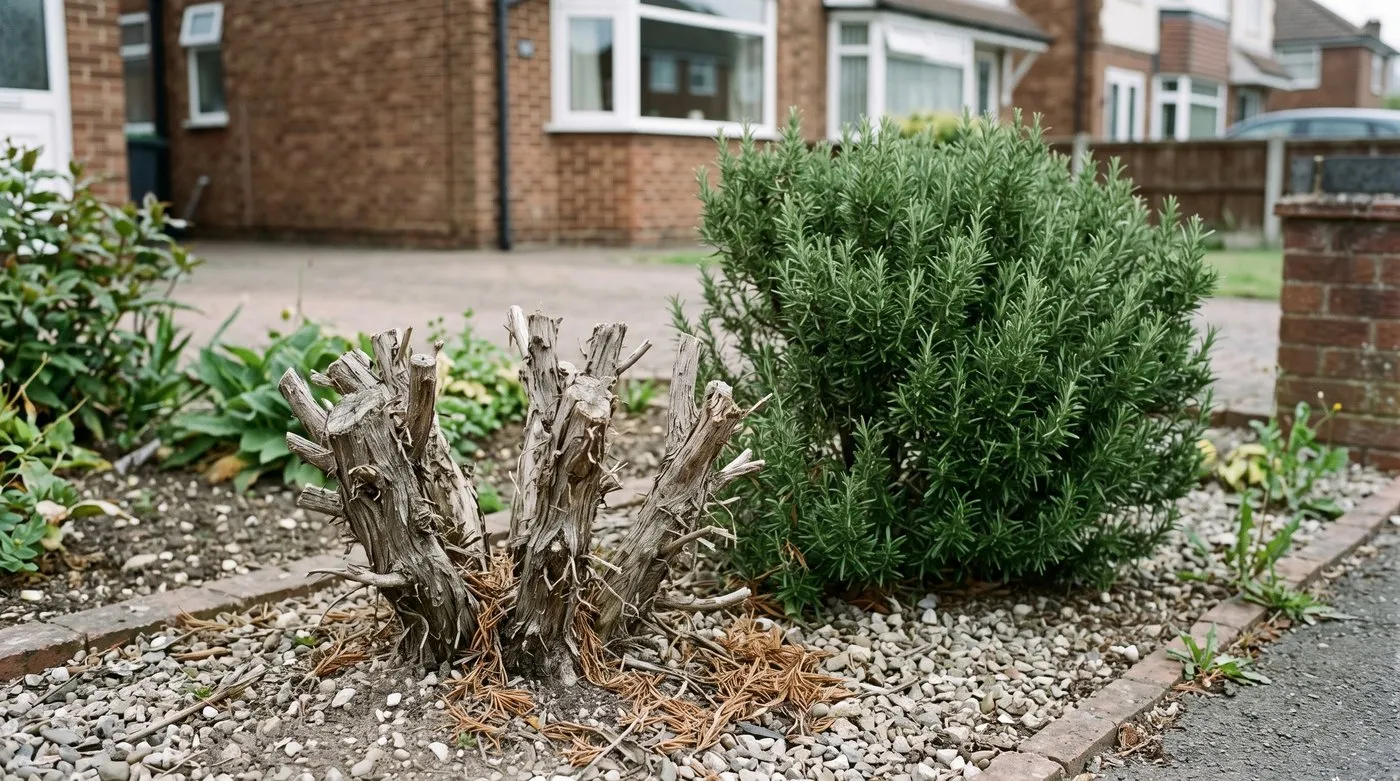
Bare stumps like these rarely sprout again. Always leave some green below every cut.
Lavender works the same way, which is why lavender is trimmed every year rather than cut back hard. The lavender pruning guide shows that routine. Sage, too, is best pruned lightly and often.
So the rule for rosemary is simple: always cut just above some green growth. That way every stem keeps leaves to grow from.
How to revive woody rosemary in stages
Check the plant first. Look along each main stem for small green shoots or leaves on the lower half. If most stems have some, a staged cut-back is worth a try.
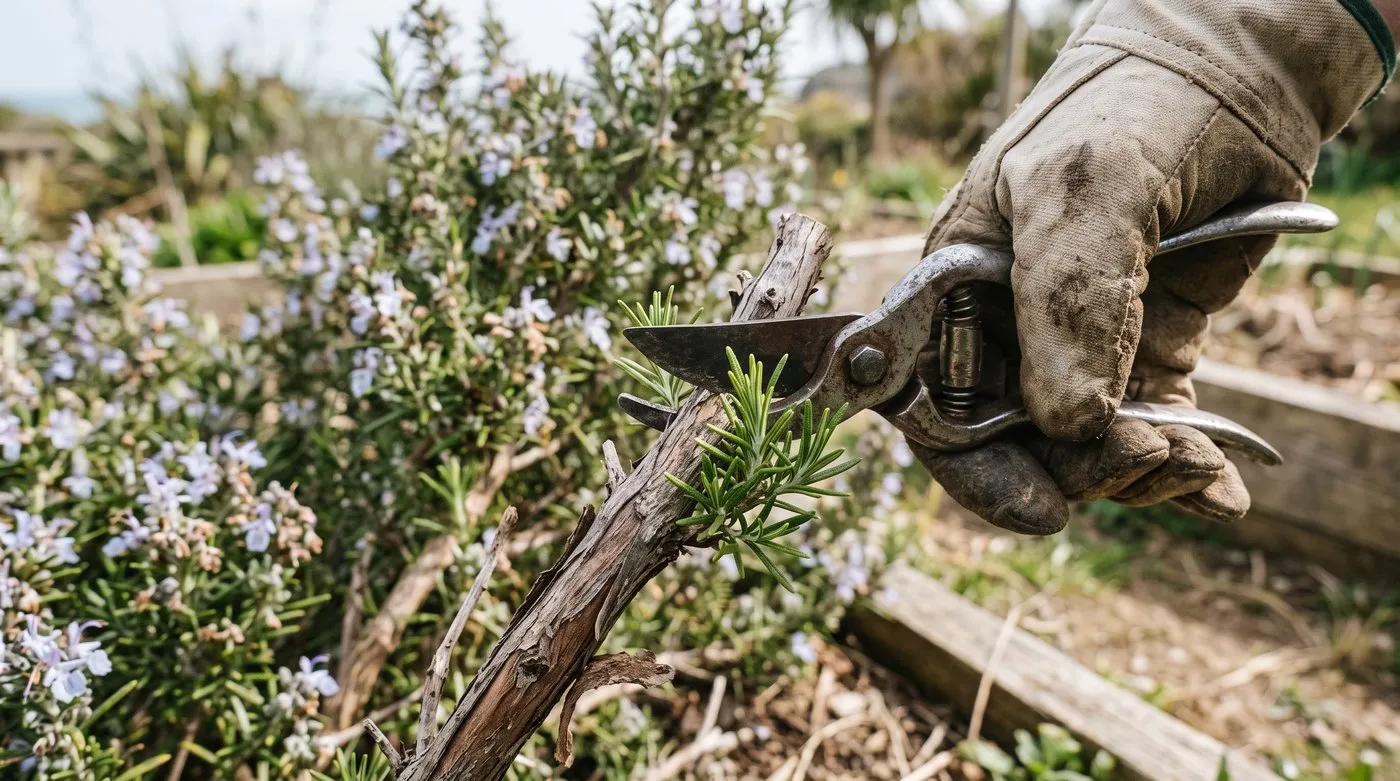
Cut just above the lowest green shoots. They’re what will grow back, while bare wood below rarely sprouts.
- Spring, year one. Just after flowering, pick out about a third of the stems: the oldest, tallest and barest. Cut each one back to just above its lowest green shoots.
- Summer. Watch for new side shoots below the cuts. A stem with no fresh growth by midsummer is best left alone or removed later.
- Spring, year two. Cut the next third of old stems in the same way.
- Spring, year three. Finish with the last of the old stems, if needed.
By the end the plant is bushier, with younger stems and more leaves lower down. It won’t shrink dramatically, because you’re only ever cutting into green.
Between the bigger cuts, trim the whole plant lightly after flowering each year. Regular light trims are what stop rosemary going leggy in the first place. Use clean, sharp secateurs and pick a dry day.
Take cuttings or layer a branch first
Before you start, make a backup plant. If the old rosemary doesn’t respond, you’ll still have the same variety.
Cuttings are easy. In late spring or early summer, take 10cm tips from non-flowering shoots. Strip the leaves from the lower half and push the stems into small pots of gritty compost. Keep them in light shade and water lightly. Most root within a couple of months. The rosemary cuttings guide walks through every step.

A few cuttings taken before you start pruning mean you’ll still have the same rosemary if the old plant gives up.
Layering is even less work. Bend a low, flexible branch down to the ground. Scrape a little bark from the underside where it touches the soil. Pin it down with a wire peg, cover it with a mound of gritty compost and put a stone on top. Leave it in place until it has rooted, then cut it from the parent and pot it up. Low, spreading rosemary often layers itself where branches touch the ground. The guide to cuttings, division and layering explains both methods in more detail.

Peg a low branch into gritty compost and weigh it down with a stone. Roots form where the stem touches the soil.
When an old rosemary is beyond saving
Some plants are better replaced than rescued. Signs it’s time to start again:
- No green growth low down. Without green shoots near the base, there’s nowhere safe to cut.
- Browning after every wet winter. This usually means the roots are rotting in soggy soil.
- A hollow, dead centre. Green only on the outer edge means the middle has given up.
- Rocking in the wind. A plant that moves at the base has lost its grip and rarely recovers.
Don’t feel bad about it. Rosemary grows quickly, and a young plant from your own cutting soon fills the gap.
Choosing a replacement rosemary
Buy a named variety from a nursery or garden centre, so you know how big it will get.
| Variety | Habit | Good for |
|---|---|---|
| Miss Jessopp’s Upright | Tall and upright | Informal hedges, the back of a herb bed |
| Tuscan Blue | Upright, broad leaves | Cooking, sunny borders |
| Sissinghurst Blue | Bushy, blue flowers | Mixed borders |
| Prostrate Group | Low and trailing | Tumbling over walls and pots |
Miss Jessopp’s Upright holds the RHS Award of Garden Merit and is a dependable all-rounder. Prostrate types look lovely spilling over the edge of a raised bed or a large pot.

Given sun and sharp drainage, rosemary makes a lovely low hedge. A light trim after flowering keeps it dense.
Where to plant rosemary so it stays healthy
Most leggy, short-lived rosemary is growing in the wrong spot. Get the site right and the new plant will do far better.

A low gritty mound and a gravel mulch keep rosemary’s roots and stems dry through a wet winter.
- Full sun. A sunny, sheltered spot, ideally facing south or west.
- Sharp drainage. Wet roots in winter kill more rosemary than anything else. On clay, plant on a low mound with plenty of grit mixed in, or grow it in a pot.
- Lean soil. Skip rich manure and high-nitrogen feeds. They make soft, floppy growth.
- Room to breathe. Space plants so air moves around them.
Plant with the top of the root ball level with the soil, not deeper. Water in well, then water only in long dry spells once it settles. A gravel mulch keeps the base of the stems dry. Bark and manure mulches hold wet against the stems, so avoid them.
Rosemary care through the year
| Month | What to do |
|---|---|
| January to February | No pruning. Brush heavy snow off upright plants |
| March to April | Flowering starts. Check stems for green growth low down |
| April to May | After flowering, do this year’s staged cut and a light trim |
| May to June | Take cuttings. Layer a low branch |
| July to August | Water pots in dry spells. No hard pruning from now on |
| September to October | Check for rosemary leaf beetle. Top up gravel mulch |
| November to December | Move pots against a sheltered wall and raise them on feet |
Rosemary leaf beetle is a small, shiny beetle with metallic green and purple stripes. It feeds on the leaves from late summer through to spring. Pick the beetles off by hand, or tap the plant over a sheet of paper. The rosemary leaf beetle guide has more on spotting and managing it.
Common mistakes with woody rosemary
- Cutting into bare wood. Rosemary rarely regrows from it. Always leave some green below each cut.
- Doing it all at once. Spread the renovation over two or three springs.
- Pruning late in the year. Soft regrowth in autumn is easily damaged by cold. Prune after flowering in spring.
- Bark or manure mulch. It holds wet against the stems. Use gravel instead.
- Heavy clay with no grit. Wet roots rot. Raise the plant up or grow it in a pot.
- Skipping the yearly trim. A light trim each year is what stops the legginess coming back.
Frequently asked questions
Can you cut rosemary back hard?
Not into bare brown wood, as it rarely regrows from there. Cut back in stages instead. Each spring, take about a third of the oldest stems back to just above the lowest green shoots.
When should I prune rosemary in the UK?
Prune in spring, just after flowering. That gives new shoots all summer to firm up before winter. Avoid pruning in late summer and autumn, when soft new growth can be damaged by cold.
How do you propagate rosemary from cuttings?
Take 10cm cuttings from non-flowering shoots in late spring or early summer. Strip the lower leaves and push them into gritty compost. Keep them in light shade and lightly moist until they root, usually within a couple of months.
Why is my rosemary turning brown?
Wet roots in winter are the most common cause. Rosemary hates sitting in cold, soggy soil, especially clay. Improve drainage with grit or replant on a slight mound. Hard pruning into old wood and rosemary leaf beetle can also cause browning.
What is the best rosemary variety for UK gardens?
Miss Jessopp’s Upright is a reliable, upright choice for hedging and borders. Prostrate types suit low walls and the tops of pots. Tuscan Blue has broad leaves and an upright habit. Buy a named variety so you know its size.
Is it better to replace an old rosemary?
Often yes, if it has no green growth near the base. A young plant from a cutting soon catches up. Keep a cutting from the old plant so you grow the same rosemary again.
Now your rosemary is on the mend, plan the rest of the bed with the guide to creating a herb garden, or browse more how-to guides.
Our team produces practical UK gardening guidance from source research, contributor records and established horticultural practice. Editorial standards are overseen by Matt W.