
Key takeaways
- Use the three-cut method on any branch too heavy to hold while you cut
- Undercut first, about 30cm out, so the falling limb can't tear bark down the trunk
- Make the final cut just outside the branch collar, never flush with the trunk
- Don't paint or seal the cut; the tree seals it best on its own
- Prune most trees in winter, but cherries and plums from June to August
- Leave work above shoulder height, chainsaw work off the ground and anything near power lines to a professional
To remove a large tree branch safely, take the weight off first and make the final cut last. That’s the three-cut method, and it stops a heavy limb tearing a long strip of bark down the trunk as it falls. It takes one extra cut and a couple of minutes.
This guide covers the three cuts, where to place the final one, the right tools, when to cut and when to leave it to a professional. If you’re pruning to let in more light or keep a screen, see the guide to pruning trees for privacy and light.
Why a single cut tears bark down the trunk
If you saw straight through a heavy branch from the top, its weight snaps it before you finish. The breaking limb rips a strip of bark and wood down the trunk below the cut.
That tear is the real damage. It leaves a big, ragged wound that the tree struggles to seal, and decay can get in. A clean cut in the right place is much easier for the tree to deal with.

This is what happens when a heavy branch snaps before the cut is finished. The three-cut method prevents it.
The three-cut method step by step
Use this on any branch too heavy to hold in one hand while you cut.
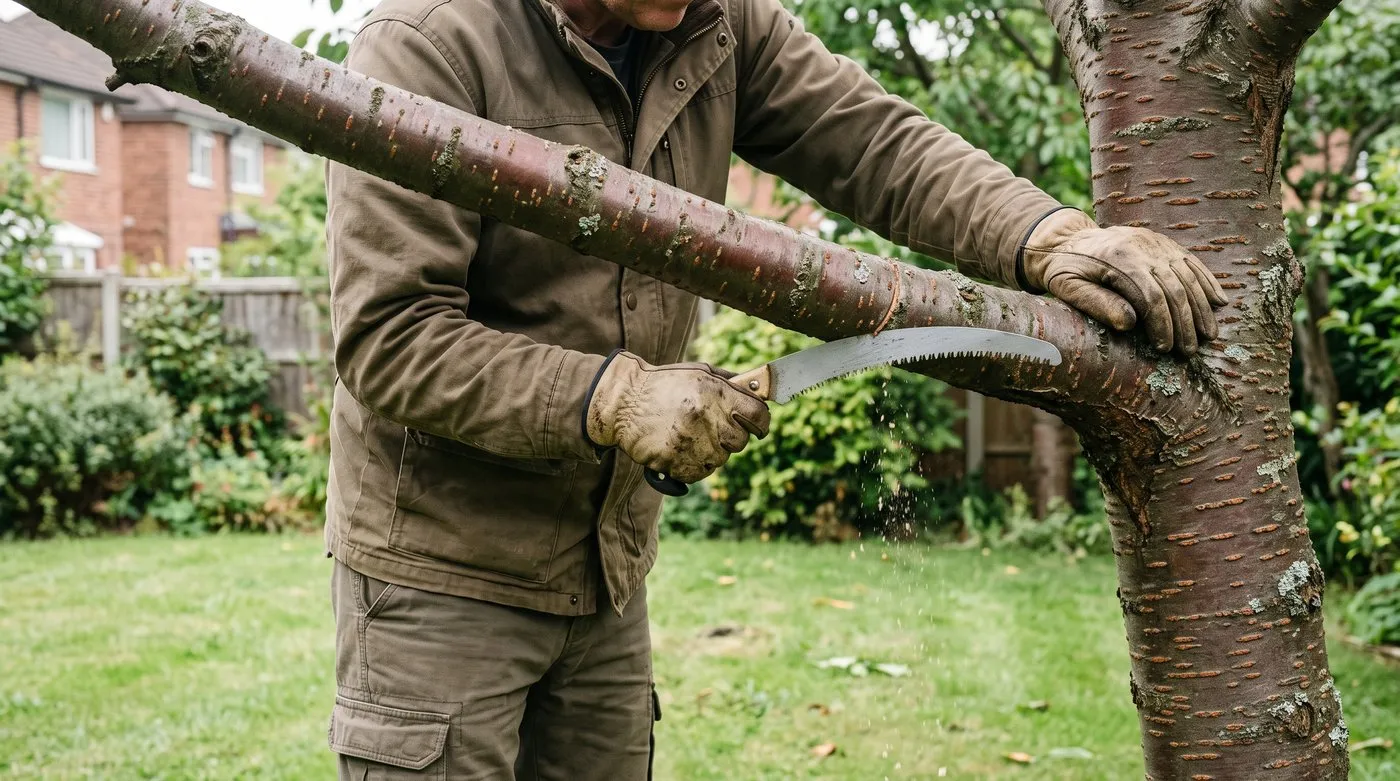
The undercut goes in first, about a third of the way through. It stops the bark tearing when the branch drops.
- Undercut. About 30cm out from the trunk, saw upwards from underneath, about a third of the way through. Stop before the saw starts to pinch.
- Top cut. A few centimetres further out than the undercut, saw down from the top. The branch drops away cleanly, and any tearing stops at the undercut.
- Final cut. You’re left with a short, light stub. Cut it off just outside the branch collar, the slightly swollen ring where the branch meets the trunk.
The step people skip is the undercut. Without it, the branch still tears as it falls. If a limb is too long or heavy to drop safely, take it off in sections from the tip back.
Finding the branch collar
The branch collar is your target for the final cut. It’s the slightly swollen, often wrinkled ring of bark around the base of the branch. On some trees it’s obvious; on smooth-barked trees such as birch, look closely.
Above the branch, where it meets the trunk, there’s usually a raised line of rougher bark called the bark ridge. Start the final cut just outside the bark ridge and angle down to finish just outside the bottom of the collar.
Avoid two mistakes:
- Flush cuts slice off the collar, which is where the tree grows new tissue to seal the wound.
- Long stubs leave dead wood that rots back towards the trunk.

The wrinkled swelling at the base of the branch is the collar. Cut just outside it and leave it intact.
Don’t paint the wound
Leave pruning cuts bare. Trees don’t heal like skin. Instead they wall off the damaged wood and grow new bark over it from the collar. Wound paints can trap moisture and decay inside, so they do more harm than good.
Choosing the right tool
Match the tool to the thickness of the branch.
| Branch | Tool |
|---|---|
| Thin, under about 2.5cm | Sharp bypass secateurs or loppers |
| Thicker branches within easy reach | Curved pruning saw |
| Thick limbs, feet on the ground | Bow saw |
| Light branches a little out of reach | Pole saw, from the ground |
| Big limbs overhead | Leave to a tree surgeon |
Bypass loppers slice cleanly rather than crushing live wood. A curved pruning saw cuts on the pull stroke and is the best all-rounder for garden branches. The guide to the best secateurs covers the smaller cuts.
A chainsaw is only for trained users standing on solid ground. Never use one up a ladder, in a tree or above shoulder height.

A bow saw handles thick limbs well, as long as you can reach them with both feet on the ground.
When to cut large branches
Most deciduous trees are best pruned from November to February, while dormant. With the leaves off, you can see the shape clearly and birds aren’t nesting. Avoid heavy cutting in spring, when trees are putting their energy into new growth.
| Trees | Best time | Why |
|---|---|---|
| Most deciduous trees (oak, lime, sycamore) | November to February | Dormant and easy to see |
| Apples and pears | November to February | Winter pruning shapes the tree |
| Cherries, plums, damsons and other Prunus | June to August | Lowers the risk of silver leaf disease |
| Birch, walnut and maples | Late summer or early winter | They bleed sap if cut in late winter or spring |
| Conifers | Late spring to summer | Cut into green growth only; most won’t regrow from bare wood |
Birds nest in trees from about March to August, and damaging an active nest is an offence. Check carefully before cutting during those months. The year-round pruning calendar covers the whole garden month by month.
Staying safe while you cut
Planning matters more than technique on a big limb.
- Clear the drop zone. Branches bounce and roll, so clear more space than the branch is long.
- Plan an escape route. Know where you’ll step back to, and keep it free of tools and hoses.
- Work with a helper. Someone on the ground can watch, steady a ladder and call for help.
- Wear the right kit. Gloves, eye protection and sturdy boots, plus a hard hat for anything overhead.
- Keep away from power lines. If a branch is anywhere near an overhead line, don’t touch it. Call 105 for your local electricity network or hire a professional.

Before any cut, look at where the branch will fall, what’s underneath and whether there are any wires nearby.
When to call a tree surgeon
Call a qualified arborist (tree surgeon) when:
- the branch is above shoulder height
- it needs a chainsaw off the ground
- it’s near a house, shed, boundary or power line
- the tree is large, dead or diseased
Look for a contractor with recognised chainsaw and tree-climbing qualifications and proper insurance. The Arboricultural Association lists approved contractors. Get two or three quotes before you book. If a conifer has simply outgrown its space, the guide to what to do when a conifer is too big covers the options.
Check the rules before you cut
Some trees are protected. Check with your council before cutting anything big.
- Tree Preservation Order (TPO): you need written consent from the council before any work, even on your own tree. The guide to Tree Preservation Orders explains how to check and apply.
- Conservation areas: you must give the council six weeks’ written notice before working on most trees.
- Overhanging branches: you can cut a neighbour’s branches back to the boundary if the tree isn’t protected. Don’t cut beyond the boundary. The branches belong to the tree’s owner, so ask what they’d like done with them.
Common mistakes when removing branches
- Skipping the undercut. The limb tears bark as it falls. Always undercut first.
- Cutting flush with the trunk. The collar goes and the wound can’t seal. Cut just outside it.
- Leaving a long stub. It dies and rots back. Remove it at the collar.
- Pruning cherries and plums in winter. Wait for summer.
- Taking too much at once. Heavy cutting causes masses of weak shoots. Spread big jobs over a few winters.
- Working off a ladder with a heavy limb. If you can’t reach it from the ground, call a professional.
Gardener’s tip: Before you cut, tie a loop of garden twine round each branch you plan to remove. Walk round the tree and check the shape still works. Twine comes off easily; branches don’t go back on.

A well-placed cut a few years on, with new bark growing in from the collar to close the wound.
For more practical guides, visit the how-to hub. If your tree is an apple or pear, the next step is the guide to pruning fruit trees.
Frequently asked questions
What is the three-cut method for removing a tree branch?
It’s three cuts that take a heavy branch off without tearing bark. First, undercut about a third of the way through, around 30cm from the trunk. Second, cut down from the top a little further out so the branch drops. Third, remove the short stub just outside the branch collar.
Where exactly should I make the final pruning cut?
Just outside the branch collar, never flush with the trunk. The collar is the slightly swollen ring where the branch joins the trunk. Leave it intact, angling the cut to follow its line. A flush cut removes the tissue the tree uses to seal the wound.
Should I paint or seal a large pruning cut?
No, leave the cut bare. Wound paints can trap moisture and decay against the wood. A clean cut just outside the branch collar lets the tree seal the wound off naturally.
When can I cut large branches off a tree in the UK?
Most deciduous trees are best pruned in winter while dormant. Prune cherries, plums and other Prunus from June to August to reduce the risk of silver leaf. Cut birch, walnut and maples in late summer or early winter, as they bleed sap in late winter and spring. Check for nesting birds from March to August.
Can I use a chainsaw to remove a tree branch myself?
Only if you’re trained, with both feet on the ground. Never use a chainsaw up a ladder, in a tree or above shoulder height. Most garden branches can be cut safely with a pruning saw or bow saw instead.
When should I call a tree surgeon instead of doing it myself?
Call one for anything above shoulder height or near buildings or power lines. The same goes for big limbs, dead or diseased trees, and anything needing a chainsaw off the ground. Choose a qualified, insured arborist and ask to see proof first.
Do I need permission to cut branches off my own tree?
Only if it’s protected by a Tree Preservation Order or in a conservation area. Protected trees need written consent from the council first. In a conservation area, you must give the council six weeks’ notice before working on most trees.
Our team produces practical UK gardening guidance from source research, contributor records and established horticultural practice. Editorial standards are overseen by Matt W.


