Key takeaways
- Leylandii and Lawson cypress don't regrow from bare brown wood
- Lower the height by up to about a third at a time and let side shoots cover the top
- Trim the sides only within the green growth, never back to bare wood
- Yew is the main conifer that regrows well after a hard cut
- Avoid cutting when birds are nesting, roughly March to August
- If a hedge is far too big, removing and replanting is often the better choice
A conifer that has outgrown its spot is frustrating, because the obvious fix can make things worse. Leylandii and Lawson cypress don’t regrow from bare, brown wood. Cut too hard into the sides and you are left with a brown gap for good.
The good news is that you can usually bring an overgrown hedge down to a sensible height. The trick is to work in stages, stay in the green, and know when to stop and replant instead. This guide covers how far you can cut, the yew exception, the law on high hedges and nesting birds, and what to plant if you start again. If your hedge is also going brown in patches, see the guide to conifer hedge browning.
Why most conifers don’t regrow from bare wood
A mature leylandii has a green outer layer of foliage and a brown, leafless inside. The new shoots only grow from that green layer. The brown wood inside has no buds left, so it can’t sprout again.
Most broadleaf hedges, such as beech, hornbeam and privet, are different. They have hidden buds along their stems and push out new shoots after a hard cut.
Conifers that don’t regrow from bare wood include:
- Leyland cypress (leylandii), the usual fast boundary hedge
- Lawson cypress and its many varieties
- Junipers
- Pines and spruces
Western red cedar copes a little better with cutting than leylandii, but don’t count on it refilling bare wood. The simple rule for all of these: keep your cuts in the green.

This is what happens when you cut into bare wood on leylandii. The brown twigs stay bare, so keep cuts in the green.
How much can you cut off a leylandii?
You can lower the height by up to about a third at a time. The cut top stays bare at first. Side shoots then grow up and slowly hide it. The sides are different: only trim them within the green growth.
For a big reduction, spread the work over two or three years:
- Year one: Lower the top by up to a third. Lightly trim the sides, staying in the green.
- Year two: Lower the top a little more if needed. Trim the sides lightly again.
- Year three: Reach your target height and shape the top so it is slightly narrower than the base.
- After that: Trim once or twice a year to hold the new size.
A hedge that is slightly narrower at the top than the bottom lets light reach the lower branches. That keeps the base green and dense.
Big hedges mean ladders, platforms and powered trimmers. Use a stable platform rather than a ladder where you can, and get a professional in for very tall hedges. The guide to when to cut hedges has more on timing.

Taking the top down in stages keeps the hedge healthy. Side shoots slowly cover the cut top.
When should you cut an overgrown conifer?
The safest time for bigger cuts is late summer to early autumn, once most birds have finished nesting. The hedge still has time to put on a little growth before winter.
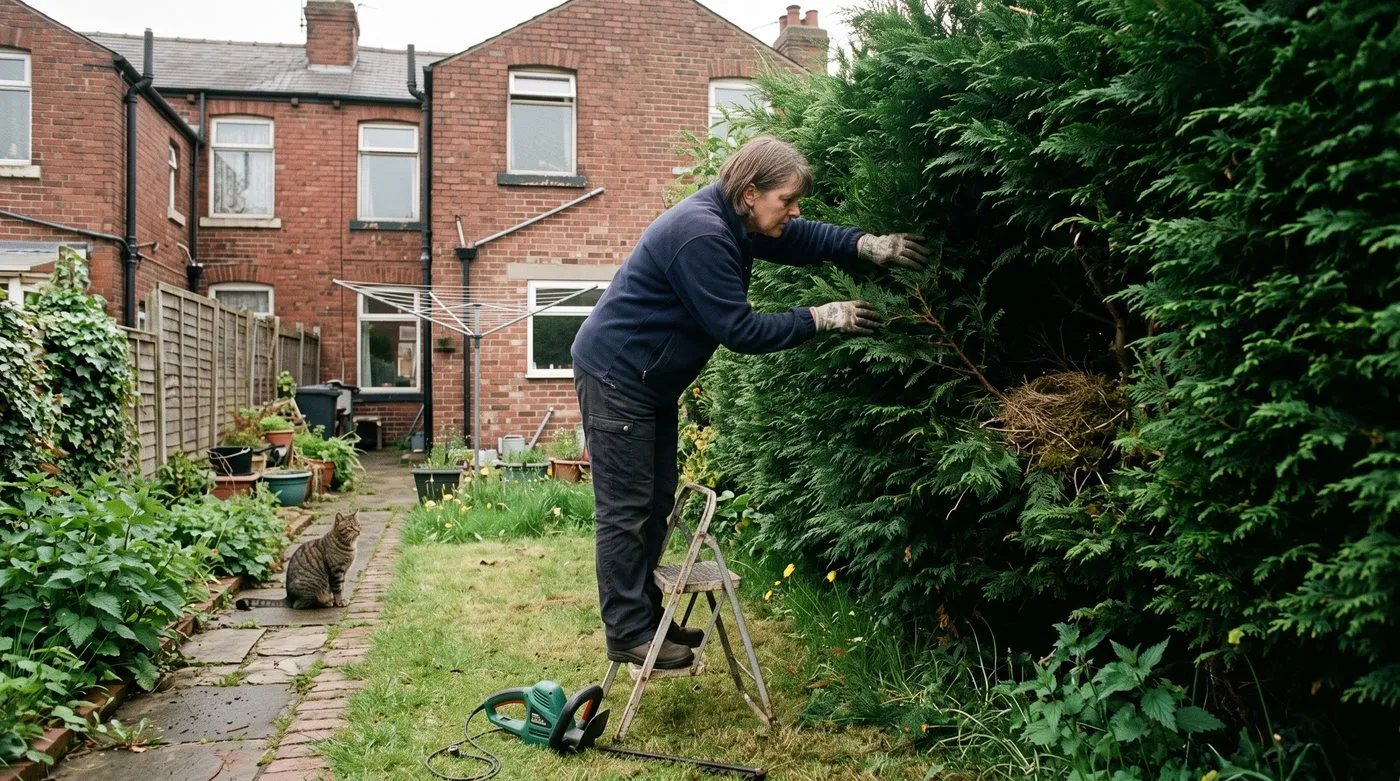
Always look for nests before you cut. If birds are nesting, leave that stretch until late summer.
Light trims can be done from spring, but check the hedge carefully for nests first. Damaging or destroying an active bird nest is an offence at any time. In a dense conifer that is hard to check, so many gardeners avoid cutting from March to August.
Avoid hard cuts in hot, dry spells, as stressed conifers can scorch.
Why yew is the exception
Yew is the main conifer that regrows from old wood. You can cut a yew hedge back hard to the main stems and it will sprout new shoots.
The safest way is to renovate it over two or three years:
- Year one: Cut one side back hard, and trim the top and other side lightly.
- Year two: Cut the other side back hard once the first side is regrowing well.
- Year three: Lower the top if needed.
Do the hard cutting in mid-spring, before birds are nesting, or check carefully for nests. Water well in dry spells and mulch the roots to help it recover. A yew can take a couple of years to clothe itself again.

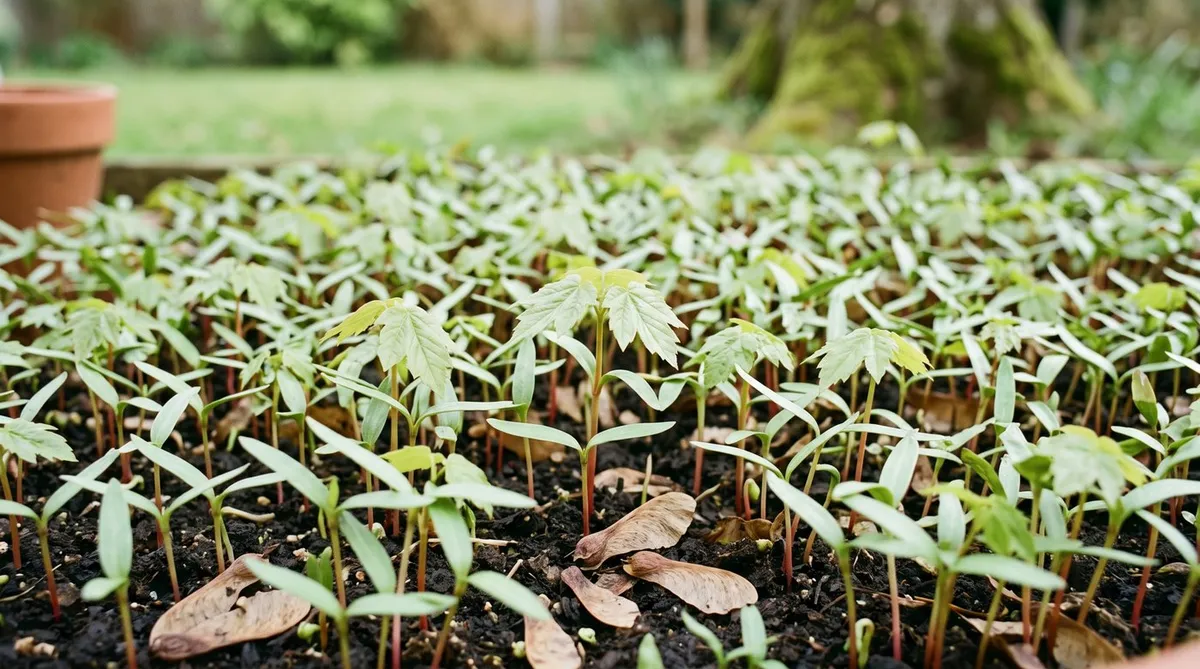
Yew is the conifer that bounces back. Fresh shoots sprout from old wood after a hard cut.
What the law says about tall hedges
You don’t need planning permission to cut or remove an ordinary garden conifer. Check with your council first if a tree has a Tree Preservation Order or stands in a conservation area.
In England and Wales, councils can deal with complaints about high hedges. These are lines of two or more mostly evergreen trees or shrubs over 2 metres tall. The hedge must be spoiling a neighbour’s reasonable enjoyment of their home, for example by blocking light. Neighbours must try to sort it out together first. The council can then order the hedge to be cut and kept lower. Scotland and Northern Ireland have their own high hedges laws. The GOV.UK high hedges page explains the steps.
Bird law applies whatever the hedge. Always check for active nests before cutting or felling. The guide to neighbour disputes in the garden covers boundaries and overhanging branches.
When to remove and replant instead
Staged cutting works when you only need to lose a metre or two. If a hedge is far too tall or wide, removing it and starting again is often quicker and tidier.
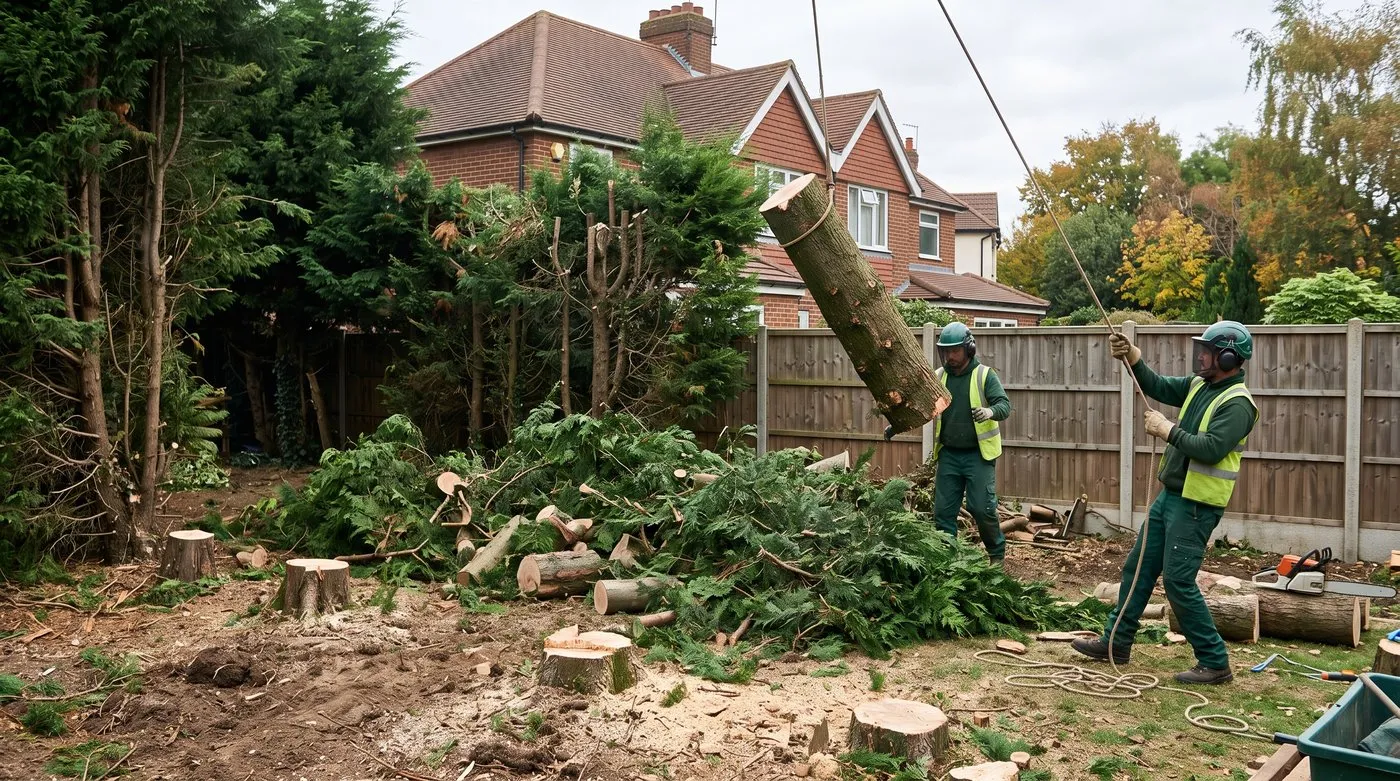
When a hedge is far too big, a tree surgeon can take it down in sections and clear the stumps so you can replant.
Signs it’s time to replace:
- The hedge needs to come down by more than half its height
- The sides are already bare and brown inside
- It is too wide for the space and can’t be trimmed back without exposing bare wood
- Whole plants are dead or dying
Large conifers are a job for a qualified tree surgeon. They will fell the trees in sections and can grind out the stumps so you can replant. If you are taking smaller limbs off yourself, use the three-cut method for big branches to avoid tearing the bark.
Which hedges make a good replacement?
Pick a hedge that will cope with being cut back if it ever gets too big. All of these regrow from older wood.
| Hedge | Evergreen? | Good for |
|---|---|---|
| Yew | Yes | Formal, long-lived hedges |
| Beech | Holds dry brown leaves in winter | Formal screening on well-drained soil |
| Hornbeam | Holds dry brown leaves in winter | Heavy clay and wetter soil |
| Holly | Yes | Dense, prickly, good for wildlife |
| Mixed native (hawthorn, hazel, field maple) | No | Wildlife and a country look |
| Privet | Mostly | Quick, tidy, easy to clip |
Bare-root plants, sold from late autumn to early spring, are the cheapest way to plant a long hedge. Larger potted or root-balled plants give quicker screening. The hedge planting guide covers spacing and aftercare. The native hedgerow species guide helps with a wildlife hedge.

A young beech hedge settles in quickly and copes with being cut back. It’s an easy-going swap for leylandii.
Common mistakes with an overgrown conifer
- Cutting the sides back to brown wood. The gap stays bare for good.
- Trying to fix it all in one go. Spread big reductions over two or three years.
- Cutting in nesting season without checking. Active nests are protected by law.
- Letting a new leylandii hedge grow away. Trim it from the start to keep it at the size you want.
- Keeping a hedge that can’t be saved. Replanting is often quicker and looks better sooner.
Frequently asked questions
Can you cut a Leylandii right back to bare wood?
No, leylandii won’t regrow from bare brown wood. Cut the sides back to brown and they stay brown. You can lower the top, as side shoots slowly cover the cut. For a big reduction, spread the work over a few years or replant.
Which conifers can be hard-pruned back?
Yew is the main conifer that regrows well from old wood. It can be cut back hard, one side at a time, over two or three years. Leylandii, Lawson cypress, junipers, pines and spruces don’t recover from hard cuts into bare wood.
How tall can a hedge be in the UK before the council can act?
Councils can act on evergreen hedges over 2 metres tall. In England and Wales, a neighbour can complain under the high hedges rules if the hedge spoils their reasonable enjoyment of their home. They must try to sort it out with you first. Scotland and Northern Ireland have their own high hedges laws.
When is the best time to cut conifer hedges in the UK?
Late summer to early autumn is a good time for most conifer hedges. Light trims can also be done from spring, but always check for nests first. Damaging or destroying an active bird nest is an offence. Avoid hard cuts in hot, dry weather.
What can I plant to replace an overgrown Leylandii hedge?
Yew, beech, hornbeam, holly or a mixed native hedge all make good replacements. Yew and holly stay green all year. Beech and hornbeam hold dry brown leaves through winter. All of them cope with being cut back far better than leylandii.
Do I need permission to cut down a conifer hedge?
Usually not, but check first. If a tree has a Tree Preservation Order or stands in a conservation area, you need council consent. Always check for nesting birds before felling or cutting.
Planning a replacement? Read the guide to slow-growing hedging plants to pick a hedge that won’t outgrow its space again. For more garden troubles, browse the problems hub.
Our team produces practical UK gardening guidance from source research, contributor records and established horticultural practice. Editorial standards are overseen by Matt W.