Key takeaways
- The main bird nesting season runs from 1 March to 31 August
- Damaging a nest that's in use is a crime at any time of year, so always look before you cut
- Most deciduous hedges like two trims, one in late summer and one in February
- Yew and holly need just one trim a year, in late summer
- Never cut Leylandii back into bare brown wood, as it won't grow back
- Late August to mid-September is the best single window for most hedges
The best time to cut a hedge in the UK is between September and February, when birds aren’t nesting. Hedges make lovely homes for nesting birds, and it’s against the law to damage a nest while it’s in use or being built. That’s why the timing matters as much as the technique.
This guide covers the nesting dates, when to trim 10 common hedge plants, a month-by-month calendar and the mistakes to avoid. The rules are the same whether you have one small garden hedge or a long country boundary.
The law on cutting hedges in the UK
The Wildlife and Countryside Act 1981 protects wild birds’ nests in England, Scotland and Wales. It’s an offence to damage or destroy a nest while it’s in use or being built. Northern Ireland has its own, similar law.
The nesting bird dates: 1 March to 31 August
The bird nesting season runs roughly from 1 March to 31 August. These dates aren’t written into the law itself. The law protects any active nest, whatever the date. But 1 March to 31 August is when most birds are breeding, so it’s the period to be most careful.
Some birds start in late February, and blackbirds can still have chicks in September. So whatever the month, always check for nests before you cut.
Penalties for disturbing nesting birds
Damaging an active nest is a criminal offence. It can lead to a fine, and serious cases can mean up to six months in prison. Each nest counts separately. Rare birds such as barn owls, kingfishers and red kites have extra protection, so even disturbing them near the nest is an offence.
What counts as “checking for nests”
Before cutting between March and August, have a proper look. Stand back 3-5 metres and watch the hedge quietly for 15-20 minutes. Look for birds flying in and out, and listen for alarm calls or cheeping chicks. Gently part the leaves in thick sections. If you find an active nest, leave the hedge until the chicks have flown, usually two to three weeks after they hatch.
 A blackbird nest tucked deep in a privet hedge. It’s easy to miss, so always look before you trim.
When to cut each hedge species
Each hedge plant grows at its own pace, so each has its own best time for a trim. Cut at the wrong moment and you can end up with leggy, gappy growth. The table below covers 10 common UK hedges. Privet is one of the fastest after Leylandii, and our privet hedge care guide covers its busier year.
Hedge species comparison table
| Hedge | Growth | Trims a year | Best time to cut | Type |
|---|---|---|---|---|
| Leylandii | Very fast | 3 | May, July, September (check for nests) | Evergreen |
| Privet | Fast | 2-3 | June, August, October | Semi-evergreen |
| Beech | Medium | 2 | February, late summer | Deciduous |
| Hornbeam | Medium | 2 | February, late summer | Deciduous |
| Hawthorn | Medium | 1-2 | February, September | Deciduous |
| Yew | Slow | 1 | Late summer | Evergreen |
| Box | Slow | 1-2 | June, September | Evergreen |
| Laurel | Fast | 1-2 | Late summer | Evergreen |
| Berberis | Medium | 1 | After flowering | Evergreen |
| Holly | Slow | 1 | Late summer | Evergreen |
Deciduous hedges: beech, hornbeam, and hawthorn
Beech and hornbeam are the favourite formal deciduous hedges in UK gardens. When grown as a hedge, both hang on to their brown leaves through winter, so they screen all year. Two trims a year suit them best.
Do the first trim in February, before the nesting season, to shape the hedge before spring growth. Do the second in late summer, once the birds have finished, so the hedge stays neat through winter. Beech does most of its growing between April and July. Our beech hedge planting and care guide covers spacing, feeding and bringing back an overgrown hedge.
Hawthorn is the classic country hedge. It flowers in May on older stems, so don’t cut it in spring if you want the blossom. One trim in September suits most hawthorn hedges. For a smart, formal look, add a second trim in February.
Evergreen hedges: yew, box, and holly
Yew is the queen of formal evergreen hedges. It grows slowly and needs just one trim a year, in late summer. It’s also brilliant at bouncing back from hard pruning, even regrowing from bare wood, which most conifers can’t do.
Box grows very slowly. Trim box hedges and topiary in June after the first flush of growth, with an optional tidy in September. Don’t cut box in wet weather, as that helps spread box blight, a fungal disease that can leave hedges bare and brown.
Holly needs just one trim a year, in late summer. Use secateurs rather than a hedge trimmer, as trimmers shred the big glossy leaves and leave brown edges for months. Cut each stem just above a leaf.
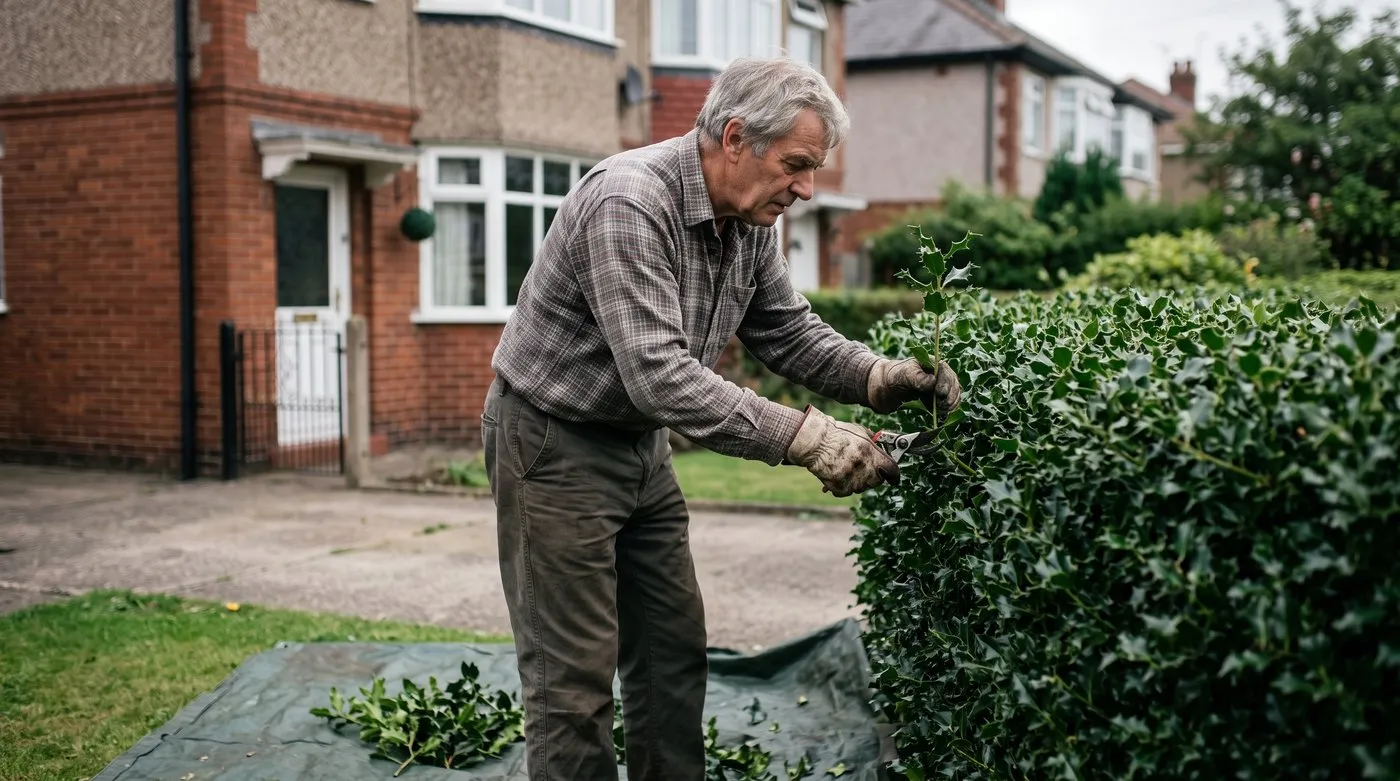
Holly needs just one trim in late summer. Use secateurs rather than a trimmer, which shreds the big leaves and leaves brown edges for months.
Fast-growing hedges: Leylandii and privet
Leylandii is the fastest-growing hedge in the UK. Leave it alone and it shoots up into a very tall tree and a classic cause of rows with the neighbours. Councils can order a high evergreen hedge to be cut down if it blocks a neighbour’s light, under the high hedges law. Keep it in check with three trims a year: May, July and September, checking for nests first in the summer months.
Important: never cut Leylandii back into bare brown wood. Unlike yew, it won’t grow back from old wood. Only trim the green growth. If yours has got too big, reduce it gently over 2-3 years, only ever taking off green growth.
Privet grows fast and keeps putting on new growth from spring to autumn. Two or three trims a year keep it neat. In a hard winter it may drop some leaves, so northern hedges can need a February tidy-up.
 A yew hedge after its once-a-year trim. It stays dense and tidy until the next one.
Month-by-month hedge cutting calendar
Here’s a month-by-month guide for the 10 hedges above. From March to August, only cut after checking for nests.
| Month | What to do |
|---|---|
| January | No cutting needed. Plan the year. Order bare-root hedging plants (planted November to March). Check for storm damage. |
| February | Best month for hard pruning. Cut beech, hornbeam and hawthorn before the nesting season starts on 1 March. Last chance for big renovation jobs. |
| March | Nesting season begins. No routine cutting. Blackbirds and song thrushes nest early. Only cut if you’re sure there are no nests. |
| April | Busy nesting month. Leave hedges alone. Blue tits, robins, wrens and dunnocks are all nesting. Do some weeding and mulching around the base instead. |
| May | Still nesting. First Leylandii trim, but only if a nest check shows nothing. Most birds are feeding chicks, so leave hedges alone if you can. |
| June | Nesting continues. Trim box topiary after its first growth. Trim flowering hedges like berberis and escallonia as soon as the flowers fade. Watch for second broods. |
| July | Late nesting. Second Leylandii trim if it’s safe. Many young birds are leaving the nest, but still check first. Privet may need its second trim. |
| August | Late summer trims. Towards the end of the month most nesting is over. After a nest check, trim yew, holly, beech, hornbeam, laurel and privet. |
| September | Prime cutting time. Fine for all hedges. Trim hawthorn, beech, privet and the last Leylandii cut. Look out for late blackbird nests early in the month. |
| October | A last tidy before winter. Snip off long shoots that could catch snow and pull the hedge out of shape. Last trim for privet. |
| November | No cutting. Mulch hedges with 5-7cm of composted bark. It’s a great time to plant new hedges while they’re dormant. |
| December | No cutting. Keep planting bare-root hedging if the ground isn’t frozen. Plan any February renovation. |
Why hedges go wrong
Most hedge troubles come down to three things: the wrong time, the wrong shape or the wrong plant.
Wrong timing
Cutting late in autumn, from November on, can push out soft new shoots that get hit by frost. They die back and leave brown patches. Cutting in spring takes away nesting spots and can trigger a flush of floppy growth.
Late summer to early autumn is the sweet spot. Growth has slowed, and a trim now holds its shape all winter. The later past mid-October you leave it, the more chance of frost damage.
Wrong technique
The most common mistake is cutting the sides dead straight. A straight-sided hedge shades its own bottom, and over the years the lower branches die off. You end up with bare stems at the base and all the leaves at the top.
Aim for a slight slope instead: wider at the bottom than the top, like a letter “A”. That lets light reach the lower branches, so the hedge stays leafy right to the ground.
The other big mistake is cutting conifers back into the brown. Leylandii, Lawson cypress and Thuja won’t regrow from bare brown wood, so that patch stays bare for good. Yew is the only common hedge conifer that reliably regrows from old wood.
Wrong species for the location
A Leylandii hedge in a small garden means years of hard work, with three trims a year just to keep it in check. Beech hates soggy ground, so it struggles on wet clay. Pick a hedge that suits your soil and the space you have.
How to check for nesting birds before cutting
Some birds nest earlier or later than the usual dates, so it’s worth checking before every cut.
The 15-minute watch method
Stand 3-5 metres from the hedge and watch quietly for 15-20 minutes. Birds going back to a nest use the same route again and again. You’ll see them going in at the same spot with food in their beak, then popping out again a minute later without it.
Signs of a nest in use:
- Birds carrying food, like insects or worms, into the hedge
- Alarm calls as you get close (a sharp “tik-tik-tik” from blackbirds, a churring rattle from wrens)
- Chicks cheeping
- Fresh droppings on leaves below one spot
- A bird sitting very still deep in the hedge
If you find a nest, leave the hedge alone until the chicks have flown. For most small garden birds that’s two to three weeks after hatching.
Species most likely to nest in UK hedges
Lots of UK birds nest in hedges. The ones you’re most likely to find in a garden hedge are:
- Blackbird: March to August, often two or three broods
- Song thrush: March to July
- Robin: March to July
- Wren and dunnock: April to July
- Blue tit and chaffinch: April to June
- Goldfinch: May to August
Blackbirds cause the most surprises. They start early, have several broods and love garden hedges, so the last brood can still be in the nest in September. To tell them apart, see our guide to identifying common garden birds.
 A clean cut with sharp secateurs. Use them for thicker stems and shears for the soft growth.
Common mistakes when cutting hedges
These are the slip-ups that do the most harm.
Cutting during nesting season without checking
It only takes a few seconds with a hedge trimmer to destroy a nest you didn’t know was there. Between March and August, always do the 15-minute watch first. If in doubt, wait until September.
Cutting all species on the same date
One big “hedge day” treats every plant the same, but they’re not. Yew wants one trim in late summer, privet wants up to three, and beech two. Flowering hedges should be cut just after they flower, which is May or June for berberis and later in summer for escallonia. Keep a simple note of when each one is due.
Cutting the top flat and sides vertical
A flat-topped, straight-sided hedge looks smart for a fortnight. Then the top grows away and the shaded bottom thins out. Over a few years you get a hedge that’s bare at the base and heavy at the top. Taper the sides in towards the top. A rounded or pointed top also sheds snow better, so branches don’t get pushed apart.
Using blunt blades
Blunt blades tear stems instead of cutting them. Torn stems are slow to heal and let in diseases like coral spot. Keep trimmer blades sharp and give hand shears a sharpen at least twice a year.
Neglecting the base
It’s easy to trim the top and sides and forget the bottom. Weeds, ivy and brambles creep in there and compete with the hedge. Clear the base each February and spread a 5-7cm mulch of composted bark to keep weeds down and the soil moist.
Renovation pruning for overgrown hedges
A hedge that’s been left for years needs a bigger cut back, called renovation pruning. How you do it depends on the plant.
Deciduous hedges (beech, hornbeam, hawthorn)
In February, cut one side hard back towards the main stems and leave the other side alone. The next February, do the other side. That way the hedge always has leaves on one face while it recovers. These hedges regrow well from old wood, and beech and hornbeam usually bounce back within a season.
Afterwards, feed with a general fertiliser such as Growmore in March, following the pack, and mulch with composted bark. Our pruning shrubs guide has more on the same ideas.
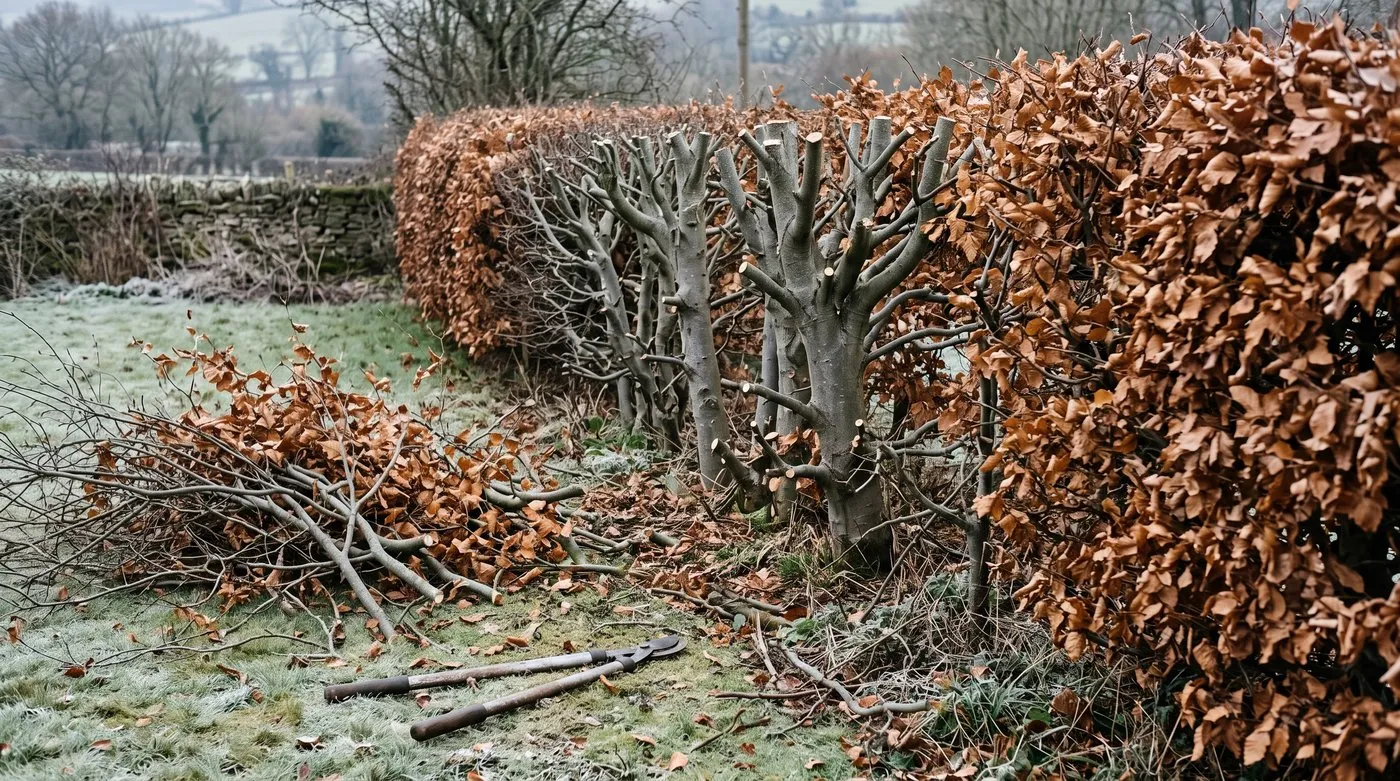
Renovate one side in February and the other side the next year. The hedge always keeps one leafy face while it recovers.
Evergreen hedges (yew, laurel, holly)
Yew is the easiest evergreen hedge to rescue. You can cut it right back in February and it’ll reshoot. Feed and mulch it afterwards.
Laurel also bounces back well, but use secateurs or loppers rather than a hedge trimmer, which shreds the big leaves. Cut each stem just above a bud or leaf. It regrows quickly.
Don’t try to renovate Leylandii, Lawson cypress or Thuja. They won’t regrow from brown wood. If one has got badly out of hand, either keep it at its current size or take it out and replant.
Tools for hedge cutting
The right tool makes the job quicker and neater, and is kinder to the hedge.
| Tool | Best for |
|---|---|
| Hand shears | Short formal hedges, box and topiary |
| Electric trimmer | Medium garden hedges like privet and beech |
| Petrol trimmer | Long country hedges and thick growth |
| Battery trimmer | Medium hedges, quieter and no cable to trip on |
| Secateurs | Holly and laurel stem by stem, and small renovation cuts |
| Loppers | Thick stems when renovating |
Good secateurs for UK gardeners are worth having for all pruning jobs, including holly and renovation work.
Legal requirements beyond nesting birds
A few other rules can affect your hedge.
High hedge rules (England and Wales)
The high hedge rules in England and Wales are actually part of the Anti-social Behaviour Act 2003. They let a neighbour complain to the council about an evergreen or semi-evergreen hedge over 2 metres tall that blocks their light. The council can then order it to be cut down to a set height, and ignoring that order can mean a fine. The neighbour has to try to sort it out with you first, and councils charge a fee for a complaint.
Countryside and boundary hedges
Countryside hedgerows, such as those around fields, are covered by the Hedgerow Regulations 1997. You need the council’s permission to remove most of them. These rules don’t cover hedges in your own garden.
Highway hedges
If your hedge runs along a road or public path, you have to keep it trimmed so it doesn’t get in the way. The council can send a notice asking you to cut it back, and if you don’t, they can do it and send you the bill.
How to create a wildlife-friendly cutting regime
Hedges give birds, hedgehogs and insects food, shelter and a place to nest. A few small changes to how you trim make your hedge even better for wildlife.
Leave berry-laden bits until February. Haws, holly berries, sloes and elderberries feed thrushes, blackbirds and fieldfares through winter. Trimming a hawthorn in September takes away that winter food. If you can, just trim the top and the front, and leave the back with its berries.
Take turns. On a long hedge, cut two-thirds each year and leave a third alone. There’s always some thick, mature growth for nesting next spring. Move the uncut section along each year.
Related reading: Flowering currant makes a quick, informal hedge. See our guide to growing and pruning flowering currant.
Once your hedge is sorted, our hedge planting guide has advice on choosing, spacing and planting new hedging.
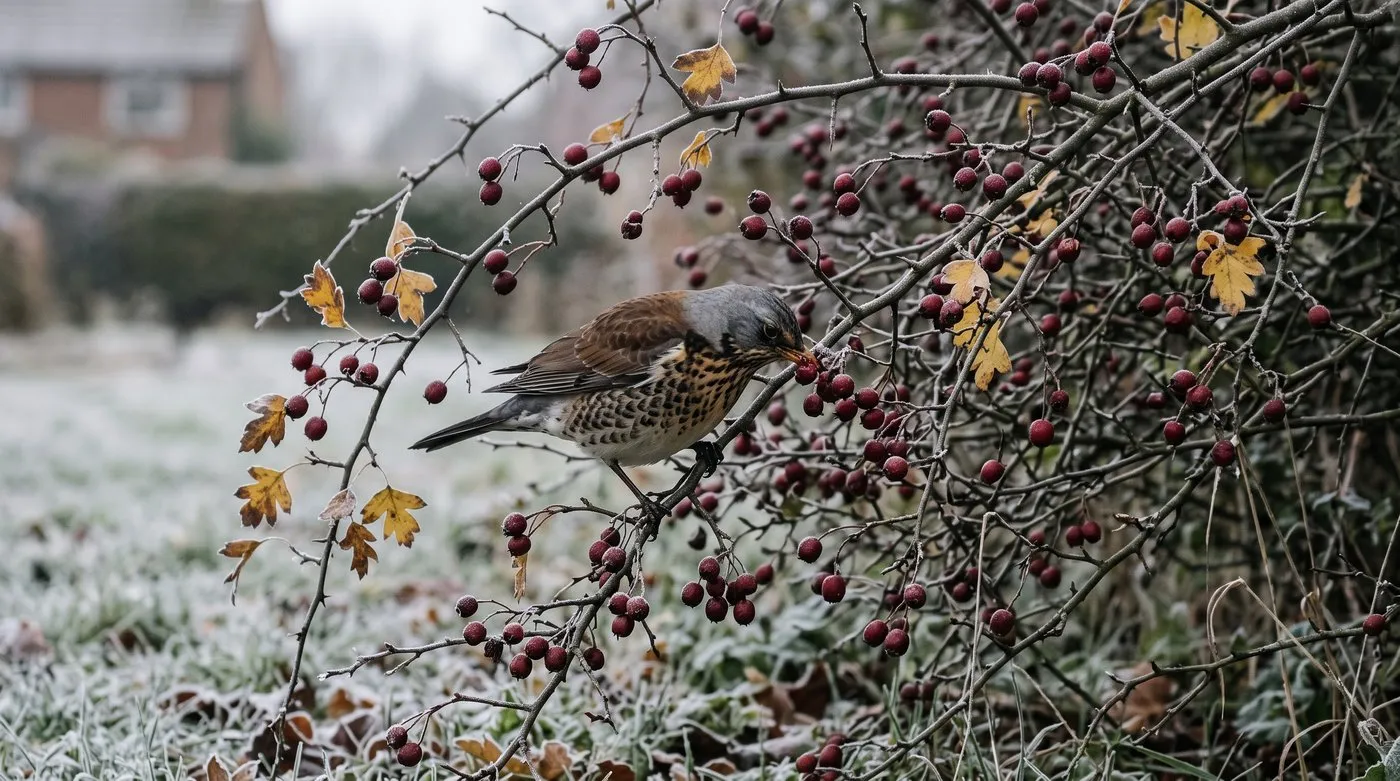
Leave berry-laden hawthorn until February if you can. The haws feed thrushes, blackbirds and fieldfares through the cold months.
Frequently asked questions
Is it illegal to cut hedges in summer UK?
Not in itself, but damaging an active nest is. The law protects nesting birds, not the hedge. So you can trim in summer if you’ve checked carefully and there are no nests. Nests are easy to miss though, so the RSPB advises waiting until September if you can.
What months can you legally cut hedges in the UK?
September to February is the safe time. Most birds have finished nesting by then. Many hedges like a trim in February and again in late summer. Still have a quick look for nests in early September, as blackbirds can nest late.
Can I cut my hedge in March UK?
Only if you’ve checked carefully and there are no nests. March is the start of the nesting season, and blackbirds and thrushes get going early. If you can, do any big jobs in February and save the rest for September.
What is the penalty for cutting hedges during nesting season?
Damaging an active nest is a criminal offence. It can mean a fine, and in serious cases up to six months in prison. Each nest counts as a separate offence, and rare birds like barn owls have extra protection.
How often should I cut my hedge?
Once to three times a year, depending on the plant. Yew and holly need one trim in late summer. Beech, hornbeam and hawthorn like two, in late summer and February. Fast growers like privet and Leylandii need two or three.
Can I cut my neighbour’s hedge if it overhangs my garden?
Yes, back to the boundary line. You’ll still need to check for nests between March and August. The cuttings belong to your neighbour, so offer them back. Don’t go onto their land without asking.
Should I cut my hedge wet or dry?
Dry, always. Wet leaves clog trimmer blades and tear instead of cutting cleanly. A dry, cloudy, still day is perfect. Hot sun can scorch the inner leaves you’ve just uncovered.
What is the best tool for cutting hedges?
It depends on the size of the hedge. Hand shears give a neat finish on short, formal hedges. Powered trimmers save time on longer ones. For thick, woody stems, use loppers or a pruning saw first, then tidy with shears. Keep the blades sharp.
Our team produces practical UK gardening guidance from source research, contributor records and established horticultural practice. Editorial standards are overseen by Matt W.