Key takeaways
- A clipped beech hedge keeps its copper leaves through winter, so it screens almost like an evergreen
- Plant bare-root whips between November and March, while they are dormant
- Space 3 plants per metre in one row, or 5 per metre in a staggered double row
- Dry first summers kill more new beech hedges than anything else, so water weekly in dry spells
- Trim once a year in August, after checking carefully for nesting birds
- Beech hates waterlogged clay, where hornbeam is the better choice
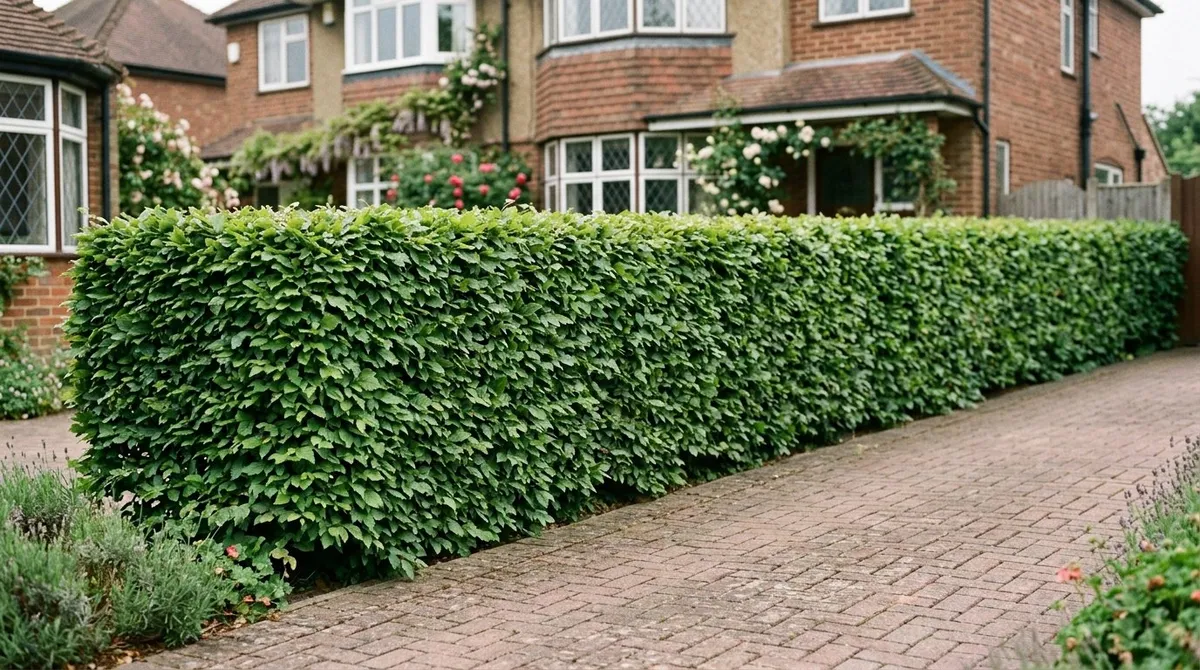
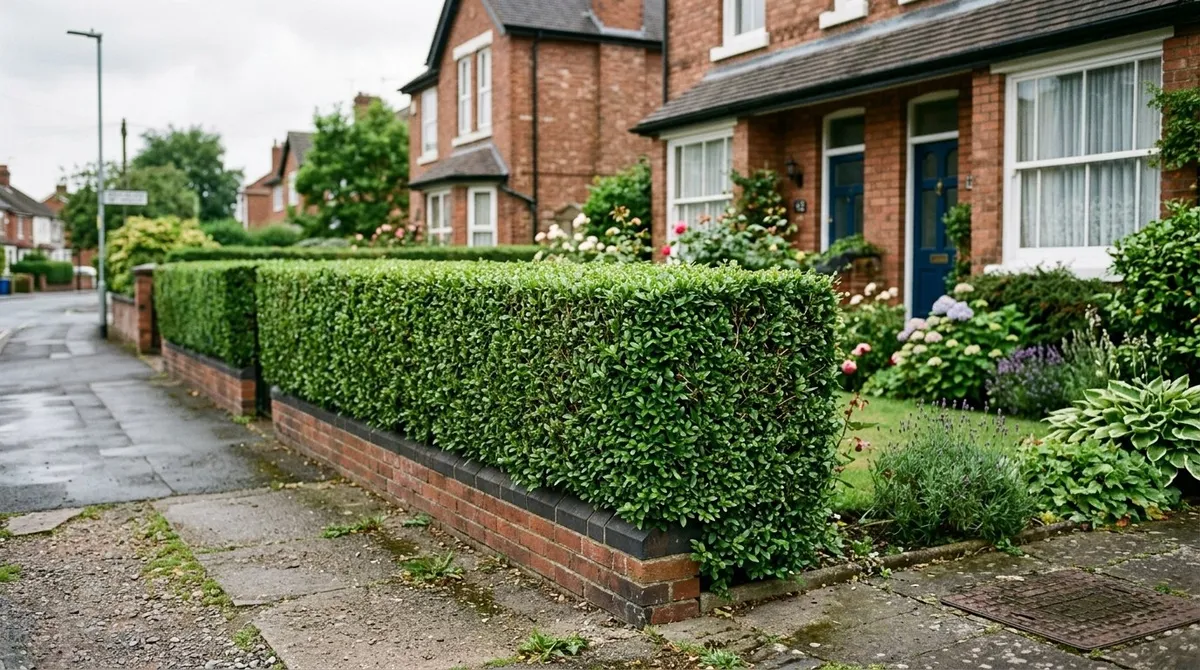
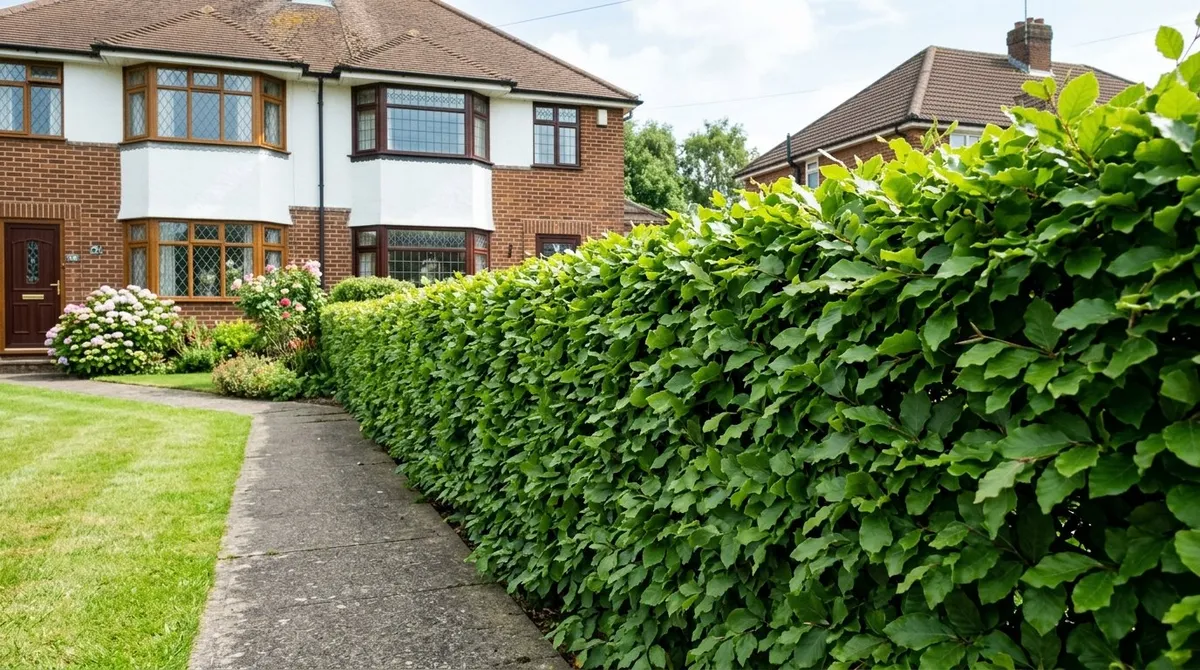
A beech hedge keeps you screened in January using leaves that died in November. The fresh green of summer turns copper in autumn and simply stays put, rustling gently, until spring growth pushes it off. You get the colour changes of a deciduous plant with most of the privacy of an evergreen.
This guide covers planting, spacing, watering and trimming a beech hedge, plus what to do when it goes brown. For hedging in general, including how to prepare the ground for any species, see the hedge planting guide.
Why does a beech hedge keep its dead leaves in winter?
Clipped beech keeps its dead leaves because trimming keeps the whole hedge young. Young beech growth holds on to old leaves through winter, a habit called marcescence. Big old beech trees, by contrast, drop most of theirs in autumn.
A hedge you cut every summer never grows old wood at the top and sides. So the leaves turn copper in autumn and hang on until the buds break in spring. A strong gale thins them a little, and by March there may be the odd gap. Even so, stand behind a clipped beech hedge in January and you’re well hidden.
Beech is also very hardy, so cold winters are never the problem.
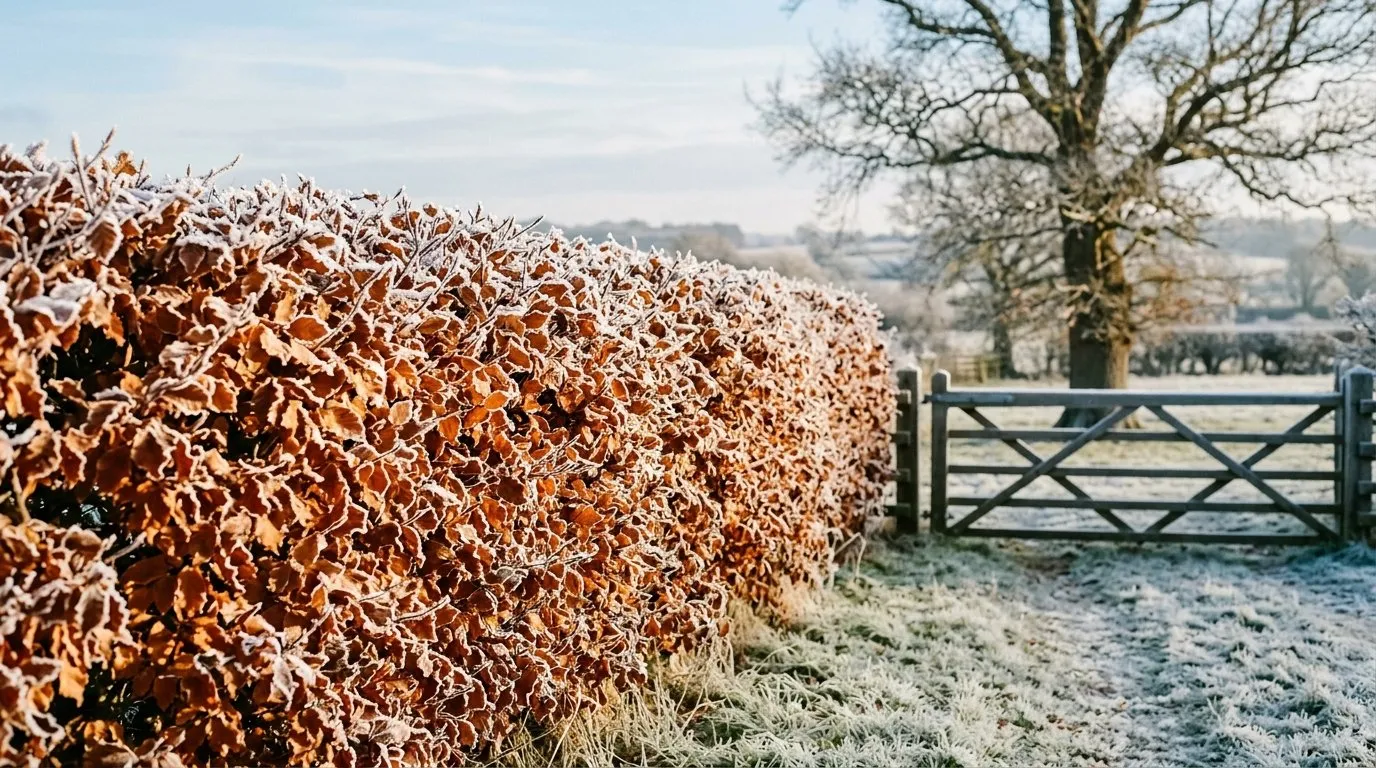
Brown leaves in January are exactly what you want from beech. The hedge isn’t dying; it’s doing its winter job.
When should you plant a beech hedge?
Plant bare-root beech between November and March, while the plants are dormant. This is the best-value way to buy a hedge. Nurseries sell young plants called whips, usually 60-90cm tall, in bundles.
November is the pick if you can choose. The soil still holds some summer warmth, so roots start growing before winter and the hedge meets its first dry spell better prepared.
Pot-grown beech can be planted at any time of year, as long as you keep it watered. It costs more for the same size. Large ready-made hedging gives instant height, but it needs even more watering, and small whips often catch it up within a few years.
Never let bare roots dry out or freeze. Keep the bundle bagged and damp, and if planting is delayed for more than a few days, heel the whips into a trench of soil. The steps in the guide to planting bare-root trees apply to hedging too.
How to plant a beech hedge and how far apart
Plant 3 whips per metre in a single row, or 5 per metre in a staggered double row. A single row is cheapest and makes a good hedge in a few years. A staggered double row, two lines about 35-40cm apart with plants offset, thickens faster and hides the odd loss.
- Clear a strip about 60cm wide. Dig out every scrap of perennial weed root and turf.
- Plant at the old soil mark on the stem, so the whip sits at the same depth it grew in the nursery.
- Firm in with your boot and water well.
- Cut back by a third. Shortening each whip and its side shoots feels harsh but builds a bushy base.
- Guard against rabbits with a cane and spiral guard if they visit your garden.
- Mulch a strip about 50cm wide and 5-7cm deep with bark or compost, kept just clear of the stems.
Skip manure in the planting slit. Good soil prep and mulch on top are all a new hedge needs.
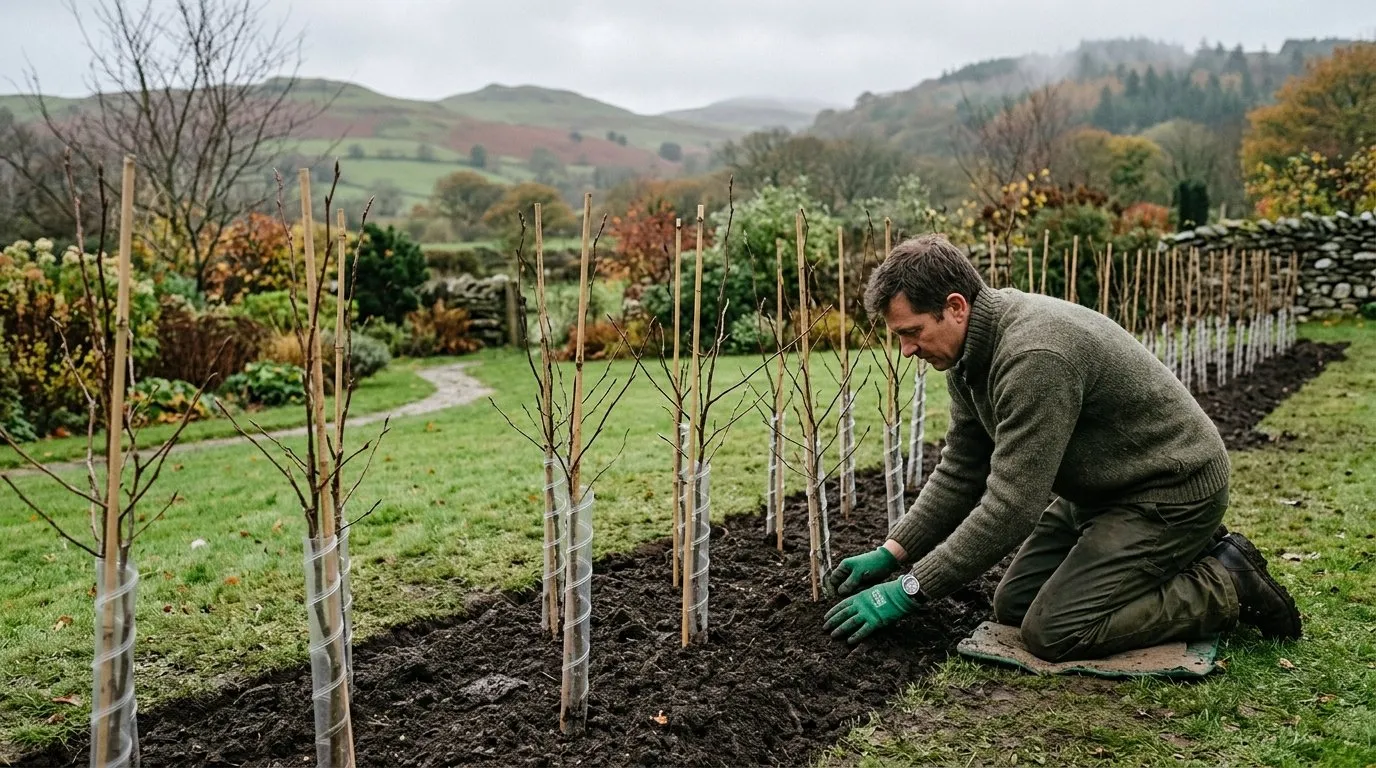
A staggered double row, caned and guarded against rabbits. Offsetting the plants closes the gaps sooner than a single line.
Beech or hornbeam: which suits your soil?
Choose by drainage. Beech wants free-draining soil, including chalk. Hornbeam copes with heavy, wet clay that beech can’t stand. Beech planted in ground that stays waterlogged in winter slowly sulks and dies back over a few seasons.
To test, dig a hole about 30cm deep on the planting line in winter and check it after heavy rain. If water is still sitting there a day later, plant hornbeam.
| Green beech | Hornbeam | Copper beech | |
|---|---|---|---|
| Soil | Free-draining, including chalk | Clay, wet and exposed sites | Free-draining, as green beech |
| Winter leaves | Holds copper leaves well when clipped | Holds some, patchier and paler | Holds dark brown leaves well |
| Leaf | Glossy, wavy edge | Ribbed, toothed edge | Deep purple, glossy |
| Trim | Once, August | Once, mid to late summer | Once, August |
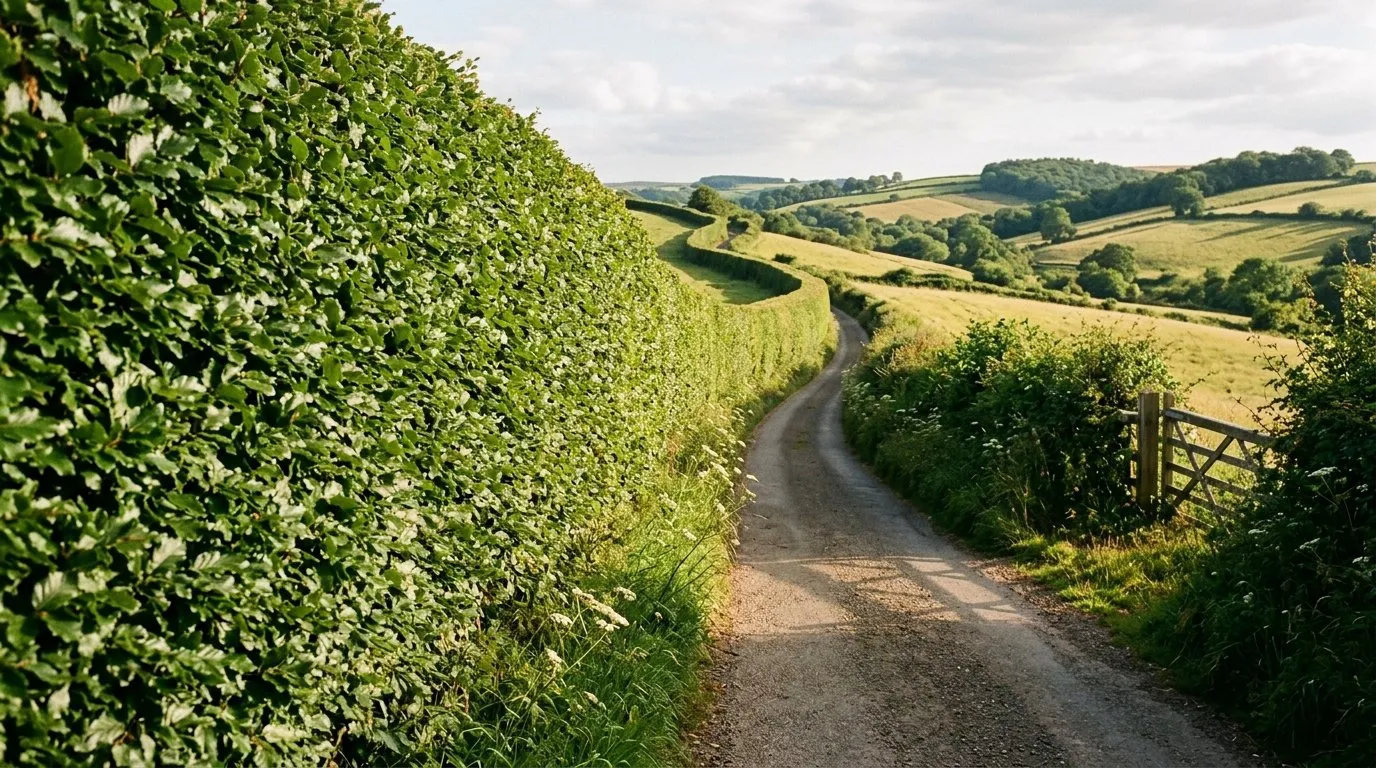
On free-draining soil, a beech hedge clipped once a year can stay neat and healthy for decades.
How to water a new beech hedge for the first two summers
The first two summers decide whether a beech hedge lives or dies. Lifting a bare-root whip strips away most of its fine roots. Until they grow back, the plant can’t find water for itself.
Give about 10 litres per metre, once a week, in any week without decent rain, from April to September. Keep this up for two summers. A watering can does the job on a short hedge. A seep hose along the row makes a long hedge much easier. Top the mulch back up each spring to hold moisture in.
Watch the leaves for early warning. Stressed beech leaves come out small and pale, then crisp from the edges inwards. Catch it at the pale stage and a deep soak usually sorts it.
Gardener’s tip: Push a finger under the mulch once a week in summer. If the top few centimetres are dry, water that evening, slowly and deeply. Daily splashes grow shallow roots, while one deep weekly soak grows roots that look after themselves by the third year.
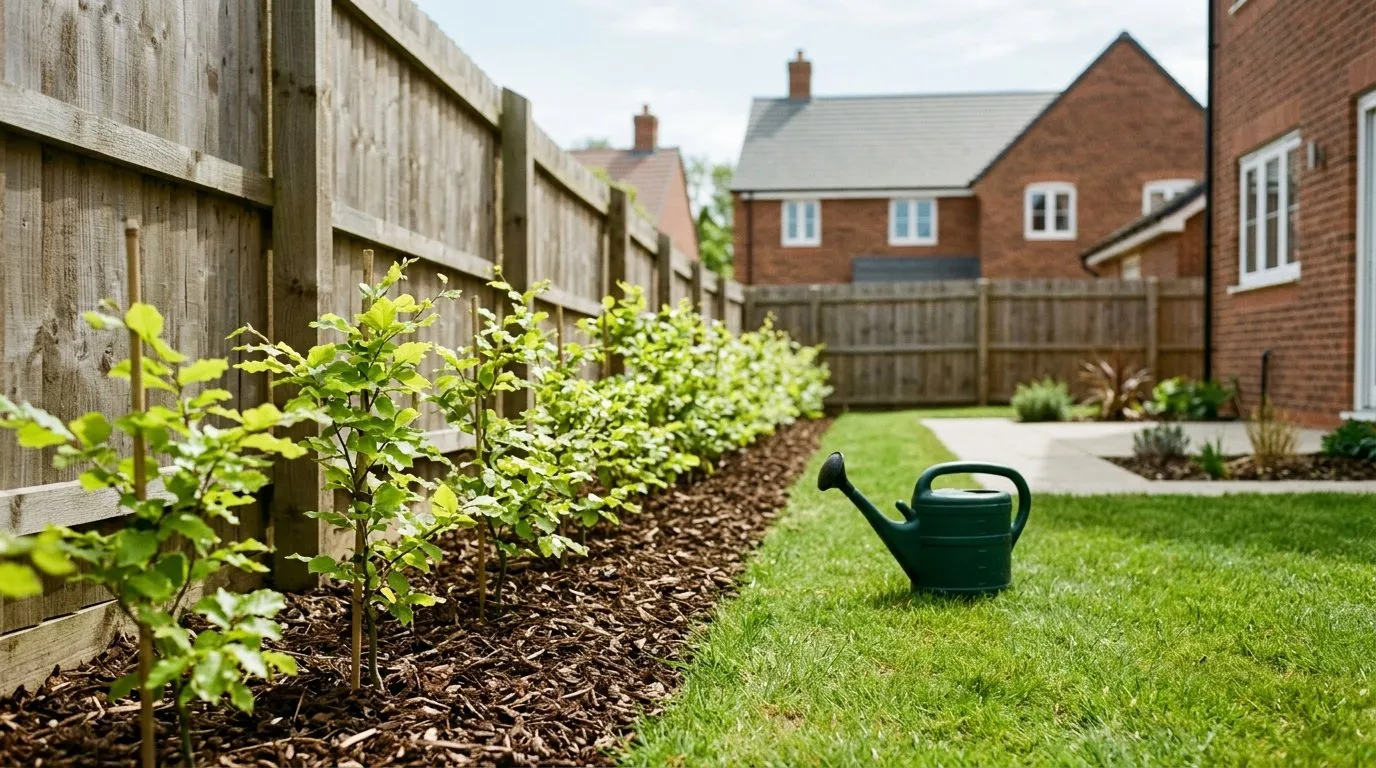
A first-year hedge with a wide mulch strip. The mulch holds in water and stops grass competing with the young whips.
When should you trim a beech hedge?
Trim an established beech hedge once a year, in August. Growth has nearly finished, so the hedge stays crisp right through winter. The leaves it carries are mature enough to turn copper and stay on. Cut in early summer and the soft regrowth that follows makes the winter screen patchier.
For the first two or three winters, give young hedges a formative trim in late winter. Shorten the leading shoots and long side shoots by about a third to keep the base thick.
Always check for nesting birds before you cut. Damaging or destroying an active nest is an offence at any time of year, and the main nesting season runs from March to August. Watch the hedge quietly for a while first. If birds are flying in and out with food, wait until the young have left. The guide to when to cut hedges has more on timing.
To control height, cut the top about 15cm below your target and let it fill out to the line. To bring an overgrown hedge back down, cut it back in stages in late winter: one side one year, the other side the next, then the top. Feed and mulch each spring while it recovers.
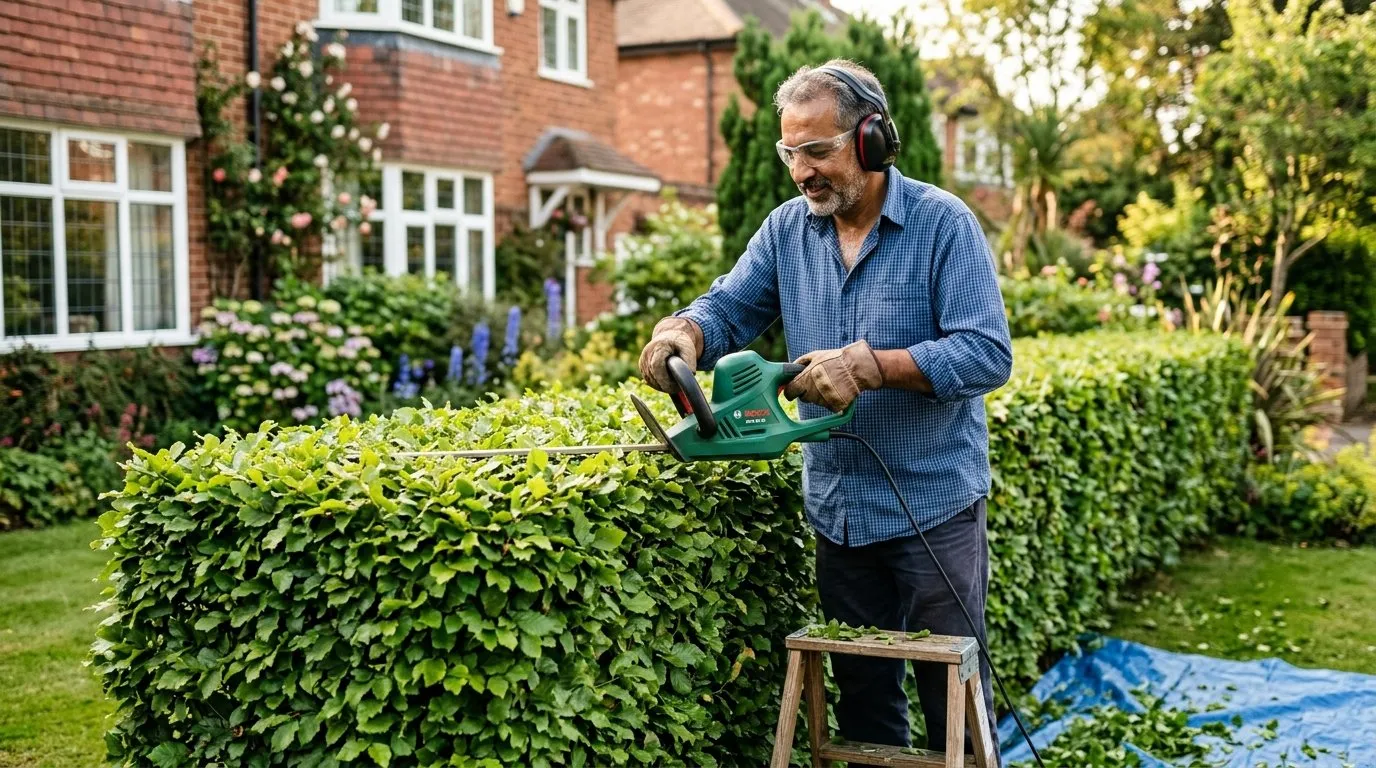
The once-a-year August trim. Gloves, eye protection and a sheet underneath to catch the clippings make the job much easier.
Why is my beech hedge turning brown?
Brown leaves in winter are normal. Brown, crispy leaves in summer usually mean drought or scorch.
- Drought. Leaf edges crisp first, worst on young hedges and sandy soil. Water deeply each week in dry spells and mulch. If the stems are still green under the bark when scratched, new leaves usually appear next spring.
- Scorch and late frost. Hot, sunny faces can brown in a heatwave, and a late spring frost can blacken fresh leaves overnight. Both look alarming, but the hedge usually grows out of it.
- Woolly beech aphid. White cotton-wool fluff under the leaves in late spring and early summer, sometimes with sticky honeydew. It’s mostly cosmetic. Hose it off or leave it for ladybirds and hoverfly larvae.
- Grey squirrels. They sometimes strip bark from beech stems in early summer. Growth above a stripped ring dies. Cut back to healthy wood and the hedge fills the gap.
A brown beech hedge usually recovers, because beech regrows from older wood. Most conifers don’t, which is why the conifer hedge browning guide gives different advice.
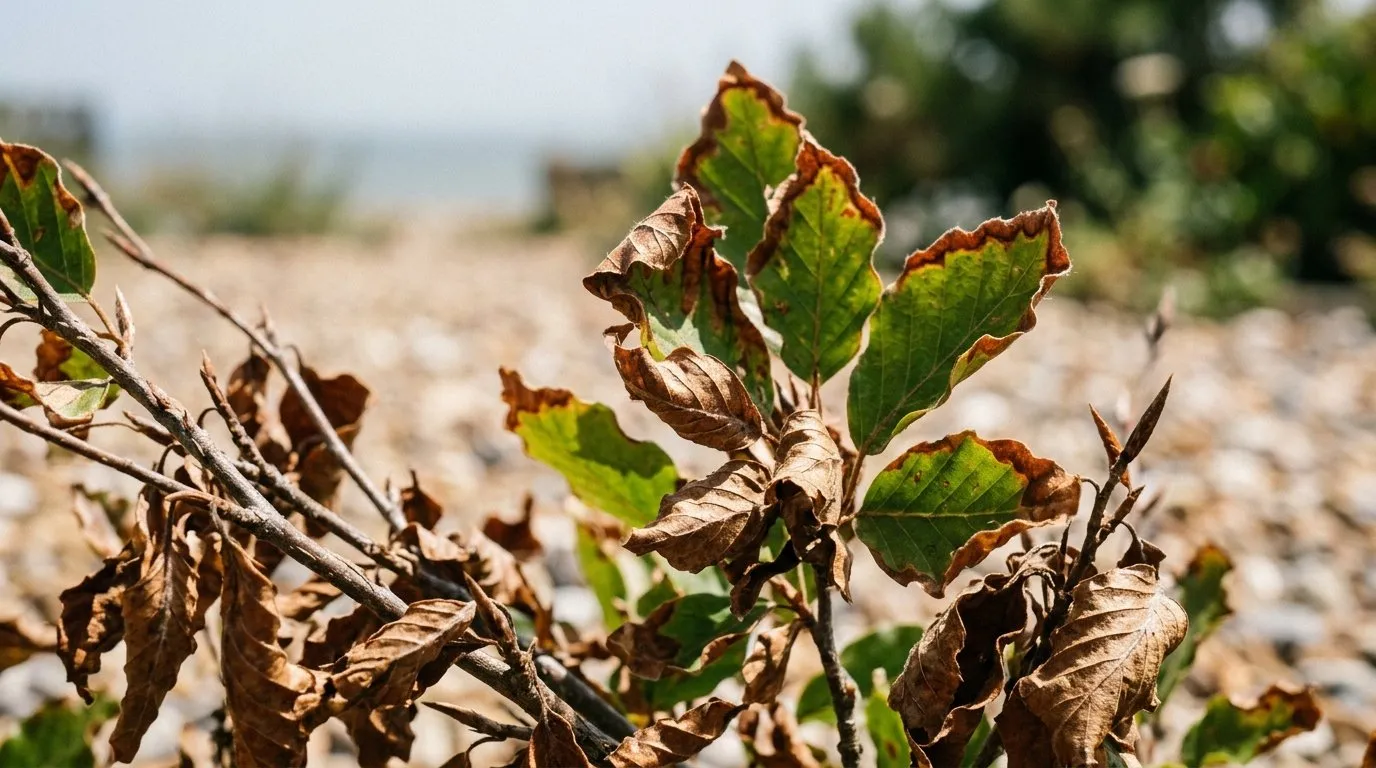
Summer drought browns beech from the leaf edges inwards. A deep weekly soak and a good mulch are the fix.
Is copper beech worth it for a hedge?
Copper beech is the same species as green beech with deep purple leaves, and it usually costs more. It comes into leaf a rich purple in spring, darkens through summer and holds dark brown leaves in winter. Spacing, watering and the August trim are exactly the same.
Some gardeners mix green and copper plants in one row for a tapestry effect. Either way, it’s a striking choice for a front garden.
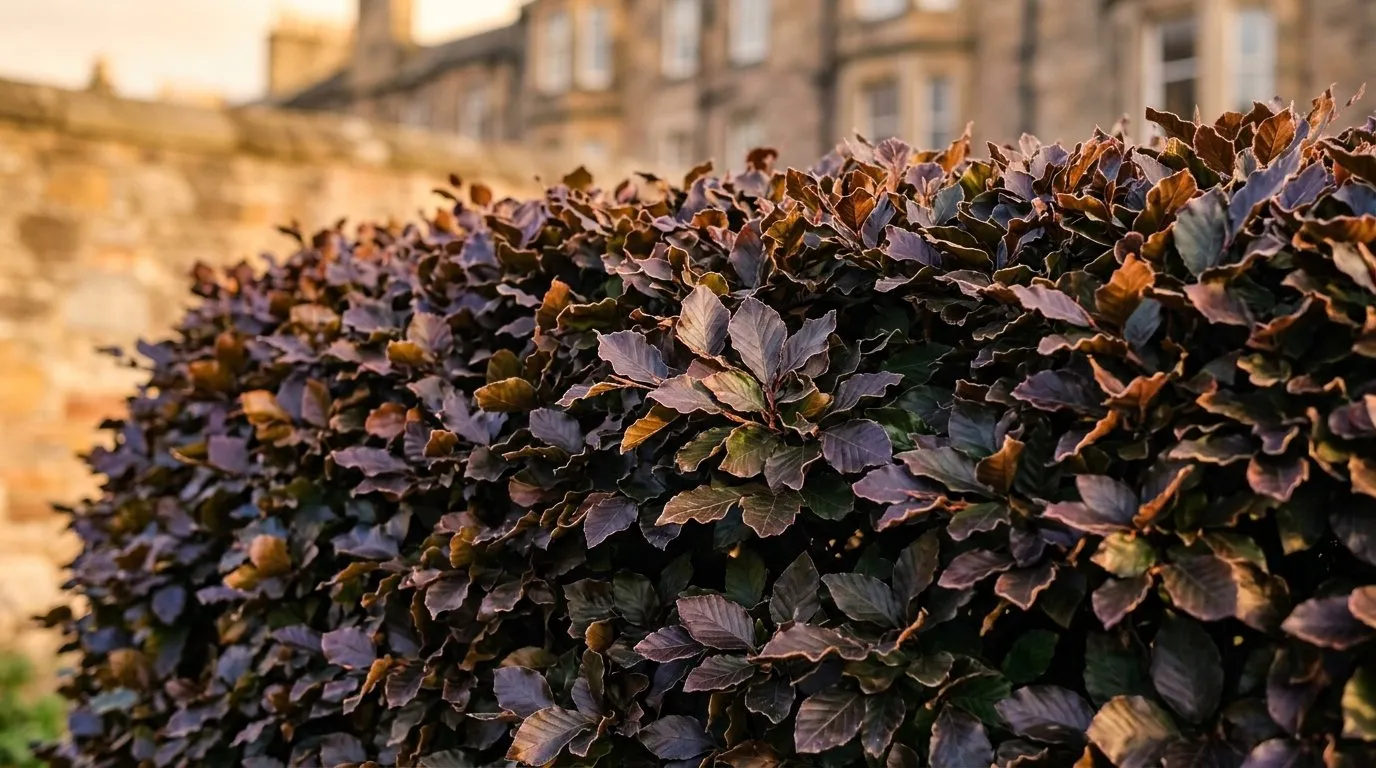
Copper beech needs exactly the same care as green beech. It just brings deep purple leaves to the boundary.
Common beech hedge mistakes
- Planting into wet clay. Beech roots rot in waterlogged soil. Do the hole test first and choose hornbeam if it stays wet.
- Skipping summer watering. Most new hedges that fail die of drought in their first or second summer.
- Not cutting back after planting. Unpruned whips grow tall and gappy at the base.
- Trimming in early summer. Apart from nesting birds, an early cut leaves the hedge shaggy by autumn. August is the sweet spot.
- Letting grass grow up to the stems. Grass steals water. Keep a mulched strip clear for the first few years.
Frequently asked questions
Does a beech hedge lose its leaves in winter?
No, a clipped beech hedge holds its dead leaves through winter. Regular clipping keeps the growth young, and young beech hangs on to its old leaves. They turn copper in autumn and stay on until the new spring leaves push them off.
How fast does a beech hedge grow?
Beech grows roughly 30-60cm a year once settled in. The first year is slow while the roots rebuild, then growth picks up. Small whips usually make a decent screen within a few years if they are watered well and kept weed-free.
When should you trim a beech hedge?
Trim an established beech hedge once a year, in August. The cut stays crisp all winter and the copper leaves hold well. Do formative pruning and any hard cutting back in late winter, and always check for nesting birds before any trim.
Why is my beech hedge going brown in summer?
Summer browning is usually drought or scorch, not disease. Young hedges crisp from the leaf edges when short of water, so give a deep weekly soak in dry spells and mulch. Late frost or a heatwave can brown new leaves too, and the hedge usually grows out of it.
How far apart do you plant beech hedging?
Plant beech at 3 per metre in a single row. For a thicker hedge, plant a staggered double row at 5 per metre, with the rows about 35-40cm apart. Planting closer than this doesn’t make the hedge thicken any faster.
Is beech or hornbeam better for a hedge?
Beech holds winter leaves better; hornbeam copes with heavy wet clay. Clipped, they look similar, but beech leaves are glossy with wavy edges while hornbeam leaves are ribbed with toothed edges. On ground that stays wet in winter, choose hornbeam. The RHS beech growing guide has more on both.
What is the white fluff on my beech hedge?
White fluff under beech leaves is usually woolly beech aphid. It appears in late spring and early summer and looks worse than it is. Hose it off if it bothers you, or leave it for ladybirds and hoverfly larvae to clear.
Still choosing a hedge? Compare beech with other options in our guide to privacy hedges and trees, or browse more planting guides on the how-to hub.
Our team produces practical UK gardening guidance from source research, contributor records and established horticultural practice. Editorial standards are overseen by Matt W.