Key takeaways
- Hornbeam is the hedge for heavy clay and wet winter soil, where beech often fails
- Plant bare-root whips from November to March, about 3 per metre or 5 per metre in a double row
- Trim once a year in late summer, checking first for nesting birds
- Clipped hedges hold many of their dead brown leaves through winter, a little less than beech
- Overgrown hedges take hard cutting back in late winter, one side at a time
- Water new hedges through their first two summers and keep a weed-free strip along them
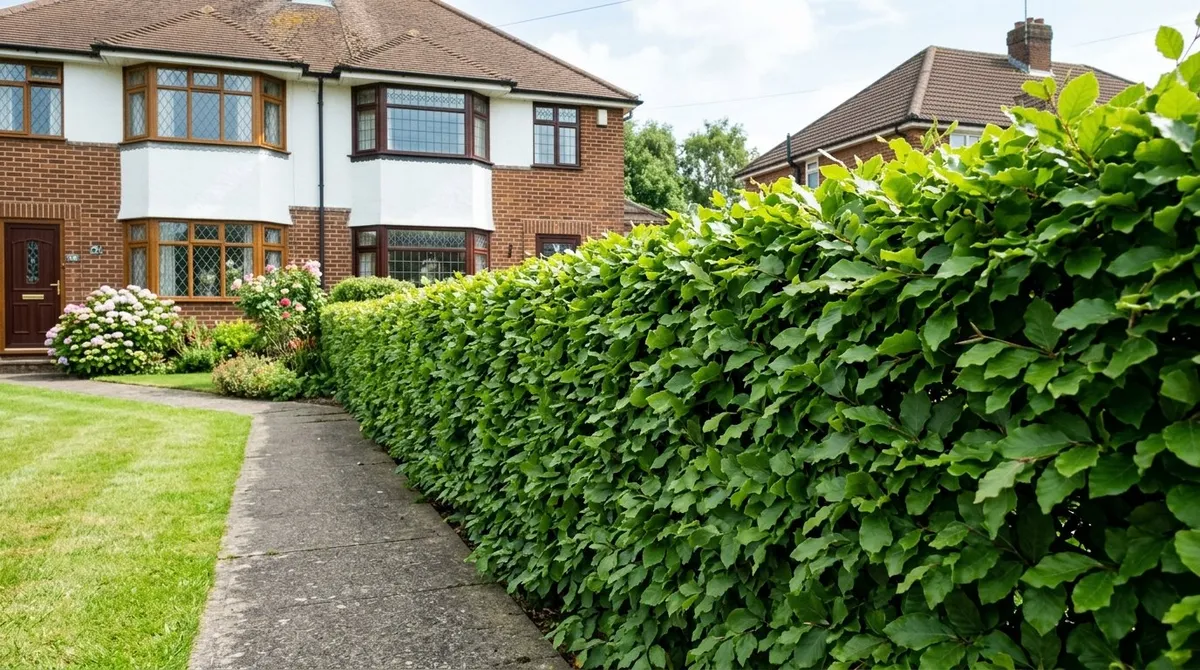
A hornbeam hedge gives you everything a beech hedge does, on the heavy, wet soils where beech struggles. You get fresh, pleated green leaves all summer, a dense clipped face and a screen of warm brown leaves through winter.
If your garden is on clay, hornbeam is the one to pick. It’s native, fully hardy, happy in part shade and easy to grow from cheap bare-root whips. This guide covers telling it apart from beech, planting, trimming, renovating an old hedge and growing it as a pleached screen. For general hedge-planting steps, see the hedge planting guide.
Why choose hornbeam instead of beech?
Choose hornbeam if your soil is heavy clay, wet in winter, cold or exposed. On light, free-draining soil the two do equally well. On difficult ground, hornbeam is far more reliable.
Beech hates sitting in waterlogged soil over winter. On sticky clay it often grows thinly, or dies. Hornbeam (Carpinus betulus) is a native tree of the clays of southern and eastern England, so it’s quite at home there. It’s fully hardy anywhere in the UK and copes with part shade. The guide to improving clay soil helps with getting the ground ready.
How do you tell hornbeam and beech apart?
Look at the leaves. Hornbeam leaves are matt and deeply ribbed, with sharp, saw-toothed edges. Beech leaves are glossy, with smooth, wavy edges and no teeth.
Hornbeam leaves have lots of parallel veins pressed into the surface, like the pleats of a fan. Beech leaves have fewer, shallower veins, and young beech leaves have a soft fringe of silky hairs. On older plants, the bark helps too. Hornbeam stems are pale grey and fluted, with ripples running up them. Beech bark is smooth and grey.
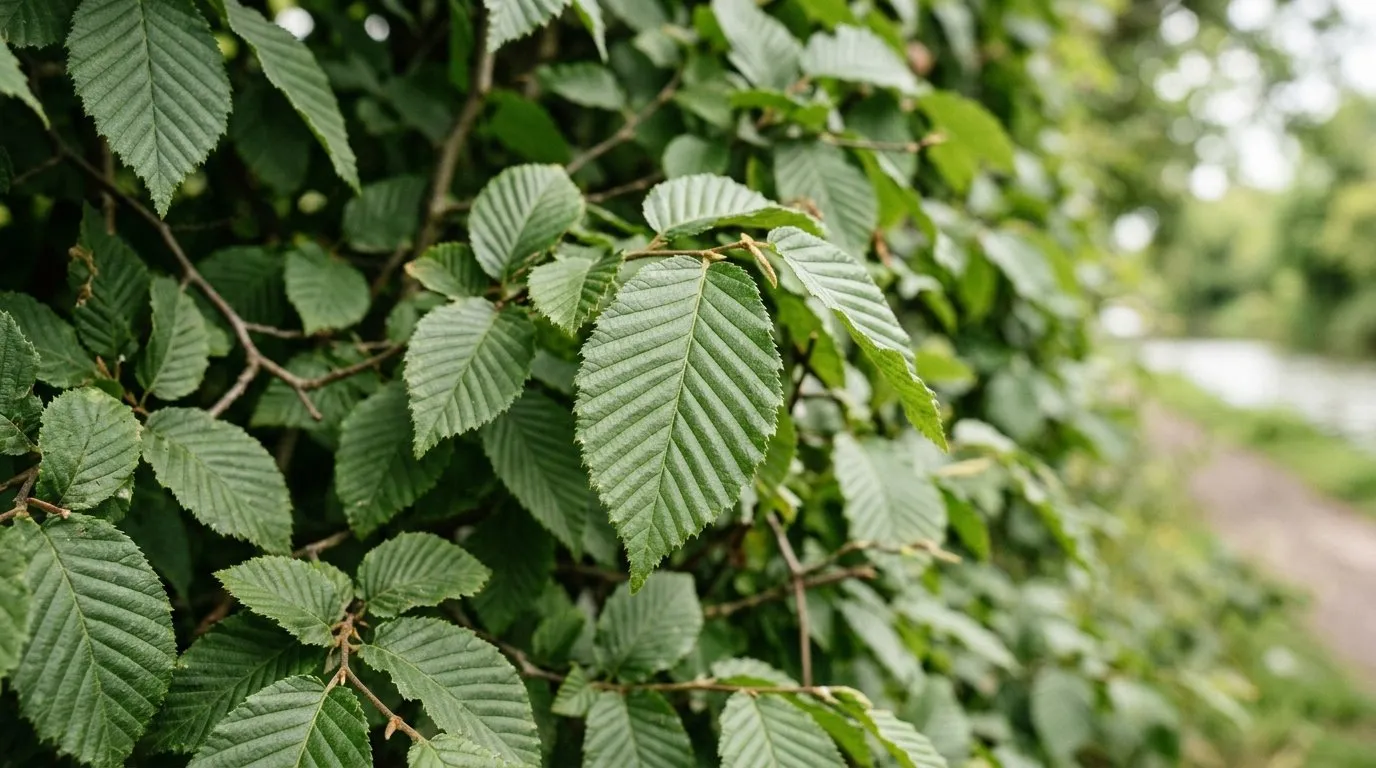
The easy ID test: matt, pleated leaves with saw-toothed edges mean hornbeam. Beech is glossy with smooth, wavy edges.
Does a hornbeam hedge keep its leaves in winter?
Yes, mostly. A clipped hornbeam hedge holds many of its dead brown leaves from autumn until the new leaves push them off in spring. This habit is called marcescence. It happens mainly on trimmed hedges and young plants. Big, free-growing hornbeam trees drop their leaves like other deciduous trees.
It’s fair to say hornbeam holds a little less winter leaf than beech. Expect a slightly thinner, coppery screen that sheds some leaves in winter gales. It’s still much better winter cover than most deciduous hedges, and it looks lovely with low winter sun shining through it.
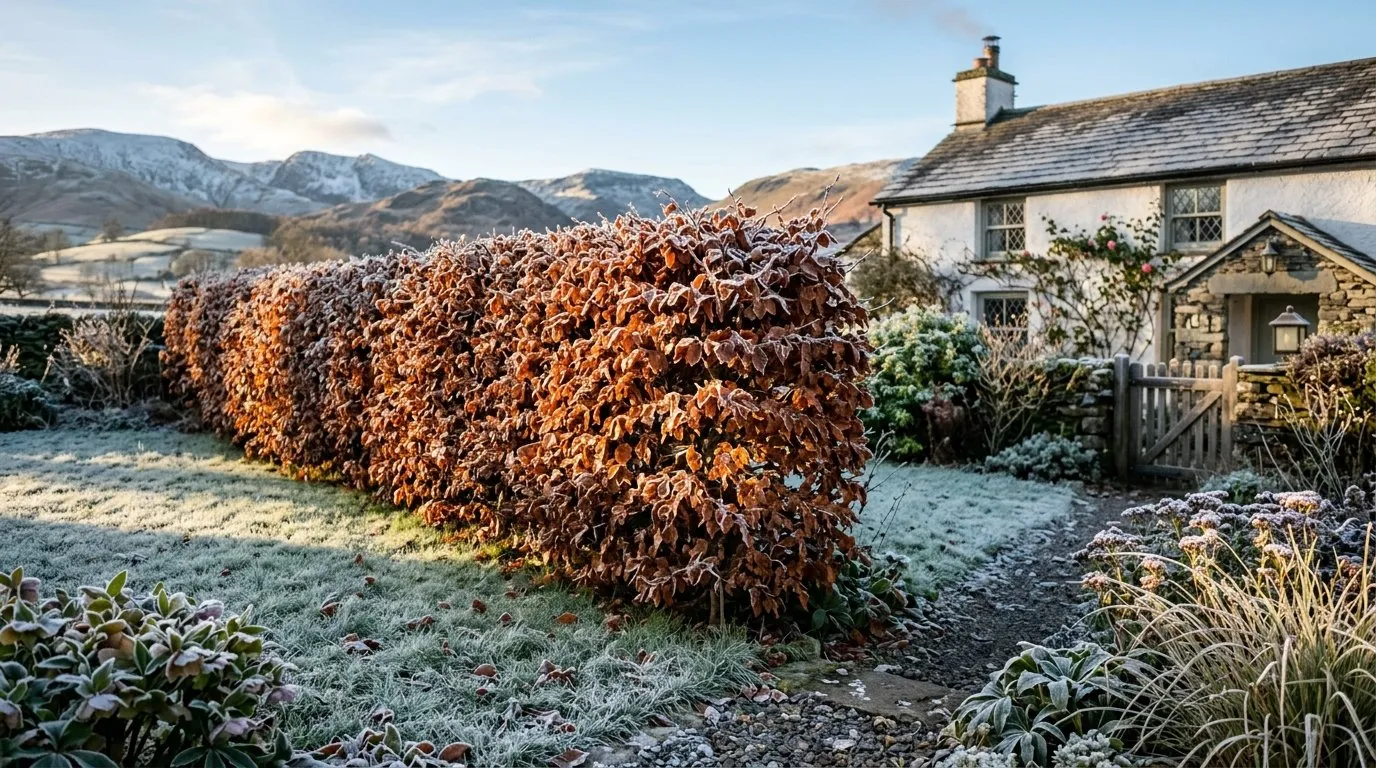
A clipped hedge holding its dead leaves through a frosty winter. It’s thinner than in summer, but still a useful screen.
How to plant a hornbeam hedge
Plant bare-root whips between November and March, when they’re dormant and cheapest. Pot-grown plants can go in at other times but cost more and need more watering.
- Single row: about 3 plants per metre
- Double row: about 5 plants per metre, in two staggered rows about 40cm apart
A double row fills out a little faster. Dig over a strip about 60-90cm wide and loosen the soil at the bottom. On clay, work some well-rotted organic matter into the whole strip, not just the planting holes. Plant each whip at the same depth it grew in the nursery, shown by the soil mark on the stem. Firm it in, water well and mulch, keeping the mulch clear of the stems.
If your plants arrive before you’re ready, heel them into a spare patch of soil so the roots don’t dry out. The RHS guide to planting hedges has more detail.

Bare-root whips go in over winter, even on heavy clay. Plant them at the old soil mark and firm them in well.
Looking after a young hornbeam hedge
Water through the first two summers in dry spells. Give the hedge a good soak once a week rather than a sprinkle every day. Dry summers kill more new hedges than pests or diseases do.
Keep a weed-free strip about 1m wide along the hedge for the first few years, as weeds and grass steal water. A mulch helps. Where rabbits are about, fit spiral guards, and use taller tree shelters or fencing if deer visit.
Growth is slow in the first year while roots settle. From the second year it speeds up. Hornbeam can be kept at any height from a low garden divider to a tall screen, and it filters wind well on exposed sites.

Spiral guards stop rabbits nibbling new whips to the ground. They’re well worth fitting where rabbits visit.
When to trim a hornbeam hedge
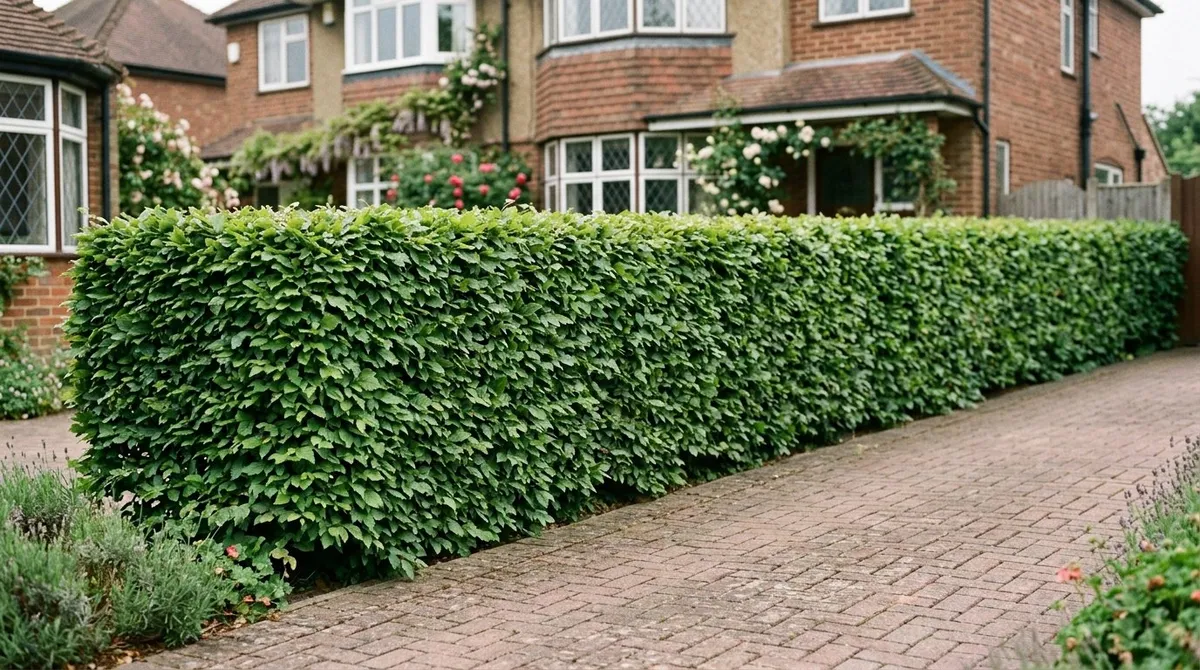
Trim hornbeam once a year in late summer, usually from late August into September. One cut keeps it neat and lets it hold a crisp outline through autumn and winter.
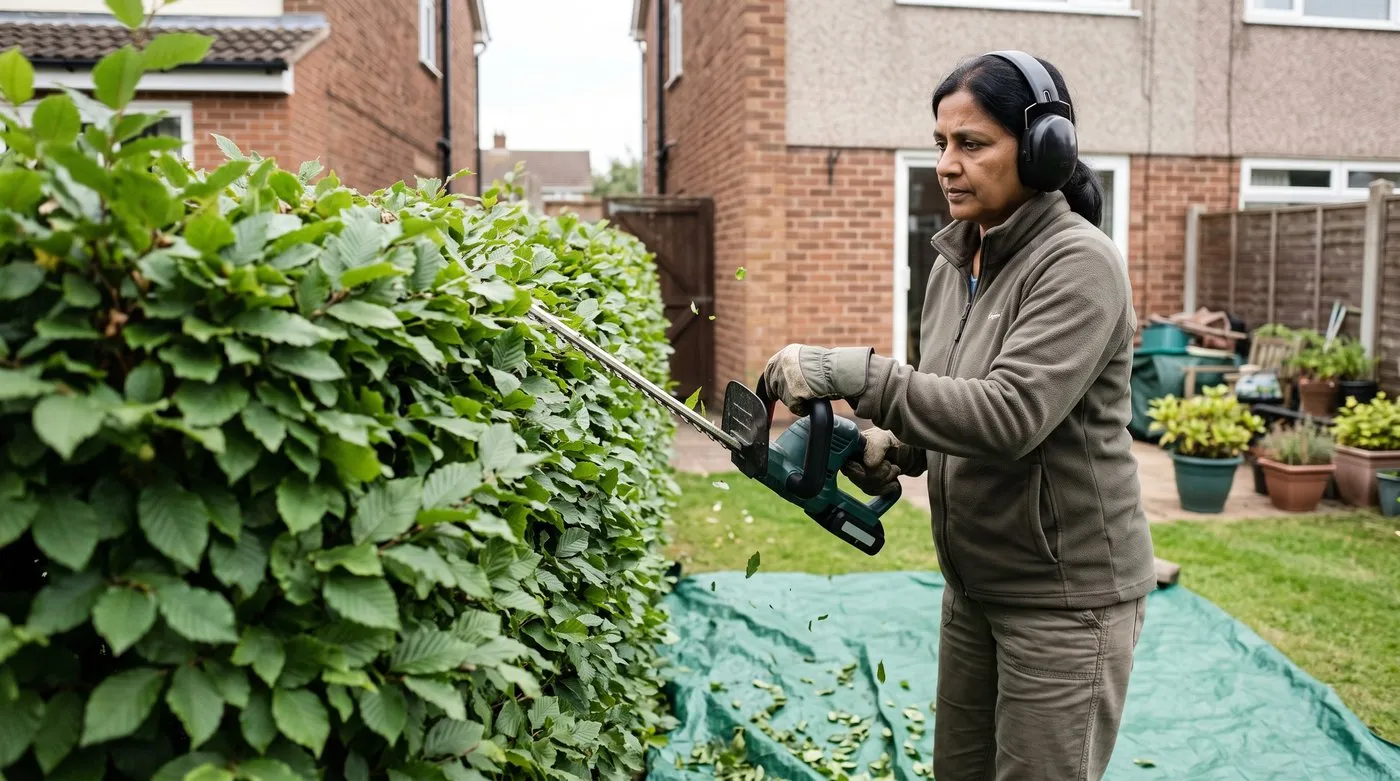
One trim in late summer is enough. Keeping the base a little wider than the top lets light reach the bottom.
Shape it so it’s slightly wider at the bottom than the top. That lets light reach the base, so the hedge stays thick right down to the ground. A young hedge growing fast can take an extra light trim in early summer, if no birds are nesting.
Always check for nesting birds first. Damaging or destroying an active nest is an offence at any time, and many birds still nest into August. If you find one, wait until the young have left. The guide to when to cut hedges and the legal dates has the details.
How to renovate an overgrown hornbeam hedge
Hornbeam takes hard cutting back very well and regrows from old, bare wood. It has been coppiced in woods for centuries. A tall, gappy old hedge rarely needs replacing.
Do the work in late winter, while the plants are dormant. Spread it over two years:
- First winter: reduce the height to a little below where you want it, and cut one side hard back, close to the main stems.
- Spring and summer: feed with a general fertiliser, mulch and water in dry spells.
- Second winter: once the first side has regrown well, cut back the other side.
Expect the bare stems to green up in the first summer. A full, clipped face usually returns within a couple of seasons. As always, check for nesting birds before you start.
Growing a pleached hornbeam screen
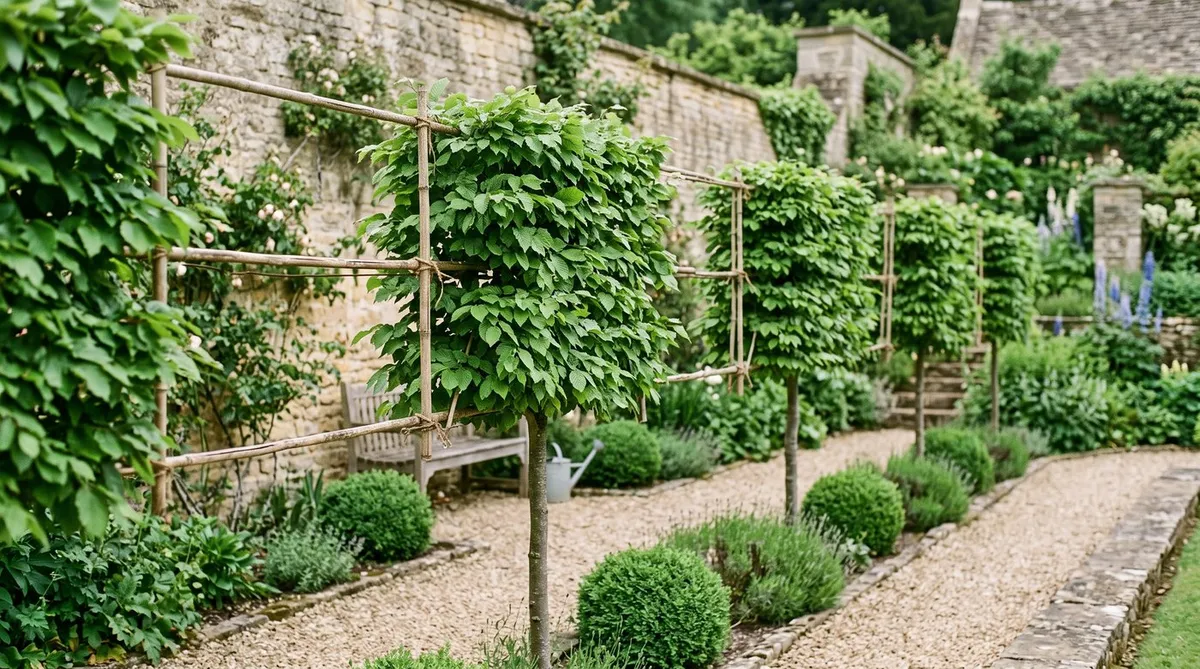
A pleached screen is a row of trees with clear trunks and flat, trained heads, like a hedge on stilts. Hornbeam is the classic tree for it. It’s a neat answer to being overlooked from neighbours’ upstairs windows.
Garden fences and walls usually need planning permission above 2m. Pleached trees can lift a green screen above that height, where you need the privacy most. Buy trees with ready-trained frames, plant them in a line with their panels touching, and support them with posts and wires while they establish. Trim the panels once a year in late summer, like a hedge. The guide to planting and supporting pleached trees covers the details.
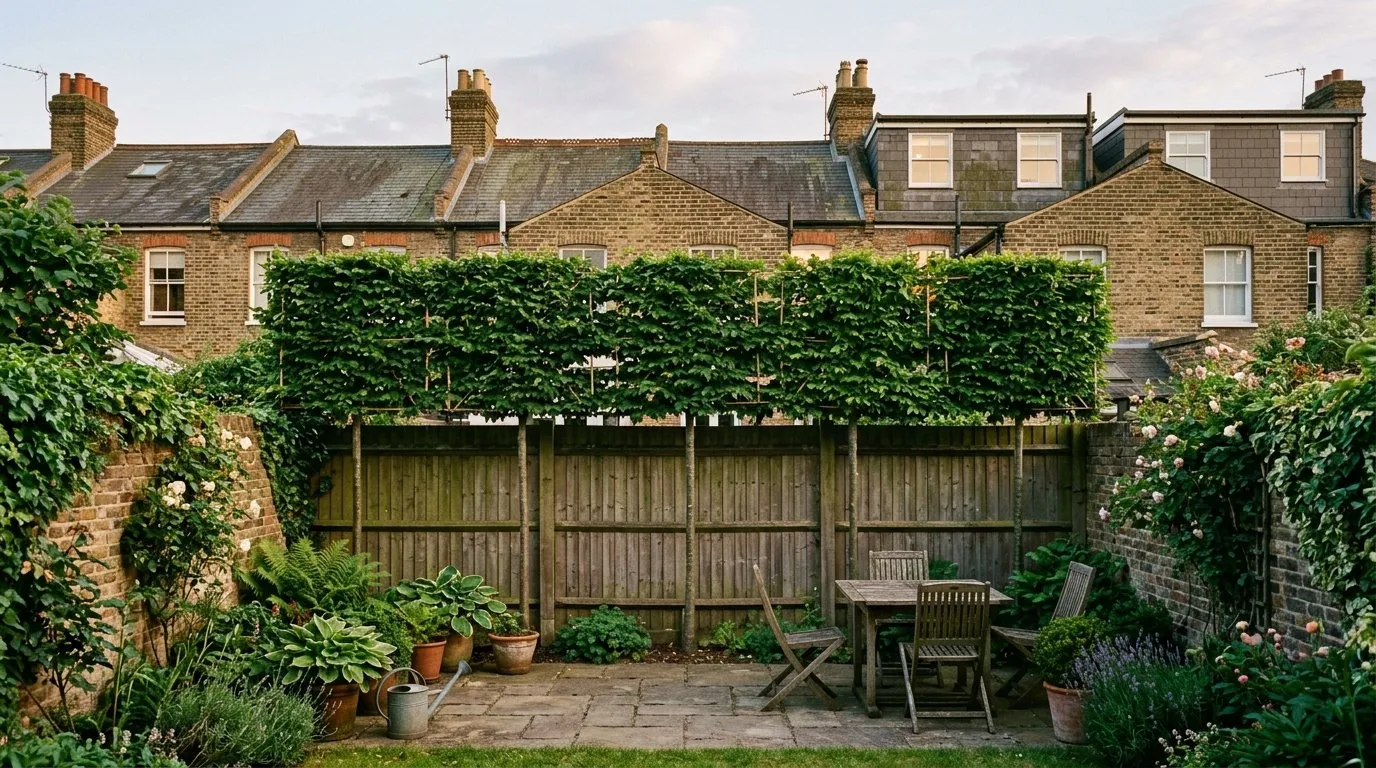
A pleached hornbeam screen lifts greenery above the fence line, blocking the view from upstairs windows next door.
Hornbeam, beech, yew or laurel?
Hornbeam is best on wet or heavy soil, beech on free-draining soil, yew for a formal evergreen hedge and laurel for fast evergreen bulk.
| Hornbeam | Beech | Yew | Cherry laurel | |
|---|---|---|---|---|
| Soil | Almost any, even wet clay | Free-draining | Any that doesn’t waterlog | Most, not shallow chalk |
| Winter cover | Brown leaves held | Brown leaves held, a bit fuller | Evergreen | Evergreen |
| Speed | Moderate | Moderate | Slow | Fast |
| Trims a year | 1 | 1 | 1-2 | 1-2 |
| Hard cutting back | Very good | Fair | Very good | Good |
| Native | Yes | Yes | Yes | No |
Laurel gives quick evergreen cover but keeps growing fast, as the guide to cherry laurel growth rate explains. Yew makes the smartest formal hedge but costs more and hates wet roots. Weighing up hedges against trees for privacy? The guide to privacy screening with hedges and trees helps you choose.
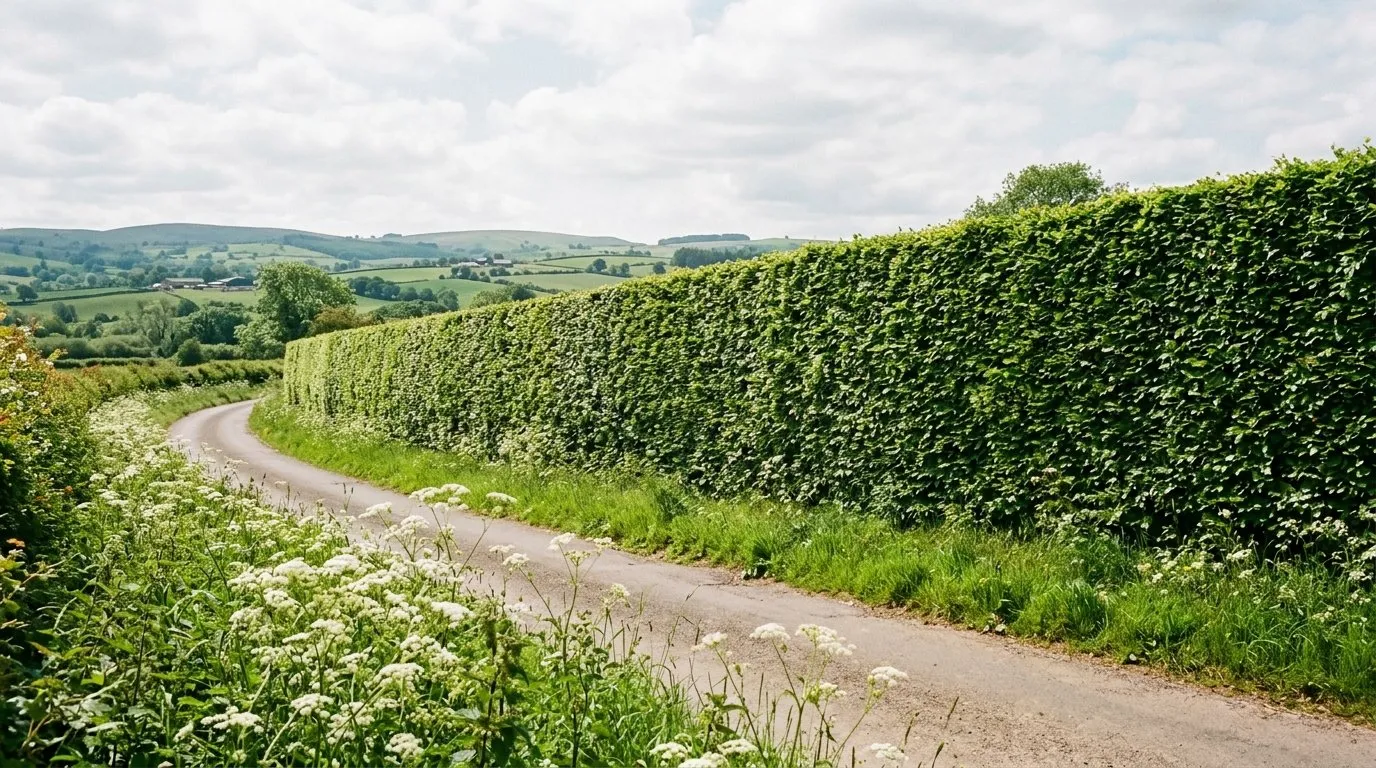
Kept tall with one trim a year, hornbeam makes a dense screen and windbreak along a rural boundary.
Common problems with hornbeam hedges
Hornbeam is pleasingly trouble-free. Most problems come from how it’s planted and looked after.
- Drought in the first two summers. The main reason new hedges fail. Water weekly in dry spells.
- Weeds and grass at the base. They steal water from young plants. Keep a weed-free, mulched strip.
- Coral spot. Small orange-pink spots on dead twigs. Prune out the dead wood back to healthy growth.
- Thin, bare base. Usually from trimming the top wider than the bottom. Trim to a slight A-shape.
Hornbeam is also good for wildlife. Moth caterpillars feed on the leaves, birds nest and roost in the dense growth, and finches eat the seeds in autumn. For more hedge ideas, browse the how-to guides.
Now you know how to grow a hornbeam hedge, read the guide to planting bare-root trees before your whips or pleached trees arrive.
Frequently asked questions
Which is better, hornbeam or beech hedging?
Hornbeam is better on heavy clay or wet ground; beech suits free-draining soil. They look very alike when clipped. Beech holds a little more winter leaf and is glossier, but it struggles where soil stays wet. If in doubt about your soil, choose hornbeam.
Does a hornbeam hedge lose its leaves in winter?
A clipped hornbeam hedge keeps many dead brown leaves until spring. This mostly happens on trimmed hedges and young plants, not big free-growing trees. The screen is a little thinner than beech, but still gives useful winter cover.
How fast does a hornbeam hedge grow?
It’s a steady, moderate grower once established. Growth is slow in the first year while the roots settle, then picks up from the second year. With watering and weeding, young whips make a decent hedge in a few years.
How far apart should you plant hornbeam hedging?
Plant about 3 whips per metre in a single row. For a thicker hedge, plant about 5 per metre in a staggered double row, with the rows about 40cm apart. A double row thickens up a little faster.
Can you cut a hornbeam hedge back hard?
Yes, hornbeam regrows well after hard cutting. Do it in late winter, before growth starts. Cut back one side in the first winter and the other side a year later, then feed and mulch.
When can you legally cut a hornbeam hedge?
Whenever no birds are nesting in it. Damaging or destroying an active nest is an offence at any time. Most birds nest from March to August, so check carefully before a late summer trim and wait if you find a nest.
Is hornbeam good for wildlife?
Yes, it gives birds shelter and food. The dense branches and winter leaves give cover for nesting and roosting birds. Moth caterpillars feed on the leaves, and finches and small mammals eat the seeds in autumn.
Our team produces practical UK gardening guidance from source research, contributor records and established horticultural practice. Editorial standards are overseen by Matt W.