Key takeaways
- Established cherry laurel usually grows about 30-60cm a year, and more on good, moist soil
- Plants bought at 60-90cm tall usually make a 1.5m hedge in two to four years
- 'Rotundifolia' is the fast hedging variety; 'Otto Luyken' and 'Zabeliana' stay low
- Plant bare-root between November and March, 60cm apart, and mulch every spring
- Trim in late summer after birds have finished nesting, and check for nests first
- Every part is poisonous to people, dogs, horses and livestock, so bag the clippings
Cherry laurel usually grows about 30-60cm a year once it’s established, which makes it one of the quickest evergreen hedges you can plant. Buy plants at 60-90cm tall and you can expect a 1.5m hedge in two to four years.
How fast your hedge actually grows depends on the variety, the size of plant you start with and how well you look after it in the first couple of years. This guide covers all three. To compare laurel with other quick hedges, see the guide to fast-growing hedging plants.
How fast does cherry laurel grow?
Once its roots are settled, cherry laurel (Prunus laurocerasus) usually puts on about 30-60cm a year. The biggest burst of growth comes in late spring and early summer, with a smaller one in late summer.
The first year is usually slower. The plant puts its energy into roots before it really takes off. From year two, growth picks up.
Your site makes a big difference:
- Slower: windy, exposed sites, dry or poor soil, or root competition from nearby trees
- Average: a typical suburban garden with ordinary soil and some watering in dry spells
- Faster: a sheltered spot with deep, moist, fertile soil and a mulch every spring

The pale new shoots show the spring growth spurt. Most of each year’s height comes in late spring and early summer.
How long does cherry laurel take to make a hedge?
From plants bought at 60-90cm tall, expect a 1.5m hedge in about two to four years. A full 2m privacy screen usually takes a year or two longer.
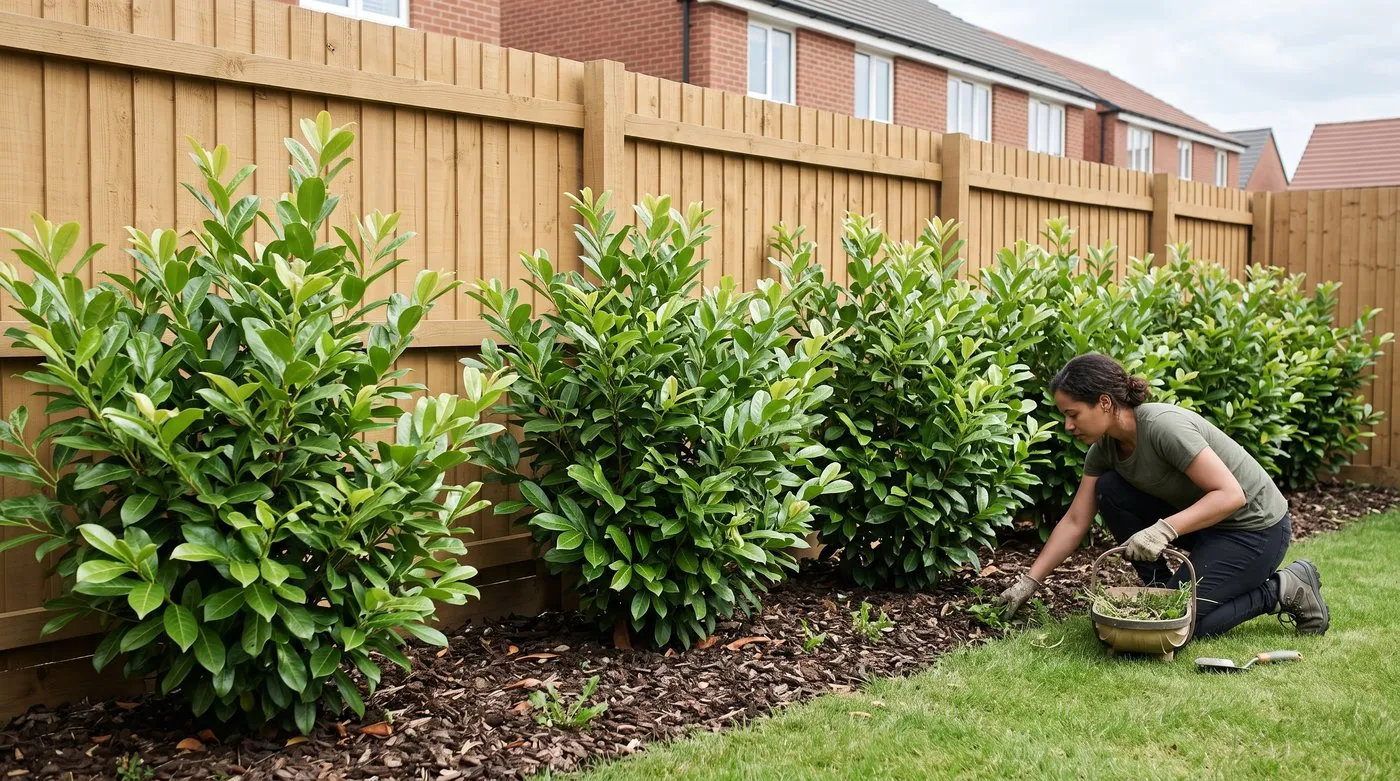
Planted 60cm apart and mulched, young laurels start to join up into a solid hedge within a couple of years.
Starting size matters most. Small 30-45cm plants are cheaper, but add at least a year to the wait. Larger 90-120cm plants give you a head start, though they need extra watering to settle in.
Spacing matters too. At 60cm apart the plants knit together quickly into a solid hedge. At 90cm or more, gaps at the base can take years to close.
Which cherry laurel variety grows fastest?
‘Rotundifolia’ is the standard hedging variety and the quickest to make a tall screen. It has large, glossy, rounded leaves and would grow into a big shrub several metres tall if never cut.
‘Caucasica’ is narrower and more upright, with slimmer leaves. It is often chosen for colder, more exposed gardens.
‘Otto Luyken’ is a compact variety, usually about 1m tall and wider than it is high. It grows slowly and suits low hedges and ground cover.
‘Zabeliana’ is low and spreading, with narrow leaves. Use it where you want width rather than height.
‘Etna’ is a more compact variety with bronze young leaves. It suits a smaller, decorative hedge.
Don’t mix varieties in one hedge. They grow at different speeds, so the line soon goes uneven.
How to plant cherry laurel for faster growth
Good planting is the easiest way to speed up a hedge. Roots that settle in quickly mean more top growth in year two.
- Plant bare-root between November and March, while the plants are dormant. Pot-grown plants can go in at other times, but avoid hot, dry spells.
- Dig a trench about 30cm deep and wide along the whole line, rather than separate holes. It gives every plant the same easy root run.
- Mix some compost into the soil you put back, especially on thin or sandy ground.
- Space plants 60cm apart for a fast, dense hedge.
- Plant at the same depth they grew in the nursery or pot. Look for the soil mark on the stem.
- Firm the soil gently with your heel to remove air pockets, then water well.
- Mulch with bark or leaf mould, keeping it a few centimetres clear of the stems.
The guide to hedge planting covers soil preparation for all common hedges.

Autumn and winter are the best times to plant bare-root laurel. The roots settle in before the spring growth spurt.
Aftercare that keeps a laurel hedge growing
Water in dry spells for the first two summers. Young hedges can stall or die in drought. Give a long, slow soak once a week in dry weather rather than a daily sprinkle.
Mulch every spring. A layer of bark or leaf mould holds moisture, keeps weeds down and feeds the soil as it breaks down.
Keep weeds and grass away from the base. They compete for water and slow growth, especially in the first few years.
Feed only if growth stalls. A healthy hedge on reasonable soil doesn’t need fertiliser. If an established hedge grows very little, give a balanced feed in spring.
When and how to trim cherry laurel
Trim cherry laurel in late summer, from late August into September, after most birds have finished nesting. Dense laurel hedges are popular with nesting blackbirds. Damaging or destroying an active nest is an offence, so always check first. The guide to when to cut hedges explains the rules.
If you want a second trim, a light tidy in early spring, before nesting starts, is fine.
Secateurs give the neatest finish on the big leaves, because hedge trimmers slice leaves in half and leave brown edges. On a long hedge, trimmers are fine.

A sheet underneath catches the clippings. Bag them up, as laurel leaves are poisonous to pets and livestock.
Can you cut back an overgrown cherry laurel?
Yes. Cherry laurel regrows well from old wood, so you can reduce an overgrown hedge hard. Do it in late winter, before birds start nesting.
- Light: cut back by about a third. It recovers within a season.
- Medium: cut to about half its height. Expect a sparse summer, then good regrowth.
- Hard: cut stems to 30-50cm. It regrows from the base but takes a few years to return to full height.
Leyland cypress and most other conifers won’t regrow from bare wood, so this sort of renovation can kill them. The guide to conifer hedge browning explains why.
Cherry laurel flowers, fruit and safety
An untrimmed or lightly trimmed laurel bears upright spikes of small white flowers in spring. Bees visit them. Dark, cherry-like fruits follow in late summer, and blackbirds eat them.
Every part of cherry laurel is poisonous if eaten, including the leaves, seeds and fruit. It is harmful to people, dogs, horses and livestock. Wear gloves when pruning. Bag the clippings or take them to your council’s green waste, and never put them where animals graze.

Leave a laurel untrimmed in spring and you’ll get these creamy flower spikes. Bees visit them, but the fruit that follows is poisonous to people and pets.
Problems that slow cherry laurel growth
Shot hole. Round holes in the leaves, caused by fungal or bacterial infections. Improve airflow and clear up fallen leaves.
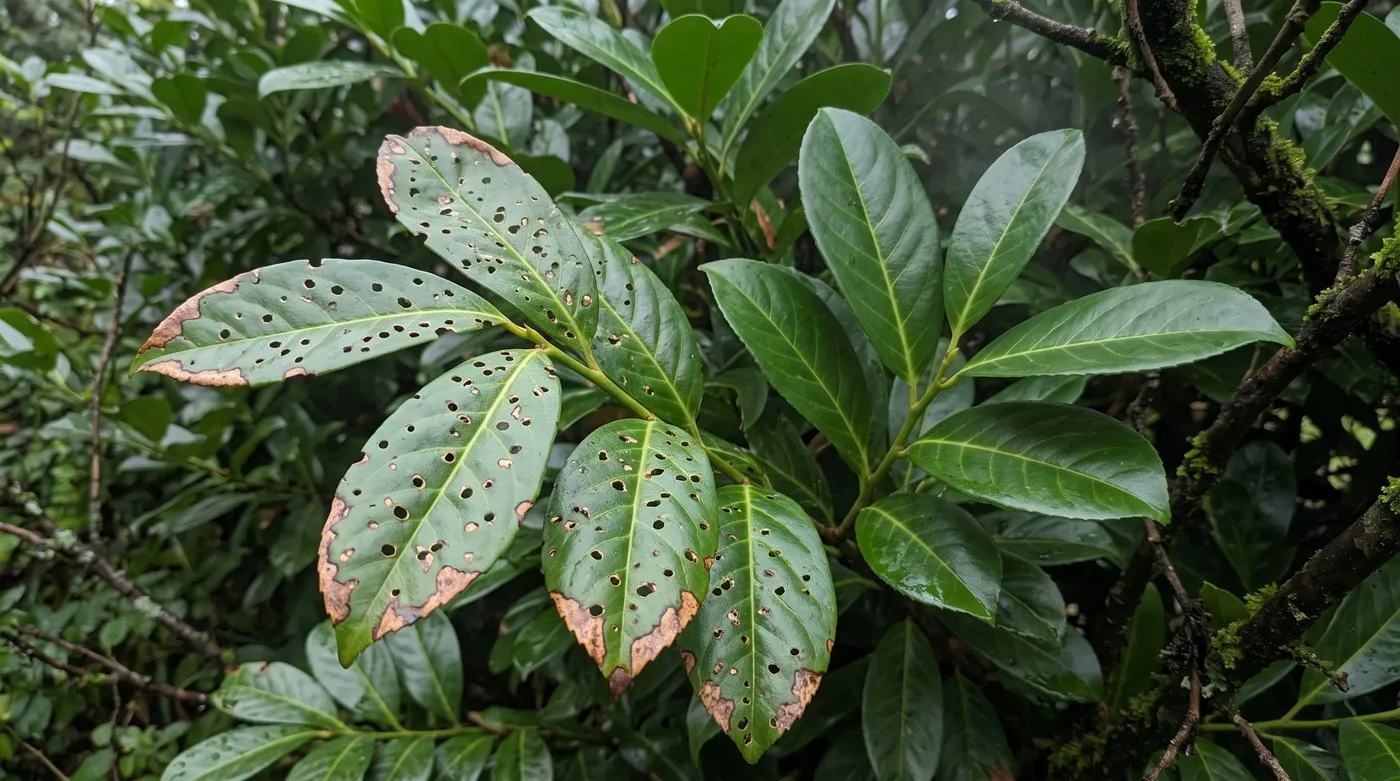
Shot hole peppers the leaves with small round holes. Better airflow and clearing fallen leaves usually keep it in check.
Powdery mildew. A white coating on young leaves, often in dry summers. Water at the roots in dry spells and it usually fades.
Yellowing leaves. Usually waterlogging, drought stress or very chalky soil. Check drainage first.
Vine weevil. The grubs eat roots, mostly of pot-grown plants. Nematodes watered on in late summer help.
If a hedge is browning or dying back, the guide to why a laurel hedge is dying helps you find the cause.
When to choose something other than cherry laurel
Cherry laurel isn’t the right hedge for every garden.
- Small gardens. It wants to grow big and needs regular cutting. A slower hedge such as yew may suit better.
- Near horses or livestock. The leaves are poisonous, so choose a safer hedge.
- Next to woodland. Birds spread the seeds and laurel can take over woodland edges. A native hedge is a better neighbour.
- For wildlife. Native hedges such as hawthorn and hazel support far more insects. The guide to native hedgerow species has ideas.
Common mistakes with cherry laurel
- Spacing too wide. Plants at 1m or more leave gaps at the base for years. Stick to about 60cm.
- Skipping water in the first summers. Dry spells stall young hedges. Water deeply once a week in dry weather.
- Trimming in spring and early summer without checking. Nesting birds love laurel. Trim in late summer, and check for nests first.
- Mulching right up to the stems. It can rot the bark. Leave a small gap.
- Leaving clippings where animals graze. Laurel is poisonous. Bag it up.
For more hedging ideas, browse the plants hub.
Frequently asked questions
How fast does cherry laurel grow per year?
Cherry laurel usually grows about 30-60cm a year once established. It grows fastest on fertile, moist soil in a sheltered spot. The first year is often slower while the roots settle in.
How long does it take cherry laurel to make a hedge?
From 60-90cm plants, expect a 1.5m hedge in about two to four years. A full 2m screen takes a year or two longer. Bigger plants, good soil preparation and watering in dry spells all speed things up.
Which cherry laurel variety grows fastest?
‘Rotundifolia’ is the usual fast-growing variety for UK hedges. ‘Caucasica’ is a narrower, upright alternative. Compact varieties such as ‘Otto Luyken’ and ‘Zabeliana’ grow slowly and stay low.
When should I plant cherry laurel in the UK?
Plant bare-root cherry laurel between November and March, while it is dormant. Pot-grown plants can go in at other times, but autumn is best. Avoid planting in hot, dry summer weather.
How far apart should I plant cherry laurel?
Plant cherry laurel about 60cm apart for a fast, dense hedge. Spacing of 75-90cm uses fewer plants but takes longer to close up. Give single shrubs at least 1.2m.
Is cherry laurel poisonous?
Yes, all parts of cherry laurel are poisonous if eaten. It is harmful to people, dogs, horses and livestock. Wear gloves when pruning, bag the clippings and keep them well away from grazing animals.
When should I trim a cherry laurel hedge?
Trim in late summer, from late August into September, after most birds have finished nesting. Always check for active nests first, as damaging one is an offence. A light tidy before nesting starts in early spring is fine.
Can cherry laurel be cut back hard?
Yes, cherry laurel regrows well from old wood, even when cut back hard. Do it in late winter, before birds start nesting. Lighter cuts of a third regrow faster than cutting to knee height.
Still deciding between a hedge and trees for screening? Read the guide to privacy hedges versus trees.
Our team produces practical UK gardening guidance from source research, contributor records and established horticultural practice. Editorial standards are overseen by Matt W.