Key takeaways
- Leylandii grows fastest at up to 90cm/year but needs trimming twice yearly to stay manageable below 4m
- Thuja plicata 'Atrovirens' is the gold-standard Leylandii alternative at 60-80cm/year, RHS H7 hardy to -20C
- Photinia 'Red Robin' gives bright red new growth at 30-45cm/year, ideal for ornamental privacy hedges
- Beech holds copper-brown leaves through winter, giving semi-evergreen cover on a deciduous plant
- Bare-root whips planted November to March cost 60-80% less than container plants and establish faster
- Fargesia rufa is the only safe non-spreading bamboo for UK screening, growing 30-40cm per year
Fast-growing hedges for UK gardens include Leyland cypress, western red cedar, laurel, privet, griselinia and vigorous native mixes. The best choice balances growth rate with final height, trimming frequency, soil and exposure.
The RHS hedge-selection guidance warns that faster growth usually means more maintenance. This comparison covers 10 evergreen and deciduous choices, spacing and realistic screening times. Use our hedge planting guide once you have chosen the species.
How to read hedge growth rates
Growth rates are broad planning ranges, not guarantees. Soil, exposure, plant size, first-year watering and trimming all affect annual extension growth. A fast hedge may establish slowly during its first season while roots develop.
Use the table to compare relative vigour, then check the cultivar label and supplier guidance for your plant. The RHS hedge-pruning guide explains that formal hedges may need trimming once, twice or three times a year depending on the species.
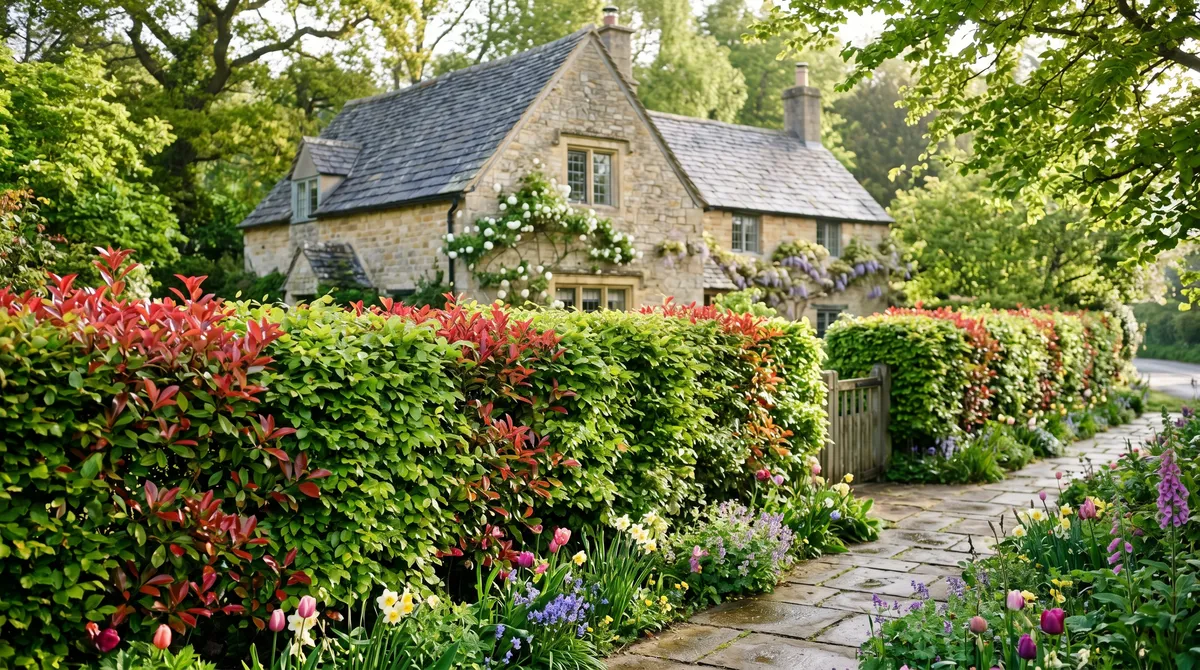
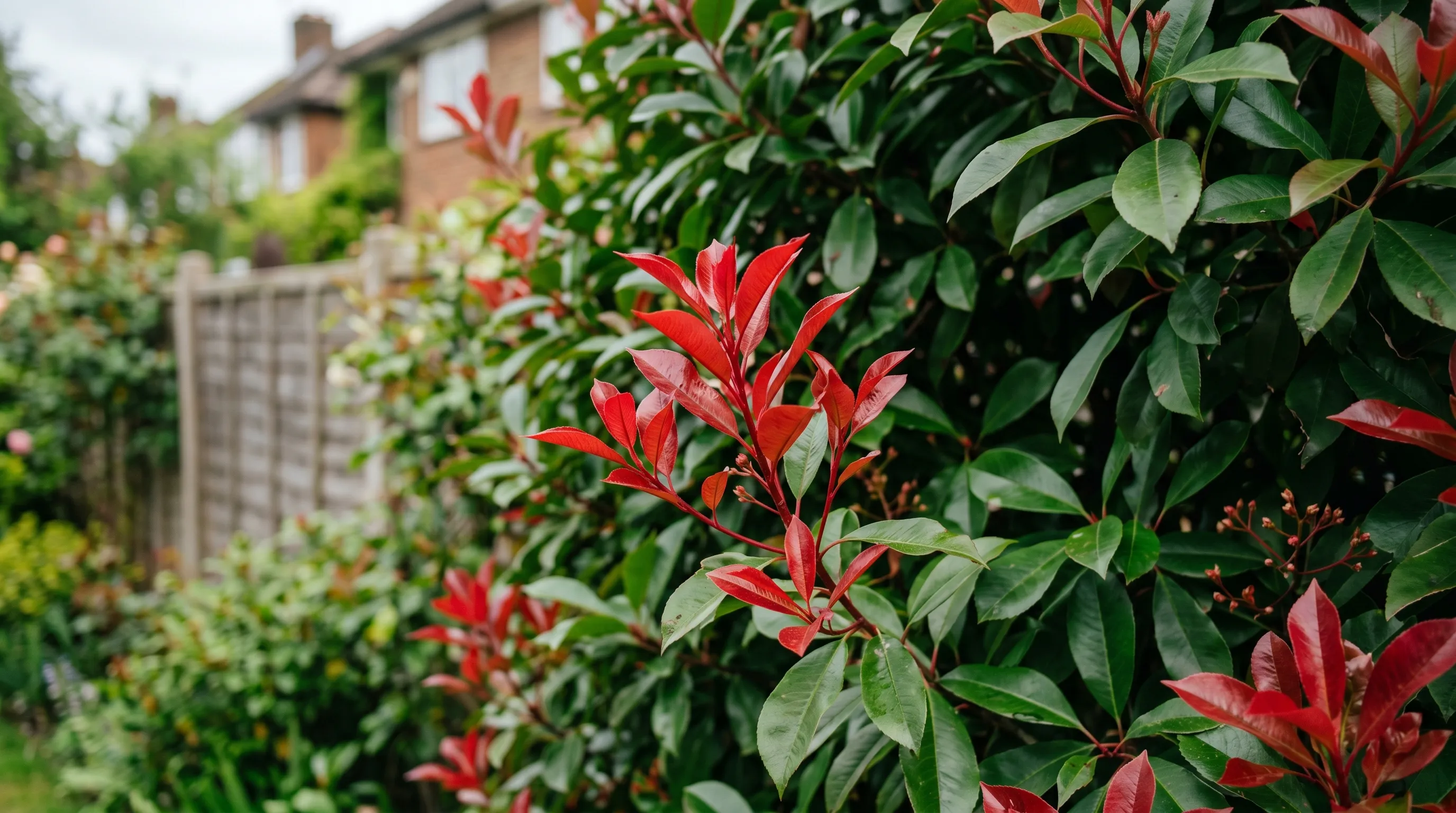 Photinia ‘Red Robin’ produces its strongest red flush on new growth after trimming.
The Top 10 Fast-Growing Hedging Plants Ranked
The table below ranks species by sustained growth rate, with a hardiness and cost comparison for direct planning. Bare-root prices assume 30-60cm whips bought in lots of 25 from a specialist hedging nursery.
| Rank | Species | Growth rate | Mature height | Plants/m | RHS hardiness | Bare-root £/plant | Cost/m |
|---|---|---|---|---|---|---|---|
| 1 | Leylandii (x Cuprocyparis leylandii) | 75-90cm/yr | 6m+ | 3 | H6 (-15C) | £3-£5 | £9-£15 |
| 2 | Thuja plicata ‘Atrovirens’ | 60-80cm/yr | 4m | 3 | H7 (-20C) | £4-£6 | £12-£18 |
| 3 | Cherry laurel (Prunus laurocerasus) | 45-60cm/yr | 5m | 2 | H5 (-15C) | £6-£10 | £12-£20 |
| 4 | Privet (Ligustrum ovalifolium) | 40-60cm/yr | 4m | 4 | H5 (-15C) | £1-£2 | £4-£8 |
| 5 | Photinia ‘Red Robin’ | 30-45cm/yr | 3m | 3 | H4 (-10C) | £8-£12 | £24-£36 |
| 6 | Pyracantha (Pyracantha ‘Saphyr Red’) | 35-50cm/yr | 3m | 3 | H6 (-15C) | £6-£8 | £18-£24 |
| 7 | Escallonia ‘Apple Blossom’ | 30-45cm/yr | 2.5m | 3 | H4 (-10C) | £6-£9 | £18-£27 |
| 8 | Portugal laurel (Prunus lusitanica) | 30-45cm/yr | 4m | 2 | H5 (-15C) | £8-£14 | £16-£28 |
| 9 | Beech (Fagus sylvatica) | 30-40cm/yr | 4m | 3 | H7 (-20C) | £1-£2 | £3-£6 |
| 10 | Hornbeam (Carpinus betulus) | 30-40cm/yr | 4m | 3 | H7 (-20C) | £1-£2 | £3-£6 |
| Bonus | Fargesia rufa (clumping bamboo) | 30-40cm/yr | 2.5m | 1 | H5 (-15C) | £25-£40 | £25-£40 |
Leylandii: Fastest Growth, Highest Maintenance
Leylandii (x Cuprocyparis leylandii) is widely sold as one of the fastest hedging conifers, with a planning range of roughly 75-90cm per year in favourable conditions. It needs well-drained soil and enough room for regular trimming.
The problem is upkeep. Without two trims per year (June and late August), Leylandii becomes leggy at the base and a target for neighbour complaints once it passes 4m. The Anti-social Behaviour Act 2003 lets councils issue remedial notices on hedges over 2m that block light, with fines up to £1,000 if ignored.
Buy 30-60cm bare-root plants at £3-£5 each from November onwards. Space at 60-90cm (3 per 2 metres for a thinner screen, 3 per metre for fast cover). Cut the leader once the hedge reaches your target height plus 30cm.
Thuja Plicata ‘Atrovirens’: The Gold Standard Leylandii Alternative
Western Red Cedar (Thuja plicata ‘Atrovirens’) is a dense alternative to Leyland cypress. Allow roughly 60-80cm of annual growth in favourable conditions, while remembering that exposed sites and dry first seasons will slow establishment. The foliage is dark, dense and aromatic when crushed.
The single biggest advantage is recovery from hard pruning. Leylandii will not regenerate from old brown wood. Thuja plicata ‘Atrovirens’ sprouts new growth from bare stems when cut back hard into year-old wood. If your hedge gets away from you, Thuja can be rescued. Leylandii usually cannot.
Why consider Thuja plicata ‘Atrovirens’: It forms a dense evergreen screen and is generally easier to keep within bounds than Leyland cypress. Check mature spread, soil drainage and trimming access before planting.
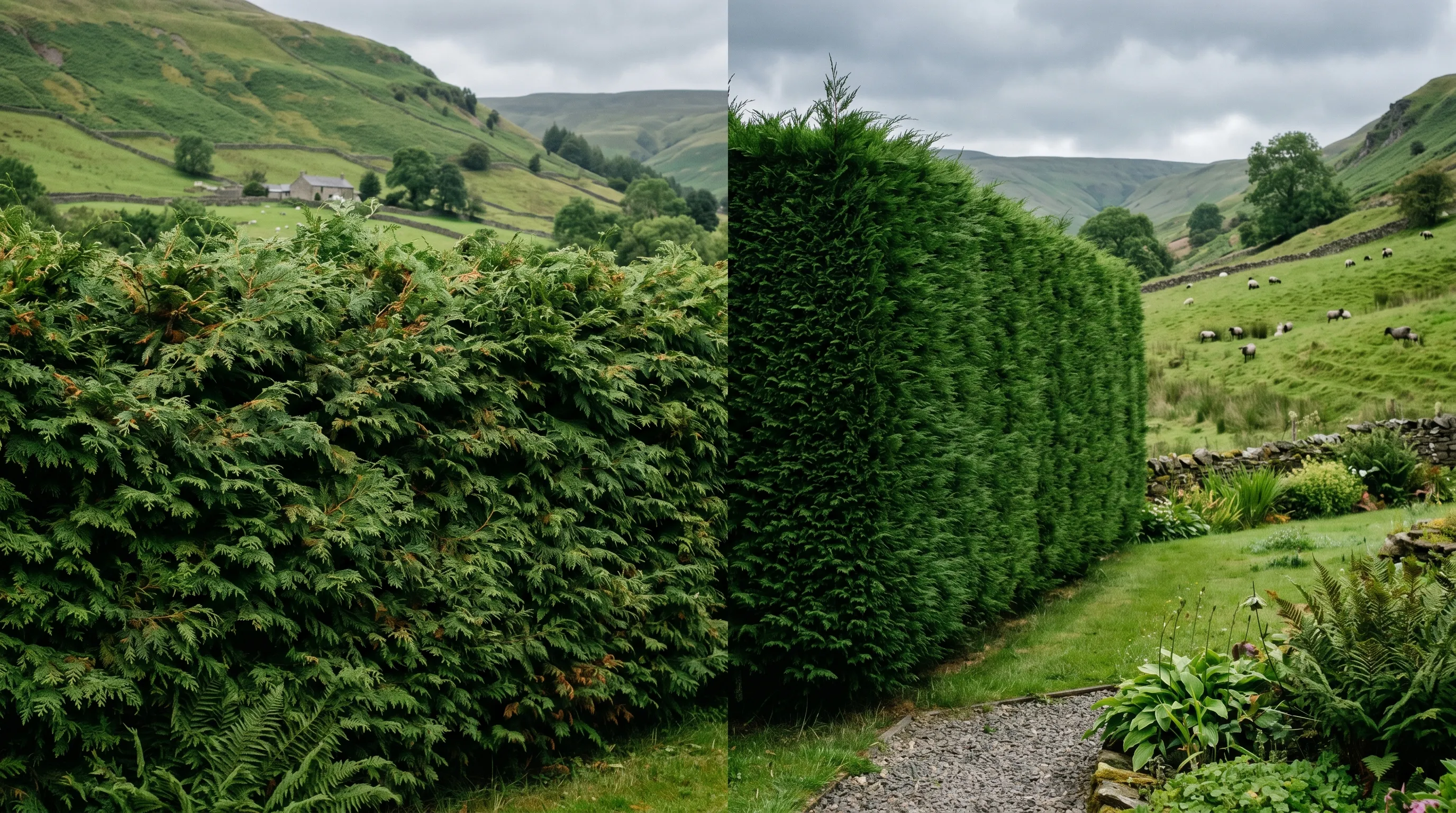 Thuja plicata ‘Atrovirens’ forms a dense evergreen screen when planted and trimmed evenly.
Cherry Laurel: The Glossy Evergreen Workhorse
Cherry laurel (Prunus laurocerasus) is the most widely planted evergreen hedge in the UK and for good reason. Growth rate 45-60cm per year, large glossy leaves 8-12cm long, and pollarder-tolerant. RHS H5 hardy to -15C. White flower spikes in May feed bees.
Cherry laurel needs more space than most hedges. Plant at 50-60cm spacing (2 per metre). Use loppers or secateurs rather than electric trimmers, which shred the large leaves and leave brown edges.
Best cultivar for hedging is Prunus laurocerasus ‘Rotundifolia’ for denser growth and slightly smaller leaves than the type. Avoid ‘Otto Luyken’ for tall hedges as it stays under 1.2m.
Privet: The Cheapest Fast Hedge
Privet (Ligustrum ovalifolium) is the budget choice at £1-£2 per bare-root plant. Plant 4 per metre at 25cm spacing. Growth rate 40-60cm per year. Semi-evergreen in the south, deciduous in colder northern counties. RHS H5. See our privet hedge care guide for pruning and renovation detail.
Privet needs the most trimming of any hedge in this list. Three cuts per year (June, July, September) keep it tight. Without trimming, it bolts to 4m and develops sparse leggy growth. Tolerates shade better than most fast growers, making it the standard front-garden hedge in Victorian terraces.
For yellow variation, Ligustrum ovalifolium ‘Aureum’ grows slightly slower at 30-45cm/year but lifts a dark shaded corner.
Photinia ‘Red Robin’: The Showpiece Hedge
Photinia x fraseri ‘Red Robin’ produces the brightest red new growth of any hedging shrub. Each summer trim triggers a fresh red flush that holds for 4-6 weeks before turning glossy green. Growth rate 30-45cm/year, mature height 3m, RHS H4 hardy to -10C.
The hardiness rating is the catch. Photinia is vulnerable to cold, drying wind and late frost, so it performs best in a sheltered position. In exposed northern or east-coast sites, consider hardier alternatives such as Thuja or beech.
Plant container-grown specimens at £25-£40 each, 3 per metre. Bare-root Photinia is rarely sold. Buy from Crocus, Burncoose, or Coolings garden centres.
Pyracantha: The Wildlife Defence Hedge
Pyracantha (‘Saphyr Red’ is the most disease-resistant cultivar) gives you three things at once: 35-50cm of growth per year, white spring flowers for bees, and orange-red berries from October to February for blackbirds, song thrushes, and waxwings. The vicious 3cm thorns deter intruders. RHS H6 hardy to -15C.
Plant 3 per metre at 33cm spacing. Wear thick leather gloves when planting and trimming, and use tools that keep hands and arms clear of the thorns.
Pyracantha tolerates the harsh dry soil at the base of a south-facing wall, which beech, hornbeam, and Photinia all hate. For boundary security and wildlife value, it has no rival in this list.
Escallonia and Portugal Laurel: The Coastal Pair
Escallonia ‘Apple Blossom’ is the best fast-growing hedge for coastal and seaside gardens. Salt-tolerant, pink-and-white flowers from June to October, growth rate 30-45cm/year. RHS H4, so use it from Cornwall to North Yorkshire but avoid exposed Scottish coasts.
Portugal laurel (Prunus lusitanica) is the sophisticated cousin of cherry laurel. Smaller darker leaves, red leaf stalks, growth rate 30-45cm/year, mature height 4m. RHS H5 hardy to -15C. Cleaner-looking than cherry laurel in formal gardens. Plant 2 per metre at 50cm spacing.
 Cherry laurel has large glossy leaves and forms a broad evergreen screen.
Beech and Hornbeam: The Native Heritage Choices
Beech (Fagus sylvatica) and hornbeam (Carpinus betulus) are the two best native fast-growing hedging plants for UK gardens. Growth rate 30-40cm/year, mature height 4m+, RHS H7 hardy to -20C. Both hold dead leaves through winter, giving year-round screening despite being deciduous.
Bare-root plants are usually cheaper than container-grown stock and are available during the dormant season. Check current supplier prices before budgeting a long boundary.
Gardener’s tip: Beech prefers free-draining ground, while hornbeam copes better with heavier or seasonally wet soil. Do not plant either into a waterlogged hole.
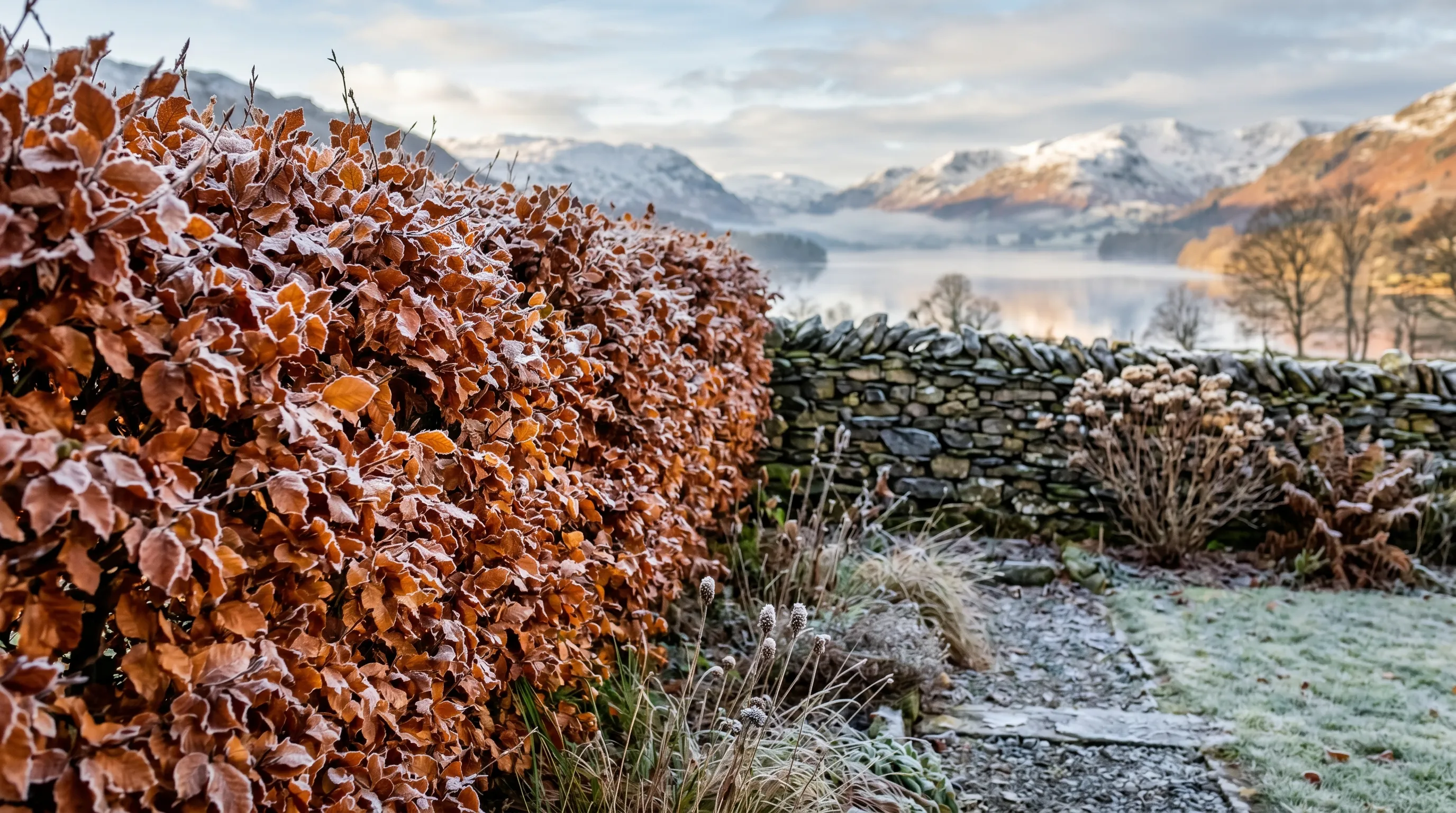 Beech holds its copper-bronze dead leaves until April, giving semi-evergreen screening on a deciduous plant.
Fargesia Rufa: The Safe Bamboo Screen
Avoid all Phyllostachys species. The RHS lists Phyllostachys aurea, Phyllostachys nigra, and Phyllostachys bissetii as potentially invasive plants in the UK. They send out 6-10m rhizomes that lift paving and undermine fences. The Royal Horticultural Society has published detailed guidance on invasive bamboo and the legal responsibility of gardeners under the Wildlife and Countryside Act 1981.
Plant 3L container bamboo at £25-£40 per plant, one per metre. Mulch heavily for the first two summers. For tree-based screening options, see our best trees for privacy in UK gardens guide.
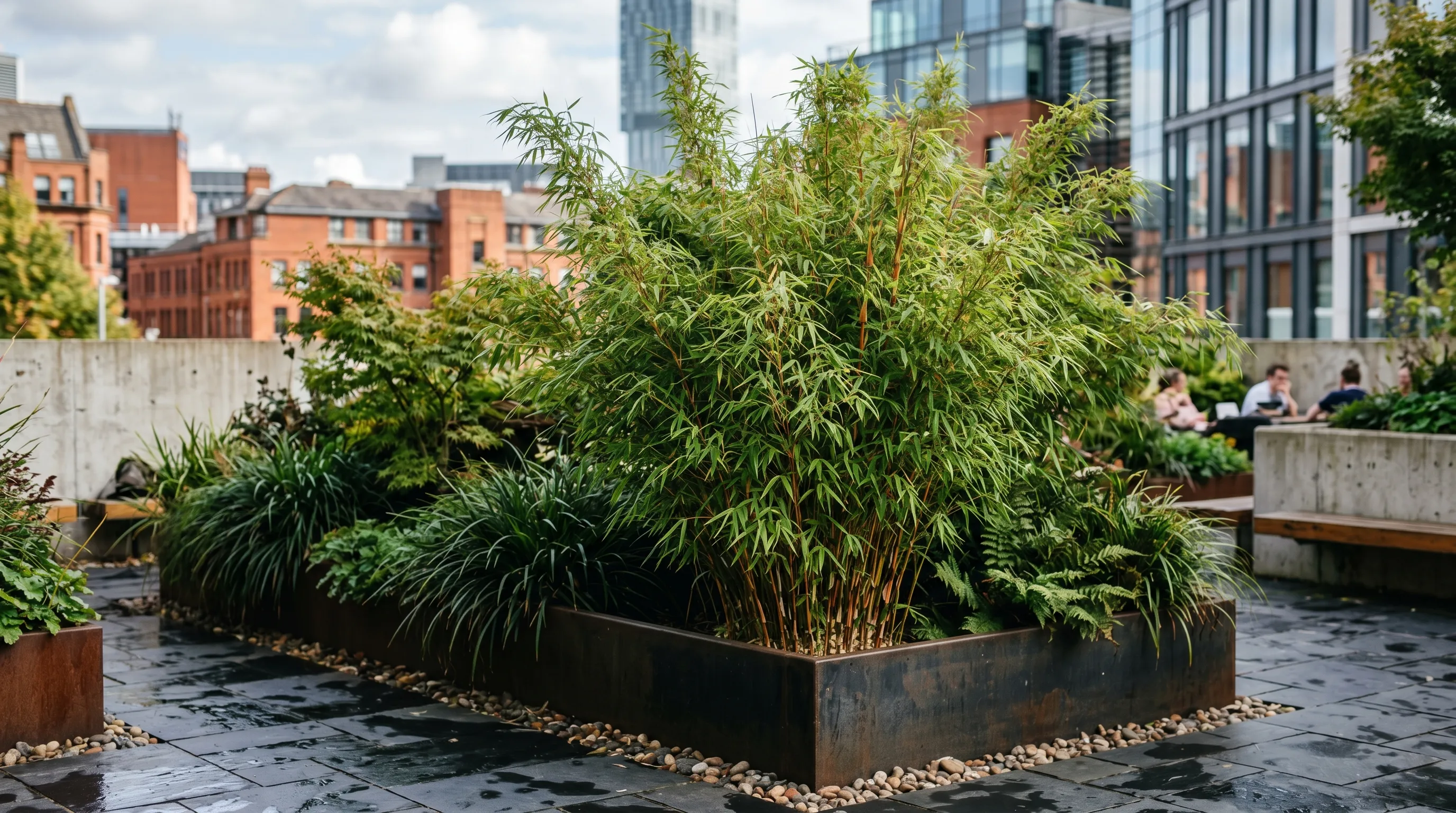 Fargesia rufa stays in a tidy clump. No running rhizomes, no neighbour disputes, and a contemporary look that hard landscaping loves.
Bare-Root vs Container: The Cost Reality
Bare-root hedging plants are lifted from open ground in winter and sold without soil while dormant. Container plants are grown year-round in pots. The cost difference is dramatic on a per-metre basis.
| Hedge length | Bare-root beech (3/m) | Container beech (3/m) | Saving |
|---|---|---|---|
| 5m | £15-£30 | £75-£150 | 75-80% |
| 10m | £30-£60 | £150-£300 | 75-80% |
| 25m | £75-£150 | £375-£750 | 75-80% |
| 50m | £150-£300 | £750-£1,500 | 75-80% |
Smaller bare-root plants can establish well when planted during dormancy and watered through their first growing season. Container plants cost more but extend the practical planting window.
Spacing and Plants Per Metre
Get spacing wrong and you either waste plants or wait years for gaps to close. Use the values in the table below. For a denser, faster screen, plant a double staggered row at 40cm spacing in rows offset by 30cm.
| Species | Single row spacing | Plants per metre | Double row option |
|---|---|---|---|
| Leylandii | 60-90cm | 1-2 | Rarely needed |
| Thuja ‘Atrovirens’ | 50-60cm | 2-3 | 40cm staggered |
| Cherry laurel | 50-60cm | 2 | 50cm staggered |
| Privet | 25cm | 4 | Not needed |
| Photinia | 33cm | 3 | 40cm staggered |
| Pyracantha | 33cm | 3 | Not needed |
| Beech | 33-45cm | 3 | 40cm staggered |
| Hornbeam | 33-45cm | 3 | 40cm staggered |
| Fargesia rufa | 100cm | 1 | Not needed |
Common Mistakes When Choosing a Fast Hedge
1. Picking pure speed over manageable maturity. Leylandii at 90cm/year sounds ideal until you realise it needs two trims a year forever. Thuja or laurel at 60cm/year is the smarter long-term choice for most gardens. Calculate trim hours over 20 years, not just years one to three.
2. Buying container plants when bare-root is available. Bare-root saves 70-85% and grows faster after year two. The only reason to buy container hedging is if you must plant outside the November-March window.
3. Planting too close to a fence or boundary. Plant at least 60cm from a fence line. Hedges need air circulation on both sides to stay dense at the base. A hedge planted tight against a fence becomes sparse on the boundary side within five years.
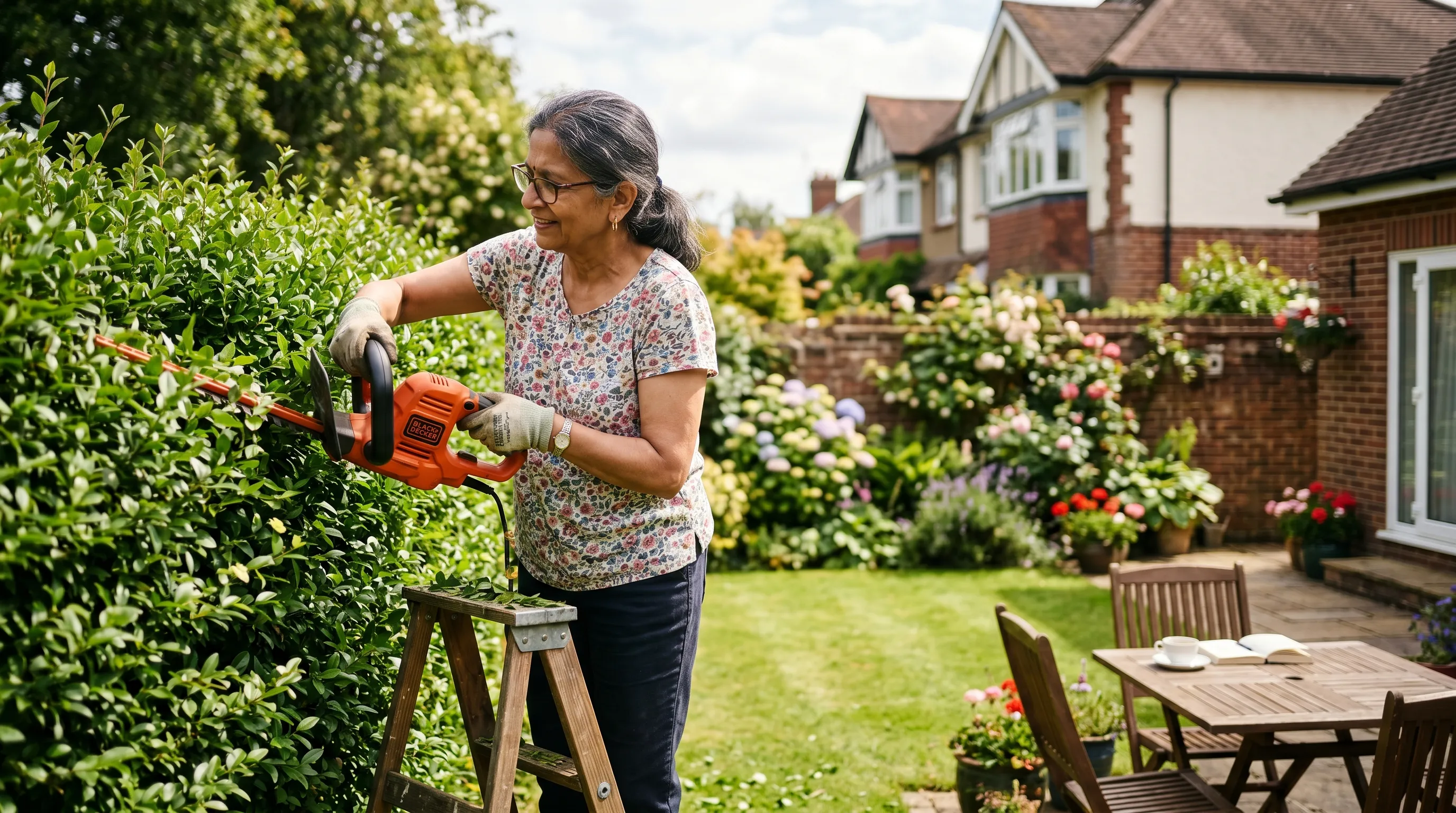 Privet needs two to three trims per year to stay dense. June, July, and September is the standard pattern.
4. Ignoring soil drainage. Beech, Photinia and Leyland cypress dislike waterlogged ground. On heavier or seasonally wet soil, hornbeam may be a safer deciduous choice.
5. Trimming without checking for nests. The main nesting season is usually early March to early August, but birds can nest outside that window. It is an offence to damage or destroy an active nest, so check the hedge carefully and delay work if one is in use.
Month-by-Month Hedge Care Calendar
| Month | Task |
|---|---|
| November | Best month to plant bare-root whips into prepared ground |
| December | Continue planting; firm in any heaved plants after frost |
| January | Hand-weed any winter weeds at the hedge base |
| February | Last chance for bare-root planting before bud break |
| March | Apply 5cm mulch around base; first chance to spot frost damage |
| April | Water young hedges weekly if dry; watch for new bird nests |
| May | No trimming as bird nesting season is peak |
| June | Trim formal evergreens after main nesting period; check for nests first |
| July | Second trim for Leylandii and privet; water during droughts |
| August | Main annual trim for most evergreen species |
| September | Final trim for privet; plant container hedging if needed |
| October | Order bare-root plants for winter delivery |
Buying Bare-Root vs Container Plants
- Hedges Direct (Lancashire) for the broadest range and good quality bare-root
- Buckingham Nurseries (Buckinghamshire) for the best native species selection
- Coolings (Kent) for strong Photinia and Escallonia stock
- Burncoose Nurseries (Cornwall) for unusual evergreens
Inspect plants on arrival. Roots should be moist and pale, never dry or black. Plant within 48 hours of delivery, or heel them into a temporary trench if you cannot plant immediately. Reject any plants with dry, dehydrated roots as they will not recover.
For a wider look at evergreens that work in shade and exposed sites, see our guide to the best evergreen trees for UK gardens. For low formal alternatives to box, see our box hedge alternatives.
Now You’ve Picked Your Hedge
Now you have picked the right species, the next step is getting them in the ground properly. Read our hedge planting guide for the UK for the full step-by-step method covering soil prep, planting depth, the all-important first-year water schedule, and the post-planting cut that forces dense growth from the base.
For specimen plants rather than a hedge, see our guide to fast-growing shrubs.
Frequently asked questions
What is the fastest growing hedge in the UK?
Leylandii (x Cuprocyparis leylandii) is the fastest, adding up to 90cm per year. Thuja plicata ‘Atrovirens’ is a close second at 60-80cm and stays denser. Cherry laurel grows 45-60cm/year and provides glossy evergreen screening within four seasons. Most fast hedges reach a useful 1.8m height within 3-5 years from bare-root whips.
How many hedging plants do I need per metre?
Most species need 3 plants per metre at 33cm spacing. Privet, box, and yew use 4-5 plants per metre. Cherry laurel and Portugal laurel use 2 plants per metre because of leaf size. For a thicker screen, plant a double staggered row at 40cm spacing in rows 30cm apart.
What is the best alternative to Leylandii?
Thuja plicata ‘Atrovirens’ (Western Red Cedar) is the best alternative. It grows 60-80cm per year, stays dense to the base, tolerates harder pruning than Leylandii, and reaches RHS hardiness H7 (-20C). It costs roughly the same as Leylandii at 1m bare-root, around £3-£5 per plant.
What is the cheapest fast-growing hedge?
Bare-root privet, beech and hornbeam are usually among the cheapest options. Prices vary by plant size, quantity and supplier, so compare the installed cost per metre rather than the individual plant price. Bare-root stock is sold during dormancy.
Is Fargesia rufa bamboo invasive?
No, Fargesia rufa is a clumping bamboo and is not invasive. It spreads outwards by 5-15cm per year and never sends out running rhizomes. The RHS lists Phyllostachys species as potentially invasive, but Fargesia varieties are all safe for UK gardens.
Our team produces practical UK gardening guidance from source research, contributor records and established horticultural practice. Editorial standards are overseen by Matt W.