Key takeaways
- Osmanthus is an evergreen shrub with small, sweetly scented white flowers
- O. x burkwoodii and O. delavayi flower in spring, and O. heterophyllus in autumn
- The common garden species are hardy in most of the UK
- Plant in sun or part shade in well-drained soil, out of cold winds
- Trim after flowering. It also makes a neat, scented hedge or box alternative
Osmanthus is a tidy evergreen shrub with glossy dark leaves and clusters of small white flowers with a gorgeous sweet scent. The garden species are hardy, slow-growing and easy to keep in shape. Choose a spring-flowering kind for scent by the door in April, or an autumn one for a late surprise.
It’s a great choice where you want year-round structure plus fragrance. For more ideas, see our list of the best evergreen shrubs.
Which Osmanthus to grow
Most UK garden centres sell two or three species. Here’s how they compare.
| Species | Flowers | Leaves | Notes |
|---|---|---|---|
| O. x burkwoodii | April to May | Dark green, oval | Easy, hardy, great for hedges |
| O. delavayi | March to April | Small, dark green | Arching habit, very early scent |
| O. heterophyllus | Autumn | Spiny, holly-like | Variegated forms such as ‘Goshiki’ |
| O. armatus | Autumn | Large, spiny | Big shrub for a large garden |
| O. fragrans (tea olive) | Autumn | Narrow, glossy | Tender. Conservatory or mild, sheltered spot |
O. x burkwoodii is the one to start with. It’s hardy, flowers reliably and takes clipping well. O. delavayi flowers a few weeks earlier, on graceful arching stems.
O. heterophyllus is often mistaken for holly. Its spiny leaves come in plain or variegated forms, and the small flowers appear in autumn. Look at the leaves: osmanthus leaves sit in opposite pairs, while holly leaves alternate along the stem.

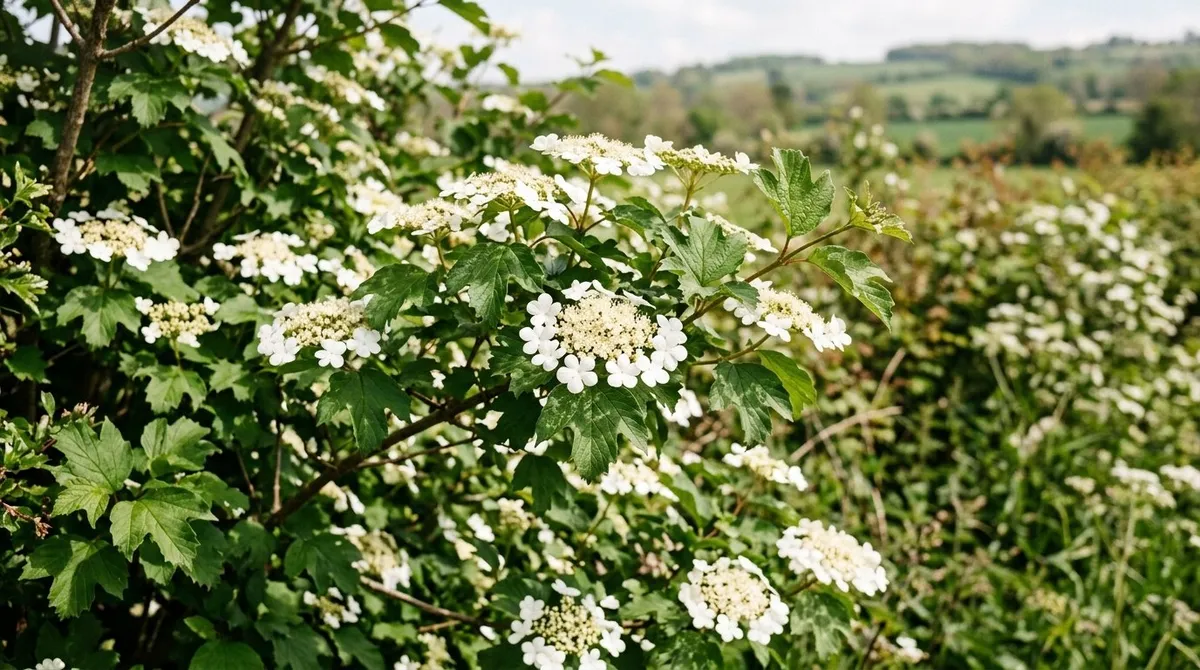
Osmanthus x burkwoodii in spring. Each little cluster of white tubes is packed with sweet scent.
Where to plant Osmanthus
Osmanthus is happy in sun or part shade and almost any soil, as long as it drains well. It flowers best with a few hours of sun.
Good spots include:
- Beside a front door or path, where you’ll catch the scent alongside other scented plants
- Against a sheltered south or west-facing wall or fence
- In a mixed shrub border
- As a low to medium hedge
Avoid exposed spots facing cold north or east winds, which can scorch the leaves and buds. Heavy, waterlogged clay can rot the roots, so improve drainage first or plant on a slight mound. If your garden is windswept, our guide to plants for exposed gardens can help with shelter.
How to plant Osmanthus
Plant container-grown shrubs at any time the ground isn’t frozen or parched. Autumn and spring are easiest, as the soil is moist and warm.
- Dig a hole about twice as wide as the rootball and the same depth
- Tease out roots if they’re circling the pot
- Set the plant at the same level it sat in its pot
- Backfill with the soil you dug out, firming gently
- Water well, then mulch around the base, keeping the mulch off the stem
- Stake tall plants in windy spots for the first year
Water during dry spells for the first summer, as that’s when new shrubs are most at risk. After that, it rarely needs watering in the ground.

A short stake and a ring of bark mulch help a new osmanthus settle in its first year.
Pruning Osmanthus
Osmanthus needs little pruning. Trim lightly after flowering: late spring for spring kinds and late autumn or early spring for autumn kinds.
- Cut long, wayward shoots back to a pair of leaves
- Remove dead, damaged or crossing stems
- Avoid pruning in late summer on spring kinds, as that cuts off next year’s flower buds
An overgrown plant can be cut back harder after flowering to bring it back to size. It regrows slowly, so be patient and expect fewer flowers for a year or so.

A light trim straight after flowering keeps the shape neat without losing next year’s flowers.
Osmanthus as a hedge or box alternative
O. x burkwoodii and O. heterophyllus both make dense, evergreen hedges. They’re slow, so they’re easy to keep neat, and burkwoodii gives you scented flowers each spring. Small-leaved osmanthus is also a popular choice for low clipped hedges and balls where box has struggled.
Plant hedging about 45-60cm apart. Clip once a year after flowering. Remember that clipping hard every year means fewer flowers, so give it a lighter trim if scent matters most. Our guide to box hedge alternatives compares other options, and the hedge planting guide covers the basics.

Variegated O. heterophyllus looks like holly but carries small, scented flowers in autumn.
Growing Osmanthus in a pot
Osmanthus is a good long-term pot plant for a patio or front door, and its slow growth helps.
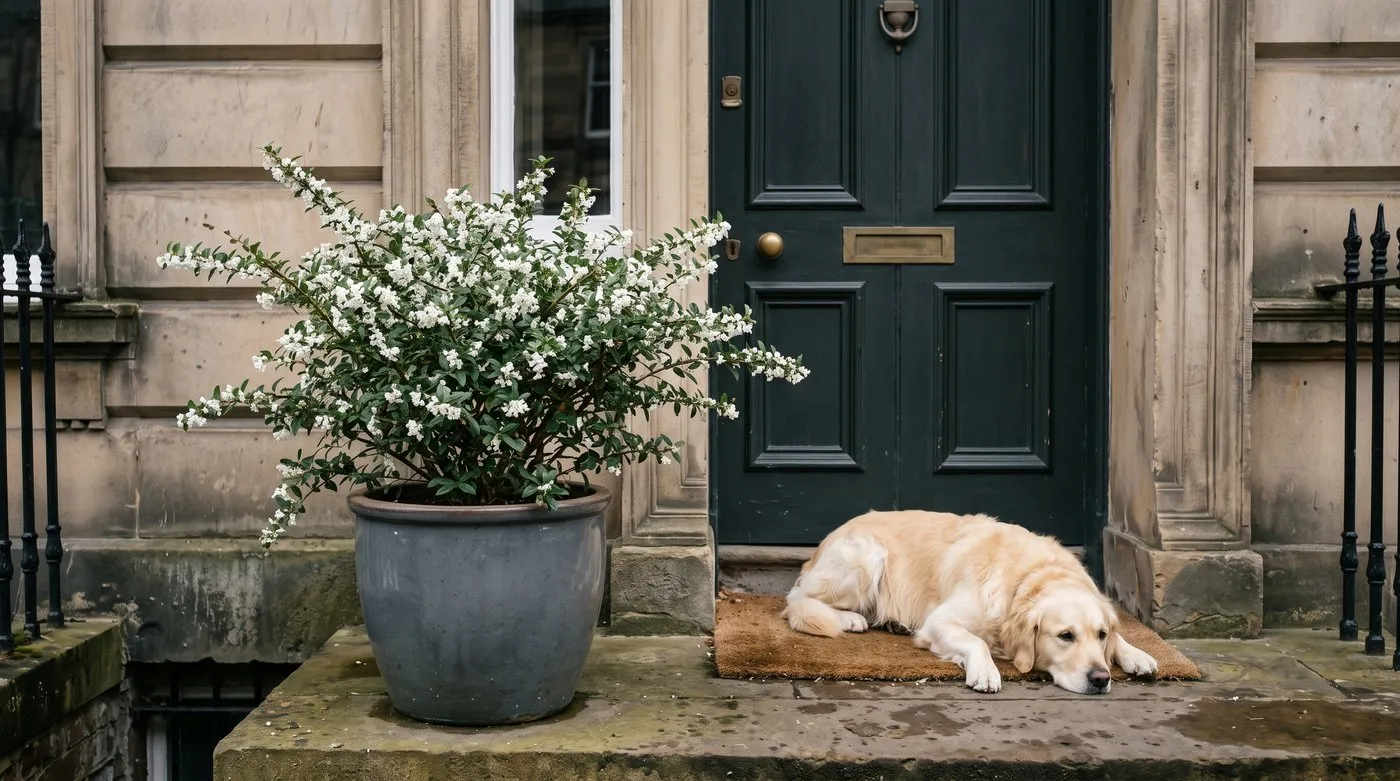
A potted osmanthus by the door means you catch the sweet scent every time you come home in spring.
- Use a pot at least 50cm across with drainage holes
- Fill with a loam-based compost such as John Innes No 3
- Water regularly in summer, as pots dry out quickly
- Feed with a general slow-release fertiliser each spring
- Replace the top few centimetres of compost every year or two, and move into a bigger pot when it’s packed with roots
In a very cold spell, move the pot against the house wall to protect the roots.
Problems with Osmanthus
Osmanthus is usually trouble-free. A few things to look out for:
- Brown, scorched leaves usually mean cold, drying winds. Shelter helps, and new growth soon covers the damage
- Yellowing leaves often point to waterlogged soil. Improve drainage
- Few flowers can come from too much shade or pruning at the wrong time
- Scale insects sometimes appear as small brown bumps under the leaves. Rub them off by hand
Osmanthus month by month
| Month | What to do |
|---|---|
| January to February | Check for wind damage. Plant in mild spells |
| March | O. delavayi flowers. Mulch around the base |
| April | O. x burkwoodii flowers. Feed pots |
| May | Trim spring kinds after flowering. Clip hedges |
| June to August | Water new and potted plants in dry spells |
| September to October | Autumn kinds flower. Good time to plant |
| November | Trim autumn kinds lightly if needed |
| December | Move potted plants to shelter in hard frost |
Common Osmanthus mistakes
Planting in a cold, windy spot. The leaves scorch and flowers suffer. Give it shelter.
Pruning at the wrong time. Late-summer pruning of spring kinds removes the flower buds. Trim straight after flowering.
Choosing O. fragrans for an open border. The true tea olive is tender in most of the UK. Grow it under glass or in a very mild spot.
Heavy, wet soil. Osmanthus rots in waterlogged ground. Improve drainage first.
Expecting fast results. It’s slow. Buy a bigger plant if you want an instant effect.
Frequently asked questions
Is Osmanthus hardy in the UK?
The common garden species are hardy in most of the UK. O. x burkwoodii, O. delavayi and O. heterophyllus all cope with normal winters, especially out of cold winds. O. fragrans, the true tea olive, is more tender and needs a mild, sheltered spot or a cool conservatory.
When does Osmanthus flower in the UK?
It depends on the species. O. delavayi flowers in March and April, and O. x burkwoodii in April and May. O. heterophyllus and O. armatus flower in autumn. O. fragrans flowers in autumn too, and sometimes again later.
Does Osmanthus need pruning?
Only a light trim after flowering. Cut back long shoots and remove dead or crossing stems to keep a good shape. Hedges can be clipped after flowering. An overgrown plant can be cut back harder, but it regrows slowly.
What is the best Osmanthus for a small garden?
O. x burkwoodii is the easiest all-rounder. It’s hardy, reliable and wonderfully scented in spring. It grows slowly and takes clipping well, so you can keep it to the size you want. O. heterophyllus ‘Goshiki’ is a pretty, slow choice for colourful leaves.
Can I grow Osmanthus in a pot?
Yes, it does well in a large pot. Use one at least 50cm across with a loam-based compost such as John Innes No 3. Water regularly in summer, feed in spring, and refresh the top layer of compost every year or two.
What does Osmanthus smell like?
The flowers have a sweet scent that carries on still, mild days. Many people compare spring species to jasmine. O. fragrans, the tea olive, is known for its apricot-like perfume and is used to flavour tea in China.
For more fragrance through the colder months, read our guide to the best winter flowering shrubs, or browse all our plant guides.
Our team produces practical UK gardening guidance from source research, contributor records and established horticultural practice. Editorial standards are overseen by Matt W.